From Surf Wiki (app.surf) — the open knowledge base
Honourable Artillery Company
Oldest regiment of the British Army

Oldest regiment of the British Army
| Field | Value | |
|---|---|---|
| unit_name | Honourable Artillery Company | |
| image | Honourable Artillery Company short arms crest.png | |
| caption | Crest and motto of the Honourable Artillery Company | |
| dates | 1087; | |
| chartered 25 August 1537 | ||
| allegiance | United Kingdom | |
| branch | ||
| role | ||
| size | ||
| command_structure | 77th Brigade | |
| garrison | London | |
| ceremonial_chief | Charles III | |
| ceremonial_chief_label | Captain General | |
| colonel_of_the_regiment | Prince Michael of Kent | |
| colonel_of_the_regiment_label | Royal Honorary Colonel | |
| commander4 | General Sir Roland Walker | |
| commander4_label | Colonel Commandant | |
| motto | Arma pacis fulcra | |
| (Latin: "Armed Strength for Peace") | ||
| march | ||
| identification_symbol | [[File:GuardsTRF.svg | 65px]] |
| Only worn by Corps of Drums | ||
| identification_symbol_label | Tactical Recognition Flash | |
| identification_symbol_2 | None | |
| (Bearskin cap) | ||
| identification_symbol_2_label | Plume | |
| identification_symbol_4 | HAC | |
| identification_symbol_4_label | Abbreviation | |
| notable_commanders | Lieutenant Colonel Sir Edward Heath | |
| General Sir Richard O'Connor |
chartered 25 August 1537 (Latin: "Armed Strength for Peace") Only worn by Corps of Drums (Bearskin cap) General Sir Richard O'Connor
The Honourable Artillery Company (HAC) is a reserve regiment in the British Army. Incorporated by royal charter in 1537 by King Henry VIII, it is the oldest regiment in the British Army and is considered the second-oldest military unit in the world. Today, it is also a charity whose purpose is to attend to the "better defence of the realm", primarily through supporting the HAC regiment. The word "artillery" in "Honourable Artillery Company" does not have the current meaning that is generally associated with it, but dates from a time when in the English language that word meant any projectile, for example arrows shot from a bow. The equivalent form of words in modern English would be either "Honourable Infantry Company"{{NoteTag|"Infantry" today is closer to the meaning of "artillery" then than is "military" because "military" includes in its scope today's usage of "artillery" and also mounted troops, whereas "infantry", like the HAC when founded, did not include these.
- }} or "Honourable Military Company".
In the 17th century, its members played a significant part in the formation of both the Royal Marines and the Grenadier Guards. More recently, regiments, battalions and batteries of the Company fought with distinction in both World Wars and its current regiment, which forms part of the Army Reserve, is the oldest surviving regiment in the British Army, and the second most senior in the Army Reserve. Members of the regiment are drawn, for the most part, from young men and women working in and around the City and Greater London. Those leaving the active units may become Veteran Members and remain within the fraternity of the company.
History
Early history
The HAC can trace its history back as far as 1087, but it received a royal charter from Henry VIII on 25 August 1537, when Letters Patent were received by the Overseers of the Fraternity or Guild of St George authorising them to establish a perpetual corporation for the defence of the realm to be known as the Fraternity or Guild of Artillery of Longbows, Crossbows and Handgonnes. This body was known by a variety of names until 1658, when it was first referred to as the Artillery Company. It was initially referred to as the Honourable Artillery Company in 1685 and officially received the name from Queen Victoria in 1860. However, the Archers' Company of the Honourable Artillery Company was retained into the late 19th century, though as a private club. Founded in 1781 by Sir Ashton Lever, it met at Archers' Hall, Inner Circle, Regent's Park, London. The Archers' Company remained a part of the regiment operated from 1784 to the late 1790s, along with Matross, Grenadier (established on 11 August 1686) and Light Infantry companies/divisions, with a Rifle or Yager Company introduced around 1803.

The regiment has the rare distinction of having fought on the side of both Parliament and the Royalists during the English Civil War 1642 to 1649.
From its formation, the Company trained at a site it had occupied at the Old Artillery Ground in Spitalfields and at the Merchant Taylors' Company Hall. In 1622, the Company built its first Armoury House at the site of the Old Artillery Gardens.
In 1638, Sir Maurice Abbot granted the Company use of lands at its current site south of Bunhill Fields Burial Ground on City Road, which in 1649 consisted of twelve acres enclosed by a brick wall and pale. In 1657, it sold its old Armoury House in Spitalfield to Master Gunner Richard Woolaston for £300.
In 1656, the Grenadier Guards were formed from gentlemen of the Honourable Artillery Company who had taken the then heir to the throne, Prince Charles (later Charles II), to Europe for his safety during the English Civil War.
On 28 October 1664, in the New Artillery Gardens, the body of men that would become the Royal Marines was first formed with an initial strength of 1,200 infantrymen recruited from the London Trained Bands as part of the mobilisation for the Second Anglo-Dutch War. James (later King James VII & II), the Duke of York and Albany, Lord High Admiral and brother of King Charles II, was Captain-General of the Honourable Artillery Company, the unit that trained the Trained Bands.
The Company served in Broadgate during the Gordon Riots of 1780 and in gratitude for its role in restoring order to the city, the Corporation of London presented "two brass field-pieces", which led to the creation of an HAC Artillery Division. (These guns are on display in the entrance hall of Armoury House.)
In 1860, control of the company moved from the Home Office to the War Office and in 1889, a Royal Warrant gave the Secretary of State for War control of the company's military affairs. In 1883, Queen Victoria decreed that the HAC took precedence next after the Regular Forces and therefore before the Militia and Yeomanry in consideration of its antiquity.
South Africa 1900–1902
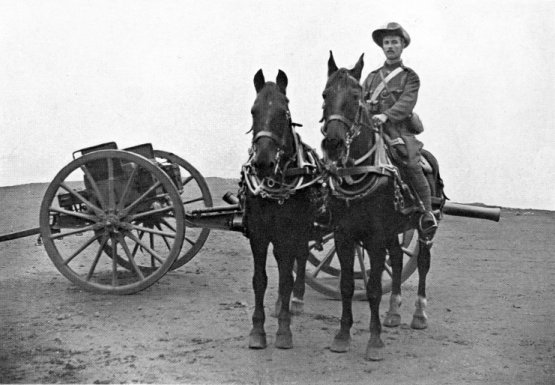
Members of the Company first served as a formed unit overseas in the South African War (1899–1902). Almost two hundred members served; the majority in the City of London Imperial Volunteers (CIV) as infantry, mounted infantry and in a Field Battery that was officered, and for the most part manned, by members of the company.
Territorial and Reserve Forces Act 1907
In 1907, the Company became part of the newly formed Territorial Force with the passing of the Territorial and Reserve Forces Act. The HAC Infantry was due to become part of the newly formed London Regiment as the "26th (County of London) Battalion", but instead managed to retain its own identity as the Honourable Artillery Company Infantry Battalion. The HAC also had its property and privileges protected by the Honourable Artillery Company Act 1908.
First World War
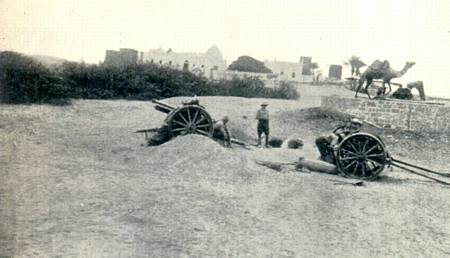

The HAC expanded to three infantry battalions and seven artillery batteries during the First World War. Second Lieutenants Reginald Leonard Haine and Alfred Oliver Pollard, of the 1st Battalion HAC, were awarded Victoria Crosses for their actions at Gavrelle in 1917. In total 1,650 men from the HAC were killed during the war.
In September 1914, the 1st Battalion followed the British Expeditionary Force to France and fought in the 1st Battle of Ypres. After the fighting at the Battle of the Ancre in 1916 and the Battle of Arras in 1917, it became an officer training battalion and provided demonstration platoons. Elements of the battalion were used to help quell the Étaples Mutiny. The 2nd Battalion HAC was raised in August 1914; it was in France by October 1916 and in action on 25 February 1917 at Bucquoy. They fought at the Battle of Arras in May and the 3rd Battle of Ypres in October. In November 1917, the battalion moved to the Italian Front under the command of Lieutenant-Colonel Sir Richard O'Connor. In the Battle of Vittorio Veneto, in October 1918, they led a force of Italians, Americans and British that compelled the garrison of the strategic island of Papadopoli (in the main channel of the River Piave) to surrender. For this remarkable feat of arms, the HAC was awarded two Distinguished Service Orders, five Military Crosses, three Distinguished Conduct Medals and 29 Military Medals.
Both A Battery and B Battery went to Suez in April 1915. In July, B Battery fought in the recapture of Sheikh Othman (key to the water supply to Aden) from the Turks as part of the Aden campaign. In February 1917, both batteries took part in the Palestine Campaign, were in action at the First and Second Battle of Gaza and entered Jerusalem in December 1917. In the German counter-attack during the Second action of Es Salt on 1 May 1918, A Battery was forced to make a rapid withdrawal under heavy fire, which resulted in the loss of all its guns. Both A and B Batteries took part in the Battle of Megiddo in September.
The 2nd Line batteries – 2/A Battery and 2/B Battery – were formed in 1914 and served on the Western Front in 1917 and 1918 as part of an Army Field Artillery Brigade; the 3rd Line batteries – A (Reserve) Battery and B (Reserve) Battery – were formed in 1915 to provide trained replacements for the 1st and 2nd Line batteries.
A seventh battery, the 309th (HAC) Siege Battery RGA, went to France in April 1917 and saw action at the Battle of Messines and the Battle of Amiens.
In 1919, Lieutenant-Colonel Edward Lisle Strutt, arranged for a detachment of the 2nd Battalion to form a Guard of Honour at Imst Station to give a final Royal Salute on the departure of the Imperial State Train for Charles I, the last Austro-Hungarian Emperor-King, to safety in Switzerland, after having served as the family's protector at Eckartsau on the personal initiative of King George V.
Interwar
When the Territorial Force was reconstituted as the Territorial Army (TA) in 1920, the HAC infantry battalion was reformed, while A and B Batteries formed a composite RHA unit with the City of London Yeomanry (Rough Riders) (one battery) as 11th (HAC and City of London Yeomanry) Brigade, RHA. The TA began to expand rapidly at the time of the Munich Crisis in 1938, and the Yeomanry left to form a separate light anti-aircraft regiment leaving 11th Regiment RHA (HAC). Subsequently, the HAC formed the 12th (1939) and 13th Regiments RHA (HAC) (1940) and the 86th (HAC) Heavy Anti-Aircraft Regiment (1939).
Second World War
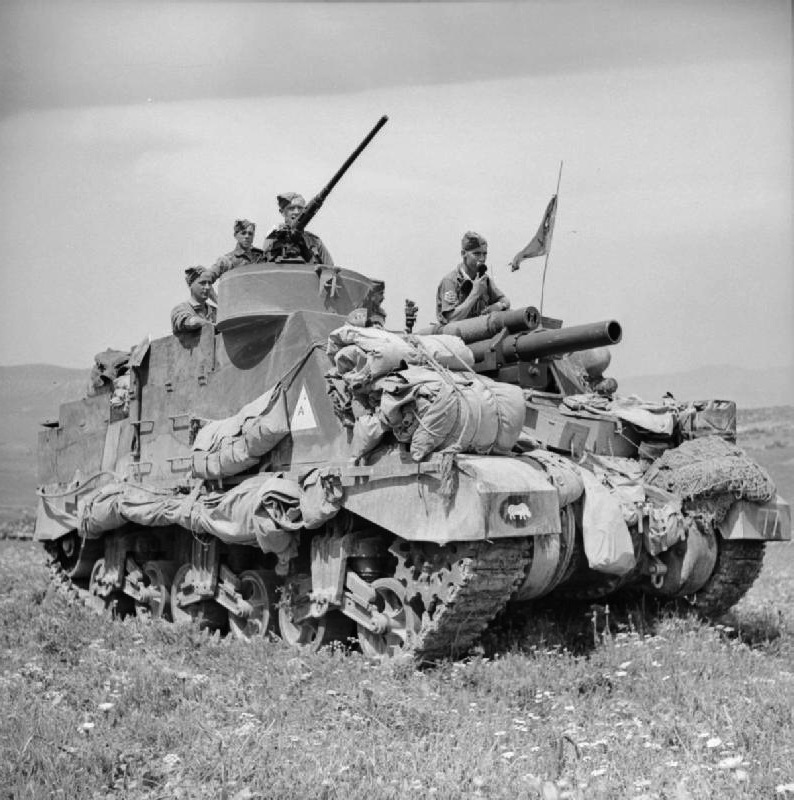
Infantry Battalion
In 1939, the Infantry Battalion became 162 (HAC) Officer Cadet Training Unit, this was the Officer Training Unit of the Reconnaissance Corps. In 1942, 101 RAC OCTU amalgamated with 162 Reconnaissance Corps OCTU to form 100 RAC OCTU based at the Royal Military College, Sandhurst.
11th (HAC) Regiment, RHA
The 11th (HAC) Regiment RHA served in North Africa at the Battle of Knightsbridge with 25-pounder guns and, after re-equipping with the M7 Priest self-propelled gun, in the Second Battle of El Alamein where it was commanded by Bill Leggatt. The regiment's guns were the first guns ashore in the invasion of Sicily; then they took part in the Allied invasion of Italy and the Italian Campaign.

12th (HAC) Regiment, RHA
The 12th (HAC) Regiment RHA took part in the Operation Torch landings and were in action at Thala in February 1943, where they halted a German advance following the Battle of the Kasserine Pass. After re-equipping with Priests, they too moved on to Italy in March 1944 and fought at Monte Cassino.
13th (HAC) Regiment, RHA
The 13th (HAC) Regiment RHA equipped with Sexton self-propelled guns fought in Normandy, the Netherlands and across the Rhine into Germany as part of 11th Armoured Division.
86th (HAC) HAA Regiment, RA
Main article: 86th (Honourable Artillery Company) Heavy Anti-Aircraft Regiment, Royal Artillery
The regiment formed part of 26th (London) Anti-Aircraft Brigade defending the London Inner Artillery Zone. Anti-Aircraft Command mobilised on 24 August 1939, and so 86th (HAC) HAA Rgt was already manning static gunsites at places like Primrose Hill and Finsbury Park when war was declared on 3 September. The regiment served in the defence of the capital throughout The Blitz. It became a mobile unit in 1942 and was one of the first units to land on D-Day, with Regimental Headquarters commanding a composite AA Assault Group on Juno Beach. During the Normandy Campaign and subsequent advance into Belgium the regiment's 3.7-inch HAA guns were sometimes used to engage ground targets. During the winter of 1944–45 its guns and radar defended Brussels and Antwerp against V-1 flying bombs (known as 'Divers').
Over seven hundred members of the Company lost their lives during the Second World War.
Post-war
In 1947, the Company was reorganised into:
- an Infantry Battalion
- 1st Regiment HAC, RHA, of self-propelled artillery (from 11th (HAC) RHA Regiment)
- 2nd Regiment HAC (HAA) of heavy anti-aircraft artillery (from 86th (HAC) HAA Regiment; disbanded 1955)
- G Locating Battery (from 12th (HAC) RHA Regiment; disbanded 1961)
In 1973, the Regiment was again reorganised; it was given the role of providing 'stay behind' observation posts (OPs) for the British Army of the Rhine as one of the three Territorial Army units making up the Corps Patrol Unit (with 21 and 23 SAS). The three sabre squadrons, each with a number of four to six man patrols provided surveillance and target acquisition capabilities to the HQs of 1st Artillery Brigade (HQ Sqn HAC), 1 Armoured Division (I Sqn HAC), 4 Armoured Division (II Sqn HAC), and 1 BR Corps (III Sqn HAC) with one 'sabre' squadron each. The new structure was:
- Three patrol squadrons (1, 2 and 3 or I, II and III) – a fourth patrol squadron was formed for a short period in the 1980s
- Headquarter Squadron, including Training Wing and Medical Wing
- The Gun Troop (a battery of six 25 pounder guns and not part of the OP role)
- Band
- Corps of Drums

In 1992, the signals troops that had been integrated into the patrol squadrons were brought together to form the Signal Squadron; they were subsequently re-integrated with the patrol squadrons in 2010.
In 1992, in the Salisbury Plain Training Area, the HAC was the last British Army unit to fire the 25-pounder in the field, as the Gun Troop retrained onto the 105mm Light Gun. The 25 pounder continued to be fired ceremonially until it was replaced by the Light Gun.
In 1996, the first formed unit of the Regiment to be mobilised for active service since the Second World War was called up for Operation Resolute with the NATO IFOR in Bosnia and Herzegovina.
The regiment participated in the celebration of the Queen's Golden Jubilee on 4 June 2002 by firing a 62 gun salute at the Tower of London, and by providing a Guard of Honour (including the Regimental Band and the Massed Corps of Drums of the 1st Bn Grenadier Guards and the HAC) at St Paul's Cathedral. In December of that year, the Captain-General visited and dined with the company to commemorate her Golden Jubilee as Captain-General.
In 2005, the guns were withdrawn from Gun Troop, which was renamed Liaison Troop.
In 2006, the HAC was the first major unit of the Territorial Army to convert to the Bowman communications system. When Bowman was temporarily withdrawn from the Territorial Army in 2008/09, it was one of the few units to retain the equipment.
In 2016, Queen Elizabeth II became the longest-serving Captain-General of the HAC, with 64 years of service.
In 2017 A Battery (1st City of London) Honourable Artillery Company, was re-formed to provide gunners in support of 7th Parachute Regiment Royal Horse Artillery.
Current role and organisation
Current role

The main role of the regiment is surveillance and target acquisition, in which it operates three patrol squadrons. In 2018, the regiment took on an additional role when a new battery was formed to serve as part of 16 Air Assault Brigade in support of 7 (Parachute) Regiment, Royal Horse Artillery.
The HAC has a ceremonial role in providing guards of honour at the Guildhall in the City of London during state visits and, since 1924 (when the Royal Artillery ceased to be stationed at the Tower), has provided the saluting battery at the Tower of London for state occasions.
Training
The HAC is one of two Army Reserve units (the other being the Parachute Regiment) to deliver their own Phase 1 training, and to a more demanding standard that the rest of the reserve 'in house'. Unlike most Army Reserve units, who are only required to train at up to sub-unit (company or squadron) level, the HAC is required to train as a regiment.
Those who wish to serve in 1 Squadron are required to undertake the Surveillance and Reconnaissance Patrols Course (SRPC), an arduous course with only a 10% pass rate. Service as a Special Observer qualifies for additional pay and specialist courses and is open to all arms and services.
Organisation
The HAC is not part of the Royal Regiment of Artillery, being an older and separate regiment with its own uniform, insignia and colours. The regiment forms part of 77 Brigade (having previously been part of 1st Intelligence Surveillance and Reconnaissance Brigade) with sub units supporting the Army Special Operations Brigade and 16 Air Assault Brigade Combat Team. The sub units of the HAC are:
- Headquarters Squadron.
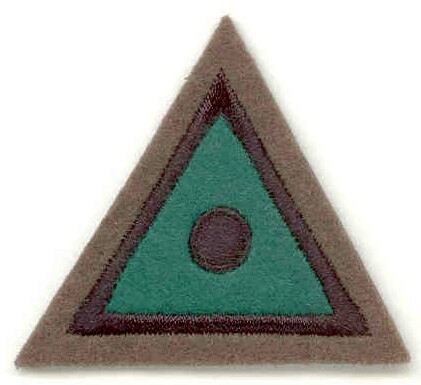
- The Corps of Drums. The last remaining sub-unit from the infantry battalions and still wearing the grenade beret badge, Foot Guards belt, beret badge backing and tactical recognition flash. As with an infantry battalion corps of drums, the drummers are 'soldiers first' and regularly deploy soldiers on operations as well as fulfilling their ceremonial role. The Corps of Drums forms part of HQ Squadron and is a separate entity from the Band, who are primarily musicians. They provide personnel for A Battery whilst still maintaining their ceremonial drumming role.
- The Medical Wing, commanded by the Surgeon Major, who is a Royal Army Medical Service officer, provides medical support to the Regiment for peacetime training and on deployment. Combat medical technicians within the Medical Wing undergo additional specialist medical training with the Defence Medical Services.
- CIS Troop, a troop to provide communications information systems capability to the HAC and other units.
- Sicily Troop. The enablers of the Regiment, providing logistics and motorised capability to the HAC and other units.
- A (1st City of London) Battery, Honourable Artillery Company, a battery of 105mm light guns. The battery is paired with 7th Parachute Regiment Royal Horse Artillery.
- 1 Squadron (Special Operations), comprising two troops of surveillance and reconnaissance patrols. 1 Squadron provides long-range surveillance, reconnaissance and a joint-fires capability as formed surveillance and target acquisition patrols to support the Army Special Operations Brigade, following the Integrated Review, 2021.
- 2 Squadron, composed of a squadron headquarters, and three troops (Knightsbridge, El Hamma and El Alamein) of light ISR Detachments.
- III Squadron, composed of a squadron headquarters, and three troops (Aden, Gaza and Rhine) of light ISR Detachments.
Future Soldier programme: under this programme the HAC was moved to 77th Brigade. A Battery will provide two guns to each battery of 7 (Para) RHA and 1 Squadron will provide Special Patrols to the Army Special Operations Brigade.
Operations
The Regiment has had individuals or sub-units on active service at all times since 1996; with the personnel serving in a wide variety of roles in Northern Ireland, Bosnia, Kosovo, Iraq, Afghanistan and various countries in Africa. Commitments included the deployment of individuals to human intelligence roles in the Balkans (including as part of Joint Commission Observer teams) and then formed patrols to Bosnia, Kosovo and Iraq; independent sub-units to Operation Telic 4 and 5 in Iraq and L Troop to Operation Telic 9; as well as individual and group reinforcements to other infantry and artillery units. In Afghanistan deployed personnel were divided between operating and maintaining counter indirect fire systems and other high technology equipment and forming part of the Brigade Reconnaissance Force (BRF).{{Cite news
On Tuesday 4 December 2007, Trooper Jack Sadler, who was serving with the BRF, was killed when his vehicle was hit by a blast north of Sangin, in Helmand Province. Two other soldiers were injured in the attack. In 2008, the Runner-up for the Cobra Trophy for Volunteer Reservist of the year was Trooper Adam Cocks of 2 Squadron, who was severely injured in Afghanistan when his vehicle struck a mine. While recuperating at Headley Court rehabilitation centre, he and a friend came up with the idea of a rugby match at Twickenham to help raise money for the charity Help for Heroes.
Regimental museum
The Honourable Artillery Company Museum is located at Armoury House.
Dress

In 1830, King William IV ordered that the uniform of the HAC should be based on that of the Grenadier Guards, except that where the Grenadiers wear gold, the HAC were to wear silver. This tradition is continued today by the wearing of the silver coloured grenade in the forage cap similar to the brass one of the Grenadiers, and the buttons and lace on HAC dress uniforms being silver coloured instead of gold.
Berets
The HAC wear a khaki beret with the HAC's beret badge ("short arms") in white metal on a black backing. Officers and warrant officers wear an embroidered cloth version of the same badge. The Corps of Drums and Regimental Band wear the HAC infantry grenade on a blue red blue backing, which is superficially identical to that of the Grenadier Guards. From July 2008, members of 4/73 (Sphinx) Special OP Battery, part of 5th Regiment Royal Artillery, the HACs paired regular regiment, adopted the khaki beret to mark their close working relationship.
Image:HAC_Gunner_Badge.jpg|HAC Gunner Badge worn by Officers in No 1 Dress (Gunner) on artillery ceremonial duties Image:HAC Officers Beret Badge.jpg |Officer's and warrant officer's beret badge Image:Badge HAC OR ShortArms.gif|Other ranks beret badge Image:HAC_Officers_Forage_Cap_Badge.jpg |Officer's forage cap badge (Infantry) Image:HACSNCOGrenade.JPG|Grenade worn by SNCOs of all sub units in forage cap, and Band and Drums in the beret Image:HAC_grenade.jpg|Grenade worn by ranks below sergeant in the forage cap, and by the Band and Corps of Drums in the beret
Other headdress
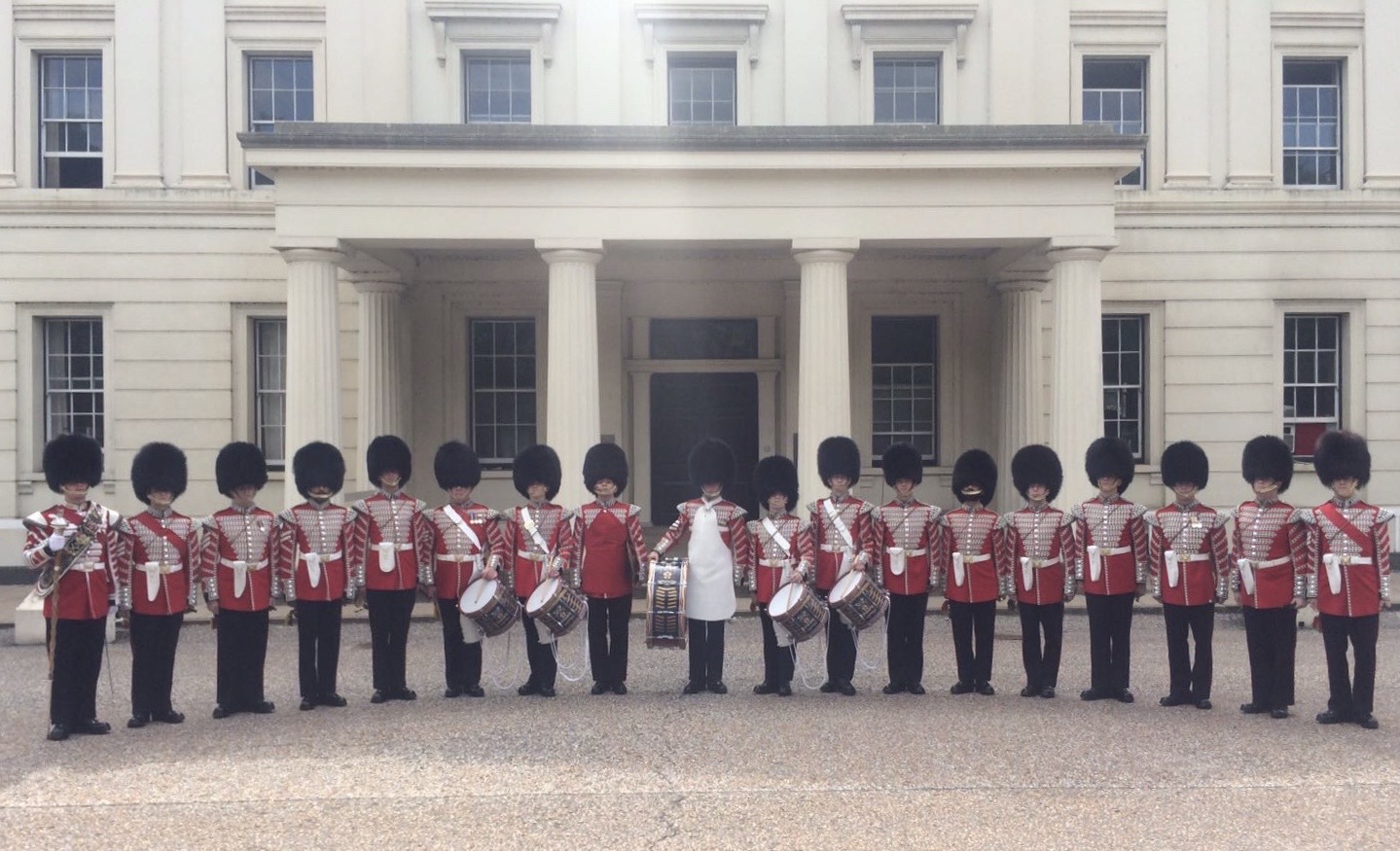
On the forage cap, the HAC infantry grenade (white metal) is worn by junior ranks of all subunits of the regiment. Sergeants and Warrant Officers wear a different version of the grenade, which has the letters HAC in brass on the ball of the grenade. Officers wear an embroidered silver grenade on their forage caps in No 1 Dress (Infantry) and on the Service Dress forage cap but when in No 1 Dress (Gunner) they wear the HAC Artillery cap badge. The latter is similar to that of the Royal Artillery but with "HAC" and "Arma Pacis Fulcra" replacing "Ubique" and "Quo Fas et Gloria Ducunt". In Full Dress (normally only worn by the Band and Corps of Drums), the Bearskin is worn without a plume.
Badges of rank

In No 2 dress, Soldiers wear the larger Foot Guards badges of rank and qualification. Lance Corporals wear two chevrons and Lance Sergeants three. In Full Dress and Number 1 dress, WO2's wear a large colour badge of the same pattern as the Grenadier Guards, but in silver rather than gold. Officers' crowns and stars are of the same pattern as those of the Grenadiers (Order of the Garter), woven for combat uniforms but in silver for Service and Barrack Dress.
Stable belts
Each Squadron wears a different stable belt:
- A (City of London) Battery – Light blue with narrow yellow stripe through the middle. ( Identical to the Royal Horse Artillery)
- Headquarter Squadron and Band – red and blue edged with narrow yellow stripes
- I Squadron – red
- II Squadron – green (Identical to that worn by The Rifles)
- III Squadron – blue
- Training Wing – black
- Corps of Drums – blue red blue (Identical to that worn by the Foot Guards)
|-
(III Squadron)
(Training Wing)
(Corps of Drums) |-
|}
Other distinctions
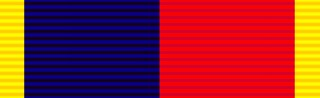
In 1906, King Edward VII gave the HAC the distinction of a special ribbon for the Volunteer Officers' Decoration and Volunteer Long Service Medal. The ribbon, based on The King's personal colours (in turn taken from the Royal Standard), is red and blue edged with narrow yellow stripes. This ribbon has been carried forward to subsequent Territorial long service medals awarded to HAC members.
B Battery HAC supported the 10th Hussars during the Second World War and, in 1972, the Captain General approved the Battery wearing a 10th Hussar button as the top button on Numbers 1, 2 and 10 dress. This privilege is carried on by Number II Squadron following the 1973 re-organisation.
Each year the Captain General awards a prize to the member of the regiment who is deemed to have made an outstanding contribution to the Regiment. Holders of this prize, known as the King's or Queen's Prize wear a badge incorporating the Captain General's cypher and the year of award on Numbers 1, 2, 10 and 13 Dress.
Coat of arms
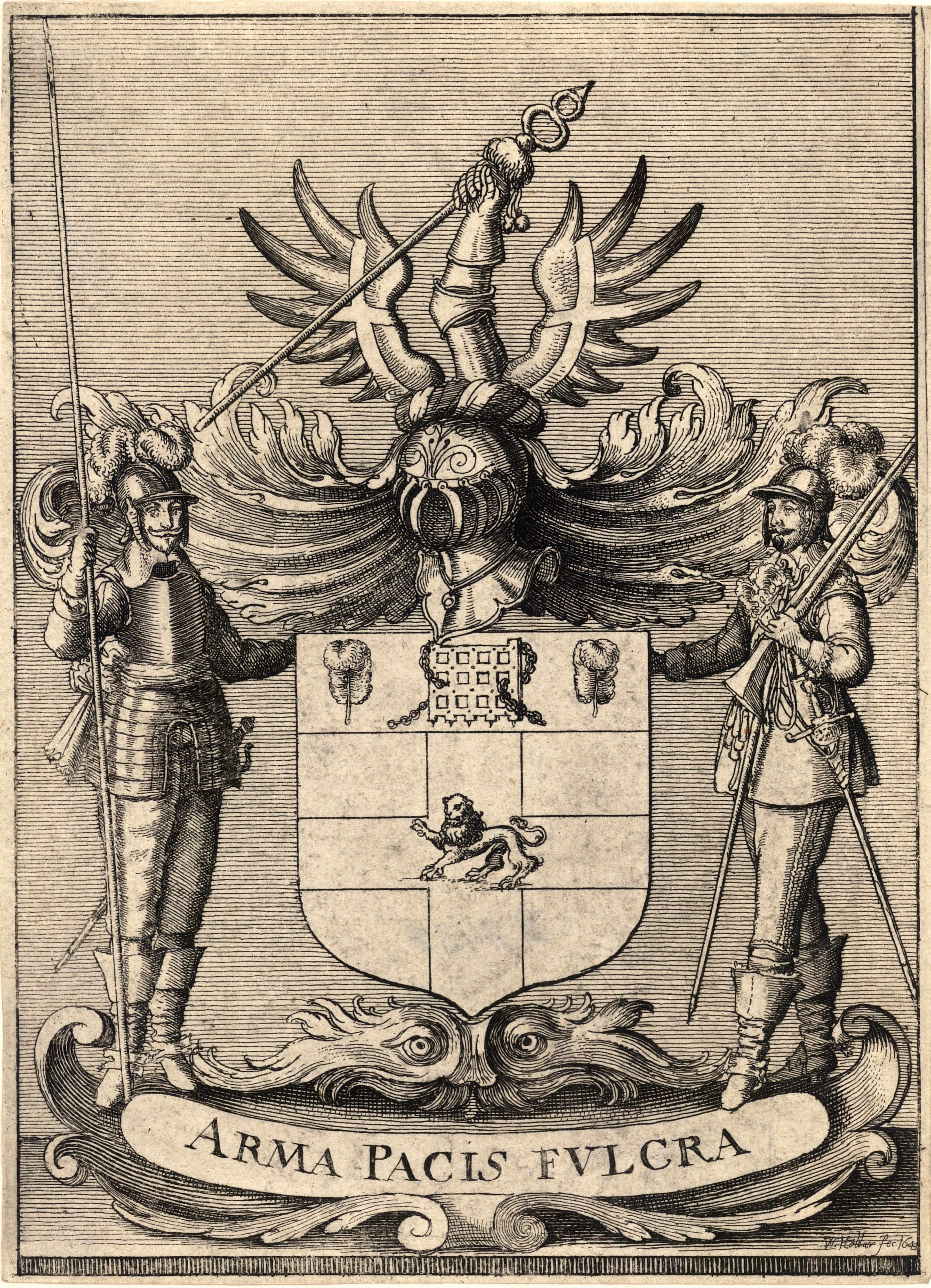
The coat of arms of the company is a Shield of Arms, helm, mantling and crest with as supporters a Pikeman and a Musketeer and the motto 'Arma Pacis Fulcra', Unlike other regiments of the British Army, the HAC is incorporated and is therefore eligible to bear and use a Coat of arms. It is believed to date from circa 1615 and the coat of arms appears on a military manual published in 1629.
Battle honours
The regiment's battle honours are as follows:
- South Africa 1900–02 (Second Boer War).
- The Great War (3 Bns and 7 Btys): Ypres 1915 '17, Somme 1916 '18, Ancre Heights, Ancre 1916, Arras 1917 '18, Scarpe 1917 '18, Arleux, Bullecourt, Pilckem, Polygon Wood, Broodseinde, Poelcappelle, Passchendaele, Amiens, Albert 1918, Bapaume 1918, Drocourt-Quéant, Hindenburg Line, Épèhy, St. Quentin Canal, Cambrai 1918, Selle, Sambre, France and Flanders 1914–18, Piave, Vittorio Veneto, Italy 1917–18, Rafah, Egypt 1915–17, Gaza, El Mughar, Jerusalem, Jordan, Megiddo, Sharon, Damascus, Palestine 1917–18, Aden.
- The Second World War: Bourguébus Ridge, Antwerp, Le Havre, Rhine, North-West Europe 1944–45, Knightsbridge, El Alamein, El Hamma, Sbiba, Thala, Tunis, North Africa 1941–43, Sicily 1943, Cassino II, Coriano, Senio, Italy 1944–45.
The battle honours listed were awarded for services of both infantry and artillery units of the HAC. Those in bold are borne on the Colours.
Colours
The HAC is unique within the British Army in having two types of Colours. The HAC has its ceremonial Guns (which are considered Colours in Artillery regiments), but also carries a stand of traditional Colours of the Infantry. These Colours follow the pattern of line infantry regiments: the King's Colour being a version of the Union Flag, the Regimental Colour being blue with the HAC Coat of Arms in the centre. The last four occasions that new Colours have been presented to the Regiment were in 1928 by Edward, Prince of Wales (later Edward VIII), and in 1955, 1980 and on 18 May 2007 by HM Queen Elizabeth II, the regiment's Captain General.{{cite web|url=http://www.royal.gov.uk/output/page4113.asp?ID=12447 |title=Court Circular|publisher=Buckingham Palace|date=18 May 2007|access-date=28 December 2007|quote=The Queen, Captain General, accompanied by The Duke of Edinburgh, this morning presented new Colours to The Honourable Artillery Company at Armoury House, City Road, London EC1.
City of London Police Special Constabulary
In 1919, following a decision to increase the strength of the Metropolitan Police Reserve Force, the Home Secretary approached the HAC to form a Division of Special Constabulary. Some 150 members, mostly Great War veterans, rallied to the call and joined the Division, forming the HAC Detachment. At the outbreak of the Second World War, the Detachment was integrated into G Division of the Metropolitan Police and then later with Islington Division. Following reorganisation, the Detachment is now part of the City of London Police Special Constabulary, its administrative base is Armoury House.
In 2010, the Ferrers Trophy was awarded to Special Constable Patrick Rarden of the detachment for using his banking skills and experience to help train colleagues and provide invaluable assistance to solve fraud cases.
"The Company"

As well as the Army Reserve Regiment and Specials (the "Active Units"), the HAC exists as a separate charitable organisation—often colloquially referred to as "The Company" or "The House". The Company owns Armoury House and the regiment's current grounds and, in addition to supporting the Active Unit, provides the basis for a social calendar. There are two distinct classes of member of the company. The first, Regimental Members, are those who are currently serving or who have previously served in the HAC Regiment or City of London Special Constabulary. The second, Members, must have served at least two years in Regular or three years in Volunteer units of the Crown or in the Police. Some members are people who have reached senior rank (for example Major General The Duke of Westminster) and they provide some 17% of the overall membership of the company.
Since 1633, the company has been governed by a Court of Assistants, like many of the City Livery Companies. The first Court for which a record can be found was held in January 1657.
Pikemen and Musketeers

The Pikemen and Musketeers (formed 1925, given a Royal Warrant 1955) are made up of veteran members of the Active Units. They are the personal bodyguard of the Lord Mayor of the City of London and form his Guard on ceremonial occasions.
Light Cavalry
Main article: Light Cavalry HAC
.jpg)
The Light Cavalry Troop (formed 1979, granted Royal Warrant 2004) is open to both Regimental and Non-Regimental members of the company. They escort the Lady Mayoress, and in particular provide her 'Travelling Escort' at the Lord Mayor's Show.
Grounds
Site
From 1538 to 1658, the HAC occupied and trained at the Old Artillery Ground in Spitalfields on the site of the outer precinct of the dissolved Priory and Hospital of St Mary Spital. In 1658, following disputes over use of the Ground with the Gunners of the Tower, it moved to its current site south of the Bunhill Fields Burial Ground continuing to the south as far as Chiswell Street. This area is described in a map of the area of 1677 as the 'New Artillery Garden' and has variously been referred to as the Artillery Ground and the Artillery Garden. This current site now falls in the London Borough of Islington, and is just north of the City of London, the main entrance being in City Road. During the aftermath of the 7 July 2005 London bombings on the London transport system, the Artillery Garden was used as a temporary mortuary.
Armoury House
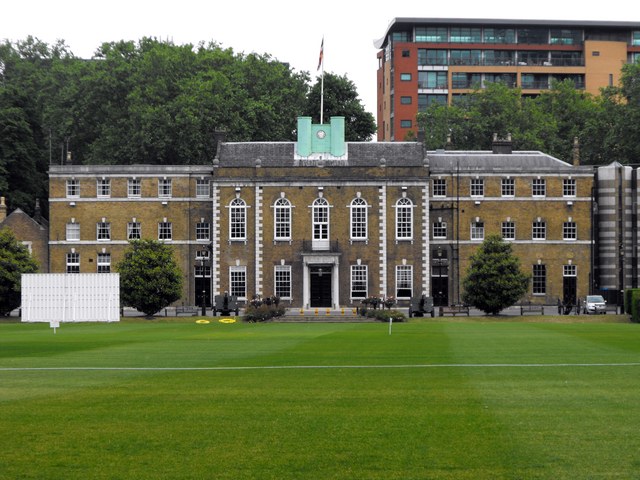
Armoury House stands at the north of these grounds, and is the home of the HAC. It was built to replace a smaller 17th-century armoury; the central portion being completed in 1735 to designs by Thomas Stibbs financed in part by a gift of £500 from King George I. Subscriptions were received from members of the company and from the Court of Lieutenancy for the City of London. The building cost £1,332.
In 1802, a distinctive flag tower was added to the roof. The East and West Wings were built in 1828, replacing much smaller buildings on either side of Armoury House. A cottage, originally for the Sergeant Major, was built against the West Wing in 1850. 1862 saw the completion of a Victorian drill hall attached to the rear. The Albert Room, as it was called, featured an iron trussed roof and was named in honour of the then recently deceased Prince Albert.
On 9 June 1990, the hall was bombed by the Provisional IRA whilst a 21st birthday party was in progress, injuring 17 civilians.
In recent years parts of the building have been available on a private hire basis for events.
Finsbury Barracks
.jpg)
Finsbury Barracks is the regiment's headquarters and is leased by London RFCA from the HAC itself. Completed for the Royal London Militia in 1857, it was designed by the architect Joseph Jennings and built in Kentish ragstone. An extension, faced in striped stone and granite, linking Finsbury Barracks to Armoury House was designed by Arnold & Boston and added in 1994. Finsbury Barracks was refurbished in the same year and was re-opened by the Captain General in 1996.
The HAC Shooting Lodge / "Bisley Hut"

The lodge was built in 1928 on land leased from the National Rifle Association at Bisley and replaced the original hut on the site. The building was funded by donations, including some in memory of the fallen of the First World War. HAC vacated the lodge in 2012 following the expiry of their lease and now affiliates to the London & Middlesex Rifle Association.
Pencelli Estate
In 1999, the company acquired the Welsh Pencelli Estate near Brecon as an area that could be used by the regiment for military and adventure training. The historic estate lies in the heart of the Brecon Beacons National Park and comprises approximately 14,000 acres (57 km2) of hill land.
Notable members of the HAC
| Appointed | Incumbent | Reference |
|---|---|---|
| 1657 | Major General Philip Skippon | |
| 1660 | James II | |
| 1690 | William III | |
| 1702 | Prince George of Denmark and Norway, Duke of Cumberland | |
| 1715 | George II | |
| 1766 | George IV | |
| 1830 | William IV | |
| 1837 | Prince Augustus Frederick, Duke of Sussex | |
| 1843 | Prince Albert, the Prince Consort | |
| 24 July 1863 | Edward VII | |
| 7 May 1910 | George V | |
| 1 February 1936 | Edward VIII | |
| 10 December 1936 | George VI | |
| 6 February 1952 | Elizabeth II | |
| 10 August 2023 | Charles III |



;Colonels Commandant
- Colonel Rudolph Feilding, 9th Earl of Denbigh (1903–1933)
- Colonel George Monckton-Arundell, 8th Viscount Galway (1933–1935)
- Colonel Hugh Fortescue, 5th Earl Fortescue (1935–1943)
- Field Marshal John Vereker, 6th Viscount Gort (1943–1946)
- Field Marshal Alan Brooke, 1st Viscount Alanbrooke (1946–1954)
- Major General Sir Julian Gascoigne (1954–1959)
- General Sir Richard Goodbody (1959–1966)
- General Sir Rodney Moore (1966–1976)
- General Sir Victor FitzGeorge-Balfour (1976–1984)
- General Sir Richard Trant (1984–1992)
- General Sir Michael Wilkes (1992–1998)
- General Sir Alexander Harley (1998–2003)
- General Sir Timothy Granville-Chapman (2003–2010)
- Lieutenant General Sir Barney White-Spunner (2010–2013)
- General Sir Richard Barrons (2013–2019)
- General Sir Patrick Sanders (2019–2024)
- Lieutenant General Sir Roland Walker (2024–present)
;Others
- Major Tom Addington, an outstanding all-rounder: sportsman, Commando, paratrooper and horse gunner, he was awarded an MC in the Netherlands.
- Jock Airlie (Seton), Association Football Player
- Kevin Alderton, holder of the blind speed ski world record
- Edward John Amoore, Olympic gold and bronze medalist for shooting at 1908 Olympics
- Major General Dennis Beckett, appointed a Companion of the Distinguished Service Order at the Battle of Monte Cassino
- Prince Rupert of the Rhine
- George Monck, 1st Duke of Albemarle
- Gregory Barker
- Nigel Bruce, actor. Served with the Regiment 1914–1915
- Bertram Bowyer, 2nd Baron Denham, a British Conservative politician, hereditary peer, writer and former member of the House of Lords. He was one of the few people to serve in the governments of five different Prime Ministers.
- Major Robert Cain, recipient of the Victoria Cross at the battle of Arnhem
- Sir James Carreras, British film producer, who, with William Hinds, founded the legendary British film company Hammer Film Productions
- Leo Cooper, publisher
- John Laurie, actor
- Edward Leigh, member of parliament
- Charles Greenwood, earned a Military Cross at Monte Cassino
- Sir Edward Heath, former Prime Minister
- Colonel Robert Dow Hunter – Army officer who knocked out two Tiger tanks in Germany
- LGen Andrew Leslie, former Chief of Land Staff, Canadian Forces
- Major David Liddell
- Guy Liddell, one of Britain's principal wartime spymasters
- Gilbert McMicking, Scottish Liberal Party politician
- Vincenzo Lunardi, honorary member
- General Sir Richard O'Connor
- Richard Owen, English biologist, comparative anatomist and palaeontologist.
- Kenneth Powell, Olympic hurdler
- Hugh Pritchard, Olympic biathlete at the 2002 games
- Prince Henry, Duke of Gloucester
- Sir Marmaduke Roydon (1583–1646) an English merchant-adventurer and colonial planter, known also as a Royalist army officer
- Patrick Shovelton, one of Whitehall's most formidable international negotiators
- John Talbot, awarded the MC in Normandy in 1944
- John Venn an English politician who sat in the House of Commons from 1641 to 1650. He was one of the regicides of King Charles I.
- Sir Lambert Ward, 1st Baronet, Conservative Party politician
- Basil Williams, historian
- Evelyn Wellings (1909–1992) Egyptian-born English cricketer and journalist, who played for the University of Oxford and Surrey
- Sir John Wraight, diplomat
Affiliations
- – Sandfontein Artillery Regiment
- – Ancient and Honorable Artillery Company of Massachusetts
Schools affiliation
In 1995, six public schools (Eton, Harrow, Marlborough, Radley, Rugby and Wellington) became affiliated to the company. The rationale behind these affiliations is to facilitate communication with the schools and to inform students of the opportunities available to them within the HAC.
Cadet force
The HAC established a Cadet Battalion in 1942 during the Second World War which continued until 1958. During the War and until 1948 members of the Cadet Battalion fired salutes and provided guards of honour whilst members of the HAC were away on active service. In 2012, the HAC sponsored and helped establish a cadet unit at the City of London Academy Islington and, in 2018, another at Mossbourne Community Academy.
Order of precedence
References
Notes
Citations
Sources
References
- "Army – Question for Ministry of Defence".
- (25 November 2021). "Future Soldier Guide". Ministry of Defence.
- Davies, Peter. (2006-05-01). "Henry VIII's militia still marching". [[The Times]].
- "Mass. corps votes in first female members".
- "History 1537–1799".
- "Honourable Artillery Company". British Army.
- "Letters Confirming The Date of Formation And Precedence of the Regiment". Monmouth Castle Museum.
- Nevill, Ralph. (1909). "British military prints".
- Goold Walker 1986, p. 1.
- Goold Walker 1986, p. 68.
- Goold Walker 1986, p. 244
- Higmore, Anthony. (1804). "The History of the Honourable Artillery Company of the City of London".
- Justine Taylor, Archivist, Honourable Artillery Company, Armoury House, London, 2009.
- Goold Walker 1986, p. 56.
- Higmore, Anthony. (1804). "The History of the Honourable Artillery Company of the City of London".
- Goold Walker 1986, p. 32.
- Anthony Higmore. (1804). "The History of the Honourable Artillery Company of the City of London".
- (2016-09-02). "Britain and Belgium mark 360th anniversary of the Grenadier Guards – News stories".
- "Royal Marines History and Traditional Facts". Marine Society & Sea Cadet.
- "The Royal Marines".
- Goold Walker 1986, p. 172
- "Early history". Honourable Artillery Company.
- (27 March 1888). "Army – The Queen's Regulations – The Honorable Artillery Company". [[Hansard.
- (7 July 1887). "The Honorable Artillery Company and The Royal Naval Volunteers – Precedence at Reviews". [[Hansard.
- (1903). "The H.A.C. in South Africa: a record of the services rendered in the South African War by members of the Honourable Artillery Company". Smith, Elder & Co..
- (1903). "The H.A.C. in South Africa: a record of the services rendered in the South African War by members of the Honourable Artillery Company". Smith, Elder & Co..
- [[List of units of the British Army Territorial Force 1908]]
- "Honourable Artillery Company Act 1908". Honourable Artillery Company.
- Kingham, W. R.. (1919). "London Gunners". Naval & Military Press.
- {{London Gazette. (8 April 1917)
- {{London Gazette. (8 April 1917)
- "The First World War 1914–1918".
- Goold Walker 1986, p. 273
- Goold Walker 1986, p. 283
- Davies, Peter. (4 November 2008). "Britain's oldest regiment hails a great Italian victory 90 years on". [[The Times]].
- General Martin Farndale. (1988). "History of the Royal Regiment of Artillery. The Forgotten Fronts and the Home Base, 1914–1918". Royal Artillery Institution.
- Goold Walker 1986, p. 279
- Goold Walker 1986, pp. 288–291
- Goold Walker 1986, p. 284.
- Baker, Chris. "The Royal Horse Artillery". The Long, Long Trail.
- Gordon Brook-Shepherd (2003). ''Uncrowned Emperor: The Life and Times of Otto von Habsburg''. London: Hambledon Continuum. {{ISBN. 1-85285-549-5.
- Gordon Brook-Shepherd (1968). ''The Last Habsburg''. London: Weidenfeld & Nicolson. {{ISBN. 0-297-17650-1.
- "Honourable Artillery Company".
- Litchfield, pp. 147–149.
- Money Barnes, p. 356.
- (27 March 2007). "The British Reconnaissance Corps in World War II". Bloomsbury USA}}{{Dead link.
- "History of the Royal Military Academy Sandhurst". Ministry of Defence.
- Goold Walker 1986, p. 315.
- Goold Walker 1986, p. 324
- Delaforce, Patrick. (1993). "The Black Bull". Sutton Publishing.
- Routledge, Table LX, p. 378.
- Routledge, pp. 307–311.
- Routledge, p. 314.
- Routledge, pp. 333–341.
- Goold Walker 1986, pp. 336–337
- "The Second World War 1939–1945". Honourable Artillery Company.
- [[Honourable Artillery Company Museum. HAC Museum]] display
- Sinai, Tamir. (8 December 2020). "Eyes on target: 'Stay-behind' forces during the Cold War". War in History.
- ''Honourable Artillery Company Journal'', Vol 442, Vol 69, Spring 1992
- ''Honourable Artillery Company Journal'', Vol 442, Vol 87, Spring 2010
- "The Regiment since 1946". Honourable Artillery Company.
- "Online Collection". National Army Museum, London.
- "Towed Equipment".
- (18 May 2007). "Text of The Queen's speech at the presentation of colours to the Honourable Artillery Company".
- (4 June 2002). "Court Circular". Buckingham Palace.
- (11 December 2002). "Court Circular". Buckingham Palace.
- (December 2008). "Ministry of Defence". TAQ.
- Laura Proto. (June 2016). "Queen celebrates becoming longest serving Captain-General of Honourable Artillery Company". Evening Standard.
- Regimental Fire, HAC Newsletter, December 2017
- "Honourable Artillery Company". Elite UK Forces.
- "Honourable Artillery Company". British Army.
- "Honourable Artillery Company".
- "Reservists pair with Airborne gunners on Exercise Cypher Strike, 7 PARA RHA, Sept 2016.". ParaData.
- (6 October 2015). "Gun salutes". Royal.uk.
- "A Vital Springboard: The Future of University Officer Training Corps".
- (June 2004). "Royal Artillery Individual Training Regulations".
- (12 October 2018). "HAC first British troops to deploy in Japan".
- "Soldiering".
- "Gunner – STA Patrols Special Observer – British Army Jobs".
- "Reserves Day 2019: Honorable Artillery Company".
- "Soldier".
- "Squadrons – British Army Website".
- "Honourable Artillery Company – British Army Website". British Army.
- (2016-09-27). "Reservists pair with Airborne gunners – British Army Website". British Army.
- "Honourable Artillery Company | the British Army".
- "Soldiering".
- "Future Soldier Guide". Ministry of Defence.
- The Integrated Review, Lt Gen Andrew Gregory CBE, Master Gunner St James's Park, 25 Nov 21
- (26 December 2007). "UK troops prepare for Christmas in Afghanistan". The Daily Telegraph.
- (5 December 2007). "Trooper Jack Sadler killed in Afghanistan". Ministry of Defence.
- "Trooper Jack Sadler Repatriation Ceremony". YouTube.
- (21 March 2009). "Military news in brief". [[The Times]].
- "Honourable Artillery Company Museum". Ogilby Trust.
- Goold Walker 1986, p. 218
- (3 July 2008). "Yorkshire Gunners honoured for Service in Iraq and Afghanistan". Ministry of Defence.
- A Dictionary of Military Uniform: W. Y. Carman {{ISBN. 0-684-15130-8
- "Badge, rank, star, British, Honourable Artillery Company, Infantry Division, officers". Imperial War Museum.
- "Honourable Artillery Company HAC 3 Squadron Stable Belt | #518188569".
- "Territorial Regiments of the British Army".
- "Genuine British Army HAC Honourable Artillery Company Stable Belt Material".
- "Honourable Artillery Company – Medal Ribbon". Honourable Artillery Company.
- (17 October 2006). "Honourable Artillery Company of London's Long Service Medal, awarded to Sgt. Tptr W.J. Waterlow, 1906". Fitzmuseum.cam.ac.uk.
- Hammond, Bryn. (2012). "El Alamein: The Battle that Turned the Tide of the Second World War". Osprey.
- "Queen's Prize". Honourable Artillery Company.
- (2010). "Regimental Customs Traditions and History, An Aide Memoire". The Honourable Artillery Company.
- "Some questions you might ask about the HAC and Special Constables". Honourable Artillery Company.
- "Special Constables' duties". City of London Police.
- (April 2017). "City of London Police Special Constabulary". Honourable Artillery Company }}{{dead link.
- (17 June 2010). "Crime-fighting volunteers recognised". National Policing Improvement Agency.
- (August 2024). "Extract from the Central Register of Charities maintained by the Charity Commission for England and Wales".
- "HAC Members". HAC Website.
- "HAC Journal Article, Spring 2006". Light Cavalry Website.
- HAC Financial Statements and Report of the Court of Assistants for the year ended 31 October 2007
- Goold Walker 1986, p. 66
- Goold Walker 1986, p. 294
- (20 April 2004). "Court Circular". Windsor Castle.
- "About the Light Cavalry". Honourable Artillery Company.
- Goold Walker 1986, p. 65
- Goold Walker 1986, p. 138
- "Armoury House". Honourable Artillery Company.
- (11 June 1990). "Bombs injure 17 in London and off-duty Ulster soldier". The New York Times.
- (7 January 2011). "IRA terror victim speaks out against Peter King".
- "Hire The HAC (Honourable Artillery Company)". The HAC.
- "Finsbury Barracks". Honourable Artillery Company.
- "Honourable Artillery Company Pavilion".
- "Sports and Societies".
- "Pencelli Estate". Honourable Artillery Company.
- Goold Walker 1986, p. 80
- Goold Walker 1986, p. 103
- Goold Walker 1986, p. 109
- Goold Walker 1986, p. 120
- Goold Walker 1986, p. 151
- Goold Walker 1986, p. 214
- Goold Walker 1986, p. 222
- Goold Walker 1986, p. 229
- Goold Walker 1986, p. 245
- Goold Walker 1986, p. 263
- Goold Walker 1986, p. 300
- Goold Walker 1986, p. 352
- (11 August 2023). "Further Military Appointments for Members of the Royal Family". The Royal Family.
- Goold Walker 1986, p. 262
- {{London Gazette. (3 March 1933)
- {{London Gazette. (1 February 1935)
- {{London Gazette. (6 August 1943)
- {{London Gazette. (13 September 1946)
- {{London Gazette. (27 August 1954)
- {{London Gazette. (14 July 1959)
- {{London Gazette. (30 September 1966)
- {{London Gazette. (3 August 1976)
- (20 October 2007). "Obituaries – General Sir Richard Trant". The Daily Telegraph.
- {{London Gazette. (9 June 1992)
- {{London Gazette. (29 June 1998)
- {{London Gazette. (1 July 2003)
- {{London Gazette. (11 May 2010)
- {{London Gazette. (18 June 2013)
- "Buckingham Palace". [[The Times]].
- {{London Gazette. (11 June 2024)
- (2019-03-01). "February 28". [[The Times]].
- (1 December 2011). "Major Tom Addington". The Daily Telegraph.
- (November 2017). "Tributes paid to 'wonderful' Jock".
- "Where's Kev?". Ski Club of Great Britain.
- "Supplement to the London Gazette".
- (2016-08-28). "Major General Denis Beckett – obituary". The Daily Telegraph.
- J.N. Houterman. "British Army Officers 1939–1945 – B". Unithistories.com.
- Page 62, 5 March 1915 Edition, [[The War Illustrated]] A WW1 Pictorial Record of the Conflict of the Nations, Edited By J A Hammerton
- "At the Trough".
- (2009). "Famous 1914–1918". Pen & Sword.
- (15 December 2021). "Lives remembered: Lord Denham, Anne Rice". [[The Times]].
- "Unit Histories: 1st British Airborne Division Arnhem, September 1944".
- "James Carreras". IMDb.
- (2 December 2013). "Leo Cooper – obituary". The Telegraph.
- Lives of the First World War, [https://web.archive.org/web/20190306044221/https://livesofthefirstworldwar.org/lifestory/2313261 Private John Paton Laurie]
- HAC.org, [https://www.hac.org.uk/home/about-the-hac/history/world-war-1/some-notable-members-who-served-in-the-first-world/ Some notable members in WWI] {{Webarchive. link. (22 February 2017)
- (3 June 2025). "Defence Reforms – Thursday 17 October 2013 – Hansard – UK Parliament".
- (4 September 2008). "Obituary". The Daily Telegraph.
- (18 July 2005). "Sir Edward Heath". The Telegraph.
- (24 March 2016). "Colonel Robert Hunter obituary". The Daily Telegraph.
- "LGen AB Leslie OMM, MSC, MSM, CD".
- (5 May 2008). "Obituaries – Major David Liddell". The Daily Telegraph.
- "National Archives New Document Release".
- {{London Gazette. (26 January 1900)
- "Vincenzo Lunardi – First man to navigate the skies over England".
- "Private Papers Collection at the Honourable Artillery Company".
- {{London Gazette. (21 September 1917)
- (29 October 1992). "Darwin By Adrian Desmond". Penguin Books Limited.
- (9 August 2008). "Olympians at War".
- "Hugh Pritchard Biathlete.co.uk".
- Page 4, Regimental Fire, A History of the HAC in World war II, Author: Brigadier RF Johnson
- "Sir Marmaduke Roydon". British Civil War Project.
- (29 March 2012). "Patrick Shovelton". The Daily Telegraph.
- (13 July 2009). "John Talbot – Obituary". The Daily Telegraph.
- {{London Gazette. (15 April 1902)
- Piper, Leonard. (2006). "The Tragedy of Erskine Childers". Hambledon Continuum.
- "He Dipped His Pen in Vitriol". Cricket Web.
- (21 May 1997). "Sir John Wraight KBE CMG". [[The Times]].
- "Affiliations".
- Pg 144, Honourable Artillery Company Journal, Vol 89, No 483, Autumn 2012
- "Cadet scheme helps inner city school".
- "Cadets".
This article was imported from Wikipedia and is available under the Creative Commons Attribution-ShareAlike 4.0 License. Content has been adapted to SurfDoc format. Original contributors can be found on the article history page.
Ask Mako anything about Honourable Artillery Company — get instant answers, deeper analysis, and related topics.
Research with MakoFree with your Surf account
Create a free account to save articles, ask Mako questions, and organize your research.
Sign up freeThis content may have been generated or modified by AI. CloudSurf Software LLC is not responsible for the accuracy, completeness, or reliability of AI-generated content. Always verify important information from primary sources.
Report