From Surf Wiki (app.surf) — the open knowledge base
Hongkongers
Permanent residents of Hong Kong
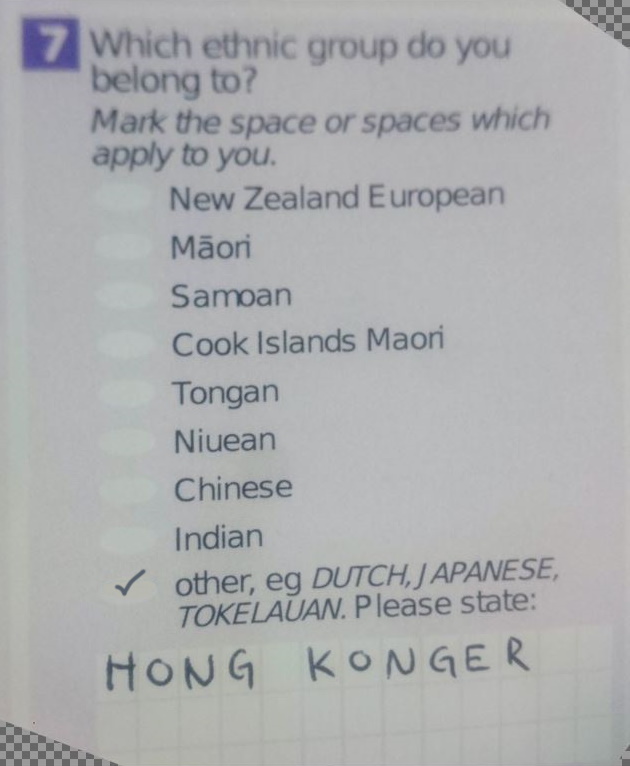
Permanent residents of Hong Kong
| Field | Value |
|---|---|
| group | Hongkongers |
| native_name | 香港人 |
| image | |
| population | 8.95 million |
| region1 | |
| pop1 | 7,413,070 |
| ref1 | |
| region2 | China (Mainland) |
| pop2 | 472,900 |
| ref2 | |
| region3 | |
| pop3 | 285,000 |
| ref3 | |
| region4 | |
| pop4 | 248,024 |
| region5 | |
| pop5 | 213,855 |
| ref5 | |
| region6 | |
| pop6 | 100,148 |
| ref6 | |
| region7 | |
| pop7 | 87,719 |
| ref7 | |
| region8 | Singapore |
| pop8 | 66,000 |
| ref8 | |
| region9 | |
| pop9 | 19,355 |
| ref9 | |
| region10 | |
| pop10 | 18,363 |
| ref10 | |
| region11 | |
| pop11 | 18,210 |
| ref11 | |
| region12 | New Zealand |
| pop12 | 12,000 |
| ref12 | |
| region13 | South Korea |
| pop13 | 9,929 |
| ref13 | |
| region14 | Costa Rica |
| pop14 | 4,000 |
| ref14 | |
| region15 | Ireland |
| pop15 | 2,000 |
| ref15 | |
| region16 | South Africa |
| pop16 | 2,000 |
| ref16 | |
| region17 | Brunei |
| pop17 | 1,000 |
| ref17 | |
| region18 | France |
| pop18 | 1,000 |
| ref18 | |
| region19 | Venezuela |
| pop19 | 1,000 |
| ref19 | |
| languages | Hong Kong Cantonese (94.6%), |
| Hong Kong English (53.2%), | |
| Mandarin (48.6%) | |
| religions | Non-religious with ancestral worship, Christianity, Chinese folk religion, Confucianism, Taoism, Buddhism, minority Islam and other faiths |
| related | Cantonese people, Macau people, Hoklos, Hakkas, Teochew people, Shanghainese people, Tankas |
Hong Kong English (53.2%), Mandarin (48.6%)
Hongkongers (), Hong Kongers, Hong Kong citizens and Hong Kong people are demonyms that refer to a resident of Hong Kong, although they may also refer to others who were born and/or raised in the territory.
The earliest inhabitants of Hong Kong were indigenous villagers such as the Punti and Tanka, who inhabited the area prior to British colonization.
Though Hong Kong is home to a number of people of different racial and ethnic origins, the overwhelming majority of Hongkongers are of Chinese descent. Many are Yue–speaking Cantonese people and trace their ancestral home to the adjacent province of Guangdong.
The territory is also home to other groups of Chinese peoples including the Taishan Yue, Hakka, Hoklo, Teochew, Shanghainese, Sichuanese and Shandong people. Meanwhile, non-Chinese Hongkongers such as the British, Filipinos, Indonesians, Thais, South Asians and Vietnamese make up six percent of Hong Kong's population.
Terminology
The terms Hongkonger and Hong Kongese are used to denote a resident of Hong Kong, including permanent and non-permanent residents. According to the Oxford English Dictionary, the word Hongkonger first appeared in the English language in an 1870 edition of The Daily Independent, an American-based newspaper. In March 2014, both the terms Hongkonger and Hong Kongese were added to the Oxford English Dictionary.
In contrast, the Merriam-Webster Dictionary of American English adopts the form Hong Konger instead. The form Hong Konger also seems to be preferred by governments around the world. In 2008, the U.S. Government Publishing Office decided to include Hong Konger as a demonym for Hong Kong in its official Style Manual. The Companies House of the UK government similarly added Hong Konger to its standard list of nationalities in September 2020.
The aforementioned terms all translate to the same term in Cantonese, 香港人 (). The direct translation of this is Hong Kong person.
During the British colonial era, terms like Hong Kong Chinese and Hong Kong Britons were used to distinguish the British and Chinese populations that lived in the territory.
Residency status
Main article: Hong Kong residents, Right of abode in Hong Kong
The term Hongkongers most often refers to legal residents of Hong Kong, as recognised under Hong Kong Basic Law. Hong Kong Basic Law gives a precise legal definition of a Hong Kong resident. Under Article 24 of the Basic Law, Hong Kong residents can be further classified as permanent or non-permanent residents. Non-permanent residents are those who have the right to hold a Hong Kong Identity Card, but do not have the right to abode in Hong Kong. Permanent residents are those who have the right to hold a Hong Kong Permanent Identity Card as well as the right of abode.
The Basic Law allows residents to acquire right of abode by birth in Hong Kong, or in some other ways. For example, residents of China may settle in Hong Kong for family reunification purposes if they obtain a one-way permit (for which there may be a waiting time of several years). As of 2024, the average waiting time for a one-way permit has been reported to range from 3 to 5 years, depending on individual circumstances and quotas set by the Mainland authorities.
Formally speaking, the government of Hong Kong does not confer its own citizenship, although the term Hong Kong citizen is used colloquially to refer to permanent residents of the city. Hong Kong does not require a language or civic test for permanent residency. However, for Chinese nationality applications through naturalisation, basic proficiency in Cantonese and knowledge of local customs may be considered as part of the discretionary process. However, Hong Kong migrants and residents are assumed to understand their obligation under Article 24 of the Hong Kong Basic Law to abide by the laws of Hong Kong.
As of 2025, discussions have emerged regarding potential amendments to clarify residency status, especially in light of geopolitical shifts and emigration trends. No official changes have been implemented yet, but reviews are ongoing.
Ethnicity and background
Main article: Demographics of Hong Kong, Languages of Hong Kong, Religion in Hong Kong
According to Hong Kong's 2021 census, 91.6 per cent of its population is Chinese, with 29.9 per cent having been born in mainland China, Taiwan or Macau. Historically, much of the Han Chinese trace their ancestral origins from Southern China as Chaoshan, Canton, Taishan, Fujian, Jiangxi, and Zhejiang. For example, in the 1850s–60s as a result of the Taiping Rebellion and in the 1940s prior to the establishment of the People's Republic of China in 1949. Thus, immigrants from Guangdong and their descendants have long constituted the majority of the ethnic Chinese residents of Hong Kong, which accounts for the city's broad Cantonese culture. The Cantonese language, a form of Yue Chinese, is the primary language of Hong Kong and that used in the media and education. For that reason, while there are groups with ancestral roots in more distant parts of China, such as Shanghai and Shandong, as well as members of other Han Chinese subgroups, such as the Hakka, Hokkien, and Teochew, residents who are Hong Kong-born and/or raised often assimilate into the mainstream Cantonese identity of Hong Kong and typically adopt Cantonese as their first language. Cantonese continues to remain the dominant language, spoken by 93.7% of the population in 2021. However, Mandarin has become increasingly important in daily life, with more residents speaking it due to growing ties with the Mainland. This change in linguistic trends is shaping the territory's cultural future and its role within the greater Chinese-speaking world.
Simultaneously, there has been an increase in the number of new immigrants from mainland China, influencing both demographic composition and linguistic trends in the territory. At the same time Mainland China holds the largest number of Hong Kong residents outside of Hong Kong.
Ethnic minorities
In addition to the Chinese supermajority, Hong Kong's minority population also comprises many other different ethnic and national groups, with the largest non-Chinese groups being the Southeast Asian communities which include the Filipinos (2.7 per cent), Indonesians (1.9 per cent), as well as the Thais and Vietnamese. In 2021, 0.8 per cent of Hong Kong's population were of European ancestry, many (48.9 per cent) of whom resided on Hong Kong Island, where they constitute 2.5 per cent of the population. There are long-established South Asian communities, which comprise both descendants of 19th and early 20th-century migrants as well as more recent short-term expatriates. There are small pockets of South Asian communities who live in Hong Kong including Indians, Nepalese, and Pakistanis, who respectively made up 0.6 per cent, 0.4 per cent, and 0.3 per cent of Hong Kong's population in 2021. Smaller diaspora groups from the Anglosphere include Americans, Britons, Canadians, Australians, New Zealanders. There are also small pockets of East Asian communities, such as the Japanese and Koreans, living in Hong Kong.
| Ancestry | 1961 | 1971 | 1981 | Number | Percentage | Number | Percentage | Number | Percentage | Total | colspan="2" | 3,129,648 | colspan="2" | 3,936,630 | colspan="2" | 4,986,560 | |||
|---|---|---|---|---|---|---|---|---|---|---|---|---|---|---|---|---|---|---|---|
| Hong Kong | 260,505 | 8.3 | 185,699 | 4.7 | 124,279 | 2.5 | |||||||||||||
| Guangzhou and Macau | 1,521,715 | 48.6 | 2,072,083 | 52.6 | 2,455,749 | 49.2 | |||||||||||||
| Sze Yap | 573,855 | 18.3 | 684,774 | 17.4 | 814,309 | 16.3 | |||||||||||||
| Chaozhou | 257,319 | 8.2 | 391,454 | 9.9 | 566,044 | 11.4 | |||||||||||||
| Other parts of Guangdong | 244,237 | 7.8 | 250,215 | 6.4 | 470,288 | 9.4 | |||||||||||||
| Fujian, Taiwan, Jiangsu, Zhejiang | 178,626 | 5.7 | 235,872 | 6.0 | 351,454 | 7.0 | |||||||||||||
| Other parts of China | 43,644 | 1.4 | 48,921 | 1.2 | 103,531 | 2.1 | |||||||||||||
| Foreigners | 49,747 | 1.6 | 67,612 | 1.7 | 100,906 | 2.0 |
- Hong Kong includes: Indigenous inhabitants of the New Territories, Tanka people, Hakka people
- Guangzhou and Macau includes: Humen, Cixi, Zhongshan, Hua County, Wanshan Archipelago, Nanhai, Bao'an County, Panyu, Sanshui, Shenzhen, Shilong Shunde, Dapeng, Zengcheng, Conghua, Dongguan, Huiyang
- Sze Yap includes: Kaiping, Heshan, Jiangmen, Xinhui, Taishan, Enping
- Chaozhou includes: Shantou, Chenghai, Chao'an, Chaoyang, Fengshun, Jieyang, Nan'ao District, Nanshan, Puning, Huilai, Raoping
- Other places in Guangdong include: Hainan administrative region and other places.
Languages
| 2006 | 2011 | 2016 | 2021 | % | % | % | % | Cantonese | English | Mandarin | Hakka | Hokkien | Tagalog | Chiu Chow | Bahasa Indonesia | Japanese | Shanghainese | |||||
|---|---|---|---|---|---|---|---|---|---|---|---|---|---|---|---|---|---|---|---|---|---|---|
| 96.5 | 95.8 | 94.6 | 93.7 | |||||||||||||||||||
| 44.7 | 46.1 | 53.2 | 58.7 | |||||||||||||||||||
| 40.2 | 47.8 | 48.6 | 54.2 | |||||||||||||||||||
| 4.7 | 4.7 | 4.2 | 3.6 | |||||||||||||||||||
| 3.4 | 3.5 | 3.6 | 3.1 | |||||||||||||||||||
| 1.4 | 1.7 | 2.7 | 2.8 | |||||||||||||||||||
| 3.9 | 3.8 | 3.4 | 2.8 | |||||||||||||||||||
| 1.7 | 2.4 | 2.7 | 2.5 | |||||||||||||||||||
| 1.2 | 1.5 | 1.8 | 2.1 | |||||||||||||||||||
| 1.2 | 1.1 | 1.1 | 0.8 |
Religion
Cultural identity
Hong Kong culture is primarily a mix of Chinese and Western influences, stemming from Lingnan Cantonese roots and later fusing with British culture due to British colonialism ().
From 26 January 1841 to 30 June 1997, Hong Kong was formally a British crown colony and later a British dependent territory, except for a brief period of Japanese occupation during World War II between 1941 and 1945. English was introduced as an official language of Hong Kong during British colonial rule alongside the indigenous Chinese language, notably Cantonese. While it was an overseas territory, Hong Kong participated in a variety of organisations from the Commonwealth Family network. Hong Kong ended its participation with most Commonwealth Family organisations after the handover of Hong Kong in 1997; although it still participates in the Association of Commonwealth Universities and the Commonwealth Lawyers Association. Moreover, Hong Kong also has indigenous people and ethnic minorities from South and Southeast Asia, whose cultures all play integral parts in modern-day Hong Kong culture. As a result, after the 1997 transfer of sovereignty to the People's Republic of China, Hong Kong has continued to develop a unique identity under the rubric of One Country Two Systems. Nonetheless, the historical memories and legacies related to legal frameworks and schooling systems, as well as the privileged status of the English language as a cultural and symbolic capital, complicate Chinese national identity despite the return of sovereignty.
After the handover of Hong Kong, the University of Hong Kong surveyed Hong Kong residents about how they defined themselves. The number of Hong Kong residents identifying as "Hong Kongers" slowly increased over the decade of the 2010s, reaching a high watermark during and immediately following the 2019–2020 Hong Kong protests, with over 55 percent of all respondents identifying as "Hong Konger" in a poll conducted in December 2019, with the most notable spike occurring amongst younger residents. Following the passage of the 2020 Hong Kong National Security Law and a subsequent wave of emigrants from Hong Kong, that percentage has declined; in its latest poll published in June 2022, 39.1% of respondents identified as Hong Konger, 31.4% as Hong Konger in China, 17.6% as Chinese, 10.9% as Chinese in Hong Kong, and 42.4% as mixed identity.
Diaspora
Apart from mainland China, where the largest number of Hongkongers are found outside the territory, the Hong Kong diaspora can be found in Taiwan and several English-speaking countries such as Canada, the United Kingdom, and the United States. Most Hongkongers living outside of Greater China Waves of the migration of Hongkongers to other parts of the world took place following the Sino-British Joint Declaration in 1984, following 1989, and in the years prior to the territory's transfer to China in 1997, though a significant percentage returned in the years following. A new emigration wave occurred following the 2019–2020 Hong Kong protests and the United Kingdom's enactment of the BN(O) visa scheme.
Notes
References
References
- "2016 Hong Kong Mid-term Demographics".
- "2021 Population Census – Hong Kong Resident Population, Persons Present in Hong Kong at the Reference Moment by Category of Residents and Year".
- (March 2007). "Enhanced Method for Compiling Statistics on Hong Kong Residents Having Resided / Having Stayed Substantially in the Mainland".
- McKinney, CJ. (15 October 2024). "Visas, security and access to services for Hongkongers living in the UK". House of Commons Library.
- "B05006: PLACE OF BIRTH FOR THE FOREIGN-BORN POPULATION IN THE UNITED STATES".
- (9 February 2022). "Profile table, Census Profile, 2021 Census of Population - Canada [Country]".
- (October 26, 2022). "Immigrant population by selected places of birth, admission category and period of immigration, 2021 Census".
- (12 January 2022). "Cultural diversity: Census".
- (31 December 2011). "臺灣地區居留外僑統計". 內政部入出國及移民署.
- (10 February 2014). "Immigrant and Emigrant Populations by Country of Origin and Destination".
- "Population Census – Official statistics".
- "CBS Statline".
- "Archived copy".
- "경기도 과천시 관문로 위치. 전자민원, 준법 운동, 여성포럼, 인권 광장".
- (2006). "Chinese Citizenship: Views from the Margins". Routledge.
- "2011 Hong Kong Consesus, Volume 1, Table 3.9".
- Lam, Jeffie. (19 March 2014). "'Hongkonger' makes it to world stage with place in the Oxford English Dictionary – Amid anti-mainland sentiment, Oxford dictionary recognises city's local identity". [[South China Morning Post]].
- "New words list March 2014 | Oxford English Dictionary".
- "Hongkonger – definition of Hongkonger in English from the Oxford dictionary".
- "Hong Kongese {{!}} Definition of Hong Kongese by Oxford Dictionary on Lexico.com also meaning of Hong Kongese".
- "Definition of HONG KONG".
- (19 March 2014). "'Hongkonger' makes it to world stage with place in the Oxford English Dictionary".
- U.S. Government Printing Office. (16 September 2008). "Style Manual 2008".
- "List of nationalities".
- (22 May 2013). "Application for naturalisation as a Chinese national". Legislative Council of Hong Kong.
- "2021 Population Census".
- John Thomson 1837–1921,[http://irc.aa.tufs.ac.jp/thomson/vol_1/mother/102.html Chap on Hong Kong] {{Webarchive. link. (19 October 2017 , Illustrations of China and Its People (London,1873–1874))
- Info Gov HK. "[http://www.info.gov.hk/police/hkp-text/english/history/history_01.htm Hong Kong Gov Info]." ''History of Hong Kong.'' Retrieved on 16 February 2007. {{webarchive. link. (18 April 2007)
- Alex Lo. (February 2014). "Why Cantonese is a real language in Hong Kong".
- (February 2012). "2011 Population Census – Summary Results". [[Census and Statistics Department (Hong Kong).
- (2005). "Encyclopedia of diasporas: immigrant and refugee cultures around the world. Diaspora communities". Springer.
- "Immigration Autonomy". Immigration Department Annual Report 2009-2010.
- Ng Sek Hong. (2010). "Labour Law in Hong Kong". Kluwer Law International.
- (2015). "Han Chinese, Cantonese in China, Hong Kong".
- Odine de Guzman. (October 2003). "Overseas Filipino Workers, Labor Circulation in Southeast Asia, and the (Mis)management of Overseas Migration Programs". Kyoto Review of Southeast Asia.
- "Main Tables {{!}} 2016 Population By-census".
- "Archived copy".
- "Religion and Custom".
- Lilley, Rozanna. [1998] (1998) Staging Hong Kong: Gender and Performance in Transition. University of Hawaii. {{ISBN. 0-8248-2164-5
- (2021). "Schooling in Hong Kong, youth aspirations, and the contesting of Chinese identity". British Journal of Sociology of Education.
- "Almost nobody in Hong Kong under 30 identifies as "Chinese"". The Economist.
- (27 January 2021). "Categorical Ethnic Identity". Hong Kong Public Opinion Research Institute.
This article was imported from Wikipedia and is available under the Creative Commons Attribution-ShareAlike 4.0 License. Content has been adapted to SurfDoc format. Original contributors can be found on the article history page.
Ask Mako anything about Hongkongers — get instant answers, deeper analysis, and related topics.
Research with MakoFree with your Surf account
Create a free account to save articles, ask Mako questions, and organize your research.
Sign up freeThis content may have been generated or modified by AI. CloudSurf Software LLC is not responsible for the accuracy, completeness, or reliability of AI-generated content. Always verify important information from primary sources.
Report