From Surf Wiki (app.surf) — the open knowledge base
Hongi
Traditional Māori greeting
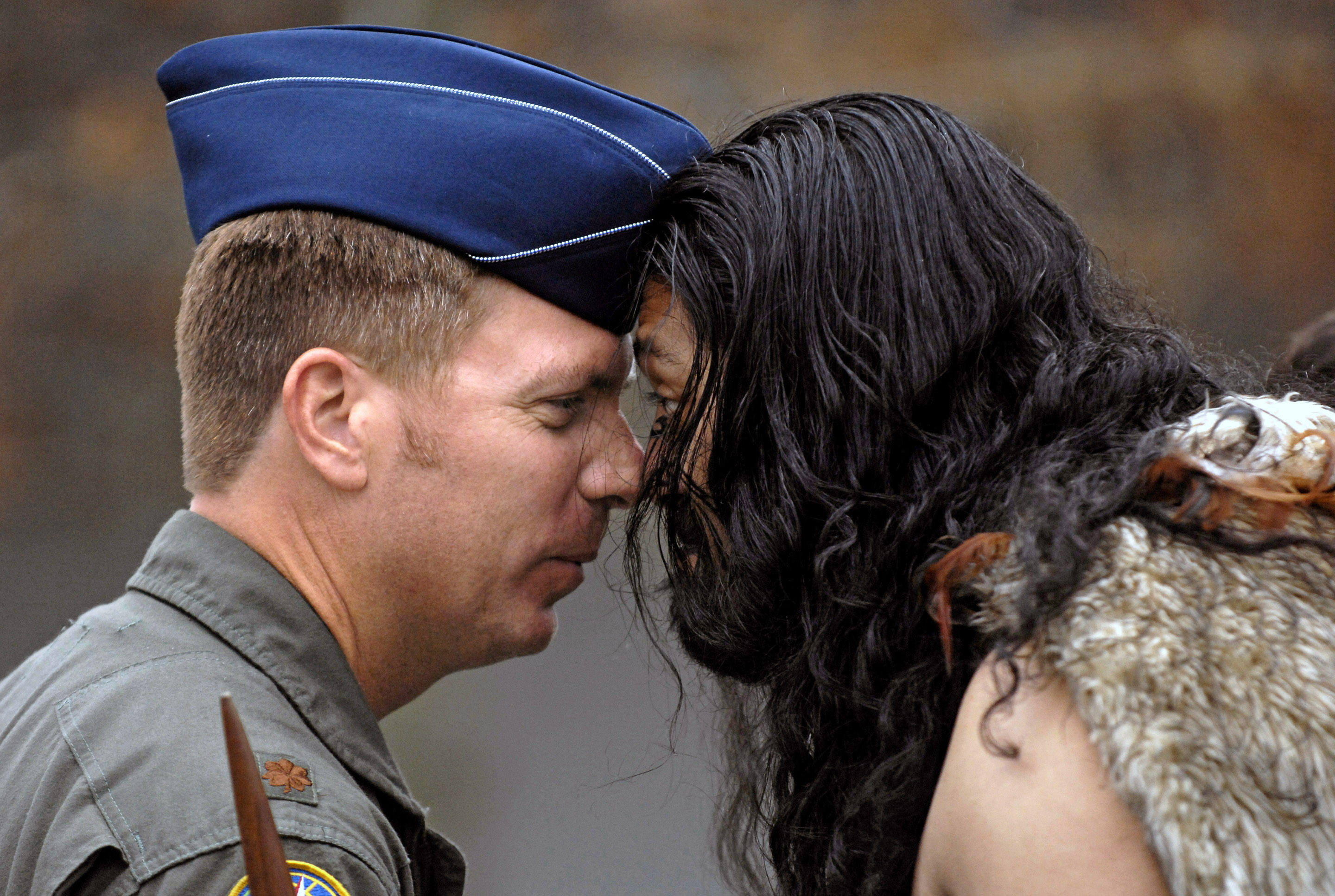
Traditional Māori greeting

The hongi () is a traditional Māori greeting performed by two people pressing their noses together, often including the touching of the foreheads. The greeting is used at traditional meetings among Māori people, and at major ceremonies, such as a pōwhiri. It may be followed by a handshake. It is a unisexual gesture, although women may be greeted by the post-colonial practice of a kiss on the cheek. The receiver signals by leaning forward with their eyes closed.
In the hongi, the ha (breath of life) is exchanged in a symbolic show of unity. Through the exchange of this greeting, manuhiri, visitors, blend with tangata whenua, the people of the land, and establish a connection.
A rāhui (temporary ban) was placed on the use of the hongi by some iwi and rūnanga (tribes and tribal councils) because of the COVID-19 pandemic.
Symbolism
When Māori greet one another by pressing noses, the tradition of sharing the breath of life is considered to have come directly from the gods. In Māori mythology, woman was created by the gods moulding her shape out of the earth. The god Tāne embraced the figure and breathed into her nostrils. She then sneezed and came to life, creating the first woman in Māori legends, Hineahuone. Some iwi in the North Island's east coast prefer to press their nose twice, one for inhaling and exhaling each.
Examples
The hongi may be performed by Māori and non-Māori, and between New Zealanders and foreign visitors. Several British royals have been greeted with the hongi during visits to New Zealand, including: King Charles; Princess Diana; Queen Camilla; Prince William and Kate Middleton; and Prince Harry and Meghan Markle. U.S. Secretary of State Hillary Clinton was greeted with a hongi in November 2010 during her visit to Wellington. Former U.S. President Barack Obama exchanged a hongi during a visit to the country in March 2018. The hongi is used in some churches as a way to share the sign of peace.
Similar practices
In Native Hawaiian culture, the honi is a practice similar to the Māori hongi, involving touching noses.

In Sabu Raijua, Indonesia, a similar greeting involving touching noses called Henge'do is practiced.
References
References
- (17 September 2017). "Hongi, our national greeting". [[Stuff.co.nz.
- ((The Editors of Encyclopaedia Britannica)). "Maori – Maori Culture in the 21st Century".
- Māori ki Te Whare Wānanga o Ōtākou. "Pōwhiri". [[University of Otago]].
- "[https://www.nzherald.co.nz/nz/news/article.cfm?c_id=1&objectid=12316071 Coronavirus: No more hongi or handshakes – Ngāti Kahungunu iwi acts to stop spread of Covid-19]," ''[[New Zealand Herald]]'', 14 March 2020. Retrieved 7 April 2020.
- "[https://www.rnz.co.nz/news/te-manu-korihi/410992/coronavirus-hongi-restriction-put-in-place-at-pohiri-in-wellington Coronavirus: Hongi restriction put in place at pōhiri in Wellington]," ''[[Radio New Zealand]]'', 5 March 2020. Retrieved 7 April 2020.
- (September 2013). "Ngā mahi tika – Welcome and hospitality: Origin of the hongi".
- (12 August 2025). "How to perform a hongi". [[The Spinoff]].
- (7 November 2015). "Maori warriors greet Prince Charles and Camilla in New Zealand". [[The Daily Telegraph.
- (31 August 2017). "Remembering Princess Diana 20 years on". [[Gisborne Herald]].
- (12 October 2017). "Prince William shares hongi greeting as he honours Kiwi Passchendaele soldiers". The Telegraph.
- (28 October 2018). "Meghan praises first female vote in speech". [[BBC News]].
- (2010). "Hillary Clinton's First Powhiri Hongi". scoop.co.nz.
- (23 March 2018). "Pictures of the Day: 23 March 2018". The Telegraph.
- "Honi". ulukau HAWAIIAN ELECTRONIC LIBRARY.
- "Makna di Balik Tradisi Cium Hidung Warga Sabu Raijua". [[Tempo.co]].
This article was imported from Wikipedia and is available under the Creative Commons Attribution-ShareAlike 4.0 License. Content has been adapted to SurfDoc format. Original contributors can be found on the article history page.
Ask Mako anything about Hongi — get instant answers, deeper analysis, and related topics.
Research with MakoFree with your Surf account
Create a free account to save articles, ask Mako questions, and organize your research.
Sign up freeThis content may have been generated or modified by AI. CloudSurf Software LLC is not responsible for the accuracy, completeness, or reliability of AI-generated content. Always verify important information from primary sources.
Report