From Surf Wiki (app.surf) — the open knowledge base
Hobart-class destroyer
Class of destroyer of Royal Australian Navy
Class of destroyer of Royal Australian Navy
| Field | Value | ||||||||
|---|---|---|---|---|---|---|---|---|---|
| section1 | {{Infobox ship/image | ||||||||
| image | HMAS Hobart December 2017.jpg | ||||||||
| image_caption | in December 2017 | ||||||||
| section2 | {{Infobox ship/class overview | ||||||||
| name | Hobart class | ||||||||
| builders | * Navantia (designer) | ||||||||
| operators | |||||||||
| class_before | Perth-class destroyer and Adelaide-class frigate | ||||||||
| cost | * | ||||||||
| * {{ShipCost | AUS | 3.03 | b | year | 2020 | mode=historical | r=2 | quantity=1 | est=yes}} |
| built_range | 2009–2020 | ||||||||
| in_commission_range | 2017–present | ||||||||
| total_ships_completed | 3 | ||||||||
| total_ships_active | 3 | ||||||||
| section3 | {{Infobox ship/characteristics | ||||||||
| header_caption | (as designed) | ||||||||
| type | Guided-missile destroyer | ||||||||
| displacement | 7000 tonne full load | ||||||||
| length | 147.2 m | ||||||||
| beam | 18.6 m maximum | ||||||||
| draught | 5.17 m | ||||||||
| propulsion | * Combined diesel or gas (CODOG) arrangement | ||||||||
| speed | Over 28 kn | ||||||||
| range | Over 5000 nmi at 18 kn | ||||||||
| complement | * 186 + 16 aircrew | ||||||||
| sensors | * Aegis combat system | ||||||||
| * Ultra Electronics Sonar Systems, hull mounted sonar and towed sonar<ref>{{cite web | url | http://www.lockheedmartin.com/content/dam/lockheed/data/ms2/documents/AWD-HobartClassDestroyer-brochure.pdf | title=The Hobart Class Air Warfare Destroyer: Welcome to the fleet | work=lockheedmartin.com | access-date=4 March 2017 | archive-date=28 May 2016 | archive-url=https://web.archive.org/web/20160528071057/http://www.lockheedmartin.com/content/dam/lockheed/data/ms2/documents/AWD-HobartClassDestroyer-brochure.pdf | url-status=dead}} | |
| EW | * ITT EDO Reconnaissance and Surveillance Systems ES-3701 ESM radar | ||||||||
| armament | * Missiles: | ||||||||
| aircraft | 1 × MH-60R Seahawk | ||||||||
| boats | 2 x 7.2m RHIBs |
-
AWD Alliance (project coordinator)
-
ASC (primary shipbuilder)
-
Forgacs Group and BAE Systems Australia (module builders)
-
2 × General Electric Marine model 7LM2500-SA-MLG38 gas turbines, 17500 kW each
-
2 × Caterpillar Bravo 16 V Bravo diesel engines, 5650 kW each
-
2 × controllable pitch propellers
-
Accommodation for 234
-
Lockheed Martin AN/SPY-1D(V) S-band radar
-
Northrop Grumman AN/SPQ-9B X-band pulse Doppler horizon search radar
-
Raytheon Mark 99 fire-control system with two AN/SPG-62 continuous wave illuminating radars
-
2 × L-3 Communications SAM Electronics X-band navigation radars
-
Ultra Electronics Sonar Systems, hull mounted sonar and towed sonar
-
Ultra Electronics Series 2500 electro-optical director
-
Sagem VAMPIR IR search and track system
-
Rafael Toplite stabilised target acquisition sights
-
SwRI MBS-567A communications ESM system
-
Ultra Electronics Avalon Systems multipurpose digital receiver
-
Jenkins Engineering Defence Systems low-band receiver
-
4 × quad Nulka decoy launchers
-
4 × Mk36 SRBOC 6-tube 130mm multipurpose decoy launchers
-
48-cell Mark 41 Vertical Launch System firing:
- SM-2 Standard missile
- RIM-162 Evolved Sea Sparrow missile
- SM-6 missile
- Tomahawk cruise missile
-
2 x 4-canister Naval Strike Missile launchers
-
Torpedoes:
-
2 × 2-tube Mark 32 Mod 9 torpedo launchers firing MU90 Impact torpedoes
-
Guns:
-
1 × 5"/64 calibre Mark 45 mod 4 main gun
-
2 × 25mm M242 Bushmaster Mk 38 mod 2 Typhoon RWS
-
1 × 20mm Phalanx CIWS The Hobart class is a ship class of three air warfare destroyers (AWDs) built for the Royal Australian Navy (RAN). Planning for ships to replace the Adelaide-class frigates and restore the capability last exhibited by the Perth-class destroyers began by 2000, initially under acquisition project SEA 1400, which was re-designated SEA 4000. Although the designation "Air Warfare Destroyer" is used to describe ships dedicated to the defence of a naval force (plus assets ashore) from aircraft and missile attack, the destroyers are expected to also operate in anti-surface, anti-submarine, and naval gunfire support roles.
Planning for the Australian Air Warfare Destroyer (as the class was known until 2006) continued through the mid-2000s, with the selection of the Aegis combat system as the intended combat system and ASC Pty Ltd (ASC) as the primary shipbuilder in 2005. In late 2005, the AWD Alliance was formed as a consortium of the Defence Materiel Organisation (DMO), ASC, and Raytheon. Between 2005 and 2007, Gibbs & Cox's Evolved Arleigh Burke-class destroyer concept and Navantia's Álvaro de Bazán-class frigate competed for selection as the AWD design. Although the Arleigh Burke design was larger and more capable, the Álvaro de Bazán design was selected in June 2007 as it was an existing design and would be cheaper, quicker, and less risky to build.
Three ships were ordered in October 2007, and were assembled at ASC's facility in Osborne, South Australia, from 31 pre-fabricated modules (or 'blocks'). An option to build a fourth destroyer was included in the original contract but was not exercised. ASC, NQEA, and Forgacs Group were selected in May 2009 to build the blocks, but within two months, NQEA was replaced by BAE Systems Australia. Construction errors and growing delays led the AWD Alliance to redistribute the construction workload in 2011, with some modules to be built by Navantia. Increasing slippage pushed the original planned 2014-2016 commissioning dates out by at least three years, with lead ship to be completed by June 2017, in September 2018, and by March 2020. The AWD Alliance, Navantia, and the involved shipyards were criticised for underestimating risks, costs, and timeframes; faulty drawings and bad building practices leading to repeated manufacturing errors; and blame-passing. The alliance concept was panned for having no clear management structure or entity in charge, and having the DMO simultaneously acting as supplier, build partner, and customer for the ships.
Planning
The 1992 Force Structure Review contained plans to replace the three Perth-class guided-missile destroyers and four of the six Adelaide-class guided-missile frigates with air defence vessels. The initial proposal – to build an additional six Anzac-class frigates configured for wide-area anti-aircraft warfare – did not go ahead as the Anzac design was too small to effectively host all the required equipment and weapons. The frigate upgrade was only intended as a stop-gap (only four ships were upgraded, and all four were due to decommissioning during the mid-2010s), and by 2000, the Australian Defence Force had begun a project to replace the three Perth-class destroyers. The acquisition of the dedicated air warfare destroyers was initially identified as Project SEA 1400, then redesignated Project SEA 4000.
The main role of the air warfare destroyer is air defence of a naval task group, in addition to assets ashore and operating in the littoral. Although specifically designed for air warfare, the AWDs also had to be capable of facing other threats and were to be fitted with ship-to-ship missiles, a gun for naval gunfire support of soldiers ashore, and anti-submarine capability through sonar systems and above-water-launched torpedoes. The ships had to be able to operate a helicopter for both surveillance and combat duties.
In 2004, the Department of Defence identified that the future air warfare destroyer class would be built around the United States Navy's Aegis Combat System. The use of Aegis was formally approved in April 2005, and Raytheon Australia was brought into the AWD project with the responsibility of integrating the Aegis system into the selected design, along with modifications to accommodate RAN-preferred electronic warfare equipment, underwater sensors, and weapons. In May 2005, the ASC shipyard at Osborne, South Australia, was identified as the primary shipbuilder for the project. In late 2005, the AWD Alliance was formed to organise and implement the project. The Alliance is a consortium including the Defence Materiel Organisation (DMO), ASC's project-dedicated subsidiary, and Raytheon.
After receiving tenders from Blohm + Voss, Navantia, and Gibbs & Cox, among others, the Australian government identified Gibbs & Cox's Evolved Flight II Arleigh Burke-class destroyer as the preferred design in August 2005. The Álvaro de Bazán-class frigate, designed by Navantia, was identified as the official alternative, and both designs began further testing and modification as part of a two-year selection process. The Chief of Navy, Vice Admiral Russ Shalders, believed the American design would provide the RAN with a greater long-term capability, as there was greater scope for upgrades and modifications later in the ships' careers. Despite the American destroyer being the preferred option, the conclusion of the selection process in late June 2007 saw Navantia's Álvaro de Bazán design selected: the Spanish ships were considered a less-risky design as, unlike the Evolved Arleigh Burkes (which at this point only existed as an on-paper design), vessels of the Spanish design had been built and were operational. The Álvaro de Bazán derivatives were predicted to be in service four years earlier than the American-designed ships, and would cost A$1 billion less to build, with further financial and technical benefits in ordering the AWDs and the Canberra-class landing helicopter dock ships from the same supplier.
The contract for the ships was signed on 4 October 2007. This option was due to expire in October 2008. According to the Navy League, building a fourth destroyer would be relatively cheap (money for design and other 'start-up' costs would have already been spent) and improve RAN capabilities (by offering increased flexibility and redundancy, particularly in the event of a Falklands War-like armed conflict).
The Australian Minister for Defence announced on 20 January 2006 that the Air Warfare Destroyers will be named , , and . The Navy League of Australia suggested several possible names for a possible fourth destroyer; one was to name the ship Melbourne; another involved taking the Adelaide name from the second Canberra-class landing helicopter dock ship, and renaming the larger vessel Australia.
In April 2022, Navantia Australia made an unsolicited bid to build an additional three Hobart-class air warfare destroyers for the Royal Australian Navy due to possible delays to the Hunter-class frigate program.
Design

Each destroyer will have a length overall of 147.2 m, a maximum beam of 18.6 m, and a draught of 5.17 m. The Hobarts have been designed to allow for upgrades and installation of new equipment, with a theoretical maximum displacement of 7000 tonne.
The Hobarts use a more powerful propulsion system than their Spanish predecessors. The combined diesel or gas turbine (CODOG) propulsion arrangement consists of two General Electric Marine model 7LM2500-SA-MLG38 gas turbines, each generating 17500 kW, and two Caterpillar Bravo 16 V Bravo diesel engines, each providing 5650 kW. These drive two propeller shafts, fitted with Wärtsilä controllable pitch propellers. The ships' maximum speed is over 28 kn, with a range of over 5000 nmi at 18 kn; although not fast enough to keep pace with an American carrier battle group, the RAN is happy with the speed/range tradeoff, as endurance is more important for Australian operating conditions. For in-harbour manoeuvring, each destroyer is fitted with a bow thruster.
The standard ship's company is 186-strong, plus 16 additional personnel to operate and maintain the ship's helicopter. Additional accommodation increases the maximum potential complement to 31 officers and 203 sailors. Onboard electricity requirements (the hotel load) are supplied by four MTU prime mover diesel motors connected to Alconza alternators.
Armament
Each ship's main weapon is a 48-cell Mark 41 Vertical Launch System.
The missiles are supplemented by two four-canister launchers for Harpoon anti-ship missiles, and a BAE Systems Mark 45 (Mod 4) 5-inch gun with a 62-calibre barrel.
In November 2006, the Australian Government commissioned research on whether the AWDs should be equipped with anti-ballistic missile capabilities, most likely linked to the United States Department of Defense's Aegis Ballistic Missile Defense System.
The Hobarts carry a single MH-60 Romeo version of the Seahawk. Two rigid-hulled inflatable boats are carried.
In 2009, the government announced in the 2009 Defence Whitepaper that the Hobarts would be armed with the Standard Missile 6 (SM-6). In August 2024, HMAS Sydney became the first of the Hobarts to fire a Standard Missile 6.
In 2021, the government announced that the Hobarts would be armed with Tomahawk cruise missiles to enable them to strike land targets at greater distances up to 2500 km. In December 2024, HMAS Brisbane became the first of the Hobarts to fire a Tomahawk cruise missile.
In 2022, the government announced that the Hobarts would be armed with the Naval Strike Missile to replace the RGM-84 Harpoon Block II which would more than double the strike range of the Hobarts. In June 2024, HMAS Sydney became the first of the Hobarts to fire a Naval Strike Missile.
In 2024, the government announced that the Hobarts would be armed with the SM-2 Block IIIC missile.
Sensors and systems

The Hobarts are built around the Aegis combat system, specifically the Aegis Baseline 7.1 Refresh 2 version.
In addition to the main radar, the Hobarts will be fitted with a Northrop Grumman AN/SPQ-9B X-band pulse Doppler horizon search radar, a Raytheon Mark 99 fire-control system with two continuous wave illuminating radars for missile direction, and two L-3 Communications SAM Electronics X-band navigation radars. The ships are fitted with an Ultra Electronics Sonar Systems' Integrated Sonar System, which includes a hull-mounted sonar and a towed variable depth sonar built up from a quad directional active-passive receive array, a passive torpedo detection array and a high-powered towed sonar source. Other sensors include an Ultra Electronics Series 2500 electro-optical director, a Sagem VAMPIR IR search and track system, and Rafael Toplite stabilised target acquisition sights for each ship's Typhoons.
Electronic warfare sensors consist of the ITT EDO Reconnaissance and Surveillance Systems ES-3701 electronic support measures (ESM) radar, a SwRI MBS-567A communications ESM system, an Ultra Electronics Avalon Systems multipurpose digital receiver, and a Jenkins Engineering Defence Systems low-band receiver. Countermeasures include four launchers for Nulka decoy missiles, plus four six-tube launchers for radio frequency, infrared, and underwater acoustic decoys.
Communications equipment includes HF, VHF, and UHF radios, Link 11 and Link 16 tactical data exchange uplinks, ASTIS MCE (Advanced SATCOM Terrestrial Infrastructure System Maritime Communications Elements) terminals, and Inmarsat equipment.
In September 2020, the government announced that the Aegis combat system would be upgraded. The upgrade will cost up to A$5.1 billion. As of August 2024, the Hobarts are yet to receive the Aegis Baseline 9 upgrade.
Control system
The control system for this class is provided by Navantia and is a version of the Integrated Platform Management System (IPMS) designed specifically for the Hobart Class Destroyers. The implementation of Navantia's IPMS uses COMPLEX / SIMPLEX, a framework developed by Navantia for new ship builds and all future modernisations. This system allows for the automation, control, and supervision of all the equipment that is installed on the ship with the exception of the combat system.
Currently within the Royal Australian Navy (RAN), the IPMS is installed on the Canberra-class landing helicopter docks, Hobart-class guided missile destroyers, and the Supply-class replenishment oiler platforms, as well as on-board more than 60 ships across multiple navies.
Construction
Each ship is assembled from 31 pre-fabricated modules or 'blocks', averaging 200 tonne in weight and 15 by in size. The nine blocks making up the forward superstructure of each destroyer, containing the most sensitive or classified equipment, are manufactured by ASC's shipyard at Osborne, South Australia, where the final assembly of each destroyer will occur. However, during June, NQEA advised the AWD Alliance that the shipbuilder was undergoing restructuring and may have difficulty in meeting its contracted obligations. The Department of Defence went into negotiations with NQEA and BAE Systems Australia (which had been shortlisted during the initial subcontractor selection process), and at the end of June, transferred all of NQEA's work to BAE.
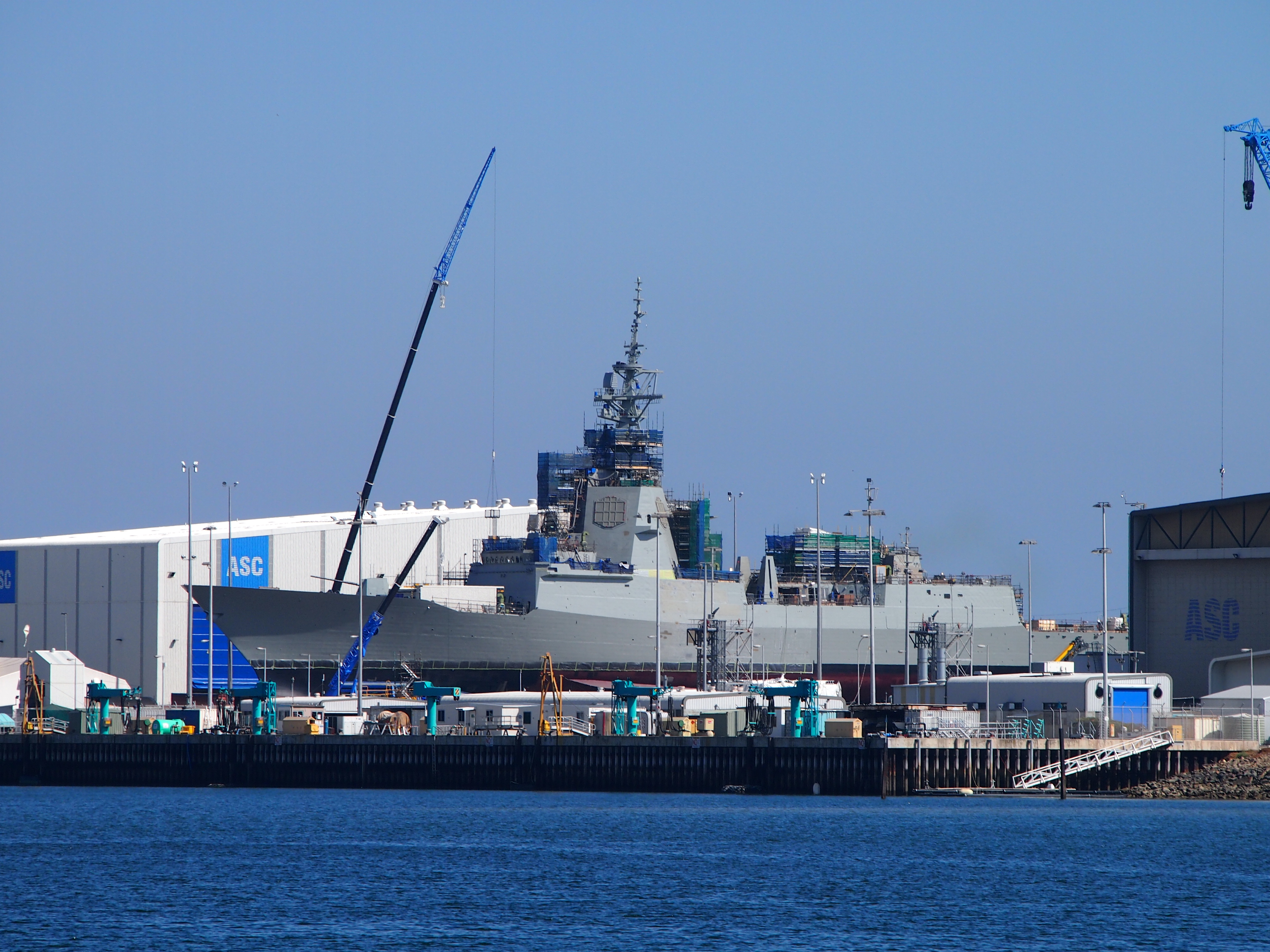
In October 2010, the 20 by central keel block manufactured by BAE for Hobart was found to be distorted and incompatible with other hull sections. The cause of the fabrication errors is unknown: BAE blamed incorrect drawings from designer Navantia, while the AWD Alliance claimed the other two shipyards have not experienced similar problems, when in fact they had, However, a report in 2014, by the Australian National Audit Office (ANAO) confirmed that 'errors resulting from a sub-standard technology transfer procedure (passing on specific techniques relative to the design) & drawings that were not localised by designer Navantia' were to blame. The delay in reworking the keel block was predicted to set construction back by at least six months. Brisbanes construction has been marred by numerous defects requiring rework.
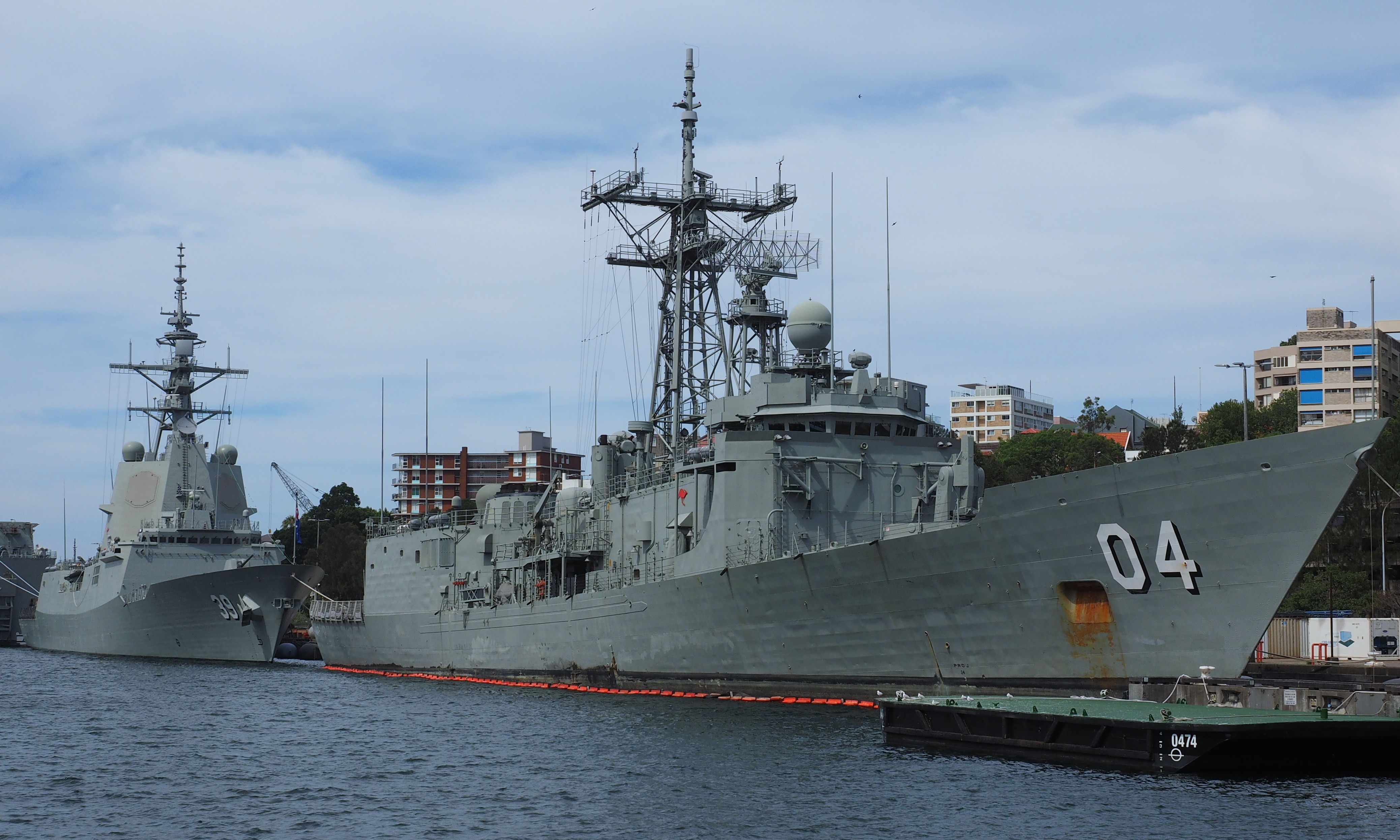
In late May 2011, the government announced that the delay in building Hobart had increased to between one and two years, and would attempt to reduce the workload on BAE (which is also responsible for superstructure work on the Canberra-class amphibious ships) by redistributing up to 13 of the 24 hull blocks the company was slated to build for the first two ships to the other two shipyards. In addition, the three blocks containing each destroyer's hull-mounted sonar are being assembled by Navantia in Spain and the United Kingdom, with the possibility another two hull blocks could be assigned to the Spanish shipyard.
A March 2014 report by the ANAO heavily criticised the DMO and the AWD Alliance for underestimating the risks in redesigning the ships for Australian operations, and building them in shipyards with no recent warship construction experience. The ANAO report also criticised designer Navantia and the shipyards involved in block construction over poor drawings, repeated errors, and bad building practices. Follow-up government reports identified unrealistic time and cost estimates as additional factors. The overarching alliance concept has been repeatedly denounced, with no effective management structure or entity in charge, (allowing for repeated blame-passing between the individual alliance partners, Navantia, and the subcontracted shipyards), and the DMO locked in a contradictory role (simultaneously acting as supplier, build partner, and customer).

Hobarts keel was laid down on 6 September 2012, and the ship was launched on 23 May 2015, with 76% of construction complete. Brisbane was laid down on 3 February 2014, and by October 2015 was 68% complete. Sydney was laid down on 19 November 2015 (two weeks after the Adelaide-class frigate of the name was decommissioned, and on the anniversary of the loss of the second Sydney during World War II), with block fabrication due to complete in early 2016.
Originally, the Hobart-class destroyers were to be operational between December 2014 and June 2017. The original contract cost was about A$7.9 billion for the three ships. By March 2014, the project was running A$302 million over budget.
In February 2018, the Hobart-class was removed from the "Projects of Concern" list, after long-term reform arrangements were put in place. In May 2018, the third and final Hobart-class ship, Sydney, was launched.
Upgrade
The Royal Australian Navy's Hobart-class destroyers are undergoing a comprehensive upgrade under the SEA4000 Phase 6 project, aimed at enhancing their combat capabilities and ensuring interoperability with allied forces. A central component of this upgrade is the transition from the Aegis Baseline 8 to the more advanced Baseline 9 combat system, which introduces improved missile defense, radar tracking, and integrated fire control systems . Lockheed Martin Australia has played a pivotal role in this modernization, completing the Combat System Design Agent contract that integrates the new Aegis architecture into the destroyers' systems.
Navantia Australia, as the original designer of the Hobart-class destroyers, has been appointed the Platform Systems Designer for the SEA4000 Phase 6 upgrade. The company has released the first set of Ship Alterations drawings, which are essential for the physical modifications required to install new systems and equipment on the in-service warships . This work is being carried out in collaboration with Navantia's Technical Partner Network and involves a dedicated team of engineers and designers working to ensure the successful implementation of the upgrades.
Saab Australia is contributing significantly to the combat system upgrades by introducing a new Australian Interface (AI) that integrates with the Aegis Combat System. This interface aims to enhance the Royal Australian Navy's ability to deter, protect, and defend by increasing commonality across the surface fleet, thereby delivering operational, training, and sustainment efficiencies. Saab's involvement is part of a broader collaboration under the Combat Systems Integration – Integrated Project Team (CSI-IPT), which includes BAE Systems Australia and Lockheed Martin Australia, working together to deliver these advanced capabilities.
The Hobart-class upgrade is part of a broader initiative to enhance the Royal Australian Navy's surface combatant fleet in response to evolving regional security challenges. The 2023 Defence Strategic Review emphasized the need for increased firepower and advanced capabilities to address potential threats. The upgraded destroyers will feature enhanced missile systems, including the integration of the Naval Strike Missile and Tomahawk cruise missiles, providing greater offensive capabilities. These enhancements aim to ensure that the Hobart-class destroyers remain a formidable component of Australia's naval defense strategy.
Ships
| Name | Pennant number | Builder | Laid down | Launched | Commissioned | Status |
|---|---|---|---|---|---|---|
| DDG 39 | Navantia, ASC Pty Ltd, Osborne | 6 September 2012 | 23 May 2015 | 23 September 2017 | Active | |
| DDG 41 | 3 February 2014 | 15 December 2016 | 27 October 2018 | Active | ||
| DDG 42 | 19 November 2015 | 19 May 2018 | 18 May 2020 | Active |
Citations
References
;Journal articles
;News articles
;Press releases
;Websites
References
- (22 May 2015). "Control of troubled warship project to go to tender as costs hit $9b".
- [https://www.anao.gov.au/sites/default/files/Auditor-General_Report_2020-21_19.pdf Auditor General Report 2020-21]
- "The Hobart Class Air Warfare Destroyer: Welcome to the fleet". lockheedmartin.com.
- Gulber, ''Growth in Strength'', p. 4
- Instead, the RAN began to [[Adelaide-class frigate#FFG Upgrade
- Pengelley, ''Aussie rules''
- Brown, ''Spanish designs are Australia's choice for warship programmes''
- Department of Defence, ''Preferred designer chosen for AWD contract''
-
- nmi
- Walters, ''Navy wants upgrade capacity for destroyers''
- The A$8 billion three-ship deal included the option to order a fourth ship at a later date.Kerr, ''Australia seeks to extend AWD options''
- (December 2011)
- ''Collins''-class replacement]] and the [[Hunter-class frigate
- Department of Defence, ''Next generation of naval ships to reflect a rich history of service''
- Andrew, ''AWD, Hobart, MFU or DDGH – What's in a name?''
- Thornhill, ''The Case for the Fourth Air Warfare Destroyer'' pp. 9-10
- ''Time to bring back the Pride'', in ''The Navy'', p. 2
- Nigel Pittaway. (30 May 2022). "Navantia air warfare destroyer bid 'surprise'". The Australian.
- (31 March 2021). "Australia to build guided missiles to boost defense capacity".
- Air Warfare Destroyer Alliance, ''The Hobart Class – Characteristics''
- (2009). "Defending Australia in the Asia Pacific Century : Force 2030". Commonwealth of Australia.
- Minister for Defence Industry and Capability Delivery Pat Conroy. (10 August 2024). "Navy conducts firing of Standard Missile 6 as part of Government push to provide ADF with enhanced capabilities".
- (16 September 2021). "Australia to pursue Nuclear-powered Submarines through new Trilateral Enhanced Security Partnership".
- (10 December 2024). "Navy conducts successful firing of Tomahawk cruise missile".
- Minister for Defence Peter Dutton. (5 April 2022). "$3.5 billion to accelerate missile strike capabilities for the ADF".
- (5 January 2023). "Kongsberg has signed a Naval Strike Missile contract with Australia".
- (11 April 2022). "Australia fast-tracks NSM Block 1A for RAN surface fleet". Janes.
- Minister for Defence Industry and Capability Delivery Pat Conroy. (22 July 2024). "Navy conducts successful firing of Naval Strike Missile".
- (22 October 2024). "Safeguarding Australians with boost to air and missile defence".
- Minister for Defence Linda Reynolds. (1 September 2020). "Aegis combat system upgrade unlocks increased air and missile defence capability".
- (16 September 2021). "Key naval projects confirmed for South Australia".
- "IPMS".
- Navantia Australia [https://navantia.com.au/innovation/nsag/ "Integrated Platform Management System (IPMS)"]
- Grevatt, ''AWD Alliance admits destroyer contract hit by construction 'difficulties{{'''
- Stewart, ''$8bn navy flagship founders after construction bungle''
- and suggested first-of-kind manufacturing errors were made by BAE.Stewart, ''BAE shipyard to blame for destroyer delays: Defence''
- Ferguson, G. (2011). "''Air Warfare Destroyer, The cost of Defence: ASPI Budget brief: 2011–2012, page CCXVI''". Australian Strategic Policy Institute.
- Other major issues during ''Hobart''{{'}}s construction included the need to replace 25% of the internal pipework due to faulty manufacture, and the initial rejection of the ship's mainmast block because of defects in the cabling and combat system equipment.McPhedran, ''Navy warships project heading for cost blowout''
- Greene, ''Companies building multi-billion-dollar warships feared defects would damage their reputations, leaked documents show''
- Stewart, ''Overdue and over budget''
- Royal Australian Navy, ''Changes to Air Warfare Destroyer Construction Program''
- An additional nine-month delay was announced in September 2012; this was intended to create a better transition of labour from the destroyers to following shipbuilding projects ([[Collins-class submarine replacement project|replacements for the ''Collins''-class submarines]] and the ''Anzac''-class frigates), and achieve some savings in the federal budget.Thornhill, ''Force 2030'', p. 11
- Cullen, ''Work on $8bn destroyer fleet delayed''
- Starick, ''First look aboard Adelaide-built air warfare destroyer, the Hobart''
- Radio Australia, ''Air Warfare Destroyer project: HMAS Hobart launched, SA Premier calls on Government to trust workers with next generation submarines''
- Australian Associated Press, ''Adelaide keel ceremony for destroyer''
- Naval-technology.com, ''HMAS Hobart construction costs overrun by $870m, says AWD Alliance''
- (3 December 2015). "One keel closer to fruition". Royal Australian Navy.
- (27 May 2015). "BAE delivers two blocks to Royal Australian Navy's AWD programme". Kable.
- "The Air Warfare Destroyer program".
- (1 February 2018). "Australia removes Air Warfare Destroyer project from 'concern list'".
- (22 May 2018). "Australia launches third and final Hobart-class Air Warfare Destroyer".
- Staff, Naval News. (2023-11-06). "Lockheed Martin Complete Enabler for Australian Aegis upgrade".
- "Hobart Class destroyer combat system upgrade launches".
- Davis, Malcolm. (2024-02-20). "The Navy gets bigger under the fleet review. But is it enough?".
This article was imported from Wikipedia and is available under the Creative Commons Attribution-ShareAlike 4.0 License. Content has been adapted to SurfDoc format. Original contributors can be found on the article history page.
Ask Mako anything about Hobart-class destroyer — get instant answers, deeper analysis, and related topics.
Research with MakoFree with your Surf account
Create a free account to save articles, ask Mako questions, and organize your research.
Sign up freeThis content may have been generated or modified by AI. CloudSurf Software LLC is not responsible for the accuracy, completeness, or reliability of AI-generated content. Always verify important information from primary sources.
Report