From Surf Wiki (app.surf) — the open knowledge base
HMS Pegasus (1897)
Pelorus-class cruiser

Pelorus-class cruiser
| Field | Value | ||||
|---|---|---|---|---|---|
| section1 | {{Infobox ship/image | ||||
| image | Gw_pegasus_01.jpg | ||||
| image_caption | HMS Pegasus | ||||
| section2 | {{Infobox ship/career | ||||
| country | United Kingdom | ||||
| flag | |||||
| name | HMS Pegasus | ||||
| ordered | 1893 | ||||
| builder | Palmers Shipbuilding and Iron Company | ||||
| yard_number | 718 | ||||
| laid_down | May 1896 at Jarrow | ||||
| launched | 4 March 1897 | ||||
| commissioned | 17 January 1899 | ||||
| motto | "Excelsior" | ||||
| fate | Sunk by in Zanzibar harbour, 20 September 1914 | ||||
| section3 | {{Infobox ship/characteristics | ||||
| class | protected cruiser | ||||
| displacement | *2135 LT (normal) | ||||
| *{{convert | 2740 | LT | t | abbr | on}} (full load) |
| length | 300 ft | ||||
| beam | 36 ft | ||||
| draught | 17 ft | ||||
| power | 7000 ihp | ||||
| propulsion | * 8 × Reed water tube boilers | ||||
| speed | 20 kn | ||||
| complement | 224 | ||||
| armament | *8 × QF 4 in guns | ||||
| armour | *0.25in (gun shields) |
- 2740 LT (full load)
- 2 × triple expansion steam engines
- 2 × screws
- 8 × QF 3-pounder guns
- 2 × 18-inch (450-mm) torpedo tubes
- 2-1.5in (decks)
'*HMS *Pegasus''''' was one of 11 protected cruisers ordered for the Royal Navy in 1893 under the Spencer Program and based on the earlier . The class were fitted with a variety of different boilers, most of which were not entirely satisfactory, and by 1914, four ships had been withdrawn. They had all been condemned in 1904 but were reprieved and remained in service, with scrapping proposed in 1915.
History
Pegasus was completed in 1898, and in 1899, she was stationed off the southeast coast of America. She was commissioned at Chatham on 21 May 1901 by Commander Edmund Hyde Smith, to serve at the Mediterranean Station. In June 1902 she was in Gibraltar for a coronation fête, and in September that year she visited the Aegean Sea with other ships of the station for combined manoeuvres near Nauplia. She was later stationed at Australia, China, and finally Africa, serving on the Cape of Good Hope Station in 1906.
In 1908, Pegasus rescued the crew of the wrecked French barque President Félix Faure, who had been stranded for sixty days on the Antipodes Islands.
First World War
Pegasus remained part of the Cape Station on the eve of the outbreak of the First World War. As the likelihood of war with Germany increased, the commander of the Cape Station, Rear Admiral Herbert King-Hall, deployed his ships in order to counter the threat posed by the German light cruiser , based at Dar es Salaam. On 31 July 1914, Pegasus sighted Königsberg leaving Dar es Salaam, but was unable to keep track of the faster German cruiser. King-Hall recognised that Königsberg outclassed Pegasus and intended that Pegasus should operate with the cruiser while his flagship operated independently to protect the trade routes around the Cape, but on 12 August, the Admiralty ordered Astraea to join Hyacinth off the Cape to escort troop convoys, leaving Pegasus unsupported at Zanzibar. On 23 August Pegasus sailed to the port of Bagamoyo in German East Africa with the intention of forcing a truce so that the port would take no further part in the war. When the port authorities refused to agree to such a truce, Pegasus shelled the port's Customs House.
Sinking
Main article: Battle of Zanzibar
On 18 September 1914 Pegasus returned to Zanzibar harbour to carry out repairs to her engines. In the early morning of 20 September Königsberg launched a surprise attack on Pegasus. Pegasuss engines were shut down to allow the repairs, and outranged and outgunned, was incapacitated within eight minutes, and the captain – Commander Ingles – struck the colours to avoid further bloodshed. She was the last Royal Navy ship to surrender in a combat action.
The ship sank later that day, with 31 lives lost and 55 wounded. The hospital ship Gascon and Scottish ship Clan Macrae came to the aid of the survivors.
—Pegasus sister ship—later assisted in the blockade of the Rufiji River where Königsberg had taken refuge.
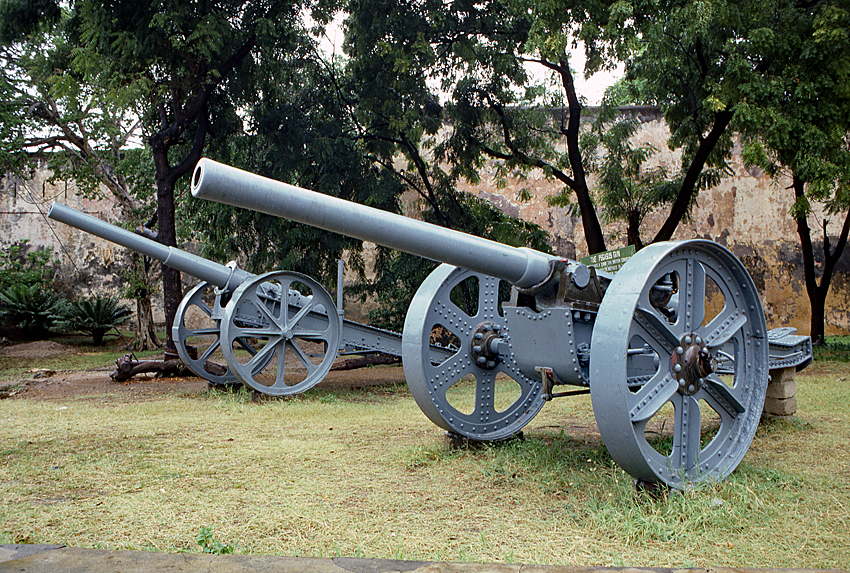
Notes
Citations
References
References
- "Pegasus 1898".
- Robertson, L.S.. (1901). "Water-Tube Boilers: Based on a Short Course of Lectures Delivered at University College, London". Murray.
- (22 May 1901). "Naval & Military intelligence".
- (23 June 1902). "The Coronation - celebrations in the colonies".
- (14 October 1902). "Naval & Military intelligence".
- (16 May 1908). "Castaways rescued". Evening Post.
- {{Harvnb. Corbett. 1920
- {{Harvnb. Naval Staff Monograph No. 10. 1921
- {{Harvnb. Naval Staff Monograph No. 10. 1921
- {{Harvnb. Naval Staff Monograph No. 10. 1921
- "John Alexander Ingles". Imperial War Museum.
- {{Harvnb. Naval Staff Monograph No. 10. 1921
- Drachinifel, video documentary, ''SMS Konigsberg - Creek Guaranteed, Paddle Optional'', at 16:00 mark. https://www.youtube.com/watch?v=RyqzfCcUhc4
- {{Harvnb. Corbett. 1920
- "Zanzibar and the Loss of HMS Pegasus". Zanzibar.net.
- Patience, Kevin. (2006). "Shipwrecks and salvage on the East African coast". Kevin Patience.
- Patience, Kevin. (1997). "Königsberg: a German East African raider". Kevin Patience.
This article was imported from Wikipedia and is available under the Creative Commons Attribution-ShareAlike 4.0 License. Content has been adapted to SurfDoc format. Original contributors can be found on the article history page.
Ask Mako anything about HMS Pegasus (1897) — get instant answers, deeper analysis, and related topics.
Research with MakoFree with your Surf account
Create a free account to save articles, ask Mako questions, and organize your research.
Sign up freeThis content may have been generated or modified by AI. CloudSurf Software LLC is not responsible for the accuracy, completeness, or reliability of AI-generated content. Always verify important information from primary sources.
Report