From Surf Wiki (app.surf) — the open knowledge base
HLA-B48
Human leukocyte antigen serotype
Human leukocyte antigen serotype
HLA-B48 (B48) is an HLA-B serotype. The serotype identifies the more common HLA-B48 gene products. B48 is most common along the West Pacific Rim, Americas indigenous peoples and Northern Eurasians. B4801 is part of a group of alleles including B4201 that share Intron 1 sequence with B0702, which is common over Western and Central Asia, and has a distribution indicating an early and long presence in Eurasian humans. A*48 appears to be the result of a recombination event that occurred early in the settlement history of Central Asia that then spread eastward into the NW Pacific rim and the New World. (For terminology help see: HLA-serotype tutorial)
Serotype
| 4803 | 66 | 13 | 32 |
|---|
Alleles
| Sindhi (Pakistan) | 0.5 |
|---|
Haplotypes
There is a known haplotype that covers a distance from South America to Siberia
A2402 : C08 : B4801 : DRB108 : DQA10401 : DQB10402
and maybe indicative of recent long range migration. This haplotype is found in Peru, Mexico, Eskimos. The A2402 : C0801 : B4801 sub-component is also found in Asian Americans, Hispanic Americans, Indigenous Taiwanese, Northern Philippines, Japanese, Orochon, Tibetans. The A-Cw-B component of the haplotype appears to have been conserved, however, equilibration of linkage to DR-DQ is more evident in Asian and Native American populations. The Cw0803 allelic variant of this haplotype is found in Japan, Eskimos, Asian Americans, Hispanic Americans and Oaxacans. The oddity of the distribution is that, other than the Manchu of Northern China, the Chinese population is devoid of the major A24-B48 and A2-B48 haplotypes. This indicates gene-flow along the West Pacific Rim to the New World and across Siberia connecting Tibet and Japan. B48 is found higher in the Ainu and Nivkhi than Japanese.
Another haplotype that shows long distance relationships is the A0206 : C0801 : B4801 This haplotype is seen in the Taiwan aboriginal population, Okinawan, Japanese, Asian Americans, Orochon, Korean and Hispanic American populations. This haplotype might be extended with DRB10407 : DQA10301 : DQB10302
The Cw8-B48-DRB10407-DQB10302 is found in the Peru Llamas and Japanese populations. However levels in Japan, given the declining gradient to the south, indicate these haplotypes are the result of admixing with Northern Jomon populations during the post-Jomon period.
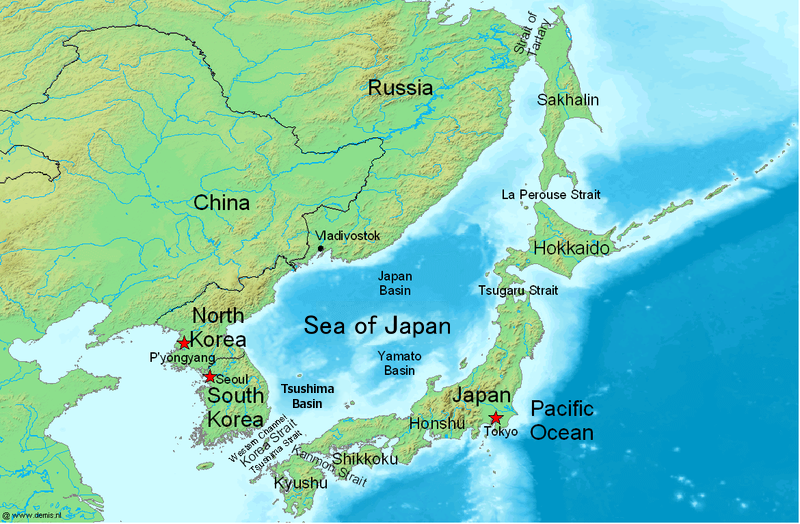
The B*48 haplotypes indicate that the Sea of Japan region was a probable hot spot for both migration to the South and also to the New World.

The Orochon, which have the highest level of A24-B48 live along the Amur river in NE China and share many similarities with the Ainu of Hokkaido and the Nivkhi of Northern Sakalin Island. HLA B*48 haplotypes indicate a means of passage to the New World along the Siberian Coast, a possible land route of passage through Beringia or later by boat across the bering strait into the New World.
References
References
- (2010). "Nomenclature for factors of the HLA system, 2010". Tissue Antigens.
- Gomez-Casado E. (1999). "Evolutionary relationships between HLA-B alleles as indicated by an analysis of intron sequences". Tissue Antigens.
- [http://www.ebi.ac.uk/imgt/hla/allele.html derived from IMGT/HLA]
- (2003). "New allele frequency database". Tissue Antigens.
This article was imported from Wikipedia and is available under the Creative Commons Attribution-ShareAlike 4.0 License. Content has been adapted to SurfDoc format. Original contributors can be found on the article history page.
Ask Mako anything about HLA-B48 — get instant answers, deeper analysis, and related topics.
Research with MakoFree with your Surf account
Create a free account to save articles, ask Mako questions, and organize your research.
Sign up freeThis content may have been generated or modified by AI. CloudSurf Software LLC is not responsible for the accuracy, completeness, or reliability of AI-generated content. Always verify important information from primary sources.
Report