From Surf Wiki (app.surf) — the open knowledge base
History of Gillingham F.C.
History of an English football club

History of an English football club
Gillingham Football Club is an English football club based in Gillingham, Kent. The club was formed in 1893, and played in the Southern League until 1920, when that league's top division was absorbed into the Football League as its new Division Three. The club was voted out of the league in favour of Ipswich Town at the end of the 1937–38 season, but returned 12 years later, when that league was expanded from 88 to 92 clubs. Twice in the late 1980s Gillingham came close to winning promotion to the second tier of English football, but a decline then set in and in 1993 the club narrowly avoided relegation to the Football Conference. In 2000, the "Gills" reached the second tier of the English league for the first time in the club's history and went on to spend five seasons at this level, achieving a club record highest league finish of eleventh place in 2002–03. The club has twice won the division comprising the fourth level of English football: the Football League Fourth Division championship in 1963–64 and the Football League Two championship in 2012–13.
The early years: 1893–1920

The local success of a junior football side, Chatham Excelsior F.C., encouraged a group of businessmen to meet at the Napier Arms pub on 18 May 1893,{{cite book with a view to creating a football club that could compete in larger competitions. To do this, the club required an enclosed playing area where an admission fee could be charged, which Excelsior lacked. New Brompton F.C. was formed at the meeting, incorporating a number of Excelsior players. The group also purchased the plot of land which would later become Priestfield Stadium,{{cite book where a pitch was quickly laid and a pavilion constructed. New Brompton's first team played their first match on 2 September 1893, with the new team, sporting Excelsior's black and white stripes, being defeated 5–1 by Woolwich Arsenal's reserve team in front of a crowd of 2,000. As a "curtain-raiser" immediately prior to this match, New Brompton's own reserves played a match against Grays, which was therefore technically the first match played by a team representing the club.{{cite book
New Brompton joined the Southern League upon its creation in 1894, being placed in Division Two because it was one of the last clubs to be invited to join the league. Upon joining the league, New Brompton turned professional, with the players agreeing to be paid 12 shillings per match, and promptly won the Division Two championship in the 1894–95 season. With a record of one defeat and eleven victories from twelve matches, the team concluded the season with a "test match" against Swindon Town, who had finished bottom of Division One. As 5–1 winners, New Brompton gained promotion to Division One the following season.{{cite book Groombridge served the club, as secretary and sometimes manager, until well after the First World War.{{cite book

New Brompton struggled in Division One, generally finishing close to the foot of the table, but did reach the first round proper of the FA Cup for the first time in 1899–1900, losing 1–0 to Southampton. In the same season the club was forced to play a league fixture at the home ground of Woolwich Arsenal when Priestfield was closed due to crowd trouble in a match against Millwall.{{cite book
In the 1907–08 season, under the management of the former England international Stephen Smith,{{Cite web |access-date=2007-08-17 |url-status=dead |archive-url=https://web.archive.org/web/20070927233313/http://www.englandfc.com/Profiles/php/PlayerProfileByName.php?id=900 |archive-date=27 September 2007 |access-date=2007-08-23 |url-status=live |archive-url=https://web.archive.org/web/20100721195910/http://www.rsssf.com/tablese/engsouthernleaghist.html |archive-date=21 July 2010}} avoiding relegation only due to the expansion of the league, but did achieve a cup victory over First Division Sunderland, remembered for a hat-trick from Charlie McGibbon.
In 1912 the directors passed a resolution to change the club's name to Gillingham F.C., and the team played under this name throughout the 1912–13 season, although the change was not officially ratified by the shareholders until the following year.{{cite book
Once the competition resumed after the war Gillingham, once again wearing black and white,{{cite book
Into the Football League: 1920–1938
In the club's first match in the newly created Football League Division Three, Gillingham held Southampton to a 1–1 draw in front of a new record Priestfield crowd of 11,500, with Tom Gilbey scoring the club's first goal in league competition.{{cite book | access-date=2007-04-11 |access-date = 2007-08-21 |archive-url = https://web.archive.org/web/20070930220838/http://www.soccerbase.com/managers2.sd?managerid=579 |archive-date = 30 September 2007 |url-status = live}} and former Wolverhampton Wanderers manager Albert Hoskins stepped down a division to manage the club,{{Cite web |access-date = 2007-08-21 |archive-url = https://web.archive.org/web/20071001195912/http://www.soccerbase.com/managers2.sd?managerid=38 |archive-date = 1 October 2007 |url-status = live}} but he could do little to change the team's fortunes and left in 1929 after Gillingham finished bottom of the table once again.{{Cite web | access-date=2007-08-23
Striker Fred Cheesmur set a new club record in the 1929–30 season when he scored six goals in a match against Merthyr Town. This remains the highest number of goals scored by a Gillingham player in a professional match, but was a rare high point in a season which saw Gillingham forced to apply for re-election to the league. The following year the club abandoned its traditional black and white striped shirts in favour of blue shirts and white shorts, colours which have remained associated with Gillingham ever since,{{cite book | access-date=2007-08-23

In the 1934–35 season centre-forward Sim Raleigh, the club's top scorer the previous season and a player seen as a future star, suffered a brain haemorrhage following a blow to the head in a match against Brighton & Hove Albion on 1 December. Although he played on he collapsed during the second half and died in hospital later the same day.{{cite book
In 1938 the Gills finished bottom of the now-regionalised Third Division South once more, and were required to apply for re-election to the Football League for the fifth time since joining it in 1920. This time the club's bid for re-election failed, with Ipswich Town registering 36 votes to Gillingham's 28 and being promoted into the League. At the time it was considered a distinct possibility that Gillingham, saddled with heavy debts incurred during the preceding unsuccessful seasons, might not survive,{{cite book
The wilderness years: 1938–1950
The club's second stint in the Southern League was interrupted by the outbreak of the Second World War in 1939, which saw newly appointed manager Archie Clark and most of the players assigned to work at the local dockyards. When competitive football resumed, Gillingham played in the first incarnation of the Kent League, winning the title in both 1944–45 and 1945–46.{{cite book
Although Gillingham missed out on the Southern League title the following season, finishing as runners-up, the team again captured the Kent Senior Cup, as well as setting a club record attendance of 23,002 for a cup match against Queens Park Rangers.{{Cite web |access-date = 2007-08-21 |archive-url = https://web.archive.org/web/20071001150714/http://www.soccerbase.com/team_records.sd?teamid=1098 |archive-date = 1 October 2007 |url-status = dead}} Gillingham applied for re-election to the Football League in the summer of 1948 but, despite producing a glossy brochure detailing the team's achievements, the club saw its application rejected, with only one vote cast in its favour. Despite this disappointment, the team continued to perform strongly in the Southern League and successfully regained the league title in 1948–49. In 1950 plans were announced to expand the Third Division South from 22 to 24 teams and, based on the team's local success in the interim, Gillingham gained re-election to the Football League, receiving the highest number of votes amongst the candidate clubs.{{cite book
Return to the Football League: 1950–1974
Gillingham's first game back in the Football League saw the Kent club hold fellow new entrants Colchester United to a 0–0 draw at Priestfield in front of 19,542 fans.{{cite book | access-date=2007-08-22
Gillingham's fortunes on the field gradually improved and the team finished in the top half of the Third Division South on three occasions, helped by the goals of Ernie Morgan, who in 1954–55 set a new club record by scoring 31 league goals. In 1956–57 and 1957–58, however, the Gills found themselves once again rooted to the bottom of the table, and this meant that with the restructuring of the league system for the 1958–59 season, the team was placed in the newly created Fourth Division – a top-half finish would have led to placement in the new national Third Division. 1958 also saw the departure of long-serving manager Archie Clark, who had held the post since before the Second World War, with Harry Barratt taking over.

The Gills were still in the Fourth Division in 1962 when Barratt was replaced as manager by Freddie Cox, who inherited a team which had just finished 20th in the table. Cox set about fashioning a new team noted for its formidable defensive capabilities. After finishing in 5th place in 1962–63 Gillingham went on to gain promotion the following year, winning the first divisional championship in the club's history. With goalkeeper John Simpson setting a new club record by conceding only 30 goals all season, the team finished level on 60 points with Carlisle United, but with a fractionally better goal average, and so claimed the title.{{cite book
Gillingham initially performed well at the higher level, twice coming close to promotion, but performances then declined and the club was relegated back to the Fourth Division in 1970–71.{{Cite web | access-date=2007-08-24 | access-date=2007-08-24
Consolidation, then collapse: 1974–1995
After guiding the club to promotion Andy Nelson left to take over as manager of Charlton Athletic{{Cite web |access-date=2007-08-21 |url-status=dead |archive-url=https://web.archive.org/web/20070927175847/http://www.cafc.co.uk/personality.ink?page=7284 |archive-date=27 September 2007 |access-date = 2007-08-21 |archive-url = https://web.archive.org/web/20071127133346/http://www.soccerbase.com/manager_history.sd?teamid=1098 |archive-date = 27 November 2007 |url-status = dead}} Gerry Summers took over and was to take the club the closest it had ever come to promotion to Division Two when, in 1978–79, Gillingham finished just one point off a promotion place,{{Cite web | access-date=2007-08-23 |access-date = 2008-01-07 |url-status = dead |archive-url = https://web.archive.org/web/20080121113147/http://www.gillinghamfootballclub.premiumtv.co.uk/page/PastPlayers/0%2C%2C10416~63314%2C00.html |archive-date = 21 January 2008}} and also brought through the ranks a number of young players who went on to achieve success at a higher level, including Micky Adams, Steve Bruce, and Tony Cascarino, who was famously bought from non-league Crockenhill in exchange for a set of tracksuits.{{Cite web |access-date = 2008-01-07 |url-status = dead |archive-url = https://web.archive.org/web/20080121113214/http://www.gillinghamfootballclub.premiumtv.co.uk/page/PastPlayers/0%2C%2C10416~63320%2C00.html |archive-date = 21 January 2008}} Gillingham came close to promotion several times during Peacock's reign, with four top-six finishes in six years, and in 1986–87 reached the play-offs (in their first year of existence) only to lose in the final to Swindon Town.{{Cite web |access-date=2007-04-11 |url-status=dead |archive-url=https://web.archive.org/web/20071115155803/http://www.gillinghamfootballclub.premiumtv.co.uk/page/ClubHistory/0%2C%2C10416%2C00.html |archive-date=15 November 2007}} Deadlocked at 2–2 after the home and away legs of the final, the two teams had to play a third match at a neutral venue, which Swindon won 2–0.

| access-date=2007-08-22
Former Gillingham player Damien Richardson became the club's next manager, with veteran goalkeeper Ron Hillyard as his assistant, but the club's financial situation was poor and the pair struggled to produce results with a squad composed of ageing journeymen and untried youngsters, and both men were sacked in September 1992, with Glenn Roeder taking over as manager. Gillingham's league status was in jeopardy for most of the 1992–93 Division Three campaign, with relegation to the Football Conference a distinct possibility until the last home match of the season, when a 2–0 win over Halifax Town ensured the club's league status. Nonetheless, the financial crisis continued at Priestfield, and steadily improving league form over the next two seasons did little to disguise the fact that the club was in real danger of going out of existence.{{Cite web | access-date=2007-08-22
The club eventually went into receivership in January 1995,{{Cite web | access-date=2007-08-22
Revival: 1995–2000
In June 1995 a London-based former office supplies salesman, Paul Scally, stepped in and bought the club for a nominal fee. Scally brought in new manager Tony Pulis, who signed almost a complete new team and led Gillingham to promotion in his first season, finishing second in Division Three (now Football League Two). This season was also notable for the fact that the team only conceded 20 league goals – a league record for a 46-game season. In 1999 Gillingham reached the playoffs, but lost in the Second Division play-off final against Manchester City. Following goals by the prolific partnership of Robert Taylor and Carl Asaba, the Gills led 2–0 with less than two minutes left, only to see Manchester City score twice, the equaliser in injury time, and then win a penalty shoot-out 3–1.{{Cite web |access-date=2007-04-11 |url-status=dead |archive-url=https://web.archive.org/web/20070405191113/http://www.football-league.premiumtv.co.uk/page/PlayOffsDetail/0%2C%2C10794~475418%2C00.html |archive-date=5 April 2007}}
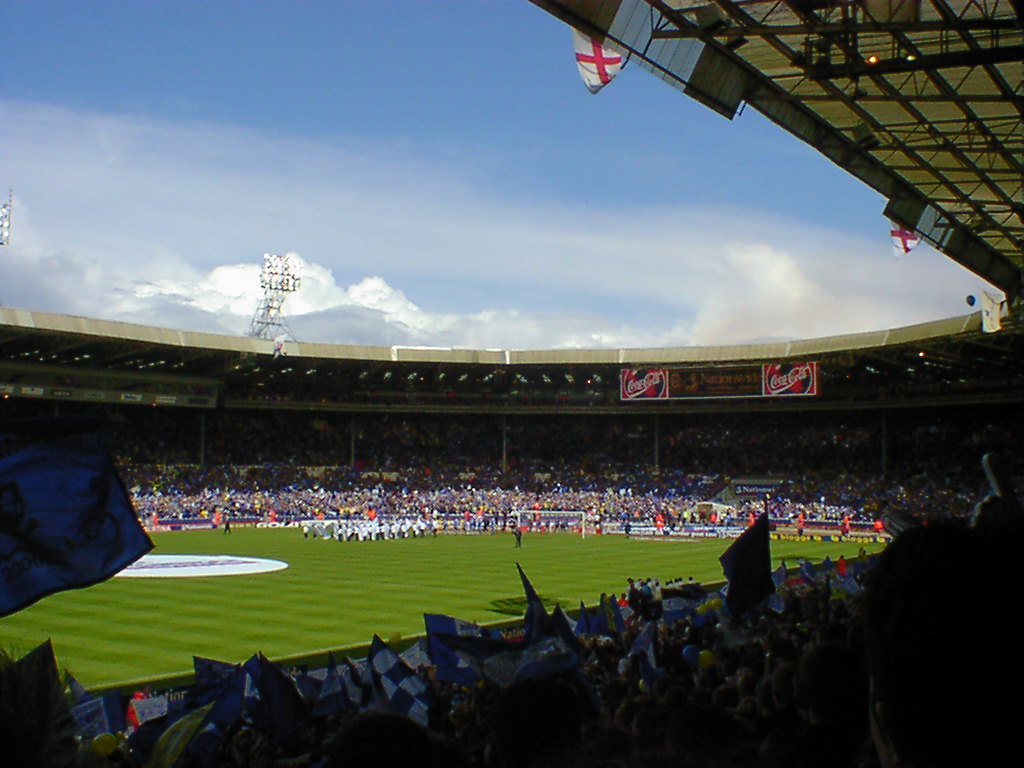
Soon after the play-off loss, Pulis was sacked for gross misconduct, with Peter Taylor replacing him as manager. In the 1999–00 season Gillingham went on a club record breaking FA Cup run, beating then-Premiership teams Bradford City and Sheffield Wednesday before losing 5–0 to Chelsea in the quarter-finals. The team also finished in third place in the league and thus qualified for the play-offs again, facing Wigan Athletic at Wembley Stadium in the final. The game finished 1–1 after 90 minutes but thanks to goals in extra time from Gillingham substitutes Steve Butler and Andy Thomson the club was promoted to the second tier of the English league (Division One) for the first time. As Taylor had only signed a one-year deal, Leicester City, then in the Premiership, approached him to be their new manager.
The Division One years: 2000–2005

Former team captain Andy Hessenthaler was appointed player-manager, having previously served as player-coach, and led the club to league finishes of 13th, 12th and 11th in his first three seasons in charge. In contrast, the 2003–04 season saw the club escape relegation by the narrowest of margins, with a last day goalless draw keeping Gillingham above Walsall on goal difference, with just one goal separating the two teams. John Gorman was appointed to help Hessenthaler as the side started the 2004–05 season poorly, but as the team continued to struggle at the wrong end of the table Hessenthaler resigned as manager in late November. Somewhat unusually he continued to be employed as a player. Gorman succeeded Hessenthaler in a caretaker capacity but left the club to take the manager's job at Wycombe Wanderers. Gillingham then appointed former Burnley boss Stan Ternent as manager, but despite a late run of positive results, he could not prevent the Gills' relegation to League One on the last day of the season. In a reversal of the previous season's fortunes, Crewe Alexandra, the team immediately above Gillingham in the table, survived by just one goal.
Return to the lower divisions: 2005–present

The 2005–06 season started with Neale Cooper being appointed as the new manager, but despite achieving a 3–2 victory over Premiership side Portsmouth in the League Cup, the team struggled in the league, and shortly after defeat in the first round of the FA Cup by Northern Premier League side Burscough, Cooper resigned. He was replaced by Ronnie Jepson, who led the team to a mid-table finish, which he repeated in 2006–07. After a poor start to the 2007–08 season Jepson resigned,{{cite web | access-date=2007-09-09}} and Mick Docherty and Iffy Onuora were appointed joint caretaker managers.{{Cite web | access-date=2007-09-10 | access-date=2007-10-08 |access-date=2007-11-01 |url-status=dead |archive-url=https://web.archive.org/web/20080105135232/http://www.gillinghamfootballclub.premiumtv.co.uk/page/NewsDetail/0%2C%2C10416~1157378%2C00.html |archive-date=5 January 2008 with Stimson leaving the club by mutual consent two days after the end of the season. Within two weeks, Andy Hessenthaler returned for a second spell as manager.
For two consecutive seasons the Gills finished just outside the play-off places in League Two, following which Hessenthaler was moved to the position of Director of Football and Martin Allen appointed as manager. In the 2012–13 season, helped by a new club record of eleven away wins in a season, the club once again gained promotion back to League One, winning the League Two championship, only the second title the club had ever won at a professional level. The following October, however, Allen was sacked after a poor start to the season and Peter Taylor was appointed manager for a second time. Taylor was sacked after fourteen months in the job, and his successor Justin Edinburgh lasted until January 2017. Former Gillingham player Adrian Pennock returned as manager, but the team came close to relegation at the end of the 2016–17 season. Pennock left the club by mutual consent in September 2017, and Steve Lovell, another former Gills player, took charge. Lovell left the club two games before the end of the 2018–19 season.
Steve Evans was announced as the team's new manager. In January 2022, following a 4–0 home defeat to Ipswich Town which left the side 22nd in the table, seven points from safety, Evans was dismissed. Neil Harris took over, but could not prevent the team being relegated to EFL League Two. In the 2022–23 season Gillingham reached the fourth round of the EFL Cup for only the third time in the club's history, defeating Premier League side Brentford on penalties in the third round, before succumbing to another top tier side in Wolverhampton Wanderers 2–0 in the following round. On 23 December 2022, Brad Galinson, an American property magnate was announced as a majority owner of Gillingham. A number of managers came and went in quick succession. Harris was dismissed in October 2023, following a 2-0 loss to Crewe Alexandra, and replaced by Stephen Clemence. Following the final match of the season he was sacked following a twelfth-place finish, six points off the play-off places, and replaced by Mark Bonner, but he was dismissed in January 2025, with John Coleman taking over. Coleman left the club in March 2025 and was replaced by Gareth Ainsworth. Ainsworth helped lead the Gills to the club's longest ever unbeaten run of 21 league games on 20 September 2025 against Newport County, a run that had started with the last three games of Coleman's tenure.
References
References
- Roger. Triggs. "The Men Who Made Gillingham Football Club". Tempus Publishing Ltd. (2001)
- Roger. Triggs. "The Men Who Made Gillingham Football Club". Tempus Publishing Ltd. (2001)
- Roger. Triggs. "The Men Who Made Gillingham Football Club". Tempus Publishing Ltd. (2001)
- Roger. Triggs. "The Men Who Made Gillingham Football Club". Tempus Publishing Ltd. (2001)
- Roger. Triggs. "The Men Who Made Gillingham Football Club". Tempus Publishing Ltd. (2001)
- Roger. Triggs. "The Men Who Made Gillingham Football Club". Tempus Publishing Ltd. (2001)
- Roger. Triggs. "The Men Who Made Gillingham Football Club". Tempus Publishing Ltd. (2001)
- Roger. Triggs. "The Men Who Made Gillingham Football Club". Tempus Publishing Ltd. (2001)
- Roger. Triggs. "The Men Who Made Gillingham Football Club". Tempus Publishing Ltd. (2001)
- Triggs, Roger. "The Men Who Made Gillingham Football Club".
- [http://www.football-league.premiumtv.co.uk/page/RecordGoals/0,,10794,00.html The official Football League website] {{webarchive. link. (10 February 2007 lists this achievement in second place on the overall list of teams who have conceded the fewest goals in a season, behind [[Liverpool F.C.). link. (1 October 2007 , Liverpool played only 42 matches, giving Gillingham the record for a 46-match season.)
- Steve Rogers. (8 May 2004). "Football: Pulis in blast at Scally". Daily Mirror.
- "England 2003/2004".
- (23 November 2004). "Hessenthaler steps down at Gills". BBC Sport.
- (30 November 2004). "Gorman appointed Wycombe manager". BBC Sport.
- (7 December 2004). "Gills unveil Ternent as manager". BBC Sport.
- "England 2004/2005".
- (21 May 2005). "Cooper named as Gillingham boss". BBC Sport.
- (15 November 2005). "Gillingham manager Cooper resigns". BBC Sport.
- (20 April 2006). "Jepson braced for crucial meeting". BBC Sport.
- "England 2006/2007".
- (3 May 2008). "Leeds 2–1 Gillingham". BBC.
- (23 May 2009). "Gillingham 1–0 Shrewsbury". BBC Sport.
- (8 May 2010). "Wycombe 3–0 Gillingham". BBC.
- (10 May 2010). "Stimson departs Priestfield". [[Gillingham F.C.]].
- (21 May 2010). "Andy Hessenthaler named new Gillingham boss". BBC Sport.
- (5 July 2012). "Martin Allen appointed new Gillingham manager". BBC Sport.
- (23 February 2013). "Martin Allen proud to make Gillingham history". BBC Sport.
- (6 April 2013). "Gillingham 1–0 Torquay". BBC Sport.
- (14 October 2013). "Gillingham: Peter Taylor named interim boss after Martin Allen exit". BBC.
- (31 December 2014). "Gillingham sack manager Peter Taylor after 14 months in job". The Guardian.
- (3 January 2017). "Gillingham sack manager Justin Edinburgh after Oxford United defeat". The Guardian.
- (25 September 2017). "Ady Pennock: Gillingham head coach leaves League One club by mutual consent". BBC.
- (12 April 2018). "Steve Lovell: Gillingham manager signs new contract until 2020". BBC.
- (26 April 2019). "Steve Lovell Leaves Gillingham FC". BBC.
- "Club Statement {{!}} Gillingham F.C.".
- "Club Statement {{!}} Gillingham F.C.".
- (2022-01-31). "Neil Harris: Gillingham appoint former Millwall and Cardiff City boss as new manager". BBC Sport.
- "Report {{!}} Gillingham 0-2 Rotherham United {{!}} Gillingham F.C.".
- (2022-12-20). "Wolverhampton Wanderers 2-0 Gillingham: Julen Lopetegui gets off to winning start as Wolves manager". BBC Sport.
- (2022-11-08). "Carabao Cup: Brentford 1-1 Gillingham (5-6 on penalties) - Bees stunned by League Two Gills". BBC Sport.
- "Club Statement {{!}} Gillingham F.C.".
- (2023-10-05). "Neil Harris: Gillingham sack manager 'to go in different direction'". BBC Sport.
- "Stephen Clemence Appointed First-Team Head Coach {{!}} Gillingham F.C.".
- "Gills part company with Stephen Clemence {{!}} Gillingham F.C.".
- (2024-05-07). "Gillingham appoint Mark Bonner as manager to replace Stephen Clemence".
- Cawdell, Luke. (5 January 2025). "Mark Bonner has been sacked by Gillingham with the club sitting 14th in the League 2 table – assistant boss Anthony Hayes also departs". [[KM Media Group]].
- "John Coleman to take charge as First-Team Manager until the end of the season {{!}} Gillingham F.C.".
- (25 March 2025). "Ainsworth leaves Shrewsbury to become Gills boss". [[BBC Sport]].
- (20 September 2025). "These players will go down in history".
This article was imported from Wikipedia and is available under the Creative Commons Attribution-ShareAlike 4.0 License. Content has been adapted to SurfDoc format. Original contributors can be found on the article history page.
Ask Mako anything about History of Gillingham F.C. — get instant answers, deeper analysis, and related topics.
Research with MakoFree with your Surf account
Create a free account to save articles, ask Mako questions, and organize your research.
Sign up freeThis content may have been generated or modified by AI. CloudSurf Software LLC is not responsible for the accuracy, completeness, or reliability of AI-generated content. Always verify important information from primary sources.
Report