From Surf Wiki (app.surf) — the open knowledge base
Hiroo, Shibuya
District located in Shibuya, Tokyo, Japan
District located in Shibuya, Tokyo, Japan
| Field | Value |
|---|---|
| official_name | Hiroo |
| native_name | |
| settlement_type | Major district of Special ward |
| image_skyline | Gaien-Nishi_Dori_Street_at_Hiroo_Tokyo.jpg |
| image_caption | Gaien Nishi-Dori Ave |
| coordinates | |
| subdivision_type | Country |
| subdivision_name | Japan |
| subdivision_type1 | Prefecture |
| subdivision_name1 | Tokyo |
| subdivision_type2 | Special ward |
| subdivision_name2 | Flag of Shibuya, Tokyo.svg Shibuya |
| population_total | 15,263 |
| population_as_of | 1 October 2020 |
| population_density_km2 | auto |
| timezone1 | UTC+09:00 |
| postal_code_type | ZIP code |
| postal_code | 150-0012 |
| area_code_type | Telephone area code |
| area_code | 03 |
| website |
Hiroo is a district of Shibuya, Tokyo, Japan. Abutting Ebisu, Minami-Azabu, Nishi-Azabu and Minami-Aoyama, Hiroo is an upmarket residential and shopping neighborhood in central Tokyo.
As of October, 2020, the population of this district is 15,263. The postal code for Hiroo is 150-0012.
According to the Ministry of Land, Infrastructure and Transport, as of 2020, the residential land prices on Hiroo 2-chōme and 3-chōme are as high as ¥1,350,000/m2 and ¥1,260,000/m2, respectively.
Located on Minami-Azabu, the Hiroo Station of Tokyo Metro Hibiya Line is the nearest subway station to Hiroo.
Geography
Hiroo is located in the southeast area of the district of Shibuya, Tokyo, Japan. The boundaries of Hiroo are Nishi-Azabu, Minato and Minami-Aoyama, Minato to the north and follows the Shibuya River along the south. Minami-Azabu, Minato is located to the east and Higashi, Shibuya is located to the west and Ebisu to the south.
Education
Tertiary education
There are two universities in Hiroo. The University of the Sacred Heart, successor to the Sacred Heart Koto Senmon School which was established in 1916 and reorganized into a university with the current name in 1948, is one of the oldest women's universities in Japan. Its important alumnae include the former UN High Commissioner for Refugees Sadako Ogata and Empress of Japan Michiko. One of the two campuses of the Japanese Red Cross College of Nursing is also located in Hiroo. Although reorganized into a four-year college recently in 1986, the origin of the nursing school dates back to 1890, when nursing education was launched at the Japanese Red Cross Hospital. The university offers education to women in Japanese.
Primary and secondary schools
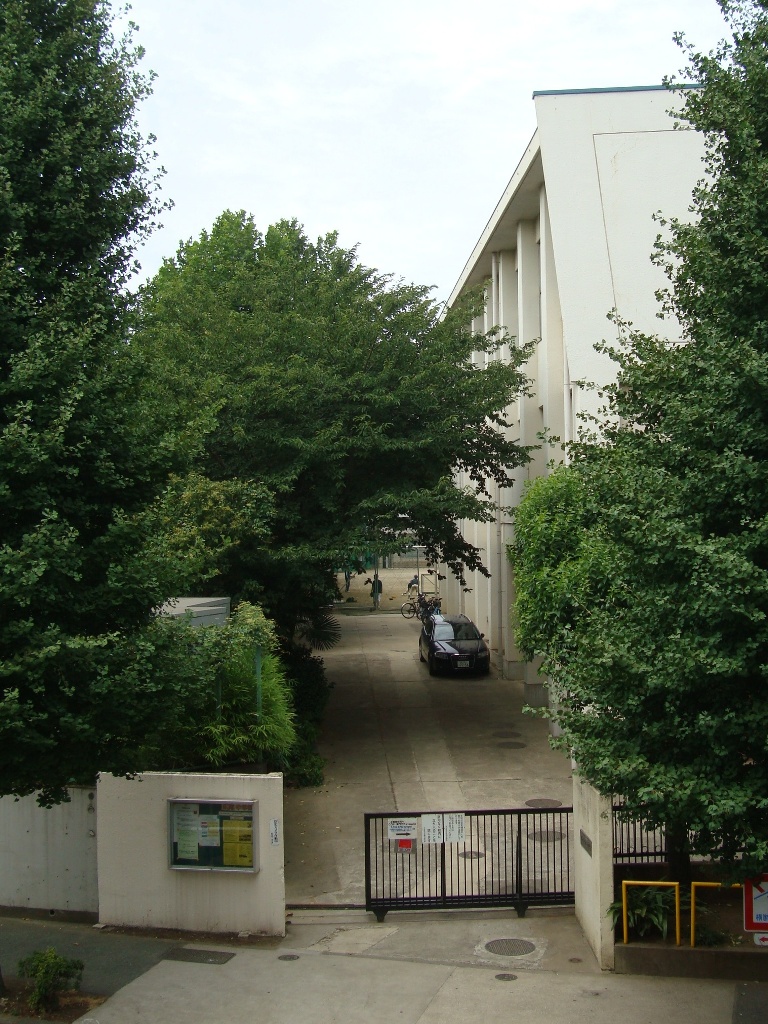
operates public elementary and junior high schools.
Hiroo 1-chome 1-8 and 11-16 ban, 2-chome 1-9 ban, and 3-chome 2-3 and 8-17 ban are zoned to Hiroo Elementary School (広尾小学校). Hiroo 4-5 chome, 1-chome 9-10 ban, and 2-chome 10-22 ban are zoned to Rinsen Elementary School (臨川小学校). Hiroo 3-chome 1 and 4-7-ban are zoned to Tokiwamatsu Elementary School (常磐松小学校).
Hiroo 1-2 and 4-5 chome and 3-chome 2, 3, and 8-17 ban are zoned to Hiroo Junior High School (広尾中学校). Hiroo 3-chome 1 and 4-7 ban are zoned to Hachiyama Junior High School (鉢山中学校).
Schools in Hiroo:
- Hiroo Elementary School (Hiroo Shōgakkō)
- Rinsen Elementary School, a public elementary school.
- Tokyo Jogakkan Elementary, Junior and Senior High School, a private girls school.
- Keio Gijyuku Yōchisha, a private elementary school, affiliated with Keio University. It is located in Tengenji Bridge (Tengenji-Bashi).
- Hiroo is also home to the International School of the Sacred Heart which was founded in 1908 and is located on the same grounds as the University of the Sacred Heart (Seishin Joshi Daigaku). It offers education in English for girls from the ages of three to eighteen.
- There are several Japanese high schools in the area as well, including Hiroo Senior High School (Hiroo Kōtōgakkō)
- The Rainbow International Montessori School also has a facility located in the same area.
広尾小学校-2.JPG|Hiroo Elementary School (広尾小学校) 臨川小学校-1.JPG|Rinsen Elementary School (臨川小学校)
Demography
| District | Number of | |||||||||||||
|---|---|---|---|---|---|---|---|---|---|---|---|---|---|---|
| Households | Total | |||||||||||||
| Population | Male | Female | Hiroo 1-chōme | Hiroo 2-chōme | Hiroo 3-chōme | Hiroo 4-chōme | Hiroo 5-chōme | Total | 8,592 | 15,263 | 6,760 | 8,503 | ||
| 1,833 | 2,889 | 1,344 | 1,545 | |||||||||||
| 903 | 1,936 | 914 | 1,022 | |||||||||||
| 1,436 | 2,995 | 1,386 | 1,609 | |||||||||||
| 2,291 | 4,262 | 1,756 | 2,506 | |||||||||||
| 2079 | 3181 | 1360 | 1821 |
| Year | Total Population |
|---|---|
| 2011 | 13,101 |
| 2012 | 13,228 |
| 2013 | 14,386 |
| 2014 | 14,552 |
| 2015 | 15,248 |
| 2016 | 15,355 |
| 2017 | 15,310 |
| 2018 | 15,295 |
| 2019 | 15,381 |
| 2020 (October 1) | 15,263 |
| Year | Total | Female | Male | Japanese | Non-Japanese |
|---|---|---|---|---|---|
| 2015 | 15,248 | 8,498 | 6,750 | 14,241 | 1,007 |
| 2016 | 15,355 | 8,566 | 6,769 | 14,362 | 993 |
| 2017 | 15,310 | 8,588 | 6,722 | 14,316 | 994 |
| 2018 | 15,295 | 8,567 | 6,728 | 14,321 | 974 |
| 2019 | 15,381 | 8,622 | 6,759 | 14,337 | 1,044 |
| 2020 (October 1) | 15,263 | 8,503 | 6,760 | 14,248 | 1,015 |
Attractions
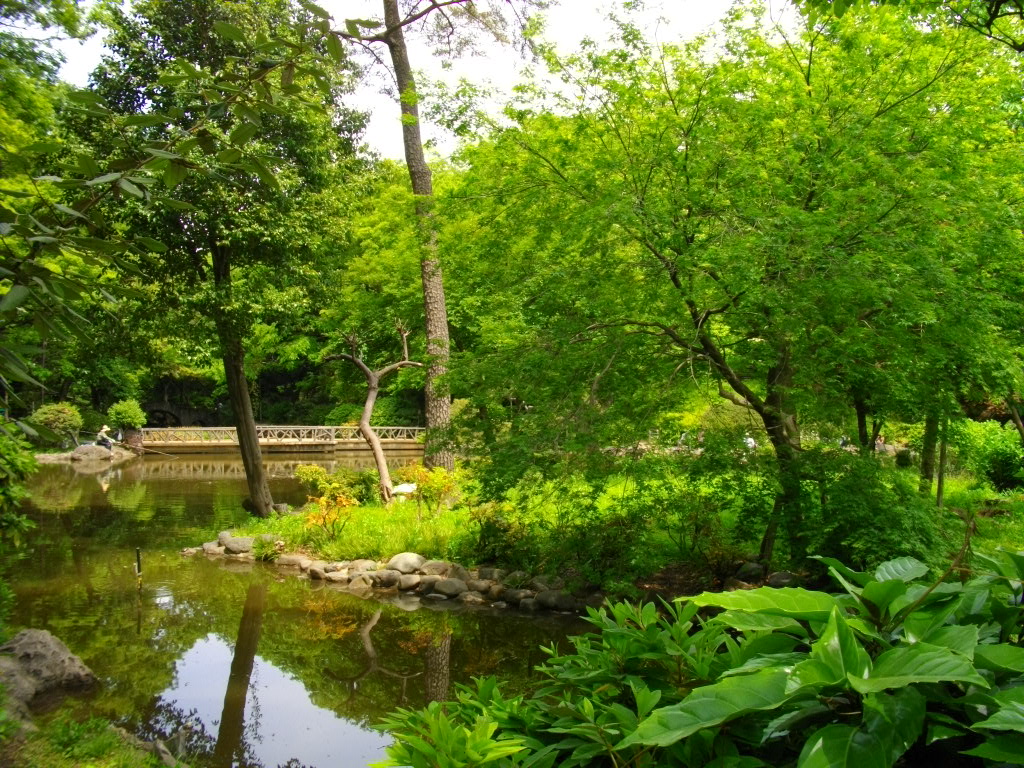

Adjacent to Hiroo, the district of Minami-Azabu is home to Arisugawa Park, which spans through a large chunk of the town. The park consists of several paths and walkways, a baseball field, soccer field, children's amusement areas and a man-made waterfall that empties into a pond full of koi and ducks. The park is situated in the close vicinity of Hiroo Station, causing it to be often incorrectly regarded as "a park in Hiroo."
Foreign Embassies
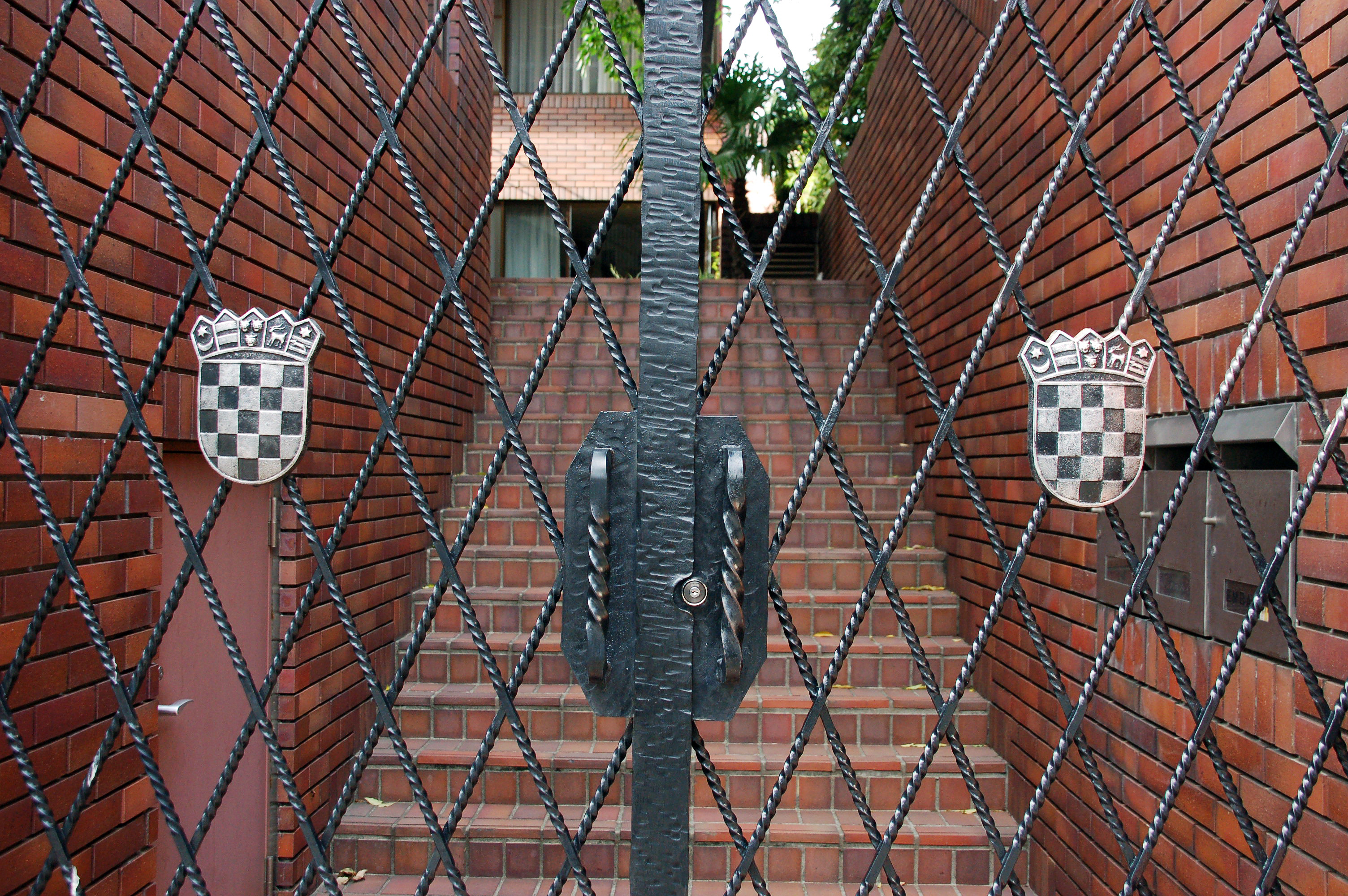
Hiroo is home to several embassies: Embassy of Peru, Croatia, Czech Republic, Burkina Faso, Tajikistan, Congo, and Oman. Hiroo Station is the nearest subway station to several prominent embassies in Minato: Embassy of France, Germany, Norway, Pakistan and the EU.
New Sanno Hotel

The New Sanno Hotel is a short-term accommodation facility operated by the U.S. Navy. While the hotel technically is located in Minami-Azabu, it is nearby the Hiroo subway station and Tengenji Bridge. The hotel opened in 1983 after moving from a location nearby Akasaka Mitsuke Station. The large number of daily visitors to the hotel contributes to the international atmosphere in Hiroo.
Tsukushigahara
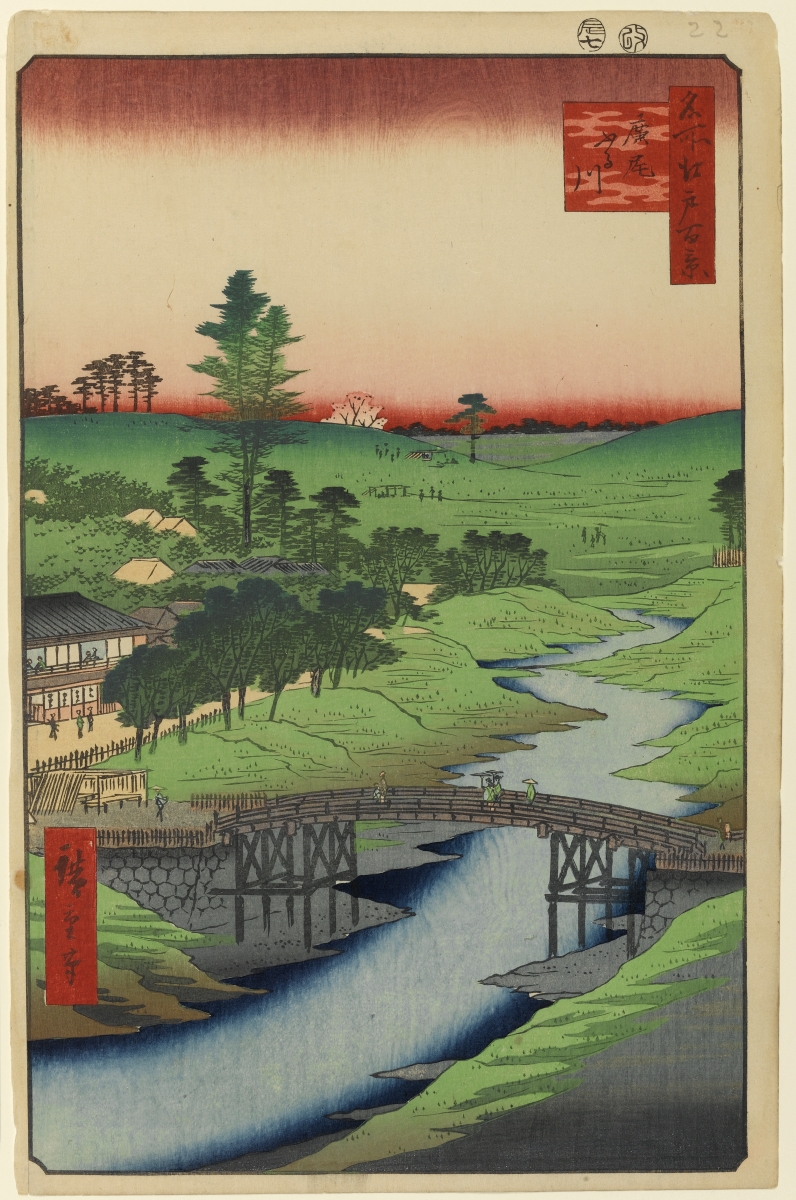
In the Edo period, the area near present-day Tokyo Metropolitan Hiroo Hospital, Keio Gijyuku Yochisha School, Tengenji Bridge, and Tokyo Metropolitan Hiroo 5-chome Apartments was named Tsukushigahara. At the time, this area was a large flatland of susuki grass (miscanthus sinensis). Tsukushigahara was a popular strolling and play area and was recorded in the Illustrated Collection of Famous Places in Edo (江戸名所図会).

Hiroo 5-chome Shopping Street Town
The area surrounding the present-day Hiroo 5-chome shopping street town was designated a shopping street town in Shotoku 3 (1713). This area survived the destruction of the Bombing of Tokyo in 1944-1945. As a result, many Meiji period and Taisho period buildings can still be found in the area. The area is locally known for its nostalgic atmosphere.
Tengenji Bridge

Tengenji Bridge (天現寺橋) is located at the intersection of Gaien-Nishi-dori and Meiji-dori in Hiroo 5-chome. The bridge spans the confluence of the Shibuya River and the Kogai River. The Kogai River flows completely underground since it was covered by concrete. The Kogai River flows under Gaien-Nishi Dori upstream towards and past the east side of Aoyama Cemetery. Two springs known to still flow into the Kogai River are located at the ponds of Arisugawa Park and the ponds at the Nezu Museum. The Tengenji Bridge is an old bridge and existed long before it was mentioned in a text named Gofunaienkakuzsho (御府内沿革図書) published in Bunkyu 3 (1863).
Facilities


- Tokyo Metropolitan Hiroo Hospital, located in Ebisu.
- Japanese Red Cross Medical Center
- Aiiku Hospital, located in Minami-Azabu.
- Japanese Red Cross College of Nursing
- University of the Sacred Heart (Japan)
- International School of the Sacred Heart
- Arisugawa-no-miya Memorial Park, located in Minami-Azabu.
- Tokyo Metropolitan Central Library, located at the center of the Arisugawa-no-miya Memorial Park in Minami-Azabu.
- Embassy of Croatia
- Embassy of Czech Republic
- Embassy of Burkina Faso
- Embassy of Oman
- Embassy of Peru
- Ebasssy of Tajikistan
- Embassy of Congo
- New Sanno Hotel
- Hiroo Garden Hills
- Hiroo Plaza
- Tengenji Bridge (Tengenji-Bashi)
- Yamatane Museum of Art
- Hanezawa Garden (Demolished in 2012)
- Ebisu Prime Square
References
References
- "住民基本台帳・外国人登録による人口". Shibuya City.
- [https://www.land.mlit.go.jp/landPrice/SearchServlet?nccharset=1A2EE725&MOD=0&nen_from=2020&nen_from=2020&nen_from=2020&nen_to=2020&nen_to=2020&nen_to=2020&youtokubun=0&tounenkakaku_from=&tounenkakaku_to=&MOD=0&TDK=&SKC=&CHI=%C5%EC%B5%FE%C5%D4%3A%3A%BD%C2%C3%AB%B6%E8%3A%B9%AD%C8%F8%2C%3A%3A%3A%2C%3A%3A%3A%2C%3A%3A%3A%2C%3A%3A%3A%2C%3A%3A%3A%2C%3A%3A%3A%2C%3A%3A%3A%2C%3A%3A%3A%2C%3A%3A%3A&YFR=2020&YTO=2020&YOU=0&PFR=&PTO=&PG=0&LATEST_YEAR=0 国土交通省地価公示 検索結果(東京都渋谷区広尾 住宅地)] - [[Ministry of Land, Infrastructure and Transport (Japan)]]. Retrieved on 2020-11-08.
- [https://www.tokyometro.jp/rosen/eki/hiro-o/index.html 広尾駅] - [[Tokyo Metro]]. Retrieved on 2008-08-18.
- [http://www.u-sacred-heart.ac.jp/english/general_info/geninfoframe.html General Information] {{Webarchive. link. (September 20, 2008 - [[University of the Sacred Heart (Japan)). University of the Sacred Heart]]. Retrieved on 2008-08-17.
- "学校別通学区域(小学校)". City of Shibuya.
- "学校別通学区域(中学校)". City of Shibuya.
This article was imported from Wikipedia and is available under the Creative Commons Attribution-ShareAlike 4.0 License. Content has been adapted to SurfDoc format. Original contributors can be found on the article history page.
Ask Mako anything about Hiroo, Shibuya — get instant answers, deeper analysis, and related topics.
Research with MakoFree with your Surf account
Create a free account to save articles, ask Mako questions, and organize your research.
Sign up freeThis content may have been generated or modified by AI. CloudSurf Software LLC is not responsible for the accuracy, completeness, or reliability of AI-generated content. Always verify important information from primary sources.
Report