From Surf Wiki (app.surf) — the open knowledge base
Hippodraco
Extinct genus of dinosaurs
Extinct genus of dinosaurs
Hippodraco is a genus of iguanodontian ornithopod dinosaur from the Early Cretaceous Cedar Mountain Formation of Utah, United States. The genus contains a single species, H. scutodens, known from a partial skeleton belonging to an immature individual.
Discovery
The holotype of Hippodraco, UMNH VP 20208, was discovered in 2004 by Andrew R. C. Milner. It is a fragmentary specimen including a fragmented skull and dentary teeth, vertebrae (dorsal, caudal and cervical), a right humerus, a right scapula, a left ischium, a right tibia, a right femur, and left metatarsals.
It was later named in 2010 by Andrew T. McDonald, James I. Kirkland, Andrew R. C. Milner, Scott K. Madsen, Donald D. DeBlieux, Jennifer Cavin and Lukas Panzarin. The generic name Hippodraco is a combination of the Greek word hippos ("horse") and the Latin word draco ("dragon"). It refers to the elongated shape of the skull, which resembles a horse skull. The specific name scutodens is a combination of the Latin words scutum (meaning shield) and dens (meaning tooth), and it references the shield-shaped dentary tooth crowns. UMNH VP 20208 was unearthed from the Yellow Cat Member of the Cedar Mountain Formation, Utah, at a site known as Andrew's Site, dating from the Valanginian stage in the Early Cretaceous period.
Description
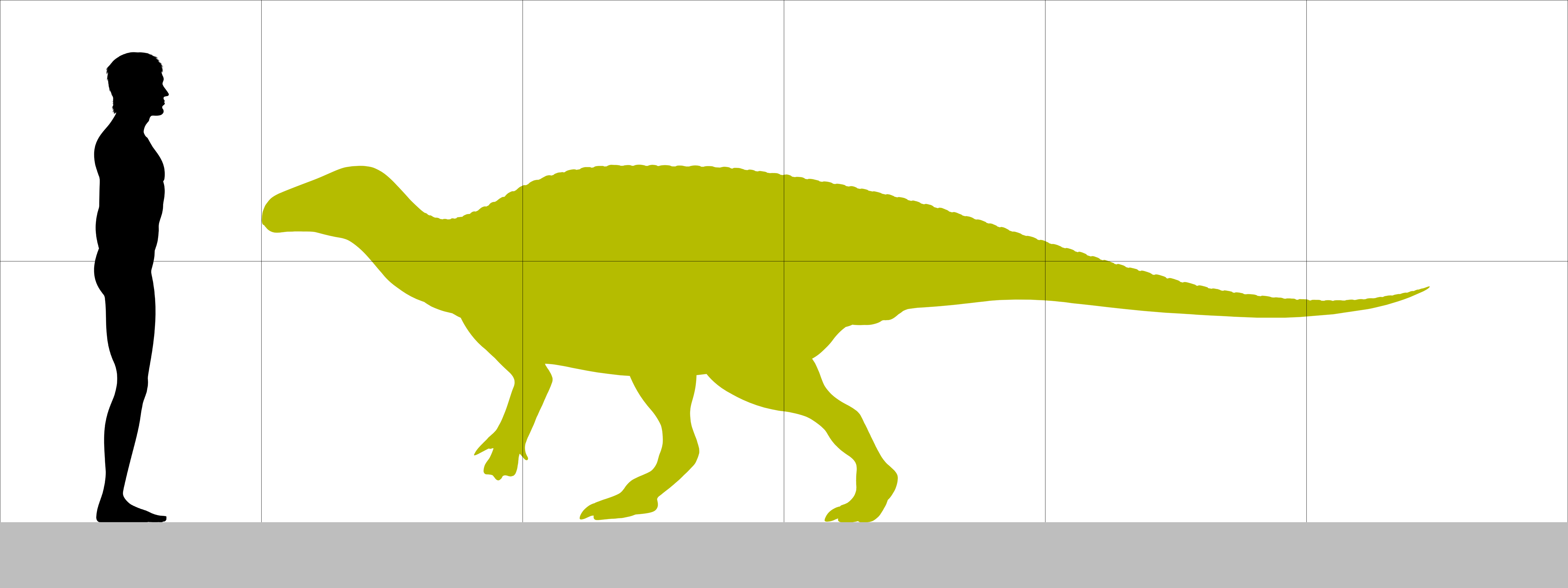
Hippodraco is a relatively small iguanodontid, with the holotype reaching 4.5 m in length. Holtz estimated its weight between 227 to. However, a large orbital in the skull indicates that the specimen is immature. The left side of the skull is well preserved, although the right side is very fragmented. The left dentary is preserved on the skull along with teeth, which, have shield-shaped crowns. The lacrimal bone closely resembles those of Dakotadon and Theiophytalia.

Vertebrae indicates a characteristic iguanodont body shape. Most of the body remains are gracile, such as the right humerus and scapula, the right tibia and femur are fragmented, having irregular surfaces. The nearly-complete metatarsus is very similar to those of Camptosaurus and Iguanodon.
Classification

In 2010 and 2011 cladistic analyses of McDonald and colleagues, Hippodraco has been recovered as a basal member of the Styracosterna and its closest relative was Theiophytalia.
Paleoenvironment

The holotype of Hippodraco was unearthed from the Upper Yellow Cat Member of the Cedar Mountain Formation. Contemporaneous fauna from the Upper Yellow Cat include the fellow ornithopod Cedrorestes, sauropods (Cedarosaurus and Moabosaurus), theropods (Martharaptor and Nedcolbertia), the nodosaurid Gastonia, and the giant dromaeosaurid Utahraptor. Other dromaeosaurids with fragmentary remains are also known from the formation: an indeterminate eudromaeosaur (UMNH VP 20209) and an indeterminate velociraptorine (UMNH VP 21752).
References
References
- (2010). "New Basal Iguanodonts from the Cedar Mountain Formation of Utah and the Evolution of Thumb-Spiked Dinosaurs.". PLOS ONE.
- "Two new dinosaur species found at Utah site".
- (8 December 2010). ""Horse Dragon," Colossus Dinosaurs Found in Utah".
- (2010). "Two New Dinosaurs From Utah: ''Hippodraco'' and ''Iguanacolossus''". PLOS ONE.
- (2007). "Dinosaurs: The Most Complete, Up-to-Date Encyclopedia for Dinosaur Lovers of All Ages". Random House.
- Andrew T. McDonald. (2011). "The taxonomy of species assigned to ''Camptosaurus'' (Dinosauria: Ornithopoda)". Zootaxa.
- (2012). "Phylogeny of Basal Iguanodonts (Dinosauria: Ornithischia): An Update". PLOS ONE.
- (2015). "Insight on the anatomy, systematic relationships, and age of the Early Cretaceous ankylopollexian dinosaur Dakotadon lakotaensis". PeerJ.
- Paul, Gregory S.. (2016). "The Princeton Field Guide to Dinosaurs". Princeton University Press.
- (December 1, 2016). "The Lower Cretaceous in East-Central Utah—The Cedar Mountain Formation and its Bounding Strata". Geology of the Intermoutain West.
- (2015). "First report of bird tracks (Aquatilavipes) from the Cedar Mountain Formation (Lower Cretaceous), eastern Utah". Palaeogeography, Palaeoclimatology, Palaeoecology.
- (2012). "New Dromaeosaurids (Dinosauria: Theropoda) from the Lower Cretaceous of Utah, and the Evolution of the Dromaeosaurid Tail". PLOS ONE.
This article was imported from Wikipedia and is available under the Creative Commons Attribution-ShareAlike 4.0 License. Content has been adapted to SurfDoc format. Original contributors can be found on the article history page.
Ask Mako anything about Hippodraco — get instant answers, deeper analysis, and related topics.
Research with MakoFree with your Surf account
Create a free account to save articles, ask Mako questions, and organize your research.
Sign up freeThis content may have been generated or modified by AI. CloudSurf Software LLC is not responsible for the accuracy, completeness, or reliability of AI-generated content. Always verify important information from primary sources.
Report