From Surf Wiki (app.surf) — the open knowledge base
Hinuera
Settlement in Waikato, New Zealand
Settlement in Waikato, New Zealand
| Field | Value |
|---|---|
| name | Hinuera |
| image_skyline | Hinuera Stone Quarry.jpg |
| image_caption | Hinuera Stone Quarry |
| mapframe | yes |
| mapframe-zoom | 9 |
| subdivision_type | Country |
| subdivision_name | New Zealand |
| subdivision_type1 | Region |
| subdivision_name1 | Waikato |
| subdivision_type2 | Territorial authority |
| subdivision_name2 | Matamata-Piako District |
| subdivision_type3 | Ward |
| subdivision_name3 | Matamata General Ward |
| seat_type | Electorates |
| seat | |
| leader_title | Territorial Authority |
| leader_name | Matamata-Piako District Council |
| leader_title1 | Regional council |
| leader_name1 | Waikato Regional Council |
| leader_name2 | |
| leader_title3 | Waikato MP |
| leader_name3 | |
| leader_title4 | Hauraki-Waikato MP |
| leader_name4 | |
| area_footnotes | |
| area_total_km2 | 10.61 |
| population_total | 162 |
| population_as_of | 2023 Census |
| population_footnotes | |
| population_density_km2 | auto |
| postal_code_type | Postcode |
| timezone | NZST |
| utc_offset | +12 |
| timezone_DST | NZDT |
| utc_offset_DST | +13 |
| postal_code | 3472 |
| area_code | 07 |
| coordinates |
| mapframe-zoom = 9 Hinuera is a settlement in the Waikato Region of New Zealand's North Island. It is located along State Highway 29, approximately halfway between the cities of Hamilton and Tauranga. It also contains the Hinuera cliffs along State Highway 29.
Hinuera had a butter factory from 1922 to 1987. Electric street lights were introduced in 1923.
Demographics
Hinuera settlement and its surrounds cover 10.61 km2. The SA1 area is part of the larger Hinuera statistical area.
Hinuera had a population of 162 in the 2023 New Zealand census, unchanged since the 2018 census, and an increase of 9 people (5.9%) since the 2013 census. There were 84 males and 75 females in 66 dwellings. 1.9% of people identified as LGBTIQ+. The median age was 34.8 years (compared with 38.1 years nationally). There were 36 people (22.2%) aged under 15 years, 27 (16.7%) aged 15 to 29, 69 (42.6%) aged 30 to 64, and 27 (16.7%) aged 65 or older.
People could identify as more than one ethnicity. The results were 88.9% European (Pākehā); 20.4% Māori; 3.7% Pasifika; 3.7% Asian; 1.9% Middle Eastern, Latin American and African New Zealanders (MELAA); and 3.7% other, which includes people giving their ethnicity as "New Zealander". English was spoken by 96.3%, Māori language by 1.9%, and other languages by 7.4%. The percentage of people born overseas was 11.1, compared with 28.8% nationally.
Religious affiliations were 27.8% Christian, 3.7% Māori religious beliefs, and 1.9% other religions. People who answered that they had no religion were 61.1%, and 7.4% of people did not answer the census question.
Of those at least 15 years old, 15 (11.9%) people had a bachelor's or higher degree, 84 (66.7%) had a post-high school certificate or diploma, and 27 (21.4%) people exclusively held high school qualifications. The median income was $48,300, compared with $41,500 nationally. 15 people (11.9%) earned over $100,000 compared to 12.1% nationally. The employment status of those at least 15 was that 66 (52.4%) people were employed full-time, 15 (11.9%) were part-time, and 3 (2.4%) were unemployed.
Hinuera statistical area
Hinuera statistical area covers 129.37 km2 and had an estimated population of as of with a population density of people per km2.
Hinuera had a population of 1,134 in the 2023 New Zealand census, a decrease of 3 people (−0.3%) since the 2018 census, and an increase of 36 people (3.3%) since the 2013 census. There were 582 males and 552 females in 444 dwellings. 1.9% of people identified as LGBTIQ+. The median age was 43.0 years (compared with 38.1 years nationally). There were 207 people (18.3%) aged under 15 years, 183 (16.1%) aged 15 to 29, 540 (47.6%) aged 30 to 64, and 207 (18.3%) aged 65 or older.
People could identify as more than one ethnicity. The results were 88.4% European (Pākehā); 10.8% Māori; 1.6% Pasifika; 6.1% Asian; 1.3% Middle Eastern, Latin American and African New Zealanders (MELAA); and 2.6% other, which includes people giving their ethnicity as "New Zealander". English was spoken by 96.3%, Māori language by 2.4%, Samoan by 0.5%, and other languages by 9.3%. No language could be spoken by 1.9% (e.g. too young to talk). The percentage of people born overseas was 18.3, compared with 28.8% nationally.
Religious affiliations were 33.9% Christian, 1.3% Hindu, 0.8% Islam, 0.5% Māori religious beliefs, 0.8% Buddhist, 0.3% New Age, and 1.1% other religions. People who answered that they had no religion were 53.7%, and 7.9% of people did not answer the census question.
Of those at least 15 years old, 162 (17.5%) people had a bachelor's or higher degree, 516 (55.7%) had a post-high school certificate or diploma, and 255 (27.5%) people exclusively held high school qualifications. The median income was $53,000, compared with $41,500 nationally. 135 people (14.6%) earned over $100,000 compared to 12.1% nationally. The employment status of those at least 15 was that 531 (57.3%) people were employed full-time, 135 (14.6%) were part-time, and 12 (1.3%) were unemployed.
Railway station
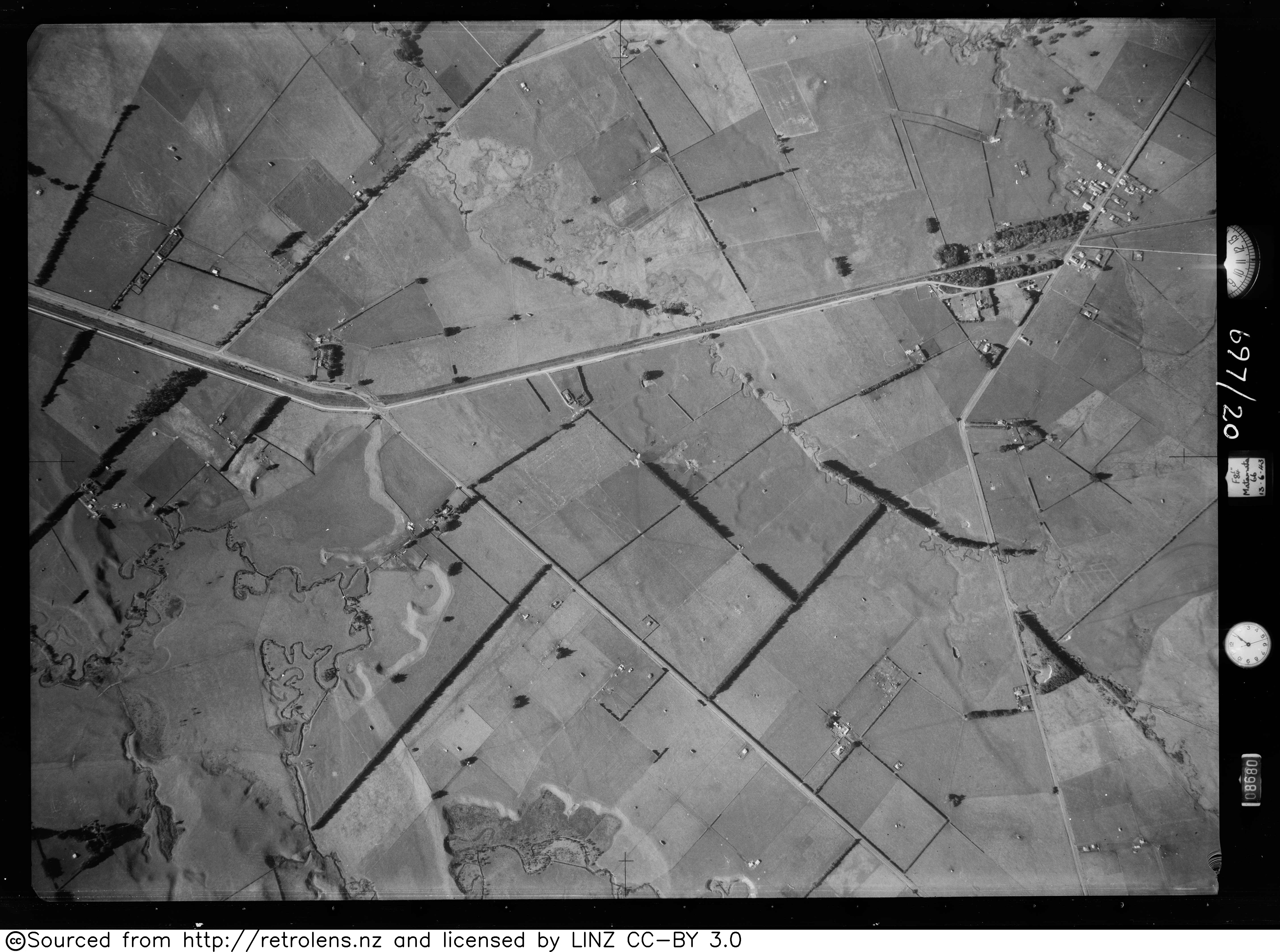
Hinuera was a flag station off Hinuera Rd, on the Kinleith Branch, from 8 March 1886. It was 78 m (256 ft) above sea level. The station was renamed from Mangawhara to Hinuera on 1 April 1897, as the Post Office found that Mangawhara was confused with Mangawhare, near Dargaville. By then the station had a shelter shed, platform, cart approach, a 24 ft by 20 ft goods shed (increased to 40 ft by 15 ft in 1915), cattle yards and a passing loop for 29 wagons. Hinuera was used as a transfer point during construction of Horahora power station in 1911, for additional turbines in the 1920s. The station became staffed and expanded to 3 tracks in 1919, when part of the plantation was removed. Like many stations in this area, Hinuera was protected by a tree plantation, part of which remains, though more of it, on the east side, was felled between 1943 and 1966. The station closed to passengers on 12 November 1968 and to freight on 29 March 1981. Only the plantation and passing loop remain.
Education
Hinuera School is a co-educational state primary school for Year 1 to 6 students, with a roll of as of . It was established as Hinuera Public School in 1892 and operated out of a building leased from the Railway Department. The building could fit 26 pupils, with a roll of 22 and an average attendance of 17.
Hinuera Stone
Hinuera Stone, or Ongatiti Ignimbrite, is a Late Pleistocene, light-brown rock containing angular fragments of pumice in a fine-grained ash matrix. It has been quarried since at least 1893, though not on the present scale until 1954, and is sold as Hinuera Stone for cladding and other decorative uses. The stone is soft enough to be quarried by cutting with saws. One of the first houses built with Hinuera stone was the Bishop's House in Ponsonby in 1893.
Hinuera Gap
The Hinuera Gap, a geological feature stretching west and southwest from the locality towards Piarere, was in prehistoric times the path of the Waikato River, which had its outlet in the Firth of Thames. The river's course was altered to its current outflow by the massive Oruanui eruption about 26,500 years ago. A remnant river, the Waitoa River, now flows through the gap, with its source lying less than one kilometre from the Waikato River, close to the junctions of SH1 and SH29. The route of the latter of these roads takes it through the Hinuera Gap.
Notable people
- James Cotter, MLC was from Hinuera
References
References
- "Hinuera. (Matamata Record, 1924-11-10)".
- Waikato Times. (19 May 2007). "Te Poi's buzzing and Big John is smiling".
- "HINUERA. (Matamata Record, 1923-05-07)".
- "Stats NZ Geographic Data Service".
- "Geographic Boundary Viewer". Stats NZ.
- {{NZ census 2018. 7011643
- "Totals by topic for dwellings, (RC, TALB, UR, SA3, SA2, Ward, Health), 2013, 2018, and 2023 Censuses". Stats NZ – Tatauranga Aotearoa – Aotearoa Data Explorer.
- "Totals by topic for individuals, (RC, TALB, UR, SA3, SA2, Ward, Health), 2013, 2018, and 2023 Censuses". Stats NZ – Tatauranga Aotearoa – Aotearoa Data Explorer.
- "Stats NZ Geographic Data Service".
- {{NZ census 2018. Hinuera (174800). hinuera. Hinuera
- "Totals by topic for dwellings, (RC, TALB, UR, SA3, SA2, Ward, Health), 2013, 2018, and 2023 Censuses". Stats NZ – Tatauranga Aotearoa – Aotearoa Data Explorer.
- "Totals by topic for individuals, (RC, TALB, UR, SA3, SA2, Ward, Health), 2013, 2018, and 2023 Censuses". Stats NZ – Tatauranga Aotearoa – Aotearoa Data Explorer.
- (1886-08-21). "Page 6 Advertisements Column 2". New Zealand Herald.
- (1944). "Sheet N066 Matamata".
- (1965). "New Zealand Railway and Tramway Atlas". Quail Map Co..
- "Stations".
- "HINUERA. (Waikato Argus, 1911-09-27)".
- "HINUERA. (Matamata Record, 1924-12-01)".
- "DISTRICT NEWS (Waikato Times, 1919-12-05)".
- "Matamata railway station with the Plantation behind (pre-1919)".
- "Beautifying on the Railways — Activities Of The Railway Department. — Trees and Gardens. — Co-operation of Local Bodies and Clubs".
- "State Hwy 29".
- (13 Jun 1943). "Survey: SN255 Run: 697 Photo: 20".
- (Sep 1966). "Hinuera / this map was compiled by N.Z. Aerial Mapping Ltd. for Lands & Survey Dept., N.Z.".
- Scoble, Juliet. (2010). "Names & Opening & Closing Dates of Railway Stations".
- "Official School Website".
- "Ministry of Education School Profile". [[Ministry of Education (New Zealand).
- "Education Review Office Report". [[Education Review Office]].
- (1976). "Land of the Three Rivers: A Centennial History of Piako County". Wilson & Horton.
- (February 1994). "International Inter-INQUA Field Conference and Workshop on Tephrochronology, Loess, and Paleopedology".
- Briggs, R.M.. "GEOLOGICAL SOCIETY OF NEW ZEALAND 1981 CONFERENCE".
- "Hinuera ignimbrite".
- "THROUGH WAIKATO. (New Zealand Herald, 1893-05-06)".
- "Hinuera Stone Specialists Ltd. – The Quarry".
- (2006-06-16). "The other Quarrying Dimension". Institute of Quarrying.
- "Bishop's House (Catholic)".
- "A river used to run through it". New Zealand Geographic.
- "Waitoa River".
This article was imported from Wikipedia and is available under the Creative Commons Attribution-ShareAlike 4.0 License. Content has been adapted to SurfDoc format. Original contributors can be found on the article history page.
Ask Mako anything about Hinuera — get instant answers, deeper analysis, and related topics.
Research with MakoFree with your Surf account
Create a free account to save articles, ask Mako questions, and organize your research.
Sign up freeThis content may have been generated or modified by AI. CloudSurf Software LLC is not responsible for the accuracy, completeness, or reliability of AI-generated content. Always verify important information from primary sources.
Report