From Surf Wiki (app.surf) — the open knowledge base
Hinton, Alberta
Town in Alberta, Canada
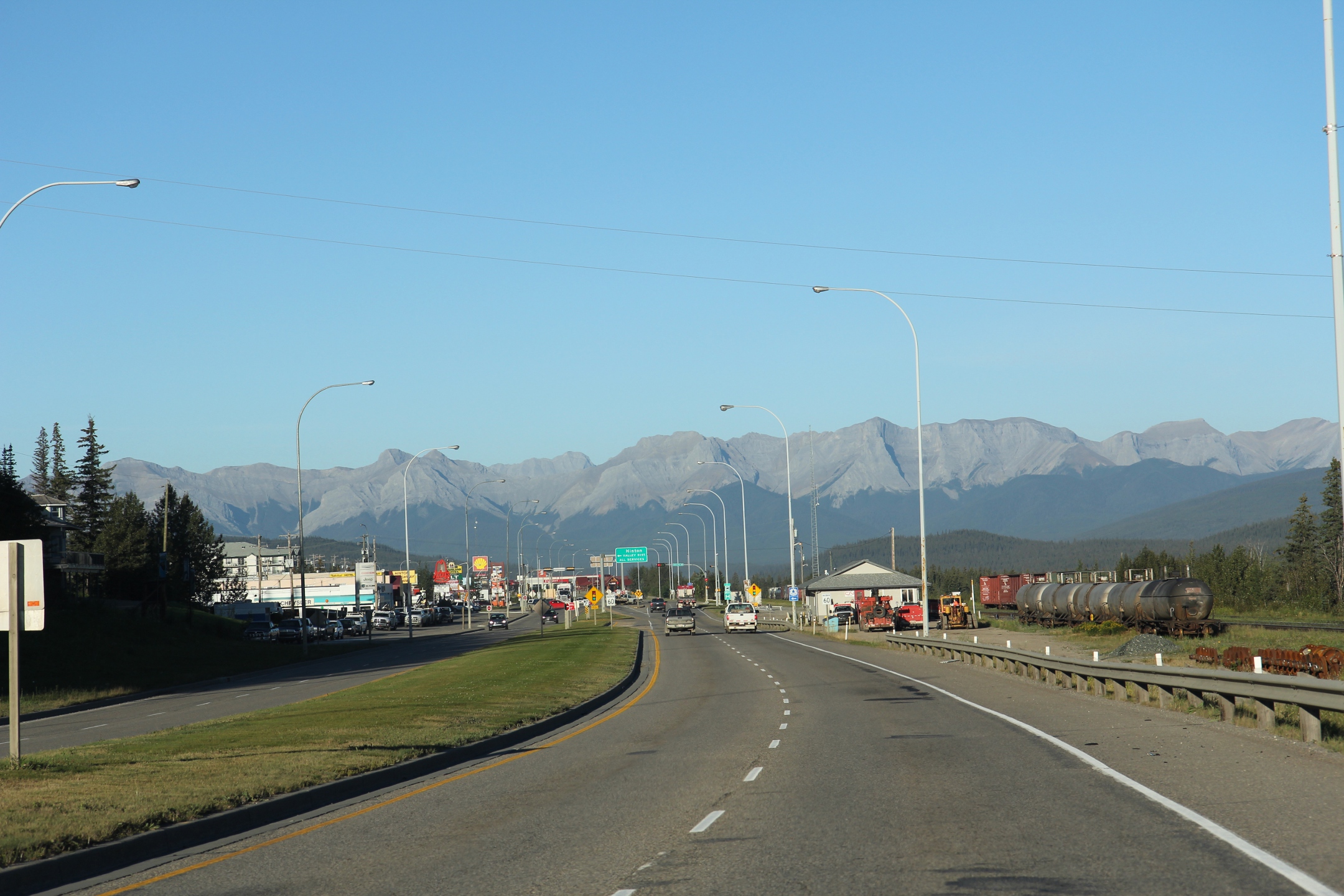
Town in Alberta, Canada
| Field | Value | |||||
|---|---|---|---|---|---|---|
| name | Hinton | |||||
| official_name | Town of Hinton | |||||
| native_name | ||||||
| settlement_type | Town | |||||
| motto | Gateway to the Rockies | |||||
| image_skyline | Hinton Govt Centre.jpg | |||||
| image_caption | Government Centre | |||||
| image_blank_emblem | Hinton Alberta logo.svg | |||||
| blank_emblem_size | 120px | |||||
| image_map | 0151 Town Hinton, Alberta Locator.svg | |||||
| map_caption | Location in Yellowhead County | |||||
| pushpin_relief | yes | |||||
| pushpin_map | Alberta#Canada#North America | |||||
| pushpin_label_position | ||||||
| pushpin_map_caption | Location of Hinton in Alberta | |||||
| subdivision_type | Country | |||||
| subdivision_name | Canada | |||||
| subdivision_type1 | Province | |||||
| subdivision_name1 | Alberta | |||||
| subdivision_type2 | Region | |||||
| subdivision_type3 | Planning region | |||||
| subdivision_name3 | Upper Athabasca | |||||
| subdivision_type4 | Municipal district | |||||
| subdivision_name4 | Yellowhead County | |||||
| government_footnotes | ||||||
| leader_title | Mayor | |||||
| leader_name | Brian LaBerge | |||||
| leader_title1 | Governing body | |||||
| leader_name1 | {{Collapsible list | title=Hinton Town Council | ||||
| 1 | Kristen Chambers | 2=Natalie Charlton | 3=Gail Dunn | 4=Donald MacLean | 5=William McDonald | 6=Dewly Nelson}} |
| leader_title2 | Manager | |||||
| leader_name2 | Jordan Panasiuk | |||||
| leader_title3 | MP | |||||
| leader_name3 | William Stevenson (CPC - Yellowhead) | |||||
| leader_title4 | MLA | |||||
| leader_name4 | Martin Long (UCP - West Yellowhead) | |||||
| established_title | Founded | |||||
| established_date | 1928 | |||||
| established_title1 | Incorporated | |||||
| established_date1 | ||||||
| established_title2 | • New town | |||||
| established_date2 | November 1, 1956 | |||||
| established_title3 | • Town | |||||
| established_date3 | December 29, 1958 | |||||
| established_title4 | Amalgamated | |||||
| established_date4 | April 1, 1957 | |||||
| area_footnotes | (2021) | |||||
| area_land_km2 | 33.32 | |||||
| population_as_of | 2021 | |||||
| population_footnotes | ||||||
| population_total | 9817 | |||||
| population_density_km2 | 294.6 | |||||
| population_blank2_title | Estimate (2022) | |||||
| population_blank2 | 10087 | |||||
| timezone | MST | |||||
| utc_offset | −07:00 | |||||
| timezone_DST | MDT | |||||
| utc_offset_DST | −06:00 | |||||
| coordinates | ||||||
| elevation_footnotes | ||||||
| elevation_m | 990 | |||||
| postal_code_type | Forward sortation area | |||||
| postal_code | T7V | |||||
| area_codes | 780 / 587 | |||||
| blank_name | Highways | |||||
| blank_info | Yellowhead Highway | |||||
| website |
Hinton is a town in the foothills of Alberta, Canada, with a population of 9,817. It is in Yellowhead County, 81 km northeast of Jasper and about 284 km west of Alberta's capital city, Edmonton, at the intersection of the Yellowhead and Bighorn Highways. Situated on the south bank of the Athabasca River, Hinton is on Treaty 6 territory.
The Town of Hinton is named after its railway station, which in turn was named after William Hinton, a manager for the Grand Trunk Pacific Railway at the time it was built, in 1911. The area has been on Indigenous travel routes for thousands of years, and a fur trade route beginning in 1810. Its first homesteads were established at the end of the 19th Century. Aside from a coal boom in the 1930s, the population around the Hinton station remained low until 1956 when Northwest Pulp and Power built a pulp mill. The new town, with a population over 3,500, was incorporated in 1958.
History
Early habitation
The area around present day Hinton deglaciated 12,800–11,600 BCE. Archeological sites up the Athabasca River from Hinton show repeated habitation from 8,000 BCE until approximately 1500 AD. Other sites around Hinton demonstrate that the foothills were also an important travel and trade corridor for Indigenous peoples for thousands of years prior to European contact, dating to at least 7,000 BCE.
Before Europeans arrived in North America, the upper Athabasca region was relatively sparsely inhabited by groups speaking Athabascan/Dene languages (including the Tsuut'ina, Tsa'tinne, and Tse'khene), Siouan languages (specifically Nakoda) and, potentially, Salish languages (such as Secwepemctsín, now present west of the Rockies). European settlement in eastern Canada resulted in waves of western migration of Indigenous groups in the 18th and 19th centuries including Algonquian language-speaking groups (in particular Woodland Cree and Salteaux), Iroquoian speakers, and Métis.
Around the start of the 19th century, furs supplied by these groups, and a desire to access the Columbia River, encouraged the Hudson's Bay Company and North West Company to establish trade and supply posts in the vicinity of the Divide. David Thompson's guide Thomas the Iroquois led a brigade over Athabasca Pass, establishing the York Factory Express. Company employees would continue to pass through the area on the Athabasca River for the next half century, primarily to transport correspondence and move personnel between districts. The Jasper House post also collected furs traded by the local Indigenous people.
This population, estimated to be about 200 in 1836, was a cultural mix of Iroquois, Cree, Dane-zaa, and Métis. Present-day Hinton was within the area that they hunted, travelled, and camped: the Miette-Athabasca confluence to the west, the upper Smoky River to the north, and Lac Ste. Anne to the east. Cache Percotte Creek, just east of present-day Hinton may have been named after a camp of smallpox sufferers travelling to Lac Ste. Anne during the 1870 epidemic. (A 19th century French Canadian word for smallpox was picotte.)
In 1888, Jack Gregg established a trading post at Prairie/Maskuta Creek (from maskotêw: Plains Cree for prairie), 3 km southwest of present day Hinton, to serve travellers on the overland route between Edmonton and Jasper. In 1894 he started a homestead in the same area.
Jasper Forest Park (renamed Jasper National Park in 1930) was established in 1907; in 1909, the government bought out and evicted Métis homesteaders. Among those removed from the new park was the family of John Moberly. They were given $1,000 and a quarter section next to their cousins, the Greggs' homestead. They and a handful of others homesteaded around present-day Hinton ranching, hunting, trapping, and guiding.
Railroads
The construction of the Grand Trunk Pacific Railway (GTPR) saw the establishment of a construction camp at the mouth of Prairie Creek at the Athabasca River in 1908. A 245 m steel trestle bridge was built over the creek and is still in use by the Canadian National Railway today. In 1911, the GTPR built a station house at mile 978 west of Winnipeg. The station was named after William Hinton, a Vice President and General Manager for the GTPR. Mary Schäffer, on her 1911 government-sponsored trip to Maligne Lake, arrived at the end of the line in Hinton in June. The Prairie Creek construction camp was just about to break up and relocate to Moose Lake to support the next stage of construction from Hinton to Tête Jaune Cache. Schäffer wrote that they were glad to leave the, "rubbishy little town to finish its pathetic history."
The Canadian Northern Railway (CNoR) established a parallel line between Edmonton and Tête Jaune Cache. The CNoR ran just north of the GTPR line at Hinton, establishing the stations of Dalehurst (18 km northeast of Hinton Station), Bliss (3 km northeast of Hinton Station), and Dyke (now Entrance; 6 km southwest of Hinton Station). In 1917 when the heavier gauge GTP rail was dismantled and sent to Europe for the war effort, trains used the CNoR line and Dalehurst became the postal station for the Hinton area; Dyke served as its communications centre.
The Canadian National Railway became the owner of both the CNoR and GTPR, and various portions of both lines were used by the new railway. In 1927, the company moved the track back to the better-constructed GTPR grade between Obed and Entrance, and the Hinton station reopened.
Coal boom and bust
The coal-fired steam engines of the railroads both opened access to, and provided a market for, coal from a thick seam underlying the Hinton area. The Coal Branch was completed in 1912 and created work camps such as Mountain Park, Cadomin, Luscar, Robb, Mercoal, and Coalspur, which grew into communities with populations in the hundreds, surpassing Hinton's. By the late 1920s, the region contributed 22% of Alberta's total coal production.
Closer to the Hinton station, prospectors had explored coal indications at the mouths of Happy and Prairie (Maskuta) Creeks, but as late as 1925 they were not considered practical to exploit. However, by 1928, Jasper Collieries Ltd. operated the Drinnan coal mine on the eastern end of present-day Hinton. It produced nearly 2 million tons of coal before closing in 1940. Another, smaller mine opened a short distance southwest in 1943.
On the west side of Hinton, Frank Seabolt, R. W. Jones, and Harry King opened the Hinton Collieries near Happy Creek in 1931. Seabolt had been prospecting in the area for some time while he worked supplying timber to the Mountain Park mine. He also served as the Drinnan postmaster, and in 1916 he bought Jack Gregg's ranch (and renamed it the Bar F Ranch). Seabolt, King, and Jones built and operated all the major businesses in the hamlet of Hinton in the 1930s.
The Hinton Collieries operated for about 10 years despite the Great Depression, which temporarily reduced demand for coal. At 4:30 pm on March 30, 1938 an explosion in the Hinton Collieries killed five miners and wounded five more. The mine's manager L. G. Chavignaud was found to have breached several provisions of the Alberta Mines Act and fined a total of $200. In 1940, Chavignaud's hiring as fire boss at the Mountain Park mine sparked a 3-week strike. On January 22, 1940, another miner was killed, and five injured by a runaway mine car. The Hinton Collieries were abandoned in 1941 and reported flooded in 1944.
Without the Hinton mines, a significant portion of the population left to find work elsewhere. Those that remained relied on forestry, trapping, outfitting, and some oil and gas exploration during the war years. The coal branch communities to the south continued producing through the 1940s. However, as the railways switched from coal to diesel locomotives, these mines too began closing, beginning with Mountain Park in 1950 and ending with Luscar in 1956.
Getting a pulp mill

In April 1954, Ruben returned with business partners from New York-based St. Regis Paper to revive the plan for an Edson area pulp mill. St. Regis and Northwest Pulp and Power would each put up $5 million and finance an additional $20 million estimated to be required for the mill. Each company would own 50% of the venture, with Ruben Chairman of the Board and Roy K. Ferguson of St. Regis the president. On September 1, 1954, North Western Pulp and Power entered into a new agreement with the province to construct a pulp mill on the McLeod River in the Edson area. The updated terms now included reserving 3000 sqmi of pulpwood in exchange for completion of a $15-million mill by 1957 and expansion by 1962. The company then announced it had purchased a site for the mill and would begin construction the following spring.
However, in early 1955, Ruben announced a pause on the project pending the results of certain tests. In fact, the company had discovered that they would not have sufficient water for the mill's effluent at the planned Edson location. That March, Northwest Pulp and Power announced that it would instead build the mill near Hinton, where the larger Athabasca River would provide ample water. Under the new partnership with St. Regis, which was responsible for designing the mill, the fuel source for powering the mill was also changed from coal to natural gas. Ruben's Northern Canadian Oil had to construct a new 219 km pipeline from Wabamun to Hinton at a cost of $5 million. The recently-purchased Bryan Mountain Coal Company, whose 250 employees had been out of work pending construction of the mill's power plant, never reopened.
Work on the mill and pipeline began in the spring of 1955, and in September, the agreement with the province was officially amended to reflect the new location and costs, which had risen to at least $28.5 million. The mill was completed in April 1957, with the first pulp produced on May 29. It became Alberta's first pulp mill. By 1959, Northwest Pulp and Power employed 562 people at the mill, with a further 600 in woodland operations.
Development and incorporation
Before the mill, Hinton had a population of about 180, and couldn't immediately support this increase in population. To jump start development of real estate and services, Northwest Pulp and Power created its own subsidiary, the Athabasca Valley Development Corporation, with Ruben as its vice president. In 1955, the corporation began plans to provide town services and a shopping centre, prompting the Minister of Municipal Affairs Ted Hinman to clarify that the province was in charge of planning and Hinton would not be a company town. In December 1955, Ruben announced plans to build 500 houses in the new town. He followed that up with an announcement that the pulp mill would be expanded within 18 months to a total cost of $100 million and that the town would be named New Hinton. This was swiftly denied by Minister of Lands and Forests Norman Willmore. Ruben responded that, "the matter is entirely out of Mr. Willmore's department," and clarified that he was expressing his personal opinion that they would, "expand the mill at the earliest possible date." The Financial Post, in 1959, reported that the pulp mill cost $42 million.
The New Town of Hinton was incorporated on November 1, 1956. The community grew rapidly, as did a new village to the east called Drinnan. On March 27, 1957, the two communities amalgamated, with a population of about 3,500. The New Town of Hinton incorporated as the Town of Hinton on December 29, 1958, and William A. Switzer was elected as its first mayor. Three years later, the 1961 Canadian census recorded Hinton's population as 3,529.
Hinton train collision
Main article: Hinton train collision
On February 8, 1986, a Canadian National Railway freight train collided with a Via Rail passenger train called the Super Continental, killing twenty-three people. The Hinton train collision was the deadliest rail disaster in Canada since the Dugald rail accident of 1947, which had thirty-one fatalities, and was not surpassed until the Lac-Mégantic rail disaster in 2013, which resulted in forty-seven fatalities. It was surmised that the accident was a result of the crew of the freight train becoming incapacitated, and the resulting investigations revealed serious flaws in Canadian National Railway's labour practices.
Geography
Hinton is situated along a 10.5 km stretch of the Athabasca River valley, on the southeast side of the river. The western town boundary is Highway 40 South. Highway 16 and the CN Rail tracks run side-by-side, approximately parallel to the river and divide the town lengthwise – the area downhill of the tracks and highway, towards the river, is generally referred to as the Valley District and the area above the tracks and highway is called The Hill District. Hinton has nine districts: Eaton, Hardisty, Hillcrest, Miette, Mountain View, Riverside, Terrace Heights, Thompson Lake, and West Riverside.
Hinton lies in the Alberta Plateau Benchlands physiographic subdivision of the Interior Plains. Soils around town are influenced by deposits of carbonate-rich, wind-blown sand and silt which usually have surface textures of loam, sandy loam or silt loam. They are moderately alkaline, in contrast to the varying, mostly moderate acidity which prevails beyond the zone of calcareous aeolian material.
Climate
Under the Köppen climate classification, Hinton is classified as Dfc: subarctic, a subcategory of the continental climates. This is defined as having its coldest month averaging below 0 C, three months averaging above 10 C, and no season contributing more than 70% of the annual precipitation.
The closest Environment Canada weather station was located at Entrance, about 10 km southwest of Hinton. It supplied climate normals data up to 2010. Current Environment Canada weather forecasts and climate normals data up to 2020 rely on the Jasper Warden Station near Maligne Canyon, 61 km southwest of Hinton.
Demographics
population history of Hinton |1951|203 |1956|948 |1961|3529 |1966|4307 |1971|4911 |1976|6731 |1981|8342 |1986|8630 |1991|9046 |1996|9961 |2001|9405 |2006|9738 |2011|9640 |2016|9882 |2021|9817
In the 2021 Canadian census conducted by Statistics Canada, the Town of Hinton had a population of 9,817 living in 4,006 of its 4,405 total private dwellings, a change of from its 2016 population of 9,882. With a land area of 33.32 km2, it had a population density of in 2021.
The 2021 census also found that 52.1% of the population in Hinton were men (Canada-wide: 49.3%). Hinton's proportion of population that are under 15 years of age was 18.8% (Canada-wide: 16.3%), between 15 and 64 was 68.0% (Canada-wide: 64.8%), and 65 or over was 13.2% (Canada-wide: 19.0%).
The median employment income in 2020 in people 15 years or older was $45,600 in Hinton (Canada-wide: $37,200). The percentage of 25–64 year olds in Hinton who completed high school was 77.9% (Canada-wide: 88.4%). Hinton's English-French bilingualism rate was 8.5% (Canada-wide: 18%). Immigrants make up 11.3% of Hinton's population (Canada-wide: 23.0%).
In the Canada 2016 Census conducted by Statistics Canada, the Town of Hinton recorded a population of 9,882 living in 3,930 of its 4,343 total private dwellings, a increase from its 2011 population of 9,640. With a land area of 33.52 km2, it had a population density of in 2016.
The population of the Town of Hinton according to its 2009 municipal census is 9,825. The census originally counted 9,812 people within the town limits but an additional 13 were added when a long-standing annexation application was approved shortly after the census was conducted.
It is the site of the Foothills Ojibway Society (non-status First Nation).
| Panethnic group | 2021 | 2016 | 2011 | 2006 | 2001 | Pop. | % | Pop. | % | Pop. | % | Pop. | % | Pop. | % | Total responses | 9,720 | 9,790 | 9,550 | 9,740 | 9,370 | Total population | 9,817 | 9,882 | 9,640 | 9,738 | 9,405 |
|---|---|---|---|---|---|---|---|---|---|---|---|---|---|---|---|---|---|---|---|---|---|---|---|---|---|---|---|
| European | 7,110 | 7,705 | 7,950 | 8,320 | 8,000 | ||||||||||||||||||||||
| Indigenous | 1,330 | 1,170 | 1,085 | 1,145 | 1,020 | ||||||||||||||||||||||
| Southeast Asian | 675 | 485 | 270 | 115 | 70 | ||||||||||||||||||||||
| South Asian | 210 | 75 | 30 | 10 | 10 | ||||||||||||||||||||||
| East Asian | 165 | 115 | 30 | 100 | 215 | ||||||||||||||||||||||
| African | 105 | 110 | 80 | 10 | 25 | ||||||||||||||||||||||
| Latin American | 55 | 15 | 50 | 20 | 25 | ||||||||||||||||||||||
| Middle Eastern | 30 | 20 | 0 | 20 | 15 | ||||||||||||||||||||||
| Other/multiracial | 40 | 85 | 40 | 10 | 10 | ||||||||||||||||||||||
| Note: Totals greater than 100% due to multiple origin responses |
Economy
Throughout the 20th century, Hinton's economy has been resource-based, including coal, timber, natural gas, and petroleum. By the 1980s, the service industry, tourism, and the Forest Technology School had diversified the economy. In 2021, sales and service occupations made up the largest share of Hinton's labour force at 28.9%, followed by trades, transport, and equipment operators (25.0%), then business, finance, and administration (12.0%).
Arts and culture
The Performing Arts Theatre of Hinton exhibits films, live theatre, music, dance, and other events. The Wild Mountain Music Festival is held on the third weekend of July across the Athabasca River from Hinton at the Entrance Ranch. The 3-day event has 2 concert stages, a beer tent, food stalls, tent and RV camping, and runs a shuttle between Hinton and the festival. The annual event began in 2008.
The Northern Rockies Museum of Culture and Heritage is in the original GTP Hinton station. It was moved from its original location across the highway and, after renovations, opened May 20, 2017.
Recreation
.jpg)
In town
The Beaver Boardwalk consists of three kilometres (1.9 miles) of boardwalk through the forest, meadow, and wetland near Maxwell Lake, at the south side of town. It is named for the active beaver lodge that it passes beside. Large sections of the boardwalk were rebuilt in early 2025, with more rehabilitation planned for future winters.
The Hinton Mountain Bike Park has 23 trails of varying difficulty, a skills area, pump track, and jumps. The bike park is connected to the Happy Creek trail network, which has an additional 39 maintained trails. The Bighorn Ridge trails begin 3.5 km south of the bike park and offers an additional 33 km of maintained mountain bike trail.
Hinton has both an 18-hole golf course and an 18-hole disc golf course. The town has numerous parks with a boat launch, rodeo grounds, sports fields, picnic facilities, and trails.
The Dr. Duncan Murray Recreation Centre has a 25m pool, sauna, hot tub, kids pool, two skating rinks, a bouldering wall, and courts for basketball, racquetball, and squash. It also includes the Hinton Municipal Library.
Regional
Hinton is a short drive from several popular parks and recreation areas:
- Jasper National Park's east gate is 27 km southwest on Highway 16.
- Obed Lake Campground is 30 km east on Highway 16.
- The Hinton Nordic Centre is 22 km northwest on Highway 40.
- Switzer Park Visitor Centre is 27 km northwest.
- Rock Lake is 73 km northwest.
- Whitehorse Creek Campground is 57 km south on Highway 40.
- Cardinal Divide is 73 km south
Hinton is a staging area for expeditions into the Willmore Wilderness Park, via Rock Lake or Big Berland Provincial Recreation Area. The other common staging area is Grande Cache.
Governance
| 2025 Mayoral Candidates | Vote | % |
|---|---|---|
| Nicholas Nissen (X) | 452 | 19 |
| Brian LaBerge | 1222 | 52 |
| David Michael Rees | 665 | 28 |
| *(X) indicates incumbent. Bold indicates elected.* |
| 2025 Councillor Candidates | Vote |
|---|---|
| Kristen Chambers (X) | 1375 |
| Trevor Haas (X) | 798 |
| Ryan Maguhn (X) | 776 |
| Natalie Charlton | 1462 |
| Gail Dunn | 1312 |
| Donald MacLean | 1093 |
| William (Bill) McDonald | 996 |
| Lyla Mozel | 853 |
| Dewly Nelson | 1271 |
| Mike Storey | 736 |
| *(X) indicates incumbents. Bold indicates elected. Top six candidates are elected at large.* |
Hinton has a council-manager government system, where residents elect a mayor and six councilors every four years. They, in turn, appoint the Chief Administrative Officer to oversee management of town departments. The mayor and each councilor has equal voting power for enacting by-laws and policies, with the mayor serving also as the Chief Elected Official.
The government is empowered by the Municipal Government Act, which delimits its roles and responsibilities. These include property tax collection, building permits, by-law enforcement, road and utility maintenance, fire services, recreation, and transit.
Recent Elections
In October 2021, Marcel Michaels was re-elected as mayor to a second term, but resigned in August 2023. In a by-election in November, Nicholas Nissen defeated former councilor Brian LaBerge. Laberge's vacant seat was won by Kristen Chambers in the same by-election. The other councilors elected in 2021 were JoAnn Race, Ryan Maguhn, Trevor Haas, Albert Ostashek, and Stuart Taylor, who resigned in May 2025. As the municipal election is scheduled for October 20, 2025, there is no by-election for his seat.
In the 2025 Alberta Municipal Elections, LaBerge again ran for mayor, this time defeating incumbent Nissen. Longtime incumbent councilors Trevor Haas and Ryan Maguhn also lost their seats. Other incumbents Race, Ostashek, and Taylor did not seek re-election; only Chambers kept her seat. The other councilors elected were Natalie Charlton, Gail Dunn, Donald MacLean, William (Bill) McDonald, and former councilor Dewly Nelson. Out of 7,900 eligible electors, 2,369 voted, for a voter turnout of 29.9%.
Voters were also given three options in a non-binding plebiscite concerning the recreation centre. "Build New" received the most support with 1001 yes votes to 664 no votes. The percentage of voters who cast ballots for this question was 29.5%.
Infrastructure

Transportation
Hinton Transit is the municipal public transportation service, operated under contract by First Student Canada, which is responsible for providing the vehicles, drivers and maintenance.
The bus service operates on Monday to Saturday from 7 am to 1 pm and 2:30 pm to 8:30 pm. No service is provided on Sunday or statutory holidays. It alternately runs a hill district loop and a valley district loop, returning to each stop at the same minute after the hour.
There is also an accessible, door-to-door transit service available upon request for residents with physical and cognitive disabilities called The Freedom Express.
Regional bus service is provided by SunDog Transportation and Tour Co. which has a daily route between Edmonton and Jasper, with one stop in Hinton. Starting in the summer of 2025, the province has funded a bus route between Jasper and Hinton that is $15 per trip, but free for Jasper residents displaced by the 2024 wildfire. It is operated by Jasper Transit, and is funded for approximately 2 years.
As a flag stop, Via Rail's The Canadian calls at the Hinton station two times per week, in each direction.
There are two small airports near Hinton. The Jasper-Hinton Airport is 9.5 NM southwest of Hinton on Highway 16. It is operated by Yellowhead County and is used by chartered air services supporting tourist, forestry, mining, and wildlife research activities. The Hinton/Entrance Airport is 6 NM west of town, across the Athabasca River. It is owned by Alberta Forestry and primarily supports wildfire fighting operations. It is operated by the Hinton Flying Club.[[File:Hinton, Alberta, Canada (21791960225).jpg|thumb|The Hinton Healthcare Centre's main building.]]
Health care
Emergency and other medical care is provided at the Hinton Healthcare Centre. The hospital offers a wide range of diagnostic testing, chronic and acute care, and recovery services. As of 2022, it has 23 acute care beds. Beginning in 2024, physician shortages have resulted in repeated closures of the emergency department, prompting the town to declare a local healthcare crisis.
Education
Education in Hinton includes:
- Grande Yellowhead Public School Division No. 77
- Crescent Valley Elementary School (K-7)
- Mountain View Elementary School (K-7 English, French)
- Harry Collinge High School (8-12 English, French)
- Evergreen Catholic Separate School Division
- St. Gregory Catholic Elementary School (K-4)
- Father Gerard Redmond Community Catholic School (5-12)
- Post secondary
- Northwestern Polytechnic
- Hinton Employment and Learning Place
- Hinton Training Centre
- Northern Lakes College
Media
Newspapers
Hinton no longer has a local paper. The Hinton Voice, an independent newspaper that started up in June 2009, printed its last issue on August 28, 2025. Hinton also had a weekly tabloid-format newspaper called the Hinton Parklander, which was founded in 1955 and printed its final issue on January 13, 2020.
Radio
- CBXI-FM 88.1 CBC Radio One
- CFXH-FM 97.5 Newcap Broadcasting (Stingray Radio)
- CFHI-FM 104.9 Newcap Broadcasting
- CHFA-FM-4 100.7 Ici Radio-Canada Première
- CKUA-FM-7 102.5 CKUA Radio Network
Notable people
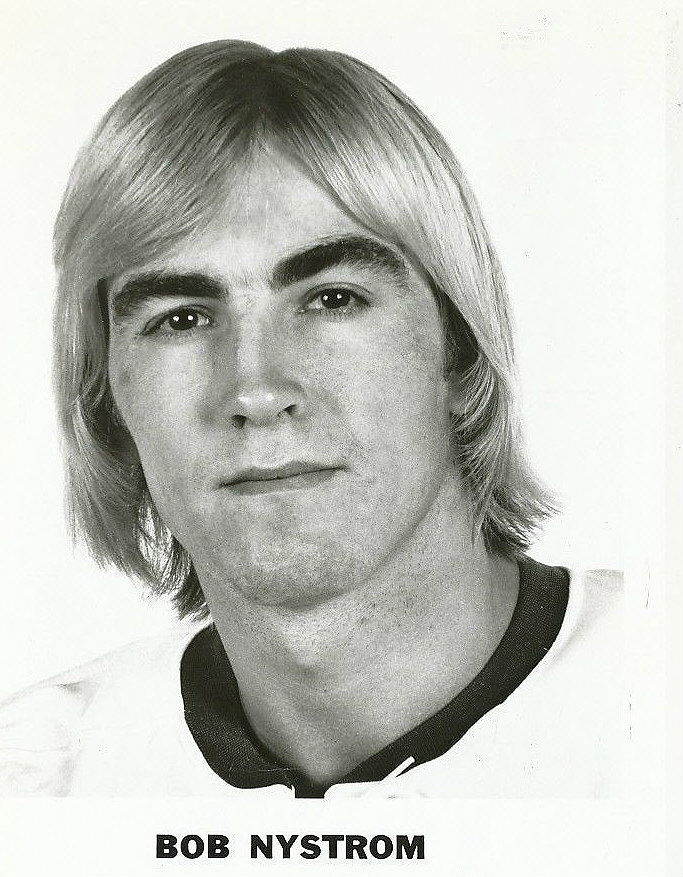
- Bob Nystrom (born 1952), Swedish-Canadian professional ice hockey player
- Arthur Godfrey Peuchen, major of the Canadian armed forces, lived in Hinton most of his life until few weeks before his death in 1929, when he returned to his native Toronto.
- Dave Scatchard (born 1976), professional National Hockey League ice hockey player
- Glenn Taylor (born 1961/62), former leader of the Alberta Party, former mayor
Notes
References
Citations
Bibliography
References
- {{AMOS
- (June 17, 2016). "Location and History Profile: Town of Hinton". [[Alberta Municipal Affairs]].
- (February 9, 2022). "Population and dwelling counts: Canada and population centres". [[Statistics Canada]].
- (January 11, 2023). "Census Subdivision (Municipal) Population Estimates, July 1, 2016 to 2022, Alberta". [[Alberta Municipal Affairs]].
- {{Cite cgndb. IAJWU. Hinton
- (January 2012). "Alberta Private Sewage Systems 2009 Standard of Practice Handbook: Appendix A.3 Alberta Design Data (A.3.A. Alberta Climate Design Data by Town)". Safety Codes Council.
- (2022-04-05). "The age of the opening of the Ice-Free Corridor and implications for the peopling of the Americas". Proceedings of the National Academy of Sciences.
- (July 24, 2019). "Glacier Pass Concretions: A pre-contact toolstone from an alpine quarry complex in Alberta's Rocky Mountains". Archaeological Survey of Alberta.
- Hudecek-Cuffe, Caroline. (February 20, 2019). "Site 243R (FgQm-59): A stratified campsite on the Snake Indian River in Jasper National Park, Alberta". Archaeological Survey of Alberta.
- Burchill, Alexandra. (May 26, 2022). "Findings and interpretations at GbQn-13, an Early Prehistoric Period site in Alberta's west central Foothills". Archaeological Survey of Alberta.
- "Expedition Magazine {{!}} Archaeology Along Canada's Rocky Mountain Eastern Slopes".
- Snowdon, Wallis. (March 31, 2025). "Obsidian artifacts unearthed in Alberta offer new clues on prehistoric trade routes". [[CBC News]].
- (2004). "First Nations, Métis and Inuit Perspectives in Curriculum FNMI Worldviews". Government of Alberta.
- (July 21, 2022). "A brief introduction to Indigenous Peoples in Alberta". Indigenous Relations.
- "Athabasca Pass National Historic Site of Canada".
- "Jasper House National Historic Site of Canada".
- (1857). "Report from the Select Committee on the Hudson's Bay Company: Together with the proceedings of the Committee, minutes of evidence, appendix and index". Her Majesty's Stationery Office.
- Government of Canada, Natural Resources Canada. "Place names - Cache Percotte Creek".
- (2025-04-25). "Alberta Geographical Names Program {{!}} Alberta.ca".
- "The 1885 Montreal Smallpox Epidemic".
- Desbiens, Karine. (2020-10-20). "Montréal au temps de la variole".
- "itwêwina: the online Cree dictionary".
- Government of Canada, Natural Resources Canada. "Place names - Maskuta Creek".
- (2025-04-25). "Alberta Geographical Names Program {{!}} Alberta.ca".
- Gainer, Brenda, and Parks Canada. 1981. [https://bac-lac.on.worldcat.org/oclc/59738933?lang=en The Human History of Jasper National Park, Alberta]. [Ottawa]: Parks Canada. p. 78–82
- "John and Mary Gregg with Mr. and Mrs. John Moberly. - Alberta On Record".
- "Alberta's 10 largest railway bridges - Forth Junction".
- "History".
- "Hinton".
- (2015-01-27). "Hinton, Alberta".
- Schäffer, Mary T. S.. (2014). "A Hunter of Peace". Whyte Museum of the Canadian Rockies.
- Chalifour, J. E.. (September 1, 1914). "Northern Alberta Disposition of Lands, 1:792,000". [[Minister of the Interior (Canada).
- Clegg, Anthony. (July–August 1959). "Canadian National's Edmonton-Red Pass Jct. Line Has Interesting History". Canadian Railroad Historical Association News Report.
- ''[https://archive.org/stream/actsofparl1919v01cana#page/76/mode/2up The Grand Trunk Railway Acquisition Act, 1919]'', [[Statutes of Canada. S.C.]] 1919 (2nd sess.), c. 17 , supplemented by ''[https://archive.org/stream/actsofparl1920v01cana#page/26/mode/2up An Act to confirm the Agreement dated the eighth day of March, 1920, between His Majesty the King and the Grand Trunk Railway Company of Canada for the acquisition by His Majesty of the capital stock of the said Grand Trunk Railway Company, except the four per cent guaranteed stock]'', [[Statutes of Canada. S.C.]] 1920, c. 13
- "A Brief History of Alberta's Railway • Alberta Railway Museum".
- Rutherford, R. L. (6 March 1925). [https://ags.aer.ca/publications/all-publications/rep-11 Geology of the Foothills Belt Between McLeod and Athabasca Rivers], Alberta (Report). p. 3. Retrieved 2 May 2025.
- "Steam Locomotives and Railway Expansion - Coal - Alberta's Energy Heritage".
- (1994). "Geological atlas of the Western Canada Sedimentary Basin". Canadian Society of Petroleum Geologists and Alberta Research Council.
- "The Coal Branch - Coal - Alberta's Energy Heritage".
- Rutherford, R. L.. (March 6, 1925). "Geology of the Foothills Belt Between McLeod and Athabasca Rivers, Alberta".
- "Drinnan Coal Mine, Hinton Alberta".
- "Square entrance to mine at Hinton, Alberta".
- Lang, A. H.. (January 1, 1944). "Drinnan to Brûlé Lake, Athabaska Valley, Alberta (Report and Map)". Canada Department of Mines and Resources, Mines and Geology Branch.
- "Bar F Ranch House".
- "Contraction and Expansion: 1930-1950 - Coal - Alberta's Energy Heritage".
- (March 31, 1938). "Five Killed, Four Injured in Alberta Mine Explosion". [[Regina Leader-Post]].
- "Safety - Coal - Alberta's Energy Heritage".
- (November 23, 1938). "Heavily Assessed Mine Manager Is Fined on Charges Arising From Alberta Disaster". [[The StarPhoenix]].
- (April 9, 1940). "Mountain Park Mine Strike Ends". [[The Calgary Herald]].
- "Reinvention: 1950 Onwards - Coal - Alberta's Energy Heritage".
- Frantz, Larry. (May 28, 1953). "North Canadian Buys Pulp Firm". [[The Calgary Herald]].
- Order in Council 836-51. "[https://digitalcollections.ucalgary.ca/archive/Alberta-Gazette-2R3BF1SH7O0E2.html Alberta Gazette 1951]", 1951, (CU14941083) by Alberta. corporate. Courtesy of Alberta Law Collection, Libraries and Cultural Resources Digital Collections, University of Calgary. Pp. 803–811
- (May 15, 1954). "Edson Area Pulp Scheme Revived". [[Financial Post]].
- (June 16, 1961). "North West Signs Agreem't For New Alberta Pulp Mill". [[Financial Post]].
- (April 28, 1954). "U.S. Pulp Men in Edson Area". [[The Calgary Herald]].
- (June 26, 1954). "St. Regis Backs New Edson Mill". [[Financial Post]].
- Order in Council 1264-54. "[https://digitalcollections.ucalgary.ca/archive/Alberta-Gazette-2R3BF1SH7O0E2.html Alberta Gazette 1954 part 1]", 1954, (CU11090979) by Alberta. corporate. Courtesy of Alberta Law Collection, Libraries and Cultural Resources Digital Collections, University of Calgary. p. 1716
- (November 2, 1954). "Province Signs Pulpwood Lease". [[The Edmonton Journal]].
- (September 20, 1954). "Pulp Mill Site Said Purchased". [[The Edmonton Journal]].
- (February 7, 1955). "Plans for Edson Pulp Mill Delayed". [[The Vancouver Sun]].
- (March 17, 1955). "New Pulp Mill in Alberta". The News and Eastern Townships Advocate.
- (March 26, 1955). "Spring Start for Alberta Pulp Project". [[Financial Post]].
- Anderson, Ron. (June 20, 1956). "Plans Are Made To Double Hinton Pulp Mill Project". [[Calgary Herald]].
- (April 13, 1956). "Interprovincial Pipe Increases Revenues". [[Vancouver Sun]].
- (April 7, 1954). "Coal Mine in Alberta Suspends Operations". [[The StarPhoenix]].
- (September 3, 1955). "Pulp Plant Being Built At Hinton". [[The Calgary Herald]].
- Anderson, Ron. (1956-06-27). "Hinton: What Is Happening?". [[The Calgary Herald]].
- Order in Council 882-55. "[https://digitalcollections.ucalgary.ca/asset-management/2R3BF1LQACRU?FR_=1&W=2509&H=1315 Alberta Gazette 1955]", 1955, (CU11370527) by Alberta. corporate. Courtesy of Alberta Law Collection, Libraries and Cultural Resources Digital Collections, University of Calgary.
- (1957-06-05). "New Pulp Mill Now Near Output Peak". [[The Vancouver Sun]].
- French, Janet. (2024-03-20). "New owners will use Hinton pulp mill to make sustainable packaging". [[CBC News]].
- "Alberta's First Pulp Mill Opens New Forestry Markets".
- "Hinton".
- (September 19, 1959). "Alberta's 'New Industry'". [[Financial Post]].
- Huth, Robin. (July 19, 1954). "Boom Town". [[The Calgary Herald]].
- (1955-05-03). "Province Will Supervise Building of Pulp Mill Town". [[The Edmonton Journal]].
- (1955-12-14). "Plan 500 Homes, Pulp Mill Town". [[The Saskatoon Star-Phoenix]].
- (1959-09-19). "Alberta's 'New Industry'". [[The Financial Post]].
- Province of Alberta. (1957-03-27). "Order in Council (O.C.) 494-57, New Town Established (Amalgamation of Hinton and Drinnan)".
- (1958-07-24). "Hinton Serves as Subject of Industrial Development Survey". [[The Edmonton Journal]].
- (2005). "The Canadian parliamentary guide". Gale.
- (1963). "1961 Census of Canada Recensement du Canada". Dominion Bureau of Statistics.
- "Hinton Train Collision". Town of Hinton.
- Kanada. (1986). "Report of the commissioner / Commission of Inquiry Hinton Train Collision". Minister of Supply and Services Canada.
- "'I remember every February the 8th': Alberta's deadliest train crash". calgaryherald.
- "Maps & GIS {{!}} Hinton, AB - Official Website".
- (March 19, 2021). "Town Districts". Development Services, Town of Hinton.
- "Dumanski, Macyk, Veauvy and Lindsay, 1972. Soil Survey and Land Evaluation of the Hinton-Edson Area, Alberta".
- Canada, Natural Resources. "Climatic Regions - Open Government Portal".
- "Canada Koppen-Geiger Climate Classification Map".
- (2007-10-11). "Updated world map of the Köppen-Geiger climate classification". Hydrology and Earth System Sciences.
- "Canadian Climate Normals 1981_2010 Station Inventory". [[Environment Canada]].
- Canada, Environment. (2013-04-16). "Hinton, AB - 7 Day Forecast - Environment Canada".
- "Canadian Climate Normals 1991_2020 Station Inventory". [[Environment Canada]].
- {{1951CDNcuipr
- {{1956CDNcuipr
- (1968). "Census of Canada, 1966". [[Statistics Canada.
- (June 1973). "1971 Census of Canada". Statistics Canada.
- (1983). "1981 Census of Canada, census divisions and subdivisions, Alberta". Statistics Canada.
- (June 1, 1993). "Data tables, 1986 Census". [[Statistics Canada]].
- "Population and Dwelling Counts, for Canada and Census Subdivisions (Municipalities) with 5,000-plus Population, 2001 and 1996 Censuses - 100% Data". [[Statistics Canada]].
- (13 March 2007). "2006 Community Profiles - Hinton Alberta (Town)". [[Statistics Canada]].
- (February 9, 2022). "Population and dwelling counts: Canada, provinces and territories, and census subdivisions (municipalities)". [[Statistics Canada]].
- (April 27, 2022). "Comparison Age and Gender Pyramid".
- Statistics Canada. 2023. (table). ''Census Profile''. 2021 Census of Population. Statistics Canada Catalogue no. 98-316-X2021001. Ottawa. Released November 15, 2023. https://www12.statcan.gc.ca/census-recensement/2021/dp-pd/prof/index.cfm?Lang=E (accessed April 24, 2025).
- (15 January 2001). "Census of Population".
- (February 8, 2017). "Population and dwelling counts, for Canada, provinces and territories, and census subdivisions (municipalities), 2016 and 2011 censuses – 100% data (Alberta)". [[Statistics Canada]].
- Alberta Municipal Affairs. (2009-09-15). "Alberta 2009 Official Population List".
- (2009-07-25). "Hinton's Population is Up!". Town of Hinton.
- Government of Canada, Statistics Canada. (2022-10-26). "Census Profile, 2021 Census of Population".
- Government of Canada, Statistics Canada. (2021-10-27). "Census Profile, 2016 Census".
- Government of Canada, Statistics Canada. (2015-11-27). "NHS Profile".
- Government of Canada, Statistics Canada. (2019-08-20). "2006 Community Profiles".
- Government of Canada, Statistics Canada. (2019-07-02). "2001 Community Profiles".
- (March 1, 1989). "Alberta community profile: Hinton".
- Statistics Canada. 2023. (table). [https://www12.statcan.gc.ca/census-recensement/2021/dp-pd/prof/index.cfm?Lang=E&GENDERlist=1&STATISTIClist=1,4&DGUIDlist=2021S05100374&HEADERlist=,42,44,40,43,41&SearchText=Hinton ''Census Profile''. 2021 Census of Population. Statistics Canada Catalogue no. 98-316-X2021001]. Ottawa. Released November 15, 2023. (accessed October 27, 2025)
- (2025-04-28). "Events".
- "Info/About".
- "Location Info".
- "Northern Rockies Museum Exhibits {{!}} Explore Local History".
- "Beaver Boardwalk {{!}} Hinton, AB - Official Website".
- Initiative, The Local Journalism. (2025-04-15). "Beaver Boardwalk rehab in Hinton nearing completion for season".
- "Upcoming Beaver Boardwalk Maintenance".
- "Hinton Bike Park".
- "Happy Creek Trail System".
- "Bighorn Ridge".
- "Hinton Golf Club".
- (2025-03-21). "Town of Hinton purchases additional land at Hinton Golf Course".
- "Course".
- "Parks & Trails {{!}} Hinton, AB - Official Website".
- "Aquatics {{!}} Hinton, AB - Official Website".
- "Arenas {{!}} Hinton, AB - Official Website".
- "Bouldering Wall & Courts {{!}} Hinton, AB - Official Website".
- "Contact".
- (2022). "Hinton & The Alberta Northern Rockies 2022 Visitor Guide". Hinton and District Chamber of Commerce.
- "2025 Municipal Election - Voter Information". Hinton.
- "Official Results of General Election and Plebiscite".
- "[https://kings-printer.alberta.ca/1266.cfm?page=m26.cfm&leg_type=Acts&isbncln=9780779853908&display=html Municipal Government Act]". kings-printer.alberta.ca. Alberta King's Printer. June 11, 2025. Part 5, Division 1–4. Retrieved 2025-07-11.
- (May 15, 2025). "Local Authorities Election Act".
- "Bylaws & Policies {{!}} Hinton, AB - Official Website".
- "Council Information {{!}} Hinton, AB - Official Website".
- (June 11, 2025). "Municipal Government Act". Alberta King's Printer.
- (2025-07-10). "About municipalities {{!}} Alberta.ca".
- "Roles & Responsibilities {{!}} Hinton, AB - Official Website".
- "Resignation Announcement - Marcel Michaels".
- Interview, Cross Border. (2023-08-30). "Hinton Mayor Steps Down, Takes New Role as CAO for Village of Consort".
- Interview, Cross Border. (2023-11-20). "Nissen Triumphs Over Councillor Laberge to Secure Hinton Mayoral Spot".
- "Councillor Resignation Announcement".
- "Municipal Election 2025 {{!}} Hinton, AB - Official Website".
- "Recreation Centre Modernization".
- (October 20, 2025). "Voting results for central, northern Alberta municipal elections continue to trickle in". [[CBC News]].
- "Hinton Transit {{!}} Hinton, AB - Official Website".
- "Edmonton to Jasper Bus {{!}} SunDog Transportation and Tour Co.".
- (2025-04-22). "Muni seeking contractor for transit service between Jasper and Hinton".
- Riebe, Natasha. (Jul 29, 2025). "New Hinton-Jasper bus connects displaced Jasperites with workplaces, community". [[CBC News]].
- Fitzhugh, Peter Shokeir, Local Journalism Initiative, Jasper. (2025-06-05). "SunDog wins bid for regional transit service - News".
- "Hinton train station {{!}} VIA Rail".
- "Airports in Yellowhead County".
- Services, Alberta Health. "Hinton Healthcare Centre".
- (May 23, 2024). "Hospital Beds Staffed and In Operation, 2022–2023".
- Johnson, Lisa. (July 4, 2024). "Alberta town declares health crisis, must pay to keep clinic open as doctor roster dwindles". [[CBC News]].
- "Hinton declares local health-care crisis over 'terrifying' family doctor shortage {{!}} Globalnews.ca".
- Wood, Phil. (2024-06-26). "Alberta town says lack of family doctors prompted healthcare crisis".
- "Education".
- Wilkie, Trent. (2025-09-17). "Loss of newspaper leaves gap for community, museum manager says".
- (January 8, 2020). "Postmedia to close Alberta community newspapers in Hinton, Edson and Lacombe". [[CBC News]].
- (13 March 2012). "Toronto Titanic survivor Maj. Arthur Peuchen was scorned once back home". [[The Toronto Star]].
This article was imported from Wikipedia and is available under the Creative Commons Attribution-ShareAlike 4.0 License. Content has been adapted to SurfDoc format. Original contributors can be found on the article history page.
Ask Mako anything about Hinton, Alberta — get instant answers, deeper analysis, and related topics.
Research with MakoFree with your Surf account
Create a free account to save articles, ask Mako questions, and organize your research.
Sign up freeThis content may have been generated or modified by AI. CloudSurf Software LLC is not responsible for the accuracy, completeness, or reliability of AI-generated content. Always verify important information from primary sources.
Report