From Surf Wiki (app.surf) — the open knowledge base
Hinoba-an
Municipality in Negros Occidental, Philippines
Municipality in Negros Occidental, Philippines
| Field | Value | |
|---|---|---|
| name | ||
| image_skyline | Welcome to hinoba-an.jpg | |
| image_caption | "Welcome" sign board along the highway | |
| image_flag | Flag of Hinoba-an, Negros Occidental.png | |
| flag_size | 120x80px | |
| image_seal | File: Hinobaan_logo.png | |
| seal_size | 100x80px | |
| image_map | ||
| map_caption | ||
| mapframe | yes | |
| pushpin_map | Philippines | |
| pushpin_label_position | left | |
| pushpin_map_caption | Location within the | |
| coordinates | ||
| settlement_type | ||
| subdivision_type | Country | |
| subdivision_name | Philippines | |
| subdivision_type1 | Region | |
| subdivision_name1 | ||
| subdivision_type2 | Province | |
| subdivision_name2 | ||
| official_name | ||
| other_name | Asia | |
| motto | Paspas Hinobaan | |
| subdivision_type3 | District | |
| subdivision_name3 | ||
| established_title | Founded | |
| established_date | November 20, 1948 | |
| parts_type | Barangays | |
| parts_style | para | |
| p1 | (see Barangays) | |
| leader_title | Mayor | |
| leader_name | Daph Anthony V. Reliquias (PFP) | |
| leader_title1 | Vice Mayor | |
| leader_name1 | Francisco Jose L. Bilbao, Jr. (PFP) | |
| leader_title2 | Representative | |
| leader_name2 | Mercedes Alvarez (NPC) | |
| leader_title3 | Municipal Council | |
| leader_name3 | {{PH Town Council | |
| 1 | Jodybonne G. Octavio | |
| 2 | Gems Bernard V. Reliquias | |
| 3 | Jefre L. Encoy | |
| 4 | Romeo A. Yusay, Jr. | |
| 5 | Edgardo F. Malayo | |
| 6 | Noel B. Lapore | |
| 7 | Theodore D. Tubilleja | |
| 8 | Thomas Bermarc R. Santes | |
| leader_title4 | Electorate | |
| leader_name4 | voters (electorate_point_in_time}} | ) |
| government_type | ||
| government_footnotes | ||
| elevation_m | ||
| elevation_max_m | 687 | |
| elevation_min_m | 0 | |
| elevation_footnotes | ||
| area_footnotes | ||
| area_total_km2 | ||
| population_footnotes | ||
| population_total | ||
| population_as_of | ||
| population_density_km2 | auto | |
| population_blank1_title | Households | |
| population_blank1 | ||
| timezone | PST | |
| utc_offset | +8 | |
| postal_code_type | ZIP code | |
| postal_code | ||
| postal2_code_type | ||
| postal2_code | ||
| area_code_type | ||
| area_code | ||
| website | ||
| demographics_type1 | Economy | |
| demographics1_title1 | ||
| demographics1_info1 | ||
| demographics1_title2 | Poverty incidence | |
| demographics1_info2 | % () | |
| demographics1_title3 | Revenue | |
| demographics1_info3 | ||
| demographics1_title4 | Revenue rank | |
| demographics1_title5 | Assets | |
| demographics1_info5 | ||
| demographics1_title6 | Assets rank | |
| demographics1_title7 | IRA | |
| demographics1_title8 | IRA rank | |
| demographics1_title9 | Expenditure | |
| demographics1_info9 | ||
| demographics1_title10 | Liabilities | |
| demographics1_info10 | ||
| demographics_type2 | Service provider | |
| demographics2_title1 | Electricity | |
| demographics2_info1 | ||
| demographics2_title2 | Water | |
| demographics2_title3 | Telecommunications | |
| demographics2_title4 | Cable TV | |
| blank_name_sec1 | ||
| blank_info_sec1 | ||
| blank1_name_sec1 | Native languages | |
| blank1_info_sec1 | ||
| blank2_name_sec1 | Crime index | |
| blank1_name_sec2 | Major religions | |
| blank2_name_sec2 | Feast date | |
| blank3_name_sec2 | Catholic diocese | |
| blank4_name_sec2 | Patron saint |
Hinoba-an, officially the Municipality of Hinoba-an (formerly Asia), is a municipality in the province of Negros Occidental, Philippines. According to the , it has a population of people.
The town is home to the Magahat language, the indigenous language of Southern Negros as listed by the Komisyon ng Wikang Filipino. The language is vital to the culture and arts of the people.
History
Formerly a part of Cauayan, Hinoba-an was inhabited by natives called "Magabat". When immigrants from Panay came and settled in the coastal areas, the settlers began to group in the area where the town is now located. Traders visited to barter products like clothing made in Miag-ao, Tigbauan and Guimbal in Iloilo.
Spanish authorities did not occupy Hinoba-an during their time in the province since the area was still a jungle. It was visited only by people from Cauayan and the neighboring towns for hunting purposes, hence no important events were recorded about the coming of the Spaniards in the town until the early 20th century.
In the early 1900s, Don Estanislao Bilbao, a Basque émigré and patriarch of the Bilbao clan---one of the area's prominent families, begun a decades-long process of settling an area south of where Hinoba-an would come to be. In a few years, a significant plot of land had been rehabilitated to which thousands of germinating coconut husks were planted in precise rows. Maturing and bearing crop in under a decade, once coastal wilderness was transformed into copra producing land. Paddy fields were likewise developed further inland close to irrigation sources.
The subsequent grant of landownership, along with the total absence of government due to the area's remoteness, it became the basis for Don Estanislao's provisional administration of the people and the place. He became the area's primary, if not for a time, sole employer. As a matter of moral imperative and practical necessity, he also became the de facto Judge and Sheriff, adjudicating upon and enforcing common law.
Through his marriage to Felicidad Rivas—a patrician heiress to a similarly homesteaded parcel of land nearby, Don Estanislao doubled the size of the holding. Hand-in-hand with Dona Felicidad, they lorded over a highly productive agricultural expanse that, from points north to south, ostensibly stretched for miles on end. The couple's lifelong beneficence and philanthropy endeared them to the local populace making the Bilbao name well-respected and well-loved. Sons Joaquin and Francisco, and daughter-in-law Teresa, have each been elected town's mayor. Today, the Bilbao's have governed the municipality for a collective span of over thirty years.
When the Americans landed in Negros during World War II, Hinoba-an became a historical point of entry by the combined U.S. and Philippine Commonwealth military forces. Col. Salvador Abcede, district commander of the 7th military district, established his island headquarters in this town during the Japanese occupation.
Col. Jesús A. Villamor, aboard submarine USS Gudgeon (SS-211), landed at Ubong Point and occupied Ubong Cave as command post supply food and arms to guerillas.
After Liberation, Hinoba-an was rehabilitated by some of its pioneering residents. More settlements were established, schools were built, trails developed for the people's convenience in going to places and in transporting their local produce to nearby towns and villages. There was also a huge influx of Cebuano-speaking people during this time.
Geography
Hinoba-an is the southernmost town of the province. It is bounded on the north by Sipalay City and Candoni; on the south by Basay, Negros Oriental; on the east by the town of Ilog; and on the west by the Sulu Sea. The total land area of Hinoba-an is 421.50 square kilometers. It is 187 km from Bacolod and 154 km from Dumaguete, the capital of Negros Oriental.
Barangays

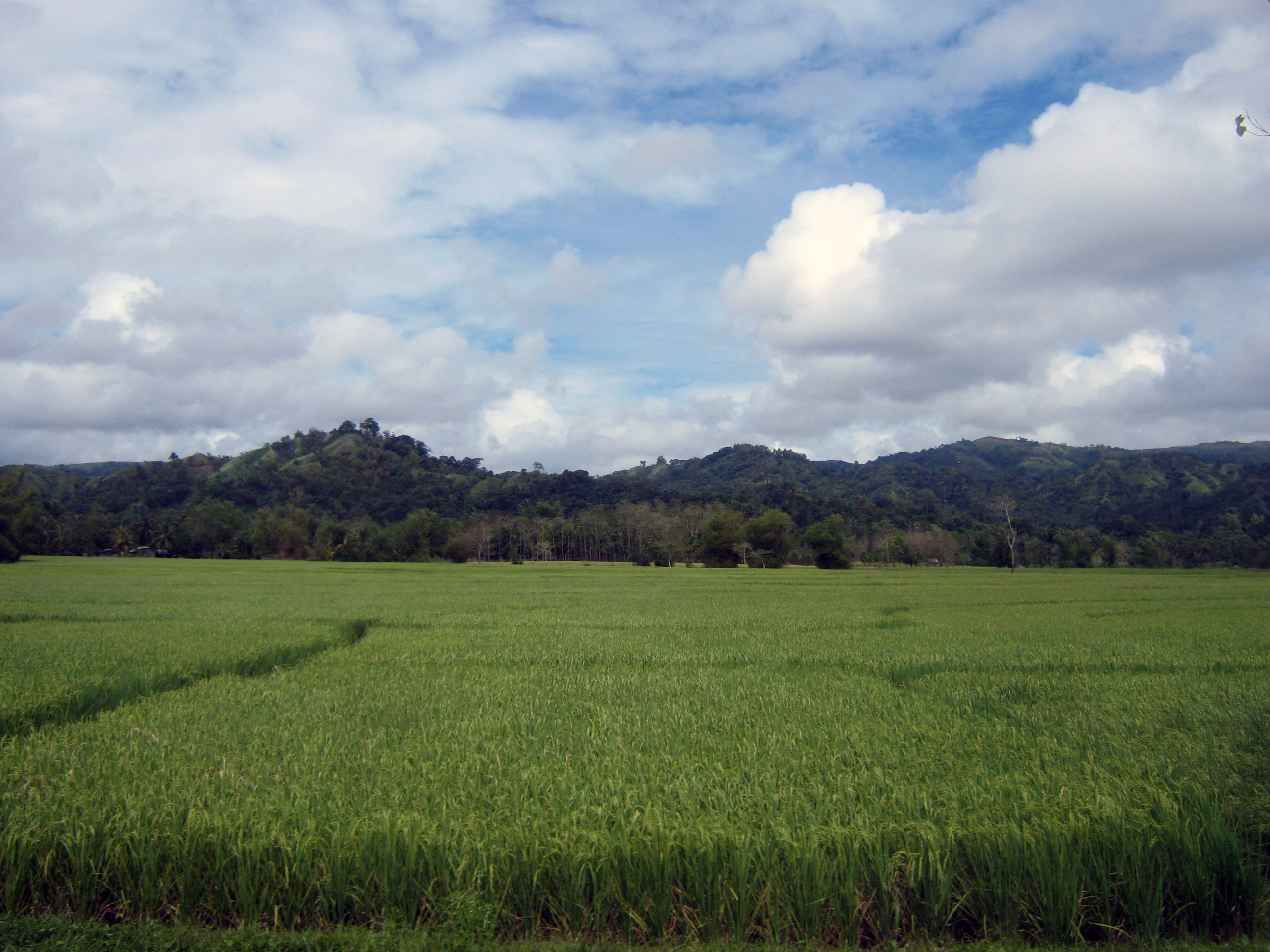

Hinoba-an is politically subdivided into 13 barangays. Each barangay consists of puroks and some have sitios.
- Alim
- Asia
- Bacuyangan
- Barangay I (Poblacion)
- Barangay II (Poblacion)
- Bulwangan
- Culipapa
- Damutan
- Daug
- Po-ok
- San Rafael
- Sangke
- Talacagay
Climate
| access-date = 7 May 2020 }}
Demographics
Languages
The people of Hinoba-an predominantly speak Cebuano and Hiligaynon, which are used interchangeably every day. Tagalog and English are also understood.
Economy
Tourism
Salvacion Cave along the vicinity of pebbled beaches of Barangay Talacagay has a natural covered pools ideal for bathing.
Ubong Cave is where the late Col. Jesús A. Villamor, hero of World War II landed bringing firearms for the Philippine guerillas aboard the US Navy Submarine in 1942, establishing the first radio contact with General Douglas MacArthur based in Australia at that time.
References
References
- {{DILG detail
- [http://www.chanrobles.com/republicacts/republicactno2154.html Republic Act No. 2154], Chan Robles, retrieved 2012
- "Caves of The Philippines: Ubong Caves".
This article was imported from Wikipedia and is available under the Creative Commons Attribution-ShareAlike 4.0 License. Content has been adapted to SurfDoc format. Original contributors can be found on the article history page.
Ask Mako anything about Hinoba-an — get instant answers, deeper analysis, and related topics.
Research with MakoFree with your Surf account
Create a free account to save articles, ask Mako questions, and organize your research.
Sign up freeThis content may have been generated or modified by AI. CloudSurf Software LLC is not responsible for the accuracy, completeness, or reliability of AI-generated content. Always verify important information from primary sources.
Report