From Surf Wiki (app.surf) — the open knowledge base
Himachal Pradesh
State in northwestern India

State in northwestern India
| Field | Value | |||||
|---|---|---|---|---|---|---|
| name | Himachal Pradesh | |||||
| official_name | State of Himachal Pradesh | |||||
| type | State | |||||
| image_seal | Himachal Pradesh seal.svg | |||||
| image_skyline | {{multiple image | |||||
| border | infobox | |||||
| total_width | 300 | |||||
| perrow | 2/1/2/2/1 | |||||
| caption_align | center | |||||
| image1 | Kinnaur Kailash.jpg | |||||
| caption1 | Kinnaur Kailash | |||||
| image2 | Kullu Valley near Manali, Himachal Pradesh, India.jpg | |||||
| caption2 | Kullu Valley near Manali | |||||
| image3 | HPCA Stadium Dharamsala.jpg | |||||
| caption3 | HPCA Stadium in Dharamshala | |||||
| image8 | Shimla night.jpg | |||||
| caption8 | Shimla at Night | |||||
| image5 | Kee monastery Spiti Valley (edited).jpg | |||||
| caption5 | Key Monastery at Spiti | |||||
| image4 | BaijNath.jpg | |||||
| caption4 | Baijnath Temple | |||||
| image6 | Sarahan-Bhimakali-10-alter Turm-gje (edited).jpg | |||||
| caption6 | Bhimakali Temple in Sarahan | |||||
| image7 | Kalpa (8512894537).jpg | |||||
| caption7 | Kalpa | |||||
| etymology | Land of the snow-clad mountains | |||||
| nickname | ||||||
| motto | Satyameva Jayate (Sanskrit) | |||||
| "Truth alone triumphs" | ||||||
| image_map | IN-HP.svg | |||||
| coordinates | ||||||
| region | North India | |||||
| before_was | East Punjab | |||||
| formation_date4 | 15 April 1948 | |||||
| formation_date1 | 1 November 1956 | |||||
| formation_date2 | 25 January 1971 | |||||
| capital | Shimla | |||||
| largestcity | Shimla | |||||
| districts | 12 | |||||
| Governor | Shiv Pratap Shukla | |||||
| Chief_Minister | Sukhvinder Singh Sukhu | |||||
| party | INC | |||||
| Deputy_CM | Mukesh Agnihotri (INC) | |||||
| judiciary | Himachal Pradesh High Court | |||||
| legislature_type | Unicameral | |||||
| assembly | Himachal Pradesh Legislative Assembly | |||||
| assembly_seats | 68 seats | |||||
| rajya_sabha_seats | 3 seats | |||||
| lok_sabha_seats | 4 seats | |||||
| area_footnotes | ||||||
| area_total_km2 | 55673 | |||||
| area_rank | 18th | |||||
| length_km | 300 | |||||
| width_km | 200 | |||||
| elevation_footnotes | ||||||
| elevation_max_m | 6,816 | |||||
| elevation_max_point | Reo Purgyil | |||||
| elevation_min_m | 232 | |||||
| elevation_min_point | Beas River | |||||
| population_footnotes | ||||||
| population_total | 7,555,000 | |||||
| population_as_of | 2025 | |||||
| population_rank | 21st | |||||
| population_density | 123 | |||||
| population_urban | 10.03% | |||||
| population_rural | 89.97% | |||||
| 0fficial_Langs | Hindi | |||||
| additional_official | Sanskrit | |||||
| official_script | Devanagari script | |||||
| GDP_total | ||||||
| GDP_year | 2024–2025 | |||||
| GDP_rank | 22nd | |||||
| GDP_per_capita | ||||||
| GDP_per_capita_rank | 16th | |||||
| GDP_footnotes | ||||||
| HDI | 0.78 | |||||
| HDI_year | 2025 | |||||
| HDI_rank | 8th | |||||
| literacy | 88.8%{{Cite book | |||||
| https://www.pib.gov.in/PressReleasePage.aspx?PRID | 2164749 | |||||
| url | https://www.mospi.gov.in/sites/default/files/publication_reports/AnnualReport_PLFS2023-24L2.pdf | title=Annual Report, Periodic Labour Force Survey (PLFS) (July 2023 – June 2024) | date=23 September 2024 | publisher=National Sample Survey Office, Ministry of Statistics and Programme Implementation, Government of India | pages=A-10 | chapter=Appendix-A: Detailed tables, Table (7): Literacy rate (in per cent) of persons of different age groups for each State/UT (persons, age-group (years): 7 & above, rural+urban (column 6))}} |
| literacy_year | 2025 | |||||
| literacy_rank | 12th | |||||
| sex_ratio | 972♀/1000 ♂ | |||||
| sexratio_year | 2011 | |||||
| sexratio_rank | 32nd | |||||
| iso_code | IN-HP | |||||
| registration_plate | HP | |||||
| website | himachal.gov.in | |||||
| mammal | Snow leopard | |||||
| bird | Western tragopan | |||||
| fish | Golden Mahseer | |||||
| flower | Pink rhododendron | |||||
| tree | Deodar cedar | |||||
| image_highway | SH IN-HP.png | |||||
| SH_numbers | HP SH1 - HP SH43 |
"Truth alone triumphs" https://www.pib.gov.in/PressReleasePage.aspx?PRID=2164749 https://www.hindustantimes.com/cities/chandigarh-news/himachals-human-development-index-higher-than-national-average-cm-sukhu-cites-report-101761594842275-amp.html https://www.thehindu.com/news/national/himachal-pradesh/himachal-pradesh-becomes-fully-literate-state/article70026151.ece
Himachal Pradesh (; ) is a state in the northern part of India. Situated in the Western Himalayas, it is one of the 13 mountain states and is characterised by an extreme landscape featuring several peaks and extensive river systems. Himachal Pradesh is the northernmost state of India and shares borders with the union territories of Jammu and Kashmir and Ladakh to the north, and the states of Punjab to the west, Haryana to the southwest, Uttarakhand to the southeast and a very narrow border with Uttar Pradesh to the south. The state also shares an international border to the east with the Tibet Autonomous Region in China. Himachal Pradesh is also known as Dev Bhoomi, meaning 'Land of Gods' and Veer Bhoomi which means 'Land of the Brave'.
The predominantly mountainous region comprising the present-day Himachal Pradesh has been inhabited since pre-historic times, having witnessed multiple waves of human migrations from other areas. Through its history, the region was mostly ruled by local kingdoms, some of which accepted the suzerainty of larger empires. Prior to India's independence from the British, Himachal comprised the hilly regions of the Punjab Province of British India. After independence, many of the hilly territories were organised as the Chief Commissioner's province of Himachal Pradesh, which later became a Union Territory. In 1966, hilly areas of the neighbouring Punjab state were merged into Himachal and it was ultimately granted full statehood in 1971.
Himachal Pradesh is spread across valleys with many perennial rivers flowing through them. Agriculture, horticulture, hydropower, and tourism are important constituents of the state's economy. The hilly state is almost universally electrified, with 99.5% of households having electricity as of 2016. The state was declared India's second open-defecation-free state in 2016. According to a survey of CMS-India Corruption Study in 2017, Himachal Pradesh is India's least corrupt state.
Himachal Pradesh is divided into 12 districts.
Etymology
The name of the state is a reference to its setting: Himachal means "snowy slopes" (Sanskrit: hima, meaning "snow"; acala/achala, meaning "slopes", or "land", or "abode"). Himachal Pradesh (ɦɪˈmaːtʃəl pɾəˈdeːʃ; literally "snow-laden province"). Himachal refers to being in the "aanchal" of the Himalayas hence; sheltered by the Himalayas or by the snow. It means "the land in the lap of the snowy Himalayas". Pradesh means "state". Himachal was referenced by Diwakar Datt Sharma, a Sanskrit scholar, after independence, when "Jan Gan Man" was revealed publicly by Pt. Nehru from Gurudev Tagore's diary. The word was added in the national anthem of India, "Jan Gan Man", by Gurudev Rabindranath Tagore when he was writing and composing it. Later, after the independence of India, Punjab province was divided and the name was given, officially to the mountain state as Himachal Pradesh.
History
Early history
Main article: History of Himachal Pradesh
Tribes such as the Koli, Hali, Dagi, Dhaugri, Dasa, Khasa, Kanaura, and Kirata inhabited the region from the prehistoric era. The foothills of the modern state of Himachal Pradesh were inhabited by people from the Indus Valley Civilisation, which flourished between 2250 and 1750 BCE. The Kols and Mundas are believed to be the original inhabitants to the hills of present-day Himachal Pradesh, followed by the Bhotas and Kiratas.
During the Vedic period, several small republics known as Janapada existed which were later conquered by the Gupta Empire. After a brief period of supremacy by King Harshavardhana, the region was divided into several local powers headed by chieftains, including some Rajput principalities. These kingdoms enjoyed a large degree of independence and were invaded by Delhi Sultanate several times. Mahmud Ghaznavi conquered Kangra at the beginning of the 11th century. Timur and Sikander Lodi also marched through the lower hills of the state, captured several forts, and fought many battles. Several hill states acknowledged Mughal suzerainty and paid regular tribute to the Mughals.

The Kingdom of Gorkha conquered many kingdoms and came to power in Nepal in 1768. They consolidated their military power and began to expand their territory. Gradually, the Kingdom of Nepal annexed Sirmour and Shimla. Under the leadership of Amar Singh Thapa, the Nepali army laid siege to Kangra. They managed to defeat Sansar Chand Katoch, the ruler of Kangra, in 1806 with the help of many provincial chiefs. However, the Nepali army could not capture Kangra fort which came under Maharaja Ranjit Singh in 1809. After the defeat, they expanded towards the south of the state. However, Raja Ram Singh, Raja of Siba State, captured the fort of Siba from the remnants of Lahore Darbar in Samvat 1846, during the First Anglo-Sikh War.
They came into direct conflict with the British along the tarai belt, after which the British expelled them from the provinces of the Satluj. The British gradually emerged as the paramount power in the region. In the revolt of 1857, or first Indian war of independence, arising from several grievances against the British, the people of the hill states were not as politically active as were those in other parts of the country. They and their rulers, except Bushahr, remained more or less inactive. Some, including the rulers of Chamba, Bilaspur, Bhagal and Dhami, rendered help to the British government during the revolt.
The British territories came under the British Crown after Queen Victoria's proclamation of 1858. The states of Chamba, Mandi and Bilaspur made good progress in many fields during the British rule. During World War I, virtually all rulers of the hill states remained loyal and contributed to the British war effort, both in the form of men and materials. Among these were the states of Kangra, Jaswan, Datarpur, Guler, Rajgarh, Nurpur, Chamba, Suket, Mandi, and Bilaspur.
Partition and post-independence
After independence, the Chief Commissioner's Province of Himachal Pradesh was organised on 15 April 1948 as a result of the integration of 30 petty princely states (including feudal princes and zaildars) in the promontories of the western Himalayas. These were known as the Simla Hills States and four Punjab southern hill states under the Himachal Pradesh (Administration) Order, 1948 under Sections 3 and 4 of the Extra-Provincial Jurisdiction Act, 1947 (later renamed as the Foreign Jurisdiction Act, 1947 vide A.O. of 1950). The State of Bilaspur was merged into Himachal Pradesh on 1 July 1954 by the Himachal Pradesh and Bilaspur (New State) Act, 1954.
Himachal became a Part 'C' state on 26 January 1950 when the Constitution of India came into effect and the Lieutenant Governor was appointed. The Legislative Assembly was elected in 1952. In July 1954, following the passage of The Himachal Pradesh and Bilaspur (New State) Act, 1954 by an act of Parliament, Bilaspur State was dissolved and incorporated into the State of Himachal Pradesh as Bilaspur district. Himachal Pradesh became a union territory on 1 November 1956. Some areas of the Punjab State, namely, Simla, Kangra, Kullu and Lahul and Spiti Districts, Lohara, Amb and Una Kanungo circles, some areas of Santokhgarh Kanungo circle and some other specified area of Una Tehsil of Hoshiarpur District, as well as Kandaghat and Nalagarh Tehsils of erstwhile PEPSU State, besides some parts of Dhar Kalan Kanungo circle of Pathankot District—were merged with Himachal Pradesh on 1 November 1966 on the enactment by Parliament of the Punjab Reorganisation Act, 1966. On 18 December 1970, the State of Himachal Pradesh Act was passed by Parliament, and the new state came into being on 25 January 1971. Himachal became the 18th state of the Indian Union with Dr. Yashwant Singh Parmar as its first chief minister.
Geography
Main article: Geography of Himachal Pradesh
Himachal is in the western Himalayas situated between 30°22′N and 33°12′N latitude and 75°47′E and 79°04′E longitude. Covering an area of 55673 km2,
The drainage system of Himachal is composed of both rivers and glaciers. Himalayan rivers criss-cross the entire mountain chain. Himachal Pradesh provides water to both the Indus and Ganges basins. The drainage systems of the region are the Chandra Bhaga or the Chenab, the Ravi, the Beas, the Sutlej, and the Yamuna. These rivers are perennial and are fed by snow and rainfall. They are protected by an extensive cover of natural vegetation. Four of the five Punjab rivers flow through Himachal Pradesh, three of them originating in the state. These rivers run through a maze of valleys separated by the mountain ranges of the state. The Satluj Valley is formed by the Satluj river entering the state near Shipki La, while the Spiti and Baspa Valleys are formed by the river's two major tributaries in the state. The Beas river flows though the Kullu and the Kangra Valleys, with tributary Parvati forming the Parvati Valley. The Chenab river, formed by the confluence of the Chandra and Bhaga, forms much of the northern regions of Lahaul and Pangi, and the Ravi river flows principally through Chamba. The Pabbar and Giri rivers in the southeast are part of the Yamuna basin.
Due to extreme variation in elevation, great variation occurs in the climatic conditions of Himachal Pradesh. The climate varies from hot and humid subtropical in the southern tracts to, with more elevation, cold, alpine, and glacial in the northern and eastern mountain ranges. The state's winter capital, Dharamsala receives very heavy rainfall, while areas like Lahaul and Spiti are cold and almost rainless. Broadly, Himachal experiences three seasons: summer, winter, and rainy season. Summer lasts from mid-April until the end of June and most parts become very hot (except in the alpine zone which experiences a mild summer) with the average temperature ranging from 28 to. Winter lasts from late November until mid-March. Snowfall is common in alpine tracts. Pollution is affecting the climate of almost all the states of India. Due to steps taken by governments to prevent pollution, Himachal Pradesh has become the first smoke-free state in India which means cooking in the entire state is free of traditional chulhas.
File:India Himachal Pradesh relief map.svg|Topographic map of Himachal Pradesh. Most of the state is mountainous. File:Shivaliks Himalayas Aerial Dehaze Himachal Feb20 R16 02827.jpg|View of the Shivalik Hills and the Middle Himalayas in Himachal Pradesh In a statement on 29 March 2025, Town and Country Planning Minister, Rajesh Dharmani, highlighted the state government's policy of sustainable development, citing the "Green Himachal vision" and ongoing efforts to meet sustainable development goals.
Flora and fauna
Main article: Protected areas of Himachal Pradesh
Himachal Pradesh is one of the states that lies in the Indian Himalayan Region (IHR), one of the richest reservoirs of biological diversity in the world. As of 2002, the IHR is undergoing large scale irrational extraction of wild, medicinal herbs, thus endangering many of its high-value gene stock. To address this, a workshop on 'Endangered Medicinal Plant Species in Himachal Pradesh' was held in 2002 and the conference was attended by forty experts from diverse disciplines.
According to 2003 Forest Survey of India report, legally defined forest areas constitute 66.52% of the area of Himachal Pradesh. Vegetation in the state is dictated by elevation and precipitation. The state is endowed with a high diversity of medicinal and aromatic plants. Lahaul-Spiti region of the state, being a cold desert, supports unique plants of medicinal value including Ferula jaeschkeana, Hyoscyamus niger, Lancea tibetica, and Saussurea bracteata.
Himachal is also said to be the fruit bowl of the country, with widespread orchards. Meadows and pastures are also seen clinging to steep slopes. After the winter season, the hillsides and orchards bloom with wild flowers, white gladiolas, carnations, marigolds, roses, chrysanthemums, tulips and lilies are carefully cultivated. Himachal Pradesh Horticultural Produce Marketing and Processing Corporation Ltd. (HPMC) is a state body that markets fresh and processed fruits.
Himachal Pradesh has around 463 birds, and Tragopan melanocephalus is the state bird of Himanchal Pradesh 77 mammalian, 44 reptile and 80 fish species. Himachal Pradesh has currently five National Parks. Great Himalayan National Park, which is the oldest and largest National park in the state, is a UNESCO World Heritage Site. Pin Valley National Park, Inderkilla, Khirganga and Simbalbara are the other national Parks located in the state. The state also has 30 wildlife sanctuaries and 3 conservation reserves. The state bird of Himachal Pradesh is the Western tragopan, locally known as the jujurana. It is one of the rarest living pheasants in the world. The state animal is the snow leopard, which is even rarer to find than the jujurana.
File:Snow Leopards - Ghost of the Mountains for Ministry of Tourism (MOT) India 2.png|Snow leopard (Panthera uncia) in Spiti File:Asian Paradise Flycatcher- Male at Himachal I2 IMG 2939.jpg|Indian paradise flycatcher (Terpsiphone paradisi) in Kullu File:Black Bulbul.jpg|Black bulbul (Hypsipetes leucocephalus)
Government
Main article: Government of Himachal Pradesh, Himachal Pradesh Legislative Assembly, Assembly election results of Himachal Pradesh, Politics of Himachal Pradesh
The Legislative Assembly of Himachal Pradesh has no pre-constitution history. The State itself is a post-independence creation. It came into being as a centrally administered territory on 15 April 1948 from the integration of thirty erstwhile princely states.
Himachal Pradesh is governed through a parliamentary system of representative democracy, a feature the state shares with other Indian states. Universal suffrage is granted to residents. The legislature consists of elected members and special office bearers such as the Speaker and the Deputy Speaker who are elected by the members. Assembly meetings are presided over by the Speaker or the Deputy Speaker in the Speaker's absence. The judiciary is composed of the Himachal Pradesh High Court and a system of lower courts.
Executive authority is vested in the Council of Ministers headed by the Chief Minister, although the titular head of government is the Governor. The governor is the head of state appointed by the President of India. The leader of the party or coalition with a majority in the Legislative Assembly is appointed as the Chief Minister by the governor, and the Council of Ministers are appointed by the governor on the advice of the Chief Minister. The Council of Ministers reports to the Legislative Assembly. The Assembly is unicameral with 68 Members of the Legislative Assembly (MLA). Terms of office run for five years, unless the Assembly is dissolved prior to the completion of the term. Auxiliary authorities known as panchayats, for which local body elections are regularly held, govern local affairs.
In the assembly elections held in November 2022, the Indian National Congress secured an absolute majority, winning 40 of the 68 seats while the BJP won only 25 of the 68 seats. Sukhvinder Singh Sukhu was sworn in as Himachal Pradesh's 15th Chief Minister in Shimla on 11 December 2022. Mukesh Agnihotri was sworn in as his deputy the same day.
Administrative divisions
Main article: List of districts of Himachal Pradesh
The state of Himachal Pradesh is divided into 12 districts which are grouped into three divisions, Shimla, Kangra and Mandi. The districts are further divided into 73 subdivisions, 78 blocks and 172 Tehsils.
| Divisions | Districts |
|---|---|
| Kangra | Chamba, Kangra, Una |
| Mandi | Bilaspur, Hamirpur, Kullu, Lahaul and Spiti, Mandi |
| Shimla | Kinnaur, Shimla, Sirmaur, Solan |
| url=http://himachalpr.gov.in/Index.aspx?Data=31&AspxAutoDetectCookieSupport=1 | title=H.P. At A Glance | work=Information and Public Relations, Government of Himachal Pradesh | access-date=17 April 2018 | archive-url=https://web.archive.org/web/20180418031557/http://himachalpr.gov.in/Index.aspx?Data=31&AspxAutoDetectCookieSupport=1 | archive-date=18 April 2018 | url-status=live}} |
|---|---|---|---|---|---|---|
| Divisions | ||||||
| Districts | ||||||
| Tehsils/ Sub-Tehsils | ||||||
| Developmental Blocks | ||||||
| Urban Local Bodies | ||||||
| Towns | ||||||
| Gram Panchayats | ||||||
| Villages | ||||||
| Police Stations | ||||||
| Lok Sabha seats | ||||||
| Rajya Sabha seats | ||||||
| Assembly Constituencies |
Economy
Main article: Economy of Himachal Pradesh
| Year | Gross State Domestic Product |
|---|---|
| 1980 | 794 |
| 1985 | 1,372 |
| 1990 | 2,815 |
| 1995 | 6,698 |
| 2000 | 13,590 |
| 2005 | 23,024 |
| 2006 | 25,435 |
| 2010 | 57,452 |
| 2013 | 82,585 |
| 2014 | 92,589 |
| 2015 | 101,108 |
| 2016 | 110,511 |
| 2017 | 124,570 |
| 2018 | 135,914 |
| 2021 | 172,174 |
| 2024 | 232,185 |
Planning in Himachal Pradesh started in 1951 along with the rest of India with the implementation of the first five-year plan. The First Plan allocated 52.7 million to Himachal Pradesh. More than 50% of this expenditure was incurred on transport and communication; while the power sector got a share of just 4.6%, though it had steadily increased to 7% by the Third Plan. Expenditure on agriculture and allied activities increased from 14.4% in the First Plan to 32% in the Third Plan, showing a progressive decline afterwards from 24% in the Fourth Plan to less than 10% in the Tenth Plan. Expenditure on energy sector was 24.2% of the total in the Tenth Plan.

The total GDP for 2005–06 was estimated at 254 billion as against 230 billion in the year 2004–05, showing an increase of 10.5%. The GDP for fiscal 2015–16 was estimated at 1.110 trillion, which increased to 1.247 trillion in 2016–17, recording growth of 6.8%. The per capita income increased from 130,067 in 2015–16 to 147,277 in 2016–17. The state government's advance estimates for fiscal 2017–18 stated the total GDP and per capita income as 1.359 trillion and 158,462, respectively. As of 2018, Himachal is the 22nd-largest state economy in India with in gross domestic product and has the 13th-highest per capita income () among the states and union territories of India.
Himachal Pradesh also ranks as the second-best performing state in the country on human development indicators after Kerala. One of the Indian government's key initiatives to tackle unemployment is the National Rural Employment Guarantee Act (NREGA). The participation of women in the NREGA has been observed to vary across different regions of the nation. As of the year 2009–2010, Himachal Pradesh joined the category of high female participation, recording a 46% share of NREGS (National Rural Employment Guarantee Scheme) workdays for women. This was a drastic increase from the 13% that was recorded in 2006–2007.
Agriculture
.jpg)
Agriculture accounts for 9.4% of the net state domestic product. It is the main source of income and employment in Himachal. About 90% of the population in Himachal depends directly upon agriculture, which provides direct employment to 62% of total workers of state. The main cereals grown include wheat, maize, rice and barley with major cropping systems being maize-wheat, rice-wheat and maize-potato-wheat. Pulses, fruits, vegetables and oilseeds are among the other crops grown in the state. Centuries-old traditional Kuhl irrigation system is prevalent in the Kangra valley, though in recent years these Kuhls have come under threat from hydroprojects on small streams in the valley. Land husbandry initiatives such as the Mid-Himalayan Watershed Development Project, which includes the Himachal Pradesh Reforestation Project (HPRP), the world's largest clean development mechanism (CDM) undertaking, have improved agricultural yields and productivity, and raised rural household incomes.

Apple is the principal cash crop of the state grown principally in the districts of Shimla, Kinnaur, Kullu, Mandi, Chamba and some parts of Sirmaur and Lahaul-Spiti with an average annual production of five lakh tonnes and per hectare production of 8 to 10 tonnes. The apple cultivation constitute 49 per cent of the total area under fruit crops and 85% of total fruit production in the state with an estimated economy of 3500 crore. Apples from Himachal are exported to other Indian states and even other countries. In 2011–12, the total area under apple cultivation was 104,000 hectares, increased from 90,347 hectares in 2000–01. According to the provisional estimates of Ministry of Agriculture & Farmers Welfare, the annual apple production in Himachal for fiscal 2015–16 stood at 753,000 tonnes, making it India's second-largest apple-producing state after Jammu and Kashmir. The state is also among the leading producers of other fruits such as apricots, cherries, peaches, pears, plums and strawberries in India.

Kangra tea is grown in the Kangra valley. Tea plantation began in 1849, and production peaked in the late 19th century with the tea becoming popular across the globe. Production dipped sharply after the 1905 Kangra earthquake and continues to decline. The tea received geographical indication status in 2005.
Industry
Main article: Industry in Himachal Pradesh
Pharma hub
Himachal Pradesh is renowned as Asia's pharmaceutical hub, housing a total of 652 pharmaceutical units. The state hosts a thriving ₹40,000 crore drug manufacturing industry.
Energy
Hydropower is one of the major sources of income generation for the state. The state has an abundance of hydropower resources because of the presence of various perennial rivers. Many high-capacity hydropower plants have been constructed which produce surplus electricity that is sold to other states, such as Delhi, Punjab and West Bengal. The income generated from exporting the electricity to other states is being provided as subsidy to the consumers in the state. The rich hydropower resources of Himachal have resulted in the state becoming almost universally electrified with around 94.8% houses receiving electricity as of 2001, as compared to the national average of 55.9%. Himachal's hydro-electric power production is, however, yet to be fully utilised. The identified hydroelectric potential for the state is 27,436 MW in five river basins while the hydroelectric capacity in 2016 was 10,351 MW.
Tourism
Main article: Tourism in Himachal Pradesh
Tourism in Himachal Pradesh is a major contributor to the state's economy and growth. The Himalayas attracts tourists from all over the world. Hill stations like Shimla, Manali, Dharamshala, Dalhousie, Chamba, Khajjiar, Kullu and Kasauli are popular destinations for both domestic and foreign tourists. The state has 5 Shakti Peeths - Chintpurni, Jwalamukhi Temple, Bajreshwari Mata Temple, Shri Chamunda Devi Mandir and Naina Devi Temple. The state also has many important Hindu pilgrimage sites with prominent temples like Baijnath Temple, Bhimakali Temple, Bijli Mahadev and Jakhoo Temple. Manimahesh Lake situated in the Bharmour region of Chamba district is the venue of an annual Hindu pilgrimage trek held in the month of August which attracts lakhs of devotees. The state is also referred to as "Dev Bhoomi" (literally meaning Abode of Gods) due to its mention as such in ancient Hindu texts and occurrence of a large number of historical temples in the state.
Himachal is also known for its adventure tourism activities like ice skating in Shimla, paragliding in Bir, Himachal Pradesh and Solang Valley, rafting in Kullu, skiing in Manali, boating in Bilaspur, fishing in Tirthan Valley, trekking and horse riding in different parts of the state. Shimla, the state's capital, is home to Asia's only natural ice-skating rink. The state has some of the highest mountain passes in the world - Rohtang Pass, Baralacha La, Kunzum La, Borasu Pass and Hamta Pass. Spiti Valley in Lahaul and Spiti District situated at an altitude of over 3000 metres with its picturesque landscapes is popular destination for adventure seekers. The region also has some of the oldest Buddhist monasteries in the world. Himachal hosted the first Paragliding World Cup in India from 24 to 31 October in 2015. Bir Billing, the venue for the paragliding world cup, is known as the launching site of paragliding. It is 70 km from the tourist town of Mcleod Ganj and is located in the heart of Himachal in Kangra district. Bir Billing is the centre for aero sports in Himachal and considered as best for paragliding. While Bir, the paragliding capital of India, is the landing site for paragliding. It is also known for its tourist attractions including Buddhist monasteries, trekking to tribal villages and mountain biking. The village also hosts prominent cultural musical events like Bir Music Festival, aiming to primarily promote the tourism of Bir.
There are a variety of festivals celebrated by the locals of Himachal Pradesh who worship gods and goddesses. There are over 2000 villages in Himachal Pradesh which celebrate festivals such as Kullu Dussehra, Chamba's Minjar, Renuka ji Fair, Lohri, Halda, Phagli, Losar and Mandi Shivratri. There approximately 6000 temples in Himachal Pradesh with a known one being Bijli Mahadev. The temple is seen as a 20-meter structure built in stone which, according to locals, is known to attract lighting. They say that this is a way the Gods show their blessings.
The Great Himalayan National Park is found in the Kullu districts of Himachal Pradesh. It has an area of 620 km2 and ranging from an altitude of 1500 meters to 4500 meters and was created in 1984. There are various forest types found here such as Deodar, Himalayan Fir, Spruce, Oak and Alpine pastures. In the Great Himalayan National Park, there are a variety of animals found such as Snow leopard, Yak, Himalayan black bear, Western tragopan, Monal and Musk deer. This National Park is a trail to many hikers and trekkers too. Moreover, there are sanctuaries which are tourist spots such as Naina Devi and Gobind Sagar Sanctuary in the Una and Bilaspur districts with an area of 220 km2. There are animals such as Indian porcupine and giant flying squirrel found here. The Gobind Sagar Lake has fish species such as Mrigal, Silver carp, Katla, Mahaseer and Rohu are found here. Narkanda located in at an altitude of around 8850 feet is known for its apple orchards. It is located between the river valleys of Giri and Sutlej.
File:Paragliding at Bir, HP.jpg|Paragliding in Bir File:Solang valley under snow, 2015.jpg|Solang, a popular ski resort near Manali File:Waterrafting in kasol.jpg|Rafting in the Parvati river near Kasol File:Triund_(22356802630).jpg|Campsite for trekkers at Triund
Transport
Main article: Transport in Himachal Pradesh
Air
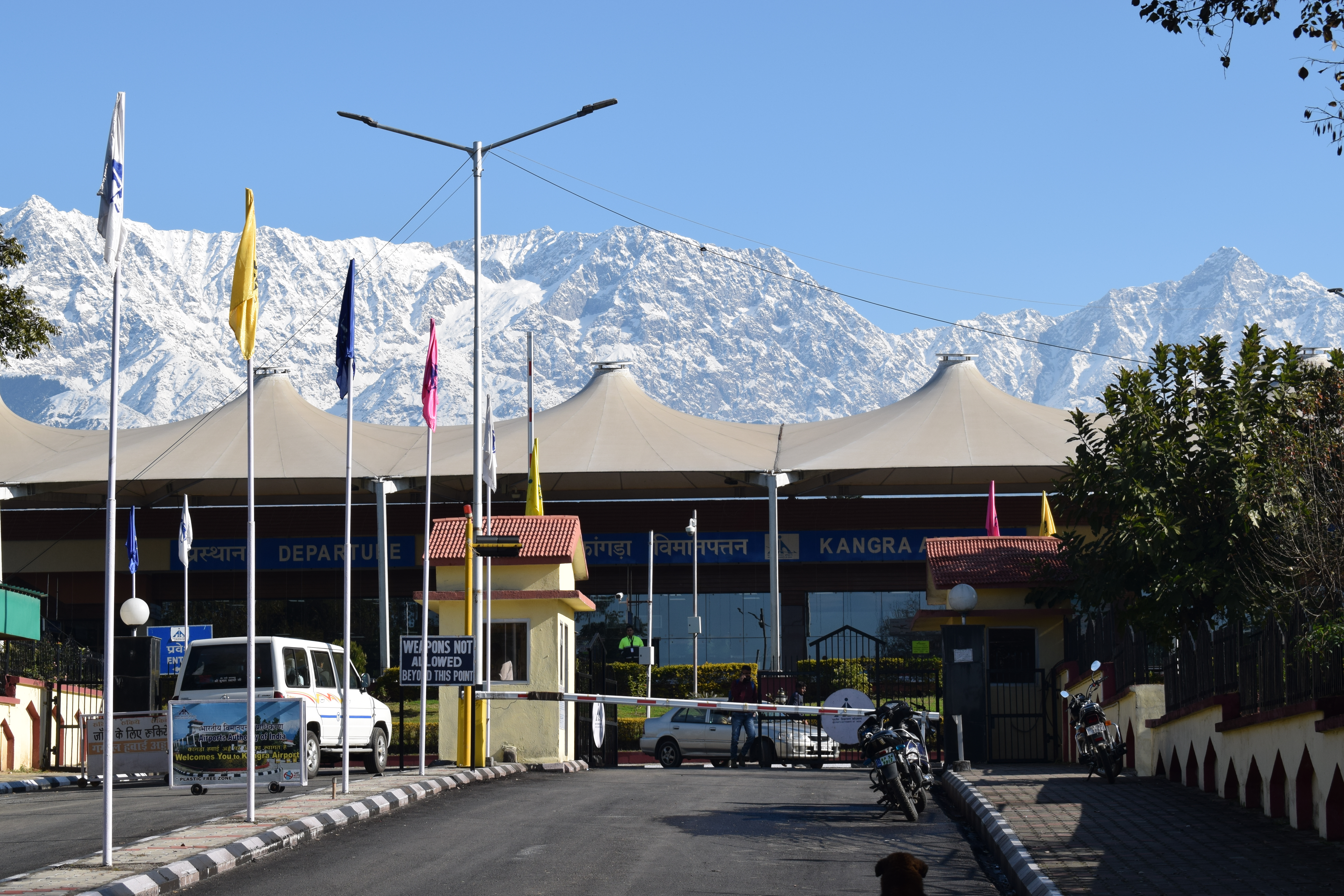
Himachal has three domestic airports in Kangra, Kullu and Shimla districts, respectively. The air routes connect the state with New Delhi and Chandigarh.
- Kullu–Manali Airport is in Kullu district, around 10 km from district headquarters Kullu.
- Kangra Airport is in Kangra district, around 15 km from district headquarters at Dharamshala, which is around 10 kilometres (6 mi) from Kangra
- Shimla Airport is around 22 km west of the Shimla city.
Railways

Broad-gauge lines
The only broad-gauge railway line in the whole state connects –Una Himachal railway station to in Punjab and runs all the way to Daulatpur, Himachal Pradesh. It is an electrified track since 1999. While a tiny portion of line adjacent to Kandrori(KNDI) station on either side on Pathankot-Jalandhar Section, under Ferozepur Division of Northern Railway also crosses into Himachal Pradesh, before venturing out to Punjab again.
Future constructions:
- –Hamirpur rail project via Dhundla
- Bhanupali (Punjab)–Bilaspur, Himachal Pradesh
- Chandigarh–Baddi
Narrow-gauge lines
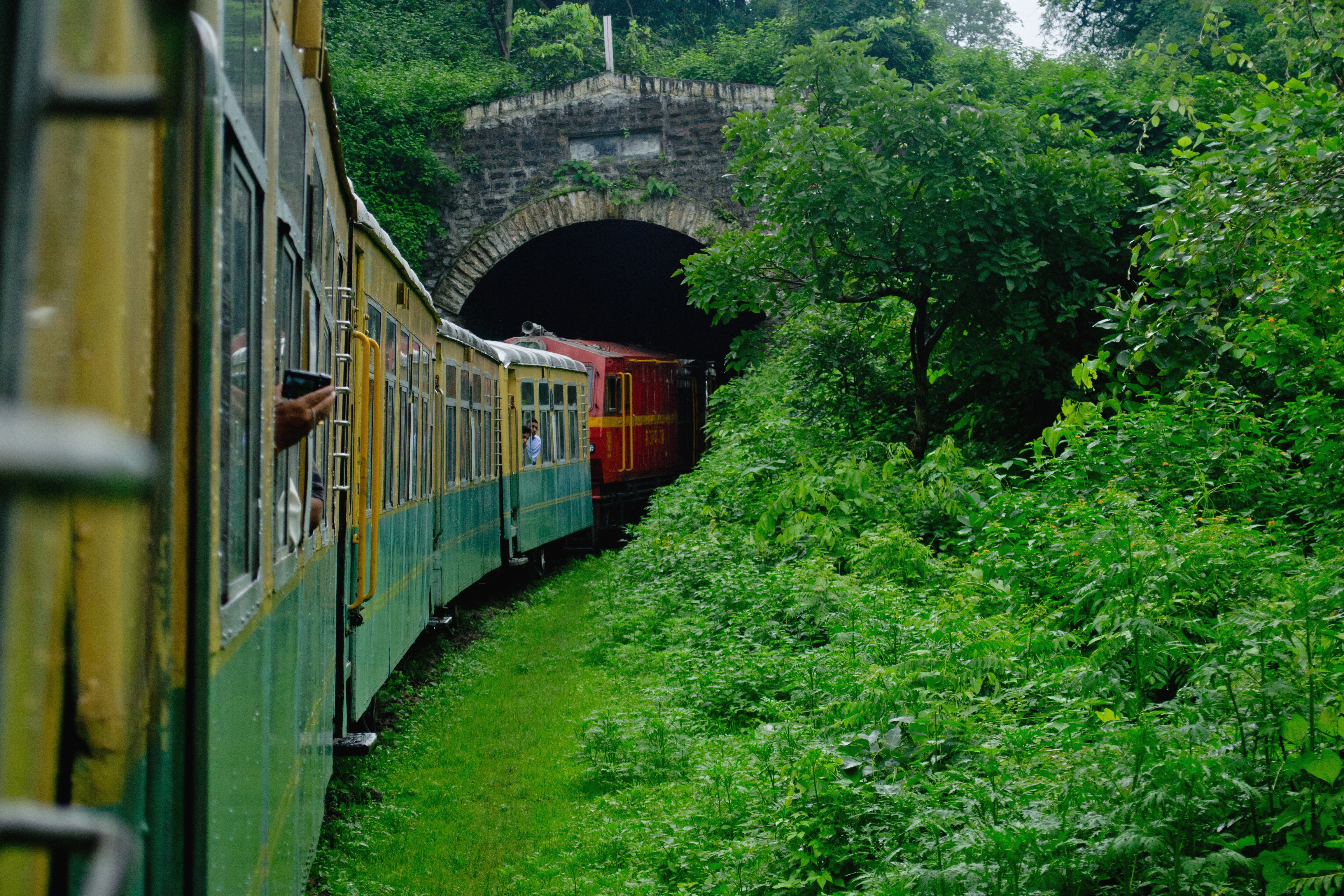
Himachal is known for its narrow-gauge railways. One is the Kalka-Shimla Railway, a UNESCO World Heritage Site, and another is the Kangra Valley Railway. The total length of these two tracks is 259 km. The Kalka-Shimla Railway passes through many tunnels and bridges, while the Pathankot–Jogindernagar one meanders through a maze of hills and valleys. The total route length of the operational railway network in the state is 296.26 km.
Roads

Roads are the major mode of transport in Himachal Pradesh due to its hilly terrain. The state has road network of 28208 km, including eight National Highways (NH) that constitute 1234 km and 19 State Highways with a total length of 1625 km. Some roads are closed during winter and monsoon seasons due to snow and landslides. The state-owned Himachal Road Transport Corporation with a fleet of over 3,100, operates bus services connecting important cities and towns with villages within the state and also on various interstate routes. In addition, around 5,000 private buses ply in the state.
Demographics
Population
|1901 | 1,920,294 |1911 | 1,896,944 |1921 | 1,928,206 |1931 | 2,029,113 |1941 | 2,263,245 |1951 | 2,385,981 |1961 | 2,812,463 |1971 | 3,460,434 |1981 | 4,280,818 |1991 | 5,170,877 |2001 | 6,077,900 |2011 | 6,864,602
Himachal Pradesh has a total population of 6,864,602 including 3,481,873 males and 3,382,729 females according to the Census of India 2011. It has only 0.57 per cent of India's total population, recording a growth of 12.81 per cent. The child sex ratio increased from 896 in 2001 to 909 in 2011. The total fertility rate (TFR) per woman in 2015 stood at 1.7, one of the lowest in India.
District wise
| District | Population | % |
|---|---|---|
| Kangra | 1,507,223 | 21.98% |
| Mandi | 999,518 | 14.58% |
| Shimla | 813,384 | 11.86% |
| Solan | 576,670 | 8.41% |
| Sirmaur | 530,164 | 7.73% |
| Una | 521,057 | 7.60% |
| Chamba | 518,844 | 7.57% |
| Hamirpur | 454,293 | 6.63% |
| Kullu | 437,474 | 6.38% |
| Bilaspur | 382,056 | 5.57% |
| Kinnaur District | 84,298 | 1.23% |
| Lahaul Spiti | 31,528 | 0.46% |
In the census, the state is placed 21st on the population chart, followed by Tripura at 22nd place. Kangra District was top-ranked with a population strength of 1,507,223.
life expectancy and literacy
| Year | % |
|---|---|
| 1971 | 31.96 |
| 1981 | 42.48 |
| 1991 | 63.86 |
| 2001 | 76.48 |
| 2011 | 83.78 |
The life expectancy at birth in Himachal Pradesh increased significantly from 52.6 years in the period from 1970 to 1975 (above the national average of 49.7 years) to 72.0 years for the period 2011–15 (above the national average of 68.3 years). The infant mortality rate stood at 40 in 2010, and the crude birth rate has declined from 37.3 in 1971 to 16.9 in 2010, below the national average of 26.5 in 1998. The crude death rate was 6.9 in 2010. Himachal Pradesh's literacy rate has almost doubled between 1981 and 2011 (see table to right). The state is one of the most literate states of India with a literacy rate of 83.78% as of 2011.
Social groups
The scheduled castes and scheduled tribes account for 25.19 per cent and 5.71 per cent of the population, respectively. The sex ratio stood at 972 females per 1,000 males, recording a marginal increase from 968 in 2001. The main caste groups in Himachal Pradesh are Brahmins, Rajputs, Kanets, Gurjars, Kulindas, Ghirths, Kolis, Hollis, Chamars, Rehars, Lohars, Baris, Julahas, Turis, Batwals and Dalits.

Languages

Main languages
Hindi is the de jure official language of Himachal Pradesh and is spoken by the majority of the population as a lingua franca. Sanskrit is the additional official language of the state. Although mostly encountered in academic and symbolic contexts, the government of Himachal Pradesh is encouraging its wider study and use.
Most of the population, however, natively speaks one or another of the Western Pahari languages (locally also known as Himachali or Pahari), a subgroup of the Indo-Aryan languages that includes Pahari (Mahasu Pahari, & Pahari Kinnauri), Kangri, Mandeali, Bilaspuri, Chambeali, Kullui, Gaddi, Sirmauri, Churahi, Hinduri, Pangwali and Bhattiyali. Additional spoken languages include Hindi (15.68%), Punjabi (4.42%), Nepali (1.30%) and Kinnauri (1.20%).
Other languages
In parts of the state there are speakers of Haryanavi (0.32%) and Gujari (0.21%) and Lahuli–Spiti languages (0.16%), Pattani (0.12%), Tibetan (0.3%), Bhoti Kinnauri, Chitkuli Kinnauri, Bunan (or Gahri), Jangshung, Kanashi, Shumcho, Spiti Bhoti, Sunam, Tinani, Tukpa, Chinali, and Lahul Lohar.
Religion
Hinduism is the major religion in Himachal Pradesh. More than 95% of the total population adheres to the Hindu faith and majorly follows Shaivism and Shaktism traditions, the distribution of which is evenly spread throughout the state. Himachal Pradesh has the highest proportion of Hindu population among all the states and union territories in India.
.jpg)
Other religions that form a smaller percentage are Islam, Sikhism and Buddhism. Muslims are mainly concentrated in Sirmaur, Chamba, Una and Solan districts where they form 2.5-6.3% of the population. Sikhs mostly live in towns and cities and constitute 1.16% of the state population. The Buddhists, who constitute 1.15%, are mainly natives and tribals from Lahaul and Spiti, where they form a majority of 62%, and Kinnaur, where they form 21.5%.
| Religious | ||||||||||||||||||||||||||||||||||||||||||||||||||||||||||||||
|---|---|---|---|---|---|---|---|---|---|---|---|---|---|---|---|---|---|---|---|---|---|---|---|---|---|---|---|---|---|---|---|---|---|---|---|---|---|---|---|---|---|---|---|---|---|---|---|---|---|---|---|---|---|---|---|---|---|---|---|---|---|---|
| group | 1881 | 1891 | 1901 | 1911 | 1921 | 1931 | 1941 | 1951 | 1961 | 1971 | 2011 | Pop. | % | Pop. | % | Pop. | % | Pop. | % | Pop. | % | Pop. | % | Pop. | % | Pop. | % | Pop. | % | Pop. | % | Pop. | % | Hinduism [[File:Om.svg | 15px]] | Islam [[File:Star and Crescent.svg | 15px]] | Christianity [[File:Christian cross.svg | 15px]] | Buddhism [[File:Dharma_Wheel_(2).svg | 15px]] | Sikhism [[File:Khanda.svg | 15px]] | Jainism [[File:Jain_Prateek_Chihna.svg | 15px]] | Zoroastrianism [[File:Faravahar.svg | 15px]] | Judaism [[File:Star_of_David.svg | 15px]] | Others | Total population | 1,539,433 | 1,645,364 | 1,690,066 | 1,724,480 | 1,737,801 | 1,831,253 | 2,036,428 | 2,082,093 | 2,546,768 | 3,460,434 | 6,864,602 |
| 1,458,481 | 1,558,111 | 1,598,853 | 1,630,084 | 1,642,176 | 1,729,008 | 1,929,634 | 2,024,692 | 2,467,765 | 3,324,627 | 6,532,765 | ||||||||||||||||||||||||||||||||||||||||||||||||||||
| 70,642 | 72,873 | 76,480 | 74,205 | 77,425 | 82,711 | 87,485 | 22,338 | 34,744 | 50,327 | 149,881 | ||||||||||||||||||||||||||||||||||||||||||||||||||||
| 3,840 | 3,571 | 3,415 | 4,400 | 4,471 | 2,586 | 2,129 | 1,517 | 2,904 | 3,556 | 12,646 | ||||||||||||||||||||||||||||||||||||||||||||||||||||
| 3,250 | 6,236 | 6,931 | 7,518 | 5,718 | 7,705 | 614 | 1,320 | 18,020 | 35,937 | 78,659 | ||||||||||||||||||||||||||||||||||||||||||||||||||||
| 2,680 | 4,167 | 3,897 | 7,894 | 7,610 | 8,948 | 12,245 | 30,837 | 22,845 | 44,914 | 79,896 | ||||||||||||||||||||||||||||||||||||||||||||||||||||
| 536 | 388 | 483 | 358 | 356 | 291 | 425 | 1,364 | 358 | 626 | 1,805 | ||||||||||||||||||||||||||||||||||||||||||||||||||||
| 4 | 13 | 7 | 18 | 40 | 3 | 3,895 | 13 | 7 | 51 | |||||||||||||||||||||||||||||||||||||||||||||||||||||
| 0 | 0 | 3 | 1 | 1 | 0 | 12 | 0 | 0 | ||||||||||||||||||||||||||||||||||||||||||||||||||||||
| 0 | 5 | 0 | 0 | 4 | 0 | 1 | 0 | 125 | 396 | 8,950 |
Culture
Main article: Culture of Himachal Pradesh
Himachal Pradesh was one of the few states that had remained largely untouched by external customs, largely due to its difficult terrain. With remarkable economic and social advancements, the state has changed rapidly. Culturally Himachal Pradesh is divided in three parts, Upper Himachal, known as Mahasu region, Lower Himachal which includes the districts of Kangra, Hamirpur, Bilaspur, Una and parts of Chamba and third part includes two districts of Lahaul and Spiti and upper parts of Kinnaur. Himachal Pradesh is a multilingual state unlike other Indian states. Western Pahari languages also known as Himachali languages are widely spoken in the state. Some of the most commonly spoken Pahadi lects are Kangri, Mandyali, Kullvi, Chambeali, Bharmauri and Kinnauri.
Himachal is well known for its handicrafts. The carpets, leather works, Kullu shawls, Kangra paintings, Chamba Rumals, stoles, embroidered grass footwear (Pullan chappal), silver jewellery, metal ware, knitted woolen socks, Pattoo, basketry of cane and bamboo (Wicker and Rattan) and woodwork are among the notable ones. Of late, the demand for these handicrafts has increased within and outside the country.
Himachali caps of various colour bands are also well-known local art work, and are often treated as a symbol of the Himachali identity. The colour of the Himachali caps has been an indicator of political loyalties in the hill state for a long period of time with Congress party leaders like Virbhadra Singh donning caps with green band and the rival BJP leader Prem Kumar Dhumal wearing a cap with maroon band. The former has served six terms as the Chief Minister of the state while the latter is a two-time Chief Minister. Local music and dance also reflect the cultural identity of the state. Through their dance and music, the Himachali people entreat their gods during local festivals and other special occasions.
There are national and regional fairs and festivals, including temple fairs in nearly every region. The Kullu Dussehra, Minjar mela and Mahashivratri Mandi festival is nationally known. The day-to-day cuisine of Himachalis is similar to the rest of northern India with Punjabi and Tibetan influences. Lentils (Dāl), rice (chāwal or bhāț), vegetables (sabzī) and chapati (wheat flatbread) form the staple food of the local population. Non-vegetarian food is more widely accepted in Himachal Pradesh than elsewhere in India, partly due to the scarcity of fresh vegetables on the hilly terrain of the state.
Himachali specialities include Siddu, Babru, Khatta, Mhanee, Channa Madra, Patrode, Mah ki dal, Chamba-style fried fish, Kullu trout, Chha Gosht, Pahadi Chicken, Sepu Badi, Auriya Kaddu, Aloo palda, Pateer, Makki di roti, Sarson ka saag, Chamba Chukh (Chouck), Bhagjery, Chutney of Til, etc.
Notable people
Main article: List of people from Himachal Pradesh
Education
Main article: Education in Himachal Pradesh

At the time of Independence, Himachal Pradesh had a literacy rate of 8% – one of the lowest in the country. By 2011, the literacy rate surged to 82.8%, making Himachal one of the most-literate states in the country. There are over 10,000 primary schools, 1,000 secondary schools and more than 1,300 high schools in the state. In meeting the constitutional obligation to make primary education compulsory, Himachal became the first state in India to make elementary education accessible to every child. Himachal Pradesh is an exception to the nationwide gender bias in education levels. The state has a female literacy rate of around 76%. In addition, school enrolment and participation rates for girls are almost universal at the primary level. While higher levels of education do reflect a gender-based disparity, Himachal is still significantly ahead of other states at bridging the gap. The Hamirpur District in particular stands out for high literacy rates across all metrics of measurement.
The state government has played an instrumental role in the rise of literacy in the state by spending a significant proportion of the state's GDP on education. During the first six five-year plans, most of the development expenditure in the education sector was utilised in quantitative expansion, but after the seventh five-year-plan the state government switched emphasis on qualitative improvement and modernisation of education. To raise the number of the teaching staff at primary schools they appointed over 1000 teacher aids through the Vidya Upasak Yojna in 2001. The Sarva Shiksha Abhiyan is another HP government initiative that not only aims for universal elementary education but also encourages communities to engage in the management of schools. The Rashtriya Madhayamic Shiksha Abhiyan launched in 2009, is a similar scheme but focuses on improving access to quality secondary education.
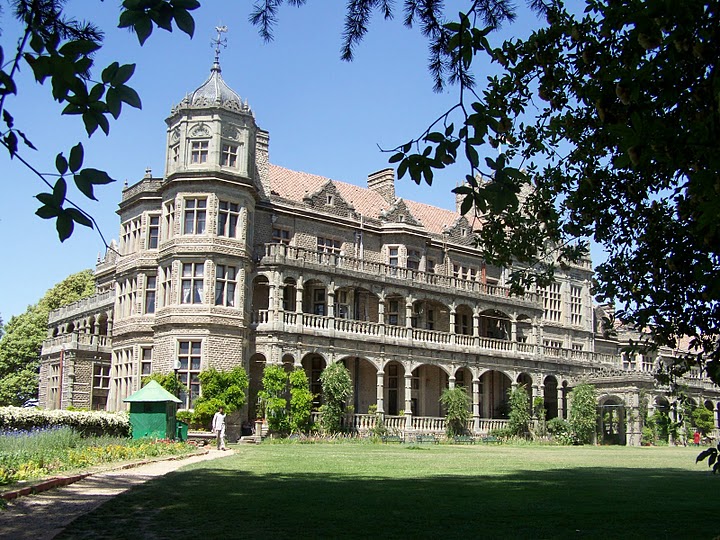

The standard of education in the state has reached a considerably high level as compared to other states in India with several reputed educational institutes for higher studies. The Baddi University of Emerging Sciences and Technologies, Indian Institute of Technology Mandi, Indian Institute of Management Sirmaur, Himachal Pradesh University in Shimla, Central University of Himachal Pradesh, Dharamsala, National Institute of Technology, Hamirpur, Indian Institute of Information Technology Una, Alakh Prakash Goyal University, Maharaja Agrasen University, Himachal Pradesh National Law University are some of the notable universities in the state. Indira Gandhi Medical College and Hospital in Shimla, Dr. Rajendra Prasad Government Medical College in Kangra, Rajiv Gandhi Government Post Graduate Ayurvedic College in Paprola and Homoeopathic Medical College & Hospital in Kumarhatti are the prominent medical institutes in the state. Besides these, there is a Government Dental College in Shimla which is the state's first recognised dental institute.
The state government has also decided to start three major nursing colleges to develop the healthcare system of the state. CSK Himachal Pradesh Krishi Vishwavidyalya Palampur is one of the most renowned hill agriculture institutes in the world. Dr. Yashwant Singh Parmar University of Horticulture and Forestry has earned a unique distinction in India for imparting teaching, research and extension education in horticulture, forestry and allied disciplines. Further, state-run Jawaharlal Nehru Government Engineering College was inaugurated in 2006 at Sundernagar. Himachal Pradesh also hosts a campus of the fashion college, National Institute of Fashion Technology (NIFT) in Kangra.
State profile
Source: Department of Information and Public Relations.
| Employment generated in government sector | 2,17,142 |
|---|
Notes
References
References
- de Souza, Gerard. (6 July 2021). "New Himachal governor Rajendra Arlekar is 1st Goan to occupy the post". Hindustan Times.
- (18 April 2011). "Himachal Pradesh Vidhan Sabha". Hpvidhansabha.nic.in.
- "Statistical Facts about India". indianmirror.com.
- "Mountaineering & Rock Climbing - Himachal Tourism Official Website". Himachal Tourism Official Website.
- "Population of Indian states 2025 - StatisticsTimes.com".
- "Indian states by GDP". Statistics Times.
- "Indian states by GDP per capita". Statistics Times.
- "India: Subnational HDI".
- ICAR-National Bureau of Fish Genetic Resources (ICAR-NBFGR). "State Fishes of India". [[Indian Council of Agricultural Research]] (ICAR).
- "Story of Himachal Pradesh".
- (8 August 2014). "Himachal Pradesh known as 'Dev Bhoomi' or 'Land of Gods and Goddess'".
- (20 August 2021). "Anurag Thakur pays tribute at Shaheed Sthal in Bilaspur, says Himachal Pradesh also known as 'Veerbhoomi'". ANI.
- "Prehistory and Protohistory". Official Website of Panchayati Raj Department, Government of Himachal Pradesh.
- Ashwani Sharma. (28 October 2016). "Himachal becomes India's second 'Open Defecation Free' state, to get Rs 9,000 cr funding from World Bank". [[The Indian Express]].
- (30 April 2017). "HP least corrupt state: CMS-India study". [[The Times of India]].
- (28 March 2017). "Corruption on decline in India; Karnataka ranked most corrupt, Himachal Pradesh least: Survey". [[Zee News]].
- (25 January 2016). "Himachal Pradesh turns 45 today: Some interesting facts about the state".
- (11 April 2022). "हिमाचल प्रदेश का नामकरण और आचार्य दिवाकर दत्त शर्मा". Himalayilog.com.
- (2006). "Land and People of Indian States and Union Territories Vol. X". Kalpaz publications.
- "History of Himachal Pradesh". National informatics center, Himachal Pradesh.
- [https://www.legalindia.com/the-himachal-pradesh-and-bilaspur-new-state-act-1954/ THE HIMACHAL PRADESH AND BILASPUR (NEW STATE) ACT, 1954]
- "Mountaineering & Rock Climbing". Himachal tourism.
- "Rivers in Himachal Pradesh". Suni Systems (P).
- "Climate of Himachal Pradesh". himachalpradesh.us.
- (2 July 2013). "Himachal Pradesh declared first smoke-free state in country". NDTV.
- (29 March 2025). "Govt promoting sustainable development with 'Green Himachal Vision': Rajesh Dharmani". The Times of India.
- (29 March 2025). "State govt promotes sustainable development with Green Himachal vision: Minister". ThePrint.
- Aldam, C. (10 October 2002). "Endangered medicinal plant species in Himachal Pradesh". Current Science Association.
- Himachal Pradesh Forest Department. "The Forests". National Informatics Center, Himachal Pradesh.
- Kala, C.P. (2002) Medicinal Plants of Indian Trans-Himalaya: Focus on Tibetan Use of Medicinal Resources. Bishen Singh Mahendra Pal Singh, Dehradun, India. 200 pp.
- Kala, C.P. (2000) Status and conservation of rare and endangered medicinal plants in the Indian trans-Himalaya. Biological Conservation, 93 (3): 371–379.
- Kala, C.P. (2005) Health traditions of Buddhist community and role of amchis in trans-Himalayan region of India. Current Science, 89 (8): 1331–1338.
- Anand Bodh. (10 August 2017). "Himachal initiates rs 1134 crore horticultural developmental project". [[The Times of India]].
- (2 July 2004). "In Himachal Pradesh Striking gold with marigold". [[The Indian Express]].
- "About HPMC".
- "Wild Life: Himachal Pradesh Forest Department".
- "Wildlife in Himachal Pradesh". Tour my India.
- "Beauty of Himachal Pradesh". Sulekha Holidays.
- "Folk Songs of Himachal Pradesh". Top Lyrics Site.
- "Protected Area Network". Himachal Pradesh Forest Department.
- (17 October 2016). "Western tragopan is state bird". Tribune.
- (10 August 2007). "Himachal to have new State Animal, Bird and Flower – Hill Post". hillpost.in.
- "Himachal Pradesh (gov) Introduction". Computer Centre, Lok Sabha Secretariat.
- "Legislative Assembly". National Informatics Centre.
- "DIVISIONAL COMMISSIONER, Kangra Division, Dharamshala".
- "Himachal Pradesh at a Glance". Official Website of Himachal Pradesh.
- "State of Himachal Pradesh at a Glance". Department of Land Records, Government of Himachal Pradesh.
- "H.P. At A Glance". Information and Public Relations, Government of Himachal Pradesh.
- (16 November 2019). "At a Glance".
- "Brief History of Himachal Pradesh Police".
- "MAP (Parliamentary & Assembly Constituencies of HP)". Chief Electoral Officer, Himachal Pradesh.
- "An Overview of Planning in Himachal Pradesh". Planning Department, Himachal Pradesh.
- "Himachal Pradesh: A Profile, Economic Development". [[Planning Commission (India)]].
- "Current GDP". H. K. Dua, The Tribune House.
- (11 March 2017). "Growth rate for Himachal Pradesh estimated at 6.8%". [[The Times of India]].
- "Final English Budget Speech for 2018–19". Finance Department, [[Government of Himachal Pradesh]].
- (3 August 2018). "MOSPI Gross State Domestic Product".
- Kundu, Tadit. (17 December 2015). "Why Kerala is like Maldives and Uttar Pradesh, Pakistan". [[Mint (newspaper).
- Sudarshan.M, Ratna. (January 2011). "India's National Rural Employment Guarantee Act: women's participation and impacts in Himachal Pradesh, Kerala and Rajasthan". Center for Social Protection Report.
- "Economic Survey: 2016–17". Official Website of Irrigation and Public Health Department, Himachal Pradesh.
- (2011). "Crop Diversification in Himachal Pradesh: Patterns, Determinants and Challenges". Indian Journal of Agricultural Economics.
- "State specific files, Chapter 57: Himachal Pradesh".
- Pinto, Aditi. (13 May 2019). "Irrigation in Kangra valley: no longer kuhl". People's Archive of Rural India.
- (7 May 2018). "HP 'Kulhs' bear the brunt of small hydro projects".
- (27 September 2012). "$37 Million Additional Financing for Himachal Pradesh Mid Himalayan Watershed Development Project, India – 18000 Farmer Households to Benefit". Worldbank.org.
- Kanwar Yogendra. (3 August 2015). "Apple season begins in Himachal Pradesh". [[The Hindu]].
- "APPLE". National Horticulture Board.
- (19 October 2015). "Himachal Pradesh headed for good Apple crop this year". [[Business Today (business magazine).
- (29 July 2016). "Production of Apple Increases by About 36% in 2015–16". [[Press Information Bureau]].
- (17 June 2014). "Tea, the Kangra way". The Hindu.
- (18 May 2019). "Plantations in Himachal Pradesh's Palampur: A tea that's not on the menu of any political party". Indian Express.
- (22 November 2023). "Drug regulator flags quality issues, shoots off notices to 19 firms in HP". hindustan Times.
- (18 January 2024). "Solan: Pharma hub without State Drugs Controller since Jan 1". The Tribune.
- "Independence Day-2013 Speech by Virbhadra Singh". shimlatimes.in.
- (5 August 2013). "While others sweat, Himachal struggles to sell its surplus power". [[Hindustan Times]].
- (1 May 2010). "Emerging energy scenario in Western Himalayan state of Himachal Pradesh". Energy Policy.
- (9 May 2017). "Himachal's mega 100 Mw hydro power project to be commissioned this month". [[The Economic Times]].
- "Himachal Pradesh Tourism". India Tourism.
- (28 February 2024). "Shakti Peeth In Himachal Pradesh".
- "Temples of Himachal Pradesh". Maps of India.
- Gopal Puri. (20 August 2017). "Historic pilgrimage trek to Himalayas concludes, five dead". [[The Times of India]].
- (8 August 2014). "Himachal Pradesh: Dev Bhoomi, The Land of Gods". Sanskriti Magazine.
- "Adventure Destinations".
- "Ice-skating rink completes 100 sessions again". The Tribune, Chandigarh, India.
- "1 Mountain Passes of Himachal - High Altitude Treks & Pass in Himachal Pradesh".
- "Top 15 Places To Visit in Himachal Pradesh". Tourpacx Dot Com.
- (10 September 2015). "Paragliding World Cup 2015 will be held in India: All you need to know". [[India Today]].
- (4 November 2015). "India hosts the first ever Paragliding World Cup". Red Bull.
- Wong, Maggie Hiufu. "Welcome to Bir, paragliding capital of India". CNN.
- Rajan, Sangita. (7 June 2024). "Beyond paragliding: Explore culture and music at Bir Music Festival in Himachal Pradesh". The Hindu.
- him_admin. "Himachal Tourism Official Website".
- Sengar, Resham. "At Bijli Mahadev temple in Himachal, lightning strikes the Shiva lingam every year". The Times of India.
- (26 November 2014). "Narkanda: The gateway to apple country".
- Lalit Mohan. (1 April 2018). "Airfares to Dharamsala skyrocket this weekend". [[The Tribune (Chandigarh).
- TNN. (27 September 2017). "Complete Una-Hamirpur rail line survey within 6 months: Anurag". [[The Times of India]].
- Mail Today. (3 May 2016). "Kangra's narrow-gauge rail corridor is all set to get heritage status".
- (7 December 2016). "Statewise Length of Railway Lines and Survey For New Railway Lines". [[Press Information Bureau]], [[Ministry of Railways (India)]], [[Government of India]].
- (11 March 2018). "Work on Chandigarh–Baddi railway line to start soon". [[The Statesman (India).
- Siddharatha Tiwari. (5 September 2016). "With eye on China, India begins work on Himachal-Ladakh rail link".
- "Himachal Pradesh: Infrastructure". Ministry of Finance, [[Government of India]].
- "Hamirpur road density". Hari Jaisingh, Published from The Tribune House.
- (13 March 2018). "White Paper on purchase of fleet of buses". [[The Tribune (Chandigarh)]].
- (3 September 2013). "Himachal private bus operators seek hike in fare". [[Business Standard]].
- "A-2 Decadal Variation In Population Since 1901". Office of the Registrar General & Census Commissioner, India.
- "Himachal Pradesh Profile". [[Census of India]].
- "Census 2011:Population size and Decadal change". Census of India.
- (5 January 2018). "Himachal Pradesh Youth status report: Sex ratio up but total fertility rate declining". [[The Indian Express]].
- "Indian Districts by Population, Sex Ratio, Literacy 2011 Census". Census 2011.
- "2011 Census of India - Results". Government of India.
- "ABRIDGED LIFE TABLES- 2011–15". [[Census of India]].
- "Highlights of Himachal Pradesh HDR (2002)". Government of Himachal Pradesh (2002), Himachal Pradesh Human Development Report 2002, Government of Himachal Pradesh.
- "Statistical Abstract Of Himachal Pradesh 2015–16: I – Area And Population- Table 1.17 And 1.18, XIII – Education- Table 13.07". Official site of [[Government of Himachal Pradesh]].
- (2005). "Himachal Pradesh, Development Report". Academic Foundation.
- Minhas, Poonam. (1998). "Traditional Trade & Trading Centres in Himachal Pradesh: With Trade-routes and Trading Communities". Indus Publishing.
- divyahimachal. (25 September 2017). "हां…मैं गुज्जर हूं".
- Grierson, George Abraham. (1916). "Linguistic Survey Of India Vol.9 Part.4".
- "Report of the Commissioner for linguistic minorities: 52nd report (July 2014 to June 2015)". Commissioner for Linguistic Minorities, Ministry of Minority Affairs, Government of India.
- Pratibha Chauhan. (17 February 2019). "Bill to make Sanskrit second official language of HP passed". [[The Tribune (Chandigarh).
- (29 April 2020). "Government committed to popularise Sanskrit language in State: Himachal Pradesh CM". India Education Diary.
- "C-16 Population By Mother Tongue – Himachal Pradesh". [[Registrar General and Census Commissioner of India]].
- "C-16 Population By Mother Tongue – Himachal Pradesh". Office of the Registrar General & Census Commissioner, India.
- (2019). "India – Languages". SIL International.
- "Population by religion community – 2011". The Registrar General & Census Commissioner, India.
- (30 October 2018). "Shimla Name Change – The Quint".
- "Hindu Religion Census 2011". Census2011.
- "Himachal Pradesh Districts – Religion 2011". Census2011.
- (1881). "Census of India, 1881 Report on the Census of the Panjáb Taken on the 17th of February 1881, vol. I.".
- (1881). "Census of India, 1881 Report on the Census of the Panjáb Taken on the 17th of February 1881, vol. II.".
- (1881). "Census of India, 1881 Report on the Census of the Panjáb Taken on the 17th of February 1881, vol. III.".
- (1891). "The Punjab and its feudatories, part II--Imperial Tables and Supplementary Returns for the British Territory".
- (1901). "Census of India 1901. [Vol. 17A]. Imperial tables, I-VIII, X-XV, XVII and XVIII for the Punjab, with the native states under the political control of the Punjab Government, and for the North-west Frontier Province.".
- (1911). "Census of India 1911. Vol. 14, Punjab. Pt. 2, Tables.".
- Kaul, Harikishan. (1911). "Census Of India 1911 Punjab Vol XIV Part II".
- (1921). "Census of India 1921. Vol. 15, Punjab and Delhi. Pt. 2, Tables.".
- (1931). "Census of India 1931. Vol. 17, Punjab. Pt. 2, Tables.".
- (1941). "Census of India, 1941. Vol. 6, Punjab".
- (1951). "Census of India, 1951: Punjab, Pepsu, Himachal Pradesh, Bilaspur & Delhi".
- "Paper No 1 of 1963, India - Census 1961".
- "Social and Cultural Tables, Part II-C(i) , Vol-XIII, Punjab - Census 1961".
- "Cultural & Migration Tables, Part II-C, Volume-XX, Himachal Pradesh - Census 1961".
- "Social and Cultural Tables, Part-II-C(i) ,Series-7, Himachal Pradesh - Census 1971".
- (28 January 2015). "Himachal Pradesh: Secrets of Success". [[World Bank]].
- (29 October 2022). "HP polls {{!}} Regional divide, not caste, a dominant factor in hill state".
- "A second House in Dharamshala".
- "The people and tribes". www.123himachal.com.
- "Indian Crafts Map: Himachal Pradesh".
- "Traditional handicrafts and handloom of Kullu district, Himachal Pradesh". NISCAIR Online Periodicals Repository.
- "Himcrafts: H.P State Handicrafts and Handloom Corp. Ltd, Shimla".
- Shruti Verma. (3 February 2018). "The Himachali cap: Culture, legacy and heritage". Himvani.
- Archana Phull. (14 January 2018). "Cap likely on 'cap politics' in Himachal Pradesh". [[The Statesman (India).
- Gaurav Bisht. (6 July 2017). "PM Modi's cap in Israel takes political hue in Himachal". [[Hindustan Times]].
- PTI. (18 December 2017). "Prem Kumar Dhumal, Virbhadra Singh: Tale of two captains, their wins and losses". [[The Economic Times]].
- "Fair Festivals and Events of Himachal Pradesh".
- "Fairs & Festivals of Himachal".
- "Kullu Dussehra, Kullu".
- "Himachal Pradesh Food and Cuisine".
- NDTV Food. (10 August 2016). "Himachal Pradesh Food: 10 Best Recipes". [[NDTV]].
- "Himachal Pradesh Development Report: Chapter 7 Education". [[Planning Commission (India)]].
- (26 May 2013). "In Himachal, where 90 per cent people live in villages, female literacy rate touches 80 per cent".
- "Factual source on Education in Himachal". Government of India.
- Dua, H.K.. "Educational updates- Himachal". The Tribune House.
- De, Anuradha & Khera, Reetika & Samson, Meera & Shiva Kumar, A. K., 2011. ''"Probe Revisited: A Report on Elementary Education in India''", OUP Catalogue, Oxford University Press, number 9780198071570.
- Government of India. Census of India (2011)
- Dreze, J.. (May 1999). "A surprising exception. Himachal's success in promoting female education". Manushi.
- "Educational Profile of Himachal Pradesh". General Overview of Education in Himachal.
- "Himachal Sarva Shiksha Abhiyan & Rashtriya Madhyamik Shiksha Abhiyan".
- "IGMC-home". Igmcshimla.org.
- "Educational Profile of Himachal Pradesh". General Overview of Education in Himachal.
- "Himachal at a Glance". Himachalpr.gov.in.
- "States Census 2011".
- "Himachal Pradesh Profile". Government of India.
- "Economic Survey projects Himachal Pradesh's growth rate at 7.7%". [[The Times of India]].
This article was imported from Wikipedia and is available under the Creative Commons Attribution-ShareAlike 4.0 License. Content has been adapted to SurfDoc format. Original contributors can be found on the article history page.
Ask Mako anything about Himachal Pradesh — get instant answers, deeper analysis, and related topics.
Research with MakoFree with your Surf account
Create a free account to save articles, ask Mako questions, and organize your research.
Sign up freeThis content may have been generated or modified by AI. CloudSurf Software LLC is not responsible for the accuracy, completeness, or reliability of AI-generated content. Always verify important information from primary sources.
Report