From Surf Wiki (app.surf) — the open knowledge base
High Power Electric Propulsion
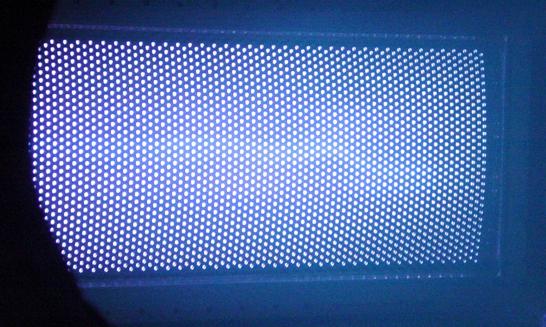
High Power Electric Propulsion (HiPEP) is a variation of ion thruster for use in nuclear electric propulsion applications. It was ground-tested in 2003 by NASA and was intended for use on the Jupiter Icy Moons Orbiter, which was canceled in 2005.
Theory
The HiPEP thruster differs from earlier ion thrusters because the xenon ions are produced using a combination of microwave and magnetic fields. The ionization is achieved through a process called Electron Cyclotron Resonance (ECR). In ECR, the small number of free electrons present in the neutral gas gyrate around the static magnetic field lines. The injected microwaves' frequency is set to match this gyrofrequency and a resonance is established. Energy is transferred from the right-hand polarized portion of the microwave to the electrons. This energy is then transferred to the bulk gas/plasma via the rare - yet important - collisions between electrons and neutrals. During these collisions, electrons can be knocked free from the neutrals, forming ion-electron pairs. The process is a highly efficient means of creating a plasma in low density gases. Previously the electrons required were provided by a hollow cathode.
Specifications
The thruster itself is in the 20-50 kW class, with a specific impulse of 6,000-9,000 seconds, and a propellant throughput capability exceeding 100 kg/kW. The goal of the project, as of June 2003, was to achieve a technology readiness level of 4-5 within 2 years.
The pre-prototype HiPEP produced 670 millinewton (mN) of thrust at a power level of 39.3 kW using 7.0 mg/s of reaction mass giving a specific impulse of 9620 s. Downrated to 24.4 kW, the HiPEP used 5.6 mg/s of reaction mass giving a specific impulse of 8270 s and 460 mN of thrust.
Project and development history
Phase 1 of HiPEP development concluded in early 2003. Conceptual Design of the thruster was completed, and individual component testing concluded. A full-scale laboratory thruster was constructed for Phase 2 of the HiPEP's development. However, with cancellation of the Jupiter Icy Moon Orbiter mission in 2005, HiPEP's development also came to a halt. Before cancellation, HiPEP completed a 2000 hour wear test.
References
References
- [http://www.nasa.gov/centers/glenn/about/fs09grc_prt.htm?ncid=txtlnkusaolp00000618 The Glenn Research Center]. NASA.
- [https://web.archive.org/web/20021227094444/http://www.grc.nasa.gov/WWW/ion/present/hipep.htm HIGH POWER ELECTRIC PROPULSION PROGRAM (HiPEP)]. Glenn Research Center - NASA. 22 December 2008.
- "The High Power Electric Propulsion (HiPEP) Ion Thruster NASA/TM—2004-213194 AIAA–2004–3812".
- Foster, John. (September 1, 2004). "The High Power Electric Propulsion (HiPEP) Ion Thruster".
- [https://ntrs.nasa.gov/search.jsp?R=20040139476] Page 8 of the September 2004 HiPEP report NASA/TM—2004-213194
- "''HiPEP Project'' Jan 2004".
- (2019-04-06). "Gridded Ion Thrusters".
- Herman, Daniel A.. (2010). "Status of the NASA’s Evolutionary Xenon Thruster (NEXT) Long-Duration Test After 30,352 Hours of Operation".
- Williams, George J.. (2005). "Preliminary Wear Analysis Following a 2000 h Wear Test of the HiPEP Ion Thruster".
This article was imported from Wikipedia and is available under the Creative Commons Attribution-ShareAlike 4.0 License. Content has been adapted to SurfDoc format. Original contributors can be found on the article history page.
Ask Mako anything about High Power Electric Propulsion — get instant answers, deeper analysis, and related topics.
Research with MakoFree with your Surf account
Create a free account to save articles, ask Mako questions, and organize your research.
Sign up freeThis content may have been generated or modified by AI. CloudSurf Software LLC is not responsible for the accuracy, completeness, or reliability of AI-generated content. Always verify important information from primary sources.
Report