From Surf Wiki (app.surf) — the open knowledge base
Heterocyclic compound
Molecule with one or more rings composed of different elements
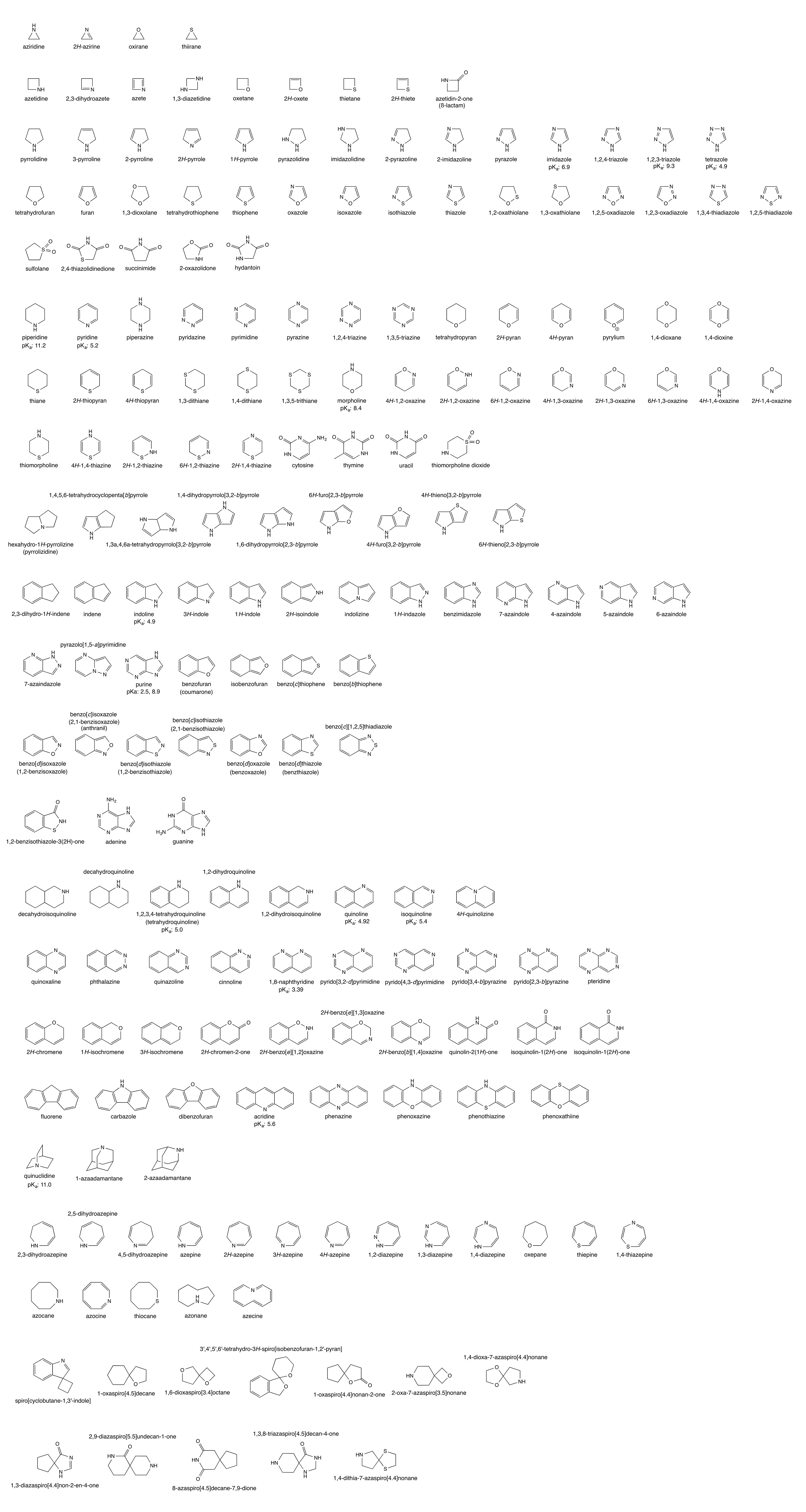
Molecule with one or more rings composed of different elements

A heterocyclic compound or ring structure is a hydrocarbon-based cyclic compound that contains at least one heteroatom as member(s) of its ring(s). Heterocyclic organic chemistry is the branch of organic chemistry dealing with the synthesis, properties, and applications of organic heterocycles.
Examples of heterocyclic compounds include all of the nucleic acids, the majority of drugs, most biomass (cellulose and related materials), and many natural and synthetic dyes. More than half of known compounds are heterocycles. 59% of US FDA-approved drugs contain nitrogen heterocycles.
Classification
The study of organic heterocyclic chemistry focuses especially on organic unsaturated derivatives, and the preponderance of work and applications involves unstrained organic 5- and 6-membered rings. Included are pyridine, thiophene, pyrrole, and furan. Another large class of organic heterocycles refers to those fused to benzene rings. For example, the fused benzene derivatives of pyridine, thiophene, pyrrole, and furan are quinoline, benzothiophene, indole, and benzofuran, respectively. The fusion of two benzene rings gives rise to a third large family of organic compounds. Analogs of the previously mentioned heterocycles for this third family of compounds are acridine, dibenzothiophene, carbazole, and dibenzofuran, respectively.
Heterocyclic organic compounds can be usefully classified based on their electronic structure. The saturated organic heterocycles behave like the acyclic derivatives. Thus, piperidine and tetrahydrofuran are conventional amines and ethers, with modified steric profiles. Therefore, the study of organic heterocyclic chemistry focuses on organic unsaturated rings.
Inorganic rings
Some heterocycles contain no carbon. Examples are borazine (B3N3 ring), hexachlorophosphazene (P3N3 ring), and trithiazyl trichloride (S3N3 ring). In comparison with organic heterocycles, which have numerous commercial applications, inorganic ring systems are mainly of theoretical interest. IUPAC recommends the Hantzsch-Widman nomenclature for naming heterocyclic compounds.
Notes on lists
- "Heteroatoms" are atoms in the ring other than carbon atoms.
- Names in italics are retained by IUPAC and do not follow the Hantzsch-Widman nomenclature.
- Some of the names refer to classes of compounds rather than individual compounds.
- Also no attempt is made to list isomers.
3-membered rings
Although subject to ring strain, 3-membered heterocyclic rings are well characterized.
| Three-membered rings with one heteroatom | Heteroatom | Saturated | Unsaturated | Three-membered rings with two heteroatoms | Heteroatoms | Saturated | Unsaturated |
|---|---|---|---|---|---|---|---|
| Boron | Borirane | Borirene | |||||
| Nitrogen | Aziridine | Azirine | |||||
| Oxygen | Oxirane | ||||||
| (ethylene oxide, epoxides) | Oxirene | ||||||
| Silicon | Silirane | Silirene | |||||
| Phosphorus | Phosphirane | Phosphirene | |||||
| Sulfur | Thiirane | ||||||
| (ethylene sulfide, episulfides) | Thiirene | ||||||
| 2 × Nitrogen | Diaziridine | Diazirine | |||||
| Nitrogen + Oxygen | Oxaziridine | Oxazirine | |||||
| Nitrogen + Sulfur | Thiaziridine | Thiazirine | |||||
| 2 × Oxygen | Dioxirane (highly unstable) | - - - - - - | |||||
| 2 × Sulfur | Dithiirane (highly unstable) | - - - - - - |
4-membered rings
| Four-membered rings with one heteroatom | Heteroatom | Saturated | Unsaturated | Four-membered rings with two heteroatoms | Heteroatoms | Saturated | Unsaturated |
|---|---|---|---|---|---|---|---|
| Boron | Boretane | Borete | |||||
| Nitrogen | Azetidine | Azete | |||||
| Oxygen | Oxetane | Oxete | |||||
| Silicon | Siletane | Silete | |||||
| Phosphorus | Phosphetane | Phosphete | |||||
| Sulfur | Thietane | Thiete | |||||
| 2 × Nitrogen | Diazetidine | Diazete | |||||
| 2 × Oxygen | Dioxetane | Dioxete | |||||
| 2 × Sulfur | Dithietane | Dithiete |
5-membered rings
The 5-membered ring compounds containing two heteroatoms, at least one of which is nitrogen, are collectively called the azoles. Thiazoles and isothiazoles contain a sulfur and a nitrogen atom in the ring. Dithioles have two sulfur atoms.
A large group of 5-membered ring compounds with three or more heteroatoms also exists. One example is the class of dithiazoles, which contain two sulfur atoms and one nitrogen atom.
| Five-membered rings with one heteroatom | Heteroatom | Saturated | Unsaturated | Five-membered rings with two heteroatoms | Heteroatoms | Saturated | Unsaturated (and partially unsaturated) | Five-membered rings with three heteroatoms | Heteroatoms | Unsaturated | Five-membered rings with four heteroatoms | Heteroatoms | Unsaturated | Five-membered rings with five heteroatoms | Heteroatoms | Unsaturated |
|---|---|---|---|---|---|---|---|---|---|---|---|---|---|---|---|---|
| Boron | Borolane | Borole | ||||||||||||||
| Nitrogen | Pyrrolidine | |||||||||||||||
| (Azolidine not used) | Pyrrole | |||||||||||||||
| (Azole not used) | ||||||||||||||||
| Pyrroline (partially unsaturated) | ||||||||||||||||
| Oxygen | Oxolane | Furan | ||||||||||||||
| (Oxole not used) | ||||||||||||||||
| Silicon | Silolane | Silole | ||||||||||||||
| Phosphorus | Phospholane | Phosphole | ||||||||||||||
| Sulfur | Thiolane | Thiophene | ||||||||||||||
| (Thiole not used) | ||||||||||||||||
| Germanium | Germolane | Germole | ||||||||||||||
| Arsenic | Arsolane | Arsole | ||||||||||||||
| Selenium | Selenolane | Selenophene | ||||||||||||||
| Tin | Stannolane | Stannole | ||||||||||||||
| Antimony | Stibolane | Stibole | ||||||||||||||
| Tellurium | Tellurolane | Tellurophene | ||||||||||||||
| Lead | Plumbolane | Plumbole | ||||||||||||||
| Bismuth | Bismolane | Bismole | ||||||||||||||
| 2 × Nitrogen | Pyrazolidine | |||||||||||||||
| Imidazolidine | Pyrazole (Pyrazoline) | |||||||||||||||
| Imidazole (Imidazoline) | ||||||||||||||||
| Nitrogen + Oxygen | Oxazolidine | |||||||||||||||
| Isoxazolidine | Oxazole (Oxazoline) | |||||||||||||||
| Isoxazole (Isoxazoline) | ||||||||||||||||
| Nitrogen + Sulfur | Thiazolidine | |||||||||||||||
| Isothiazolidine | Thiazole (Thiazoline) | |||||||||||||||
| Isothiazole (Isothiazoline) | ||||||||||||||||
| Oxygen + Sulfur | Oxathiolane | |||||||||||||||
| Isoxathiolane | Oxathiole | |||||||||||||||
| Isoxathiole | ||||||||||||||||
| 2 × Oxygen | Dioxolane | Dioxole | ||||||||||||||
| 2 × Sulfur | Dithiolane | Dithiole | ||||||||||||||
| 3 × Nitrogen | Triazole | |||||||||||||||
| 2 Nitrogen + Oxygen | Oxadiazole | |||||||||||||||
| 2 Nitrogen + Sulfur | Thiadiazole | |||||||||||||||
| Nitrogen + 2 Oxygen | Dioxazole | |||||||||||||||
| Nitrogen + 2 Sulfur | Dithiazole | |||||||||||||||
| 4 × Nitrogen | Tetrazole | |||||||||||||||
| 3 Nitrogen + Oxygen | Oxatriazole | |||||||||||||||
| 3 Nitrogen + Sulfur | Thiatriazole | |||||||||||||||
| 5 × Nitrogen | Pentazole | |||||||||||||||
| 4 Nitrogen + Oxygen | Oxatetrazole | |||||||||||||||
| 4 Nitrogen + Sulfur | Thiatetrazole |
6-membered rings
The 6-membered ring compounds containing two heteroatoms, at least one of which is nitrogen, are collectively called the azines. Thiazines contain a sulfur and a nitrogen atom in the ring. Dithiines have two sulfur atoms.
| Six-membered rings with one heteroatom | Heteroatom | Saturated | Unsaturated | Ions | Six-membered rings with two heteroatoms | Heteroatoms | Saturated | Unsaturated | Six-membered rings with three heteroatoms | Heteroatoms | Saturated | Unsaturated | Six-membered rings with four heteroatoms | Heteroatoms | Unsaturated | ||||||||||||||||||||||||
|---|---|---|---|---|---|---|---|---|---|---|---|---|---|---|---|---|---|---|---|---|---|---|---|---|---|---|---|---|---|---|---|---|---|---|---|---|---|---|---|
| Boron | Borinane | Borinine | Boratabenzene anion | ||||||||||||||||||||||||||||||||||||
| Nitrogen | Piperidine | ||||||||||||||||||||||||||||||||||||||
| (Azinane not used) | Pyridine | ||||||||||||||||||||||||||||||||||||||
| (Azine not used) | Pyridinium cation | ||||||||||||||||||||||||||||||||||||||
| Oxygen | Oxane | Pyran | |||||||||||||||||||||||||||||||||||||
| (Oxine not used) | Pyrylium cation | ||||||||||||||||||||||||||||||||||||||
| Silicon | Silinane | Siline | - - - - - - | ||||||||||||||||||||||||||||||||||||
| Phosphorus | Phosphinane | Phosphinine | last1=Fischer | first1=Lukas | last2=Wossidlo | first2=Friedrich | last3=Frost | first3=Daniel | last4=Coles | first4=Nathan T. | last5=Steinhauer | first5=Simon | last6=Riedel | first6=Sebastian | last7=Müller | first7=Christian | date=6 August 2021 | orig-date=19th July 2021 | title=One-step methylation of aromatic phosphorus heterocycles: synthesis and crystallographic characterization of a 1-methyl-phosphininium salt | journal=Chemical Communications | volume= 57 | issue=2021, 57 | publisher= Royal Society of Chemistry | pages=9522–9525 | doi=10.1039/D1CC03892C | doi-access=free | pmid=34546255 }} | ||||||||||||
| Sulfur | Thiane | Thiopyran | |||||||||||||||||||||||||||||||||||||
| (Thiine not used) | Thiopyrylium cation | ||||||||||||||||||||||||||||||||||||||
| Germanium | Germinane | Germine | - - - - - - | ||||||||||||||||||||||||||||||||||||
| Arsenic | Arsinane | Arsinine | Arsatabenzene cation | ||||||||||||||||||||||||||||||||||||
| Selenium | Selenane | Selenopyran | Selenopyrylium cation | ||||||||||||||||||||||||||||||||||||
| Tin | Stanninane | Stannine | - - - - - - | ||||||||||||||||||||||||||||||||||||
| Antimony | Stibinane | Stibinine | Stibatabenzene cation | ||||||||||||||||||||||||||||||||||||
| Tellurium | Tellurane | Telluropyran | Telluropyrylium cation | ||||||||||||||||||||||||||||||||||||
| Lead | Plumbinane | Plumbine | - - - - - - | ||||||||||||||||||||||||||||||||||||
| Bismuth | Bisminane | Bismine | Bismatabenzene cation | ||||||||||||||||||||||||||||||||||||
| 2 × Nitrogen | Piperazine | Pyrazine | |||||||||||||||||||||||||||||||||||||
| Pyrimidine | |||||||||||||||||||||||||||||||||||||||
| Pyridazine | |||||||||||||||||||||||||||||||||||||||
| Nitrogen + Oxygen | Morpholine | Oxazine | |||||||||||||||||||||||||||||||||||||
| Nitrogen + Sulfur | Thiomorpholine | Thiazine | |||||||||||||||||||||||||||||||||||||
| Oxygen + Sulfur | Oxathiane | Oxathiin | |||||||||||||||||||||||||||||||||||||
| 2 × Oxygen | Dioxane | Dioxin | |||||||||||||||||||||||||||||||||||||
| 2 × Sulfur | Dithiane | Dithiin | |||||||||||||||||||||||||||||||||||||
| 3 × Nitrogen | Triazinane | Triazine | |||||||||||||||||||||||||||||||||||||
| 3 × Oxygen | Trioxane | Trioxin | |||||||||||||||||||||||||||||||||||||
| 3 × Sulfur | Trithiane | Trithiin | |||||||||||||||||||||||||||||||||||||
| 4 × Nitrogen | Tetrazine | ||||||||||||||||||||||||||||||||||||||
| 2 Nitrogen + 2 Boron | Carborazine |
Six-membered rings with five heteroatoms The hypothetical chemical compound with five nitrogen heteroatoms would be pentazine.
Six-membered rings with six heteroatoms The hypothetical chemical compound with six nitrogen heteroatoms would be hexazine. Borazine is a six-membered ring with three nitrogen heteroatoms and three boron heteroatoms.
7-membered rings
In a 7-membered ring, the heteroatom must be able to provide an empty π-orbital (e.g. boron) for "normal" aromatic stabilization to be available; otherwise, homoaromaticity may be possible.
| Seven-membered rings with one heteroatom | Heteroatom | Saturated | Unsaturated | Seven-membered rings with two heteroatoms | Heteroatoms | Saturated | Unsaturated |
|---|---|---|---|---|---|---|---|
| Boron | Borepane | Borepine | |||||
| Nitrogen | Azepane | Azepine | |||||
| Oxygen | Oxepane | Oxepine | |||||
| Silicon | Silepane | Silepine | |||||
| Phosphorus | Phosphepane | Phosphepine | |||||
| Sulfur | Thiepane | Thiepine | |||||
| 2 × Nitrogen | Diazepane | Diazepine | |||||
| Nitrogen + Oxygen | Oxazepane | Oxazepine | |||||
| Nitrogen + Sulfur | Thiazepane | Thiazepine |
8-membered rings
| Heteroatom | Saturated | Unsaturated |
|---|---|---|
| Nitrogen | Azocane | Azocine |
| Oxygen | Oxocane | Oxocine |
| Sulfur | Thiocane | Thiocine |
Borazocine is an eight-membered ring with four nitrogen heteroatoms and four boron heteroatoms.
9-membered rings
| Heteroatom | Saturated | Unsaturated |
|---|---|---|
| Nitrogen | Azonane | Azonine |
| Oxygen | Oxonane | Oxonine |
| Sulfur | Thionane | Thionine |
Images of rings with one heteroatom
| colspan="3" | Saturated | colspan="3" | Unsaturated | Heteroatom | Nitrogen | Oxygen | Sulfur | Nitrogen | Oxygen | Sulfur | 3-atom ring | 4-atom ring | 5-atom ring | 6-atom ring | 7-atom ring | 8-atom ring | 9-atom ring | |||||||||
|---|---|---|---|---|---|---|---|---|---|---|---|---|---|---|---|---|---|---|---|---|---|---|---|---|---|---|
| Aziridine | Oxirane | Thiirane | Azirine | Oxirene | Thiirene | |||||||||||||||||||||
| [[File:Aziridin.svg | 60px | Structure of aziridine]] | [[File:Ethylene oxide.svg | 60px | Structure of oxirane]] | [[File:Thiiran.svg | 60px | Structure of thiirane]] | [[File:Azirin.svg | 60px | Structure of azirine]] | [[File:Oxiren.svg | 60px | Structure of oxirene]] | [[File:Thiiren.svg | 60px | Structure of thiirene]] | |||||||||
| Azetidine | Oxetane | Thietane | Azete | Oxete | Thiete | |||||||||||||||||||||
| [[File:Azetidine structure.svg | 70px | Structure of acetidine]] | [[File:Oxetan.png | 60px | Structure of oxetane]] | [[File:Thietan.png | 60px | Structure of thietane]] | [[File:Azete structure.svg | 60px | Structure of azete]] | [[File:Oxetene.svg | 70px | Structure of oxete]] | [[File:Thietene.png | 70px | Structure of thiete]] | |||||||||
| Pyrrolidine | Oxolane | Thiolane | Pyrrole | Furan | Thiophene | |||||||||||||||||||||
| [[File:Pyrrolidine-Structural Formula V.1.svg | 60px | Structure of pyrrolidine]] | [[File:Tetrahydrofuran acsv.svg | 70px | Structure of oxolane]] | [[File:Tetrahydrothiophen.png | 70px | Structure of thiolane]] | [[File:Pyrrol2.svg | 70px | Structure of pyrrole]] | [[File:Furan.svg | 70px | Structure of furan]] | [[File:Thiophen.svg | 70px | Structure of thiophene]] | |||||||||
| Piperidine | Oxane | Thiane | Pyridine | Pyran | Thiopyran | |||||||||||||||||||||
| [[File:Piperidin.svg | 70px | Structure of piperidine]] | [[File:Tetrahydropyran (vzorec).svg | 70px | Structure of oxane]] | [[File:Thiane3.svg | 70px | Structure of thiane]] | [[File:Pyridin.svg | 70px | Structure of pyridine]] | [[File:Pyran.svg | 70px | Structure of pyran]] | [[File:1,2-Thiapyran.svg | 70px | Structure of thiopyran]] | |||||||||
| Azepane | Oxepane | Thiepane | Azepine | Oxepine | Thiepine | |||||||||||||||||||||
| [[File:Azepane.svg | 70px | Structure of azepane]] | [[File:Oxepan.png | 70px | Structure of oxepane]] | [[File:Thiepan.svg | 70px | Structure of thiepane]] | [[File:Azepine-2D-skeletal.png | 70px | Structure of azepine]] | [[File:Oxepine.svg | 70px | Structure of oxepine]] | [[File:Thiepine.png | 70px | Structure of thiepine]] | |||||||||
| Azocane | Oxocane | Thiocane | Azocine | Oxocine | Thiocine | |||||||||||||||||||||
| [[File:Azocane.png | 70px | Structure of azocane]] | [[File:Oxocano.png | 70px | Structure of oxocane]] | [[File:Tiocano.png | 70px | Structure of thiocane]] | [[File:Azocine.png | 70px | Structure of azocine]] | [[File:Oxocinio.png | 70px | Structure of oxocine]] | [[File:Tiocinio.png | 70px | Structure of thiocine]] | |||||||||
| Azonane | Oxonane | Thionane | Azonine | Oxonine | Thionine | |||||||||||||||||||||
| [[File:Azonano.png | 70px | Structure of azonane]] | [[File:Oxonano.png | 70px | Structure of oxonane]] | [[File:Tionano.png | 70px | Structure of thionane]] | [[File:Azonina.png | 70px | Structure of azonine]] | [[File:Oxonina.png | 70px | Structure of oxonine]] | [[File:Tionina.png | 70px | Structure of thionine]] |
Fused/condensed rings
Heterocyclic rings systems that are formally derived by fusion with other rings, either carbocyclic or heterocyclic, have a variety of common and systematic names. For example, with the benzo-fused unsaturated nitrogen heterocycles, pyrrole provides indole or isoindole depending on the orientation. The pyridine derivative is quinoline or isoquinoline, and the class of analogues with two nitrogen atoms is known as the benzodiazines. For the azepine derivative, benzazepine is the preferred name. Likewise, the compounds with two benzene rings fused to the central heterocycle are carbazole, acridine, and dibenzoazepine. Heptazine is a tricyclic nitrogen-containing heterocyclic system derived by fusion of three triazine rings, and analog of the carbocycle phenalene.
History of heterocyclic chemistry
The history of heterocyclic chemistry began in the 1800s, in step with the development of organic chemistry. Some noteworthy developments:
- 1818: Brugnatelli makes alloxan from uric acid.
- 1832: Dobereiner produces furfural (a furan) by treating starch with sulfuric acid.
- 1834: Runge obtains pyrrole ("fiery oil") by dry distillation of bones.
- 1906: Friedlander synthesizes indigo dye, allowing synthetic chemistry to displace a large agricultural industry.
- 1936: Treibs isolates chlorophyll derivatives from crude oil, explaining the biological origin of petroleum.
- 1951: Chargaff's rules are described, highlighting the role of heterocyclic compounds (purines and pyrimidines) in the genetic code.
Uses
Heterocyclic compounds are pervasive in many areas of life sciences and technology.Thomas L. Gilchrist "Heterocyclic Chemistry" 3rd ed. Addison Wesley: Essex, England, 1997. 414 pp. . Many drugs are heterocyclic compounds. Among the modifications to the family of antitumor compounds, heterocyclic organic compounds have been extensively applied by many groups in order to modify the reactivity profile. Pyrrole, pyrimidine, indole, quinoline and purine are few classes of heterocycles which showed interesting cytotoxicity profiles, which can be highly beneficial when developing cancer drugs.
References
References
- [[IUPAC Gold Book]] [http://goldbook.iupac.org/H02798.html ''heterocyclic compounds'']
- (1992). "Polysulfur-Nitrogen Heterocyclic Chemistry". Journal of Heterocyclic Chemistry.
- Edon Vitaku, David T. Smith, Jon T. Njardarson. (2014). "Analysis of the Structural Diversity, Substitution Patterns, and Frequency of Nitrogen Heterocycles among U.S. FDA Approved Pharmaceuticals". J. Med. Chem..
- "Hantzsch–Widman name".
- {{March6th
- (6 August 2021). "One-step methylation of aromatic phosphorus heterocycles: synthesis and crystallographic characterization of a 1-methyl-phosphininium salt". Royal Society of Chemistry.
- (1986). "Adrien Albert and the rationalization of heterocyclic chemistry". Journal of Chemical Education.
- "IPEXL.com Multilingual Patent Search, Patent Ranking".
- (2002-06-01). "Cancer Chemotherapy and Heterocyclic Compounds". Current Medicinal Chemistry.
This article was imported from Wikipedia and is available under the Creative Commons Attribution-ShareAlike 4.0 License. Content has been adapted to SurfDoc format. Original contributors can be found on the article history page.
Ask Mako anything about Heterocyclic compound — get instant answers, deeper analysis, and related topics.
Research with MakoFree with your Surf account
Create a free account to save articles, ask Mako questions, and organize your research.
Sign up freeThis content may have been generated or modified by AI. CloudSurf Software LLC is not responsible for the accuracy, completeness, or reliability of AI-generated content. Always verify important information from primary sources.
Report