From Surf Wiki (app.surf) — the open knowledge base
Herding
Act of bringing individual animals together in a group
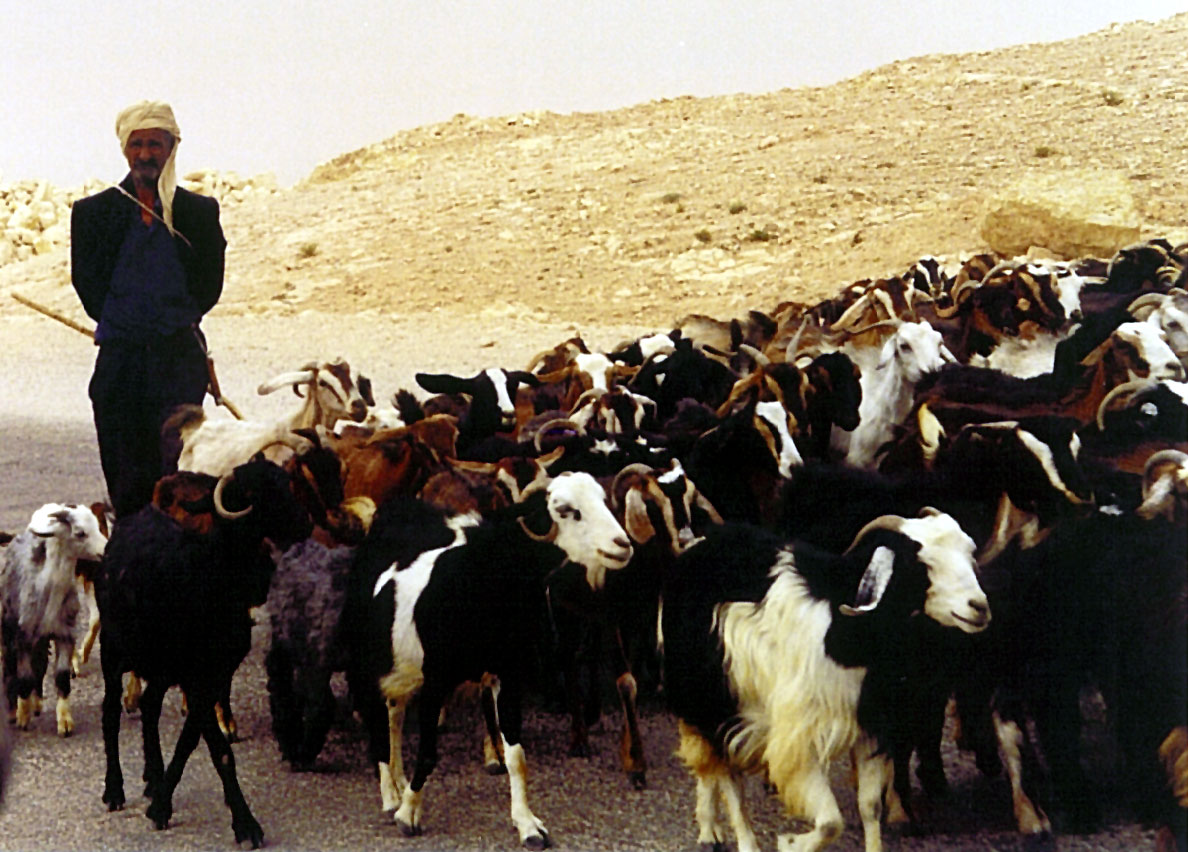
Act of bringing individual animals together in a group

Herding is the act of bringing individual animals together into a group (herd), maintaining the group, and moving the group from place to place—or any combination of those. Herding can refer either to the process of animals forming herds in the wild, or to human intervention forming herds for some purpose. While the layperson uses the term "herding" to describe this human intervention, most individuals involved in the process term it mustering, "working stock", or droving.
A herder or herdsman is a pastoral worker responsible for herding, i.e., the care and management of a herd or flock of domestic animals, usually on open pasture. It is particularly associated with nomadic or transhumant management of stock, or with common land grazing. The work is often done either on foot or mounted. Depending on the type of animal being herded, the English language can give different professional names, for example, cowboy for cows, shepherd for sheep, or goatherd for goat.
Herding is used in agriculture to manage domesticated animals. Herding can be performed by people or trained animals such as herding dogs that control the movement of livestock under the direction of a person. A competitive sport has developed in some countries where the combined skill of man and herding dog is tested and judged in a "trial", such as a sheepdog trial. Animals such as sheep, camel, yak, and goats are mostly reared. They provide milk, meat and other products to the herders and their families.
By country
China
Tibetan herding communities living in the Tibetan Plateau in the Sichuan Province of southwest China continued to graze herds on common lands even after the 1982 Household responsibility system. Several reasons have been given for the endurance of the traditional pastoral lifestyle:
- complex topography prevents the division of common grazing lands among individual households
- yaks require free grazing and become ill in fenced pasture
- rotation of grazing spots
Grassland degradation has been an issue. Herding communities and their leaders have taken steps to reach a consensus about sustainable grazing practices. These include developing the community political organization to enforce commitments to seasonal rotational grazing.
By livestock type
Cows
There are numerous regional types of cow herder, many with a specific name; these include the stockman of Australia, the buttero, campino, csikós, gardian and gulyás in Europe, the buckaroo, charro, cowboy and vaquero in North America, and the gaucho, huaso, llanero, morochuco and of South America.
Goats
Sheep
Other
- A swineherd or hogherd herds pigs.
- A gooseherd herds geese.
References
References
- Renna, Christine Hartnagle. (2009). "Herding Dogs". Kennel Club Books.
- "Supporting Collective Action through Community Development Funds: An Institutional Innovation for Herder Poverty Reduction in Sichuan, China".
This article was imported from Wikipedia and is available under the Creative Commons Attribution-ShareAlike 4.0 License. Content has been adapted to SurfDoc format. Original contributors can be found on the article history page.
Ask Mako anything about Herding — get instant answers, deeper analysis, and related topics.
Research with MakoFree with your Surf account
Create a free account to save articles, ask Mako questions, and organize your research.
Sign up freeThis content may have been generated or modified by AI. CloudSurf Software LLC is not responsible for the accuracy, completeness, or reliability of AI-generated content. Always verify important information from primary sources.
Report