From Surf Wiki (app.surf) — the open knowledge base
Henrietta Street, Dublin
Street in Dublin, Ireland
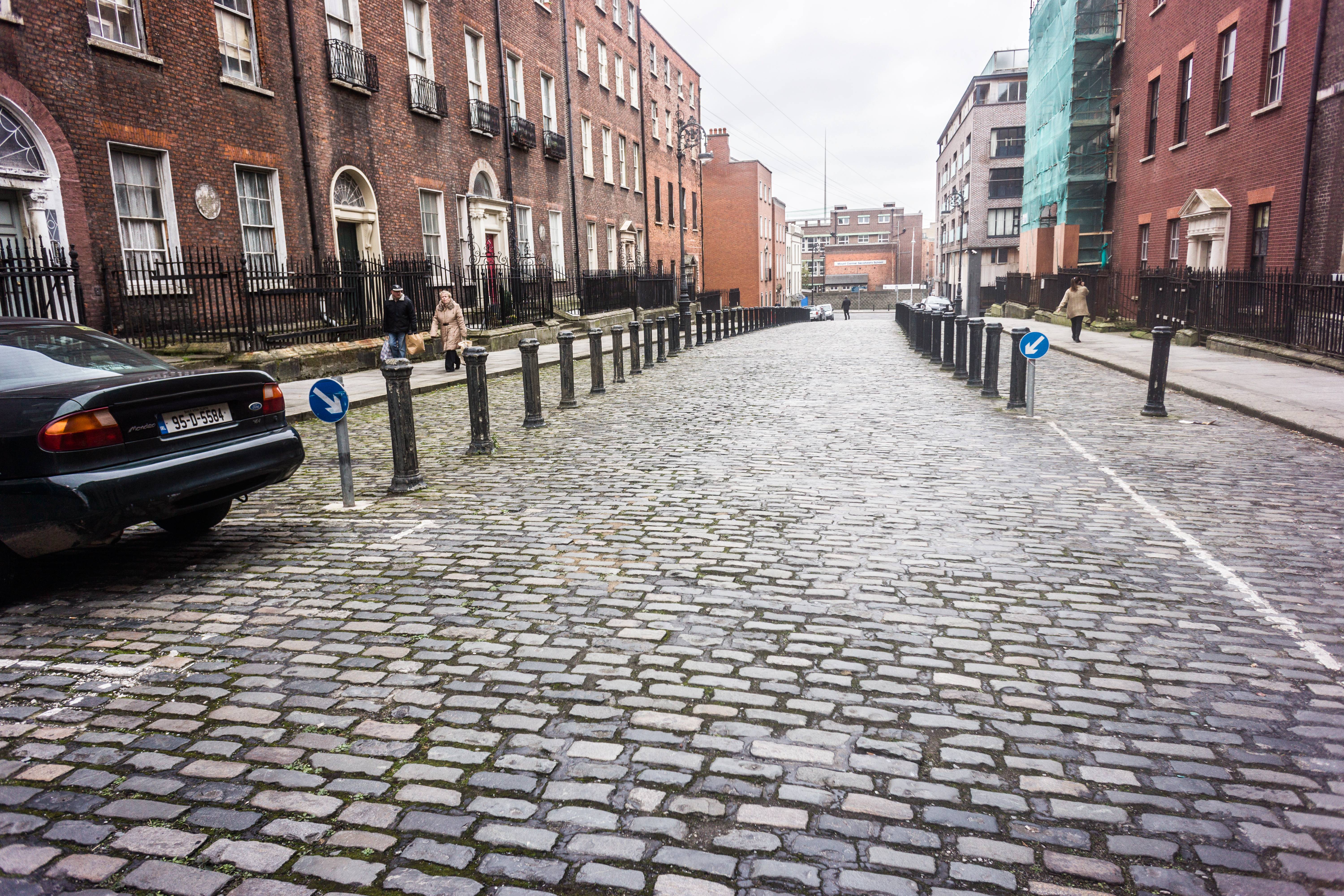
Street in Dublin, Ireland
| Field | Value |
|---|---|
| name | Henrietta Street |
| native_name | ga |
| image | HStreetD01.jpg |
| caption | Clockwise, top to bottom: Looking northwest towards Gandon's Kings Inns; a detail from a neoclassical portico along the street; the entrance to Gandon's King's Inns building |
| map_type | Ireland Central Dublin |
| namesake | Henrietta, Duchess of Grafton (1690–1726); or Henrietta Paulet, Duchess of Bolton (1697–1730) |
| length_m | 160 |
| width | 17 m |
| location | Dublin, Ireland |
| postal_code | D01 |
| coordinates | |
| direction_a | northwest |
| terminus_a | Archway leading to King's Inns |
| direction_b | southeast |
| terminus_b | Bolton Street |
| known_for | Georgian Dublin, tenements, 14 Henrietta Street |
| website |

Henrietta Street () is a Dublin street, to the north of Bolton Street on the north side of the city, first laid out and developed by Luke Gardiner during the 1720s. A very wide street relative to streets in other 18th-century cities, it includes a number of very large red-brick city palaces and townhouses of Georgian design.
Name

The street is generally held to be named after Henrietta (née Somerset; 1690–1726), the wife of Charles FitzRoy, 2nd Duke of Grafton, although an alternative candidate is Henrietta (née Crofts; 1697–1730), third wife of Charles Paulet, 2nd Duke of Bolton. The nearby Bolton Street is named after Paulet.{{Cite web
| archive-url = https://web.archive.org/web/20080520215745/http://www.rsai.ie/index.cfm?action=obj.display&obj_id=134 | access-date = 20 April 2009 | archive-date = 20 May 2008
History
Henrietta Street is the earliest Georgian street in Dublin, and at the forefront of Dublin's later Georgian streetscapes. Construction on the street started in the mid-1720s, on land bought by the Gardiner family in 1721. Construction was still taking place in the 1750s. Gardiner had a mansion, designed by Richard Cassels, built for his own use around 1730.
The street was popularly referred to as Primate's Hill, as one of the houses was owned by the Archbishop of Armagh, although this house, along with two others, was demolished to make way for the Law Library of King's Inns.
The street fell into disrepair during the 19th and 20th centuries, with the houses being used as tenements. While the houses on Henrietta Street had been home to a small number of wealthy residents in the 18th century, these were given-over to tenement use during the 19th century, and by 1911 there were 835 people living in poverty in just 15 houses.
The Dublin Civic Exhibition (1914) took place at the King's Inns and the Linenhall complex with entrance for the public via Henrietta Street.
A number of houses on the street remained in use as tenements until the 1970s. In the late 20th and early 21st centuries, the street has been subject to restoration efforts.
The street has been used as a period-location for film and TV companies, with productions filmed including Albert Nobbs, Inspector George Gently and Foyle's War.
The street is a cul-de-sac, with the Law Library of King's Inns facing onto its western end. As of 2017, there are 13 houses on the street. One of these houses, 14 Henrietta Street, was opened as a museum in late 2018. 14 Henrietta Street tells the story of the building and of the lives of the people who lived there. A plaque at the address commemorates its association with Irish republican Thomas Bryan.
First residents
The street was initially popular with landed and merchant families, and a number of hereditary peers had properties on the street in the mid-18th century. The houses were built to have rear gardens and mews.
North-side
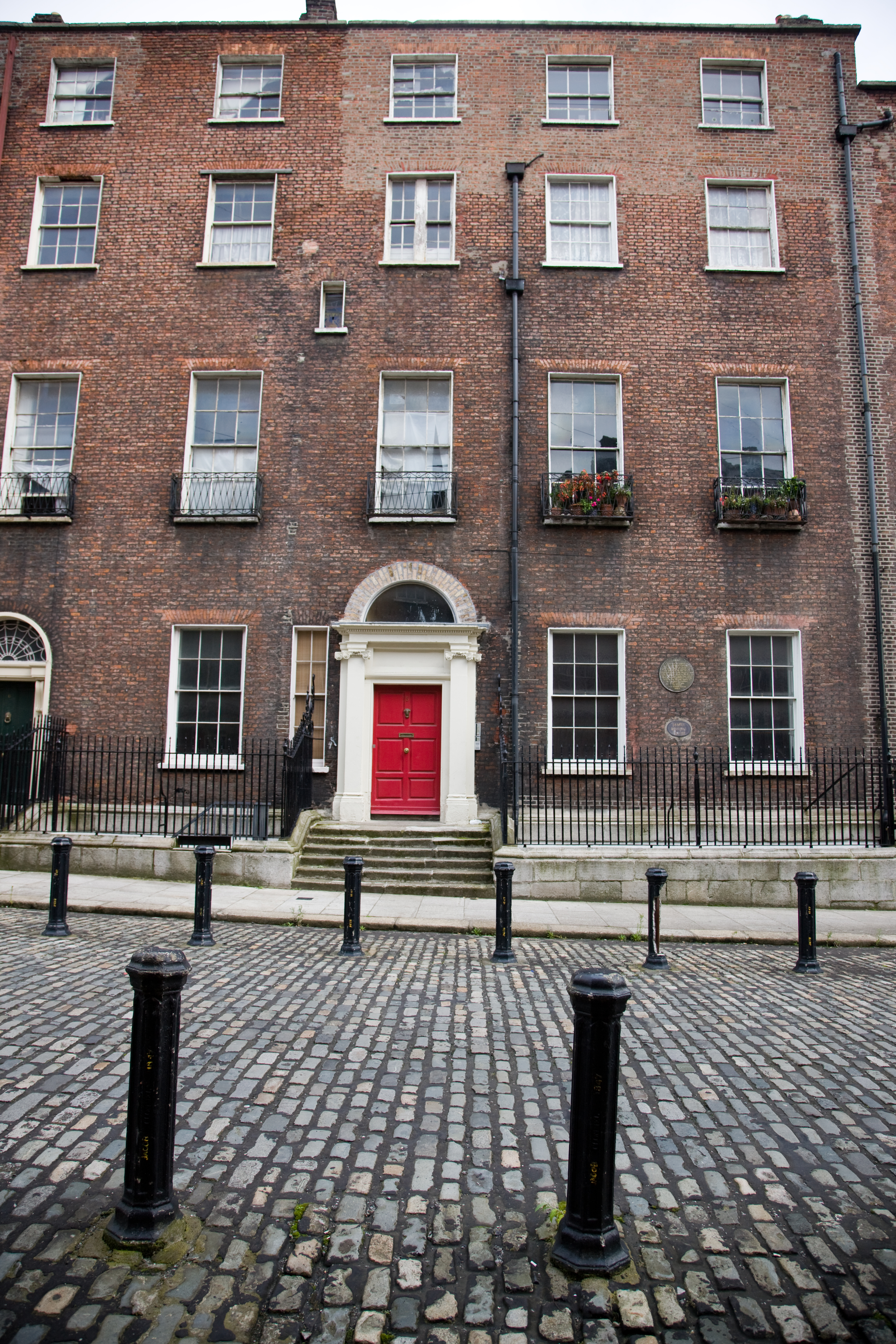
; No.3
- Resident: Owen Wynne; ; No.4
- Construction: Built after 1755
- Resident: John Maxwell, 1st Baron Farnham from 1757, father-in-law of Owen Wynne at no.3. This house remained in the possession of the same family until 1852. ; No.5
- Construction: Built by Nathaniel Clements about 1741 for Henry O'Brien
- Resident: Henry O'Brien, 8th Earl of Thomond. Thomond died 2 years later and the house was occupied by George Stone, Bishop of Ferns, who later succeeded Boulter as Primate; ; No.6
- Construction: Separate flat within No. 5; ; No.7
- Construction: Built by Nathaniel Clements about 1738
- Resident: Nathaniel Clements; ; No.8
- Construction: Nathaniel Clements 1735
- Resident: Lieutenant General Richard St George; ; No.9

- Construction: Designed by Edward Lovett Pearce and built for Luke Gardiner by 1735
- Resident Thomas Carter; ; No.10
- Construction: Edward Lovett Pearce was the architect
- Resident: Luke Gardiner
Western end
- Entrance to King's Inns
South-side
- King's Inns law library

; No.11
- Construction: Designed by Edward Lovett Pearce for Luke Gardiner (built as a pair to No. 12)
- Resident: Brigadier General William Graham; ; No.12
- Construction: Built as a pair to No. 11 for Gardiner with Edward Lovett Pearce as architect
- Resident: William Stewart, 3rd Viscount Mountjoy and later 1st Earl of Blessington; ; No.13
- Construction: Built by Luke Gardiner at the same time as numbers 14 and 15
- Resident: Nicholas Loftus, 1st Earl of Ely from 1755 (1st record); ; No.14
- Construction: Built by Luke Gardiner at the same time as numbers 13 and 15
- Resident: Richard 3rd Viscount Molesworth from 1752.
- Other notable occupant: No. 14 is now a museum. ; No.15
- Construction: Built by Luke Gardiner at the same time as numbers 13 and 14
- Resident: Sir Robert King from about 1748
- Other notable occupant: Na Píobairí Uilleann
References
References
- Craig, Maurice. (2006). "Dublin 1660-1860".
- "Henrietta Street, Dublin - Buildings of Ireland - Irish Architecture". Archiseek.
- M'Cready, C. T.. (1987). "Dublin street names dated and explained". Carraig.
- (2004). "Henrietta Street Conservation Plan". Dublin City Council.
- Sheridan, Edel. (2001). "Dublin Through Space & Time". Four Courts Press.
- (30 April 2015). "Museum of Dublin tenement life set for Henrietta Street". The Irish Times.
- "Dublin - Poverty and Health". National Archives.
- "Film Titles With Location Matching "Henrietta Street, Dublin"". IMDb.
- (20 September 2018). "News - Officially Opening of 14 Henrietta Street". Royal Institute of the Architects of Ireland.
- "What will you experience". Dublin City Council.
- "Plaque unveiled to Thomas Bryan, one of the 'Forgotten 10' during War of Independence". [[Irish Independent]].
- "Henrietta Street, Dublin". Archiseek.
- Shaffrey Associates Architects; John Montague, Architectural Historian; Carrig Conservation Ltd; Dr. Tracy Pickerill; Lee McCullough & Partners, Consulting Engineers; Boylan Farrelly, Quantity Surveyors; ''Henrietta Street Conservation Plan'' Dublin City Heritage
This article was imported from Wikipedia and is available under the Creative Commons Attribution-ShareAlike 4.0 License. Content has been adapted to SurfDoc format. Original contributors can be found on the article history page.
Ask Mako anything about Henrietta Street, Dublin — get instant answers, deeper analysis, and related topics.
Research with MakoFree with your Surf account
Create a free account to save articles, ask Mako questions, and organize your research.
Sign up freeThis content may have been generated or modified by AI. CloudSurf Software LLC is not responsible for the accuracy, completeness, or reliability of AI-generated content. Always verify important information from primary sources.
Report