From Surf Wiki (app.surf) — the open knowledge base
Hennepin County, Minnesota
County in Minnesota, United States

County in Minnesota, United States
| Field | Value |
|---|---|
| county | Hennepin County |
| state | Minnesota |
| ex image | Hennepin County Government Center 5.jpg |
| ex image size | 300px |
| ex image cap | The Hennepin County Government Center, located in the county seat of Minneapolis. Its stylized letter "H" shape serves as the logo for Hennepin County. |
| type | County |
| flag | Flag of Hennepin County, Minnesota (2022).svg |
| logo | Logo of Hennepin County, Minnesota.svg |
| coordinates | |
| founded year | 1852 |
| founded date | March 6 |
| named for | Louis Hennepin |
| seat wl | Minneapolis |
| largest city wl | Minneapolis |
| area_total_sq_mi | 606.749 |
| area_land_sq_mi | 554.019 |
| area_water_sq_mi | 52.730 |
| area percentage | 8.69% |
| population_as_of | 2020 |
| population_total | 1281565 |
| pop_est_as_of | 2024 |
| population_est | 1273334 |
| density_sq_mi | 2298.355 |
| time zone | Central |
| area codes | 612, 763, 952 |
| district | 3rd |
| district2 | 5th |
| district3 | 6th |
| website |
Hennepin County ( ) is a county in the U.S. state of Minnesota. As of the 2020 census, the population was 1,281,565, and was estimated to be 1,273,334 in 2024, making it the most populous county in Minnesota and the 34th-most populous county in the United States. Its county seat is Minneapolis, the most populous city in Minnesota and the 46th-most populous city in the United States. The county is named for the 17th-century explorer Louis Hennepin. It extends from Minneapolis to the suburbs and outlying cities in the western part of the county. Its natural areas are covered by extensive woods, hills, and lakes. It contains over 21.98% of the state's population. It is included in the Minneapolis–Saint Paul–Bloomington metropolitan statistical area.
History
19th century
The Territorial Legislature of Minnesota established Hennepin County on March 6, 1852, and two years later Minneapolis was named the county seat. Louis Hennepin's name was chosen because he originally named Saint Anthony Falls and recorded some of the earliest accounts of the area for the Western world. In January 1855, the first bridge over the Mississippi River was built over St. Anthony Falls.
Waterpower built the city of Minneapolis and Hennepin County. The water of streams and rivers provided power to grist mills and sawmills throughout the county. By the late 1860s, more than a dozen mills were churning out lumber near St. Anthony Falls and the county's population had surpassed 12,000.
The falls' power was the vital link between the central city and the farmsteads throughout the county. Farms produced vegetables, fruits, grains and dairy products for city dwellers, while Minneapolis industries produced lumber, furniture, farm implements and clothing.
By 1883, railroads united Minneapolis with both the East and West coasts, and technical developments, especially in flour milling, brought rapid progress to the area. The major Minneapolis millers were Washburn, Pillsbury, Bell, Dunwoody and Crosby.
20th century
For a decade, the "Mill City" was the flour-milling capital of the world and one of the largest lumber producers. Minneapolis, with a population of 165,000 by 1890, had become a major U.S. city, and by 1900, was firmly established as the hub of the Upper Midwest's industry and commerce.
Hennepin County's farm economy was also substantial. In 1910, farmland in the county totaled 284,000 acres, about 72% of its area. The principal crops were wheat, corn, garden vegetables, and apples. The number of acres in production remained high for the next 30 years. By 1950, the amount of land devoted to agriculture had declined to 132,000 acres as development progressed in the suburbs.
During the 1950s and 1960s, many suburbs grew rapidly as housing developments, shopping centers, large school systems and growing industrialization replaced much of the open farmland. By 1970, Hennepin County's suburban population outnumbered the cities for the first time. Minneapolis's population declined by 10 percent from 1960 to 1970, while the suburban population grew by nearly 50 percent.
Another wave of immigration—which began after the Vietnam War in the mid-1970s—marked a major change in the county's ethnic makeup. This wave peaked in the 1980s when hundreds of refugees from Southeast Asia, often aided by local churches, resettled in Hennepin County. Its population surpassed one million in 1989.
Geography
According to the United States Census Bureau, the county has a total area of 606.749 sqmi, of which 554.019 sqmi is land and 52.730 sqmi (8.69%) is water. It is the 60th largest county in Minnesota by total area.
Hennepin is one of 17 Minnesota counties with more savanna soils than either prairie or forest soils, and one of two Minnesota counties with more than 75% of its area in savanna soils (the other is the adjacent Wright County).
The highest waterfall on the Mississippi River, Saint Anthony Falls (discovered by Louis Hennepin), is in Hennepin County next to downtown Minneapolis, but in the 19th century, the falls were converted to a series of dams. Barges and boats now pass through locks to move between the parts of the river above and below the dams.
Adjacent counties
- Anoka County (northeast)
- Ramsey County (east)
- Dakota County (southeast)
- Scott County (south)
- Carver County (southwest)
- Wright County (northwest)
- Sherburne County (north)
National protected areas
- Minnesota Valley National Wildlife Refuge (part)
- Mississippi National River and Recreation Area (part)
Demographics
|align-fn=center 1790–1960 1900–1990 1990–2000 2010–2020
As of the third quarter of 2024, the median home value in Hennepin County was $398,850.
As of the 2023 American Community Survey, there are 534,573 estimated households in Hennepin County with an average of 2.32 persons per household. The county has a median household income of $96,339. Approximately 10.1% of the county's population lives at or below the poverty line. Hennepin County has an estimated 71.4% employment rate, with 53.3% of the population holding a bachelor's degree or higher and 94.0% holding a high school diploma.
The top five reported ancestries (people were allowed to report up to two ancestries, thus the figures will generally add to more than 100%) were English (82.3%), Spanish (6.0%), Indo-European (2.9%), Asian and Pacific Islander (4.3%), and Other (4.5%).
Racial and ethnic composition
Hennepin County's racial and ethnic composition has evolved significantly over time. Initially, the region was inhabited by Native American tribes, primarily the Dakota Sioux. Beginning in the early 19th century, European settlement brought a demographic shift, with a predominantly white population of Northern European descent. The county witnessed further diversification throughout the 20th century with the arrival of African Americans during the Great Migration, as well as Latino, Asian, and other immigrant groups in the latter half of the century.
Hennepin County, Minnesota – racial and ethnic composition Note: the US Census treats Hispanic/Latino as an ethnic category. This table excludes Latinos from the racial categories and assigns them to a separate category. Hispanics/Latinos may be of any race.
| Race / ethnicity (NH = non-Hispanic) | title=Hennepin County, Minnesota — Population by Race | url=https://censusscope.org/us/s27/c53/chart_race.html | publisher=CensusScope | access-date=April 14, 2025}} | title=1990 Census of Population: General Population Characteristics Minnesota | url=https://www2.census.gov/library/publications/decennial/1990/cp-1/cp-1-25.pdf | website=www.census.gov | date=October 6, 2022 | page=21 | access-date=April 14, 2025}} | title=P004: Hispanic or Latino, and Not Hispanic or Latino by Race – 2000: DEC Summary File 1 – Hennepin County, Minnesota | url=https://data.census.gov/table/DECENNIALSF12000.P004?g=050XX00US27053 | publisher=United States Census Bureau | access-date=April 14, 2025}} | title=P2: Hispanic or Latino, and Not Hispanic or Latino by Race – 2010: DEC Redistricting Data (PL 94-171) – Hennepin County, Minnesota | url=https://data.census.gov/table?q=p2&g=050XX00US27053&tid=DECENNIALPL2010.P2 | publisher=United States Census Bureau | access-date=April 14, 2025}} |
|---|---|---|---|---|---|---|---|---|---|---|---|---|---|---|---|---|---|---|
| White alone (NH) | 875,692 | |||||||||||||||||
| (93.02%) | 914,870 | |||||||||||||||||
| (88.61%) | 881,016 | |||||||||||||||||
| (78.93%) | 826,670 | |||||||||||||||||
| (71.73%) | ||||||||||||||||||
| Black or African American alone (NH) | 32,522 | |||||||||||||||||
| (3.45%) | 59,109 | |||||||||||||||||
| (5.73%) | 98,698 | |||||||||||||||||
| (8.84%) | 134,240 | |||||||||||||||||
| (11.65%) | ||||||||||||||||||
| Native American or Alaska Native alone (NH) | 10,479 | |||||||||||||||||
| (1.11%) | 14,272 | |||||||||||||||||
| (1.38%) | 10,212 | |||||||||||||||||
| (0.91%) | 8,848 | |||||||||||||||||
| (0.77%) | ||||||||||||||||||
| Asian alone (NH) | 9,839 | |||||||||||||||||
| (1.05%) | 29,010 | |||||||||||||||||
| (2.81%) | 53,229 | |||||||||||||||||
| (4.77%) | 71,535 | |||||||||||||||||
| (6.21%) | ||||||||||||||||||
| Pacific Islander alone (NH) | — | — | 473 | |||||||||||||||
| (0.04%) | 431 | |||||||||||||||||
| (0.04%) | ||||||||||||||||||
| Other race alone (NH) | 4,852 | |||||||||||||||||
| (0.52%) | 1,192 | |||||||||||||||||
| (0.12%) | 2,115 | |||||||||||||||||
| (0.19%) | 2,321 | |||||||||||||||||
| (0.20%) | ||||||||||||||||||
| Mixed race or multiracial (NH) | — | — | 25,018 | |||||||||||||||
| (2.24%) | 30,704 | |||||||||||||||||
| (2.66%) | ||||||||||||||||||
| Hispanic or Latino (any race) | 8,027 | |||||||||||||||||
| (0.85%) | 13,978 | |||||||||||||||||
| (1.35%) | 45,439 | |||||||||||||||||
| (4.07%) | 77,676 | |||||||||||||||||
| (6.74%) | ||||||||||||||||||
| Total | **941,411 | |||||||||||||||||
| (100.00%)** | **1,032,431 | |||||||||||||||||
| (100.00%)** | **1,116,200 | |||||||||||||||||
| (100.00%)** | **1,152,425 | |||||||||||||||||
| (100.00%)** |
Ancestry
The most common ancestries in Hennepin County are German, Irish, English, Norwegian and Swedish.
| Ancestry | Any ancestry | Full ancestry | Rank | Population | Percentage | Rank | Population | Percentage |
|---|---|---|---|---|---|---|---|---|
| German | 1 | 347,042 | 27.08% | 1 | 98,811 | 7.71% | ||
| Irish | 2 | 187,435 | 14.63% | 6 | 31,653 | 2.47% | ||
| English | 3 | 152,567 | 11.09% | 3 | 40,602 | 3.17% | ||
| Norwegian | 4 | 135,077 | 10.54% | 5 | 32,327 | 2.52% | ||
| Swedish | 5 | 100,544 | 7.85% | 9 | 18,886 | 1.47% | ||
| African | 6 | 75,484 | 5.89% | 2 | 60,478 | — | ||
| Mexican | 7 | 57,607 | 4.50% | — | — | — | ||
| Polish | 8 | 54,025 | 4.22% | 11 | 10,306 | 0.80% | ||
| French | 9 | 52,883 | 4.13% | 16 | 4,467 | 0.35% | ||
| Somali | 10 | 38,588 | 3.01% | 4 | 37,897 | 2.96% |
2023 estimate
As of the 2023 estimate, there were 1,258,713 people and 534,573 households residing in the county. There were 579,806 housing units. The racial makeup of the county was 72.9% White (66.5% NH White), 14.7% African American, 1.2% Native American, 7.6% Asian, 0.1% Pacific Islander, _% from some other races and 3.6% from two or more races (% NH Multiracial). Hispanic or Latino people of any race were 7.9% of the population.
In the 2021 estimate, Hennepin County is the 2nd wealthiest county in Minnesota and 65th wealthiest county of the 100 highest-income counties in the United States. $50,478 for per capita income in 2021.
2020 census
As of the 2020 census, the county had a population of 1,281,565. The median age was 36.5 years. 21.3% of residents were under the age of 18 and 14.8% of residents were 65 years of age or older. For every 100 females there were 97.5 males, and for every 100 females age 18 and over there were 95.7 males age 18 and over.
The racial makeup of the county was 66.7% White, 13.4% Black or African American, 0.9% American Indian and Alaska Native, 7.6% Asian,
97.6% of residents lived in urban areas, while 2.4% lived in rural areas.
There were 528,547 households in the county, of which 26.5% had children under the age of 18 living in them. Of all households, 42.4% were married-couple households, 21.1% were households with a male householder and no spouse or partner present, and 28.4% were households with a female householder and no spouse or partner present. About 32.7% of all households were made up of individuals and 10.8% had someone living alone who was 65 years of age or older.
There were 555,779 housing units, of which 4.9% were vacant. Among occupied housing units, 60.1% were owner-occupied and 39.9% were renter-occupied. The homeowner vacancy rate was 0.9% and the rental vacancy rate was 5.5%.
2010 census
As of the 2010 census, there were 1,152,425 people, 475,913 households, and 272,885 families residing in the county. The population density was 2,081.7 PD/sqmi. There were 509,458 housing units at an average density of 920.3 /sqmi. The racial makeup of the county was 74.35% White, 11.82% African American, 0.92% Native American, 6.24% Asian, 0.04% Pacific Islander, 3.37% from some other races and 3.25% from two or more races. Hispanic or Latino people of any race were 6.74% of the population.
2000 census
As of the 2000 census, there were 1,116,200 people, 456,129 households, and 267,291 families residing in the county. The population density was 774.0 PD/sqmi. There were 468,824 housing units at an average density of 325.0 /sqmi. The racial makeup of the county was 80.53% White, 8.95% African American, 1.00% Native American, 4.80% Asian, 0.05% Pacific Islander, 2.06% from some other races and 2.60% from two or more races. Hispanic or Latino people of any race were 4.07% of the population.
There were 456,129 households out of which 28.80% had children under the age of 18 living with them, 45.30% were married couples living together, 9.90% had a female householder with no husband present, and 41.40% were non-families. 31.80% of all households were made up of individuals and 8.40% had someone living alone who was 65 years of age or older. The average household size was 2.39 and the average family size was 3.07.
In the county the population was spread out with 24.00% under the age of 18, 9.70% from 18 to 24, 33.70% from 25 to 44, 21.70% from 45 to 64, and 11.00% who were 65 years of age or older. The median age was 35 years. For every 100 females there were 97.00 males. For every 100 females age 18 and over, there were 94.70 males.
The median income for a household in the county was $51,711, and the median income for a family was $65,985. Males had a median income of $42,466 versus $32,400 for females. The per capita income for the county was $28,789. About 5.00% of families and 8.30% of the population were below the poverty line, including 10.50% of those under age 18 and 5.90% of those age 65 or over.
Besides English, languages with significant numbers of speakers in Hennepin County include Arabic, Hmong, Khmer, Lao, Russian, Somali, Spanish, and Vietnamese.
Politics
Religious statistics
In 2010, Hennepin County's largest religious group was the Archdiocese of Saint Paul and Minneapolis, with 215,205 Catholics worshipping at 73 parishes, followed by 124,732 ELCA Lutherans with 106 congregations, 59,811 non-denominational adherents with 103 congregations, 20,286 UMC Methodists with 42 congregations, 18,836 Missouri Synod Lutherans with 34 congregations, 16,941 PC-USA Presbyterians with 21 congregations, 16,230 Converge Baptists with 26 congregations, 16,128 AoG Pentecostals with 32 congregations, 12,307 UCC Christians with 20 congregations, and 8,608 Reform Jews with three congregations. Altogether, religious congregations claimed 54.3% of the population as members, though members of historically African-American denominations were underrepresented due to incomplete information. In 2014, Hennepin County had 708 religious organizations, the 16th-most of all U.S. counties.
Law and government
Commissioners
Like all Minnesota counties, Hennepin is governed by an elected and nonpartisan board of commissioners. In Minnesota, county commissions usually have five members, but Hennepin, Ramsey, Dakota, Anoka and St. Louis counties have seven members. Each commissioner represents a district of approximately equal population. In Hennepin County, the commission appoints the medical examiner, the county auditor-treasurer, and the county recorder. The sheriff and county attorney are also elected on a nonpartisan ticket. The county government's headquarters are in downtown Minneapolis in the Hennepin County Government Center. The county oversees the Hennepin County Library system (which merged with the Minneapolis Public Library system in 2008) and Hennepin County Medical Center. The county commission also elects a chair who presides at meetings.
| District | Commissioner | In office | |||||||
|---|---|---|---|---|---|---|---|---|---|
| since | Current term | ||||||||
| expires in January | |||||||||
| 1st | Jeff Lunde (Republican) | 2021 | title=2021 REDISTRICTING GUIDE | url=https://www.sos.mn.gov/media/4582/2021-redistricting-guide.pdf | website=sos.mn.gov | publisher=Office of the Minnesota Secretary of State | archive-url=https://web.archive.org/web/20240613064504/https://www.sos.mn.gov/media/4582/2021-redistricting-guide.pdf | archive-date=2024-06-13 | url-status=live}} |
| 2nd | Irene Fernando (DFL) | 2019 | 2027 | ||||||
| 3rd | Marion Greene (DFL) (chair) | 2014 | 2027 | ||||||
| 4th | Angela Conley (DFL) | 2019 | 2027 | ||||||
| 5th | Debbie Goettel (DFL) | 2017 | 2025 | ||||||
| 6th | Heather Edelson (DFL) | 2024 | 2025 | ||||||
| 7th | Kevin Anderson (American politician) | Kevin Anderson (DFL) | 2021 | 2025 |
Key staff
Hennepin County's normal operations are coordinated by the County Administrator David Hough, Assistant County Administrator for Human Services Jodi Wentland, Assistant County Administrator for Operations Dan Rogan, Assistant County Administrator for Public Works Lisa Cerney, Assistant County Administrator for Disparity Reduction May Xiong, and Assistant County Administrator for Public Safety Chela Guzman-Wiegert.
Public safety
County Sheriff
The Hennepin County Sheriff manages the county jail, patrols waterways, provides security for the District Court, handles home foreclosures, participates in homeland security activities and in law enforcement, and by state law is responsible for handling applications for permits to carry a firearm for county residents. The current county sheriff is Dawanna Witt, who was elected in 2022.
Medical examiner's office
The Hennepin County Medical Examiner's office is responsible for investigating all unexpected deaths in Hennepin County as well as neighboring Dakota and Scott counties. The office determines who and why a person died, which may lead to criminal charges being filed by prosecutors. Upon request, the office may provide services for other jurisdictions.
County Attorney
The Hennepin County Attorney sets policies and priorities for prosecuting criminal cases, oversees child protection and child support cases, and provides legal advice and representation to county government. The current County Attorney is Mary Moriarty, who was elected in 2022.
Politics
Like most urban counties nationwide, Hennepin County is a Democratic stronghold. It has voted Democratic in every election since 1964, except for 1972, when Richard Nixon won the county as part of a national landslide. It is also a state bellwether county, having voted for Minnesota's statewide winner in every election since 1964, the longest such streak in the state. In 2020, Joe Biden won 70% of the vote in the county, the largest percentage for any candidate since 1904. At the state level, the county is no less Democratic. For governor and U.S. Senate, the last Republicans to win the county were Arne Carlson in 1994 and David Durenberger in 1988, respectively.
Transportation
Transit
- Maple Grove Transit
- Metro Transit
- Minnesota Valley Transit Authority
- Plymouth Metrolink
- Southwest Transit
- Hawthorne Transportation Center
- Flixbus
- Greyhound Lines
- Jefferson Lines
Major highways
- [[Image:I-35W.svg|23px]] Interstate 35W
- [[Image:I-94.svg|20px]] Interstate 94
- [[Image:I-394.svg|23px]] Interstate 394
- [[Image:I-494.svg|23px]] Interstate 494
- [[Image:I-694.svg|23px]] Interstate 694
- [[Image:US 12.svg|20px]] US Highway 12
- [[Image:US 52.svg|20px]] US Highway 52
- [[Image:US 169 (MN).svg|20px]] US Highway 169
- [[Image:US 212 (MN).svg|20px]] US Highway 212
- [[Image:MN-5.svg|20px]] Minnesota State Highway 5
- [[Image:MN-7.svg|20px]] Minnesota State Highway 7
- [[Image:MN-41.svg|20px]] Minnesota State Highway 41
- [[Image:MN-47.svg|20px]] Minnesota State Highway 47
- [[Image:MN-55.svg|20px]] Minnesota State Highway 55
- [[Image:MN-62.svg|20px]] Minnesota State Highway 62
- [[Image:MN-65.svg|20px]] Minnesota State Highway 65
- [[Image:MN-77.svg|20px]] Minnesota State Highway 77
- [[Image:MN-100.svg|20px]] Minnesota State Highway 100
- [[Image:MN-101.svg|20px]] Minnesota State Highway 101
- [[Image:MN-121.svg|20px]] Minnesota State Highway 121
- [[Image:MN-252.svg|20px]] Minnesota State Highway 252
- [[Image:MN-610.svg|20px]] Minnesota State Highway 610
- [[Image:Hennepin County Route 17.svg|20px]] Hennepin County Road 17 (France Avenue)
- [[Image:Hennepin County 61.svg|20px]] Hennepin County Road 61
- [[Image:Hennepin County 81.svg|20px]] Hennepin County Road 81
- [[Image:Hennepin County 122.svg|20px]] Hennepin County Road 122
- Other county roads
Airports
- Minneapolis–Saint Paul International Airport (MSP) serves the Twin Cities area. It is the 17th-busiest airport in the United States by passenger traffic and serves as a hub for Delta Air Lines.
- Crystal Airport (MIC) is a public airport in Crystal.
- Flying Cloud Airport (FCM) is a public airport in Eden Prairie.
Economy
Major companies and employers
As the economic center of Minnesota and the Upper Midwest, Hennepin County is home to many major companies in a diverse section of industries. As of the 2018 estimate, there are twelve Fortune 500 companies headquartered in Hennepin County, five of which are located in Minneapolis.
| Company name | National Rank | Revenue ($millions), | Headquarters City | Industry |
|---|---|---|---|---|
| UnitedHealth Group | 5 | 201,159 | Minnetonka | Managed Healthcare |
| Target | 39 | 71,879 | Minneapolis | General Retailing |
| Best Buy | 72 | 42,151 | Richfield | Electronics Retailing |
| U.S. Bancorp | 122 | 23,996 | Minneapolis | Banking and Finance |
| SuperValu | 180 | 16,009 | Eden Prairie | Food Distribution and Retailing |
| General Mills | 182 | 15,619.8 | Golden Valley | Food Processing |
| C.H. Robinson | 193 | 14,869.4 | Eden Prairie | Transportation |
| Ameriprise Financial | 252 | 12,075 | Minneapolis | Financial Services |
| Xcel Energy | 266 | 11,404 | Minneapolis | Electricity and Natural Gas Utility |
| Thrivent Financial | 343 | 8,527.9 | Minneapolis | Financial Services |
| Mosaic | 382 | 7,409.4 | Plymouth | Fertilizer Manufacturing |
| Polaris | 496 | 5,504.8 | Medina | Snowmobile Manufacturing |
.svg)
Hennepin County is also home to several major private companies such as Carlson and Cargill, both located in Minnetonka, the latter of which is the largest privately owned company in the United States.
Along with these major companies, Hennepin County also contains several large employers, as listed below. According to the 2016 American Community Survey, the largest overall industries in Hennepin County are healthcare and social assistance (96,511 workers), manufacturing (80,324), and retail trade (75,861).
| Employer | Number of employees | Industry |
|---|---|---|
| University of Minnesota | 18,000 | Education |
| Target Stores Inc | 10,000 | Retail |
| Pharmacy at Park Nicollet | 9,000 | Healthcare |
| Park Nicollet Methodist Hospital | 8,200 | Healthcare |
| Park Nicollet Clinic | 8,000 | Healthcare |
| M Health Fairview University of Minnesota Medical Center | 8,000 | Healthcare |
| M Health Fairview University of Minnesota Masonic Children's Hospital | 7,658 | Healthcare |
| Ameriprise Financial Inc | 7,000 | Financial Services |
| Park Nicollet Urgent Care | 7,000 | Healthcare |
| Best Buy Inc | 6,000 | Electronics Retail |
Economic indicators
According to the 2016 American Community Survey, the average household income in Hennepin County is $71,200. The GINI Index for 2016 was 0.461, lower than the national average of 0.485. As of 2016, nearly 132,000 residents of Hennepin County were living under the poverty line, 10.9% of the county population. This figure is lower than the national average of 14%.
Education
Tertiary education
Colleges and universities in the county include:
- Augsburg University in Minneapolis
- Dunwoody College of Technology in downtown Minneapolis
- Hamline University – Minneapolis campus in St. Louis Park
- Hennepin Technical College in Brooklyn Park and Eden Prairie
- Metropolitan State University in downtown Minneapolis and Brooklyn Park
- Minneapolis College of Art and Design in Minneapolis
- Minneapolis Community and Technical College in downtown Minneapolis
- Minnesota State University, Mankato – Twin Cities campus in Edina
- Normandale Community College in Bloomington
- North Central University in downtown Minneapolis
- North Hennepin Community College in Brooklyn Park
- Northwestern Health Sciences University in Bloomington
- St. Cloud State University – Twin Cities campus in Plymouth
- Saint Mary's University of Minnesota – Twin Cities campus in Minneapolis
- University of Minnesota – Twin Cities campus in Minneapolis
- University of St. Thomas – Minneapolis campus in downtown Minneapolis
K–12 education
School districts include:
- Anoka-Hennepin Public School District
- Bloomington Public School District
- Brooklyn Center School District
- Buffalo-Hanover-Montrose Public Schools
- Delano Public School District
- Edina Public School District
- Elk River School District
- Eden Prairie Public School District
- Hopkins Public School District
- Minneapolis Public School District
- Minnetonka Public School District
- Orono Public School District
- Osseo Public School District
- Richfield Public School District
- Robbinsdale Public School District
- Rockford Public School District
- St. Anthony-New Brighton Schools
- St. Louis Park Public School District
- Waconia Public School District
- Watertown-Mayer Public School District
- Wayzata Public School District
- Westonka Public School District
Public libraries
Hennepin County Library (which Minneapolis Public Library merged into)
Recreation

Parks
Hennepin County, and particularly Minneapolis, is renowned for its expansive and high-quality park system. The Minneapolis park system has been called the best-designed, best-financed, and best-maintained in America and is run by the independently elected Minneapolis Park and Recreation Board. It has been named the top park system in the country by the Trust for Public Land for five consecutive years as of 2017. Many of Minneapolis's parks are linked by the Grand Rounds National Scenic Byway, a series of interconnected parks and paths that extends for 51 miles. The byway is divided into seven districts: Downtown Riverfront, Mississippi River, Minnehaha, Chain of Lakes, Theodore Wirth, Victory Memorial, and Northeast. The byway includes many major destinations in Minneapolis, including Nicollet Island, St. Anthony Falls, Stone Arch Bridge, Mill Ruins Park, Mississippi National River and Recreation Area, Minnehaha Creek, Minnehaha Park, Lake Hiawatha, Lake Nokomis, Lake Harriet, Bde Maka Ska, Lake of the Isles, Cedar Lake, and Theodore Wirth Park.
Outside Minneapolis, Hennepin County is part of the Three Rivers Park District, a park system containing 20 parks and 10 trails spanning the Twin Cities metro area.
Culture
Numerous art institutions in Minneapolis make Hennepin County a national center for the arts. It contains some of the country's largest and best-known centers for art, including the Minneapolis Institute of Art, Walker Art Center, Weisman Art Museum, and the Minneapolis Sculpture Garden. Major art centers include Northeast Minneapolis and the Minneapolis neighborhood of North Loop. Minneapolis is home to many important artist organizations, such as the Traffic Zone Center for Visual Art, the Handicraft Guild, and the Northeast Minneapolis Arts Association.
Hennepin County is also home to a thriving theater scene, highlighted by the Guthrie Theater in downtown Minneapolis. It is home to many theater companies, such as Mixed Blood, Skewed Visions, Brave New Workshop, and Children's Theatre Company. Other notable theaters include the Orpheum Theatre, the State Theatre, and the Pantages Theatre. Additionally, many other cities in the county are home to local community theaters, such as Eden Prairie, Minnetonka, Orono, Osseo, and Plymouth.
Sports
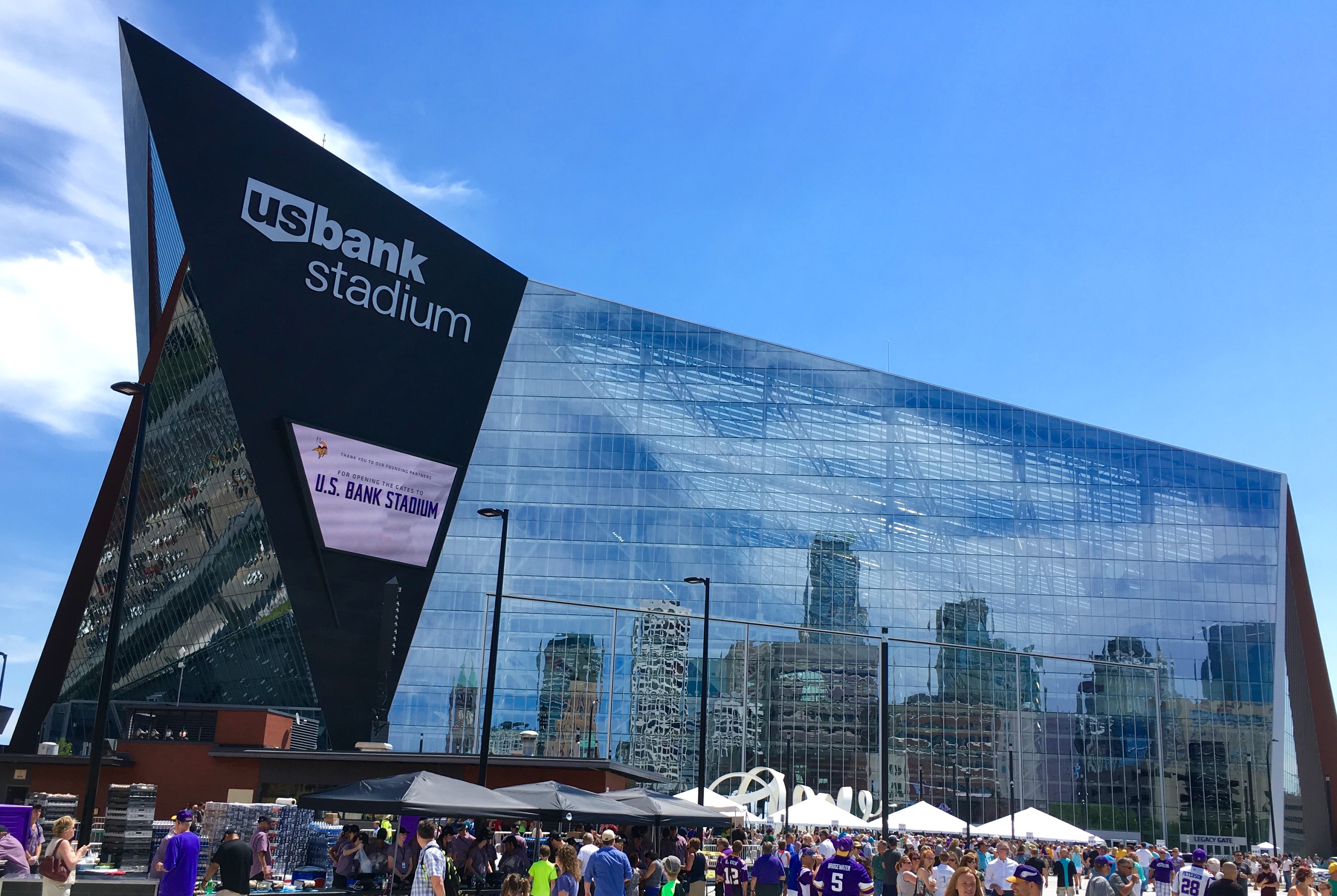
Of the "Big Four" sports leagues in the US, three are located in Minneapolis: the Minnesota Twins play in Target Field, the Minnesota Timberwolves play in Target Center, and the Minnesota Vikings play in U.S. Bank Stadium. Additionally, among major sports leagues, the Minnesota Lynx also play in Target Center.
Cities
- Bloomington
- Brooklyn Center
- Brooklyn Park
- Champlin
- Chanhassen (partial)
- Corcoran
- Crystal
- Dayton (partial)
- Deephaven
- Eden Prairie
- Edina
- Excelsior
- Golden Valley
- Greenfield
- Greenwood
- Hanover (partial)
- Hopkins
- Independence
- Long Lake
- Loretto
- Maple Grove
- Maple Plain
- Medicine Lake
- Medina
- Minneapolis (county seat and largest municipality)
- Minnetonka
- Minnetonka Beach
- Minnetrista
- Mound
- New Hope
- Orono
- Osseo
- Plymouth
- Richfield
- Robbinsdale
- Rockford (partial)
- Rogers
- Shorewood
- Spring Park
- St. Anthony (partial)
- St. Bonifacius
- St. Louis Park
- Tonka Bay
- Wayzata
- Woodland
Unorganized territory
- Fort Snelling
References
Notes
References
- "Explore Census Data". [[United States Census Bureau]].
- "Find a County". [[National Association of Counties]].
- Gannett, Henry. (1905). "The Origin of Certain Place Names in the United States". [[United States Government Publishing Office.
- "Key Industries".
- "Managing rural and agricultural land". Hennepin County, Minnesota.
- "Natural Resources Map - Hennepin County". Hennepin County, Minnesota.
- Based on the 2024 Estimate: 1,273,334 / 5,793,151 (MN pop.) = 21.98%
- (2008). "Minnesota: Individual County Chronologies". The [[Newberry Library]].
- "Father Louis Hennepin Suspension Bridge".
- "Overview of Hennepin County". Hennepin County, Minnesota.
- "Hennepin County, Minnesota – 2024 Annual Report Snapshot". Hennepin County, Minnesota.
- Administration. "Overview of Hennepin County". Hennepin County, Minnesota.
- Nelson, Steven (2011). ''Savanna Soils of Minnesota.'' Minnesota: Self. pp. 49-52. {{ISBN. 978-0-615-50320-2.
- "2024 County Gazetteer Files – Minnesota". [[United States Census Bureau]].
- "County Population Totals and Components of Change: 2020-2024".
- "U.S. Decennial Census". United States Census Bureau.
- (2007). "Historical Census Browser". University of Virginia Library.
- Forstall, Richard L.. (March 27, 1995). "Population of Counties by Decennial Census: 1900 to 1990". United States Census Bureau.
- "Census 2000 PHC-T-4. Ranking Tables for Counties: 1990 and 2000". United States Census Bureau.
- "County Median Home Price". [[National Association of Realtors]].
- "U.S. Census Bureau QuickFacts: Hennepin County, Minnesota".
- (1976). "History of Hennepin County and the City of Minneapolis". Walsworth.
- Delton, Jennifer A.. (2002). "Labor, Politics, and African American Identity in Minneapolis, 1930–1950". Minnesota Historical Society.
- "Hennepin County, Minnesota — Population by Race". CensusScope.
- (October 6, 2022). "1990 Census of Population: General Population Characteristics Minnesota".
- "P004: Hispanic or Latino, and Not Hispanic or Latino by Race – 2000: DEC Summary File 1 – Hennepin County, Minnesota". [[United States Census Bureau]].
- "P2: Hispanic or Latino, and Not Hispanic or Latino by Race – 2010: DEC Redistricting Data (PL 94-171) – Hennepin County, Minnesota". [[United States Census Bureau]].
- "P2: Hispanic or Latino, and Not Hispanic or Latino by Race – 2020: DEC Redistricting Data (PL 94-171) – Hennepin County, Minnesota". [[United States Census Bureau]].
- (September 21, 2023). "Detailed Race and Ethnicities in the Hennepin County, MN: 2020 Census". Tableau.
- "County Population by Characteristics: 2020-2023". United States Census Bureau.
- (2021). "2020 Decennial Census Demographic Profile (DP1)".
- (2021). "2020 Decennial Census Redistricting Data (Public Law 94-171)".
- (2023). "2020 Decennial Census Demographic and Housing Characteristics (DHC)".
- "[http://www.hclib.org/pub/info/WelcomeLanguages.cfm Welcome Languages] {{webarchive. link. (July 8, 2010." [[Hennepin County Public Library]]. Retrieved on July 8, 2010.)
- (2010). "County Membership Report Hennepin County (Minnesota)". The [[Association of Religion Data Archives]].
- (December 8, 2017). "Social Capital Variables Spreadsheet for 2014".
- (February 20, 2016). "Brooklyn Park mayor defies conservative conventions, aims for state Senate".
- "2021 REDISTRICTING GUIDE". Office of the Minnesota Secretary of State.
- (October 19, 2018). "Fernando and Yang vying for Hennepin County Commissioner in District 2".
- (August 30, 2018). "Elections 101: Hennepin County Races".
- "Marion Greene, District 3".
- (November 11, 2020). "Fresh faces on Hennepin County Board look to challenges ahead".
- "Office of the county administrator".
- Ibrahim, Mohamed. (November 8, 2022). "Moriarty wins Hennepin County attorney race; Witt the next county sheriff". [[MinnPost]].
- Examiner, Medical. "Medical examiner's office".
- Leip, David. "Dave Leip's Atlas of U.S. Presidential Elections".
- "Fortune 500 Companies 2018: Who Made the List".
- "America's Largest Private Companies". Forbes.
- "Hennepin County, MN". Data USA.
- Team, XPAND Corporation: America's Career InfoNet Development. "America's Career InfoNet: Largest Employers".
- Geography Division. (January 15, 2021). "2020 census - school district reference map: Hennepin County, MN". [[United States Census Bureau]].
- “Great City Parks.” Great City Parks, by Alan Tate, Spon Press, 2004, pp. 187–192.
- Cameron, Mark. (December 1996). "Reviews : The American City: What Works, What Doesn't Alexander Garvin McGraw-Hill. New York, New York 1995. 475 pages. $59.95". Journal of Planning Education and Research.
- (July 27, 2024). "about-us/history".
- (May 26, 2017). "Minneapolis parks garner top honor five years running".
- "Grand Rounds Scenic Byway System".
- "Sports Teams : Explore Minnesota".
This article was imported from Wikipedia and is available under the Creative Commons Attribution-ShareAlike 4.0 License. Content has been adapted to SurfDoc format. Original contributors can be found on the article history page.
Ask Mako anything about Hennepin County, Minnesota — get instant answers, deeper analysis, and related topics.
Research with MakoFree with your Surf account
Create a free account to save articles, ask Mako questions, and organize your research.
Sign up freeThis content may have been generated or modified by AI. CloudSurf Software LLC is not responsible for the accuracy, completeness, or reliability of AI-generated content. Always verify important information from primary sources.
Report