From Surf Wiki (app.surf) — the open knowledge base
Hearse
Large funeral vehicle

Large funeral vehicle
the vehicle

A hearse () is a large vehicle, originally a horse carriage but later with the introduction of motor vehicles, a car, used to carry the body of a deceased person in a coffin to a funeral, wake, or graveside service. They range from deliberately anonymous vehicles to heavily decorated vehicles.
In the funeral trade of some countries hearses are called funeral cars or funeral coaches.
History
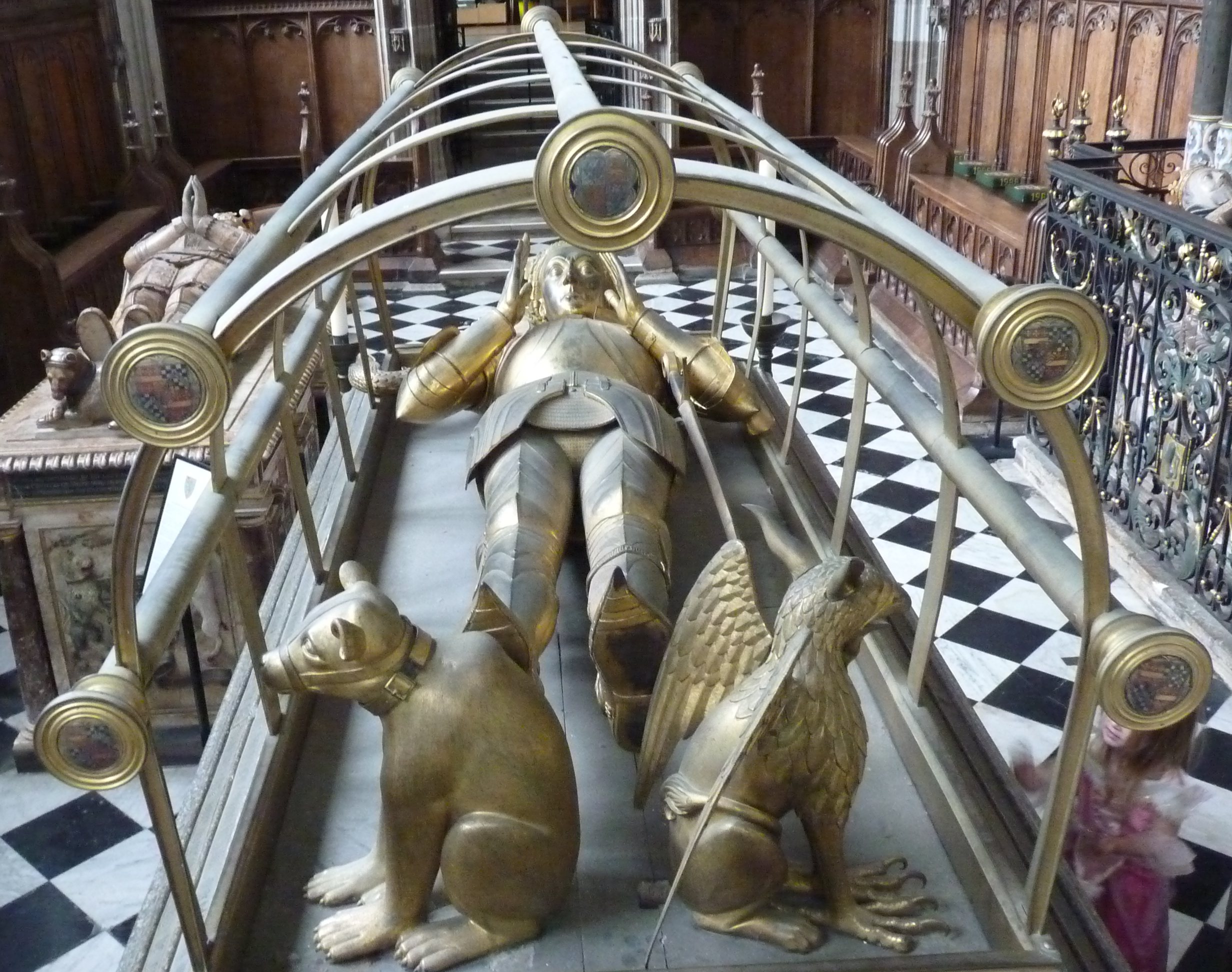
The name is derived, through the French herse, from the Latin herpex or irpex, which means a harrow. The funeral hearse was originally a wooden or metal framework, which stood over the bier or coffin and supported the pall. It was provided with numerous spikes to hold burning candles, and, owing to the resemblance of these spikes to the teeth of a harrow, was called a hearse. Later on, the word was applied, not only to the construction above the coffin, but to any receptacle in which the coffin was placed. Thus from about 1650 it came to denote the vehicle on which the dead are carried to the grave.
Hearses were originally hand-drawn then horse-drawn after the decoration and weight of the hearse increased. The first electric motorized hearses were introduced to the United States in the early 1900s. Petrol-powered hearses began to be produced from 1907 and, after slow initial uptake due to their high cost, became widely accepted in the 1920s. The vast majority of hearses since then have been based on larger, more powerful car chassis, generally retaining the front end up to and possibly including the front doors but with custom bodywork to the rear to contain the coffin.
Coche Fúnebre.JPG| Maipú, Chile Ter6.jpg|Jewish hearse, Theresienstadt concentration camp, Terezín, Czech Republic White hearse wagon.jpg|White hearse, USA File:Convoi Funebres de l Imperatrice Leopoldine by Debret.jpg|Funeral procession of Empress Maria Leopoldina of Brazil with a horse-drawn hearse, 1826 File:Vienna-Schönbrunn Royal Hearse Austria (32938095545).jpg|Imperial hearse from Austria, File:Interior of St Bartholomew's Chapel, Botley - geograph.org.uk - 221854 (cropped).jpg|Hand-drawn hearse Eglise Arc-en-Barrois 281008.jpg|Hand-drawn hearse (church of Arc-en-Barrois, France)
Corbillard 3.JPG|A hearse hippomobile (France) File:SLNSW 8565 1919 model Renault hearse at Wood Coffills funeral parlour.jpg|1919 model Renault hearse, Australia, File:Dodge Magnum 2006 (15902557573).jpg|Modern hearse, 2006 Dodge Magnum in Chile
First call vehicles
Main article: First call vehicle
A first call vehicle is used to pick up the remains of a recently deceased person, and transport them to a funeral home or morgue.
Rail transport
Main article: Funeral train

A few big cities provided special rail lines and/or funeral trolley cars and/or subway cars to carry bodies and mourners to remote cemeteries such as in Sydney, NSW and London and tram services were common. Chicago, Illinois operated 3 different funeral trolley cars over the elevated tracks in downtown Chicago to outlying cemeteries in the western suburbs. A special funeral bureau handled the funeral trains which sometimes operated 3–4 funeral trains a week over the "L".
Motorcycle hearses


A motorcycle hearse may be used during the funeral of a motorcycle enthusiast. It is either a motorcycle with a sidecar built to carry a casket or urn at the side of the rider, or a trike that carries the casket behind the rider.
Modern usage
Two styles of formal hearse bodywork are common. One style has opaque rear panels so the coffin is barely glimpsed. This American style is fitted with a heavily padded leather or vinyl roof and each side decorated with large mock landau bars resembling the braces used for the folding leather tops on some horse-drawn carriages. The other has narrow pillars and large windows revealing the coffin.
File:Malta - Mellieha - Misrah il-Parocca 02 ies.jpg|Mercedes-Benz hearse with large rear windows File:Hearse Memphis TN 2013-03-10 003.jpg|American-style Cadillac hearse File:Holden Hearse 03.JPG|Holden Caprice hearse File:Chevrolet Silverado Hearse in Indianola, Mississippi.jpg|Chevrolet Silverado hearse in Indianola, Mississippi
Since the working life of a hearse is generally one of light duty and short, sedate drives, hearses often remain serviceable for a long time and hearses 30 years old or more may still be in service. Due to the costs of owning an expensive custom vehicle that sits idle "80 to 90 percent of the week", individual funeral homes reduce costs by renting or utilizing a shared motor pool.
Perhaps owing to the morbid associations of the hearse, its luxurious accommodations for the driver, or both, the hearse has a number of enthusiasts who own and drive retired hearses. There are several hearse clubs.
North America
Usually, more luxurious automobile brands are used as a base for funeral cars; since the 1930s, the vast majority of hearses in the United States and Canada have been Cadillacs and less frequently, Lincolns.
The Cadillac Commercial Chassis was a longer and strengthened version of the long-wheelbase Fleetwood limousine frame to carry the extra weight of bodywork, rear deck and cargo. The rear of the Cadillac commercial chassis was considerably lower than the passenger car frame, thereby lowering the rear deck height as well for ease of loading and unloading. The Cadillac hearses were shipped as incomplete cars to coachbuilders for final assembly. Since the late 1990s, most Cadillac based funeral cars have been constructed from modified Cadillac sedans, until late 2019; The XTS chassis was discontinued from General Motors, and as such any new Cadillac hearse will be built on the XT5 SUV chassis, with the S&S Coach Company now building certain models of hearse on the XT6 platform.
The fleet division of Ford Motor Company sells a Lincoln Town Car with a special "hearse package" strictly to coachbuilders. Shipped without rear seat, rear interior trim, rear window or decklid, the hearse package also features upgraded suspension, brakes, charging system and tires. This was replaced with the Lincoln MKT, which has also been discontinued, followed by the Continental which also was discontinued after a short run.
The limousine style of hearse is more popular in the United States. It is common practice in the US for the windows to be curtained, while in other countries the windows are normally left unobscured.
Until the 1970s, it was common for many hearses to also be used as ambulances, due to the large cargo capacity in the rear of the vehicle. These vehicles were called "combination cars" and were especially used in small towns and rural areas. Car-based ambulances and combination coaches were unable to meet stricter Federal specifications for such vehicles and were discontinued after 1979.
Europe

Coachbuilders mostly modify Mercedes-Benz, but they also do it with Jaguar, Ford, Opel/Vauxhall Motors and Volvo products. Some second-hand Rolls-Royce cars have traditionally been used as hearses though the high cost of newer models is generally considered prohibitive.
In the United Kingdom it is possible to hire 'non-traditional' hearses that have usually been converted from various production vehicles such as vans or 'estate' style cars which may have held a particular memory for the deceased. An example of this is the Morris Minor Traveller, a popular and well-loved car in the United Kingdom. [[File:Morris Traveller Hearse.jpg|thumb|An example of a Morris Traveller converted for use as a hearse]]
Japan
In Japan, hearses, called , can come in two styles: "Foreign" style, which is similar in build and style to an American hearse, or a "Japanese" style, in which the rear area of the vehicle is modified to resemble a small, ornate Buddhist temple.
The Japanese-style hearse generally requires the rear of the vehicle to be extensively altered; commonly, the rear roof is cut away from the front windows back and all interior parts are removed from the rear as well. The ornate Buddhist-style rear area, generally constructed of wood and in which the casket or urn is placed, is built on top of this empty cavity and most often is wider than the base of the vehicle, so that it sticks out on the sides, over the rear body panels. Popular bases for these hearses are large sedans, minivans and pickup trucks.
The ornaments on a Japanese-style hearse vary by region. Nagoya style decorates both the upper and lower halves of the car body. Kansai style has a relatively modest decorations unpainted. Kanazawa style is known for having a red body (other styles mostly have black bodies) with gilded ornaments. Tokyo style, found anywhere else in Japan, features painted/gilded ornaments on the upper half of the body.
"Foreign" style hearses are mostly similar in appearance to their US counterparts, although their exterior dimensions and interiors reflect the Japanese preference for smaller, less ornate caskets (this in light of the national preference for cremation). This means that, in contrast to American hearses, the rear quarter panels require less, and sometimes no, alteration. These are generally built from station wagons such as the Nissan Stagea, or from executive sedans such as the Toyota Celsior (Lexus LS in the US) and Nissan Cima (Infiniti Q45 in the US). American market vehicles such as the Lincoln Town Car and Cadillac DeVille, which are otherwise fairly uncommon in Japan, are often converted to hearses in both styles.
Hong Kong

In Hong Kong, light goods vehicles of Isuzu, Volkswagen and Ford are used as hearses by most of the privately operated funeral homes.
Singapore
In Singapore, most standard hearses are built on a commercial van chassis, such as the Toyota Hiace, the Nissan Urvan and the Mercedes-Benz Vito, while the traditional Chinese or Indian hearses are built on a lorry chassis such as the Mitsubishi Fuso Canter and the Isuzu Elf. There are also some limousine hearses in Singapore that are built on a luxury car chassis, such as Mercedes-Benz, Maserati and Jaguar.
In popular culture

Amongst hearse enthusiasts, the 1959 Cadillac Miller-Meteor hearse is considered one of the most desirable, due to its especially ornate styling and appearances in several feature films, notably an ambulance version (Ecto-1) in the 1984 film Ghostbusters. In the 2016 Ghostbusters reboot, the Ecto-1 is a 1984 Cadillac Superior hearse.
The Rogues prowl around in a graffitied 1955 Cadillac Hearse in the film The Warriors.
Musician Neil Young's first car was a hearse, which was used to transport the band's equipment.
Celebrity hearse enthusiasts include rock singer Neil Young and three-time NASCAR Sprint Cup Champion Tony Stewart, who had his hearse customised for a television show. Sam the Sham of the Pharaohs (known for Wooly Bully and Lil' Red Riding Hood) was known for transporting all his equipment in a 1952 Packard hearse.
In April 2021, following the death of Prince Philip, Duke of Edinburgh, it was revealed that the prince had helped to design a custom-built military green, Land Rover Defender which was used to transport his coffin in his funeral procession at Windsor Castle.
Other uses of the term
- In the traditional Holy Week services of the Roman Catholic Church and some Anglican churches, a candelabrum with 15 candles on it is used for the service of Tenebrae. The candelabrum is referred to as a "hearse".
- A structure that is sometimes placed above the coffin of a distinguished person at their funeral and subsequently above their tombs.
References
References
- Lews & Short 1879 (possibly from ἅρπαξ) https://www.perseus.tufts.edu/hopper/text?doc=irpex&fromdoc=Perseus%3Atext%3A1999.04.0059
- {{Catholic Encyclopedia
- Oxford English Dictionary Online accessed 26 January 2018
- (30 March 2009). "A Brief History of Hearses".
- (3 March 2012). "A history of hearses, plus the tale of the man who set Elvis's hearse on fire".
- Bowden Pickstock, Susan. (9 November 2006). "Has the world gone mad? A motorcycle hearse…?". BBC News.
- (26 September 2011). "The Car Show". Lulu.com.
- [http://www.pioneerlocal.com/evanston/business/194494,pp-bzofuneral-010407-s1.article] {{webarchive. link. (31 August 2009)
- [http://www.nysscpa.org/cpajournal/old/14038924.htm Providing advisory services to funeral directors] {{Webarchive. link. (16 June 2012 from ''The CPA Journal'')
- "Grim Rides: Other Hearse Clubs".
- (13 September 2012). "Hearses served as ambulances at one time".
- "Ambulance and EMS History".
- [http://www.09net.jp/syouhisya/car_preview/n2.html 全国霊柩自動車協会] {{webarchive. link. (10 May 2007 (Nagoya type hearse house type) from 09net.jp {{in lang). ja
- [http://www.09net.jp/syouhisya/car_preview/n3.html 全国霊柩自動車協会] {{webarchive. link. (27 September 2007 (Kansai type hearse house type) from 09net.jp {{in lang). ja
- [http://www.fukou.co.jp/car_4/p2-b.html] {{webarchive. link. (29 August 2009)
- [http://www.09net.jp/syouhisya/car_preview/n1.html 全国霊柩自動車協会] {{webarchive. link. (27 September 2007 (Kanto type hearse house type) from 09net.jp {{in lang). ja
- link. Xinhua News Agency. (15 September 2006)
- "ͼ ־ΰ ѧ ѷ _".
- "紅磡靈車司機醉駕撞欄".
- Wong, Derryn. (2024-05-03). "Last rides and last rites: The rise of the limousine hearse".
- "Print Page - the Sinister 15: Murilee's Favorite Bad Guy Movie Cars [Movie Cars]".
- "Five Famous Hearses".
- (2010-01-26). "Tony Stewart's 1984 Cadillac Hearse – Smoke Deville - Pictures".
- Coles, Any. (15 April 2021). "Prince Philip: Bespoke Land Rover hearse designed by Duke of Edinburgh revealed ahead of funeral".
- (12 April 2017). "Into the darkness of Good Friday: The ancient liturgy of Tenebrae".
- See [[John Wodderspoon. J. Wodderspoon]], ''Memorials of the Ancient Town of Ipswich'' (Longman, Brown, Green and Longmans, London 1850), [https://archive.org/stream/memorialsancien00woddgoog#page/n366/mode/2up p. 317 and note] (Internet archive).
This article was imported from Wikipedia and is available under the Creative Commons Attribution-ShareAlike 4.0 License. Content has been adapted to SurfDoc format. Original contributors can be found on the article history page.
Ask Mako anything about Hearse — get instant answers, deeper analysis, and related topics.
Research with MakoFree with your Surf account
Create a free account to save articles, ask Mako questions, and organize your research.
Sign up freeThis content may have been generated or modified by AI. CloudSurf Software LLC is not responsible for the accuracy, completeness, or reliability of AI-generated content. Always verify important information from primary sources.
Report