From Surf Wiki (app.surf) — the open knowledge base
HBeAg
Hepatitis B viral protein

Hepatitis B viral protein
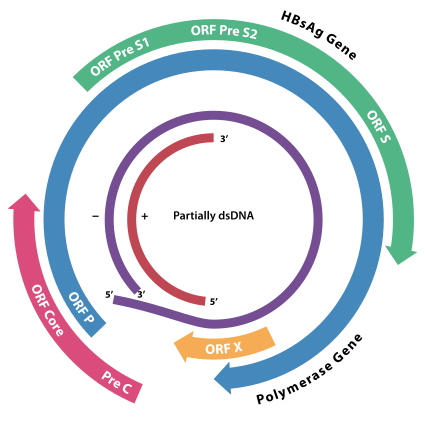
HBeAg is a hepatitis B viral protein, produced by the HBcAg reading frame. It is an indicator of active viral replication; this means the person infected with Hepatitis B can likely transmit the virus on to another person (i.e. the person is infectious). HBeAg is considered a marker for cccDNA replication.
Structure
HBeAg is an antigen that can be found between the icosahedral nucleocapsid core and the lipid envelope (the outer most layer of the hepatitis b virus). However, HBeAg is considered "nonparticulate" or "secretory". While both HBeAg and HBcAg are made from the same reading frame (multiple protein products can be produced from the same DNA sequence and when the genes "ORF Core" and "Pre C" are translated together, the result is HBeAg), HBeAg is secreted and accumulates in serum as an immunologically distinct soluble antigen. Hence the reason why the presence of both proteins together acts as a marker of viral replication, and why antibodies to these antigens are a marker of declining replication. The presence of HBeAg in the serum of patients can serve as a marker of active replication in chronic hepatitis.
Function
Although the function of HBeAg was not clearly understood, one study demonstrated that it downregulated Toll-like receptor 2 expression on hepatocytes and monocytes leading to a decrease in cytokine expression. HBeAg is dispensable for replication, as mutant viruses with defects in the pre-C region are both infectious and pathogenic.
References
References
- (2021). "Transition to HBeAg-negative chronic hepatitis B virus infection is associated with reduced cccDNA transcriptional activity". Journal of Hepatology.
- "TSRI - News and Publications".
- Mandell, Douglas, and Bennett's Principles and Practice of Infectious Diseases. 7th ed. page 2062
This article was imported from Wikipedia and is available under the Creative Commons Attribution-ShareAlike 4.0 License. Content has been adapted to SurfDoc format. Original contributors can be found on the article history page.
Ask Mako anything about HBeAg — get instant answers, deeper analysis, and related topics.
Research with MakoFree with your Surf account
Create a free account to save articles, ask Mako questions, and organize your research.
Sign up freeThis content may have been generated or modified by AI. CloudSurf Software LLC is not responsible for the accuracy, completeness, or reliability of AI-generated content. Always verify important information from primary sources.
Report