From Surf Wiki (app.surf) — the open knowledge base
Havre, Montana
City in Montana, United States

City in Montana, United States
| Field | Value |
|---|---|
| official_name | Havre, Montana |
| settlement_type | City |
| nickname | Heart of the Hi-Line |
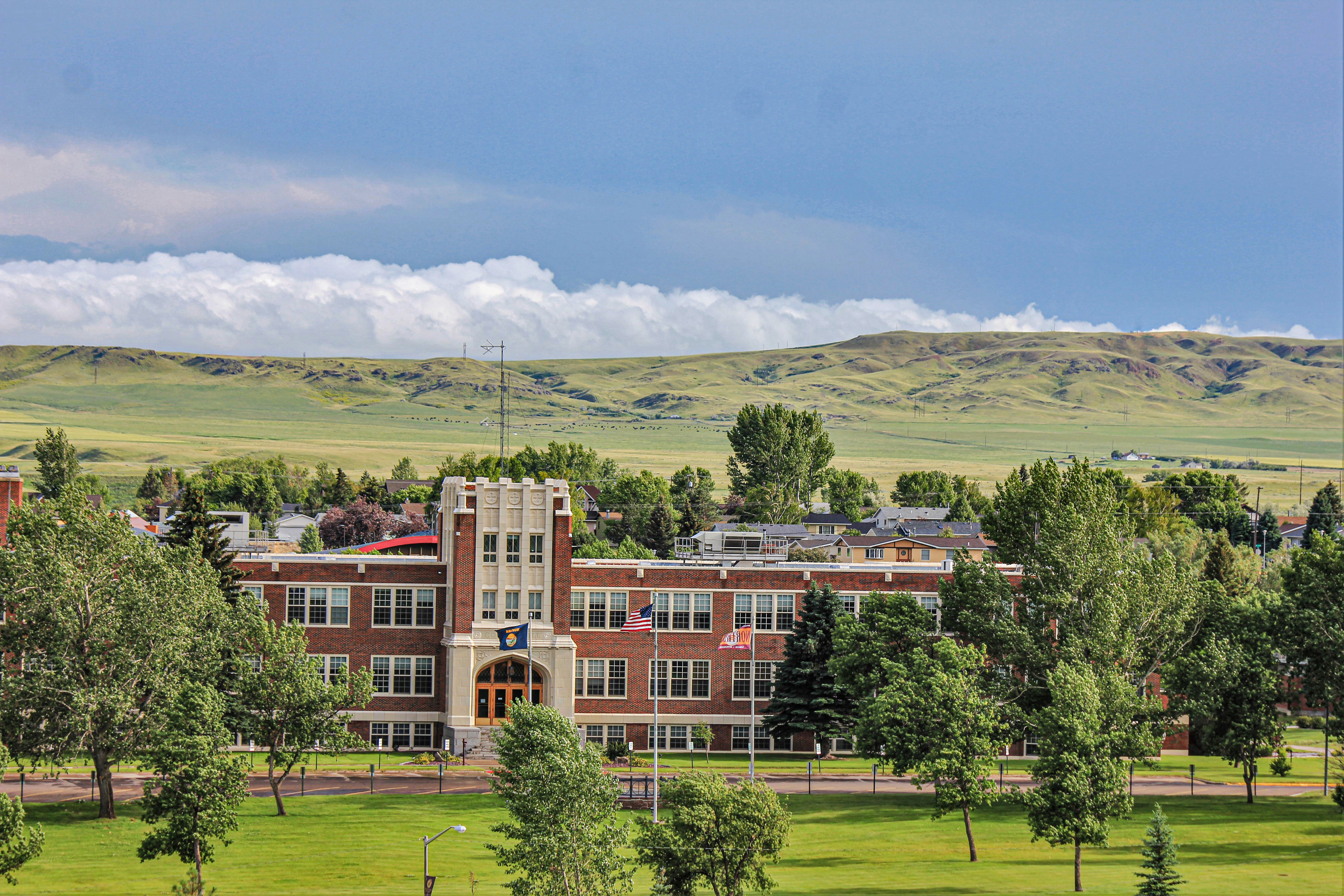
| image_skyline | Havre, Hill County, Montana.jpg |
| imagesize | 250px |
| image_caption | View of Havre looking south to the Bears Paw Mountains |
| image_map | Hill County Montana Incorporated and Unincorporated areas Havre Highlighted.svg |
| mapsize | 250px |
| map_caption | Location of Havre, Montana |
| subdivision_type | Country |
| subdivision_name | United States |
| subdivision_type1 | State |
| subdivision_name1 | Montana |
| subdivision_type2 | County |
| subdivision_name2 | Hill |
| pushpin_map | USA |
| pushpin_map_caption | Location in the United States |
| unit_pref | Imperial |
| area_footnotes | |
| area_total_km2 | 9.61 |
| area_land_km2 | 9.61 |
| area_water_km2 | 0.00 |
| area_total_sq_mi | 3.71 |
| area_land_sq_mi | 3.71 |
| area_water_sq_mi | 0.00 |
| population_as_of | 2020 |
| population_total | 9362 |
| population_density_km2 | 974.57 |
| population_density_sq_mi | 2524.13 |
| timezone | Mountain [MST] |
| utc_offset | −7 |
| timezone_DST | MDT |
| utc_offset_DST | −6 |
| elevation_footnotes | |
| elevation_ft | 2562 |
| coordinates | |
| postal_code_type | ZIP code |
| postal_code | 59501 |
| area_code | 406 |
| blank_name | FIPS code |
| blank_info | 30-35050 |
| blank1_name | GNIS feature ID |
| blank1_info | 2410715 |
| website |
Havre ( ) is the county seat of and the largest city in Hill County, Montana, United States. Havre is nicknamed the crown jewel of the Hi-Line. It is said to be named after the city of Le Havre in France. As of the 2020 census the population was 9,362.
History
Havre was incorporated in north-central Montana on September 5, 1893. In August 1893, twenty-six people voted to incorporate Havre as a city on September 5 of that year. The townsite was platted south of the railroad tracks on parts of Descelles’ and Simon Pepin’s ranches. Like many railroad towns, Havre’s streets were set in a grid formation, with the east–west orientation of the railroad serving as the northern boundary of the town running parallel to the south by Main Street, which fronted the railroad tracks, followed by First through Third Streets. The avenues ran perpendicular to the tracks with Third Avenue running south from the Great Northern depot. The depot served as the gateway to the commercial district of Havre. First Street between Second Avenue and Fourth Avenue served as the main commercial street, and Third Avenue became the main avenue. The buildings in Havre during the 1890s were typical first-generation structures and mainly consisted of tar papered wood-framed shacks. Built close together, these buildings were false-fronted and one story high, with a few scattered one-and-a-half and two-story buildings, like the Windsor Hotel on the south side of First Street between Third and Fourth Avenues.

Originally named "Bullhook Bottoms", the town held a series of meetings to determine a new name. The original settlers were given the final decision, and due to a strong French influence, the town was renamed "Havre". To decide on a new name, the town held a meeting. Though that first meeting ended in a brawl, the second meeting was more successful. There, the citizenry agreed that only the original five homesteaders, Gus Decelles, Exzelia James Pepin (nephew of Simon Pepin), Tom McDevitt, Joe Demars and Charlie Goutchie would be allowed to vote. After several suggestions, including "France" to acknowledge their common heritage, Gus Decelles then suggested Havre after his parents’ hometown of Le Havre, France. "Havre", which means "the haven or harbor", won the vote.
Simon Pepin (1840–1914), the "Father of Havre", was born in Quebec and emigrated to Montana in 1863, where he became a contractor, furnishing supplies for the construction of Fort Custer, Fort Assinniboine, and Fort Maginnis. Pepin purchased ranch land near Fort Assinniboine. When James J. Hill built the Great Northern Railway across northern Montana, he built several locomotive shops on property Pepin owned at the site of Havre. Pepin became a major contributor to Havre's economic growth through his cattle, real estate, and banking enterprises.
Havre is the eighth-largest city in Montana, and the largest city in the Montana section of the Hi-Line. With the nearest larger city, Great Falls, about 120 mi to the south, Havre serves as a medical and business center for the Montana section of the Hi-Line. U.S. Highway 87 has its northern terminus at Havre. U.S. Highway 2, running east–west, is the city's main street. The largest employers are Northern Montana Hospital, Montana State University–Northern, and the Burlington Northern and Santa Fe Railway (BNSF). Throughout much of the twentieth century, BNSF was the most prominent employer in the city, but the company scaled back its workforce in Havre in the 1990s. The Milk River (tributary of the Missouri River) runs through the town, and the Bears Paw Mountains can be seen to the south.
Small grids of purple squares can be seen in some of the sidewalks downtown. These are skylights for an underground mall built in the city at least a hundred years ago. Throughout its history, this underground area has been host to a brothel, a Chinese laundromat, a saloon, a drugstore, at least three opium dens, and rooms used for smuggling alcohol during Prohibition. When fire destroyed Havre's business district in 1904, legitimate above-ground businesses joined the illicit businesses operating in the underground while the new brick buildings were built in the streets above. The underground area, now designated "Havre Beneath the Streets", currently operates as a tourist attraction.
The Wahkpa Chu'gn buffalo jump, or bison kill, is located behind the Holiday Village Shopping Center near the northwest corner of Havre. Over 2,000 years old, it is one of the largest and best-preserved buffalo jumps anywhere. In prehistoric times, Native Americans would drive bison over the edge of the cliff, killing or severely injuring the animals. Afterward, the Native Americans skinned the animals and preserved the meat. The buffalo jump is now an archaeological site and a small tourist attraction.
The buffalo jump is located at the southern edge of the Havre Badlands, a badlands formation that runs alongside the Milk River to the west of the city. Small fossils, including seashells and petrified wood, can be found in the limestone sediment in this area.

Fort Assinniboine is 6 mi southwest of Havre. The fort served as one of Montana's principal military posts from 1879 through the Prohibition era. The fort was one of many used by the United States to protect against potential attacks from Native Americans and to block incursions from Canada. At its peak, the fort housed and employed 489 soldiers in 104 buildings.
Also near Havre is the Bear's Paw Battlefield site of the Battle of Bear Paw, where the Nez Perce were attacked and defeated by the U.S. Cavalry. Chief Joseph surrendered to the Cavalry and made a famous speech ending with the line, "From where the sun now stands, I will fight no more forever."
In 2018, two natural-born U.S. citizens were detained by U.S. Customs and Border Protection agents; in 2020, they settled with CBP for an undisclosed sum.
Geography
Havre is located in eastern Hill County, on the Milk River. U.S. Route 2 (1st Street) is the main road through the city, running east to west near the city's northern border. Route 2 leads east 87 mi to Malta and west 102 mi to Shelby and Interstate 15. U.S. Route 87 has its northern terminus in West Havre, 3 mi west of downtown Havre. US 87 leads southwest 110 mi to Great Falls. Montana Secondary Highway 234 leads south from the center of Havre 30 mi to the Bear Paw Ski Bowl in the Bears Paw Mountains.
According to the United States Census Bureau, Havre has a total area of 3.28 sqmi, all land.
Climate
_-_Havre_Area,_MT(ThreadEx).svg)
Havre experiences a semi-arid climate (Köppen BSk) with long, cold, dry winters and hot summers with cool nights. Winter weather can vary greatly from brutal cold when Arctic air moves in from Canada, to temperatures far above 32 F due to chinook windsfor instance the coldest month (and only one to never top freezing) of January 1916 averaged −13.3 F and February 1936 during a notorious cold wave −12.8 F, but February 1954 averaged as high as 37.1 F and January 1919, 34.1 F. The hottest temperature recorded in Havre is 111 F on August 5, 1961, and the coldest −57 F on January 27, 1916.
|Jan record high F = 68 |Feb record high F = 74 |Mar record high F = 79 |Apr record high F = 95 |May record high F = 98 |Jun record high F = 108 |Jul record high F = 108 |Aug record high F = 111 |Sep record high F = 103 |Oct record high F = 91 |Nov record high F = 78 |Dec record high F = 71 |Jan avg record high F = 51.5 |Feb avg record high F = 54.1 |Mar avg record high F = 67.1 |Apr avg record high F = 79.1 |May avg record high F = 86.4 |Jun avg record high F = 92.5 |Jul avg record high F = 99.1 |Aug avg record high F = 99.1 |Sep avg record high F = 92.7 |Oct avg record high F = 80.0 |Nov avg record high F = 65.5 |Dec avg record high F = 53.8 |year avg record high F = 101.1 |Jan avg record low F = -23.5 |Feb avg record low F = -17.1 |Mar avg record low F = -5.1 |Apr avg record low F = 14.8 |May avg record low F = 26.2 |Jun avg record low F = 37.3 |Jul avg record low F = 43.9 |Aug avg record low F = 39.5 |Sep avg record low F = 28.1 |Oct avg record low F = 11.0 |Nov avg record low F = -5.9 |Dec avg record low F = -16.4 |year avg record low F = -31.3 |Jan record low F = -57 |Feb record low F = -55 |Mar record low F = -41 |Apr record low F = -14 |May record low F = 14 |Jun record low F = 29 |Jul record low F = 31 |Aug record low F = 27 |Sep record low F = 18 |Oct record low F = -21 |Nov record low F = -33 |Dec record low F = -50
|access-date = August 22, 2022 |archive-url = https://web.archive.org/web/20230906231612/https://www.ncei.noaa.gov/access/services/data/v1?dataset=normals-monthly-1991-2020&stations=USW00094012&format=pdf&dataTypes=MLY-TMAX-NORMAL,MLY-TMIN-NORMAL,MLY-TAVG-NORMAL,MLY-PRCP-NORMAL,MLY-SNOW-NORMAL |archive-date = September 6, 2023 |archive-url = https://web.archive.org/web/20230906231202/ftp://ftp.atdd.noaa.gov/pub/GCOS/WMO-Normals/TABLES/REG_IV/US/GROUP4/72777.TXT |archive-date = 2023-09-06 |url-status = dead |access-date = September 6, 2023 |access-date = August 22, 2022
|Jan record high F = 68 |Feb record high F = 75 |Mar record high F = 82 |Apr record high F = 94 |May record high F = 98 |Jun record high F = 108 |Jul record high F = 107 |Aug record high F = 111 |Sep record high F = 102 |Oct record high F = 91 |Nov record high F = 78 |Dec record high F = 69
|Jan avg record high F = 51.9 |Feb avg record high F = 54.0 |Mar avg record high F = 66.3 |Apr avg record high F = 78.4 |May avg record high F = 85.9 |Jun avg record high F = 91.4 |Jul avg record high F = 98.0 |Aug avg record high F = 98.3 |Sep avg record high F = 92.4 |Oct avg record high F = 80.4 |Nov avg record high F = 64.7 |Dec avg record high F = 54.6 |year avg record high F = 100.2
|Jan avg record low F = -21.0 |Feb avg record low F = -14.8 |Mar avg record low F = -4.8 |Apr avg record low F = 15.6 |May avg record low F = 26.7 |Jun avg record low F = 38.0 |Jul avg record low F = 44.6 |Aug avg record low F = 40.6 |Sep avg record low F = 29.9 |Oct avg record low F = 12.1 |Nov avg record low F = -5.0 |Dec avg record low F = -14.2 |year avg record low F = -27.8
|Jan record low F = -49 |Feb record low F = -48 |Mar record low F = -34 |Apr record low F = -11 |May record low F = 11 |Jun record low F = 30 |Jul record low F = 37 |Aug record low F = 30 |Sep record low F = 12 |Oct record low F = -21 |Nov record low F = -28 |Dec record low F = -44
|Jan snow depth inch = 7.8 |Feb snow depth inch = 7.4 |Mar snow depth inch = 6.7 |Apr snow depth inch = 2.0 |May snow depth inch = 0.6 |Jun snow depth inch = 0.0 |Jul snow depth inch = 0.0 |Aug snow depth inch = 0.0 |Sep snow depth inch = 0.0 |Oct snow depth inch = 1.6 |Nov snow depth inch = 3.6 |Dec snow depth inch = 5.3 |year snow depth inch = 11.4
|access-date = October 16, 2024 |access-date = October 16, 2024
Demographics
U.S. Decennial Census
2010 census
As of the census of 2010, there were 9,310 people, 3,900 households, and 2,293 families living in the city. The population density was 2838.4 PD/sqmi. There were 4,285 housing units at an average density of 1306.4 /sqmi. The racial makeup of the city was 81.6% White, 0.4% African American, 13.0% Native American, 0.6% Asian, 0.1% Pacific Islander, 0.3% from other races, and 4.0% from two or more races. Hispanic or Latino of any race were 2.5% of the population.
There were 3,900 households, of which 30.1% had children under the age of 18 living with them, 41.3% were married couples living together, 12.1% had a female householder with no husband present, 5.5% had a male householder with no wife present, and 41.2% were non-families. 33.8% of all households were made up of individuals, and 12% had someone living alone who was 65 years of age or older. The average household size was 2.30 and the average family size was 2.98.
The median age in the city was 33.9 years. 25.1% of residents were under the age of 18; 12.8% were between the ages of 18 and 24; 23.5% were from 25 to 44; 25.2% were from 45 to 64; and 13.4% were 65 years of age or older. The gender makeup of the city was 49.8% male and 50.2% female.
2000 census
As of the census of 2000, there were 9,621 people, 4,015 households, and 2,449 families living in the city. The population density was 2,778.2 PD/sqmi. There were 4,400 housing units at an average density of 1,270.6 /sqmi. The racial makeup of the city was 87.08% White, 0.11% African American, 9.01% Native American, 0.49% Asian, 0.02% Pacific Islander, 0.51% from other races, and 2.78% from two or more races. Hispanic or Latino of any race were 1.48% of the population.
There were 4,015 households, out of which 31.9% had children under the age of 18 living with them, 45.2% were married couples living together, 11.5% had a female householder with no husband present, and 39.0% were non-families. 32.6% of all households were made up of individuals, and 13.2% had someone living alone who was 65 years of age or older. The average household size was 2.32 and the average family size was 2.95.
In the city, the population was spread out, with 25.7% under the age of 18, 13.6% from 18 to 24, 25.4% from 25 to 44, 20.6% from 45 to 64, and 14.6% who were 65 years of age or older. The median age was 34 years. For every 100 females there were 96.8 males. For every 100 females age 18 and over, there were 92.3 males.
The median income for a household in the city was $29,944, and the median income for a family was $38,870. Males had a median income of $30,401 versus $19,189 for females. The per capita income for the city was $15,847. About 14.8% of families and 17.5% of the population were below the poverty line, including 22.0% of those under age 18 and 7.8% of those age 65 or over.
Arts and culture
The H. Earl Clack Museum has exhibits on Native American history, pioneer life, and the Great Northern Railway. It is part of the Montana Dinosaur Trail. More early Montana history can be seen at Fort Assinniboine, one of the oldest and largest Army installations in Montana. Self-guided walking tour maps for both the historic residential and business districts are available from the local Chamber of Commerce.
Outdoor recreation can be found in all seasons. Beaver Creek Park claims to be the largest county park in the United States. It covers over 10,000 acres and offers fishing, hiking, camping, and wildlife viewing. Bear Paw Ski Bowl, 30 miles south of town, has 24 downhill runs.
Havre has a public library, the Havre-Hill County Library.
Points of interest
- LORAN-C transmitter Havre
- Big Bud 747, the world's largest farm tractor
- Wahkpa Chu'gn, a buffalo jump archaeological site, open to visitors
- The Havre Underground, a tourist attraction in the historic under city
Government
Havre has a mayor and city council. The council consists of eight members representing four wards. Wade Bitz was elected mayor in 2025. He replaced Doug Kaercher who did not run for re-election.
Education
The city is served by Havre Public Schools, which operates Havre High School, S.U.N.S. Alternative High School, Havre Middle School, and three elementary schools.
Higher education is provided at the Montana State University-Northern campus.
The city hosts one private school within city limits, Saint Judes Thaddeus School; it is affiliated with the Roman Catholic Diocese of Great Falls–Billings.

Local media
Radio
- KOJM AM 610/FM 98.3 (Classic Hits)
- KNMC FM 90.1 (College Radio)
- KPQX FM 92.5 (Country)
- KPQX-HD2 (Legendary Country)
- KPQX-HD3 (The Rock)
- KXEI FM 95.1 (Christian)
- KRYK FM 101.3 (Hot Adult contemporary)
- KRYK-HD2 (CHR/Pop)
- KRYK-HD3 (CBS Sports Radio)
Television
Stations available from the Great Falls market:
- KRTV Ch. 3 (CBS)
- KTGF-LD Ch. 50 (NBC)
- KUGF-TV Ch. 21 (PBS)
- KFBB Ch. 5 (ABC/Fox)
Satellite television providers are available to the entire area, and cable service comes from Charter Cable.
Newspapers
The Havre Weekly Chronicle is regionally available. Its circulation is 3,500 papers published weekly. It has a full online edition by subscription, as well as some free content online. The larger Great Falls Tribune is also available in most areas. The Havre Herald was a free online site for local news that ran from 2018 to mid-2020.
Transportation

Havre is located on the Northern Transcon of the BNSF Railway; Amtrak's Empire Builder stops at Havre station daily. Havre City–County Airport is a public use airport located 3 miles west of Havre. North Central Montana Transit provides limited bus service to Great Falls, Montana, the Rocky Boy's Indian Reservation, Harlem, Montana, and Fort Belknap, Montana.
Notable people
- Philip Aaberg, pianist and composer
- John Ahern, Washington state legislator and businessman
- Jeff Ament, musician, Pearl Jam's bassist
- Karan Armstrong, opera singer
- Jacob Bachmeier, one of the youngest state legislators in the United States
- Harriet Bossnot, social and civic worker
- T.V. Buttrey, academic and numismatist
- Ryan Divish, journalist for the Seattle Times
- Jeff Doyle, Major League Baseball player
- Larry Heck, AI expert, Co-Founder of Microsoft Cortana
- William Hulett, actor in Cirque du Soleil, Zumanity
- Marc Mariani, former NFL football player
- Larry Maze, bishop of the Episcopal Diocese of Arkansas, 1994–2006
- Jill McLain, Miss Montana USA 2006
- Karl Ohs, former lieutenant governor of Montana
- Flint Rasmussen, professional rodeo clown
- Rob Ryan, Major League Baseball player
- Rick Rydell, radio talk show host and outdoors author
- Brian Schweitzer, governor of Montana 2005–2013
- Stan Stephens, governor of Montana 1989–1993
- Jon Tester, U.S. senator for Montana
- Mike Tilleman, former NFL football player
- Paul Tuss, current state legislator
References
References
- "ArcGIS REST Services Directory". United States Census Bureau.
- {{GNIS. 2410715
- "Find a County". National Association of Counties.
- [http://www.lm.havre.k12.mt.us/magera/havre.html ''Kari Gorder, Havre History on the Web'']{{dead link. (October 2017)
- "The History of Havre, Montana". Havre Chamber of Commerce.
- "U.S. Census website". [[United States Census Bureau]].
- "Commercial Development of Havre, Montana, 1889-1959". National Park Service.
- "Havre". Montana Historical Society.
- (1976). "Grit, Guts, and Gusto: A History of Hill County". Hill County Bicentennial Commission.
- Walter, Dave. (1989). "Simon Pepin, A Quiet Capitalist". Montana Historical Society.
- "Montana's Russell Country: Havre Beneath the Streets".
- (November 24, 2020). "2 Women Detained For Speaking Spanish Settle Border Patrol Lawsuit".
- Joyce, Kathleen. (February 14, 2019). "2 Montana women sue border patrol after claiming they were detained for speaking Spanish".
- Hanson {{!}} AP, Amy Beth. "2 detained for speaking Spanish settle border patrol lawsuit". Washington Post.
- "US Gazetteer files 2010". United States Census Bureau.
- "National Weather Service, Great Falls".
- Moffatt, Riley. ''Population History of Western U.S. Cities & Towns, 1850–1990''. [[Lanham, Maryland. Lanham]]: Scarecrow, 1996, 131.
- United States Census Bureau. "Census of Population and Housing".
- "U.S. Census website". United States Census Bureau.
- "Discover Beaver Creek Park". Beaver Creek Park.
- "Montana Public Libraries". PublicLibraries.com.
- "Havre-Hill County Library". Havre-Hill County Library.
- "Mayor/City Council". City of Havre.
- "Wade Bitz (Mayor of Havre, Montana, candidate 2025)". Ballotpedia.
- (November 8, 2025). "Bitz, Dawson, Fisher win in Havre city elections". Havre Weekly Chronicle.
- [http://www.havre.k12.mt.us/havrek12/site/default.asp Havre Public Schools]
- (May 18, 2018). "Havre Herald: Independent online news site launches on Hi-Line". Missoula Current.
- (May 8, 2020). "We're Shuttering The Havre Herald". The Havre Herald.
- Rubin, Richard. (August 27, 2024). "4,000 Miles, 6 Small Towns: A Whistle-Stop Tour of America". The New York Times.
- "TESTER, Jon".
This article was imported from Wikipedia and is available under the Creative Commons Attribution-ShareAlike 4.0 License. Content has been adapted to SurfDoc format. Original contributors can be found on the article history page.
Ask Mako anything about Havre, Montana — get instant answers, deeper analysis, and related topics.
Research with MakoFree with your Surf account
Create a free account to save articles, ask Mako questions, and organize your research.
Sign up freeThis content may have been generated or modified by AI. CloudSurf Software LLC is not responsible for the accuracy, completeness, or reliability of AI-generated content. Always verify important information from primary sources.
Report