From Surf Wiki (app.surf) — the open knowledge base
Harvey Wiley Corbett
American architect

American architect
| Field | Value |
|---|---|
| name | Harvey Wiley Corbett |
| image | Harvey-Wiley-Corbett photo.jpg |
| birth_date | |
| birth_place | San Francisco, California, U.S. |
| death_date | |
| significant_buildings | Bush Tower |
| significant_projects | Peace Arch |
| George Washington Masonic National Memorial | |
| awards | New York Chapter of the American Institute of Architects achievement award, 1954 |
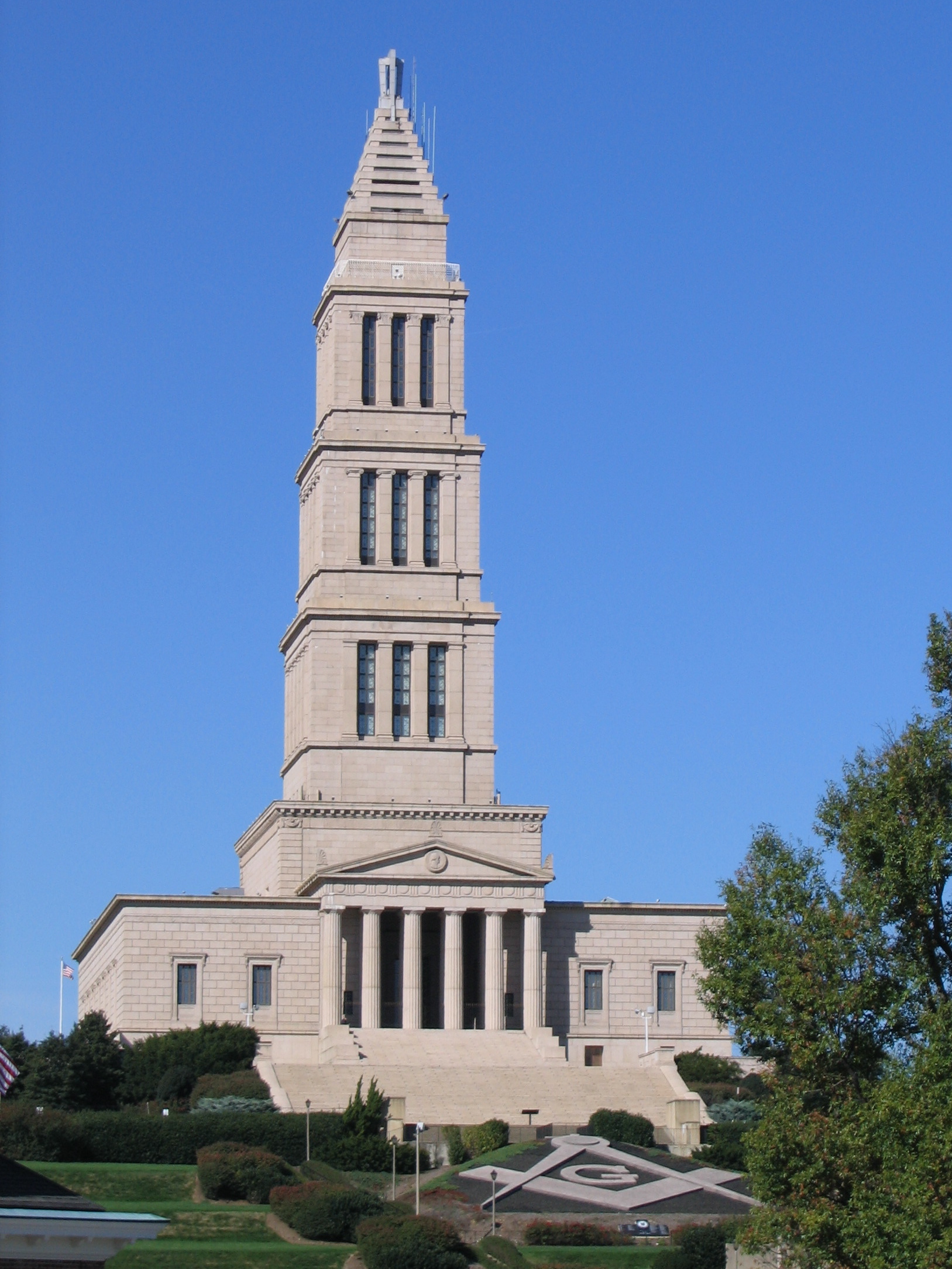
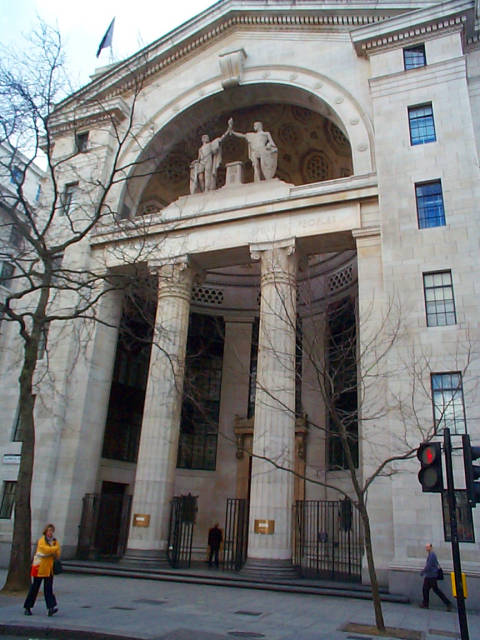
Bush House Metropolitan Life North Building George Washington Masonic National Memorial
Harvey Wiley Corbett (January 8, 1873 – April 21, 1954) was an American architect primarily known for skyscraper and office building designs in New York and London, and his advocacy of tall buildings and modernism in architecture.
Early life and education
Corbett was a San Francisco native. He was an 1895 graduate of the engineering program at the University of California, Berkeley and then was educated at the Ecole des Beaux Arts in Paris, where he was registered as a student on August 18, 1896,Ecole des Beaux Arts de Paris, archival records (kept at the French National Archives) p.388 https://www.siv.archives-nationales.culture.gouv.fr/siv/rechercheconsultation/consultation/ir/consultationIR.action?formCaller=GENERALISTE&irId=FRAN_IR_000886&gotoArchivesNums=false&defaultResultPerPage=&frontIr=&optionFullText=&fullText=&udId=d_1_1_5_1_3_2&consIr=&details=true&page=&auSeinIR=false by teacher Godefroy-Freynet.
Career
Following his graduation in 1900, he started work in the firm of Cass Gilbert. One of Corbett's early commissions during the 1910s was for the landmark Springfield Municipal Group, two large municipal buildings with a tower in Springfield, Massachusetts, in partnership with Francis Livingston Pell, a name partner in the architectural firm of Pell & Corbett.
As part of the firm of Helmle & Corbett, Harvey Wiley Corbett designed Bush Tower, a 30-story Neo-Gothic skyscraper built for the Bush Terminal Company on 42nd St. near Times Square in Manhattan. The tower, "with its prominent position and slight setbacks in buff, white and black brick, marked his début as an influential skyscraper designer."
Corbett's next major commission was in London, where he again worked for Irving T. Bush and the Bush Terminal Co. and was the architect for Bush House, a massive and essentially American-style office building built within the limits of strict London building codes.
Later in the 1920s, Corbett was part of one of the three firms that designed Rockefeller Center in Manhattan.{{Cite web | archive-url = https://web.archive.org/web/20040525025118/http://www.emporis.com/en/cd/cm/?id=103977 | url-status = usurped | archive-date = May 25, 2004
Corbett continued to design some structures during the Great Depression, including the massive New York City Criminal Courts Building in Manhattan, the northern tower of which is the Manhattan Detention Center, known as The Tombs. The complex was designed with Charles B. Meyers and completed in 1941.{{Cite web | archive-url = https://web.archive.org/web/20090221161645/http://www.nyc.gov/html/dcas/html/resources/man_criminalcourt.shtml | archive-date = February 21, 2009 | url-status = dead
In 1922, Corbett commissioned delineator and architect Hugh Ferriss to draw a series of four step-by-step perspectives demonstrating the architectural consequences of New York's City's zoning law, which he saw as a "setback." These four drawings would later be used in Ferriss's 1929 book The Metropolis of Tomorrow. By demonstrating how architecture might evolve, Corbett's commission and Ferriss's book continue to influence popular culture; the Gotham City of Batman and the cities seen in the 2004 movie Sky Captain and the World of Tomorrow{{cite news
In the late 1920s, the impact of skyscrapers on cities and downtowns was still hotly debated. Harvey Corbett defended the benefits of tall buildings against skyscraper detractors in articles published in The New York Times Magazine and National Municipal Journal in 1927.
In 1930, Corbett described modernism in architecture as a "freeing of the shackles of style that for years have forced architects to erect duplicates of Grecian temples for bank buildings, regardless of modern requirements for light, air, and utility."
Corbett lectured at the Columbia School of Architecture at Columbia University in New York City from 1907 to the 1930s. According to his obituary in The New York Times, Corbett was a longtime and ardent champion of skyscrapers and modernism.
Legacy
In addition to his work on skyscrapers, office buildings, and municipal buildings, Corbett designed monuments, including the Peace Arch (1921) on the Canada–US border and the George Washington Masonic National Memorial in Alexandria, Virginia (cornerstone laid in 1923).
Corbett shaped the course of architecture by heading the architectural committee of the 1933 World's Fair in Chicago. He was also chairman of the advisory committee of architects that created the theme for the modernistic 1939 New York World's Fair. Both fairs were influential examples of modern architecture.
Corbett was simultaneously a fellow of the American Institute of Architects and the Royal Institute of British Architects. One month before his death, the New York Chapter of the American Institute of Architects granted him their annual award for career achievement. In 1926, he was elected into the National Academy of Design as an Associate Academician, and became a full Academician in 1930.
Corbett's papers are contained within the collection of the Avery Architectural and Fine Arts Library at Columbia University.
Selected works
- New York School of Applied Design for Women (1909){{cite web |author-link = |archive-date = March 11, 2010 |archive-url = https://web.archive.org/web/20100311041047/http://www.neighborhoodpreservationcenter.org/db/bb_files/77PRATT-NYPHOENIXSCH.pdf |url-status = dead
- Bush Tower (1918)
- Peace Arch (1921)
- Navy – Merchant Marine Memorial (1922)
- Bush House, London (1923)
- One Fifth Avenue (1927)
- PPL Building (1928) at 28 stories, the tallest building in Allentown, Pennsylvania{{Cite web | archive-url = https://web.archive.org/web/20070513022315/http://www.emporis.com/en/wm/bu/?id=pennsylvaniapowerlightbuilding-allentown-pa-usa | url-status = usurped | archive-date = May 13, 2007
- Master Apartments (1929)
- Metropolitan Life North Building (begun 1928, completed 1950; with D. Everett Waid)
- 185 Montague Street (1929–1930)
- George Washington Masonic National Memorial (1922–1932)
- New York City Criminal Courts Building, including The Tombs; with Charles B. Meyers (1941)
- Springfield Municipal Group in Springfield, Massachusetts{{Cite web
References
References
- [http://www.artnet.com/library/01/0194/t019422.asp Corbett, Harvey Wiley] on artnet.com
- Saint, Andrew (1984). "Americans in London: Raymond Hood and the National Radiator Building." ''AA Files'' 7, 37–38.
- "The Bush House of London" (February 23, 1923). ''The New York Times'', p. SM6-8
- "Madison Sq. Tower To Rise 100 Stories; Metropolitan Life Will Erect the Tallest Office Structure for Own Use on Whole Block (November 3, 1929), ''The New York Times'', p. N1
- Wolfe, Gerard R. (2003) ''New York, 15 Walking Tours: An Architectural Guide to the Metropolis.'' (New York: McGraw-Hill Professional ({{ISBN. 0071411852 ), p.102
- Ferriss, Hugh. ''The Metropolis of Tomorrow'' (with essay by Carol Willis). New York: Princeton Architectural Press, 1986. Reprint of 1929 edition. {{ISBN. 0-910413-11-8
- Fogelson Robert M., ''Downtown: Its Rise and Fall, 1880–1950'' (2003). New London, CT: Yale University Press ({{ISBN. 0300098278) p. 174
- "Harvey Wiley Corbett, Architect, Dead" (April 22, 1954). ''[[The New York Times]]'', p. 22
- "NYC Landmarks Preservation Commission Report on the Master Apartments (1989)".
- {{usurped
This article was imported from Wikipedia and is available under the Creative Commons Attribution-ShareAlike 4.0 License. Content has been adapted to SurfDoc format. Original contributors can be found on the article history page.
Ask Mako anything about Harvey Wiley Corbett — get instant answers, deeper analysis, and related topics.
Research with MakoFree with your Surf account
Create a free account to save articles, ask Mako questions, and organize your research.
Sign up freeThis content may have been generated or modified by AI. CloudSurf Software LLC is not responsible for the accuracy, completeness, or reliability of AI-generated content. Always verify important information from primary sources.
Report