From Surf Wiki (app.surf) — the open knowledge base
Harrison, Arkansas
City in Arkansas, United States

City in Arkansas, United States
| Field | Value |
|---|---|
| name | Harrison, Arkansas |
| settlement_type | City |
| image_skyline | Harrison AR downtown.jpg |
| image_caption | Historic downtown Harrison (2008) |
| motto | "Adventure Awaits You" |
| image_map | Boone County Arkansas Incorporated and Unincorporated areas Harrison Highlighted 0530460.svg |
| map_caption | Location of Harrison in Boone County, Arkansas. |
| coordinates | |
| subdivision_type | Country |
| subdivision_name | United States |
| subdivision_type1 | State |
| subdivision_name1 | Arkansas |
| subdivision_type2 | County |
| subdivision_name2 | Boone |
| established_title | Platted |
| established_date | 1869 |
| established_title2 | Incorporated |
| established_date2 | March 1, 1876 |
| government_type | Council government |
| leader_title | Mayor |
| leader_name | Jerry Jackson |
| area_total_km2 | 29.09 |
| area_land_km2 | 29.02 |
| area_water_km2 | 0.07 |
| elevation_ft | 1247 |
| population_total | 13,069 |
| population_as_of | 2020 |
| population_density_km2 | 450.35 |
| timezone | Central (CST) |
| utc_offset | −6 |
| timezone_DST | CDT |
| utc_offset_DST | −5 |
| postal_code_type | ZIP codes |
| postal_code | 72601-72602 |
| area_code | 870 |
| blank_name | FIPS code |
| blank_info | 05-30460 |
| blank1_name | GNIS feature ID |
| blank1_info | 2403805 |
| website | |
| pop_est_as_of | 2024 |
| population_est | 13,723 |
| population_density_sq_mi | 1166.35 |
| unit_pref | Imperial |
| area_footnotes | |
| area_total_sq_mi | 11.23 |
| area_land_sq_mi | 11.21 |
| area_water_sq_mi | 0.03 |
| leader_party | R |
| image_blank_emblem | Harrison Arkansas Seal.png |
| blank_emblem_type | Logo |
Harrison is a city in and the county seat of Boone County, Arkansas, United States. It is named after Marcus LaRue Harrison, a surveyor who laid out the city along Crooked Creek at Stifler Springs. According to 2019 Census Bureau estimates, the population of the city was 13,069, up from 12,943 at the 2010 census and it is the 30th largest city in Arkansas based on official 2019 estimates from the U.S. Census Bureau. Harrison is the principal city of the Harrison Micropolitan Statistical Area, which includes all of Boone and Newton counties.
The community has a history of racism; there were two race riots in the early 20th century and an influx of white supremacist organizations during the late 20th and early 21st centuries.
History
Precolonial history
Native Americans were the earliest inhabitants of the area, probably beginning with cliff dwellers who lived in caves in the bluffs along the rivers. In later times, the Osage, a Siouan speaking people, were the main tribe in the Ozarks, and one of their larger villages is thought to have been to the east of the present site of Harrison. The Shawnee, Quapaw, and Caddo people were also familiar to the area.
The Cherokee arrived around 1816 and did not get along with the Osage. This hostility erupted into a full-scale war in the Ozark Mountains. By the 1830s, both tribes were removed to Indian Territory.
It is possible that the first Europeans to visit the area were some forty followers of Hernando de Soto and that they camped at a Native village on the White River at the mouth of Bear Creek. It is more likely that the discoverers were French hunters or trappers who followed the course of the White River.
19th century
In early 1857, the Baker–Fancher wagon train assembled at Beller's Stand, south of Harrison. On September 11, 1857, approximately 120 members of this wagon train were murdered near Mountain Meadows, Utah Territory, by a local Mormon militia and members of the Paiute Indian tribe. In 1955, a monument to memorialize the victims of the massacre was placed on the Harrison town square.
Boone County was organized in 1869, during Reconstruction after the Civil War. Harrison was platted and made the county seat. It is named after Marcus LaRue Harrison, a Union officer who surveyed and platted the town. The town of Harrison was incorporated on March 1, 1876.
20th century
Harrison Race Riots of 1905 and 1909
In 1905 and 1909, white race riots occurred in Harrison, which drove away black residents and established the community as one of hundreds of sundown towns in the country.
In 1901, the building of the St. Louis and North Arkansas Railroad through Harrison bolstered the local economy. Economic hardship ensued following the railroad's bankruptcy on July 1, 1905. On October 2, 1905, a white mob breached the Harrison jail, captured two Black prisoners, drove the prisoners outside city limits, whipped them, and threatened them to leave the community. The white mob then went to the Black community and burned their houses and fired guns at their windows with the message that they should leave the town. At least one person, railroad worker George Richards, was murdered during the event. Local law enforcement declined to take action to press charges for the riot.
On January 18, 1909, Charles Stinnett was arrested and charged with the rape of a white woman named Lovett. Although Stinnett testified that he did not assault the woman and only meant to rob her, a jury sentenced him to hang on February 26, 1909. A mob arrived at the jail to lynch Stinnett after learning that Lovett was very ill, and the mob's presence forced many remaining Black residents out of Harrison on January 28, 1909. Stinnett was set to be hanged on March 24, 1909, but his execution was delayed for three hours because he was drunk. On the gallows, Stinnett confessed that he had attempted to rape the woman. He died as a result of strangulation from a failed hanging fifteen minutes, but fall knocked him unconscious and he died "without a struggle".
Later 20th century
The bank robber and convicted murderer Henry Starr was in Harrison on February 18, 1921, when Starr and three companions entered the People's State Bank and robbed it of $6,000.00. During the robbery, Starr was shot by the former president of the bank, William J. Myers. Starr was carried to the town jail, where he died the next morning.
On May 7, 1961, heavy rain caused Crooked Creek, immediately south of the downtown business district, to flood the town square and much of the southwestern part of the city. Water levels inside buildings reached 8 ft. Many small buildings and automobiles were swept away. According to the American Red Cross, four people died, 80 percent of the town's business district was destroyed, and over 300 buildings were damaged or destroyed in losses exceeding $5.4 million. In 1962, Sam Walton opened his second Walmart store in Harrison.
In 1982, Kingdom Identity Ministries, an anti-gay Christian Identity outreach ministry identified as a hate group by the Southern Poverty Law Center, was founded in Harrison.
21st century
Harrison's Community Task Force on Race Relations was established in 2003 to "promote diversity and respond to racial-bias accusations against the city". City officials have made efforts to counteract organized racist activity with educational forums and billboards promoting tolerance. They also attempted to downplay the city's racist reputation and improve its image by editing the town's Wikipedia article.
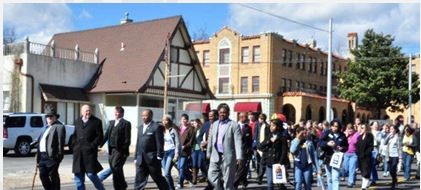
In 2014, a peace march and vigil celebrating the life and legacy of Martin Luther King Jr. was held in downtown Harrison, hosted by the Arkansas Martin Luther King Jr. Commission. In December of the same year, a dedication was held for a Confederate monument in Harrison.
In 2017, Mayor Dan Sherrell and Boone County Judge Robert Hathaway signed proclamations recognizing June as Confederate Heritage and History Month.
Kevin Cheri, who became the first African-American employed in the area in 1978, received death threats shortly after his arrival, which prompted him to leave the area. He returned in 2007, and in 2019 was recognized by mayor Jerry Jackson when Harrison issued its first-ever Black History Month proclamation.
In June 2020, a group of around 300 gathered in Harrison to protest police brutality in the murder of George Floyd while 15 people armed with rifles and displaying Confederate and American flags looked on.
the Southern Poverty Law Center has said that Kingdom Identity Ministries (founded in Harrison) has a location in the city.
Geography
U.S. Routes 62, 65, and 412 pass through Harrison. U.S. 65 leads north 33 mi to Branson, Missouri, and south 108 mi to Conway, Arkansas. U.S. 62 leads west 43 mi to Eureka Springs and beyond to Rogers and Bentonville. U.S. 412 leads west 73 mi to Springdale. U.S. 62 and 412 combined lead east 48 mi to Mountain Home.
According to the United States Census Bureau, the city has a total area of 28.8 km2, of which 28.7 km2 is land and 0.1 km2, or 0.26%, is water.
Climate
The climate in this area is characterized by hot, humid summers and generally mild to cool winters. According to the Köppen Climate Classification system, Harrison has a humid subtropical climate, abbreviated "Cfa" on climate maps.
|Jan record high F = 81 |Feb record high F = 87 |Mar record high F = 98 |Apr record high F = 99 |May record high F = 99 |Jun record high F = 105 |Jul record high F = 112 |Aug record high F = 112 |Sep record high F = 106 |Oct record high F = 96 |Nov record high F = 86 |Dec record high F = 82 |year record high F = 112 |Jan record low F = −18 |Feb record low F = −20 |Mar record low F = −10 |Apr record low F = 20 |May record low F = 26 |Jun record low F = 40 |Jul record low F = 41 |Aug record low F = 41 |Sep record low F = 30 |Oct record low F = 16 |Nov record low F = 5 |Dec record low F = −6 |year record low F = -20 |Jan record high F = 79 |Feb record high F = 87 |Mar record high F = 91 |Apr record high F = 92 |May record high F = 94 |Jun record high F = 107 |Jul record high F = 107 |Aug record high F = 112 |Sep record high F = 103 |Oct record high F = 92 |Nov record high F = 85 |Dec record high F = 78 |year record high F = 112
|Jan avg record high F = 69.3 |Feb avg record high F = 73.0 |Mar avg record high F = 81.0 |Apr avg record high F = 84.8 |May avg record high F = 88.2 |Jun avg record high F = 92.9 |Jul avg record high F = 96.9 |Aug avg record high F = 97.5 |Sep avg record high F = 92.7 |Oct avg record high F = 85.8 |Nov avg record high F = 76.4 |Dec avg record high F = 69.3 |year avg record high F = 98.8
|Jan avg record low F = 8.1 |Feb avg record low F = 12.2 |Mar avg record low F = 19.8 |Apr avg record low F = 31.2 |May avg record low F = 41.4 |Jun avg record low F = 53.1 |Jul avg record low F = 58.6 |Aug avg record low F = 56.5 |Sep avg record low F = 44.6 |Oct avg record low F = 31.5 |Nov avg record low F = 21.4 |Dec avg record low F = 13.3 |year avg record low F = 4.8
|Jan record low F = −13 |Feb record low F = −9 |Mar record low F = −9 |Apr record low F = 22 |May record low F = 32 |Jun record low F = 46 |Jul record low F = 50 |Aug record low F = 48 |Sep record low F = 33 |Oct record low F = 21 |Nov record low F = 8 |Dec record low F = −11 |year record low F = -13
|Jan snow depth inch = |Feb snow depth inch = |Mar snow depth inch = |Apr snow depth inch = |May snow depth inch = |Jun snow depth inch = |Jul snow depth inch = |Aug snow depth inch = |Sep snow depth inch = |Oct snow depth inch = |Nov snow depth inch = |Dec snow depth inch = |year snow depth inch =
Demographics
2020 census
| Race | Number | Percentage | White (non-Hispanic) | Black or African American (non-Hispanic) | Native American | Asian | Pacific Islander | Other/Mixed | Hispanic or Latino |
|---|---|---|---|---|---|---|---|---|---|
| 11,501 | 88.0% | ||||||||
| 53 | 0.41% | ||||||||
| 85 | 0.65% | ||||||||
| 148 | 1.13% | ||||||||
| 14 | 0.11% | ||||||||
| 766 | 5.86% | ||||||||
| 502 | 3.84% |
As of the 2020 United States census, there were 13,069 people, 5,578 households, and 3,198 families residing in the city.
2010 census
As of the census of 2010, there were 12,943 people and 6,043 housing units in the city. The racial makeup of the city was 96.2% White, 0.3% Black or African American, 0.6% American Indian and Alaska Native, 0.7% Asian, 0.0% Pacific Islander, and 1.6% from two or more races. 2.2% of the population were Hispanic or Latino of any race.
23.2% of the population was under the age of 18, and 19.0% were 65 years of age or older. Females made up 53.1% of the population, and males made up 46.9% of the population.
The median income for the period 2007–11 for a household in the city was $33,244, and the number of people living below the poverty level was 15.1%. The median value of owner-occupied housing units was $108,700.
Economy
Harrison is home of the general office of FedEx Freight, a leading Less-Than-Load (LTL) freight carrier. Arkansas Freightways, later renamed to American Freightways, was combined with Viking Freight to become FedEx Freight in February 2001.
Major employers
- FedEx Freight Inc. (Trucking and distribution)
- North Arkansas Regional Medical Center (Medical services)
- Walmart Inc. (Retail)
- Pace Industries (Aluminum die-casting)
- Claridge Products and Equipment, Inc. (Markerboards, chalkboards and bulletin boards)
- Windstream (Telecommunications)
- Wabash Wood Products (Trailer floor manufacturing)
- North Arkansas College (Education)
- WestRock, formerly RockTenn Company (Folding Paperboard Cartons)
Architecture
Museums and other points of interest

The National Trust for Historic Preservation has recognized the Harrison Courthouse Square Historic District. It contains a large number of the city's original commercial and governmental structures, including the still-used courthouse in the center of the square, the recently refurbished Lyric Theater, and the 1929 Hotel Seville, which underwent a complete restoration in 2008.

Ozark Arts Council
The Ozarks Arts Council is a 501(c)3 non-profit organization established in 1996 with the mission "To enrich lives by promoting the arts in Harrison and North Arkansas through exhibitions, performances, and education." It provides administrative support and distributes financial and in-kind donations to its member organizations:
- The Theatre Company
- Northark Drama
- Twentieth Century Club
- Woman's Book Club
- Ozark Children's Choir
The historic Lyric Theatre is managed by the Ozark Arts Council. Originally opened as a movie theater in 1929, it is now used for plays, community events, old movies and other gatherings.
Parks and recreation
Harrison serves as the National Park Service's Buffalo National River headquarters. The park was established in the 1970s, and was the nation's first national river. The river flows for 135 mi, and there are over 59 different species of fish in it.


Crooked Creek, a nationally recognized "Blue Ribbon" smallmouth bass fishery, flows through Harrison.
Hemmed-In-Hollow Falls, at 209 ft the tallest waterfall between the Rocky Mountains and the Appalachians, is located 25 mi southwest of Harrison near Compton. On the same bluff line is Diamond Falls, at 148 ft the second tallest in the state.
As of May 2024, the Creekside Community Center is currently under construction. When complete, it will have an Olympic size pool, two more smaller pools, 2 high school regulation size basketball courts, and an indoor music venue. Construction is deemed to end before 2025.
Education
Highways in the area include:
- [[File:US 62 (1961).svg|20px]] [[File:US 412.svg|25px]] US 62/US 412
- [[File:US 65 (1961).svg|20px]] U.S. Highway 65
- [[File:US 65B.svg|25px]] U.S. Route 65 Business
- [[File:Arkansas 7.svg|20px]] Arkansas Highway 7
- [[File:Arkansas 43.svg|20px]] Arkansas Highway 43
- [[File:Arkansas 123.svg|25px]] Arkansas Highway 123
- [[File:Arkansas 392.svg|25px]] Arkansas Highway 392
- [[File:Arkansas 397.svg|25px]] Arkansas Highway 397
- [[File:Arkansas 980(Airport).svg|25px]] Arkansas Highway 980
Health care
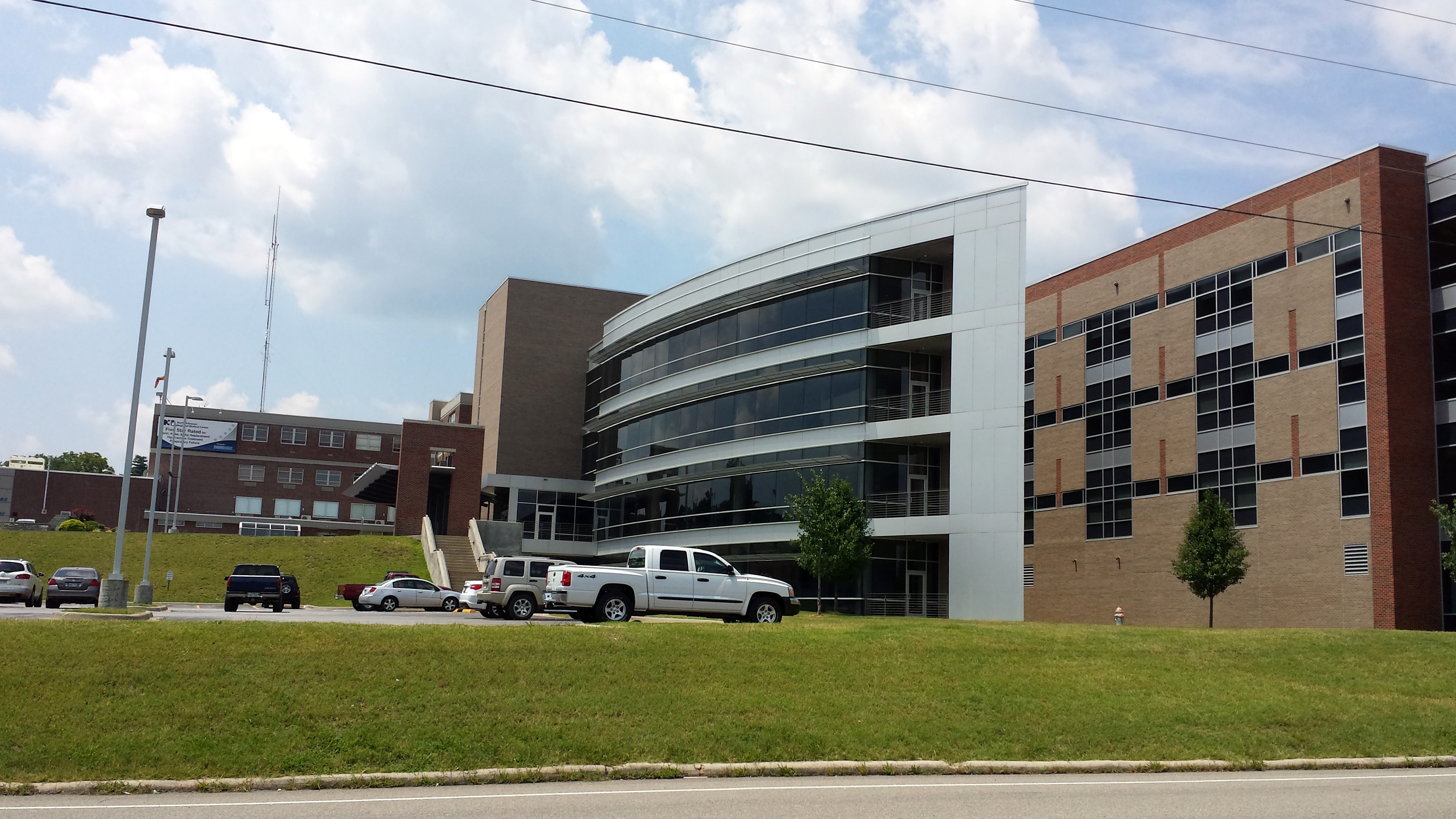
The North Arkansas Regional Medical Center is in Harrison.
Notable people
• The article must mention how they are associated with the community, whether born, raised, or residing. • The fact of their association should have a reliable source cited. • Alphabetical by last name please • All others will be deleted without further explanation END OF NOTICE * * * * * * * * * * * * END OF NOTICE * * * * * * * * * * * *END OF NOTICE --
- Daniel Boatwright, Democratic politician in California
- Brandon Burlsworth, All-American offensive lineman, played for the Arkansas Razorbacks in the late 1990s; Drafted by the Indianapolis Colts in the third round of the 1999 NFL draft
- John Burris, politician
- Faye Della Wilson Copeland, born in Harrison, along with her husband Ray became the oldest couple sentenced to death in the U.S.
- George J. Crump, Confederate officer, state legislator, lawyer, and U.S. Marshal
- John Paul Hammerschmidt, U.S. representative, 1967–1993, author of the law preserving the Buffalo National River as a free-flowing stream and adding it to the National Park System in 1972
- Ben C. Henley, lawyer, businessman, and chairman of the Arkansas Republican Party from 1955 to 1962, U.S. Senate candidate in 1956, lived in Harrison
- J. Smith Henley, federal judge, retired to senior status in Harrison; the federal building in Harrison is named in his honor
- Elgin Bryce Holt, geologist
- Courtney Rae Hudson, Arkansas Supreme Court justice, was born in Harrison
- H. Dale Jackson, ethicist
- Uvalde Lindsey, politician
- Brian McComas, country-western singer, originally from Harrison
- Bryce Molder, professional golfer, was born in Harrison
- Gracie Pfost, first woman elected to Congress from Idaho, was born in Harrison
- Charles Robinson, Arkansas State Treasurer; native of Harrison
- Tim Sherrill, former pitcher for the St. Louis Cardinals from 1990 to 1991
- Vance Trimble, Pulitzer Prize-winning journalist
- Robert Wadley, politician
- William Wirt Watkins, politician
- John A. White, President of the University of Arkansas
- Jack Williams, Medal of Honor recipient
In popular culture
In 2020, the video "Holding a Black Lives Matter Sign in America's Most Racist Town" was filmed in Harrison.
References
References
- "City of Harrison Arkansas". City of Harrison Arkansas.
- Harrison, City of. "City of Harrison".
- {{GNIS. 2403805
- "2020 U.S. Gazetteer Files". United States Census Bureau.
- "History and Facts of Harrison – City of Harrison, Arkansas".
- "Harrison (City) QuickFacts from the US Census Bureau".
- "Geographic Identifiers: 2010 Demographic Profile Data (G001): Harrison city, Arkansas". U.S. Census Bureau, American Factfinder.
- "Native Americans of Carroll County, AR – Arkansas Guide to Eureka Springs, Berryville, Green Forest, and more!".
- "Mountain Meadows Massacre". Mountain Meadows Massacre.com.
- "Harrison, AR". citydata.com.
- Lancaster, Guy. (August 13, 2014). "Harrison Race Riots of 1905 and 1909". Central Arkansas Library System.
- Loewen, James. (2005). "Sundown Towns: A Hidden Dimension of American Racism". The New Press.
- "Harrison Race Riots of 1905 and 1909".
- "Henry Starr – The Cherokee Bad Boy". Legends of America.
- "1961 Harrison Flood". Boone County Historical & Railroad Society.
- Vance H. Trimble, Sam Walton: The Inside Story of America's Richest Man, pp.46–64 (Dutton, 1990)
- (1999). "Waves of Rancor: Tuning in the Radical Right". M.E. Sharpe.
- "Kingdom Identity Ministries". [[Southern Poverty Law Center]].
- Morris, Frank. (May 12, 2014). "Tale Of Two Billboards: An Ozark Town's Struggle To Unseat Hate". [[NPR]].
- Bowden, Bill. (August 11, 2019). "Wikipedia entries won't let Harrison shed unsavory past".
- Rugh, Peter. (March 11, 2014). "The KKK Embraces Diversity in Harrison, Arkansas". Vice.
- (March 7, 2014). "Nonviolence Youth Summit Part 10 – Education Alliance".
- MrcleanMinistries. (April 5, 2014). "Mrclean at 2nd Part of Non Violence Youth Summit March Harrison, AR".
- (December 2, 2014). "Monument dedication honors Arkansas Civil War soldiers". Harrison Daily Times.
- (May 25, 2017). "June proclaimed Confederate History and Heritage Month".
- Sinett, Caitlin. (February 16, 2019). "Harrison Mayor Signs Black History Month Proclamation".
- (June 5, 2020). "Hundreds of George Floyd Protesters Come Out in Arkansas". U.S. News.
- "Hate Map".
- "Harrison, Arkansas Köppen Climate Classification (Weatherbase)".
- "NowData – NOAA Online Weather Data". National Oceanic and Atmospheric Administration.
- "Station: Harrison, AR". National Oceanic and Atmospheric Administration.
- "Station: Harrison Boone CO AP, AR". National Oceanic and Atmospheric Administration.
- "Census of Population and Housing". Census.gov.
- "Explore Census Data".
- "U.S. Census website". [[United States Census Bureau]].
- "State & County QuickFacts: Harrison (city), Arkansas". U.S. Census Bureau.
- "History – About FedEx".
- "Top Employers {{!}} HRCC".
- "ARKANSAS – Boone County".
- "Ozark Arts Council in Harrison, AR – About the OAC".
- "The Lyric Theatre". Ozarks Arts Council.
- "Buffalo River – Frequently Asked Questions". National Park Service.
- "Crooked Creek". Arkansas – The Natural State.
- "How to get to Hemmed in Hollow Waterfalls in the Arkansas Ozarks". Arkansas' Ozark Mountains Region.
- "Arkansas Waterfalls Guidebook – Tallest Waterfalls in Arkansas". Cloudland.
- "HarrisonDaily.com".
- "Newspaper-Harrison Daily Times". Community Publishers, Inc..
- "Radio Stations in Harrison AR". On The Radio.Net.
- "TKO 8 Local Television Serving You".
- "Me-TV Network {{!}} About Me-TV".
- "The Missouri and North Arkansas Railroad: Joplin, MO to Helena, AR".
- "Welcome to North Arkansas Regional Medical Center". NARMC.
- Brantley, Max. (February 26, 2012). "Meet Republican leader John Burris". Arkansas Times.
- (1991). "Cathy Kunzinger Urwin, Agenda for Reform: Winthrop Rockefeller As Governor of Arkansas, 1967–71, p. 37". [[Fayetteville, Arkansas]]: [[University of Arkansas Press]].
- "Man Holding Black Lives Matter Sign in Harrison Faces Racist Language".
- (July 30, 2020). "He held a BLM sign in what he called 'America's most racist town.' The result? A viral video of abuse.". Washington Post.
- Rowles, Dustin. (July 28, 2020). "Harrison, Arkansas Really Is the Most Racist Town in America".
- Culver, Jordan. "A man held a Black Lives Matter sign in Harrison, Arkansas. He posted the racist responses to YouTube.".
This article was imported from Wikipedia and is available under the Creative Commons Attribution-ShareAlike 4.0 License. Content has been adapted to SurfDoc format. Original contributors can be found on the article history page.
Ask Mako anything about Harrison, Arkansas — get instant answers, deeper analysis, and related topics.
Research with MakoFree with your Surf account
Create a free account to save articles, ask Mako questions, and organize your research.
Sign up freeThis content may have been generated or modified by AI. CloudSurf Software LLC is not responsible for the accuracy, completeness, or reliability of AI-generated content. Always verify important information from primary sources.
Report