From Surf Wiki (app.surf) — the open knowledge base
Harley ministry
British government
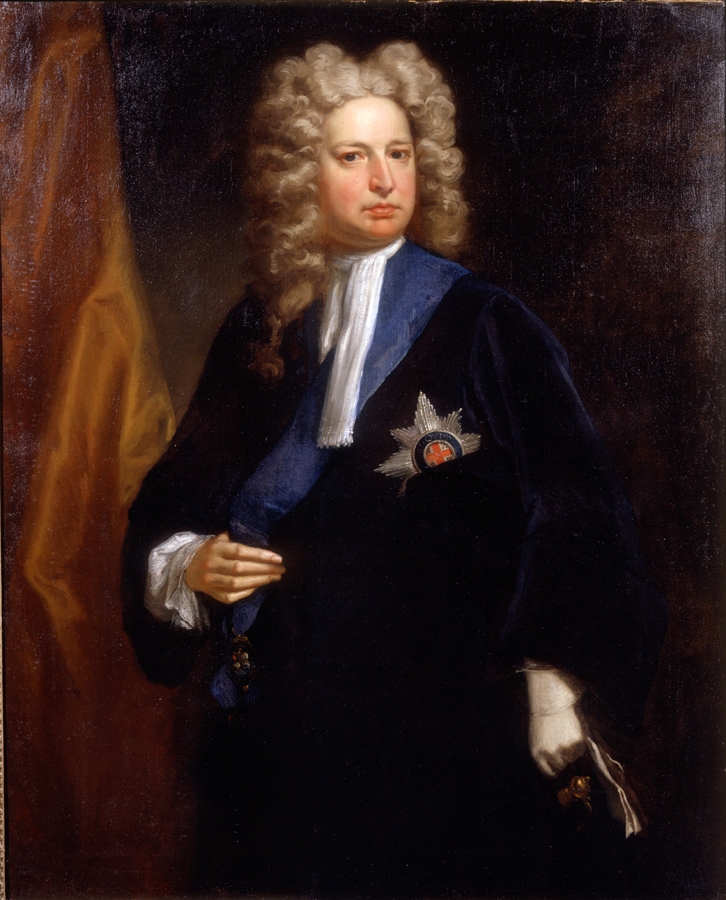
British government

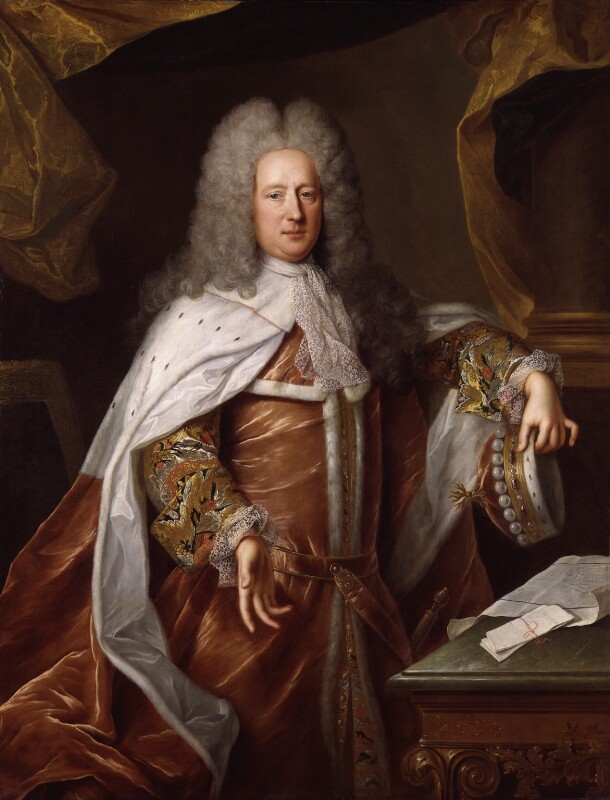

The Harley (or Oxford–Bolingbroke) ministry was the British government that existed between 1710 and 1714 in the reign of Queen Anne. It was headed by Robert Harley (from 1711, Earl of Oxford) and composed largely of Tories. Harley was a former Whig who had changed sides, bringing down the seemingly powerful Whig Junto and their moderate Tory ally Lord Godolphin. It came during the Rage of Party when divisions between the two factions were at their height, and a "paper war" broke out between their supporters. Amongst those writers supportive of Harley's government were Jonathan Swift, Daniel Defoe, Delarivier Manley, John Arbuthnot and Alexander Pope who clashed with members of the rival Kit-Kat Club.
Peace treaty
Main article: Peace of Utrecht
The ministry vigorously pushed for a peace to end the War of the Spanish Succession, leading to the Treaty of Utrecht. Foreign affairs were largely conducted by Henry St John, 1st Viscount Bolingbroke. They were fiercely pressed by the Whig opposition, who used the rallying cry of No Peace Without Spain. In order to secure his peace treaty through the hostile Whig-dominated House of Lords, Harley created twelve new peerages known as Harley's Dozen in a single day to tip the balance. The ministry successfully prosecuted Robert Walpole over charges of profiteering and had him imprisoned in the Tower of London for a period.
In December 1711 the government controversially dismissed John Churchill, 1st Duke of Marlborough, a notional Tory but long supported by the Whigs, as Captain General and replaced him with the staunchly Tory Irish general James Butler, 1st Duke of Ormond. Ormond took the field as commander of the British forces in Flanders in 1712, but received "restraining orders" from Harley forbidding him from committing troops to fight the French. Ormond marched his troops away from the Allies, now commanded by Eugene of Savoy, who suffered a major defeat at the Battle of Denain without the assistance of the British. Marlborough was also dismissed from his post in the cabinet Master General of the Ordnance, a position that was handed to the Scottish Tory James Hamilton, 4th Duke of Hamilton. Hamilton was also appointed as the first British Ambassador to France following the war, but before he left for France he was killed in a notorious duel in Hyde Park with the Whig politician Charles Mohun, 4th Baron Mohun of Okehampton.
Fall and aftermath
Main article: Hanoverian Succession
The government fell following Anne's death in 1714. The new king, George I, was not comfortable with Harley or Bolingbroke, who he believed had opposed the Hanoverian Succession and instead supported the Jacobite pretenders. They were replaced by the Townshend ministry, beginning the Whig Ascendancy, and it would be nearly fifty years before a Tory ministry gained office again in 1762. Bolingbroke was forced into exile, along with many of his followers after being accused of treason. Harley was impeached by Parliament, and remained in the Tower of London until 1717. Matthew Prior who had played an important part in the negotiating the Utrecht treaty was also imprisoned.
Several former members of the government were involved or caught up in the 1715 Jacobite rebellion. Bolingbroke in Paris served as Secretary of State for the claimant James Francis Edward Stuart, the former Scottish Secretary John Erskine, Earl of Mar led the uprising in Scotland while Sir William Wyndham, 3rd Baronet was arrested as a potential leader of the revolt in England.
Principal ministers
| Office | Name | Term |
|---|---|---|
| Lord Treasurer | John Poulett, 1st Earl Poulett (First Lord of commission) | 1710–1711 |
| Robert Harley, 1st Earl of Oxford and Earl Mortimer | 1711–1714 | |
| Charles Talbot, 1st Duke of Shrewsbury | 1714–1714 | |
| Chancellor of the Exchequer | Robert Harley | 1710–1711 |
| Robert Benson | 1711–1714 | |
| Lord President of the Council | Laurence Hyde, 1st Earl of Rochester | 1710–1711 |
| John Sheffield, 1st Duke of Buckingham and Normanby | 1711–1714 | |
| Chancellor of the Duchy of Lancaster | William Berkeley, 4th Baron Berkeley of Stratton | 1710–1714 |
| Master-General of the Ordnance | John Churchill, 1st Duke of Marlborough | 1702–1712 |
| Richard Savage, 4th Earl Rivers | 1712–1712 | |
| James Hamilton, 4th Duke of Hamilton | 1712–1712 | |
| Vacant | 1712–1714 | |
| Secretary of State for the Southern Department | William Legge, 2nd Baron Dartmouth (Earl of Dartmouth from 1711) | 1710–1713 |
| Henry St John, 1st Viscount Bolingbroke | 1713–1714 | |
| Secretary of State for the Northern Department | Henry St John, 1st Viscount Bolingbroke | 1710–1713 |
| William Bromley | 1713–1714 | |
| Lord Privy Seal | John Holles, 1st Duke of Newcastle | 1705–1711 |
| John Robinson, Bishop of Bristol | 1711–1713 | |
| William Legge, 1st Earl of Dartmouth | 1713–1714 | |
| First Lord of Trade | Thomas Grey, 2nd Earl of Stamford | 1707–1711 |
| Charles Finch, 4th Earl of Winchilsea | 1711–1713 | |
| Francis North, 2nd Baron Guilford | 1713–1714 | |
| First Lord of the Admiralty | Edward Russell, 1st Earl of Orford | 1709–1710 |
| Sir John Leake | 1710–1712 | |
| Thomas Wentworth, 1st Earl of Strafford | 1712–1714 | |
| Secretary at War | George Granville | 1710–1712 |
| Sir William Wyndham, 3rd Baronet | 1712–1713 | |
| Francis Gwyn | 1713–1714 | |
| Treasurer of the Navy | Robert Walpole | 1710–1711 |
| Charles Caesar | 1711–1714 | |
| Paymaster-General of the Forces | James Brydges | 1707–1713 |
| Thomas Moore | 1713–1714 | |
| Lord Lieutenant of Ireland | James Butler, 2nd Duke of Ormonde | 1710–1713 |
| Charles Talbot, 1st Duke of Shrewsbury | 1713–1714 | |
| Secretary of State for Scotland | James Douglas, 2nd Duke of Queensberry | 1710–1711 |
| John Erskine, Earl of Mar | 1713–1714 |
References
References
- Chris Cook and John Stevenson, ''British Historical Facts 1688–1760'', Macmillan 1988, pp. 35–36.
- [[J. C. Sainty]], [https://www.history.ac.uk/publications/office/pensions Paymaster of Pensions 1703-1782]. Accessed 9 December 2018.
This article was imported from Wikipedia and is available under the Creative Commons Attribution-ShareAlike 4.0 License. Content has been adapted to SurfDoc format. Original contributors can be found on the article history page.
Ask Mako anything about Harley ministry — get instant answers, deeper analysis, and related topics.
Research with MakoFree with your Surf account
Create a free account to save articles, ask Mako questions, and organize your research.
Sign up freeThis content may have been generated or modified by AI. CloudSurf Software LLC is not responsible for the accuracy, completeness, or reliability of AI-generated content. Always verify important information from primary sources.
Report