From Surf Wiki (app.surf) — the open knowledge base
Haplogroup C (mtDNA)
Human mitochondrial DNA haplogroup
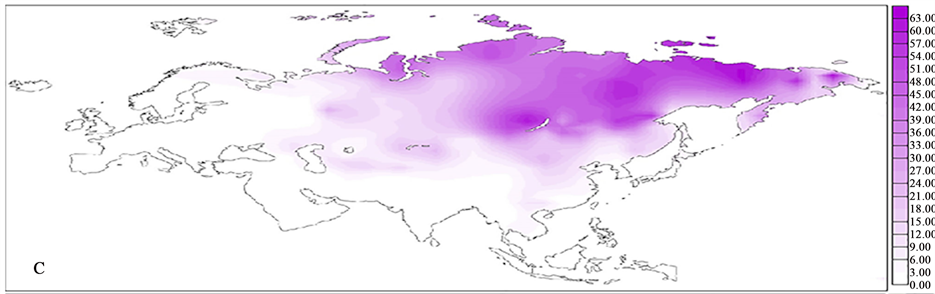
Human mitochondrial DNA haplogroup
| Field | Value |
|---|---|
| name | C |
| map | Map-of-human-migrations.jpg |
| origin-date | 36,473.3 (SD 7392.0) years |
| origin-place | East Asia |
| ancestor | CZ |
| TMRCA | 27,370 (95% CI 19,550 35,440) ybp |
| 23,912.2 | |
| (SD 4780.8) years<ref name | "Behar2012" / |
| 21,700 (95% CI 19,200 24,400) ybp | |
| descendants | C1, C4, C5, C7 |
| mutations | 489 10400 14783 15043 |
the human mtDNA haplogroup
| origin-date = 36,473.3 (SD 7392.0) years | origin-place = East Asia 23,912.2 (SD 4780.8) years 21,700 (95% CI 19,200 24,400) ybp
In human mitochondrial genetics, Haplogroup C is a human mitochondrial DNA (mtDNA) haplogroup.
Origin
Haplogroup C is believed to have arisen in East Asia some 24,000 years before present. It is a descendant of the haplogroup M. Haplogroup C shares six mutations downstream of the MRCA of haplogroup M with haplogroup Z and five mutations downstream of the MRCA of haplogroup M with other members of haplogroup M8. This macro-haplogroup is known as haplogroup M8'CZ or simply as haplogroup M8.
Distribution

Haplogroup C is found in Northeast Asia (including Siberia) and the Americas. In Eurasia, Haplogroup C is especially frequent among populations of arctic Siberia, such as Nganasans, Dolgans, Yakuts, Evenks, Evens, Yukaghirs, and Koryaks. Haplogroup C is one of five mtDNA haplogroups found in the indigenous peoples of the Americas, the others being A, B, D, and X. The subclades C1b, C1c, C1d, and C4c are found in the first people of the Americas. C1a is found only in Asia.
In 2010, Icelandic researchers discovered C1e lineage in their home country, estimating an introduction date of year 1700 AD or earlier, indicating a possible introduction during the Viking expeditions to the Americas. A Native American origin for this C1e lineage is likely, but the researchers note that a European or Asian one cannot be ruled out.
In 2014, a study discovered a new mtDNA subclade C1f from the remains of 3 people found in north-western Russia and dated to 7,500 years ago. It has not been detected in modern populations. The study proposed the hypothesis that the sister C1e and C1f subclades had split early from the most recent common ancestor of the C1 clade and had evolved independently. Subclade C1e had a northern European origin. Iceland was settled by the Vikings 1,130 years ago and they had raided heavily into western Russia, where the sister subclade C1f is now known to have resided. They proposed that both subclades were brought to Iceland through the Vikings, however C1e went extinct on mainland northern Europe due to population turnover and its small representation, and subclade C1f went extinct completely.
In 2015, a study conducted in the Aconcagua mummy identified its mtDNA lineage belongs to the subclade C1bi, which contains 10 distinct mutations from C1b.
Table of Frequencies by ethnic group
| Population | Frequency | Count | Source | Subtypes | ||||||||||||||||||||||||||||||||||||||||||
|---|---|---|---|---|---|---|---|---|---|---|---|---|---|---|---|---|---|---|---|---|---|---|---|---|---|---|---|---|---|---|---|---|---|---|---|---|---|---|---|---|---|---|---|---|---|---|
| Evenks (Stony Tunguska) | 0.769 | 39 | C4a2=7, C4a1c=6, C4b1=5, C5d1=4, C4b=3, C4b3=3, C4a1c1a=1, C5b1b=1 | |||||||||||||||||||||||||||||||||||||||||||
| Evenk | 0.718 | 71 | C(xC1, C5)=41, C5=10 | |||||||||||||||||||||||||||||||||||||||||||
| Yukaghir | 0.670 | 100 | C(xC1, C5)=54, C5=13 | |||||||||||||||||||||||||||||||||||||||||||
| Evenk (East) | 0.644 | 45 | C(xC1, C5)=17, C5=12 | |||||||||||||||||||||||||||||||||||||||||||
| Tofalar | 0.621 | 58 | C(xC1, C5)=31, C5=5 | |||||||||||||||||||||||||||||||||||||||||||
| Evens (Sebjan) | 0.556 | 18 | C4b=6, C4a1c=3, C5b1b=1 | |||||||||||||||||||||||||||||||||||||||||||
| Yukaghirs | 0.550 | 20 | C4a1c=4, C4b3a=2, C4b7=2, C4a2=1, C5a2=1, C5d1=1 | |||||||||||||||||||||||||||||||||||||||||||
| Yukaghirs (Yakutia) | 0.545 | 22 | C4b3a=5, C5d1=3, C4a1c=1, C4a2=1, C4b1=1, C5a2a=1 | |||||||||||||||||||||||||||||||||||||||||||
| Evens (Tompo) | 0.519 | 27 | C4a1c=6, C4a2=3, C4b=2, C4b1=2, C5d1=1 | |||||||||||||||||||||||||||||||||||||||||||
| Nganasans | 0.513 | 39 | C(xC1, C5)=12, C5=8 | |||||||||||||||||||||||||||||||||||||||||||
| Tozhu Tuvans | 0.479 | 48 | C(xC1, C5)=16, C5=7 | |||||||||||||||||||||||||||||||||||||||||||
| Evenks (Yakutia) | 0.472 | 125 | C4b1=13, C4a1c=11, C4b9=9, C4a2=8, C4b=5, C5b1b=4, C5a2=3, C5d1=2, C4a1=1, C4a1d=1, C4b3a=1, C5a1=1 | |||||||||||||||||||||||||||||||||||||||||||
| Tuvans | 0.472 | 231 | C(xC1, C5)=88, C5=21 | |||||||||||||||||||||||||||||||||||||||||||
| Yakut | 0.469 | 254 | C(xC1, C5)=95, C5=24 | |||||||||||||||||||||||||||||||||||||||||||
| Evens (Berezovka) | 0.467 | 15 | C4b3a=4, C4b=1, C4b1=1, C4b7=1 | |||||||||||||||||||||||||||||||||||||||||||
| Evenk (West) | 0.466 | 73 | C(xC1, C5)=29, C5=5 | |||||||||||||||||||||||||||||||||||||||||||
| Evenks (Taimyr) | 0.458 | 24 | C4a1c=5, C4b1=4, C4a1c1a=1, C4a2=1 | |||||||||||||||||||||||||||||||||||||||||||
| Yakut (Central) | 0.457 | 164 | C4a1c=16, C4a2=14, C5b1b=13, C4b1=8, C4a1d=7, C4b=4, C4b1a=3, C5a1=3, C4a1=2, C5b1a=2, C4b3a=1, C5a2=1, C7a1c=1 | |||||||||||||||||||||||||||||||||||||||||||
| Evens (Yakutia) | 0.457 | 105 | C4a1c=15, C5d1=11, C4a2=4, C4b3a=3, C4b1=2, C4b7=2, C4b9=2, C4b=2, C5a1=2, C7a1c=2, C4b1a=1, C4b2=1, C5a2a=1 | |||||||||||||||||||||||||||||||||||||||||||
| Evenks (Nyukzha) | 0.413 | 46 | C4a2=10, C4b1=3, C4a1c=2, C4a1d=1, C4b1a=1, C5a2=1, C7a1c=1 | |||||||||||||||||||||||||||||||||||||||||||
| Yakut (Northern) | 0.405 | 148 | C4a1c=17, C4b1=16, C4a2=11, C5b1a=4, C5b1b=4, C4b9=3, C4b=2, C5a1=2, C5d1=1 | |||||||||||||||||||||||||||||||||||||||||||
| Koryaks | 0.400 | 15 | C4b=3, C5a2=3 | |||||||||||||||||||||||||||||||||||||||||||
| Dolgans | 0.390 | 154 | C4a1c=33, C4b1=9, C5b1b=5, C4b3a=3, C4a2=2, C4b1a=2, C5b1a=2, C4b8=1, C4b=1, C5d1=1, C7a1c=1 | |||||||||||||||||||||||||||||||||||||||||||
| Even | 0.377 | 191 | C(xC1, C5)=50, C5=22 | |||||||||||||||||||||||||||||||||||||||||||
| Koryak | 0.368 | 182 | C(xC1, C5)=39, C5=28 | |||||||||||||||||||||||||||||||||||||||||||
| Yakut (Vilyuy) | 0.360 | 111 | C4a1c=14, C4a2=10, C4b=5, C4b1=4, C4b1a=2, C5a2=2, C5b1b=2, C4a1=1 | |||||||||||||||||||||||||||||||||||||||||||
| Evens (Kamchatka) | 0.333 | 39 | C4b1=6, C4b3a=3, C4a1c=2, C5a2=1, C5d1=1 | |||||||||||||||||||||||||||||||||||||||||||
| Altai-Kizhi | 0.322 | 90 | C(xC1, C5)=21, C5=8 | |||||||||||||||||||||||||||||||||||||||||||
| Chuvantsi | 0.313 | 32 | C(xC1, C5)=10 | |||||||||||||||||||||||||||||||||||||||||||
| Oroqen | 0.295 | 44 | C(xC1, C5)=9, C5=4 | |||||||||||||||||||||||||||||||||||||||||||
| Teleut | 0.283 | 53 | C(xC1, C5)=11, C5=4 | |||||||||||||||||||||||||||||||||||||||||||
| Evens (Sakkyryyr) | 0.261 | 23 | C4a1c=2, C4b=2, C4a1d=1, C4b1=1 | |||||||||||||||||||||||||||||||||||||||||||
| Udegey | 0.226 | 31 | C4b1=6, C4a1d=1 | |||||||||||||||||||||||||||||||||||||||||||
| Mongolian (Ulaanbaatar) | 0.213 | 47 | C=10 | |||||||||||||||||||||||||||||||||||||||||||
| Buryat | 0.212 | 419 | C(xC1, C5)=66, C1=3, C5=20 | |||||||||||||||||||||||||||||||||||||||||||
| Khakassian | 0.208 | 110 | C(xC1, C5)=28, C5=2 | |||||||||||||||||||||||||||||||||||||||||||
| Barghut | 0.201 | 149 | C4a1a1=6, C4a1a2=3, C4a1b2=3, C4a2a1=2, C4b1a=2, C4b1=2, C4=2, C5b=2, C4a1a=1, C4a1a1a2=1, C4a1a2a2=1, C4a2a2=1, C5a1=1, C5a2=1, C5b1a=1, C7=1 | |||||||||||||||||||||||||||||||||||||||||||
| Tubalar | 0.194 | 72 | C(xC1, C5)=12, C5=2 | |||||||||||||||||||||||||||||||||||||||||||
| Altaian | 0.191 | 110 | C(xC1, C5)=21 | |||||||||||||||||||||||||||||||||||||||||||
| Evenks (Iengra) | 0.190 | 21 | C4a2=2, C4b1=1, C5a2=1 | |||||||||||||||||||||||||||||||||||||||||||
| Udege | 0.174 | 46 | C(xC1, C5)=8 | |||||||||||||||||||||||||||||||||||||||||||
| Mongolian (Ulaanbaatar) | 0.170 | 47 | C4=4, C*(xC1,C4,C5)=3, C5=1 | |||||||||||||||||||||||||||||||||||||||||||
| Telenghit | 0.169 | 71 | C(xC1, C5)=10, C5=2 | |||||||||||||||||||||||||||||||||||||||||||
| Mongolian | 0.153 | 150 | C(xC1, C5)=18, C1=2, C5=3 | |||||||||||||||||||||||||||||||||||||||||||
| Negidal | 0.152 | 33 | C(xC1, C5)=3, C5=2 | |||||||||||||||||||||||||||||||||||||||||||
| Kyrgyz (Kyzylsu) | 0.145 | 138 | C=20 | |||||||||||||||||||||||||||||||||||||||||||
| Kyrgyz | 0.140 | 200 | C(xC1, C5)=18, C1=1, C5=9 | |||||||||||||||||||||||||||||||||||||||||||
| Ulch | 0.138 | 87 | C(xC1, C5)=6, C1=1, C5=5 | |||||||||||||||||||||||||||||||||||||||||||
| Turkmen | 0.135 | 178 | C(xC1, C5)=14, C5=10 | |||||||||||||||||||||||||||||||||||||||||||
| Chukchi | 0.132 | 417 | C(xC1, C5)=27 C5=28 | |||||||||||||||||||||||||||||||||||||||||||
| Kazakh (Xinjiang) | 0.132 | 53 | C(xC1, C5)=5 C5=2 | |||||||||||||||||||||||||||||||||||||||||||
| Itelmen | 0.130 | 46 | C5=6 | |||||||||||||||||||||||||||||||||||||||||||
| Shor | 0.122 | 82 | C(xC1, C5)=9 C5=1 | |||||||||||||||||||||||||||||||||||||||||||
| Orok | 0.115 | 61 | C1=7 | |||||||||||||||||||||||||||||||||||||||||||
| Kyrgyz (Taxkorgan) | 0.103 | 68 | C4=6, C5=1 | |||||||||||||||||||||||||||||||||||||||||||
| Thai | 0.100 | 40 | C=4 | |||||||||||||||||||||||||||||||||||||||||||
| Nanai | 0.094 | 85 | C(xC1, C5)=5, C1=1, C5=2 | |||||||||||||||||||||||||||||||||||||||||||
| Kazakh | 0.086 | 511 | C(xC1, C5)=32, C1=4, C5=8 | |||||||||||||||||||||||||||||||||||||||||||
| Jetisu Kazakhstan | 0.085 | 200 | last1=Askapuli | first1=Ayken | last2=Vilar | first2=Miguel | last3=Garcia-Ortiz | first3=Humberto | last4=Zhabagin | first4=Maxat | last5=Sabitov | first5=Zhaxylyk | last6=Akilzhanova | first6=Ainur | last7=Ramanculov | first7=Erlan | last8=Schamiloglu | first8=Uli | last9=Martinez-Hernandez | first9=Angelica | last10=Contreras-Cubas | first10=Cecilia | last11=Barajas-Olmos | first11=Francisco | last12=Schurr | first12=Theodore G. | last13=Zhumadilov | first13=Zhaxybay | last14=Flores-Huacuja | first14=Marlen | last15=Orozco | first15=Lorena | date=2022-11-29 | title=Kazak mitochondrial genomes provide insights into the human population history of Central Eurasia | journal=PLOS ONE | language=en | volume=17 | issue=11 | article-number=e0277771 | doi=10.1371/journal.pone.0277771 | pmid=36445929 | doi-access=free | issn=1932-6203 | pmc=9707748 | bibcode=2022PLoSO..1777771A }} | C4=11, C5=5, C7=1 |
| Mongolian (Inner Mongolia) | 0.083 | 97 | C(xC1, C5)=5 | |||||||||||||||||||||||||||||||||||||||||||
| Altaian (Kazakhstan) | 0.082 | 98 | C(xC1, C5)=8 | |||||||||||||||||||||||||||||||||||||||||||
| Kyrgyz (Artux) | 0.074 | 54 | C4=4 | |||||||||||||||||||||||||||||||||||||||||||
| Tajik | 0.073 | 82 | C(xC1, C5)=6 | |||||||||||||||||||||||||||||||||||||||||||
| Sarikoli | 0.070 | 86 | C4a1a+A14878G=2, C4a1=2, C4b1=1, C4+T152C!+T4742C+T8602C=1 | |||||||||||||||||||||||||||||||||||||||||||
| Daur | 0.066 | 45 | C(xC1, C5)=2, C1=1 | |||||||||||||||||||||||||||||||||||||||||||
| Uyghur (Xinjiang) | 0.064 | 47 | C(xC1, C5)=3 | |||||||||||||||||||||||||||||||||||||||||||
| Uzbek | 0.061 | 130 | C(xC1, C5)=6, C5=2 | |||||||||||||||||||||||||||||||||||||||||||
| Vietnamese | 0.048 | 42 | C=2 | |||||||||||||||||||||||||||||||||||||||||||
| Han Chinese | 0.045 | 1930 | C(xC1, C5)=72, C5=15 | |||||||||||||||||||||||||||||||||||||||||||
| Thai | 0.034 | 552 | C(xC1, C5)=19 | |||||||||||||||||||||||||||||||||||||||||||
| Korean (mostly Ulsan) | 0.030 | 1094 | C=33 | |||||||||||||||||||||||||||||||||||||||||||
| Manchu | 0.025 | 40 | C=1 | |||||||||||||||||||||||||||||||||||||||||||
| Korean | 0.024 | 694 | C=17 | |||||||||||||||||||||||||||||||||||||||||||
| Korean (China) | 0.020 | 51 | C=1 | |||||||||||||||||||||||||||||||||||||||||||
| Korean (Korea) | 0.016 | 185 | C=3 | |||||||||||||||||||||||||||||||||||||||||||
| Korean | 0.015 | 537 | C5=4, C(xC1,C5)=4 | |||||||||||||||||||||||||||||||||||||||||||
| Korean | 0.010 | 103 | C(xC1,C4,C5)=1 | |||||||||||||||||||||||||||||||||||||||||||
| Eskimo | 0.008 | 254 | C(xC1, C5)=2 | |||||||||||||||||||||||||||||||||||||||||||
| Japanese | 0.005 | 1312 | C1=4, C5=1, C(xC1,C5)=1 | |||||||||||||||||||||||||||||||||||||||||||
| Japanese (Tokyo) | 0.000 | 118 | - | |||||||||||||||||||||||||||||||||||||||||||
| Ainu | 0.000 | 51 | - | |||||||||||||||||||||||||||||||||||||||||||
| Nivkh | 0.000 | 38 | - | |||||||||||||||||||||||||||||||||||||||||||
| Han (Beijing) | 0.000 | 40 | - | |||||||||||||||||||||||||||||||||||||||||||
| Nivkh | 0.000 | 56 | - |
Subclades
Tree
This phylogenetic tree of haplogroup C subclades is based on the paper by Mannis van Oven and Manfred Kayser Updated comprehensive phylogenetic tree of global human mitochondrial DNA variation and subsequent published research.
- CZ
- C - China (Mongol from Chifeng), Korea, Russia (Bashkortostan), India
- C1 - Paraguay (Alto Parana), ancient DNA from specimen I0061 (from Yuzhniy Oleni Ostrov, Lake Onega, Russia, 7450 - 6950 ybp)
- C1a
- C1a* – Ulchi, Nanai, Daur, Mongol (Hulunbuir)
- C1a1 – Buryat, Kyrgyz (Kyrgyzstan)
- C1a2 – Japan
- C1b
- C1b*
- C1b1
- C1b1*
- C1b1a
- C1b1a* – Mexican American
- C1b1a1 – Mexican American
- C1b1b – Native American, Mexican American
- C1b2
- C1b2* – Peru, Paraguay
- C1b2a – Peru
- C1b2b – Colombia
- C1b2c
- C1b2c* – USA, Puerto Rico, Paraguay, Spain
- C1b2c1 – Paraguay
- C1b3
- C1b3* – Peru
- C1b3a - Indonesia (Java, Borneo, Sumatera, Papua Nugini dan Sulawesi)
- C1b3a* – Peru
- C1b3a1 – Argentina
- C1b4 – Ecuador, Peru, USA
- C1b5
- C1c
- C1c1
- C1c2
- C1d – Argentina (Buenos Aires), Colombia (Boyacá), Mexico (Tamaulipas, Guanajuato, Chihuahua, etc.), United States (Mexican Americans), Canada (Shuswap)
- C1d1
- C1d2 – Colombia (Mestizo)
- C1d2a – Colombia (Mestizos)
- C1e – Iceland
- C1f – Pamiri Tajik (Gorno-Badakhshan), India (Marathi), Scotland, Italy, Mesolithic NW Russia
- C1g – Mesolithic NW Russia (Karelia)
- C1a
- C4 – Upper Palaeolithic (14050 - 13770 ybp) Ust-Kyakhta (Buryatia), Late Neolithic-Bronze Age Irkutsk Oblast, Late Neolithic-Iron Age Yakutia, Tubalar (Ederbes), Todzhin (Toora-Hem, Iiy, Adir-Kezhig), Yukaghir (Andrushkino), Yukaghir/Chuvan (Markovo), Russian, Myanmar
- C4a'b'c - Irkutsk Oblast (6815 ybp), India (Jenu Kuruba)
- C4a – China (Guangdong, Han from Beijing)
- C4a1 – Mongol from Chifeng and Hulunbuir, Tashkurgan (Kyrgyz, Sarikoli, Wakhi), Czech Republic, Denmark
- C4a1a – Korea, China, Uyghur, Buryat (South Siberia), Denmark, Sweden, France, Scotland, Canada
- C4a1a1
- C4a1a1a
- C4a1a1a1 - Lepcha, Sherpa (Nepal)
- C4a1a1a2 - Lachungpa
- C4a1a1a3 - Wancho
- C4a1a1b - Poland, Finland (Hamina)
- C4a1a1a
- C-T195C! – Ireland, Scotland, England, USA, Hungary (Szeged region), Poland, Belarus, Russia (Russian, Buryat), Turkey, Pakistan (Hazara), India (Jammu and Kashmir), China (Bargut and Mongol in Inner Mongolia, etc.), Korea
- C4a1a2 – China
- C4a1a2a – China (Han from Ili, Han from Henan, etc.)
- C4a1a2b
- C4a1a2b1 - China
- C4a1a2b2 - Uyghur
- C4a1a3 – Bronze Age Irkutsk Oblast (Ust'-Belaya, Khaptsagai, Silinskij, Chastaja Padi), Russian (Kemerovo Oblast), Koryak, Yukaghir, Yakut, Evenk (Nyukzha, Chumikan, Nelkan/Dzhigda), Even (Sakkyryyr, Sebjan, Tompo, Markovo, Kamchatka), Udinsk Buryat (Kushun), Todzhin (Toora-Hem, Adir-Kezhig), Altai Kizhi, Iran (Qashqai), Sweden
- C4a1a3a – Yakut, Buryat (Buryat Republic, Irkutsk Oblast), Bargut, Nentsi
- C4a1a3a1 – Yakut, Nganasan (Vadei of Taimyr Peninsula)
- C4a1a3a1a - Evenk (Taimyr, Stony Tunguska)
- C4a1a3a1b - Tofalar
- C4a1a3a1 – Yakut, Nganasan (Vadei of Taimyr Peninsula)
- C4a1a3b – Bargut, Uyghur
- C4a1a3b1 - Chelkan, Tubalar
- C4a1a3c – Evenk (Taimyr Peninsula, Stony Tunguska)
- C4a1a3d – Yakut
- C4a1a3a – Yakut, Buryat (Buryat Republic, Irkutsk Oblast), Bargut, Nentsi
- C4a1a4 – Buryat, Kazakhstan
- C4a1a4a – Evenk (Okhotsk region), Shor
- C4a1a2 – China
- C4a1a5 – Teleut, Ladakh
- C4a1a6
- C4a1a6a - Russia (Bashkortostan, Khamnigan), Kyrgyzstan (Kyrgyz), Inner Mongolia (Bargut, Buryat)
- C4a1a6b - Buryat (South Siberia, Inner Mongolia), Uyghur
- C4a1a7 - Denmark
- C4a1a1
- C4a1b – China, Thailand (Palaung)
- C4a1c - Russia (Bashkortostan, Adygei), Iran (Azerbaijanian), China (Xibo, Mongol from Tianjin)
- C4a1a – Korea, China, Uyghur, Buryat (South Siberia), Denmark, Sweden, France, Scotland, Canada
- C4a2
- C4a2a – Yakut, Evenk (Chumikan)
- C4a2a1 – Bronze Age (2275 - 2040 cal BC) Irkutsk Oblast (specimen irk076 from burial 3 at the Shamanka 2 site, South Baikal), Shor, Chelkan, Teleut, Altai Kizhi, Yakut, Kazakh, Ket, Evenk (Stony Tunguska, Taimyr), Buryat (Irkutsk Oblast, Inner Mongolia), China, Korea
- C4a2a1a – Yukaghir, Yakut, Evenk (Nyukzha, Iyengra, Nelkan/Dzhigda), Even (Tompo)
- C4a2a1b – Evenk (Nyukzha), Yakut
- C4a2a1b1 - Evenk (Nyukzha)
- C4a2a1c - China (Zhejiang, Uyghurs), Buryat, Todzhin (Iiy), Karanogay (Dagestan)
- C4a2a1c1 - Tofalar (Alygdzher, Nerkha, V. Gutara), Khamnigan
- C4a2a1c2 - Uyghurs
- C4a2a1d - Uyghurs
- C4a2a1d1 - Udinsk Buryat (Kushun), Tofalar (V. Gutara), Evenk (Central Siberia)
- C4a2a1d2 - Evenk (Nelkan/Dzhigda), Evenk/Nivkh (Val)
- C4a2a1e - Bargut (Inner Mongolia), Buryat (Irkutsk Oblast)
- C4a2a1f - Buryat (South Siberia, Irkutsk Oblast)
- C4a2a1g - Ket
- C4a2a1 – Bronze Age (2275 - 2040 cal BC) Irkutsk Oblast (specimen irk076 from burial 3 at the Shamanka 2 site, South Baikal), Shor, Chelkan, Teleut, Altai Kizhi, Yakut, Kazakh, Ket, Evenk (Stony Tunguska, Taimyr), Buryat (Irkutsk Oblast, Inner Mongolia), China, Korea
- C4a2b – Tibet, Korea
- C4a2b1 – Wancho
- C4a2b2 – China (Han from Beijing)
- C4a2b2a – Tibet (Sherpa)
- C4a2c – Bargut (Inner Mongolia)
- C4a2c1 – India (Jenu Kuruba)
- C4a2c2 – Lepcha
- C4a2c2a – Ladakh
- C4a2a – Yakut, Evenk (Chumikan)
- C4a1 – Mongol from Chifeng and Hulunbuir, Tashkurgan (Kyrgyz, Sarikoli, Wakhi), Czech Republic, Denmark
- C4b – Mongol from Jilin and Hulunbuir, Yukaghir, Altai Kizhi, Ukraine, Slovakia
- C4b1 – Yukaghir, Buryat, Mongol from Jilin
- C4b1a – Bargut (Inner Mongolia)
- C4b1b – Evenk (Stony Tunguska), Buryat
- C4b2 – Koryak
- C4b2a – Koryak, Chukchi
- C4b3 – Yakut, Altai Kizhi
- C4b3a – Yukaghir, Even (Berezovka), Mongol from Xilingol
- C4b3a1 – Yukaghir
- C4b3b – Buryat, Evenk (Stony Tunguska)
- C4b3a – Yukaghir, Even (Berezovka), Mongol from Xilingol
- C4b5 – Khamnigan, Buryat
- C4b6 – Altai Kizhi, Tubalar
- C4b7 – Yukaghir
- C4b8 – Yakut
- C4b8a – Nganasan
- C4b1 – Yukaghir, Buryat, Mongol from Jilin
- C4c – Ijka
- C4c1 – Sioux (Carson County of South Dakota), Shuswap, Canada, USA, France, Spain
- C4c1a – Cherokee (Flint District of Oklahoma)
- C4c1b – Chippewa (Trempealeau in Wisconsin), Ottawa or Chippewa (Sault Saint Marie, Chippewa County, Michigan), Canada
- C4c2 – Métis (Red River, Manitoba), USA
- C4c1 – Sioux (Carson County of South Dakota), Shuswap, Canada, USA, France, Spain
- C4a – China (Guangdong, Han from Beijing)
- C4-T152C! – Russia (Bashkortostan), England
- C4-T152C!-A12780G - Uyghur
- C4d – Turkey, Tibet (Chamdo, Nyingchi, Shannan, Lhoba), Thailand (Khon Mueang from Chiang Mai Province), Han from Beijing, Mongol from Tongliao
- C4-T152C!-T4742C - Altai Republic (ancient DNA), Uyghur
- C4-T152C!-T4742C-T16093C - Kyrgyz (Kyrgyzstan), Tibet (Nyingchi)
- C4-T152C!-T4742C-T8602C - Sarikoli (Tashkurgan), Burusho (Pakistan)
- C4-T152C!-T4742C-T8602C-G11176A - Pamiri (Gorno-Badakhshan Autonomous Region of Tajikistan)
- C4e – Teleut, Shor
- C4-T152C!-A12780G - Uyghur
- C4a'b'c - Irkutsk Oblast (6815 ybp), India (Jenu Kuruba)
- C5 – India
- C5a – Azeri
- C5a1 – Mongol (Bayannur, Hohhot, Chifeng), Bargut (Inner Mongolia), Buryat (Irkutsk Oblast), Xibo (HGDP), Kazakhstan
- C5a1a - Khanty, Altai Kizhi
- C5a1b - Even (Severo-Evensk district), Ulchi
- C5a1c - Yakut, Khamnigan (South Siberia)
- C5a1d - Buryat (South Siberia, Inner Mongolia)
- C5a1e - Uyghur
- C5a1f - Uyghur
- C5a2
- C5a2a – Buryat (South Siberia, Buryat Republic), Turkey
- C5a2a1 - Evenk (Nyukzha, Iyengra)
- C5a2b – Yukaghir (Nelemnoye), Koryak, Chukchi, Evenk (Nelkan/Dzhigda), Even (Kamchatka)
- C5a2b1 – Koryak
- C5a2a – Buryat (South Siberia, Buryat Republic), Turkey
- C5a1 – Mongol (Bayannur, Hohhot, Chifeng), Bargut (Inner Mongolia), Buryat (Irkutsk Oblast), Xibo (HGDP), Kazakhstan
- C5b – Poland
- C5b1 – Mongol (Bayannur, Shanxi), Buryat (South Siberia), Tofalar, Todjin, Tuvan, Sojot, Ladakh, Japan
- C5b1a – Evenk (Central Siberia)
- C5b1a1 – Nganasan, Yakut, Buryat (South Siberia), Khamnigan (South Siberia), Kyrgyz (Tashkurgan)
- C5b1a1a - Tofalar (Nerkha, Alygdzher, V. Gutara), Todzhi-Tuva (Alygdzher), Buryat (South Siberia)
- C5b1a2 - Altai Kizhi (South Siberia), Irtysh-Barabinsk Tatar (Novosibirsk Oblast)
- C5b1a1 – Nganasan, Yakut, Buryat (South Siberia), Khamnigan (South Siberia), Kyrgyz (Tashkurgan)
- C5b1b – Khakas
- C5b1b* – Buryat (South Siberia), Russia (Chechen Republic), Bulgaria (Turk in Dobrich)
- C5b1b1 – Yakut
- C5b1b1a - Yakut, Even (Sebjan), Evenk (Stony Tunguska), Russian
- C5b1b2 - Uyghur
- C5b1a – Evenk (Central Siberia)
- C5b1 – Mongol (Bayannur, Shanxi), Buryat (South Siberia), Tofalar, Todjin, Tuvan, Sojot, Ladakh, Japan
- C5-T16093C – Japan (Aichi), Korea, Han (Beijing)
- C5c – Tubalar, Teleut, Afghanistan, Persian (Iran), Czech Republic
- C5c-C16234T – Kurd (Iran), Armenia, Turkey, Kuwait
- C5c1 – Poland, Sweden, Greece
- C5c1a – Russian (Uzbekistan), Ukraine, Lithuania, Poland, Slovakia, Austria, Germany, England, Scotland, Ireland, Italy, USA, Canada
- C5c1 – Poland, Sweden, Greece
- C5c-C16234T – Kurd (Iran), Armenia, Turkey, Kuwait
- C5d – China, Vietnam (Hmong)
- C5d1 – Altai Kizhi, Tuvan, Evenk (Stony Tunguska), Yukaghir
- C5d2 – Khamnigan, China
- C5c – Tubalar, Teleut, Afghanistan, Persian (Iran), Czech Republic
- C5a – Azeri
- C7 – South Korea, China, Taiwan (Hakka), Thailand (Khon Mueang in Chiang Rai Province, Chiang Mai Province, and Lamphun Province), Vietnam (Kinh, Tay, Jarai)
- C7a – Han (Beijing, Yunnan, Denver, etc.), Uyghur, Taiwan (Paiwan, Minnan), Lahu, Thailand (incl. Urak Lawoi, Lao Isan in Chaiyaphum Province, Khon Mueang in Lamphun Province, Khon Mueang in Lampang Province, Kaleun in Nakhon Phanom Province, Black Tai in Loei Province, Phuan in Suphan Buri Province), Vietnam (Hani, Yao, Gelao)
- C7a1 – China, Mongol (Alxa), Taiwan (Makatao), USA (Han Chinese in Denver), Korea
- C7a1a – Thailand (Mon in Lopburi Province)
- C7a1a1 – Wancho
- C7a1a2 – Dirang Monpa
- C7a1b – Northern Thailand (Tai Lue), Vietnam (Nung)
- C7a1c – Uyghurs, Mongol (Hebei, Tongliao, Hinggan, Hulunbuir), Chinese (Fengcheng, Shandong, Fujian, Taixing, etc.), Taiwan, Korea, Vietnam
- C7a1c1 – Evenk (Central Siberia, Nyukzha River basin, Okhotsk region), Uyghur
- C7a1d – Wancho
- C7a1f – Thailand (Karen)
- C7a1f1 – Thailand (Karen, Shan, Khon Mueang from Mae Hong Son Province, Mon from Kanchanaburi Province)
- C7a1f1a – Thailand (S'gaw Karen, Khon Mueang in Chiang Rai Province)
- C7a1f1 – Thailand (Karen, Shan, Khon Mueang from Mae Hong Son Province, Mon from Kanchanaburi Province)
- C7a1a – Thailand (Mon in Lopburi Province)
- C7a2 – China, Dai, Laos (Lao in Luang Prabang), Thailand (Khon Mueang in Chiang Mai Province, Khon Mueang in Chiang Rai Province, Lao Isan in Roi Et Province, Phutai in Sakon Nakhon Province, Mon in Nakhon Ratchasima Province), Myanmar (Yangon)
- C7a2a – China (Shantou, etc.), Taiwan (Hakka, Makatao, etc.)
- C7a3
- C7a4
- C7a5
- C7a6
- C7a1 – China, Mongol (Alxa), Taiwan (Makatao), USA (Han Chinese in Denver), Korea
- C7-A16051G – Bargut (Inner Mongolia)
- C7b – Gallong, Naxi, Ukraine, Moldova, Austria
- C7c – Korea
- C7d – Taiwan (Hakka), Vietnam (Vietnamese), Thailand (Khon Mueang in Mae Hong Son Province, Lao Isan in Roi Et Province), Cambodia (Kampong Cham)
- C7e – Cambodia (Takéo), Thailand (Khmer in Surin Province)
- C7a – Han (Beijing, Yunnan, Denver, etc.), Uyghur, Taiwan (Paiwan, Minnan), Lahu, Thailand (incl. Urak Lawoi, Lao Isan in Chaiyaphum Province, Khon Mueang in Lamphun Province, Khon Mueang in Lampang Province, Kaleun in Nakhon Phanom Province, Black Tai in Loei Province, Phuan in Suphan Buri Province), Vietnam (Hani, Yao, Gelao)
- C1 - Paraguay (Alto Parana), ancient DNA from specimen I0061 (from Yuzhniy Oleni Ostrov, Lake Onega, Russia, 7450 - 6950 ybp)
- C - China (Mongol from Chifeng), Korea, Russia (Bashkortostan), India
Popular culture
- In his popular book The Seven Daughters of Eve, Bryan Sykes named the originator of this mtDNA haplogroup Chochmingwu.
- Cellist Yo-Yo Ma belongs to the mtDNA haplogroup C.
- Actor and film producer Adrian Grenier carries haplogroup C1b2.
References
References
- Behar et al., 2012b
- (2010). "Origin and Post-Glacial Dispersal of Mitochondrial DNA Haplogroups C and D in Northern Asia". PLOS ONE.
- van Oven, Mannis. (13 Oct 2008). "Updated comprehensive phylogenetic tree of global human mitochondrial DNA variation". Human Mutation.
- [http://www.ianlogan.co.uk/discussion/hap_C.htm Haplogroup C.]
- (2008). "Mitochondrial Genome Diversity in Arctic Siberians, with Particular Reference to the Evolutionary History of Beringia and Pleistocenic Peopling of the Americas". The American Journal of Human Genetics.
- (2013). "Autosomal and uniparental portraits of the native populations of Sakha (Yakutia): implications for the peopling of Northeast Eurasia". BMC Evolutionary Biology.
- (2010). "A new subclade of mtDNA haplogroup C1 found in icelanders: Evidence of pre-columbian contact?". American Journal of Physical Anthropology.
- [https://phys.org/news/2010-11-vikings-brought-amerindian-iceland-years.html Vikings brought Amerindian to Iceland 1,000 years ago: study], November 17, 2010
- [https://www.telegraph.co.uk/news/science/science-news/8138884/First-Americans-reached-Europe-five-centuries-before-Columbus-voyages.html First Americans 'reached Europe five centuries before Columbus voyages'], 16 Nov 2010
- (2014). "Mitochondrial Genome Sequencing in Mesolithic North East Europe Unearths a New Sub-Clade within the Broadly Distributed Human Haplogroup C1". PLOS ONE.
- (2022-11-29). "Kazak mitochondrial genomes provide insights into the human population history of Central Eurasia". PLOS ONE.
- (2019). "The maternal inheritance of Alto Paraná revealed by full mitogenome sequences". Forensic Science International: Genetics.
- Starikovskaya, E.B., Sukernik, R.I., Derbeneva, O.A., Volodko, N.V., Ruiz-Pesini, E., Torroni, A., Brown, M.D., Lott, M.T., Hosseini, S.H., Huoponen, K. and Wallace, D.C., "Mitochondrial DNA diversity in indigenous populations of the southern extent of Siberia, and the origins of Native American haplogroups." ''Annals of Human Genetics'' 69 (PT 1), 67-89 (2005).
- (2007). "Rate variation between mitochondrial domains and adaptive evolution in humans". Human Molecular Genetics.
- (2014). "Human paternal and maternal demographic histories: Insights from high-resolution Y chromosome and mtDNA sequences". Investigative Genetics.
- Guang‐Lin He, Meng‐Ge Wang, Xing Zou, Hui‐Yuan Yeh, Chang‐Hui Liu, Chao Liu, Gang Chen, and Chuan‐Chao Wang. Extensive ethnolinguistic diversity at the crossroads of North China and South Siberia reflects multiple sources of genetic diversity[J]. ''J Syst Evol'', 2023, 61(1): 230-250.
- (2007). "Phylogeographic Analysis of Mitochondrial DNA in Northern Asian Populations". Am. J. Hum. Genet..
- S. Kumar, C. Bellis, M. Zlojutro, ''et al.'', "Large scale mitochondrial sequencing in Mexican Americans suggests a reappraisal of Native American origins." ''BMC Evol. Biol.'' 11 (1), 293 (2011).
- R.S. Malhi, J.S. Cybulski, R.Y. Tito, ''et al.'', "Brief communication: Mitochondrial haplotype C4c confirmed as a founding genome in the Americas." ''Am. J. Phys. Anthropol.'' 141 (3), 494-497 (2010).
- U.A. Perego, N. Angerhofer, M. Pala, ''et al.'', "The initial peopling of the Americas: a growing number of founding mitochondrial genomes from Beringia." ''Genome Res.'' 20 (9), 1174-1179 (2010).
- [https://www.yfull.com/mtree/C/ YFull MTree 1.02.7045 (as of January 11, 2021)]
- (June 2016). "The genetic history of Ice Age Europe". Nature.
- Kilinc, G.M., Kashuba, N., Yaka, R., Sumer, A.P., Yuncu, E., Shergin, D., Ivanov, G.L., Kichigin, D., Pestereva, K., Volkov, D., Mandryka, P., Kharinskii, A., Tishkin, A., Ineshin, E., Kovychev, E., Stepanov, A., Alekseev, A., Fedoseeva, S.A., Somel, M., Jakobsson, M., Krzewinska, M., Stora, J., and Gotherstrom, A., "Investigating Holocene human population history in North Asia using ancient mitogenomes." ''Sci Rep'' 8 (1), 8969 (2018)
- Derenko,M., Malyarchuk,B., Grzybowski,T., Denisova,G., Rogalla,U., Perkova,M., Dambueva,I., and Zakharov,I., "Origin and post-glacial dispersal of mitochondrial DNA haplogroups C and D in northern Asia." ''PLoS ONE'' 5 (12), E15214 (2010).
- (2018). "Mitochondrial genomes uncover the maternal history of the Pamir populations". European Journal of Human Genetics.
- (2009). "Updating Phylogeny of Mitochondrial DNA Macrohaplogroup M in India: Dispersal of Modern Human in South Asian Corridor". PLOS ONE.
- (2013). "The History of Slavs Inferred from Complete Mitochondrial Genome Sequences". PLOS ONE.
- Malyarchuk,B., Derenko,M., Denisova,G., ''et al.'', "Whole mitochondrial genome diversity in two Hungarian populations." ''Mol. Genet. Genomics'' (2018).
- (2013). "Investigating the Prehistory of Tungusic Peoples of Siberia and the Amur-Ussuri Region with Complete mtDNA Genome Sequences and Y-chromosomal Markers". PLOS ONE.
- (2014). "Improved Calibration of the Human Mitochondrial Clock Using Ancient Genomes". Mol Biol Evol.
- (September 2003). "Diversity of Mitochondrial DNA Lineages in South Siberia". Annals of Human Genetics.
- (2020). "Genetic legacy of cultures indigenous to the Northeast Asian coast in mitochondrial genomes of nearly extinct maritime tribes". BMC Evolutionary Biology.
- Klunk, J., Duggan, A.T., Redfern, R., ''et al.'', "Genetic resiliency and the Black Death: No apparent loss of mitogenomic diversity due to the Black Death in medieval London and Denmark." ''Am. J. Phys. Anthropol.'' (2019).
- O. A. Derbeneva, E. B. Starikovskaya, N. V. Volodko, D. C. Wallace, and R. I. Sukernik, "Mitochondrial DNA Variation in the Kets and Nganasans and Its Implications for the Initial Peopling of Northern Eurasia." ''Russian Journal of Genetics'', Vol. 38, No. 11, 2002, pp. 1316–1321. Translated from ''Genetika'', Vol. 38, No. 11, 2002, pp. 1554–1560.
- (2018). "Genes reveal traces of common recent demographic history for most of the Uralic-speaking populations". Genome Biology.
- (2021). "Mitochondrial genome diversity on the Central Siberian Plateau with particular reference to the prehistory of northernmost Eurasia". PLOS ONE.
- (2000). "Mitochondrial genome variation and the origin of modern humans". Nature.
- (2007). "Beringian standstill and spread of Native American founders". PLOS ONE.
- FamilyTreeDNA - Cherokee DNA Project. (n.d.). https://www.familytreedna.com/public/CherokeeDNAProject?iframe=mtresults
- (2017). "Sex-specific genetic diversity is shaped by cultural factors in Inner Asian human populations". American Journal of Physical Anthropology.
- Malyarchuk,B., Litvinov,A., Derenko,M., Skonieczna,K., Grzybowski,T., Grosheva,A., Shneider,Y., Rychkov,S. and Zhukova,O., "Mitogenomic diversity in Russians and Poles." ''Forensic Sci Int Genet'' 30, 51-56 (2017).
- (2013). "Complete Mitochondrial DNA Diversity in Iranians". PLOS ONE.
- Jiang,C., Cui,J., Liu,F., Gao,L., Luo,Y., Li,P., Guan,L. and Gao,Y., "Mitochondrial DNA 10609T Promotes Hypoxia-Induced Increase of Intracellular ROS and Is a Risk Factor of High Altitude Polycythemia." ''PLoS ONE'' 9 (1), E87775 (2014).
- (2016). "Complete mitochondrial genomes of Thai and Lao populations indicate an ancient origin of Austroasiatic groups and demic diffusion in the spread of Tai–Kadai languages". Hum Genet.
- (2012). "Mitochondrial DNA variant associated with Leber hereditary optic neuropathy and high-altitude Tibetans". Proceedings of the National Academy of Sciences.
- (2018). "Contrasting maternal and paternal genetic variation of hunter-gatherer groups in Thailand". Scientific Reports.
- (2003). "Phylogeny of east Asian mitochondrial DNA lineages inferred from complete sequences". Am. J. Hum. Genet..
- Zhang,A.M., Bandelt,H.J., Jia,X., Zhang,W., Li,S., Yu,D., Wang,D., Zhuang,X.Y., Zhang,Q., and Yao,Y.G., "Is Mitochondrial tRNA Variant m.593T>C a Synergistically Pathogenic Mutation in Chinese LHON Families with m.11778G>A?" ''PLoS ONE'' 6 (10), E26511 (2011).
- (2007). "Somatic mutations of mitochondrial genome in early stage breast cancer". Int. J. Cancer.
- Gates Jr., Henry Louis. (2010). "Faces of America: How 12 Extraordinary People Discovered Their Pasts". New York University Press.
- {{Cite episode. (2012-05-20)
This article was imported from Wikipedia and is available under the Creative Commons Attribution-ShareAlike 4.0 License. Content has been adapted to SurfDoc format. Original contributors can be found on the article history page.
Ask Mako anything about Haplogroup C (mtDNA) — get instant answers, deeper analysis, and related topics.
Research with MakoFree with your Surf account
Create a free account to save articles, ask Mako questions, and organize your research.
Sign up freeThis content may have been generated or modified by AI. CloudSurf Software LLC is not responsible for the accuracy, completeness, or reliability of AI-generated content. Always verify important information from primary sources.
Report