From Surf Wiki (app.surf) — the open knowledge base
Hans Zinsser
American physician, bacteriologist and author (1878–1940)

American physician, bacteriologist and author (1878–1940)
| Field | Value |
|---|---|
| name | Hans Zinsser |
| image | Hans Zinsser. Photograph. Wellcome V0027629.jpg |
| birth_date | November 17, 1878 |
| birth_place | New York City |
| death_date | September 4, 1940 (age 61) |
| death_place | New York City |
| nationality | American |
| field | Physician, bacteriologist, and epidemiologist |
| education | Timothy Dwight School |
| work_institution | Columbia University |
| Stanford University | |
| Harvard Medical School | |
| alma_mater | Columbia University (BS & MD) |
| doctoral_advisor | Philip Hanson Hiss |
| doctoral_students | William Hammon |
| Rebecca Lancefield | |
| known_for | Typhus |
Stanford University Harvard Medical School Rebecca Lancefield
Hans Zinsser (November 17, 1878 – September 4, 1940) was an American physician, bacteriologist, and prolific author. The author of over 200 books and medical articles, he was also a published poet. Some of his verses were published in The Atlantic Monthly. "Zinsser, Hans". National Cyclopaedia of American Biography. New York: James T. White Company. 1950. Volume XXXVI, pp. 35-36. His 1940 publication, As I Remember Him: the Biography of R.S., won one of the early National Book Awards, the sixth and last annual award for Nonfiction voted by members of the American Booksellers Association. "Books and Authors", The New York Times, 1936-04-12, p. BR12. ProQuest Historical Newspapers The New York Times (1851-2007). "Books and Authors", The New York Times, 1941-02-16, p. BR12. ProQuest Historical Newspapers The New York Times (1851-2007).
He is remembered especially for his 1935 book, Rats, Lice and History.
Biography
Early life
The son of German immigrants, -- Zinsser was born in New York City in 1878. He attended Timothy Dwight School on the Upper West Side of Manhattan. He received his undergraduate degree from Columbia University in 1899 and completed both a master's degree and a doctorate in medicine there in 1903.
In 1905, he married Ruby Handforth Kunz, eldest daughter of the mineralogist, George Frederick Kunz, and they had two children, Hans Handforth and Gretel Zinsser, and they all lived in Boston.
Career
After holding a series of academic medicine positions, Zinsser became an associate professor at Stanford University in 1910. In 1913, he moved to a position at his alma mater. At Columbia, he was the doctoral advisor of Rebecca Lancefield, although he did not permit her to physically work in his laboratory due to her gender. Ten years later, Zinsser was hired by Harvard Medical School, where he stayed — except for service in the US Army Medical Corps in World War I — until his death.
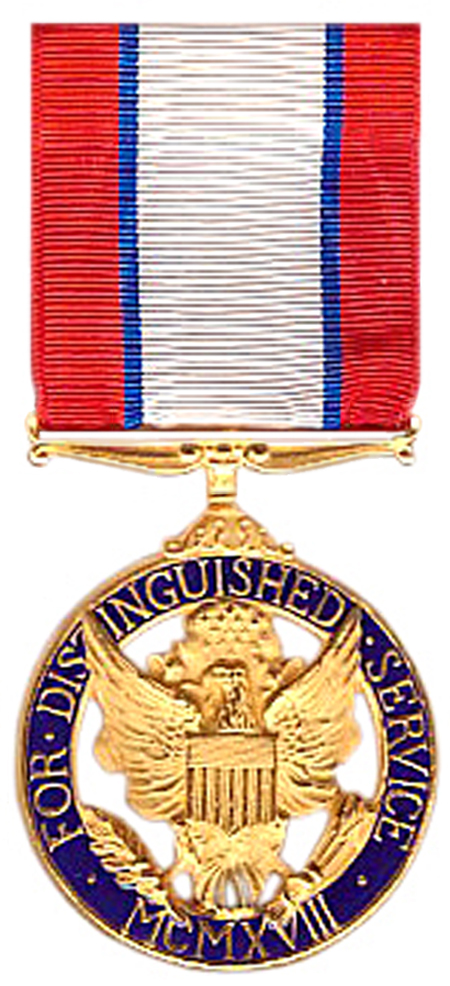
Zinsser taught as an exchange professor and worked with the American Red Cross in France, Russia, Serbia and China, and was noted for his work in typhus and immunology. He became a lieutenant colonel in the US Army and served overseas during World War I. He was awarded the Distinguished Service Medal, the citation for which read as follows "For exceptionally meritorious and distinguished services-- while acting as Sanitation Inspector of the Second Army he organized, perfected and administered with extraordinary and exceptional success a plan of military sanitation and epidemic-disease control." Zinsser also received another military citation for taking exceptional risks to minister to wounded soldiers while under direct enemy fire. He was also awarded the Order of St. Sava of Serbia and the Legion of Honour in France.
Zinsser's scientific work focused on bacteriology and immunology and he is most associated with typhus, especially the eponymous form called Brill–Zinsser disease. He isolated the typhus bacterium and developed a protective vaccine. He wrote several books about biology and bacteria, notably Rats, Lice and History (1935), a "biography" of typhus fever. Zinsser had a strong influence on the work of Albert Coons (1912–1978), who developed the technique of immunohistochemistry. Zinsser was a mentor to, and colleague of, John Franklin Enders, who was awarded the 1954 Nobel Prize in Physiology or Medicine (together with Frederick Chapman Robbins and Thomas Huckle Weller).
Zinsser was elected to the American Academy of Arts and Sciences in 1923, the United States National Academy of Sciences in 1924, and the American Philosophical Society in 1937.

Zinsser succumbed to acute leukemia in 1940. He is interred in Sleepy Hollow Cemetery in Sleepy Hollow, New York.
References
References
- O'Hern, Elizabeth (1975). "Rebecca Craighill Lancefield, Pioneer Microbiologist" (PDF). ''ASM News''. '''4''': 805–810.
- Zinsser, Hans (1935), [https://books.google.com/books?id=deE1pov75sAC&q=%22rats,+lice+and+history%22 ''Rats, Lice, and History: Being a Study in Biography, Which, After Twelve Preliminary Chapters Indispensable for the Preparation of the Lay Reader, Deals With the Life History of Typhus Fever''] (Reprinted in 1963, 1996 ([[Black Dog & Leventhal Publishers]]), and 2007 ([[Transaction Publishers]]))
- "John Franklin Enders and Modern Vaccines {{!}} Manuscripts and Archives Blog".
- "Past Presidents and Officers: John F. Enders, Ph.D.". The American Association of Immunologists, Inc..
- (2023-02-09). "Hans Zinsser".
- "Hans Zinsser".
- "APS Member History".
This article was imported from Wikipedia and is available under the Creative Commons Attribution-ShareAlike 4.0 License. Content has been adapted to SurfDoc format. Original contributors can be found on the article history page.
Ask Mako anything about Hans Zinsser — get instant answers, deeper analysis, and related topics.
Research with MakoFree with your Surf account
Create a free account to save articles, ask Mako questions, and organize your research.
Sign up freeThis content may have been generated or modified by AI. CloudSurf Software LLC is not responsible for the accuracy, completeness, or reliability of AI-generated content. Always verify important information from primary sources.
Report