From Surf Wiki (app.surf) — the open knowledge base
Hans-Jochen Vogel
German lawyer and politician (1926–2020)

German lawyer and politician (1926–2020)
| Field | Value | ||
|---|---|---|---|
| name | Hans-Jochen Vogel | ||
| image | Bundesarchiv B 145 Bild-F079283-0006, Münster, SPD-Parteitag, Vogel (cropped).jpg | ||
| caption | Vogel in 1988 | ||
| office | Leader of the Social Democratic Party | ||
| 1blankname | Federal Manager | ||
| 1namedata | Peter Glotz | ||
| Anke Fuchs | |||
| term_start | 14 June 1987 | ||
| term_end | 29 May 1991 | ||
| predecessor | Willy Brandt | ||
| successor | Björn Engholm | ||
| office1 | Leader of the Social Democratic Party | ||
| in the Bundestag | |||
| term_start1 | 8 March 1983 | ||
| term_end1 | 12 November 1991 | ||
| predecessor1 | Herbert Wehner | ||
| successor1 | Hans-Ulrich Klose | ||
| order2 | Governing Mayor of West Berlin | ||
| 1blankname2 | Mayor | ||
| 1namedata2 | Guido Brunner | ||
| term_start2 | 23 January 1981 | ||
| term_end2 | 11 June 1981 | ||
| predecessor2 | Dietrich Stobbe | ||
| successor2 | Richard von Weizsäcker | ||
| office4 | Minister of Justice | ||
| term_start4 | 16 May 1974 | ||
| term_end4 | 22 January 1981 | ||
| chancellor4 | Helmut Schmidt | ||
| predecessor4 | Gerhard Jahn | ||
| successor4 | Jürgen Schmude | ||
| office5 | Minister of Regional Planning, Construction and Urban Development | ||
| term_start5 | 15 December 1972 | ||
| term_end5 | 16 May 1974 | ||
| chancellor5 | Willy Brandt | ||
| predecessor5 | Lauritz Lauritzen | ||
| successor5 | Karl Ravens | ||
| office6 | Mayor of Munich | ||
| term_start6 | 27 March 1960 | ||
| term_end6 | 11 June 1972 | ||
| predecessor6 | Thomas Wimmer | ||
| successor6 | Georg Kronawitter | ||
| {{Collapsed infobox section begin | last | yes | Parliamentary constituencies |
| titlestyle | border:1px dashed lightgrey;}}{{Infobox officeholder | embed=yes | |
| office8 | Member of the Bundestag | ||
| for Berlin | |||
| (Bavaria; 1972–1983) | |||
| term_start8 | 29 March 1983 | ||
| term_end8 | 10 November 1994 | ||
| successor8 | multi-member district | ||
| predecessor8 | multi-member district | ||
| constituency8 | Social Democratic Party List | ||
| term_start9 | 14 December 1976 | ||
| term_end9 | 29 March 1983 | ||
| successor9 | Fritz Wittmann | ||
| predecessor9 | Wenzel Bredl | ||
| constituency9 | Munich North | ||
| term_start11 | 12 December 1972 | ||
| term_end11 | 14 December 1976 | ||
| successor11 | multi-member district | ||
| predecessor11 | multi-member district | ||
| constituency11 | Social Democratic Party List | ||
| office16 | Member of the | ||
| Abgeordnetenhaus of Berlin | |||
| for Neukölln 3 | |||
| term_start16 | 26 April 1979 | ||
| term_end16 | 26 April 1983 | ||
| predecessor16 | Manfred Twehle | ||
| successor16 | Hans Ludwig Schoenthal}} | ||
| birth_date | |||
| birth_place | Göttingen, Province of Hanover, Free State of Prussia, Weimar Republic (now Lower Saxony, Germany) | ||
| death_date | |||
| death_place | Munich, Bavaria, Germany | ||
| party | Social Democratic Party (1950–2020) | ||
| relations | Bernhard Vogel (brother) | ||
| occupation | |||
| alma_mater | Ludwig Maximilian University of Munich | ||
| spouse | |||
| children | 3 |
Anke Fuchs in the Bundestag for Berlin (Bavaria; 1972–1983) Abgeordnetenhaus of Berlin for Neukölln 3
Hans-Jochen Vogel (; 3 February 192626 July 2020) was a German lawyer and a politician for the Social Democratic Party (SPD). He served as Mayor of Munich from 1960 to 1972, winning the 1972 Summer Olympics for the city and Governing Mayor of West Berlin in 1981, the only German ever to lead two cities with a million+ inhabitants. He was Federal Minister of Regional Planning, Construction and Urban Development from 1972 to 1974, and Federal Minister of Justice from 1974 to 1981. He served as leader of the SPD in the Bundestag from 1983 to 1991, and as Leader of the Social Democratic Party from 1987 to 1991. In 1993, he co-founded the organisation Gegen Vergessen – Für Demokratie (Against Oblivion – For Democracy). He was a member of the National Ethics Council of Germany from its beginning in 2001.
Early life and professional career
Vogel was born in Göttingen in the Province of Hanover, Germany on 3 February 1926. He attended the in Göttingen, and from 1935 the in Gießen, Hesse where he achieved the Abitur in 1943. He was an active Catholic and joined the Hitler Youth and even became one of its squad leaders (Scharführer). He was not critical of the Nazi regime and later recalled:
"… in spite of all my doubts about details it did not occur to me at the time that you can, or even must, resist the State. Especially if I consider the biographies of other young people, for instance, [Sophie Scholl
Vogel volunteered for service in the [German Army (Wehrmacht) in July 1943, aged 17, in the latter stages of World War II. Twice wounded at the Italian Front, Vogel was an Unteroffizier at the end of the war, when he was captured by the Americans. On his return from prison camp he worked as a transport worker for a short while, before he was able to study law in Marburg and Munich. He received his doctorate ("magna cum laude") in 1950.
His professional career began in February 1952, when he became a junior official (Assessor) in the . At the age of 28 he was a county court judge, and in the following year he was appointed chairman of a commission in the Bavarian Minister-President's office which was to review Bavarian law for a new survey published by the Bavarian state parliament. The Munich City Council made him their legal secretary (Rechtsreferent) in 1958.
Political career
Mayor in Munich
Vogel became a member of the Social Democratic Party of Germany (SPD) in 1950. At age 34, he was elected Mayor of Munich on 27 March 1960, with 64.3% of the vote, then the youngest mayor of a city in Europe with more than a million inhabitants. His popularity increased further, partly due to his success in tackling the city's traffic problems, and he was re-elected in 1966 with 77.9%. The fact that Munich was chosen as the venue of the 1972 Summer Olympics, which had additional beneficial effects on town planning and traffic projects, was to a large extent a result of his efforts.
When Vogel became the leader of the Bavarian Social Democrats and also a member of the executive of the Social Democratic Party of Germany in 1972, he resigned as Mayor of Munich, succeeded by Georg Kronawitter. He described his Munich years in his book Die Amtskette ("The Chain of Office"), which was published in the same year.
In the Federal Elections of 19 November 1972, Vogel was the top candidate of the Bavarian SPD; two years later he was the SPD's top candidate in the elections for the Bavarian State Parliament. Whereas he could not prevent a victory of the Christian Social Union of Bavaria (CSU), he personally gained the best result for any SPD politician in Bavaria after the Second World War.
Minister in Bonn
In December 1972, Chancellor Willy Brandt made Vogel Federal Minister of Regional Planning, Construction and Urban Development; Brandt's successor, Helmut Schmidt, made him Minister of Justice in 1974.
Mayor in Berlin
A new challenge came in 1981 when Dietrich Stobbe stepped down as Mayor of West Berlin, and Vogel was asked to be his successor and take charge of a deeply divided Berlin SPD. He created a unique "Berlin way" (Neue Berliner Linie) of dealing with the problem of "squats" (Hausbesetungen) by granting contracts to the squatters, while preventing any new squats at the same time. Although he managed to successfully deal with his party's difficulties to a large extent, the SPD lost the following West Berlin elections, only a few months after Vogel had taken office. Governing Mayor of West Berlin became Richard von Weizsäcker (CDU), the later President of Germany. During the following year, Vogel led the opposition in the West Berlin parliament.
Party leader
Vogel became the SPD's top candidate for the federal elections on 6 March 1983, filling in for Helmut Schmidt, who had been toppled as chancellor by the CDU leader, Helmut Kohl. His campaign focused on disarmament and the problems of the labour market (**), but Kohl won the elections.
After the elections, Vogel was one of Berlin's members of the German parliament, Bundestag. Herbert Wehner, the previous leader of the parliamentary SPD, nominated him as his successor, and Vogel held that office until 1991. Under his leadership the Parliamentary SPD turned against atomic energy after the Chernobyl disaster of 1986.
From 1987 to 1991 Vogel was also the leader of the SPD. He was a member of the Bundestag until 1994. "I've never pushed myself into the foreground", he said of himself.
Career after political posts
After 1994, Vogel withdrew from political posts, but he continued as a member of the organisation Gegen Vergessen – Für Demokratie (Against Oblivion – For Democracy), aimed at spreading basic democratic values, as a contrast to Nazi Germany and East German concept. Vogel was one of its founders in 1993, and its first chairman. He served as chairman until 2000.
From the beginning in 2001 to 2005, Vogel belonged to the National Ethics Council of Germany, looking at ethical aspects such as biotechnology and its consequences for individuals and society.
Awards
Vogel was awarded the Grand Cross 1st class of the Order of Merit of the Federal Republic of Germany in 1986. He received the for promoting a better understanding between the Jewish community in Berlin and its social surroundings in 1998. In 2001 he won the , the highest award of the Central Council of Jews in Germany.
Personal characteristics and private life
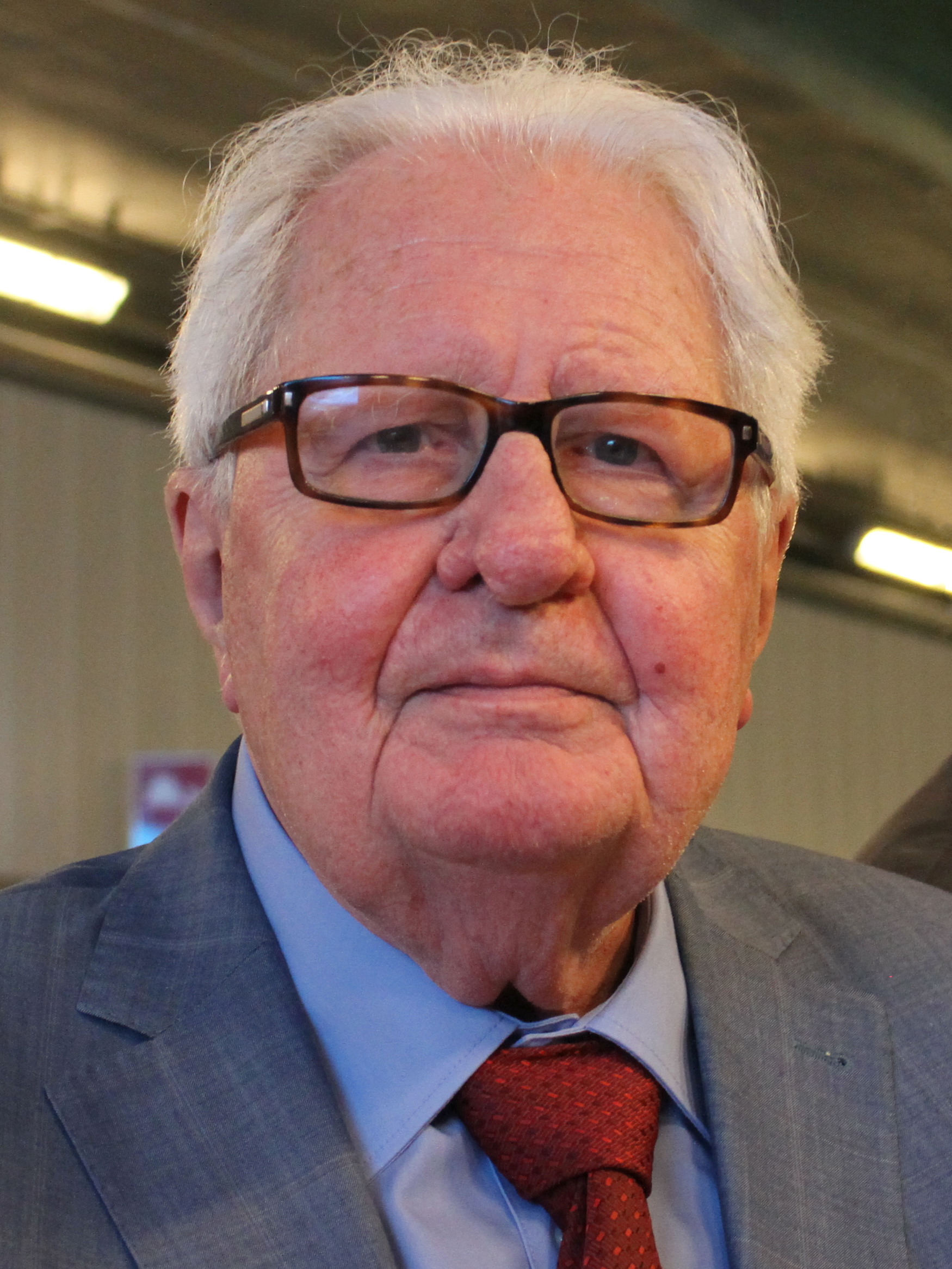

Originally on the right wing of the SPD, Vogel became more and more liberal in his views, for instance, with regard to the legislation about asylum seekers, referendums, or the protection of personal data (Datenschutz) from the state. In 1992, he visited twelve successor states of the former Soviet Union, meeting numerous presidents, ministers, but also leaders of the opposition, of the Orthodox Church, and of Islam, which broadened his outlook.
In his party, Vogel was a mediator between the various wings, and a centre of integration. He was open to seeking co-operation with the other parties. As the chairman of his party's delegates in a parliamentary commission for reviewing the Constitution, he achieved the inclusion of the principles of the protection of the environment and of the promotion of women in society. In his final speech in parliament, he said that he would have liked to see a better representation of East German values in the German Constitution after unification.
Vogel summed up his political attitude: "I am a Social Democrat who would like to reconcile something of a vision with the rather stringent and inexorable knowledge that politics cannot be conducted with clouds of words, but with solid work and craftsmanship."
Vogel was the elder brother of CDU politician Bernhard Vogel. In 1949, he married his first wife, Ilse, and the couple had three children. They were divorced in 1971. He married his second wife, Liselotte, in 1972. They moved to a senior citizen's home in 2006. In 2014, Vogel announced that he had Parkinson's disease which had been diagnosed two years prior. He died in Munich on 26 July 2020 at the age of 94.
References
References
- (26 July 2020). "Kämpfer für Gerechtigkeit". Gießener Allgemeine.
- [[Frankfurter Allgemeine Zeitung]], 23 April 2005, p. 42
- Amend, Christoph. (23 March 2006). ""Hier sind wir die Jugend" (Interview)". [[Die Zeit]].
- Staudinger, Melanie. (2 February 2016). "Gekommen, um zu bleiben". [[Süddeutsche Zeitung]].
- Vogel, Hans-Jochen. (23 July 2020). "Als ich wiederkam, hatte meine Mutter weiße Haare". [[Der Spiegel]].
- "Hans-Jochen Vogel erinnert sich".
- Bannas, Günter. (26 July 2020). "Ein großer Sozialdemokrat". [[Frankfurter Allgemeine Zeitung]].
- "Dr. Hans-Jochen Vogel".
- Bachmeier, Uli. (26 July 2020). "Er war eine moralische Instanz: Hans-Jochen Vogel gestorben". [[Augsburger Allgemeine]].
- [https://portal.dnb.de/opac.htm?method=showFullRecord¤tResultId=auRef%3D118627414%26any¤tPosition=48 Die Amtskette] [[German National Library]]
- (26 July 2020). "Germany: Ex-SPD leader Hans-Jochen Vogel dies".
- Jordan, Maria. (1 June 2018). "Appell für neue Berliner Linie".
- "Nach Tschernobyl ist nichts mehr so, wie es vorher war".
- Rhein-Neckar-Zeitung, Heidelberg, 3 February 2011, p. 20
- Stiftung Deutsches Historisches Museum. "LeMO Biografie: Hans-Jochen Vogel".
- (10 June 1986). "Großkreuz". [[Bundesanzeiger]].
- (27 July 2020). "Ein überzeugter Demokrat". Jüdische Allgemeine.
- Rudolph, Hermann. (26 July 2020). "Ein Meister der Pflicht". [[Der Tagesspiegel]].
- Sturm, Daniel Friedrich. (26 July 2020). "Er setzte gewohnte Maßstäbe außer Kraft". [[Die Welt]].
- Schmidt-Häuer, Christian. (3 April 1992). "Kasachstan, Belarus und die Ukraine haben noch nicht über ihr Arsenal entschieden". [[Die Zeit]].
- Schmidt-Häuer, Christian. (20 March 1992). "Selbst die ewige Flamme ist erloschen". [[Die Zeit]].
- Hofmann, Gunter. (19 February 1993). "Eine Chance wird vertan". [[Die Zeit]].
- Kaiser, Carl-Christian. (8 July 1994). "Ein Mann mit System". [[Die Zeit]].
- [[Die Zeit]], 27 March 1987
- (27 November 2014). "An Parkinson erkrankt. Ex-SPD-Chef Vogel: 'Habe Zittern noch unter Kontrolle'". [[Focus (German magazine).
- (26 July 2020). "Hans-Jochen Vogel: Früherer SPD-Chef gestorben". [[Hamburger Abendblatt]].
This article was imported from Wikipedia and is available under the Creative Commons Attribution-ShareAlike 4.0 License. Content has been adapted to SurfDoc format. Original contributors can be found on the article history page.
Ask Mako anything about Hans-Jochen Vogel — get instant answers, deeper analysis, and related topics.
Research with MakoFree with your Surf account
Create a free account to save articles, ask Mako questions, and organize your research.
Sign up freeThis content may have been generated or modified by AI. CloudSurf Software LLC is not responsible for the accuracy, completeness, or reliability of AI-generated content. Always verify important information from primary sources.
Report