From Surf Wiki (app.surf) — the open knowledge base
Hangul Jamo (Unicode block)
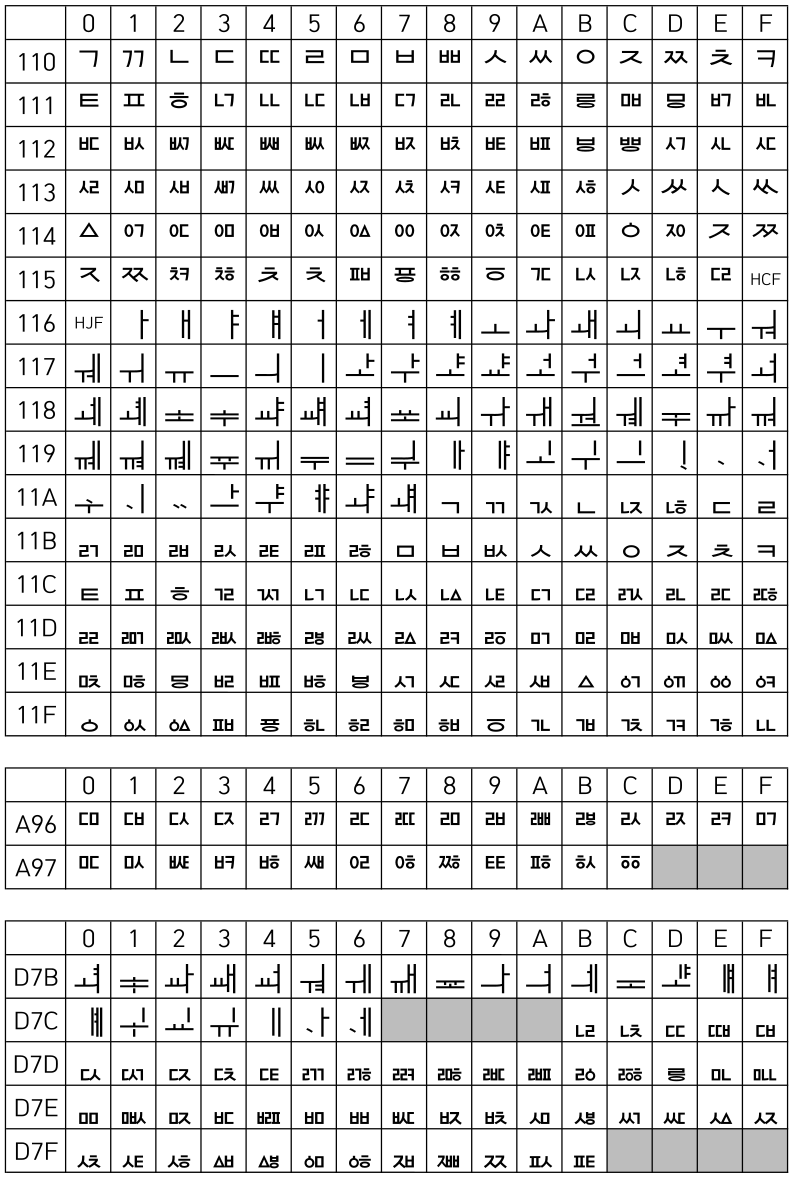
| Field | Value |
|---|---|
| blockname | Hangul Jamo |
| rangestart | 1100 |
| rangeend | 11FF |
| script1 | Hangul |
| alphabets | Hangul |
| 1_1 | 240 |
| 5_2 | 16 |
| note |
Hangul Jamo (, ) is a Unicode block containing positional (choseong, jungseong, and jongseong) forms of the ~250 Hangul consonant and vowel clusters (ko). While the Hangul Syllables Unicode block contains precomposed syllables used in standard modern Korean, the Hangul Jamo block can be used to compose arbitrary syllables dynamically, including those not included in the Hangul Syllables block.
Block
History
The following Unicode-related documents record the purpose and process of defining specific characters in the Hangul Jamo block:
References
References
- "Unicode character database". The Unicode Standard.
- "Enumerated Versions of The Unicode Standard". The Unicode Standard.
- {{Cite encyclopedia. 강신항. link. [[Academy of Korean Studies]]
- Proposed code points and characters names may differ from final code points and names
This article was imported from Wikipedia and is available under the Creative Commons Attribution-ShareAlike 4.0 License. Content has been adapted to SurfDoc format. Original contributors can be found on the article history page.
Ask Mako anything about Hangul Jamo (Unicode block) — get instant answers, deeper analysis, and related topics.
Research with MakoFree with your Surf account
Create a free account to save articles, ask Mako questions, and organize your research.
Sign up freeThis content may have been generated or modified by AI. CloudSurf Software LLC is not responsible for the accuracy, completeness, or reliability of AI-generated content. Always verify important information from primary sources.
Report