From Surf Wiki (app.surf) — the open knowledge base
Hanafuda
Japanese playing cards

Japanese playing cards
ja () are a type of Japanese playing cards. They are typically smaller than Western playing cards, only 5.4 by, but thicker and stiffer. On the face of each card is a depiction of plants, , animals, birds, or man-made objects. One single card depicts a human. The back side is usually plain, without a pattern or design of any kind, and traditionally colored either red or black. ja are used to play a variety of games including ja and ja.
Outside Japan
In Korea, ja are known as ko (, Hanja: ) and made of plastic with a textured back side. The most popular game is Go-stop (), commonly played during special holidays such as Lunar New Year and ko ().
In Hawaii, ja is used to play Sakura. ja is also played in Micronesia, where it is known as pau and is used to play a four-person game, which is often played in partnerships.
History
Main article: Karuta
Playing cards were introduced to Japan by the Portuguese in the mid-16th century. The Portuguese deck consisted of 48 cards, with four suits divided into 12 ranks. The first Japanese-made decks made during the Tenshō period (1573–1592) mimicked Portuguese decks and are referred to as Tenshō Karuta. The main game was a trick-taking game intermediate in evolution between Triunfo and Ombre. After Japan closed off all contact with the Western world in 1633, foreign playing cards were banned.

In 1648, ja were banned by the Tokugawa shogunate. During prohibition, gambling with cards remained highly popular which led to disguised card designs. Each time gambling with a card deck of a particular design became too popular, the government banned it, which then prompted the creation of a new design. This cat-and-mouse game between the government and rebellious gamblers resulted in the creation of increasingly abstract and minimalist regional patterns (地方札). These designs were initially called Yomi Karuta after the popular Poch-like game of Yomi which was known by the 1680s.
Through the Meiwa, An'ei, and Tenmei eras (roughly 1764–1789), a game called Mekuri took the place of Yomi. It became so popular that Yomi Karuta was renamed Mekuri Karuta. Mechanically, Mekuri is similar to Chinese fishing games. Cards became so commonly used for gambling that they were banned in 1791, during the Kansei era. On the other hand, Uta-garuta such as Hyakunin Isshu were officially permitted as being educationally beneficial. So as a loophole to the ban, early hanafuda were made to have old poems on some of the cards, disguising them as Uta-garuta. Remnants of this can be seen via the tanzaku-ranked cards.
The earliest known reference to ja (a previous version of ja) is from 1816 when it was recorded as a banned gambling tool. The earliest decks contained between 12, 20, and even 32 suits, each with one high value card, one tanzaku card, and two low-value cards.
As ja modernized into ja, it standardized at 12 months (suits) with four rank-like categories. The majority of ja games are descended from Mekuri although Yomi adaptations for the flower cards survived until the 20th century. Though they can still be used for gambling, its structure and design is less convenient than other decks such as Kabufuda. In the Meiji period, playing cards became tolerated by the authorities.
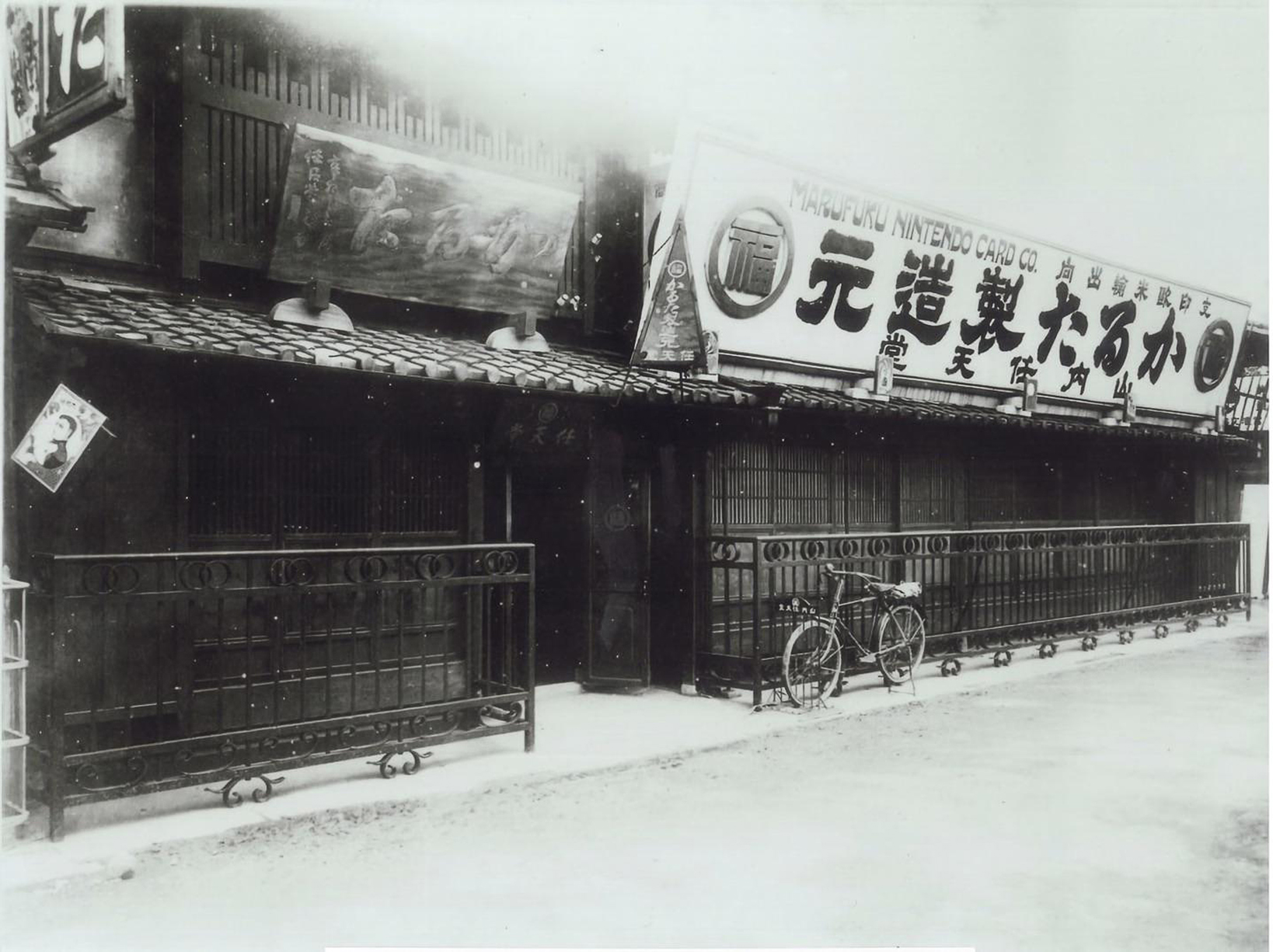
In 1889, Fusajiro Yamauchi founded Nintendo for the purposes of producing and selling hand-crafted ja. Nintendo has focused on video games since the 1970s but continues to produce cards in Japan, including themed sets based on Mario, Pokémon, and Kirby. The Koi-Koi game played with ja is included in Nintendo's own Clubhouse Games (2006) for the Nintendo DS, and Clubhouse Games: 51 Worldwide Classics (2020) for the Nintendo Switch.
Though modern Japanese hanafuda is primarily made today by either of the long-standing Oishi Tengudo (1800) or Nintendo (1889), dozens of others have manufactured hanafuda, such as Angel, Tamura Shogundo, Matsui Tengudo, Ace, Maruē, and many more.

Hanafuda were likely introduced to Korea during the late 1890s and to Hawaii in the early 1900s. Since then, companies and individuals in Korea and Hawaii have produced their own hanafuda, sometimes adapting the original Japanese imagery to fit either culture. Also made for western audiences are decks which fuse hanafuda with Toranpu (トランプ, "Trumps" a.k.a. the standard 52-card deck). These decks have indices on all their cards, and introduce a 13th suit which varies considerably by manufacturer (jokers, flowers, objects from Japanese imagery, left blank or used as a "snow" suit, left as western Kings, etc.).
Cards
There are 48 cards total, divided into twelve suits, representing months of the year. Each suit is designated by a flower and has four cards. An extra blank card may be included to serve as a replacement. In Korean hwatu decks, several joker cards (조커패) award various bonuses.
The standard categorizations and point values for each card are as follows. Note that some games change the point values or categorizations of the cards. For example, in the game , all of the November cards count as kasu, and in the game Sakura, the values of the cards are different.
| Month/suit | ||||||||||||||||||
|---|---|---|---|---|---|---|---|---|---|---|---|---|---|---|---|---|---|---|
| Flower | ja | |||||||||||||||||
| (20 points) | ja | |||||||||||||||||
| (10 points) | ja | |||||||||||||||||
| (5 points) | ja | |||||||||||||||||
| (1 point) | January | |||||||||||||||||
| Pine | February | |||||||||||||||||
| Plum blossom | March | |||||||||||||||||
| Cherry blossom | April | |||||||||||||||||
| Wisteria | May | |||||||||||||||||
| Water iris | June | |||||||||||||||||
| Peony | July | |||||||||||||||||
| Bush clover | August | |||||||||||||||||
| Susuki grass | September | |||||||||||||||||
| Chrysanthemum | October | |||||||||||||||||
| Maple | November | |||||||||||||||||
| Willow | December | |||||||||||||||||
| Paulownia | ||||||||||||||||||
| Crane and Sun | Poetry tanzaku | 2 cards | ||||||||||||||||
| Bush warbler | Poetry tanzaku | 2 cards | ||||||||||||||||
| Curtain | Poetry tanzaku | 2 cards | ||||||||||||||||
| Lesser cuckoo | Plain tanzaku | 2 cards | ||||||||||||||||
| Eight-plank bridge | Plain tanzaku | 2 cards | ||||||||||||||||
| Butterflies | Blue tanzaku | 2 cards | ||||||||||||||||
| Boar | Plain tanzaku | 2 cards | ||||||||||||||||
| Full moon | Geese | 2 cards | ||||||||||||||||
| Sake cup | Blue tanzaku | 2 cards | ||||||||||||||||
| Sika deer | Blue tanzaku | 2 cards | ||||||||||||||||
| {{ubl | Ono no Michikaze | or Rain Man | or figure with umbrella}} | Barn swallow | Plain tanzaku | Lightning | 1 card | |||||||||||
| Hōō | 3 cards |
Text significance
A few cards in hanafuda contain Japanese text. In addition to the examples below, the December kasu cards typically display the manufacturer's name and marks, similar to the Ace of spades in western playing cards.
| Cards | Description |
|---|---|
| {{nihongo | |
| {{nihongo | |
| {{nihongo |
Edo-period hanafuda frequently had poems on them in order to disguise themselves as uta-garuta (poem playing cards) with illustrations. This tradition continued on some cards produced after the ban on playing cards was lifted, but it is now rare. Cards that have lines of poetry on them are usually the less ornate kasu cards.
Cards made early after the end of the ban often had the name of the corresponding month on the tanzaku cards, and sometimes numbers on all the cards. This made it easier for new players to play games that require knowing what suit is associated with what number, such as Yomi-derived games and kabufuda games.
Korean
In Korean hwatu decks, the writing on the tanzaku cards is replaced with Korean text naming the type of card it is. Similar text is usually present on the blue tanzaku cards as well. In addition to the examples below, the manufacturer's name and marks are often prominently present on the various joker cards, and the manufacturer's logo is typically featured on the full moon card.
| Cards | Description |
|---|---|
| hongdan (), a calque of Japanese {{nihongo | |
| cheongdan (), a calque of Japanese {{nihongo | |
| su (cursive form of 壽 or 寿; "long life") |
Games
Mekuri-derived games:
- Koi-Koi
- Sakura
- Go-Stop
- Mushi
- Hachi
-
- Sudaoshi
- Tensho
Yomi-derived games:
- Isuri
Gabo Japgi/Kabufuda-derived games:
Unicode
In Unicode, a symbol to represent ja is available at in the Miscellaneous Symbols and Pictographs block. This character is typically rendered as the Full Moon with Red Sky card. It was added as part of Unicode 6.0 in 2010 for compatibility with a KDDI emoji character, and was added to Unicode Emoji 1.0 in 2015.
In popular culture
Nintendo's Clubhouse Games and Clubhouse Games: 51 Worldwide Classics feature hanafuda and Koi-Koi. Mario Kart Tour includes hanafuda-themed gliders. Other video games which feature Koi-Koi include the Yakuza series and Sakura Wars. Hanafuda and sets of yaku are featured in fighting game series Samurai Shodown.
In the 2009 anime film Summer Wars, characters play Koi-Koi, a popular hanafuda game. In Naruto, three characters (Yamanaka Ino, Nara Shikamaru, and Akimichi Choji) form a group known as "Ino-Shika-Cho", a card combination found in several hanafuda games. In an anime-only episode of Dragon Ball, there is a boar-deer-butterfly hybrid creature called the InoShikaCho. In Demon Slayer, the main character, Tanjiro Kamado, has a pair of earrings that resemble the sun hikari.
In the popular trading card game Yu-Gi-Oh!, there is an archetype known as "Flower Cardian" with hanafuda motifs for various cards.
Notes
References
References
- "Games played with Flower Cards".
- Pakarnian, John, "Game Boy: Glossary of Japanese Gambling Games", ''[[Metropolis (free magazine). Metropolis]]'', January 22, 2010, p. 15.
- "Hanafuda {{!}} cards".
- (April 13, 2018). "映画「ちはやふる」の隠れた聖地!京都・大石天狗堂".
- "The Sloperama Hanafuda/Go-Stop Zone".
- (2016-06-17). "[한국이 모르는 일본] [4] 화투의 탄생".
- (2014-10-30). "Encyclopedia of Korean Seasonal Customs: Encyclopedia of Korean Folklore and Traditional Culture Vol. 1". The National Folk Museum of Korea (South Korea) 길잡이미디어.
- (2013-09-17). "⑧추석에 빠질 수 없는 '국민놀이' 화투의 비밀".
- (2012-02-05). "Hanafuda - Hawaii style".
- "Hanahuda".
- Depaulis, Thierry (2009). "Playing the Game: Iberian Triumphs Worldwide". ''[[The Playing-Card]]''. Vol 38-2, p. 134–137.
- Harris, Blake J., [[Console Wars: Sega, Nintendo, and the Battle that Defined a Generation]], It Books, 2014-May-13. {{ISBN. 978-0062276698. "Chapter 5"
- (1973). "The Dragons of Portugal". Sanford.
- Kuromiya Kimihiko. (2005). "Kakkuri: The Last Yomi Game of Japan". ''[[The Playing-Card]]'', Vol 33-4. p. 232–235.
- (1975). "Hachi-Hachi". [[The Playing-Card]].
- "江戸時代~昭和時代 伝統の花札一覧 - 日本かるた文化館".
- Ashcraft, Brian. (March 30, 2022). "The Traditional Beauty Of Nintendo's Playing Cards".
- (2015-10-21). "Nintendo To Release Mario-Themed Japanese Playing Cards".
- (October 24, 2013). "Koi-koi! Nintendo's Pokemon hanafuda cards hitting Japan".
- (December 20, 2019). "「星のカービィ」が花札に オリジナル役も収録".
- (May 25, 2020). "Nintendo Shares A Handy Infographic Featuring All 51 Worldwide Classic Clubhouse Games".
- (1969). "Japanese Hanafuda Brands".
- (2004). "Tong Asia ŭi nori". Minsogwŏn.
- (1991). "Modern Korean cards - a Japanese perspective". [[The Playing-Card]].
- (November 2, 2018). "Hanafuda: Japanese "Flower Cards" Designed to Circumvent Ban on Western Decks".
- "Go-Stop".
- 江橋崇. (2014). "花札". 法政大学出版局.
- (2013-08-13). "花札の謎シリーズ! 赤短『あかよろし?』". 京都大石天狗堂.
- "変体がな". Yomiuri Telecasting Corporation.
- "🎴 U+1F3B4 FLOWER PLAYING CARDS - Unicode Explorer".
- "🎴 Flower Playing Cards Emoji".
- "Emoji Symbols: Background Data—Background data for Proposal for Encoding Emoji Symbols".
- Provo, Frank. (2006-10-13). "Clubhouse Games Review".
- Vincent, Brittany. (2020-07-10). "Clubhouse Games: 51 Worldwide Classics offers a perfectly punchy set of minigames".
- Bowen, Thomas. (2020-11-09). "Every Mini Game In Yakuza: Like A Dragon".
- Flores, Sky. (2020-07-22). "How to Unlock Koi-Koi Wars Characters in Sakura Wars".
This article was imported from Wikipedia and is available under the Creative Commons Attribution-ShareAlike 4.0 License. Content has been adapted to SurfDoc format. Original contributors can be found on the article history page.
Ask Mako anything about Hanafuda — get instant answers, deeper analysis, and related topics.
Research with MakoFree with your Surf account
Create a free account to save articles, ask Mako questions, and organize your research.
Sign up freeThis content may have been generated or modified by AI. CloudSurf Software LLC is not responsible for the accuracy, completeness, or reliability of AI-generated content. Always verify important information from primary sources.
Report