From Surf Wiki (app.surf) — the open knowledge base
Hamburg America Line
German ocean shipping line (1847–1970)
German ocean shipping line (1847–1970)
| Field | Value |
|---|---|
| name | Hamburg America Line |
| image | File:HAPAG logo.png |
| image_caption | HAPAG flag |
| native_name | Hamburg-Amerikanische Paketfahrt-Aktien-Gesellschaft |
| industry | shipping |
| fate | Merged with Norddeutscher Lloyd |
| successor | Hapag-Lloyd |
| foundation | 1847 |
| founder | Albert Ballin (Director General), Adolph Godeffroy, Ferdinand Laeisz, Carl Woermann, and August Bolten |
| defunct | 1 September 1970 |
| location_city | Hamburg |
| location_country | Germany |
| aum | |
| homepage |
The Hamburg-Amerikanische Packetfahrt-Actien-Gesellschaft (HAPAG), known in English as the Hamburg America Line, was a transatlantic shipping enterprise established in Hamburg, in 1847. Among those involved in its development were prominent German citizens such as Albert Ballin (director general), Adolph Godeffroy, Ferdinand Laeisz, Carl Woermann, August Bolten, and others, and its main financial backers were Berenberg Bank and H. J. Merck & Co. It soon developed into the largest German, and at times the world's largest, shipping company, serving the market created by German immigration to the United States and later, immigration from Eastern Europe. On 1 September 1970, after 123 years of independent existence, HAPAG merged with the Bremen-based North German Lloyd to form Hapag-Lloyd AG, today an international shipping and container transportation company.
History
Ports served

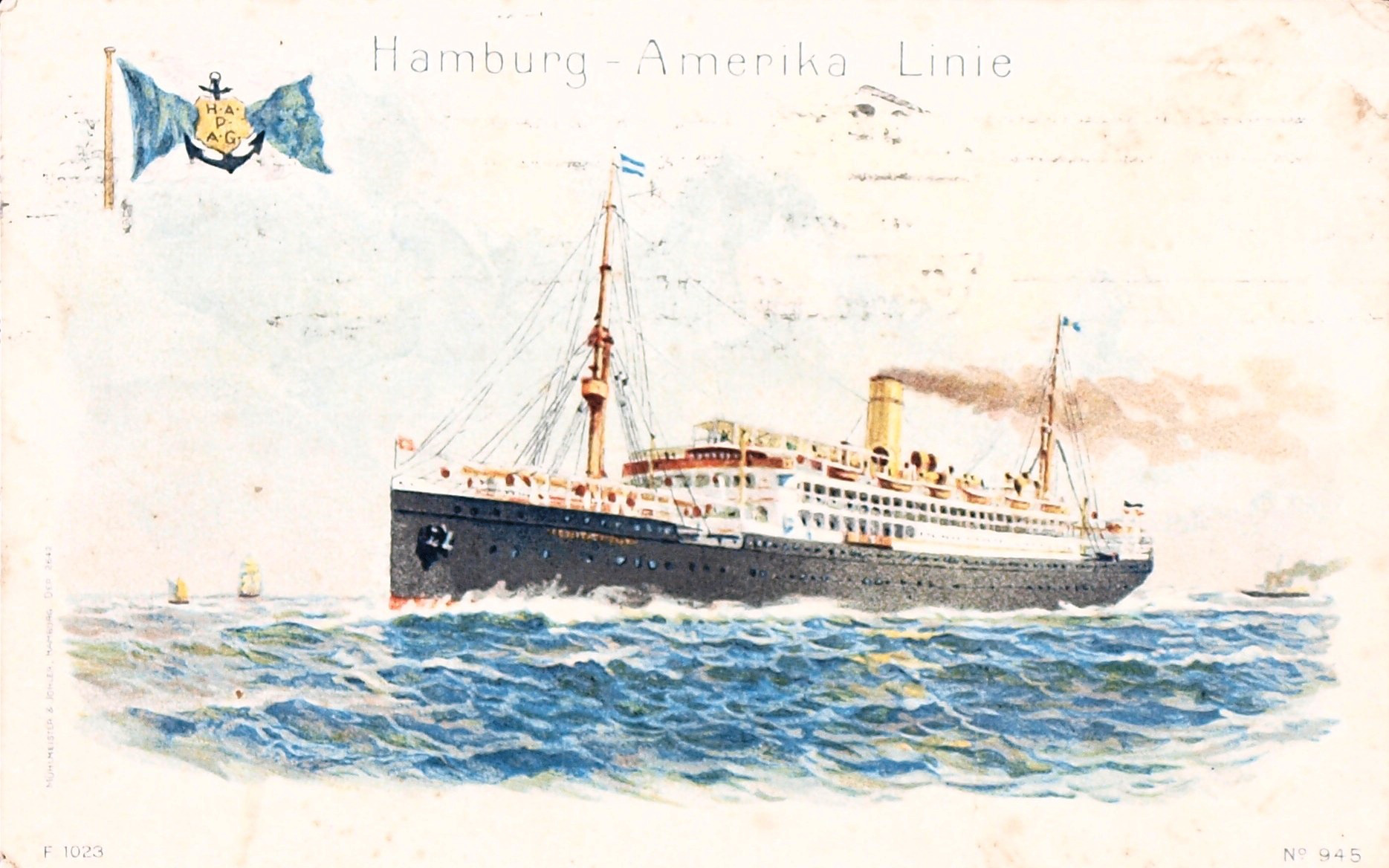

In the early years, the Hamburg America Line exclusively connected European ports with North American ports, such as Hoboken, New Jersey, or New Orleans, Louisiana. With time, however, the company established lines to all continents. The company built a large ocean liner terminal at Cuxhaven, Germany, in 1900. Connected directly to Hamburg by a dedicated railway line and station, the HAPAG Terminal at Cuxhaven served as the major departure point for German and European immigrants to North America until 1969 when ocean liner travel ceased. Today it serves as a museum and cruise ship terminal.

Atlas Service
The Atlas Service sailed from New York to Jamaica, Haiti, Colombia, Central America. The service was described as a way to "escape the rigors of Northern winters" through taking a Caribbean cruise and was promoted to tourists. The ships Altai, Sarnia, Sibiria, Alleghany, Alene, Adirondack, Valdivia, and Graecia provided this service in 1906.
Notable journeys
In 1858, its liner sank, killing 449 people. In 1891, the cruise of the Augusta Victoria in the Mediterranean and the Near East from 22 January to 22 March, with 241 passengers including Albert Ballin and wife, is often stated to have been the first passenger cruise. Christian Wilhelm Allers published an illustrated account of it as "Bakschisch". In 1897, its steamer Arcadia was wrecked on the rocks off Newfoundland. In 1900, 1901 and 1903 its liner won the Blue Riband taking the prize from the Kaiser Wilhelm der Grosse. In 1906 Prinzessin Victoria Luise ran aground off the coast of Jamaica. No people died by the grounding; however, the ship's captain committed suicide after getting all the passengers safely off the ship. In 1912, its liner SS Amerika was the first ship to warn of icebergs.
HAPAG's general director, Albert Ballin, believed that safety, size, comfort and luxury would always win out over speed. Thus he conceived the three largest liners yet to be built, named , and Bismarck.
First World War
The Imperator and the Vaterland were briefly in service before the First World War. In 1914, the Vaterland was caught in port at Hoboken, New Jersey at the outbreak of World War I and interned by the United States. She was seized, renamed Leviathan after the declaration of war on Germany in 1917, and served for the duration and beyond as a troopship. In 1917, its liner Allemannia was "torpedoed by German submarine near Alicante"; two people were lost.
Postwar reparations
After the war, the Vaterland/Leviathan was retained by the Americans as war reparations. In 1919 Vaterlands sister ships – Imperator and the unfinished Bismarck – were handed over to the allies as war reparations to Britain. They were sold to the Cunard Line and White Star Line respectively, and renamed Berengaria and Majestic. A ship chain in Mountain Lakes, New Jersey is identified by the historic society as belonging to either the Vaterland or Imperator. It was acquired in 1921, likely during refurbishments, and now lines a portion of the Boulevard.
In 1939, the HAPAG liner was unable to find a port in Cuba, the United States, or Canada willing to accept the more than 950 Jewish refugees on board and had to return to Europe. On 9 April 1940, when German warships attacked Kristiansand, Norway, during Operation Weserübung (the opening assault of the Norwegian Campaign), the HAPAG freighter sailed into the crossfire between the warships and Norwegian coastal artillery. She was holed and sunk, and her crew briefly became prisoners of war.
According to a 1940 US intelligence report compiled by the US War Department, Louis Classing, general manager of the Hamburg-America in Havana was identified as a "well-known Nazi agent" who "imported moving pictures for propaganda purposes to be shown at local theaters". In 1941 it was further reported that Luis Classing fulfilled the "finances" position in the "probable Nazi organization in Cuba".
Later years
The Hamburg America Line lost almost the entirety of its fleet twice, as a result of World Wars I and II. In the post-war years, HAPAG rebuilt its fleet and focused on cargo container transport. In 1970, the company merged with its longstanding rival, Norddeutscher Lloyd of Bremen, to establish the present-day company Hapag-Lloyd. This merger formed one of the world's biggest container shipping companies. In 2008, Hapag-Lloyd was acquired by the City of Hamburg and a group of private investors, the Albert Ballin Consortium.
Fleet list
| Name(s) | Entered HAPAG service | Notes | ||
|---|---|---|---|---|
| {{SS | Austria | 2}} | 1858 | |
| 1858 | Sold to Henry Flinn, 1877. Scrapped 1894 as Mentana. | |||
| Westphalia | 1868 | Sold to British owners in 1887, sold again to Italian owners in 1888, scrapped at Genoa in 1901 as "Sud America". | ||
| 1869 | Sold 1887. Wrecked 1899 and subsequently scrapped. | |||
| 1874 | Sold to Schiaffino, Nyer & Siges and renamed Quatre Amis, 1896. Scrapped 1898. | |||
| 1889 | Rebuilt 1897. Sold to Imperial Russian Navy, 1904, and converted into auxiliary cruiser Kuban. Scrapped 1907 | |||
| 1889 | Sold to Spanish Navy, 1898, and converted to auxiliary cruiser Rapido. Sold back to HAPAG and reverted to Columbia, 1899. Sold to Imperial Russian Navy as auxiliary cruiser Terek, 1904. Scrapped 1907. | |||
| Scandia | 1889 | Sold to US Army Quartermaster Department, 1898, and renamed USAT Warren. Scrapped 1929. | ||
| 1890 | Sold to Spanish Navy, 1898, and renamed Patriota. Scrapped as Compagnie Générale Transatlantique's L'Aquitaine, 1906. | |||
| 1891 | Sold to Imperial Russian Navy, 1904, and converted into auxiliary cruiser Don. Scrapped as Regia Marina's San Giusto, 1924 | |||
| 1891 | Sold to Housatonic Steamship Corporation and renamed Housatonic, 1915. Torpedoed and sunk 1917. | |||
| {{SS | Sicilia | 2}} / Stubbenhuk | 1892 | |
| 1894 | Sold to British Transport Company and renamed Minnewaska, 1897. Scrapped as USAT Thomas, 1929. | |||
| Ceres / Suevia | 1896 | Renamed Suevia, 1898. Seized by United States Shipping Board, 1917, and renamed Wachusett. Scrapped 1924. | ||
| 1896 | Built 1886 as Tijuca for Hamburg Süd. Bought by HAPAG and renamed Valdivia, 1896. Sold to Peter R Hinsch of Hamburg and renamed Tom G Corpi. Scrapped as Flandre, 1927. | |||
| 1897 | Seized by United States Shipping Board, 1917, and renamed Nansemond. Scrapped 1924. | |||
| 1897 | Seized by United States Shipping Board, 1917. Sold to California Steamship Company, 1923. Scrapped 1927 | |||
| 1898 | Surrendered to US government, 1919, then transferred to British government. Scrapped 1921. | |||
| 1898 | Sold to Unione Austriaca di Navigazione and renamed Canada, 1913. Returned to HAPAG and reverted to Bulgaria later that same year. Seized by United States Shipping Board, 1917, and renamed USAT Hercules and later USAT Philippines. Scrapped 1924. | |||
| Titania | 1898 | Built 1879 for Adamson & Ronaldson as Mercedes. Bought by HAPAG from Hamburg Pacific Dampfschiffs Linie. Sold 1898. Sunk as USS Marcellus, 1910. | ||
| {{SS | Sibiria | 2}} | 1898 | |
| {{SS | Graf Waldersee | 2}} | 1899 | |
| 1899 | Surrendered to US government, 1919. Transferred to Britain later that year, and scrapped 1921. | |||
| 1899 | Chartered by American Red Cross and renamed Red Cross, 1914. Seized by United States Shipping Board, 1917, and later renamed Powhatan. Scrapped as Dollar Line's President Fillmore, 1928. | |||
| Saxonia | 1899 | Seized by United States Shipping Board, 1917, and renamed Savannah. Scrapped as Orbis, 1954. | ||
| {{SS | Kaiser Friedrich | 2}} | 1899 | |
| / Viktoria Luise / Hansa | 1900 | Renamed Viktoria Luise, 1910. Rebuilt and renamed Hansa, 1921. Scrapped 1925. | ||
| {{SS | Kiautschou | 2}} | 1900 | |
| 1900 | Interned in Chile in World War I. Wrecked 1921. | |||
| Prinzessin Victoria Luise | 1901 | Struck reef and sank, 1906. | ||
| 1901 | Built 1893 for A. C. de Freitas & Co. Sold to HAPAG, 1901. Sold to Gätjens & Jarke, 1903. Sunk 1906. | |||
| Arabia | 1901 | Launched as Liddesdale for Mackil R. & Co., 1901. Purchased by HAPAG during construction. Seized by the British, 1919. Wrecked as Andrios, 1926. | ||
| {{SS | Moltke | 2}} | 1902 | |
| Prinz Eitel Friedrich | 1902 | Seized by United States Shipping Board, 1917, and renamed Otsego. Hulked or scrapped as Far Eastern Steamship Company's Dolinsk, 1955. | ||
| {{SS | Blücher | 2}} | 1902 | |
| 1902 | Struck reef and sank, 1907. | |||
| Prinz Sigismund | 1903 | Seized by United States Shipping Board, 1917, and renamed General W.C. Gorgas. Scrapped as Mikhail Lomonosov, 1958. | ||
| {{SS | Prinz Adalbert | 2}} | 1903 | |
| {{SS | Prinz August Wilhelm | 2}} | 1903 | |
| {{SS | Prinz Oskar | 2}} | 1903 | |
| Prinz Joachim | 1903 | Seized by United States Shipping Board, 1917, and renamed Moccasin. | ||
| Odenwald | 1904 | Seized by United States Shipping Board, 1917, and renamed Newport News. Scrapped 1925. | ||
| Rhaetia | 1905 | Seized by United States Shipping Board, 1917, and renamed Black Hawk and later Black Arrow. Scrapped 1924. | ||
| / Friedrichsruh | 1905 | Renamed Friedrichsruh, 1914. Surrendered to Britain, 1919. Sailed under French flag as Amboise. Scrapped 1935. | ||
| 1905 | Sold to Ernst Russ Reederei, 1935. Sunk by air attack, 1945. | |||
| Präsident | 1905 | Seized by United States Shipping Board, 1917, and renamed USS Kittery. Scrapped 1933 | ||
| Amerika | 1905 | Seized by United States Shipping Board, 1917, and subsequently renamed America, then ceded to United States Mail Steamship Company and later United States Lines. Scrapped as USAT Edmund B. Alexander, 1957. | ||
| 1906 | Seized by British government, 1915, and renamed HMS Princess. Paid off 1917. | |||
| {{SS | Kaiserin Auguste Victoria | 2}} | 1906 | |
| 1907 | Built 1896 for Sloman Line. Chartered from Sloman in 1903 before being bought outright by HAPAG in 1907. Seized by United States Shipping Board, 1917, and renamed Ascutney. Scrapped 1924. | |||
| {{SS | President Lincoln | 2}} | 1907 | |
| President Grant | 1907 | Built 1903 as Servian for Wilson & Furness-Leyland Line. Purchased by HAPAG, 1907. Seized by United States Shipping Board, 1917. Renamed Republic, 1920. Transferred to United States Lines, 1924. Scrapped as USAT Republic, 1952. | ||
| Konig Wilhelm II | 1907 | Seized by United States Shipping Board, 1917, and renamed USS Madawaska. Scrapped as USS U.S. Grant, 1948. | ||
| {{SS | Ypiranga | 2}} | 1908 | |
| {{SS | Corcovado | 2}} | 1908 | |
| Westerwald | 1908 | Seized by Portugal, 1916, and renamed Lima. Scrapped in 1969. | ||
| Spreewald | 1908 | Captured by the Royal Navy, 1914. Renamed Lucia. Scrapped in 1951. | ||
| {{SS | Frankenwald | 2}} | 1908 | |
| {{SS | Cleveland | 2}} | 1909 | |
| {{SS | Cincinnati | 2}} | 1909 | |
| Grunewald | 1912 | Seized by United States Shipping Board, 1917, and renamed General G. W. Goethals. Sold to Panama Railway Company, 1920. Bought by Munson Steamship Line, 1926, and renamed Munorleans. Scrapped 1936. | ||
| Wasgenwald / Grunewald | 1912 | Sold to Kerr Steamship Company and renamed Shoshone, 1917. Later sailed as USS Shoshone for US Navy and Manoa for Canada Steamship Lines. Bought back by HAPAG and renamed Grunewald, 1926. Scrapped 1933. | ||
| Prussia | 1912 | Seized by Brazil in 1917 and renamed Cabedello. Missing at sea, 1942. | ||
| {{SS | Imperator | 2}} | 1913 | |
| {{SS | Bohemia | 2}} | 1913 | |
| 1913 | Sunk 1914 | |||
| 1914 | Seized by United States Shipping Board, 1917, and renamed Leviathan. Operated by United States Lines. Sold for scrap, 1937. | |||
| {{SS | Vogtland | 2}} | n/a | |
| Rhineland / Friesland | 1920 | Launched as Rhineland and renamed Friesland during fitting out. Ceded to British government, 1920. Transferred to Federal Steamship Navigation Company and renamed Hertford, 1922. Torpedoed and sunk, 1942. | ||
| {{SS | Bismarck | 2}} | n/a | |
| Hagen | 1921 | Seized by South African Government, 1939. Transferred to UK and renamed Empire Success. Scuttled 1948. | ||
| Schwarzwald | 1921 | Sold to H. Vogemann, 1935. Seized by Royal Navy, 1939, and renamed Empire Mariner. Scrapped, 1964 | ||
| {{MV | Spreewald | 2}} / Anubis | 1922 | |
| 1922 | Sold to Kohlen-Import und Poseidon Schiffahrt and renamed Elbing, 1934. Wrecked as Francisco Morazan, 1960. | |||
| {{SS | Ambria | 2}} | 1922 | |
| Cattaro | 1922 | Sold to Bugsier Reederei & Bergungs AG, 1930, and renamed Finkenau. Wrecked as Frontier, 1957. | ||
| / General San Martin | 1922 | Chartered by Hamburg Süd, 1934 before being sold outright to them, 1936. Scrapped as Empire Deben, 1955. | ||
| {{SS | Albert Ballin | 2}} / Hansa | 1923 | |
| 1924 | Sunk by air attack, 1945. Wreck raised and scrapped, 1949. | |||
| Saarland | 1924 | Sold to Japanese Imperial Steamship Co., and renamed Teiyo Maru, 1940. Sunk 1943. | ||
| William O'Swald / Resolute | 1926 | Launched 1915 as HAPAG's William O'Swald. Sold incomplete to Koninklijke Rotterdamsche Lloyd and renamed Brabantia, 1916. Transferred to United American Lines and renamed Resolute, 1922. Re-acquired in merger with HAPAG, 1926. Sold to Italian Line and renamed Lombardia, 1935. Sunk by air raid, 1943, and subsequently scrapped. | ||
| {{SS | Reliance | 2}} / Johann Heinrich Burchard | 1926 | |
| Gera | 1926 | Launched 1923 for German Australian Line. Acquired by HAPAG, 1926. Seized by Britain and renamed Empire Indus. Sunk as Pan Ocean, 1958. | ||
| 1926 | Struck a mine and sunk, 1945. Raised by Soviets and converted to whaler Yuri Dolgoruki, 1950-1960. Scrapped 1977. | |||
| 1927 | Sunk 1945. | |||
| Oceana | 1927 | Built 1913 as Sierra Salvada. Acquired from Società Servizi Marittimi by HAPAG, and renamed Oceana, 1927. Seized by British and renamed Empire Tarne, 1945. Scrapped as Sibir, 1963. | ||
| {{ship | Kulmerland | ship | 2}} | 1928 |
| {{MS | Seattle | 2}} | 1928 | |
| 1928 | Sold to Soviet Union and renamed Khasan, 1940. Captured by Kriegsmarine and reverted to Palatia, 1941. Sunk by air attack, 1942. | |||
| 1929 | Surrendered to Britain and renamed Empire Waveney, 1945. Caught fire, 1946, and subsequently scrapped. | |||
| {{MS | St. Louis | 2}} | 1929 | |
| Kurmark | 1930 | Requisitioned by Kriegsmarine and converted into auxiliary cruiser Orion. Sunk by air raid, 1945. | ||
| Neumark | 1930 | Requisitioned by Kriegsmarine and converted into auxiliary cruiser Widder. Wrecked as Fechenheim, 1955. | ||
| n/a | Launched for HAPAG, 1935, before being sold to Norddeutscher Lloyd before completion. Scrapped as Pan-Islamic Steamship Company's Safina-E-Hujjaj, 1976. | |||
| 1939 | Scuttled 1940. | |||
| Arauca | 1939 | Seized by United States Maritime Commission and contracted to South Atlantic Steamship Company as Sting, 1941. Delivered to US Navy and renamed Saturn, 1942. Scrapped 1972. | ||
| 1939 | Wrecked off Norway, 1940. | |||
| n/a | Launched 1940, then laid up incomplete. Heavily damaged in air raid, 1943, and scrapped by 1948. | |||
| Cuxhaven | 1943 | Seized by United States, 1945. Sunk as Danish-flagged Inger Skou, 1952. | ||
| Millerntor | 1943 | Seized by British, 1945, and renamed Empire Lune. Scrapped as Sapho I, 1970. | ||
| {{SS | Wilhelmshafen | 2}} | 1943 | |
| Homeland | 1951 | Built as Virginian, 1904. Chartered by HAPAG from Home Lines, 1951. Scrapped 1955. |
References
References
- "Hapag Halle Museum Cuxhaven".
- "Atlas Line Service – Hamburg-American Line – 1905". GG Archives.
- (26 May 1897). "The Rescue by Rossmore".
- "Daily Event for December 16".
- "S/S Allemannia (3), Hamburg America Line". Norway-Heritage.
- "Cuba: General Conditions – MID 2056-213 Thru 2056-257 (1 of 2)".
- "Herald and Review from Decatur, Illinois on May 30, 1930".
- "About Us". Hapag-Lloyd AG.

This article was imported from Wikipedia and is available under the Creative Commons Attribution-ShareAlike 4.0 License. Content has been adapted to SurfDoc format. Original contributors can be found on the article history page.
Ask Mako anything about Hamburg America Line — get instant answers, deeper analysis, and related topics.
Research with MakoFree with your Surf account
Create a free account to save articles, ask Mako questions, and organize your research.
Sign up freeThis content may have been generated or modified by AI. CloudSurf Software LLC is not responsible for the accuracy, completeness, or reliability of AI-generated content. Always verify important information from primary sources.
Report