From Surf Wiki (app.surf) — the open knowledge base
Gurjaani
.jpg)
| Field | Value | |
|---|---|---|
| official_name | Gurjaani | |
| native_name | გურჯაანი | |
| native_name_lang | geo | |
| settlement_type | Town | |
| image_skyline | ქალაქი გურჯაანი.jpg | |
| imagesize | 280px | |
| pushpin_map | Georgia#Georgia Kakheti | |
| pushpin_label_position | bottom | |
| pushpin_mapsize | 280 | |
| pushpin_map_caption | Location of Gurjaani | |
| subdivision_type | Country | |
| subdivision_type1 | Region | |
| subdivision_name | Georgia | |
| subdivision_name1 | Kakheti | |
| subdivision_type2 | Municipality | |
| subdivision_name2 | [[File:Flag of Gurjaani Municipality.svg | 24px]] Gurjaani |
| established_title | Town | |
| established_date | 1934 | |
| population_as_of | January 1, 2024 | |
| population_footnotes | ||
| population_total | 7261 | |
| timezone | Georgian Time | |
| utc_offset | +4 | |
| coordinates | ||
| elevation_m | 415 | |
| website | gurjaani.ge |
Gurjaani (გურჯაანი) is a town in Kakheti, a region in eastern Georgia, and the seat of the Gurjaani Municipality. It is located in the Alazani River Plain, at an elevation of 415 m above sea level.
Gurjaani was first recorded as a village in a historical document of the early 16th century. It acquired the status of a town in Soviet Georgia in 1934. As of the 2014 census, Gurjaani had a population of 8,024. The town is the center of the largest wine-making region of Georgia.
Background
Gurjaani is situated in the fertile Alazani Plain, at 415 m above sea level, and 110 km east of Georgia's capital of Tbilisi. It is the center of an important region of viticulture and wine-making. Important landmarks of the town are Akhtala, a historic spa, locally known for its mud bathes, and the early medieval Gurjaani Kvelatsminda Church, the only example of a two-domed design in Georgia. There are also several museums, the largest of which is the Gurjaani Museum of Local Lore and History.
History

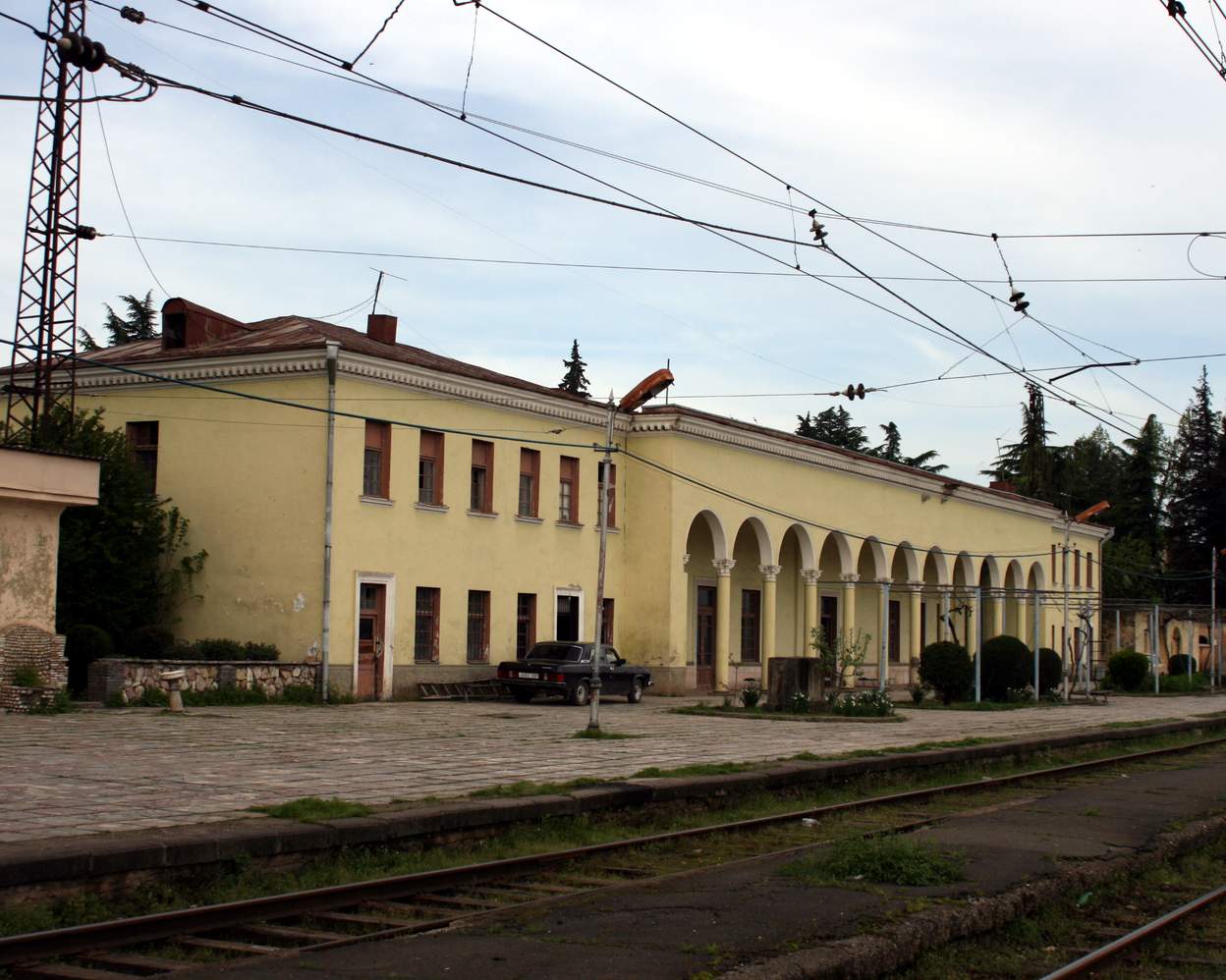
The territory of Gurjaani has not been systematically studied archaeologically. Occasional and incidental finds, such as burials, pottery, and Byzantine coins, suggest it was a home to an established settlement in the early Middle Ages. Gurjaani was first documented as a village in a charter issued in the name of King Alexander I of Kakheti (r. 1476–1511), granting the locale an exemption from taxation. In historical documents, Gurjaani is frequently mentioned together with the toponym of Kakhtubani, which is now one of the town's neighborhoods and home to the Kvelatsminda Church. Gurjaani was in possession of the Andronikashvili noble family. As a result of a series of marauding inroads from the mountains of neighboring Dagestan, Gurjaani had been virtually depopulated by the 1770s.
Gurjaani rose to a larger settlement when a railway line was constructed in Kakheti in 1915. It became a center of the newly created homonymous district—a predecessor of the present-day municipality—in 1930 and became a town in 1934. During Soviet-era industrialization, Gurjaani had wine-making, canning, distilling, brick-making, and mechanical repair plants.
The post-Soviet political and economic crisis took its toll on Gurjaani in the 1990s. The population dwindled, industry declined, and violent crime was on the rise. An armed group with ties to the Mkhedrioni paramilitary organization was implicated in several high-profile murders. The Mkhedrioni itself was in de facto control of the Gurjaani district from 1992 to 1995. Despite political and relative economic stability achieved in the 2000s, Gurjaani still lacks some elements of proper urban infrastructure and services.
Sports
Football Clubs
The football club of the town is Alazani Gurjaani, that play in Regionuli Liga. The club's biggest achievement was made in the 1992–93 season, when it took the third place in the Umaglesi Liga. During that period the team was led by Otar Gabelia. In 2014–15, Alazani finished second in Group East of the third league, one point short of the group leader. In 2020, the club participated in Regionuli Liga tournament.
Stadium
David Kipiani Stadium, named in honour of David Kipiani, is the stadium of Alazani Gurjaani.
Population
As of the 2014 national census, Gurjaani had a population of 8,024, with an ethnic Georgian majority.
| Population | 1989 census | 2002 census | 2014 census | 2023 census | ||||||||
|---|---|---|---|---|---|---|---|---|---|---|---|---|
| Total | title=საქართველოს მოსახლეობის 2002 წლის პირველი ეროვნული საყოველთაო აღწერის შედეგები, ტომი II [Results of the first national census of the population of Georgia in 2002, volume II] | url=http://geostat.ge/cms/site_images/_files/georgian/census/2002/I%20tomi%20-%20saqarTvelos%20mosaxleobis%202002%20wlis%20pirveli%20erovnuli%20sayovelTao%20aRweris%20Sedegebi.pdf | publisher=National Statistics Office of Georgia | access-date=22 October 2016 | language=ka | date=2003 | archive-date=30 August 2012 | archive-url=https://web.archive.org/web/20120830114644/http://geostat.ge/cms/site_images/_files/georgian/census/2002/I%20tomi%20-%20saqarTvelos%20mosaxleobis%202002%20wlis%20pirveli%20erovnuli%20sayovelTao%20aRweris%20Sedegebi.pdf | url-status=dead}} | 10,029 | 8,024 | 7,426 |
People from Gurjaani
- Bela Chekurishvili - poet
- Maka Purtseladze - Woman Grandmaster
Twin towns – sister cities
Gurjaani is twinned with:
- ESP Laguardia, Álava, Basque Autonomous Community
- BLR Haradok, Belarus
- LTU Pakruojis, Lithuania
- POL Piaseczno County, Poland
Notes
References
References
- "Population by regions". National Statistics Office of Georgia.
- (2013). "ქართლის ცხოვრების ტოპოარქეოლოგიური ლექსიკონი [Topoarchaeological dictionary of Kartlis tskhovreba (The history of Georgia)]". Georgian National Museum.
- (27 June 2014). "Georgian former paramilitary detained in Azerbaijan". Democracy & Freedom Watch.
- (2012). "Changing Identities: Armenia, Azerbaijan, Georgia". Heinrich Boell Foundation.
- [http://www.sportall.ge/fexburti/qarthuli-fekhburthi/chempionati/74960-gurjaanis-qalazaniq-udzakhe-akhla-meore-ligis-gundi.html გურჯაანის "ალაზანი" - უძახე ახლა მეორე ლიგის გუნდი!]. sportall.ge, 10-02-2015
- "Alazani in 2014/15". Soccerway.
- (19 September 2001). "David Kipiani". nekropole.info.
- "Population Census 2014: Number of Population by Administrative-Territorial Units and sex". National Statistics Office of Georgia.
- (2003). "საქართველოს მოსახლეობის 2002 წლის პირველი ეროვნული საყოველთაო აღწერის შედეგები, ტომი II [Results of the first national census of the population of Georgia in 2002, volume II]". National Statistics Office of Georgia.
- "Population - National Statistics Office of Georgia".
- "დამეგობრებული ქალაქები". Gurjaani.
This article was imported from Wikipedia and is available under the Creative Commons Attribution-ShareAlike 4.0 License. Content has been adapted to SurfDoc format. Original contributors can be found on the article history page.
Ask Mako anything about Gurjaani — get instant answers, deeper analysis, and related topics.
Research with MakoFree with your Surf account
Create a free account to save articles, ask Mako questions, and organize your research.
Sign up freeThis content may have been generated or modified by AI. CloudSurf Software LLC is not responsible for the accuracy, completeness, or reliability of AI-generated content. Always verify important information from primary sources.
Report