From Surf Wiki (app.surf) — the open knowledge base
Gun (staff)
Long staff weapon used in Chinese martial arts
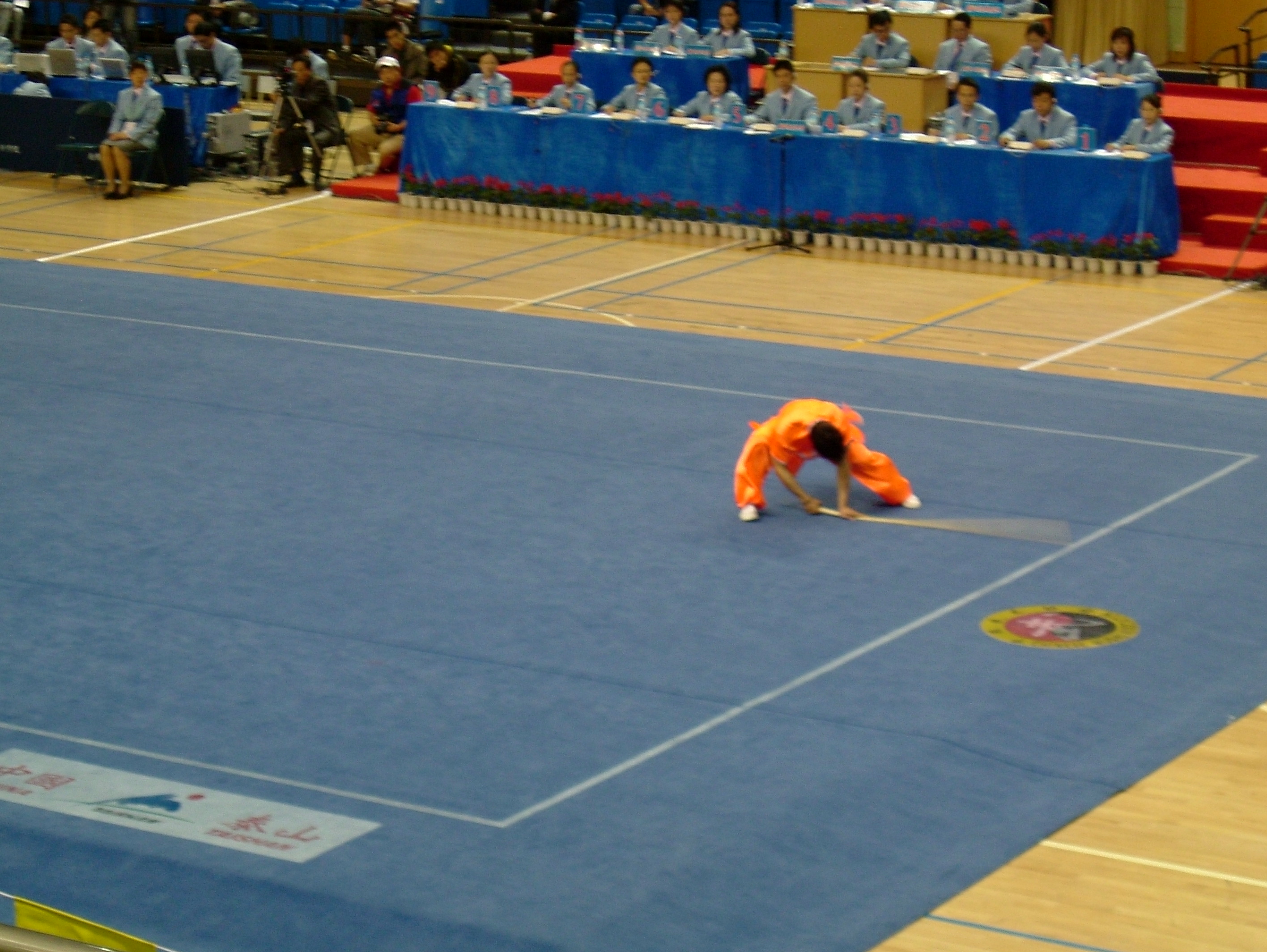
Long staff weapon used in Chinese martial arts
A gun (pronunciation , English approximation: {{IPAc-en|g|u|ə|n
Variants and styles
The gun is fashioned with one thick end as the base and a thinner end near the tip, and is cut to be about the same height as the user or 6 foot. Besides the standard gun, there are also flail-like two section and three section varieties of the staff as well as non-tapered heavier variants. Numerous Chinese martial arts teach the staff as part of their curriculum, including (in English alphabetical order):
- Bagua seven star rod () or Seven Star Stick (Qi Xing Gun), also called the Whip Stick (Bian Gun) or Heart High Stick (Xin Gun) - it is lighter and faster than the Ba Gua Staff, it can be used one-handed or two-handed.
- Bailangan, Northern staff ()
- Nangun, Southern staff ()
- Pigua Zhang's Feng Mo Gun - 'Frenzied Demon Staff' (劈掛拳 瘋魔棍).
- Shaolin Zhui Feng Gun - 'Wind Chaser Staff' (虎勇敢)
- Qún Yáng Gùn, Shepherd staff (This routine is performed with a straight heavy red oak staff)
- Six and a half point pole ()
- Staff of five tigers and goat herds ()
- Taiji staff ()
- Taiji thirteen staff () Bailangan and nangun are frequently found in modern wushu competitions in gunshu and nangun events respectively. The IWUF has created three different standardized routines and an elementary routine for gunshu and two different routines for nangun.
In contemporary wushu
Gunshu refers to the competitive event in modern wushu taolu where athletes utilize a gun in a routine. It was one of the four main weapon events implemented at the 1st World Wushu Championships due to its popularity. Modern staffs are often made from wax wood or rattan, both of which are strong woods, but flexible and light. Some versions may also feature metal or rubber parts, and the current modern staffs for competition are usually made of light carbon fiber. The newer staffs do not break like the wax wood ones and are even lighter.
The IWUF has also created three different standardized routines for competition as well as an elementary routine. The first compulsory routine was created and recorded by Yuan Wenqing in 1989.
Gunshu routines in international competition require certain staff techniques including: Píng Lūn Gùn (Horizontal Cudgel Windmill Wave), Pī Gùn (Cudgel Chop), Yún Gùn (Cudgel Cloud Waving), Bēng Gùn (Cudgel Tilt), Jiǎo Gùn (Cudgel Enveloping), Chuō Gùn (Cudgel Poke), Lì Wǔ Huā Gùn (Vertical Figure 8 with the Cudgel), Shuāng Shǒu Tí Liāo Huā Gùn (Two-handed Vertical Cudgel Uppercut). Only the Píng Lūn Gùn and Lì Wǔ Huā Gùn techniques have deduction content (codes 64 and 65 respectively).
References
References
- "Roi Kinh, quyền Bình Định".
- (9 September 2014). "Côn – binh khí độc đáo của võ cổ truyền Việt Nam".
- (20 March 2015). "Nhiều tiết mục võ thuật đặc sắc tại buổi giao lưu giữa Takhado và Tây Sơn Võ đạo".
- (May 2015). "Các Lò Võ Tây Sơn - Phần 2 - Võ Đường Hồ Ngạnh".
- (30 March 2016). "Weapons Training in Ba Gua Zhang: Part 1".
This article was imported from Wikipedia and is available under the Creative Commons Attribution-ShareAlike 4.0 License. Content has been adapted to SurfDoc format. Original contributors can be found on the article history page.
Ask Mako anything about Gun (staff) — get instant answers, deeper analysis, and related topics.
Research with MakoFree with your Surf account
Create a free account to save articles, ask Mako questions, and organize your research.
Sign up freeThis content may have been generated or modified by AI. CloudSurf Software LLC is not responsible for the accuracy, completeness, or reliability of AI-generated content. Always verify important information from primary sources.
Report