From Surf Wiki (app.surf) — the open knowledge base
Gujrat, Pakistan
City in Punjab, Pakistan
City in Punjab, Pakistan
| Field | Value | ||||
|---|---|---|---|---|---|
| name | Gujrat | ||||
| native_name | |||||
| native_name_lang | pa | ||||
| settlement_type | City | ||||
| image_skyline | {{multiple image | total_width=280px | perrow=1/2/1/ | border=infobox | caption_align = center |
| image1 | Eid Gah Gujrat.jpg | ||||
| caption1 | Eid Gah Gujrat | ||||
| image2 | Chale sharif Tomb project.jpg | ||||
| caption2 | Chal-e-Sharif Tomb | ||||
| image3 | Mosque in Gujrat Pakistan.JPG | ||||
| caption3 | A mosque in Gujrat | ||||
| image4 | MohriSharif.jpg | ||||
| caption4 | Darbar Mohri Sharif | ||||
| mapsize | 100px | ||||
| coordinates | |||||
| pushpin_map | Punjab Pakistan#Pakistan | ||||
| pushpin_map_caption | Location in Punjab, Pakistan | ||||
| subdivision_type | Country | ||||
| subdivision_name | |||||
| subdivision_type1 | Province | ||||
| subdivision_name1 | Punjab Punjab | ||||
| subdivision_type2 | Division | ||||
| subdivision_name2 | Gujrat | ||||
| subdivision_type3 | District | ||||
| subdivision_name3 | Gujrat | ||||
| population_footnotes | |||||
| population_total | 574240 | ||||
| population_rank | 11th, Punjab | ||||
| 16th, Pakistan | |||||
| population_as_of | 2023 census | ||||
| population_demonym | Gujratiye | ||||
| population_blank2_title | Language | ||||
| population_blank2 | Punjabi (native) | ||||
| area_total_km2 | 65 | ||||
| elevation_min_m | 223 | ||||
| elevation_max_m | 250 | ||||
| population_density_km2 | auto | ||||
| established_title | Founded | ||||
| established_date | Before 9th century CE | ||||
| established_title1 | City status | ||||
| established_date1 | 16th century CE | ||||
| government_type | Metropolitan Corporation (Pakistan) | ||||
| leader_title | Mayor | ||||
| leader_name | None (Vacant) | ||||
| leader_title1 | Deputy Commissioner | ||||
| leader_name1 | Nur-ul-Ain Qureshi | ||||
| leader_title2 | District Police Officer | ||||
| leader_name2 | Rana Umar Farooq | ||||
| blank_name_sec2 | Number of union councils | ||||
| blank_info_sec2 | 18 | ||||
| postal_code_type | Postal code | ||||
| postal_code | 50700 | ||||
| area_code | 053 | ||||
| area_code_type | Calling code | ||||
| timezone1 | PKT | ||||
| utc_offset1 | +5 |
the city in Pakistan
16th, Pakistan
Gujrat () is a city, located along the western bank of the Chenab River, in the northern region of Punjab, Pakistan. Located around the historic Gujrat Fort, it serves as the headquarters of its eponymous district and division. It is the 11th-most populous city in Punjab and the 16th in Pakistan, with an urban population of 574,240 in 2023.{{cite web |url-status = dead |archive-url = https://web.archive.org/web/20090214003046/http://www.nrb.gov.pk/lg_election/union.asp?district=10&dn=Gujrat |archive-date = 14 February 2009
History
Gujrat is a place of some antiquity and abounds in important ancient sites. The city and district formed part of the kingdom of Porus who ruled primarily within the Chaj Doab. He was defeated by Alexander after a difficult campaign at the Battle of Hydaspes in May 326 BC. Alexander was impressed by his bravery and decided to reinstall him as a vassal of the Macedonian Empire. Instead of rehabilitating Gujrat, which had been affected during Alexander's invasion, some local legends suggest that after the death of King Porus, a ruler named Raja Kula Chand (sometimes linked to Chandragupta) founded a new settlement near Jalalpur Jattan. This new city, reportedly comprising several smaller settlements, was named Kulachor.
With Alexander's death in June 323 BC, Chandragupta Maurya (referred to in Greek sources as "Sandrokottos") who was from Magadha region (present-day Bihar in India) Mauryan Empire. It remained under the Mauryas until shortly after the death of Ashoka in 231 BC, and later came under the sway of Demetrius I who founded the Indo-Greek Kingdom. The Scythian invasion brought about by Maues in the latter half of the second century brought a change of rulers and the Indo-Scythian Kingdom was established shortly after. This would change in the early first century CE when a Parthian governor Gondophares declared independence from the Parthian Empire. He moved east in 19 CE, conquering territory from the Indo-Scythians and Indo-Greeks, thus forming his own Indo-Parthian kingdom. The domains of the Indo-Parthians were greatly reduced following the invasions of the Kushans in the second half of the first century CE, who formed a vast prosperous empire in Central and South Asia which oversaw a flowering of Buddhism.
For several hundreds years, nothing is known about the area except between 455 and 550 CE, when it was exposed to the ravages of the Alchon Huns. After the decline of the Alchon Huns, it became the main base of the new kingdom of Gurjara, under a certain Alakhana. According to the Rajatarangini, it was invaded between 883 and 902 CE by Sankaravarman of the Utpala dynasty in Kashmir who fought and defeated the Gurjara ruler Alakhana. The name Alakhana etymologically is in reference to the Alchon Huns. This may be the Ali Khan whom the present Gujjar tribe in Gujrat hail as their elder and founder of Gujrat. The putative Hunnic origin of the ruler Alakhana, remembered as Ali Khan in the tradition and memory of the Gujjars centuries after their conversion to Islam, led British historians to conclude that the Gujjars were originally from the stock of the Alchon Huns.
Gujrat was known and inhabited during the early 16th century when the Suri ruler Sher Shah toppled the Mughals under Humayun. The area was named Khwaspur*,* in honour of Suri's Governor of Rohtas, Khwas Khan. The city came under the Mughal Empire and was further developed during the reign of Akbar in the latter half of the 16th century, who built the Gujrat Fort, and allowed Gujjars to settle in the fort who had been living within the district for centuries up to this time. The city and district was formally named in reference to the local Gujjar tribe.
In 1605, Syed Abdul Kasim was granted the city as a fief by Akbar. During the reign of Jahangir, Gujrat was part of the route used by the Mughal family when visiting Kashmir. In the Mughal era, Gujrat was encircled by a wall with five gates, of which only the Shah Daula gate survives.
With the death of Aurangzeb, in 1707, the Mughal Empire began to weaken significantly. Mughal authority in Punjab remained in the hands of Mughal Nawabs, despite the Afsharid ruler Nader Shah leading an invasion in 1739 that resulted in the sacking of the capital Delhi. Nadir Shah's invasion of India on November 18, 1738, brought devastation to Gujrat as well. With a massive army of two hundred and seventy thousand men, he crossed the Indus and entered the Punjab. His orders were to leave nothing standing within the reach of his troops' weapons, instilling fear particularly in Nawab Zakaria Khan, the Viceroy of Lahore. His forces crossed the Chenab River near the Shahdoula Shrine, entering Gujrat and pillaging the town. As part of his battle strategy, Nadir Shah stationed one of his generals, Mirza Nur Beg, with a contingent in Gujrat, while he himself led the bulk of his forces against the army of the Governor of Lahore, Mirza Kalandar Beg, who was stationed near Wazirabad at the Chenab River.
Mughal rule effectively collapsed in Punjab after Mir Mannu died in 1753. The Durrani Afghans under their new ruler Ahmad Shah Durrani annexed the region directly from the Mughals. The city suffered further from the eight invasions of the Durrani Afghans between 1748 and 1767 who fought the Sikhs for control of Punjab. In the ensuing chaos, the city was captured by local Gakhar Punjabi tribesmen under the leadership of Muqarrab Khan from the Pothohar Plateau to the west.
In 1765, the city was overrun by the Sikh Bhangi Misl under Gujjar Singh who defeated the Ghakars under their chief Muqarrab Khan. In 1765, Chaudhry Rehmat Khan Warraich of Jalalpur Jattan wrote a letter to Gujjar Singh, urging him to attack Gujrat and overthrow his rival Sultan Muqarrab Khan. This invitation marked a significant shift in alliances, as Rehmat Khan, once an ally of Adina Beg against the Sikhs, recognized the changing political dynamics in Punjab and extended a diplomatic gesture to the Sikhs. Diwan Shiv Nath Handa, an associate of Rehmat Khan from Jalalpur Jattan, also supported this move.
Responding to the call, Gujjar Singh swiftly marched towards the northeast of Punjab, capturing 150 villages, including Wazirabad, Eminabad, and Sodhra, before reaching Gujrat in December 1765. Here, Chaudhry Rehmat Khan joined forces with Gujjar Singh against Sultan Muqarrab Khan. Despite Sultan Muqarrab Khan's determined resistance, he was defeated in the battle and sought refuge in the Gujrat Fort. Following the intense clash with the Sikhs, the entire area from the vicinity of Mauza Dadupur Patala Sohian in Kunjah was in a state of chaos.
The Sikhs swiftly laid siege to the fort of Gujrat, disrupting Sultan Muqarrab Khan's supply lines and ultimately forcing him to abandon his stronghold. The Ghakkar chief, riding on an elephant, crossed a ravine known as Nali-e-Jou-e-Bar in Kunjah near Mauza Ghaidowal, located to the west of Gujrat, but he never emerged. The Sikhs defeated an Afghan force in a battle for Gujrat on 29 April 1797. In 1798, the Bhangi leader Sahib Singh pledged allegiance to the Sukerchakia Misl of Ranjit Singh who later established the Sikh Empire in 1799. By 1810, Ranjit Singh's armies captured the city from Bhangi forces, thereby extending the rule of the Sikh Empire to the city.
Gujrat finally came under British control in 1849, following the collapse of the Sikh Empire in the wake of the Sikh defeat at the Battle of Gujrat on 22 February, which ended the Second Anglo-Sikh War. In 1867, Gujrat was constituted as a municipality. According to the census, the city had a population of 18,396 in 1881, 19,410 in 1901 and 21,974 in 1921.
Geography
Gujrat is an ancient city of Pakistan located between two famous rivers, Jhelum River and Chenab River. It is bounded to the northeast by Azad Kashmir; to the northwest by the Jhelum River; to the east and southeast by the Chenab River, separating it from the districts of Gujranwala and Sialkot; and to the west by Mandi Bahauddin District. Gujrat consists of three tehsils: Sarai Alamgir, Kharian and Gujrat.
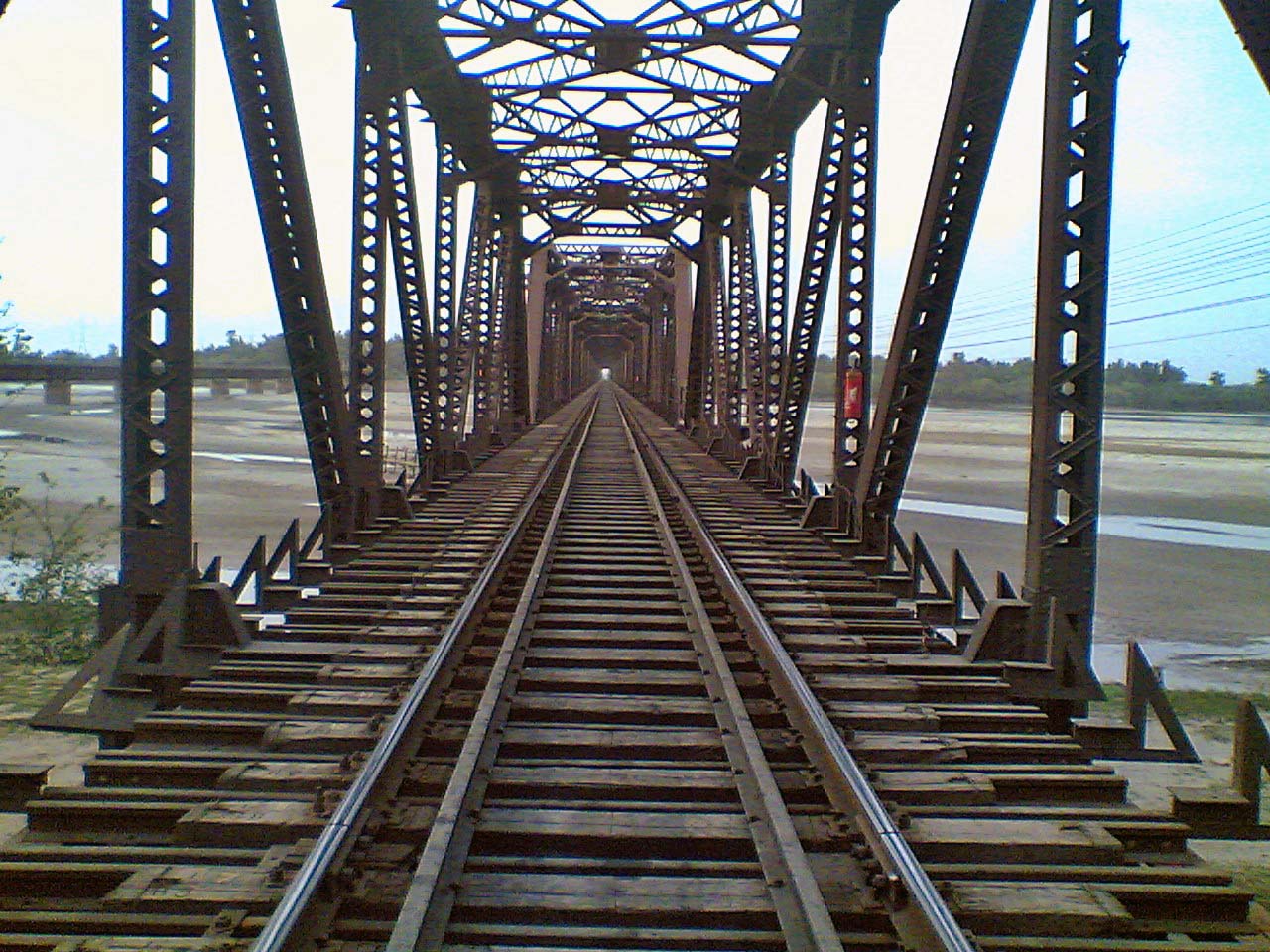
It is served by Gujrat railway station on the Karachi–Peshawar Line, the main railway line of Pakistan Railways.
Climate
Gujrat has a monsoon-influenced humid subtropical climate (Köppen Cwa), although it is almost dry enough to be a hot semi-arid climate (BSh).
Demography
Population
According to the 2023 census, Gujrat city had a population of 574,240.
Religion
| Religious | ||||||||||||||||||||||||||||||||||||||
|---|---|---|---|---|---|---|---|---|---|---|---|---|---|---|---|---|---|---|---|---|---|---|---|---|---|---|---|---|---|---|---|---|---|---|---|---|---|---|
| group | 1881 | 1891 | 1901 | 1911 | 1921 | 1931 | 1941 | 2017 | 2023 | Pop. | % | Pop. | % | Pop. | % | Pop. | % | Pop. | % | Pop. | % | Pop. | % | Pop. | % | Pop. | % | Total population | 18,743 | 18,050 | 19,410 | 19,090 | 21,974 | 26,511 | 30,899 | 542,708 | 931,279 | |
| Islam [[File:Star and Crescent.svg | 15px]] | 13,637 | 12,824 | 14,047 | 14,253 | 16,284 | 19,482 | 24,681 | 532,896 | 917,696 | ||||||||||||||||||||||||||||
| Hinduism [[File:Om.svg | 15px]] | 4,762 | 4,703 | 4,823 | 4,226 | 5,016 | 5,984 | 5,011 | 30 | 55 | ||||||||||||||||||||||||||||
| Sikhism [[File:Khanda.svg | 15px]] | 317 | 452 | 415 | 495 | 486 | 659 | 630 | 18 | |||||||||||||||||||||||||||||
| Jainism [[File:Jain_Prateek_Chihna.svg | 15px]] | 0 | 0 | 0 | 0 | 4 | 0 | 10 | ||||||||||||||||||||||||||||||
| Christianity [[File:Christian cross.svg | 15px]] | 71 | 125 | 116 | 184 | 386 | 553 | 9,121 | 12,450 | |||||||||||||||||||||||||||||
| Ahmadiyya [[File:Liwa-e-Ahmadiyya_1-2.svg | 15px]] | 659 | 1,026 | |||||||||||||||||||||||||||||||||||
| Others | 27 | 0 | 0 | 0 | 0 | 0 | 14 | 2 | 34 |
Language
Gujrat is overwhelmingly Punjabi speaking, with Punjabi constituting 90.43% of the population. Urdu speakers form 5.91%, and Pashto speakers make up 2.74%. While an additional 0.92% of the population consists of other languages (Mostly Saraiki and Balochi).
Education

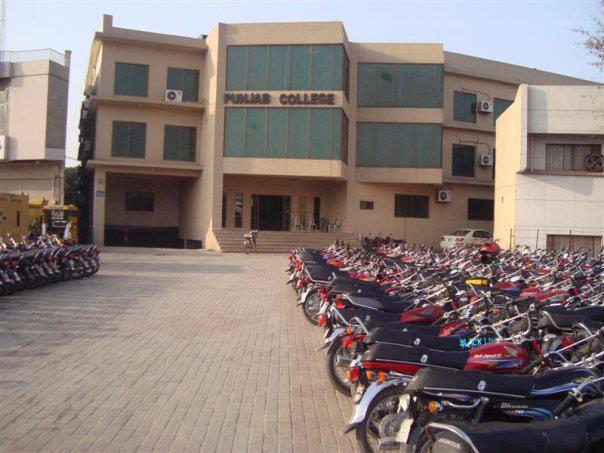
Some of the notable educational institutes of Gujrat include:
- Beaconhouse School System
- Dar-e-Arqam Schools
- Lahore Grammar School
- Nawaz Sharif Medical College
- Pakistan International Public School, Gujrat Campus
- The Superior University, Lahore, Gujrat Campus
- University of Central Punjab
- University of Gujrat
- University of Lahore
Notable people
- Chaudhry Hussain Elahi, Member of the National Assembly of Pakistan; son of Chaudhry Wajahat Hussain
- Chaudhry Pervaiz Elahi, former deputy prime minister of Pakistan, former Chief Minister of Punjab, Speaker of the Provincial Assembly of Punjab, August 2018–present, previously 1997–1999; former chairman of District Council, Gujrat; former Provincial Minister for Local Government and Rural Development
- Chaudhry Zahoor Elahi, Member of the National Assembly of Pakistan in 1962 and 1970; Deputy Opposition Leader in the National Assembly of Pakistan 1972–1977; Federal Minister for Manpower, Labor, Local Government & Rural Development 1978–1979
- Moonis Elahi, former Federal Minister for Water Resources, Member of the National Assembly of Pakistan, twice elected as the member of the Provincial Assembly of Punjab, 2008–2013 and 2013–2018
- Syed Munir Hussain Gilani, Pakistani politician
- Nawabzada Ghazanfar Ali Gul, former Adviser to Prime Minister of Pakistan
- Imam Din Gujrati, humorous poet of Urdu and Punjabi
- Abdullah Hussain, writer
- Chaudhry Shujaat Hussain, former prime minister of Pakistan, Member Pakistan Majlis-e-Shura; re-elected five times as Member of the National Assembly of Pakistan; re-elected twice as Member of the Senate of Pakistan; former Federal Minister for Interior, Information, Industries & Production; "Honorary Consul General" of the Republic of Korea
- Chaudhry Wajahat Hussain, former Federal Minister for Overseas Pakistanis; Federal Minister for Labour and Manpower and Federal Minister for Human Resource Development; three times MPA and two times MNA
- Orya Maqbool Jan, social analyst
- Saleem Sarwar Jaura, former Member of the Provincial Assembly of Punjab
- Muhammad Afzal Lone, lawyer and judge
- Mian Imran Masood, former MPA of Gujrat and Minister of Education Punjab
- Ahmad Mukhtar, former Minister for Defence, Government of Pakistan
- Shujaat Nawaz, former Member of the Provincial Assembly of Punjab
- Yasmin Qureshi, British MP
- Muhammad Abdullah Warraich, Member of the Provincial Assembly of Punjab
Notes
References
References
- "Punjab (Pakistan): Province and Major Cities, Municipalities & Towns". Citypopulation.de.
- "Nur-ul-Ain Qureshi takes charge as Gujrat’s first woman DC". Minutemirror (newspaper).
- "five-districts-get-new-dpos". Dawn (newspaper).
- "Location of Gujrat". Google Maps.
- "Pakistan City & Town Population List". Tageo.com website.
- (2014-04-21). "An assessment of industrial employment skill gaps among university graduates: In the Gujrat-Sialkot-Gujranwala industrial cluster, Pakistan". Intl Food Policy Res Inst.
- "Historical Perspective of Urban Development of Gujranwala". Dept. of Architecture, UET, Lahore.
- Folkloristan. (2022-08-18). "Sohni Mahiwal".
- Butt, Mansoor Behzad. (2025). "Zila Gujrat aur Sikh Saltanat, 1500-1947". Sulaikh Book Makers.
- Zutshi, Chitralekha. (2014-07-07). "The Multiple Lives of Rajatarangini". Oxford University Press.
- Ibbetson, Denzil. (1916). "Panjab castes". Lahore : Printed by the Superintendent, Government Printing, Punjab.
- "Imperial Gazetteer2 of India, Volume 12, page 365 -- Imperial Gazetteer of India -- Digital South Asia Library".
- (1890). "Americanized Encyclopaedia Britannica: Rev. and Amended A Dictionary of Arts, Sciences and Literature, to which is Added Biographies of Living Subjects. 96 Colored Maps and Numerous Illustrations". Belford-Clarke Company.
- "Gujrat {{!}} Pakistan". Encyclopedia Britannica.
- (2012-02-21). "Punjab Reconsidered: History, Culture, and Practice". Oxford University Press.
- Jahangir, Emperor of Hindustan. (1999). "The Jahangirnama memoirs of Jahangir, Emperor of India". Freer Gallery of Art, Arthur M. Sackler Gallery, Smithsonian Institution.
- Bhat, Muzaffar. (2017-09-22). "The Mughal road to Srinagar". The Friday Times.
- (16 June 2016). "Last vestige of Mughal era in Gujrat {{!}} ePaper {{!}} DAWN.COM".
- "NADIR SHAH AFSHAR".
- Butt, Mansoor Behzad. (2025). "Zila Gujrat aur Sikh Saltanat, 1500-1947". Sulaikh Book Makers.
- Butt, Mansoor Behzad. (2025). "Zila Gujrat aur Sikh Saltanat, 1500-1947". Sulaikh Book Makers.
- Jaques, Tony. (2007). "Dictionary of Battles and Sieges: F-O". Greenwood Publishing Group.
- "Gujrat climate: Average Temperature, weather by month, Gujrat weather averages - Climate-Data.org".
- "Population by administrative units 1951-1998". [[Pakistan Bureau of Statistics]].
- "URBAN LOCALITIES BY POPULATION SIZE AND THEIR POPULATION BY SEX, ANNUAL GROWTH RATE AND HOUSEHOLD SIZE : CENSUS-2023, PUNJAB".
- (1881). "Census of India, 1881 Report on the Census of the Panjáb Taken on the 17th of February 1881, vol. I.".
- (1881). "Census of India, 1881 Report on the Census of the Panjáb Taken on the 17th of February 1881, vol. II.".
- (1881). "Census of India, 1881 Report on the Census of the Panjáb Taken on the 17th of February 1881, vol. III.".
- (1891). "Census of India, 1891. General tables for British provinces and feudatory states.".
- (1891). "The Punjab and its feudatories, part II--Imperial Tables and Supplementary Returns for the British Territory".
- (1901). "Census of India 1901. Vol. 1A, India. Pt. 2, Tables.".
- (1901). "Census of India 1901. [Vol. 17A]. Imperial tables, I-VIII, X-XV, XVII and XVIII for the Punjab, with the native states under the political control of the Punjab Government, and for the North-west Frontier Province.".
- (1911). "Census of India, 1911. Vol. 1., Pt. 2, Tables.". Calcutta, Supt. Govt. Print., India, 1913..
- (1911). "Census of India 1911. Vol. 14, Punjab. Pt. 2, Tables.".
- (1921). "Census of India 1921. Vol. 1, India. Pt. 2, Tables.".
- (1921). "Census of India 1921. Vol. 15, Punjab and Delhi. Pt. 2, Tables.".
- "CENSUS OF INDIA, 1931 VOLUME XVII PUNJAB PART II TABLES".
- "CENSUS OF INDIA, 1941 VOLUME VI PUNJAB".
- "Final Results (Census-2017)".
- "7th Population and Housing Census - Detailed Results Table-9 Population by sex, religion and rural/urban".
- "Pakistan Census 2023".
- "First Digital Census: Understanding Its Importance and Process - Pakistan Bureau of Statistics population".
- "Home".
- "LAHORE GRAMMAR SCHOOL | Prepared to Lead".
- "Nawaz Sharif Medical College".
- "PIPS Girls WIng - Google Search".
- "SUPERIOR COLLEGE GUJRAT | Superior Group Of Colleges".
- "UCP..".
- "University of Gujrat".
- "UoL..".
- (20 July 2021). "PML-Q's Moonis Elahi sworn in as federal minister".

This article was imported from Wikipedia and is available under the Creative Commons Attribution-ShareAlike 4.0 License. Content has been adapted to SurfDoc format. Original contributors can be found on the article history page.
Ask Mako anything about Gujrat, Pakistan — get instant answers, deeper analysis, and related topics.
Research with MakoFree with your Surf account
Create a free account to save articles, ask Mako questions, and organize your research.
Sign up freeThis content may have been generated or modified by AI. CloudSurf Software LLC is not responsible for the accuracy, completeness, or reliability of AI-generated content. Always verify important information from primary sources.
Report