From Surf Wiki (app.surf) — the open knowledge base
GT World Challenge Australia
National championship for grand tourer sports cars in Australia

National championship for grand tourer sports cars in Australia
| Field | Value |
|---|---|
| logo | GT World Challenge Australia logo.png |
| pixels | 200px |
| category | Sports car racing |
| inaugural2 | 1960 |
| drivers | 49 |
| tyres | Pirelli |
| country/region | AUS Australia |
| champion driver | AUS Liam Talbot |
| AUS Chaz Mostert | |
| champion team | AUS Melbourne Performance Center |
| current_season | GT World Challenge Australia |
| website |
| country/region = AUS Australia AUS Chaz Mostert
The GT World Challenge Australia, formerly known as the Australian GT Championship, is a Motorsport Australia-sanctioned national title for drivers of GT cars, held annually from 1960 to 1963, from 1982 to 1985 and from 2005. Each championship up to and including the 1963 title was contested over a single race and those after that year over a series of races. The categories which have contested the championship have not always been well defined and often have become a home for cars orphaned by category collapse or a sudden change in regulation.
As of 2024, the series uses the international GT3 rules.
For 2025, the GT World Challenge will be the headline category of a national race series organised by the category promoters, SRO Motorsports Group.
History
Appendix K

In the first era the championship races were open to closed roof cars (not necessarily production based) complying with CAMS Appendix K regulations. Appendix K catered for modified production Grand Touring cars (such as Lotus Elite), sports cars (such as Jaguar D-Type) fitted with roofs, specials (such as the Centaur Waggott) and touring cars modified beyond the limits of the then current Appendix J regulations. Numbers dropped rapidly away as the years went on and both the category and the championship were discontinued at the end of 1963.
GT and Sports Sedan
From 1976 to 1981 the Australian Sports Car Championship had been contested by Group D Production Sports Cars. The re-introduction of Group A Sports Cars in 1982 saw Group D needing a new home. The Australian GT Championship was re-introduced as a home for both Group D and Group B Sports Sedans of the Australian Sports Sedan Championship (ASSC). The category was something of a hybrid with European racing cars, American IMSA racers and wide variety of Australian Sports Sedans competing together. One major difference between the Sports Sedans and GT cars was that the Sports Sedans were restricted to 10" wheels where as the GT cars were allowed up to 18" of rubber. Although many of the top V8 sports sedans had similar power to the GT cars, the difference in rubber on the road saw the GT cars able to get their power to the ground much more efficiently and also go much faster through the turns.
Porsche 935's dominated early with Formula One World Champion Alan Jones winning the 1982 Championship in an entry backed by former race driver Alan Hamilton's Porsche Cars Australia (Hamilton was Australia's major Porsche distributor at the time). Porsche won again in 1983, this time with Rusty French driving the 1982 title winning car he had acquired from Hamilton, while both the 1984 and 1985 championships were won by Allan Grice and Bryan Thomson respectively, both driving the ex-Bob Jane DeKon Chevrolet Monza with a 6.0 L V8 engine that produced a reported 600 bhp, with Thomson also driving his exotic Chevrolet V8 powered twin turbo Mercedes-Benz 450 SLC in the 1985 series. The Thomson Mercedes was alleged to produce over 1000 bhp making it arguably the most powerful race car in Australian motor racing. The downside though was that without a large budget, the Thompson Mercedes suffered numerous reliability problems (usually turbo) and neither Thompson nor his team driver (1985–86) Brad Jones, or indeed John Bowe who had also driven the car in the early 1980s while Thompson was in a short lived retirement, were able to show its true potential.
As time went on the usually slower Sports Sedans started to usurp the category as the more expensive Sports Car refugees dropped in numbers. Sports Sedans also became more effective, especially once local racing car factories and professional racing teams like the Adelaide based Elfin Sports Cars and K&A Engineering, and top level touring car teams such as Alan Browne's Re-Car team and former ASSC Frank Gardner's JPS Team BMW became involved. As with Appendix K of the 1960s, grids were widely varied with turbocharged Porsche 935s, BMW 318is, 5.0 and 6.0 litre V8 powered Chevrolet Monzas, Holden Commodores, Alfa Romeo Alfettas, Thomson's lone Mercedes-Benz 450 SLC, Peter Fitzgerald's non-turbo Porsche Carrera RSR, a couple of V12 Jaguar XJS' and with a variety of sports sedans such as the Holden Monaro and Holden Torana, Ford Falcon and Ford Escort, and various turbocharged Toyotas, Nissans and Mazda RX-7s.
By 1985 the field was mostly Sports Sedans bolstered with recently obsolete (from the end of 1984) Group C Touring Cars and the championship was run concurrently with the Australian Sports Car Championship. Veteran driver Kevin Bartlett introduced a very quick Ground effects De Tomaso Pantera in 1985 which brought some much needed spice to the GT category.
For 1986 Sports Sedans went their own way. Within a couple of years Porsche drivers had their own series with the Porsche Cup.
GT3 and GT4
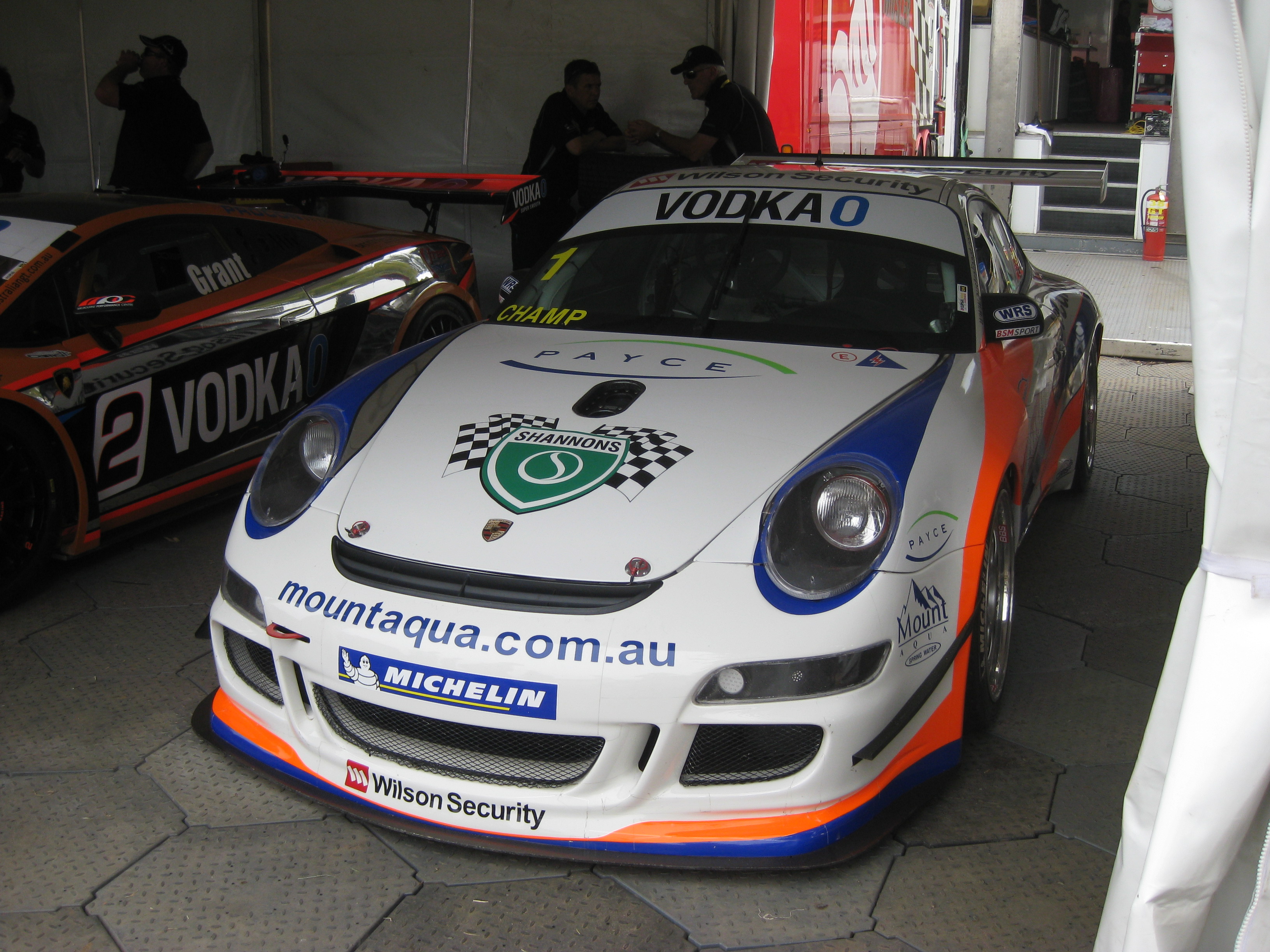
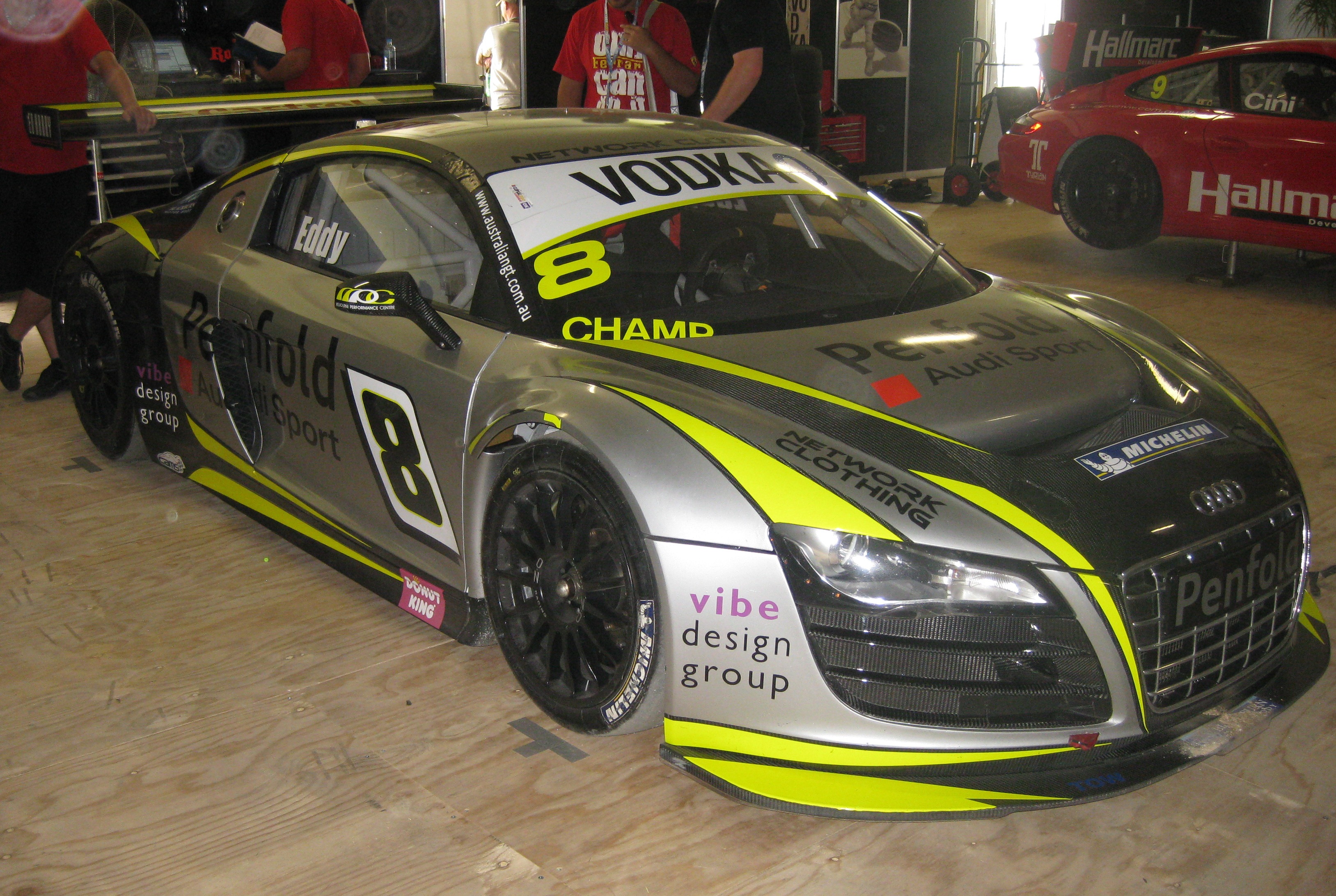

.jpg)
.jpg)
The Australian GT Championship was revived a second time in 2005 after the disbandment of the Australian Nations Cup Championship. Most of the competing 2004 cars remained eligible for 2005, although the controversial Holden Monaro 427C's which had won the two Bathurst 24 Hour races in 2002 and 2003 were a notable exception. This was because the Monaros under Nations Cup rules had been permitted to use the 7.0 litre, 427 cui LS6 Chevrolet V8 engine that had been used successfully in the Chevrolet Corvette C5-R, while the road going CV8 Monaros only came with the 5.7-litre Gen III V8. The Australian Porsche Drivers Challenge (the former Australian Porsche Cup) also was merged into the GT Championship.
The FIA GT3 regulations, like those in use in the FIA GT3 European Championship was the core of the new series. The series vehicles reflected GT3, Porsches, Ferraris, Lamborghinis, the controversial Mosler, although series regulations usually specified cars be two-three years old to cut down on costs. Competing drivers are seeded and penalised so as not to flood the series with professional drivers from other categories and increasing there has been an emphasis on longer races, sometimes allowing for more than one driver per car.
The series has grown steadily, helped by the transition of the Bathurst 12 Hour race from a production car race to a GT race. Manufacturers have diversified widely from its mostly Porsche base and in addition to the 12 Hour has also seen the creation of other long-distance races, the Phillip Island 101 and the Highlands 101 in New Zealand.
The Australian GT Trophy Series was introduced as a support series in 2016, featuring older-specification GT3, GT4, Challenge and MARC cars. GT4 cars will be integrated into the main championship in 2018.
In 2020, Australian Racing Group and SRO Motorsports Group jointly took over management of the category, renamed it "GT World Challenge Australia" in alignment with their other SRO GT3 categories around the world, and ran events as part of the ARG-run SpeedSeries event series. SRO took over as exclusive organiser of the series for 2024 series. In 2024, the main World Challenge category became exclusively for SRO GT3 spec cars, with a separate set of races for GT4 known as GT4 Australia.
For 2025, with the end of the SpeedSeries, SRO Motorsports Group will run its own event weekends for the GT World Challenge Australia, with support categories including GT4 Australia and Radical Cup Australia.
Circuits
; Current Shown in current (2026) calendar order
- VIC Phillip Island Grand Prix Circuit (2005–2019, 2021–present)
- South Australia The Bend Motorsport Park (2018–2019, 2021–2022, 2024–present)
- QLD Queensland Raceway (2005–2007, 2013, 2016–2017, 2022–present)
- Northern Territory Hidden Valley Raceway (2026)
- NSW Sydney Motorsport Park (2005–2015, 2018, 2020, 2023–present)
- South Australia Adelaide Street Circuit (2007–2013, 2015–2017, 2022–2023, 2026)
; Former In order of appearance
- NSW Mount Panorama Circuit (1960, 2006–2007, 2009–2011, 2013, 2019–2024)
- NSW Warwick Farm Raceway (1961)
- QLD Lakeside International Raceway (1962, 1982–1985)
- VIC Calder Park Raceway (1963, 1982–1985)
- VIC Winton Motor Raceway (1982–1985, 2011–2012, 2016–2017)
- NSW Oran Park Raceway (1982, 1985, 2006–2007)
- South Australia Adelaide International Raceway (1982–1985)
- Western Australia Wanneroo Raceway (1982, 2016–2017, 2019, 2023)
- QLD Surfers Paradise International Raceway (1982–1985)
- Tasmania Symmons Plains Raceway (1982, 2007)
- Tasmania Baskerville Raceway (1982)
- VIC Sandown Raceway (1983–1984, 2007–2008, 2010–2011, 2014–2020, 2022, 2025)
- NSW Wakefield Park (2005–2006, 2017)
- South Australia Mallala Motor Sport Park (2006)
- VIC Albert Park Circuit (2008–2010, 2016–2019)
- NSW Homebush Street Circuit (2009, 2012)
- QLD Reid Park Street Circuit (2011, 2014–2017)
- QLD Surfers Paradise Street Circuit (2012, 2019)
- NZL Highlands Motorsport Park (2013–2016)
- NZL Hampton Downs Motorsport Park (2016–2018, 2025)
Champions
Australian GT Championship
| Season | Champion | Vehicle | 1960 | 1961 | 1962 | 1963 | 1964 | |||||||||||||||||||||
|---|---|---|---|---|---|---|---|---|---|---|---|---|---|---|---|---|---|---|---|---|---|---|---|---|---|---|---|---|
| – | ||||||||||||||||||||||||||||
| 1981 | 1982 | 1983 | 1984 | 1985 | 1986 | |||||||||||||||||||||||
| – | ||||||||||||||||||||||||||||
| 2004 | 2005 | 2006 | 2007 | 2008 | 2009 | 2010 | 2011 | 2012 | 2013 | 2014 | 2015 | 2016 | 2017 | 2018 | 2019 | 2020 | ||||||||||||
| AUS Leo Geoghegan | Lotus Elite | |||||||||||||||||||||||||||
| AUS Frank Matich | Jaguar D-Type | |||||||||||||||||||||||||||
| AUS John French | Centaur Waggott | |||||||||||||||||||||||||||
| AUS Bob Jane | Jaguar E-Type | |||||||||||||||||||||||||||
| Not contested | ||||||||||||||||||||||||||||
| AUS Alan Jones | Porsche 935 | |||||||||||||||||||||||||||
| AUS Rusty French | Porsche 935 | |||||||||||||||||||||||||||
| AUS Allan Grice | Chevrolet Monza | |||||||||||||||||||||||||||
| AUS Bryan Thomson | Chevrolet Monza | |||||||||||||||||||||||||||
| Mercedes-Benz 450 SLC – Chevrolet | ||||||||||||||||||||||||||||
| Not contested | ||||||||||||||||||||||||||||
| AUS Bryce Washington | Porsche 911 GT3 Cup Type 996 | |||||||||||||||||||||||||||
| AUS Greg Crick | Dodge Viper GTS ACR | |||||||||||||||||||||||||||
| DEN Allan Simonsen | Ferrari 360 GT | |||||||||||||||||||||||||||
| Ferrari 430 GT3 | ||||||||||||||||||||||||||||
| AUS Mark Eddy | Lamborghini Gallardo GT3 | |||||||||||||||||||||||||||
| AUS David Wall | Porsche 911 GT3 Cup S Type 997 | |||||||||||||||||||||||||||
| AUS David Wall | Porsche 911 GT3 Cup S Type 997 | |||||||||||||||||||||||||||
| AUS Mark Eddy | Audi R8 LMS | |||||||||||||||||||||||||||
| AUS Klark Quinn | Porsche 911 GT3-R Type 997 | |||||||||||||||||||||||||||
| AUS Klark Quinn | Porsche 911 GT3-R Type 997 | |||||||||||||||||||||||||||
| AUS Richard Muscat | Mercedes-Benz SLS AMG | |||||||||||||||||||||||||||
| GER Christopher Mies | Audi R8 LMS Ultra | |||||||||||||||||||||||||||
| AUS Klark Quinn | McLaren 650S GT3 | |||||||||||||||||||||||||||
| AUS Geoff Emery | Audi R8 LMS | |||||||||||||||||||||||||||
| AUS Geoff Emery | Audi R8 LMS | |||||||||||||||||||||||||||
| AUS Geoff Emery | Audi R8 LMS Evo | |||||||||||||||||||||||||||
| Cancelled |
GT World Challenge Australia
| Season | GT3 Pro-Am | GT3 Am | GT Trophy | GT4 Overall | 2021 | 2022 | 2023 | 2024 | 2025 |
|---|---|---|---|---|---|---|---|---|---|
| AUS Yasser Shahin | AUS Andrew Macpherson | ||||||||
| AUS William Ben Porter | AUS Brad Schumacher | AUS Mark Griffith | |||||||
| AUS Yasser Shahin | AUS Gary Higgon | ||||||||
| AUS Paul Stockell | AUS Michael Kokkinos | AUS Mark Griffith | |||||||
| AUS Liam Talbot | AUS Brad Schumacher | AUS Renee Gracie | AUS Mark Griffith | ||||||
| AUS Chaz Mostert | |||||||||
| AUS Liam Talbot | AUS Mike Sheargold | ||||||||
| AUS Garth Walden | AUS Valentino Astuti | rowspan=2 | |||||||
| AUS Brad Schumacher | |||||||||
| AUS Broc Feeney | AUS Renee Gracie | AUS TBA | |||||||
| AUS TBA |
Multiple winners
By driver
| Wins | Driver | Years | 3 | 2 |
|---|---|---|---|---|
| AUS Klark Quinn | 2012, 2013, 2016 | |||
| AUS Geoff Emery | 2017, 2018, 2019 | |||
| AUS David Wall | 2009, 2010 | |||
| AUS Mark Eddy | 2008, 2011 |
By manufacturer
| Wins | Manufacturer | Years | 8 | 7 | 2 |
|---|---|---|---|---|---|
| GER Audi | 2011, 2015, 2017, 2018, 2019, 2021, 2022, 2023 | ||||
| GER Porsche | 1982, 1983, 2005, 2009, 2010, 2012, 2013 | ||||
| GBR Jaguar | 1961, 1963 | ||||
| USA Chevrolet | 1984, 1985 | ||||
| GER Mercedes-Benz | 1985, 2014 |
References
- A History of Australian Motor Sport, 1980
- Australian Motor Racing Yearbooks, 1982/83 to 1985/86
- www.camsmanual.com.au
- www.gtchampionship.com.au
References
- (2024-10-18). "SRO Motorsports Australia calendar finalised for 2025".
- Herrero, Daniel. (2023-10-24). "SRO proclaims full takeover of GT World Challenge Australia".
- Miles, Thomas. (2024-09-10). "SRO Takes Over SpeedSeries".
This article was imported from Wikipedia and is available under the Creative Commons Attribution-ShareAlike 4.0 License. Content has been adapted to SurfDoc format. Original contributors can be found on the article history page.
Ask Mako anything about GT World Challenge Australia — get instant answers, deeper analysis, and related topics.
Research with MakoFree with your Surf account
Create a free account to save articles, ask Mako questions, and organize your research.
Sign up freeThis content may have been generated or modified by AI. CloudSurf Software LLC is not responsible for the accuracy, completeness, or reliability of AI-generated content. Always verify important information from primary sources.
Report