From Surf Wiki (app.surf) — the open knowledge base
Groningen
City and municipality in the Netherlands

City and municipality in the Netherlands
| Field | Value |
|---|---|
| name | Groningen |
| native_name | gos |
| settlement_type | City and municipality |
| image_skyline | {{multiple image |
| total_width | 280 |
| border | infobox |
| perrow | 2/2/2/1¨ |
| caption_align | center |
| image1 | Martini Toren.JPG |
| alt1 | Martini Tower |
| caption1 | Martini Tower |
| image2 | Grote markt zuidzijde.jpg |
| alt2 | Grote Markt Square |
| caption2 | Grote Markt Square |
| image3 | Stadsschouwburg Groningen.jpg |
| alt3 | Groningen City Theater |
| caption3 | Groningen City Theater |
| image4 | Groningen, Korenbeurs foto2 2009-06-28 10.27.JPG |
| alt4 | Aa Church/Korenbeurs |
| caption4 | Aa Church/Korenbeurs |
| image5 | Gasuniegebouw.jpg |
| alt5 | Gasunie building |
| caption5 | Gasunie building |
| image6 | Goudkantoor Groningen Netherlands.JPG |
| alt6 | Goudkantoor |
| caption6 | Goudkantoor |
| image7 | Groninger Museum 2.jpg |
| alt7 | Groninger Museum |
| caption7 | Groninger Museum |
| image_flag | Flag of Groningen City.svg |
| flag_size | 100px |
| flag_alt | White flag with a horizontal green band in the middle |
| image_shield | Groningen stad wapen.svg |
| shield_size | 100px |
| shield_alt | Two black eagles holding a crowned yellow shield |
| image_blank_emblem | Groningen logo (municipality).svg |
| blank_emblem_type | Brandmark |
| image_map | Map - NL - Municipality code 0014 (2019).svg |
| map_alt | Highlighted position of Groningen in a municipal map of Groningen |
| map_caption | Location in Groningen |
| pushpin_map | Netherlands#Europe |
| pushpin_map_caption | Location within the Netherlands##Location within Europe |
| pushpin_relief | 1 |
| coordinates | |
| subdivision_type | Country |
| subdivision_name | Netherlands |
| subdivision_type1 | Province |
| subdivision_name1 | Groningen |
| seat_type | City Hall |
| seat | Groningen City Hall |
| government_footnotes | |
| governing_body | Municipal council |
| leader_party | VVD |
| leader_title | Mayor |
| leader_name | Roelien Kamminga |
| total_type | Municipality |
| unit_pref | Metric |
| area_footnotes | |
| area_total_km2 | |
| area_land_km2 | |
| area_water_km2 | |
| elevation_footnotes | |
| elevation_m | 7 |
| elevation_max_m | 12 |
| population_total | 244,807 |
| population_as_of | January 1st 2023 |
| population_density_km2 | |
| population_urban | |
| population_metro | |
| population_demonym | Groninger, Stadjer |
| timezone1 | CET |
| utc_offset1 | +1 |
| timezone1_DST | CEST |
| utc_offset1_DST | +2 |
| postal_code_type | Postcode |
| postal_code | 9700–9747 |
| area_code_type | Area code |
| area_code | 050 |
| website | |
| mapframe | yes |
| mapframe-zoom | 9 |
the Dutch city and municipality
| mapframe-zoom = 9 Groningen is the capital city and main municipality of Groningen province in the Netherlands. Dubbed the "capital of the north", Groningen is the largest city as well as the economic and cultural centre of the northern part of the country; as of January 2025, it had 244,807 inhabitants, making it the sixth largest city/municipality in the Netherlands and the second largest outside the Randstad. The Groningen metropolitan area has a population of about half a million inhabitants.
Groningen was established more than 980 years ago but never gained city rights. Due to its relatively isolated location from the then successive Dutch centres of power (Utrecht, The Hague, Brussels), Groningen was historically reliant on itself and nearby regions. As a Hanseatic city, it was part of the North German trade network, but later it mainly became a regional market centre. At the height of its power in the 15th century, Groningen could be considered an independent city-state and it remained autonomous until the late 18th century, when it was incorporated into the Napoleonic Batavian Republic.
Today Groningen is a university city, home to some of the country's leading higher education institutes; University of Groningen (Rijksuniversiteit Groningen), which is the Netherlands's second oldest university, and Hanze University of Applied Sciences (Hanzehogeschool Groningen). Students comprise an estimated 25% of its total population, making it the country's demographically youngest city (although Urk is the youngest municipality overall).
Etymology
The origin and meaning of 'Groningen' and its older variant, 'Groeningen', are uncertain. A folk origin story relates the idea that, in 453 BC, exiles from Troy who were guided by a mythical figure called Gruno (or Grunius, Gryns or Grunus), along with a group of Phrygians from Germany, founded a settlement in what is now Groningen, and built a castle on the bank of the Hunze, which they called 'Grunoburg', and which was later destroyed by the Vikings.
One modern theory is that 'Groningen' meant 'among the people of Groni' ('Groningi' and 'Groninga' in the 11th century), derived from Gronesbeke, which was the old name for a small lake near the Hunze (on the northern border of Zuidlaarderveen). As the name Grone (variant Groene) is an old Frisian personal name, the origin may very well be in a settlement originally founded by the family of Grone and their followers, which in Frisian would be called Groninga. Another theory is that the name was derived from the word groenighe, meaning 'green fields'.
In Frisian, it is called Grins. In Groningen province, it is called **. Regionally, it is often simply referred to as Stad (the "city"), and its inhabitants are referred to as Stadjers or Stadjeder. The Dutch sometimes refer to it as "the Metropolis of the North", or Martinistad (after the Martinitoren tower).
History
The city was founded at the northernmost point of the Hondsrug area. While the oldest document referring to Groningen's existence dates from 1040, the area was occupied by Saxons centuries prior. The oldest archaeological evidence of a settlement in the region stems from around 3950–3650 BC, and the first major settlement in Groningen trace back to the year 3 AD.

In the 13th century Groningen was an important trade centre and its inhabitants built a city wall to underline its authority. The city had a strong influence on its surrounding lands and the Gronings dialect became common. The city's most influential period was at the end of the 15th century, when the nearby province of Friesland was administered from Groningen. During these years the Martinitoren was built which is considered to be the city's most significant landmark.
In 1536, Groningen accepted Emperor Charles V, the King of Spain and the Habsburg ruler of the other Netherlands as its ruler, thus ending the region's autonomy. The city was captured in the Siege of Groningen (1594) by the Dutch and English forces led by Maurice of Nassau. After the siege, the city and the province joined the Dutch Republic.
During the 17th century, Groningen served as a crucial hub for the Dutch West India Company (WIC). This powerful trading company was responsible for maritime trade, colonization, and the transportation of goods and people.
The WIC transported over 300,000 slaves from the African coast to the Dutch colonies between 1621 and 1792. Warships like the Groeningen sailed from Groningen's shipyards to Africa's west coast, carrying enslaved Africans to plantations in Brazil, Suriname, and the Antilles. These same ships returned to Europe laden with valuable commodities such as sugar, coffee, and tobacco.
The University of Groningen was founded in 1614 with initial course offerings in law, medicine, theology and philosophy. During this period the city expanded rapidly and a new city wall was built.
The Siege of Groningen (1672) led by the bishop of Münster, Bernhard von Galen, during the Third Anglo-Dutch War failed and the city walls resisted; an event that is celebrated annually with music and fireworks on 28 August as "**" or "Bommen Berend" ("Bombing Bernard"). In the early 19th century when the kingdom of Holland under king Jerôme Bonaparte was founded, Groningen was integrated into the French system of administration, and then annexed in 1811 into the French Empire under emperor Napoleon I (until 1813). During the French administration of the area, Groningen was called Groningue.
During World War II, the main square and the Grote Markt were largely destroyed in the Battle of Groningen in April 1945. However, the church Martinitoren, the Goudkantoor, and the city hall were undamaged.
Geography
There is a town named after Groningen in Saramacca District, Suriname, a former Dutch colony. It was named after the hometown of Dutch governor-general of Suriname Jan Wichers, who established the town as a fort in 1790.
Canals
Numerous canals (grachten) surround the city, locally called diep. The major canals that travel from the city are the Van Starkenborgh Canal, Eems Canal, and Winschoterdiep. Groningen's canals, no longer used for commercial goods transport, were once vital hubs in trade and transport. The rivers crossing close to the Binnenstad have been used for trade for at least a . The Dutch West India Company and foreign investors established their Groningen headquarters in Reitemakersrijge. Additional warehouses were strategically built along the canals at Noorderhaven to store colonial produce. These warehouses often held goods obtained from plantations in the Dutch colonies.
Climate
Groningen has an oceanic temperate climate, like all of the Netherlands, although slightly colder in winter than other major cities in the Netherlands due to its northeasterly position. Weather is influenced by the North Sea to the north-west and its prevailing north-western winds and gales.
Summers are somewhat warm and humid. Temperatures of 30 °C or higher occur sporadically; the average daytime high is around 22 °C. Very rainy periods are common, especially in spring and summer. Average annual precipitation is about 800 mm. Annual sunshine hours vary, but are usually below 1600 hours, giving much cloud cover similar to most of the Netherlands. Climate in this area has mild differences between highs and lows, and there is adequate rainfall year-round. The Köppen Climate Classification subtype for this climate is "Cfb". (Marine West Coast Climate/Oceanic climate).
Winters are cool; on average above freezing, although frosts are common during spells of easterly winds. Night-time temperatures of -10 °C or lower are not uncommon during cold winter periods. The lowest temperature ever recorded is -26.8 °C on 16 February 1956. Snow often falls, but rarely stays long due to warmer daytime temperatures, although white snowy days happen every winter.
| Jan record high C=14.5 | Feb record high C=18.9 | Mar record high C=24.0 | Apr record high C=28.8 | May record high C=32.8 | Jun record high C=33.8 | Jul record high C=36.9 | Aug record high C=36.3 | Sep record high C=32.6 | Oct record high C=27.4 | Nov record high C=19.4 | Dec record high C=15.4 | year record high C=36.9
| Jan record low C=-22.0 | Feb record low C=-22.9 | Mar record low C=-18.4 | Apr record low C=-8.1 | May record low C=-3.4 | Jun record low C=0.1 | Jul record low C=2.5 | Aug record low C=3.2 | Sep record low C=-1.0 | Oct record low C=-6.9 | Nov record low C=-13.6 | Dec record low C=-22.0 | year record low C=-22.9
Economy
Hotel and catering industries constitute a significant part of the economy in Groningen. Focus on business services has increased over time and areas such as IT, life sciences, tourism, energy, and environment have developed.
Until 2008 there were two major beet sugar factories within the city. The Suiker Unie plant was constructed in the outskirts of Groningen, but became a part of the city due to expansion. The factory had 98 employees before it was closed in 2008 due to a reduction in demand. As of 2017, Vierverlaten sugar factory in Hoogkerk remains the only beet sugar production plant in the city. Other notable companies from Groningen include publishing company Noordhoff Uitgevers, tobacco company Niemeyer, cooperative health insurance company , distillery Hooghoudt, and natural gas companies GasUnie and GasTerra.
Demographics
Immigration
| Country/territory | Population | |
|---|---|---|
| NED Netherlands | ||
| GER Germany | ||
| IDN Indonesia | ||
| NED Dutch Caribbean | ||
| SUR Suriname | ||
| SOV Former Soviet Union | ||
| PRC China | ||
| TUR Turkey | ||
| UK United Kingdom | ||
| ITA Italy | ||
| YUG Yugoslavia | ||
| MAR Morocco | ||
| IRN Iran | ||
| IRQ Iraq | ||
| Other |
As of 2020, Groningen had a total population of 232,874 people.
| 2020 | Numbers | % | Dutch natives | Western migration background | Non-Western migration background |
|---|---|---|---|---|---|
| 175,249 | 75.2% | ||||
| 29,365 | 12.6% | ||||
| 28,260 | 12.1% | ||||
| Indonesia | 5,847 | 2.51% | |||
| Netherlands Antilles and Aruba | 3,959 | 1.7% | |||
| Suriname | 3,401 | 1.46% | |||
| Turkey | 1,774 | 0.76% | |||
| Morocco | 1,266 | 0.54% | |||
| Total | 232,874 | 100% |
Religion
The majority of people in Groningen, slightly more than 70%, are non-religious. With 25.1%, the largest religion in Groningen is Christianity.
Population growth
| 1400 | 5000 | 1560 | 12500 | 1600 | 16600 | 1721 | 20680 | 1770 | 23296 | 1787 | 22000 | 1795 | 23770 All historical data are for the original city limits, excluding Hoogkerk, Noorddijk, Haren and Ten Boer.
It has a land area of 168.93 km2, and a total area, including water, of 180.21 km2. Its population density is 1,367 residents per km2 (3,540 per square mile). On 1 January 2019, it was merged with the municipalities of Ten Boer and Haren. The Groningen-Assen metropolitan area has about half a million inhabitants. Colors= id:a value:gray(0.9) id:b value:gray(0.7) id:c value:rgb(1,1,1) id:d value:rgb(0.7,0.8,0.9) id:e value:rgb(0.6,0.7,0.8)
ImageSize=width:800 height:373 PlotArea=left:50 bottom:30 top:30 right:30 DateFormat=x.y Period=from:0 till:240000 TimeAxis=orientation:vertical AlignBars=justify ScaleMajor=gridcolor:b increment:20000 start:0 ScaleMinor=gridcolor:a increment:10000 start:0 BackgroundColors=canvas:c
BarData= bar:1795 text:1795 bar:1830 text:1830 bar:1840 text:1840 bar:1849 text:1849 bar:1859 text:1859 bar:1869 text:1869 bar:1879 text:1879 bar:1889 text:1889 bar:1899 text:1899 bar:1909 text:1909 bar:1919 text:1919 bar:1920 text:1920 bar:1930 text:1930 bar:1947 text:1947 bar:1956 text:1956 bar:1971 text:1971 bar:1980 text:1980 bar:1990 text:1990 bar:2000 text:2000 bar:2010 text:2010 bar:2019 text:2019
PlotData= color:d width:20 align:left
bar:1795 from:0 till: 23770 bar:1830 from:0 till: 30260 bar:1840 from:0 till: 33484 bar:1849 from:0 till: 33694 bar:1859 from:0 till: 35502 bar:1869 from:0 till: 37984 bar:1879 from:0 till: 46058 bar:1889 from:0 till: 56018 bar:1899 from:0 till: 66537 bar:1909 from:0 till: 74613 bar:1919 from:0 till: 87594 bar:1920 from:0 till: 90778 bar:1930 from:0 till: 105146 bar:1947 from:0 till: 132021 bar:1956 from:0 till: 142561 bar:1971 from:0 till: 169385 bar:1980 from:0 till: 162952 bar:1990 from:0 till: 168702 bar:2000 from:0 till: 174250 bar:2010 from:0 till: 187298 bar:2019 from:0 till: 231618
PlotData=
bar:1795 at: 23770 fontsize:s text: 23,770 shift:(-10,5) bar:1830 at: 30260 fontsize:S text: 30,260 shift:(-10,5) bar:1840 at: 33484 fontsize:S text: 33,484 shift:(-10,5) bar:1849 at: 33694 fontsize:S text: 33,694 shift:(-10,5) bar:1859 at: 35502 fontsize:S text: 35,502 shift:(-10,5) bar:1869 at: 37984 fontsize:S text: 37,984 shift:(-10,5) bar:1879 at: 46058 fontsize:S text: 46,058 shift:(-10,5) bar:1889 at: 56018 fontsize:S text: 56,018 shift:(-10,5) bar:1899 at: 66537 fontsize:S text: 66,537 shift:(-10,5) bar:1909 at: 74613 fontsize:S text: 74,613 shift:(-10,5) bar:1919 at: 87594 fontsize:S text: 87,594 shift:(-10,5) bar:1920 at: 90778 fontsize:S text: 90,778 shift:(-10,5) bar:1930 at: 105146 fontsize:S text: 105,146 shift:(-15,5) bar:1947 at: 132021 fontsize:S text: 132,021 shift:(-20,5) bar:1956 at: 142561 fontsize:S text: 142,561 shift:(-15,5) bar:1971 at: 169385 fontsize:S text: 169,385 shift:(-15,5) bar:1980 at: 162952 fontsize:S text: 162,952 shift:(-10,0) bar:1990 at: 168702 fontsize:S text: 168,702 shift:(-10,2) bar:2000 at: 174250 fontsize:S text: 174,250 shift:(-10,5) bar:2010 at: 187298 fontsize:S text: 187,298 shift:(-15,5) bar:2019 at: 231618 fontsize:S text: 231,618 shift:(-15,5)
Culture
Groningen is nationally known as the "Metropolis of the North". The city is regarded as the main urban centre of the Northern part of the country, particularly in the fields of education, business, music and other arts. It is also known as "Martinistad", referring to the tower of the Martinitoren, which is named after Groningen's patron saint Martin of Tours. The large student population also contributes to the very diverse cultural scene for a city of its size.
Since 2016 Groningen has been host of the International Cycling Film Festival, an annual film festival for bicycle related films. It takes place in the art house cinema of the old Roman Catholic Hospital.
The first major international chess tournament after World War II was held in Groningen in 1946. The tournament, won by Mikhail Botvinnik of the USSR, was the first time the Soviet Union had sent a team to a foreign event. An international chess "Schaakfestival Groningen tournament" has been held in the city in most years since 1946.
Museums


Groningen is home to the Groninger Museum. Its new building designed by Alessandro Mendini in 1994 echoes the Italian post-modern concepts and is notable for its futuristic and colourful style. The city has a maritime museum, a university museum, a comics museum and a graphics museum. Groningen is also the home of Noorderlicht, an international photographic platform that runs a photo gallery and organizes an international photo festival. The Forum Groningen that opened in 2019 is a cultural center consisting of a museum, art cinema, library, bars, rooftop terrace and tourist information office.
Theatre and music
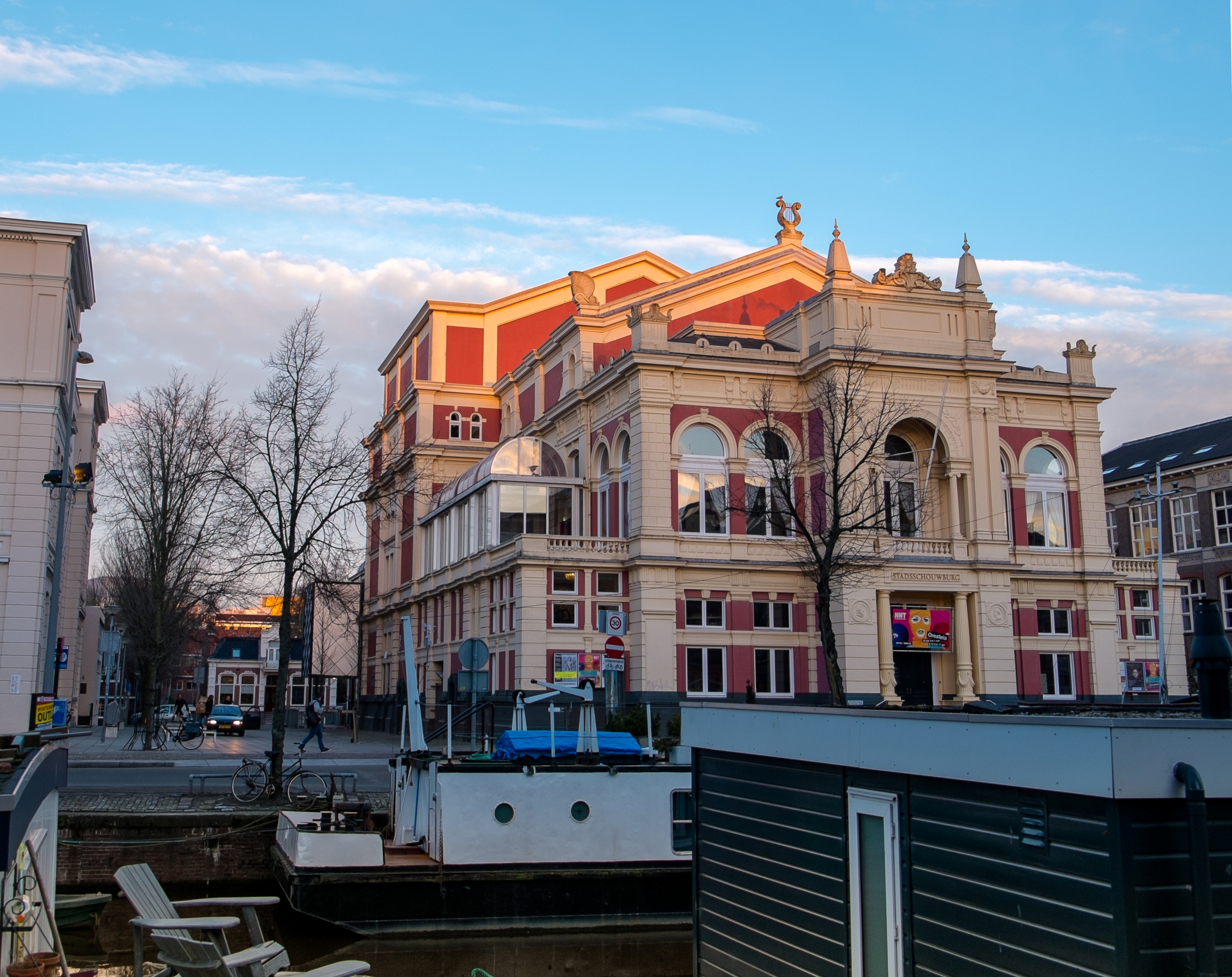
Groningen has a city theatre called the Stadsschouwburg, located on the Turfsingel, a theatre and concert venue called Martini Plaza, and a cultural venue on the Trompsingel, called the Oosterpoort. Vera is located on the Oosterstraat, the Grand Theatre on the Grote Markt, and Simplon on the Boterdiep. Several cafés feature live music, a few of which specialize in jazz music, including the Jazzcafe De Spieghel on the Peperstraat. Groningen is the host city for Eurosonic Noorderslag, an annual music showcase event for bands from across Europe.
Nightlife
Groningen's active nightlife depends largely on its student population, with the Grote Markt, Vismarkt, Poelestraat and Peperstraat crowded nightly, most bars not closing until five in the morning. From 2005 to 2007, Groningen was named "best city centre" of the Netherlands. Groningen has a red-light district, called Nieuwstad.
Sports

.jpg)
FC Groningen, founded in 1971, is the local football club, and as of 2000 they play in the Eredivisie, the highest football league of the Netherlands. Winners of the KNVB Cup in the 2014–15 season, their best Eredivisie result was in the 1990–91 season when they finished third. Their current stadium which opened in January 2006 has 22,525 seats. It is called the Hitachi Capital Mobility Stadion; it was known as the "Euroborg stadium" before 2016, and "Noordlease Stadion" from 2016 to 2018.
American sports are fairly popular in Groningen; it has American football, baseball, and basketball clubs. Groningen's professional basketball club Donar play in the highest professional league, the Dutch Basketball League, and have won the national championship seven times. The Groningen Giants are the American football team of the city who play in the premier league of the AFBN and are nicknamed as the "Kings of the North".
The running event called 4 Miles of Groningen takes place in the city on the second Sunday of October every year with over 23,000 participants. The 2002 Giro d'Italia began in Groningen, including the prologue and the start of the first stage. The city hosted the start and finish of the fifth stage of the 2013 Energiewacht Tour.
Education
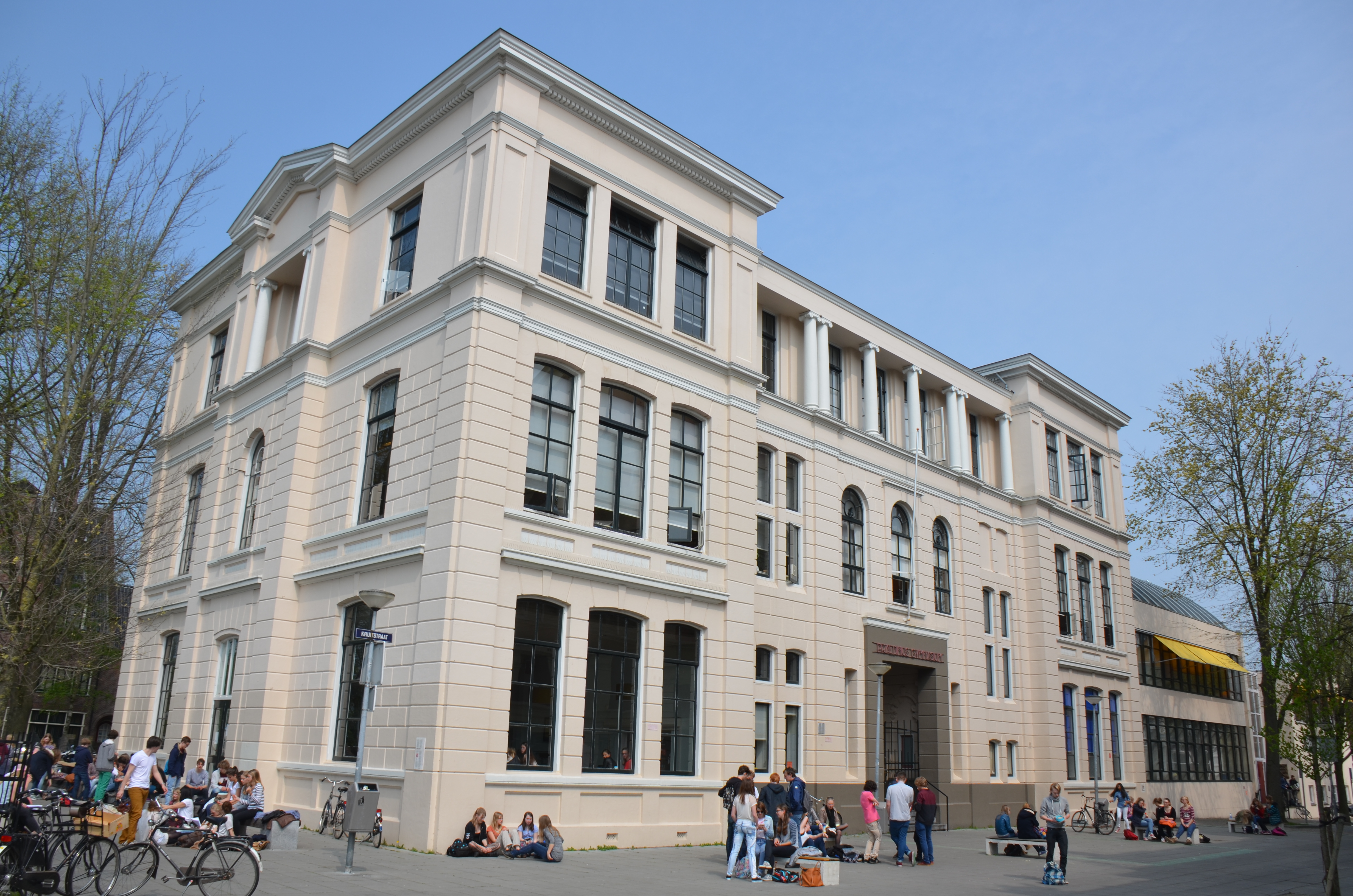

As of 2020, around 25% of the 230,000 inhabitants in Groningen are students. The city has the highest density of students and the lowest mean age in the Netherlands.
There are also Middle Schools, such as H.N. Werkman College
The University of Groningen (in Dutch: Rijksuniversiteit Groningen), established in 1614 is the second oldest university in the Netherlands (after the University of Leiden). The university educated the country's first female student, Aletta Jacobs, the first Dutch national astronaut, Wubbo Ockels, the first president of the European Central Bank, Wim Duisenberg, and two Nobel laureates; Heike Kamerlingh Onnes (in Physics) and Ben Feringa (in Chemistry). The university has about 31,000 students 22% of whom are international.
The Hanze University of Applied Sciences (in Dutch: Hanzehogeschool Groningen) was founded in 1986 and is more focused on the practical application of knowledge, offering bachelor and master courses in fields like Electrical and Electronic Engineering, Communication and Multimedia Design, and Renewable Energy. With around 8.1% international students, Hanze hosts more than 28,000 students and is one of the largest universities of applied sciences by enrollment in the Netherlands.
Politics
The Groningen municipal council has 45 members which, after the 2022 local elections, was made up as follows:
| Party name | Seats |
|---|---|
| GroenLinks | 9 |
| PvdA | 6 |
| D66 | 5 |
| Party for the Animals | 4 |
| Stadspartij 100% voor Groningen | 4 |
| Socialist Party | 4 |
| VVD | 3 |
| Student en Stad | 3 |
| Christian Union | 2 |
| Christian Democratic Appeal | 2 |
| Party for the North | 2 |
| Party for Freedom | 1 |
From 2022, the ruling municipal coalition consisted of GroenLinks, PvdA, Party for the Animals, the Socialist Party and ChristenUnie.
International relations
Groningen is twinned with the following cities:
Groningen also has a trilateral partnership with the nearby northern German cities of Bremen and Oldenburg.
Transport
Cycling and walking
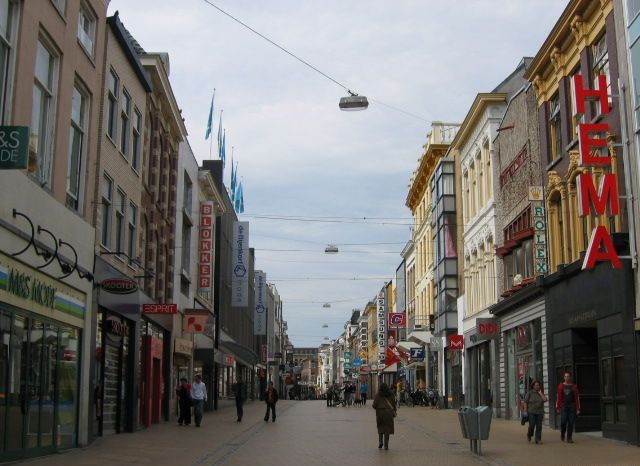
Groningen is known as the "World Cycling City"; around 57% of its residents use a bicycle for regular commute within the city. In 2000, Groningen was chosen as the Fietsstad 2002, the top cycle-city in the Netherlands for 2002. Similar to most Dutch cities, Groningen has developed to accommodate a large number of cyclists. An extensive network of bike paths were planned to make it more convenient to cycle to various destinations instead of taking a car.
The city has segregated cycle-paths, public transport, and a large pedestrianised zone in the city centre. Groningen's city centre was remodeled into a "pedestrian priority zone" to promote walking and biking. This was achieved by applying the principle of filtered permeability—the network configuration favours active transportation and selectively "filters out" traveling in a car by reducing the number of streets that run through the centre. The streets that are discontinuous for cars connect to a network of pedestrian and bike paths which permeate the entire centre. In addition, these paths go through public squares and open spaces, increasing aesthetic appeal and encouraging participation. The logic of filtering a mode of transport is fully expressed in a comprehensive model for laying out neighbourhoods and districts—the fused grid.
Public transport
Trains

Groningen railway station (in Dutch: Hoofdstation) is the main railway station and has regular services to most of the major cities in the country. The city's remaining two railway stations are Europapark and Noord.
Groningen has six railway routes:
- Groningen – Delfzijl
- Groningen – Roodeschool / Eemshaven
- Groningen – Leeuwarden
- Groningen – Veendam
- Groningen – Weener / Leer
- Groningen – Meppel / Zwolle
On those six routes, ten lines stop at:
- Groningen – Groningen North – Sauwerd – Bedum – Stedum – Loppersum – Appingedam – Delfzijl West – Delfzijl
- Groningen – Groningen North – Sauwerd – Winsum – Baflo – Warffum – Usquert – Uithuizen – Uithuizermeeden – Roodeschool – (Low Service) Eemshaven
- Groningen – Zuidhorn – Grijpskerk – Buitenpost – De Westereen – Feanwâlden – Hurdegaryp – Leeuwarden Camminghaburen – Leewarden
- Groningen – Buitenpost – Leewarden
- Groningen – Groningen Europapark – Kropswolde – Martenshoek – Hoogezand-Sappemeer – Sappemeer oost – Zuidbroek – Veendam
- Groningen – Groningen Europapark – Kropswolde – Martenshoek – Hoogezand-Sappemeer – Sappemeer oost – Zuidbroek – Scheemda – Winschoten – (lower service) Bad Nieuweschans – Weener (Due to a broken bridge, trains do not go on to Leer. Take a bus from Groningen or Weener.)
- Groningen – Groningen Europapark – Haren – Assen – Beilen – Hoogeveen – Meppel – Zwolle
- Groningen – Assen – Zwolle – Amersfoort Centraal – Utrecht Centraal – Gouda – Rotterdam Alexander – Rotterdam Centraal
- Groningen – Assen – Zwolle – Lelystad Centrum – Almere Centrum – Amsterdam South – Schiphol – Leiden Centraal – Den Haag Centraal / The Hague Centraal
Buses
Groningen has bus lines and Q-Link—a network of buses similar to a tram/metro network. City & Q-Link lines:
- 1: Main Station – City Center – UMCG North – Station Groningen North – Zernike – P+R Reitdiep
- 2: Groningen Europapark – UMCG Main Entrance – UMCG North – Station Groningen North – Zernike – Station Zuidhorn
- 3: Lewenborg – P+R Kardinge – Main Station – P+R Hoogkerk – Leek
- 4: Beijum – P+R Kardinge – Main Station – P+R Hoogkerk – Peize – Roden
- 5: Harkstede – P+R Meerstad – UMCG Main Entrance – City Centre – Main Station – P+R Haren – Zuidlaren – Annen
- 6: P+R Haren – Main Station – UMCG Main Entrance – Ten Boer – Appingedam – Delfzijl
- 7: Main Station – Westerhaven – Vinkhuizen – Paddepoel
- 8: P+R Hoogkerk – Hoogkerk – Westerhaven – Main Station – De Wijert – Groningen Europapark
- 9: Eelde – Paterswolde – Martini hospital – Corpus den Hoorn – De Wijert – Main Station – Westerhaven – Paddepoel – Zernike
- 10: P+R Hoogkerk – Martini hospital – Corpus den Hoorn – De Wijert – Main Station – Korrewegwijk – Selwerd – Station Groningen North
- 15: Main Station – Paddepoel – Zernike
- 18: P+R Hoogkerk – Vinkhuizen – Paddepoel – Zernike
- 19: Main Station – Westerhaven – Paddepoel
Q-Liner lines:
- 300: Groningen – P+R Westlaren (Zuidlaren) – P+R Gieten – P+R Borger – Emmen
- 304: Groningen – P+R Hoogkerk – Drachten
- 309: Groningen – Assen Busstation Marsdijk – Kloosterveen
- 312: Groningen – P+R Haren – P+R Annen – P+R Gieten – Gasselte – Stadskanaal
- 314: Groningen – Drachten
- 315: Groningen – Heereveen – Emmeloord
- 324: Groningen – Emmeloord
Night lines:
- 404: Groningen – P+R Hoogkerk – Marum – Drachten
- 406: Groningen – Ten Boer – Appingedam – Delfzijl
- 409: Groningen – Assen Busstation Marsdijk – Station Assen
- 410: Groningen – Vries – Assen Busstation Marsdijk – Station Assen
- 417: Groningen → P+R Hoogkerk → Peize → Roden → Leek → P+R Hoogkerk – Groningen
- 418: Groningen → Haren → Zuidlaren → Annen → P+R Gieten → P+R Annen → P+R Westlaren → P+R Haren → Groningen Regional lines:
- 35: Groningen – Aduard – Oldehove
- 39: Groningen – Vinkhuizen – Zuidhorn – Grootegast – Surhuisterveen
- 50: Groningen – Haren – Glimmen – Vries – Station Assen
- 51: Groningen – Haren – Zuidlaren – Annen – Loon – Station Assen
- 61: Groningen – Bedum – Middelstum – Uithuizen
- 65: Groningen – Winsum – Zoutkamp
- 76: Groningen – Hoogezand
- 85:Groningen – Leek – Oosterwolde
- 107: Zernike – P+R Kardinge – Gasselte – Stadskanaal
- 109: Zernike – P+R Hoogkerk – Assen
- 133: Groningen – P+R Hoogkerk – Via A7 – Grootegast – Surhuisterveen
- 139: Groningen – Hoogkerk – Grootegast – Surhuisterveen
- 163: Groningen – Winsum – Lauwersoog (connecting with the ferry to Schiermonnikoog)
- 171: Zernike – Via A7 – Hoogezand – Veendam
- 178: Groningen – Slochteren – Siddeburen – Appingedam (limited Service to Appingedam) Other lines:
- 563: Winsum – Bedum – Ten Boer
- 564: Ten Boer – Woltersum – Appingedam Direct bus routes from Groningen to Bremen, Hamburg, Berlin, and Munich are also available.
Motorways
The A28 motorway connects Groningen to Utrecht (via Assen, Zwolle and Amersfoort). The A7 motorway connects it to Friesland and Zaandam (West), and Winschoten and Leer (East).
Airport

Groningen Airport Eelde is an international airport located near Eelde, in Drenthe, with scheduled services to Guernsey, Gran Canaria, Antalya, Crete, Mallorca and Bodrum.
Notable people
Main article: List of people from Groningen

- Abel Janszoon Tasman (1603–1659), explorer, seafarer, merchant for the Dutch East India Company
- Albert Dominicus Trip van Zoudtlandt (1776–1835), lieutenant-general at the Battle of Waterloo
- Geert Adriaans Boomgaard (1788–1899), soldier, first validated supercentenarian
- Heike Kamerlingh Onnes (1853–1926), physicist, Nobel laureate
- Dirk Jan de Geer (1870–1960), statesman and Dutch Prime Minister (1926–29, 1939–40), advocated peace settlement between the Netherlands and Nazi Germany in 1940
- Jantina Tammes (1871–1947), botanist and geneticist
- A. W. L. Tjarda van Starkenborgh Stachouwer (1888–1978), last colonial Governor-General of the Netherlands East Indies
- Michel Velleman (1895–1943), Jewish magician
- Jan Wolthuis (1903–1983), lawyer and collaborator, active in far-right politics after WWII
- Esmée van Eeghen (1918–1944), Dutch resistance member executed by the Nazis in Paddepoel, Noorddijk
- Pete Hoekstra (born 1953), United States ambassador to the Netherlands and Canada, former Republican member of Congress representing Michigan's 2nd congressional district
- Gerard Kemkers (born 1967), speed skating bronze medalist at 1988 Winter Olympics
- Anda Kerkhoven (1919–1945), Dutch resistance member executed by the Nazis near Glimmen
- Bauke Mollema (born 1986), cyclist
- Kim Feenstra (born 1985), model
- Ben Woldring (born 1985), internet entrepreneur
- Luit Bieringa (1942-2022), New Zealand Art Historian
- Luciano Valente (born 2003), professional footballer
- Noisia, music producers
- Vicetone, DJ and music producer duo
Notes
References
Bibliography
References
- "Burgemeester". Gemeente Groningen.
- [https://archief28.sitearchief.nl/archives/sitearchief/20180223220341/https://www.rijksoverheid.nl/onderwerpen/gemeenten/nieuws/2025/05/23/benoeming-burgemeester-groningen Benoeming burgemeester Groningen], Rijksoverheid, 23 mei 2024. [https://archive.today/20250630224915/https://archief28.sitearchief.nl/archives/sitearchief/20180223220341/https://www.rijksoverheid.nl/onderwerpen/gemeenten/nieuws/2025/05/23/benoeming-burgemeester-groningen Gearchiveerd] op 30 juni 2025.
- {{Dutch municipality total area. dataref
- "Postcodetool for 9712HW". Het Waterschapshuis.
- "AlleCijfers Groningen".
- {{Cite American Heritage Dictionary. Groningen
- [https://en.oxforddictionaries.com/definition/us/Groningen "Groningen"] {{Webarchive. link. (1 May 2019 (US) and {{Cite Oxford Dictionaries). Groningen
- "Minicruises to Groningen".
- (2016-09-19). "Groningen: Small City, Full of Life".
- [https://allecijfers.nl/gemeente/groningen/ AlleCijfers - Groningen population data]
- van de Broek, Jan. (2007). "Groningen, een stad apart : over het verleden van een eigenzinnige stad (1000-1600)". Assen: Koninklijke Van Gorcum.
- administrator. "Study in Groningen, The Netherlands".
- "Groningen: student city".
- "Waar wonen de meeste jongeren en ouderen?".
- (1855). "''De Navorscher: Een middel tot gedachtenwisseling en letterkundig verkeer, tusschen allen die iets weten: iets te vragen hebben, of iets kunnen oplossen ...''". J.C. Loman, Jr..
- (1999). "Nieuwe Groninger encyclopedie". REGIO-PRoject uitgevers.
- John Lothrop Motley. (1867). "History of the United Netherlands, from the Death of William the Silent to the Synod of Dort: With a Full View of the English-Dutch Struggle Against Spain, and of the Origin and Destruction of the Spanish Armada". John Murray.
- [http://gtb.inl.nl/iWDB/search?wdb=WFT&actie=article&id=35345 "Grins (II)”], in ''Wurdboek fan de Fryske taal'' (in Dutch), 2011
- (1936). "Onze taaltuin".
- Helmer Molema. (1887). "Woordenboek der Groningsche volkstaal in de 19de eeuw". Mekel.
- Association for History and Computing. International Conference. (1995). "Structures and Contingencies in Computerized Historical Research: Proceedings of the IX International Conference of the Association for History & Computing, Nijmegen, 1994". Uitgeverij Verloren.
- (2005). "Place Identity, Participation and Planning". Psychology Press.
- Rob Roggema. (2 December 2012). "Swarming Landscapes: The Art of Designing For Climate Adaptation". Springer Science & Business Media.
- Pieter C. van der Kruit. (18 November 2014). "Jacobus Cornelius Kapteyn: Born Investigator of the Heavens". Springer.
- (30 April 2020). "Houses of the Dead". Oxbow Books.
- A.A. Balkema. (1982). "Palaeohistoria". A.A. Balkema.
- (1 March 2007). "The Rough Guide to the Netherlands". Rough Guides Limited.
- (1 June 2011). "Language Change: Contributions to the Study of its Causes". Walter de Gruyter.
- DK Eyewitness. (7 May 2020). "DK Eyewitness The Netherlands". Dorling Kindersley Limited.
- E.O. van der Werff, ''Martini. Kerk en toren''. Assen, 2003, p. 53; F. Westra, ''Martinitoren''. Groningen, 2009, p. 29. According to an improbable myth, the tower would have been 127 m high
- Clement Cruttwell. (1808). "The New Universal Gazetteer, or, Geographical Dictionary: Containing a Description of All the Empires, Kingdoms, States, Provinces, Cities, Towns, Forts, Seas, Harbours, Rivers, Lakes, Mountains, and Capes in the Known World ; with the Government, Customs, Manners, and Religion of the Inhabitants ... ; with Twenty-eight Whole Sheet Maps". Longman, Hurst, Rees and Orme.
- (1859). "An Index of Dates: Comprehending the Principal Facts in the Chronology and History of the World, from the Earliest to the Present Time. Alphabetically Arranged. Being a Complete Index to the Enlarged Edition of Blair's Chronological Tables". Bell & Daldy.
- R. Prokhovnik. (31 March 2004). "Spinoza and Republicanism". Palgrave Macmillan UK.
- (2019-03-25). "Groningen's links to the Dutch Slave Trade".
- (22 March 2011). "Groningen, University of".
- Major Jeffrey D. Noll U.S. Army. (15 August 2014). "Restraint In Urban Warfare: The Canadian Attack On Groningen, Netherlands, 13-16 April 1945". Lucknow Books.
- Wouter Troost. (2005). "William III the Stadholder-king: A Political Biography". Ashgate Publishing, Ltd..
- Society of Archer-Antiquaries. (1969). "Journal of the Society of Archer-Antiquaries". Society of Archer-Antiquaries.
- [http://toerisme.groningen.nl/english/agenda/bommen-berend Groningen tourism site] {{webarchive. link. (2008-12-10)
- Conrad Malte-Brun. (1834). "A System of Universal Geography: Or A Description of All the Parts of the World, on a New Plan, According to the Great Natural Divisions of the Globe". S. Walker.
- G.J. Ashworth. (22 November 2017). "The Construction of Built Heritage: A North European Perspective on Policies, Practices and Outcomes". Taylor & Francis.
- "The weather and surroundings of Groningen". FutureLearn.
- J. Smith Homans. (1859). "A Cyclopedia of Commerce and Commercial Navigation, with Maps and Engravings: To which is Now Added a Chart of the Bay and Harbor of New York, with the Soundings of East River, North River, Harlem River, Newark Bay, and New York Bay". Harper & Brothers.
- Popular encyclopedia. (1879). "The popular encyclopedia; or, 'Conversations Lexicon': [ed. by A. Whitelaw from the Encyclopedia Americana].".
- "Groningen, Netherlands Köppen Climate Classification (Weatherbase)".
- (1794). "A new geographical, historical, and commercial Grammar. Fourteenth edition, illustrated with a correct set of maps".
- (1990). "The Meteorological Magazine". H.M. Stationery Office.
- "Eelde, gehomogeniseerde langjarige extremen, tijdvak 1906–2022". Royal Netherlands Meteorological Institute.
- (9 March 2020). "Number of overnight tourists up to 46 million in 2019". Statistics Netherlands.
- OECD. (31 March 2020). "OECD Urban Studies The Circular Economy in Groningen, the Netherlands". OECD Publishing.
- (17 January 2008). "Suiker Unie to Concentrate Sugar Production in Dinteloord and Hoogkerk". CNS Media.
- (16 March 2017). "CSM beet plant a victim of EU sugar reform". ConfectioneryNews.
- Joop W. Koopmans. (5 November 2015). "Historical Dictionary of the Netherlands". Rowman & Littlefield Publishers.
- (1991). "International Brands and Their Companies". Gale Research.
- Sjors van Leeuwen. (2007). "Zorgmarketing in de praktijk". Uitgeverij Van Gorcum.
- (14 June 2017). "The Global Oil & Gas Industry: Stories From the Field". PennWell Corporation.
- "CBS StatLine – Bevolking; leeftijd, herkomstgroepering, geslacht en regio, 1 januari".
- "CBS Statline".
- "De religieuze kaart van Nederland, 2010-2015".
- (2 October 2014). "Kerkelijkheid en kerkbezoek, 2010/2013". Centraal Bureau voor de Statistiek.
- Historisch Genootschap te Groningen. (1987). "De Historie herzien: vijfde bundel "Historische avonden"". Uitgeverij Verloren.
- (30 September 2018). "Dutch haven: A day in Groningen". Malay Mail.
- (12 November 2012). "Global Tourist Behavior". Routledge.
- "Culture". GroningenLife!.
- (1995). "Centres of Learning: Learning and Location in Pre-Modern Europe and the Near East". BRILL.
- (31 May 2019). "What, where, when: New tips for Groningen and Leeuwarden". Persbureau Tammeling BV.
- . (2021-01-01). ["Groningen (1946)"](https://www.chessgames.com/perl/chess.pl?tid=79918). *chessgames.com*.
- Marietta de Vries. (2010). "Present". 010 Publishers.
- Fred Maidment. (November 2000). "International Business: 01/02". McGraw-Hill/Dushkin.
- (25 April 2013). "The north and the Frisian Islands Rough Guides Snapshot Netherlands (includes Leeuwarden, Harlingen, Hindeloopen, Makkum, Sneek and Groningen)". Rough Guides Limited.
- Athina Karatzogianni. (17 June 2013). "Violence and War in Culture and the Media: Five Disciplinary Lenses". Routledge.
- Rough Guides. (1 March 2019). "The Rough Guide to the Netherlands (Travel Guide eBook)". Apa Publications (UK) Limited.
- (2012). "Re-exploring Canadian Space". Barkhuis.
- (June 2007). "Here's Holland". Eburon Uitgeverij B.V..
- (31 March 2011). "Migrating Music". Routledge.
- (1979). "Living Blues". Living Blues Publications.
- (2005). "Dutch Realist". NAi Publishers.
- (2000). "The Rough Guide to Holland". Rough Guides.
- (1997). "Holland". Rough Guides.
- "About Eurosonic Noorderslag".
- "Winnaars 2005 – 2007 -- Verkiezing Beste Binnenstad". debestebinnenstad.nl.
- (13 February 2015). "Life behind red lights in Groningen".
- "Standings". Eredivisie.
- (4 May 2015). "FC Groningen pakt eerste KNVB-beker in clubhistorie ten koste van PEC – NU – Het laatste nieuws het eerst op NU.nl". nu.nl.
- "Netherlands 1990/91". The Rec.Sport.Soccer Statistics Foundation..
- [http://www.imtech.eu/eCache/DEF/1/579.bGFuZz1FTg.html 10 million Euro orders for Olympic Stadium in Berlin and Euroborg Stadium in Groningen] {{webarchive. link. (28 December 2010 Imtech, 8 April 2004)
- (27 October 2008). "Club Info – FC Groningen". FC Groningen.
- (28 June 2018). "Naam stadion FC Groningen gaat veranderen in Hitachi Stadion". NU.
- "Landskampioenen, bekerwinnaars en competitiewinnaars". J-dus.com.
- Steven W. Coutinho. (24 May 2018). "Breaking Rank: How to lead change when yesterday's stories limit today's choices". Steven Coutinho.
- (14 October 2018). "4 Mile of Groningen". Campus Groningen.
- "85th Giro d'Italia (GT)". cyclingnews.com.
- "Technical Guide Elite". energiewachttour.nl.
- "Groningen: Student City". Accord of Groningen.
- Arthur Joseph van Essen. (11 November 2013). "E. Kruisinga: A Chapter in the History of Linguistics in the Netherlands". Springer.
- (1996). "Memories: My Life as an International Leader in Health, Suffrage, and Peace". Feminist Press.
- European Space Agency. (2014). "Bulletin Agence Spatiale Européenne". ESA Publications Division.
- Arun Agarwal. (2008). "Nobel Prize Winners in Physics". APH Publishing.
- "Asymmetric oxidation of phenols. Atropisomerism and optical activity".
- (14 July 2004). "Key figures". University of Groningen.
- "History – Hanze University of Applied Sciences, Groningen". Hanze University of Applied Sciences.
- "Programmes". Hanze University of Applied Sciences.
- "Facts & Figures". Hanze University of Applied Sciences.
- (16 March 2022). "Groningen municipal election 2022".
- GemeenteOplossingen. "Raadsleden, Gemeente Groningen".
- "Coalitieakkoord {{!}} Gemeente Groningen".
- "''Groningen – Partner Cities''". 2008 Gemeente Groningen, Kreupelstraat 1,9712 HW Groningen.
- "Kadernota Internationalisering 2013–2016". Groningen.
- "Twin Towns – Graz Online – English Version". graz.at.
- "''Kaliningrad – Partner Cities''". 2000–2006 Kaliningrad City Hall.
- "International relations and development cooperation - Senatskanzlei UNESCO-Welterbe Rathaus Bremen".
- Pooley, Colin G. (21 August 2013). "Promoting Walking and Cycling: New Perspectives on Sustainable Travel". Policy Press.
- R Tolley. (29 August 2003). "Sustainable Transport". Elsevier.
- (28 August 2018). "Building the Cycling City: The Dutch Blueprint for Urban Vitality". Island Press.
- (23 April 2018). "Ride a Bike!: Reclaim the City". Birkhäuser.
- (1995). "The Environmental Assessment of Traffic Management Schemes: A Literature Review". Transport Research Laboratory.
- Timothy Beatley. (26 September 2012). "Green Urbanism: Learning From European Cities". Island Press.
- Paul Appleby. (12 October 2012). "Integrated Sustainable Design of Buildings". Routledge.
- Fiona Spotswood. (26 February 2016). "Beyond Behaviour Change: Key Issues, Interdisciplinary Approaches and Future Directions". Policy Press.
- Commission of the European Communities. (1994). "City and Environment". The Commission.
- Melia, S. (2012). ''Filtered and unfiltered permeability: The European and Anglo-Saxon approaches''. Project, 4.
- link. (7 February 2021 {{in lang). nl, Stationsweb. Retrieved on 25 May 2015.
- link. (21 January 2021 {{in lang). nl, Stationweb. Retrieved 8 December 2015.
- (23 January 2020). "Spoorkaart 2020: hier te downloaden". Nieus.
- (29 June 2018). "Light Rail Transit Systems: 61 Lessons in Sustainable Urban Development". Elsevier Science.
- "Kaarten en plattegronden". Qbuzz.
- DK Eyewitness. (6 July 2017). "DK Eyewitness The Netherlands". Dorling Kindersley Limited.
- (1 June 1989). "Agricultural Engineering: Proceedings of the 11th International Congress, Dublin, 4-8 September 1989". CRC Press.
- "Destinations". Groningen Airport Eelde.
This article was imported from Wikipedia and is available under the Creative Commons Attribution-ShareAlike 4.0 License. Content has been adapted to SurfDoc format. Original contributors can be found on the article history page.
Ask Mako anything about Groningen — get instant answers, deeper analysis, and related topics.
Research with MakoFree with your Surf account
Create a free account to save articles, ask Mako questions, and organize your research.
Sign up freeThis content may have been generated or modified by AI. CloudSurf Software LLC is not responsible for the accuracy, completeness, or reliability of AI-generated content. Always verify important information from primary sources.
Report