From Surf Wiki (app.surf) — the open knowledge base
Grindcore
Extreme genre of music

Extreme genre of music
| Field | Value | |||||||
|---|---|---|---|---|---|---|---|---|
| name | Grindcore | |||||||
| stylistic_origins | {{flatlist | |||||||
| * noise<ref>{{cite web | url | https://www.heavychronicle.com/campfire-stories/grindcore-unleashed-the-birth-evolution-and-impact-of-an-extreme-genre/ | title=Grindcore Unleashed: The Birth, Evolution, and Impact of an Extreme Genre | website=Heavy Chronicle | access-date=7 November 2023 | archive-date=7 November 2023 | archive-url=https://web.archive.org/web/20231107200248/https://www.heavychronicle.com/campfire-stories/grindcore-unleashed-the-birth-evolution-and-impact-of-an-extreme-genre/ | url-status=dead}} |
| cultural_origins | Mid-1980s, England | |||||||
| derivatives | ||||||||
| fusiongenres | * Deathgrind | |||||||
| local_scenes | Birmingham | |||||||
| other_topics | * Anarcho-punk |
- Hardcore punk
- crust punk
- thrashcore
- extreme metal
- thrash metal
- industrial
- noise
- goregrind
- pornogrind
- Brazil
- United Kingdom
- crossover thrash
- D-beat
- death metal
- industrial metal
- metalcore
- powerviolence
- sludge metal
- speedcore
Grindcore is an extreme fusion genre of heavy metal and hardcore punk that originated in the mid-1980s, drawing inspiration from abrasive-sounding musical styles, such as thrashcore, crust punk, hardcore punk, extreme metal, and industrial. Grindcore is considered a more noise-filled style of hardcore punk while using hardcore's trademark characteristics such as heavily distorted, down-tuned guitars, grinding overdriven bass, high-speed tempo, blast beats, and vocals which consist of growls, shouts and high-pitched shrieks. Early groups such as England's Napalm Death are credited with laying the groundwork for the style. It is most prevalent today in North America and Europe, with popular contributors such as Brutal Truth and Nasum. Lyrical themes range from a primary focus on social and political concerns, to gory subject matter and black humor.
A trait of grindcore is the "microsong", far shorter than average for punk or metal. Several bands have produced songs that are only seconds in length. Many bands, such as Agoraphobic Nosebleed, record simple phrases that may be rhythmically sprawled out across an instrumental lasting only a couple of bars in length.
A variety of subgenres and microgenres have subsequently emerged, often labeling bands according to traits that deviate from regular grindcore; including goregrind, focused on themes of gore (e.g. mutilation and pathology), and pornogrind, fixated on pornographic lyrical themes. Another offshoot is cybergrind which incorporates electronic music elements such as sampling and programmed drums. Although influential within hardcore punk and extreme metal, grindcore remains an underground form of music.
Characteristics
Known for being "among the noisiest, fastest and rawest kinds of metal," grindcore is influenced by crust punk, thrashcore, hardcore punk, death metal and thrash metal, as well as noise musical acts like Swans. The name derives from the fact that grind is a British term for thrash; that term was prepended to -core from hardcore. Grindcore relies on standard hardcore punk instrumentation: electric guitar, bass and drums.
A characteristic of some grindcore songs is the "microsong," lasting only a few seconds. In 2001, the Guinness Book of World Records awarded Brutal Truth the record for "Shortest Music Video" for 1994's "Collateral Damage" (the song lasts four seconds). In 2007, the video for the Napalm Death song "You Suffer" set a new "Shortest Music Video" record: 1.3 seconds. Beyond the microsong, it is characteristic of grindcore to have short songs in general; for example, Carcass' debut album Reek of Putrefaction (1988) consists of 22 tracks with an average length of 1 minute and 48 seconds. It is common for grindcore albums to be very short when compared to other genres, usually consisting of a large track list but having a total length of only 15 to 20 minutes.
Many grindcore groups experiment with tuned-down guitars and play mostly with downstrokes of the pick, power chords and heavy distortion. While the vinyl A-side of Napalm Death's debut, 1987's Scum, is set to Eb tuning, on side B, the guitars are tuned down to C. Their second album From Enslavement to Obliteration and the Mentally Murdered EP were tuned to C ♯. Harmony Corruption, their third full-length album, was tuned up to a D. Bolt Thrower went further, dropping 3½ steps down (A). The bass playing is often overdriven.
Blast beat
Main article: Blast beat
The blast beat is a drum beat characteristic of grindcore in all its forms, although its usage predates the genre itself, in Adam MacGregor's definition, "the blast-beat generally comprises a repeated, sixteenth-note figure played at a very fast tempo, and divided uniformly among the kick drum, snare and ride, crash, or hi-hat cymbal." Napalm Death coined the term, Dirty Rotten Imbeciles ("No Sense"), Sarcófago ("Satanas"), Sepultura ("Antichrist"), and Repulsion also included the technique prior to Napalm Death's emergence.
Lyrical themes
Grindcore lyrics are typically provocative. A number of grindcore musicians are committed to political and ethical causes, generally leaning towards the far left in connection to grindcore's punk roots. For example, Napalm Death's songs address a variety of anarchist concerns, in the tradition of anarcho-punk. These themes include anti-racism, feminism, anti-militarism, and anti-capitalism. Early grindcore bands including Napalm Death, Agathocles and Carcass made animal rights one of their primary lyrical themes. Some of them, such as Cattle Decapitation and Carcass, have expressed disgust with human behavior and animal abuse, and are, in some cases, vegetarians or vegans. Carcass' work in particular is often identified as the origin of the goregrind style, which is devoted to "bodily" themes.{{cite journal | archive-url = https://web.archive.org/web/20071214174913/http://www.decibelmagazine.com/features/dec2005/carcass_clones.aspx | archive-date = 14 December 2007 | access-date = 28 November 2007 }} Groups that shift their bodily focus to sexual matters, such as Gut and the Meat Shits, are sometimes referred to as pornogrind.{{cite book |access-date= 28 November 2007 }} Seth Putnam's lyrics are notorious for their black comedy, while The Locust tend toward satirical collage, indebted to William S. Burroughs' cut-up method.
History
Precursors
The early grindcore scene relied on an international network of tape trading and DIY production. The most widely acknowledged precursors of the grindcore sound are Siege and Repulsion, an early death metal outfit. Siege, from Weymouth, Massachusetts, were influenced by classic American hardcore (Minor Threat, Black Flag, Void) and by British groups like Discharge, Venom, and Motörhead. Siege's goal was maximum velocity: "We would listen to the fastest punk and hardcore bands we could find and say, 'Okay, we're gonna deliberately write something that is faster than them, drummer Robert Williams recalled. Repulsion is sometimes credited with inventing the classic grind blast beat (played at 190 bpm), as well as its distinctive bass tone. Kevin Sharp of Brutal Truth declares that "Horrified was and still is the defining core of what grind became; a perfect mix of hardcore punk with metallic gore, speed and distortion." Writer Freddy Alva credited NYC Mayhem as a notable precursor, calling them "arguably one of the fastest bands on the planet back [in the mid 1980s]".
Other groups in the British grindcore scene, such as Heresy and Unseen Terror, have emphasized the influence of American hardcore punk, including Septic Death, as well as Swedish D-beat. Sore Throat cites Discharge, Disorder, and a variety of European D-beat and thrash metal groups, including Hellhammer, and American hardcore groups, such as Poison Idea and D.R.I. Japanese hardcore, particularly GISM, is also mentioned by a number of originators of the style. Other key groups cited by current and former members of Napalm Death as formative influences include Discharge, Amebix, Throbbing Gristle, and the aforementioned Dirty Rotten Imbeciles. Post-punk, such as Killing Joke and Joy Division, was also cited as an influence on early Napalm Death.
British grindcore
Grindcore, as such, was developed during the mid-1980s in the United Kingdom by Napalm Death, a group who emerged from the anarcho-punk scene in Birmingham, England. While their first recordings were in the vein of Crass, they eventually became associated with crust punk, The group began to take on increasing elements of thrashcore, post-punk, and power electronics, and began describing their sound as "Siege with Celtic Frost riffs". The group also went through many changes in personnel. A major shift in style took place after Mick Harris became the group's drummer. Punk historian Ian Glasper indicates that "For several months gob-smacked audiences weren't sure whether Napalm Death were actually a serious band any longer, such was the undeniable novelty of their hyper-speed new drummer." Albert Mudrian's research suggests that the name "grindcore" was coined by Harris. When asked about coming up with the term, Harris said:
Other sources contradict Harris' claim. In a Spin magazine article written about the genre, Steven Blush declares that "the man often credited" for dubbing the style grindcore was Shane Embury, Napalm Death's bassist since 1987. Embury offers his own account of how the grindcore "sound" came to be:
Earache Records founder Digby Pearson concurs with Embury, saying that Napalm Death "put hardcore and metal through an accelerator." Pearson, however, said that grindcore "wasn't just about the speed of [the] drums, blast beats, etc." He claimed that "it actually was coined to describe the guitars – heavy, downtuned, bleak, harsh riffing guitars [that] 'grind', so that's what the genre was described as, by the musicians who were its innovators [and] proponents."
While abrasive, grindcore achieved a measure of mainstream visibility. New Musical Express featured Napalm Death on their cover in 1988, declaring them "the fastest band in the world." As James Hoare, deputy editor of Terrorizer, writes:
Napalm Death's seismic impact inspired other British grindcore groups in the 1980s, among them Extreme Noise Terror, Extreme Noise Terror, from Ipswich, formed in 1984. With the goal of becoming "the most extreme hardcore punk band of all time," the group took Mick Harris from Napalm Death in 1987. Ian Glasper describes the group as "pissed-off hateful noise with its roots somewhere between early Discharge and Disorder, with [vocalists] Dean [Jones] and Phil [Vane] pushing their trademark vocal extremity to its absolute limit." In 1991, the group collaborated with the acid house group The KLF, appearing onstage with the group at the Brit Awards in 1992. Carcass released Reek of Putrefaction in 1988, which John Peel declared his favorite album of the year despite its very poor production. The band's focus on gore and anatomical decay, lyrically and in sleeve artwork, inspired the goregrind subgenre. Sore Throat, said by Ian Glasper to have taken "perhaps the most uncompromisingly anti-music stance" were inspired by crust punk as well as industrial music. Some listeners, such as Digby Pearson, considered them to be simply an in-joke or parody of grindcore.
In the subsequent decade, two pioneers of the style became increasingly commercially viable. According to Nielsen Soundscan, Napalm Death sold 367,654 units between May 1991 and November 2003, while Carcass sold 220,374 units in the same period. The inclusion of Napalm Death's "Twist the Knife (Slowly)" on the Mortal Kombat soundtrack brought the band much greater visibility, as the compilation scored a Top 10 position in the Billboard 200 chart and went platinum in less than a year. The originators of the style have expressed some ambivalence regarding the subsequent popularity of grindcore. Pete Hurley, the guitarist of Extreme Noise Terror, declared that he had no interest in being remembered as a pioneer of this style: "grindcore was a legendarily stupid term coined by a hyperactive kid from the West Midlands, and it had nothing to do with us whatsoever. ENT were, are, and – I suspect – always will be a hardcore punk band... not a grindcore band, a stenchcore band, a trampcore band, or any other sub-sub-sub-core genre-defining term you can come up with." Lee Dorrian of Napalm Death indicated that "Unfortunately, I think the same thing happened to grindcore, if you want to call it that, as happened to punk rock – all the great original bands were just plagiarised by a billion other bands who just copied their style identically, making it no longer original and no longer extreme."
North American grindcore


Journalist Kevin Stewart-Panko argues that the American grindcore of the 1990s borrowed from three sources: British grindcore, the American precursors, and death metal. As early Napalm Death albums were not widely distributed in the United States, American groups tended to take inspiration from later works, such as Harmony Corruption. American groups also often employ riffs taken from crossover thrash or thrash metal. Early American grind practitioners included Terrorizer and Assück. Anal Cunt, a particularly dissonant group who lacked a bass player, were also particularly influential. Their style was sometimes referred to as "noisecore" or "noisegrind", described by Giulio of Cripple Bastards as "the most anti-musical and nihilistic face of extreme music at that time." Brutal Truth was a groundbreaking group in the American scene at the beginning of the 1990s.
However, Sharp indicates that they were more inspired by the thrash metal of Dark Angel than the British groups. Pig Destroyer is inspired by thrash metal, such as Dark Angel and Slayer, the sludge metal of the Melvins, and grindcore practiced by Brutal Truth, while Agoraphobic Nosebleed takes cues from thrashcore and powerviolence, like D.R.I. and Crossed Out.
The Locust, from San Diego, also take inspiration from powerviolence (Crossed Out, Dropdead), first-wave screamo (Angel Hair), obscure experimental rock (Art Bears, Renaldo and the Loaf), and death metal. The Locust were sometimes described as "hipster grind" because of their fan base and fashion choices. In Los Angeles, Hole also initially drew influence from grindcore in their early releases, particularly on their singles "Dicknail" and "Teenage Whore", as well as on their debut album, Pretty on the Inside (1991),{{cite AV media notes
Other later prominent grindcore groups of North America include Brujeria, Soilent Green, Cephalic Carnage, Impetigo, and Circle of Dead Children. Fuck the Facts, a Canadian group, practice classic grindcore, characterized by the "metronome-precision drumming and riffing [that] abound, as well as vocal screams and growls" by AllMusic reviewer Greg Prato.
Continental European grindcore

European groups, such as Agathocles, from Belgium, Patareni, of Croatia, and Fear of God, from Switzerland, are important early practitioners of the style. Filthy Christians, who signed to Earache Records in 1989, introduced the style in Sweden, D.D.T. & Fear of Dog were pioneering grind & noise in Serbia since mid-end of '80, Extreme Smoke 57 in Slovenia at the early beginning of the '90, while Cripple Bastards established Italian grindcore. Giulio of Cripple Bastards asserts that the name itself took some time to migrate from Britain, with the style being referred to as "death-thrashcore" for a time in Europe. Nasum, who emerged from the Swedish death metal scene, became a popular group, addressing political topics from a personal perspective.
Anders Jakobson, their drummer, reported that "It was all these different types of people who enjoyed what we were doing. [...] We made grindcore a bit easier to listen to at the expense of the diehard grindcore fans who thought that we were, well, not sellouts, but not really true to the original essence of grindcore." Inhume, from the Netherlands, Rotten Sound, from Finland, and Leng Tch'e, from Belgium, were subsequent European groups who practiced grindcore with death metal inflections. In 2000s, the Belgium-based Aborted "had grown into the role of key contributors to the death-grind genres".
Grindcore in Asian countries
In 2010, Singaporean band Wormrot signed a recording contract with Earache Records.
In 2019, Filipino band Tubero signed a recording contract with Tower of Doom Records.
Influence
Japanese noise rock group Boredoms have borrowed elements of grind, and toured with Brutal Truth in 1993. The Japanese grindcore group Gore Beyond Necropsy formed in 1989, and later collaborated with noise music artist Merzbow. Naked City, led by avant-garde jazz saxophonist John Zorn, performed an avant-garde form of polystylistic, grindcore-influenced punk jazz. Zorn later formed the Painkiller project with ambient dub producer Bill Laswell on bass guitar and Mick Harris on drums, which also collaborated with Justin Broadrick on some work. In addition, grindcore was one influence on the powerviolence movement within American hardcore punk, and has affected some strains of metalcore. Some musicians have also produced hybrids between grind and electronic music.
Powerviolence
Main article: Powerviolence
Powerviolence is a raw and dissonant subgenre of hardcore punk. The style is closely related to thrashcore Its nascent form was pioneered in the late 1980s in the music of hardcore punk band Infest, who mixed youth crew hardcore elements with noisier, sludgier qualities of Lärm and Siege. The microgenre solidified into its most commonly recognized form in the early 1990s, with the sounds of bands such as Man Is the Bastard, Crossed Out, No Comment, Capitalist Casualties, and Manpig.
Powerviolence bands focus on speed, brevity, bizarre timing breakdowns, and constant tempo changes. and Agoraphobic Nosebleed later reincorporated elements of powerviolence into grindcore.
Industrial and electronic influence
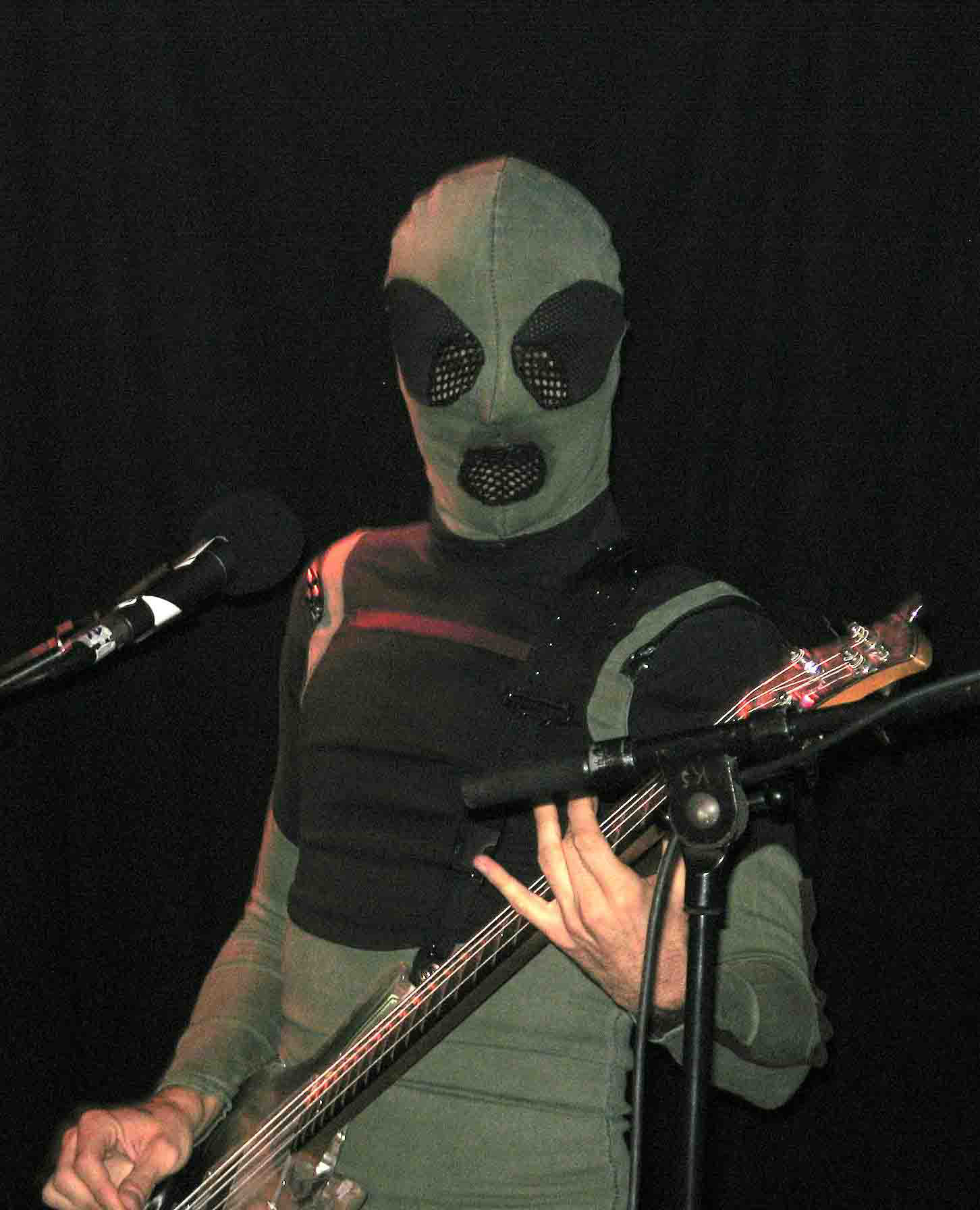
Among other influences, Napalm Death took impetus from the industrial music scene. Scorn also worked in the industrial hip hop and isolationist styles. Fear Factory have also cited debts to the genre. Digital hardcore is an initially German hybrid of hardcore punk and hardcore techno. Agoraphobic Nosebleed and the Locust have solicited remixes from digital hardcore producers and noise musicians. James Plotkin, Dave Witte, and Speedranch participated in the Phantomsmasher project, which melds grindcore and digital hardcore. Alec Empire collaborated with Justin Broadrick, on the first Curse of the Golden Vampire album, and with Gabe Serbian, of the Locust, live in Japan. Japanoise icon Merzbow also participated in the Empire/Serbian show.
Electrogrind
Not to be confused with electronicore.
The 21st century also saw the development of "electrogrind" (or "cybergrind"), practiced by The Berzerker, Gigantic Brain and Genghis Tron which borrows from electronic music. These groups built on the work of Agoraphobic Nosebleed, Enemy Soil and The Locust, as well as industrial metal. Bands like Libido Airbag and Cumfilled Brain incorporates elements of Grindcore, such as pitch-shifted, gurgled vocals, with the rhythmic structures of Techstep. Many later electrogrind groups were caricatured for their hipster connections.
Mathcore and screamo
Main article: Mathcore
In the mid-1990s, mathcore groups such as The Dillinger Escape Plan, Some Girls, and Daughters began to take inspiration from developments in grindcore. These groups also include elements of post-hardcore. In addition to mathcore, some early screamo groups, like Circle Takes the Square and Orchid, have been associated with grindcore by some commentators.
Crust punk
Crust punk had a major impact on grindcore's emergence. The first grindcore, practiced by British bands such as Napalm Death, Extreme Noise Terror and Disrupt emerged from the crust punk scene. This early style is sometimes dubbed "crustgrind".
Deathgrind
Deathgrind is a shorthand term that is used to describe bands who play a fusion of death metal and grindcore. With growing popularity of grindcore in the metal fandom, some death metal bands were noted to feature a heavy amount of grindcore influence; thus, these bands ended up becoming called "deathgrind" for short (sometimes written as death-grind or death/grind). Dan Lilker described deathgrind as "combining the technicality of death metal with the intensity of grindcore." Some examples of death metal and grindcore hybrids include Assück, Circle of Dead Children, Misery Index, Exhumed, Gorerotted and Cattle Decapitation. Assück in particular has been credited as one of the earliest deathgrind acts.
Blackened grindcore
Blackened grindcore is a fusion genre that combines elements of black metal and grindcore. Notable bands include Anaal Nathrakh and early Rotting Christ.
Noisegrind
Noisegrind (also known as grindnoise) is a microgenre that combines elements of grindcore and harsh noise. Notable bands include Holy Grinder, Sete Star Sept, Full of Hell, Fear of God, Insufferable, and early Knelt Rote.
Notes
References
- Carcass (1988). Reek of Putrefaction. [CD]. Nottingham, UK: Earache Compact Discs, Cassettes & Records. (1994).
- Ekeroth, Daniel (2008). Swedish Death Metal. Bazillion Points Books.
- Glasper, Ian (2009). Trapped in a Scene: UK Hardcore 1985-1989. Cherry Red Books.
- Grindcore Special (2009), Terrorizer, 180, 41–56, and 181, 41–56.
- Lilker, Danny (2007). "A User's Guide to Grindcore." Grind Your Mind: A History of Grindcore [CD]. Liner notes. Mayan Records, MYNDD056.
- Mudrian, Albert (2004). Choosing Death: The Improbable History of Death Metal and Grindcore. Los Angeles, CA: Feral House.
- Sarcófago. (1986). Satanas. On Warfare Noise [CD]. Belo Horizonte, MG: Cogumelo Records. (2007).
- Sepultura (1986). Antichrist. On Morbid Visions [CD]. New York: Roadrunner Records. (1997).
References
- "Grindcore Unleashed: The Birth, Evolution, and Impact of an Extreme Genre".
- "WTF is sasscore, and why is SeeYouSpaceCowboy bringing it to St. Petersburg's Lucky You Tattoo?".
- (2009). "Choosing Death: The Improbable History of Death Metal & Grindcore".
- Metal: The Definitive Guide (Garry Sharpe-Young), US Death Metal and Grindcore
- Blum, Jordan. (2021-11-19). "The 'Big 4' Bands of 17 Metal Subgenres".
- "In Grind We Crust" [[Terrorizer (magazine). Terrorizer]] #181, March 2009, p. 46, 51
- "Grindcore Music Genre Overview - AllMusic".
- Steven Blush. "Grindcore: Our 1991 Feature on the Metal Subgenre".
- (1997). "Legends of Rock Guitar: The Essential Reference of Rock's Greatest Guitarists". Hal Leonard Corporation.
- (17 February 2020). "The Quietus {{!}} Features {{!}} Anniversary {{!}} Early Reflections On Life In The Information Age: John Zorn's Naked City Turns 30".
- McPheeters, Sam. (9 March 2006). "Extreme Extremeness". Orange County Weekly.
- Johnson 2007, page 04.
- Adam MacGregor, Agoraphobic Nosebleed review, ''Dusted'', 11 June 2006. [http://www.dustedmagazine.com/reviews/2945] {{Webarchive. link. (21 December 2008 Access date: 2 October 2008.)
- Blast beats have been described as "maniacal percussive explosions, less about rhythm per se than sheer sonic violence."Strub, Whitney. [https://www.popmatters.com/music/interviews/napalm-death-060511.shtml "Behind the Key Club: An Interview with Mark 'Barney' Greenway of Napalm Death"]. ''PopMatters'', 11 May 2006. Retrieved 17 September 2008.
- though this style of drumming had previously been practiced by others. Daniel Ekeroth argues that the blast beat was first performed by the Swedish group Asocial on their 1982 demo. [[Lärm]] ("Campaign For Musical Destruction")Ekeroth, p. 22.
- Sarcófago,
- Sepultura, 1986, track 10.
- "Grindcore Special," p. 46.
- Barchi, Rodrigo. (January 2017). "O ruído infame das ecologias menores".
- Carcass biography. NME.com. [https://www.nme.com/artists/carcass] Access date: 25 April 2009.
- Eduardo Rivadavia, Anal Cunt bio, Allmusic. [{{AllMusic
- (17 October 2007). "The Locust: Catching Up with JP".
- "Grindcore Special", p. 44.
- Steven Blush, "Boston Not L.A.", ''American Hardcore'', Feral House, p. 171.
- Matthew Widener. (August 2008). "Scared to Death: The Making of Repulsion's ''Horrified''".
- Mudrian 2004, p. 50.
- "Grindcore Special", p. 41.
- "FREDDY ALVA".
- "Grindcore Special," p. 43.
- "Grindcore Special", p. 45.
- "Grindcore Special", p. 52.
- "Dark Recollections: Napalm Death, Scum," ''Terrorizer'', issue 183, May 2009, p. 84-85
- Atkinson, Peter. (7 February 2003). "Fire in the Belly: Interview With Napalm Death's Mark "Barney" Greenway". KNAC.COM.
- Mudrian 2004, page 31.
- Interview with Mick Harris, DVD half of Napalm Death's ''[[Scum (Napalm Death album). Scum]]'' 20 year anniversary [[reissue]].
- Glasper 2009, p. 11
- "Crustgrind", "Grindcore Special" part 2, p. 46
- Glasper 2009, p. 12
- Glasper 2009, p. 14
- Mudrian 2004, page 35.
- Blush 1991, page 36
- Blush 1991, page 35
- Pearson, Digby. (26 April 2007). "Godflesh/PSI etc – are they Grind?". Ask earache – BraveWords.com.
- Glasper 2009, p. 22
- James Hoare, ''Terrorizer'', #180, February 2009, p. 1.
- "Havoc Records and Distribution".
- Glasper 2009, p. 273
- Dean Jones, quoted in Glasper 2009, p. 273
- Glasper 2009, p. 275
- Glasper 2009, p. 277
- Mudrian 2004, p. 132
- Glasper 2009, p. 237
- Glasper 2009, p. 238
- Glasper 2009, p. 502
- (17 November 2003). "It's Official: CANNIBAL CORPSE Are The Top-Selling Death Metal Band Of The SoundScan Era". Roadrunnerrecords.com.
- "Billboard 200: Week of September 23, 1995". Rovi Corporation.
- "Search Results for Mortal Kombat". [[Recording Industry Association of America]].
- Glasper 2009, 279
- Glasper 2009, p. 25
- Kevin Stewart-Panko, "Altered States," "Grindcore Special" part 2, p. 42-43.
- [[Discordance Axis]] had a more technical style of playing than many of the predecessors, and had a much more ornate visual and production style. [[Scott Hull (musician)|Scott Hull]] is prominent in the contemporary grindcore scene, through his participation in [[Pig Destroyer]] and [[Agoraphobic Nosebleed]]. ANb's ''[[Frozen Corpse Stuffed with Dope]]'' has been described as "the ''[[Paul's Boutique]]'' of grindcore", by ''Village Voice'' critic Phil Freeman, for its "hyper-referential, impossibly dense barrage of samples, blast beats, answering machine messages, and incomprehensibly bellowed rants."Phil Freeman, "Gratuitous Grindcore Gross-Out Gimps' Glade and Guns Get Guffaws", ''Village Voice'', 13 September 2005. [https://web.archive.org/web/20090117010851/http://www.villagevoice.com/2005-09-13/music/gratuitous-grindcore-gross-out-gimps-glade-and-guns-get-guffaws] Access date: 19 July 2008.
- Anthony Bartkewicz, "Pig Destroyer", ''Decibel'', July 2007 [https://web.archive.org/web/20070913162946/http://www.decibelmagazine.com/features/jul2007/pigdestroyer.aspx] Access date: 24 July 2008
- Bryan Reed, ''The Daily Tar Heel'', 19 July 2007. [http://www.dailytarheel.com/index.php/article/2007/07/phantom_limb_exorcises_its_emotions] {{Webarchive. link. (20 March 2012 Access date: 27 March 2011.)
- Mudrian, p. 265
- "Writing: A Day with the Locust".
- Jason Birchmeier, ''Matando Güeros'' review, Allmusic. [{{AllMusic
- D. Shawn Bosler, "Soilent Green", ''Decibel'', September 2005. [https://web.archive.org/web/20070808184328/http://decibelmagazine.com/features/sep2005/soilent_green.aspx] Access date: 3 October 2008.
- John Book, Ultimo Mondo Cannibale review, Allmusic. [{{AllMusic
- Alex Henderson, The Genocide Machine review, Allmusic. [{{AllMusic
- Greg Prato, ''Stigmata High-Five'' review, Allmusic. [{{AllMusic
- "Grindcore Special", p. 54.
- Ekeroth, p. 262.
- Ekeroth, p. 263, 381.
- Anders Jakobson interview, "Grindcore Special" part 2, p. 56.
- Other Swedish groups, such as [[General Surgery (band). General Surgery]] and [[Regurgitate (band). Regurgitate]], practiced goregrind.Ekeroth, p. 263.
- Eduardo Rivadavia, In for the Kill review, Allmusic. [{{AllMusic
- Paul Kott, Still Psycho review, Allmusic. [{{AllMusic
- "Leng TCH'e - the Process of Elimination - Review - Stylus Magazine".
- Rivadavia, Eduardo. "Aborted".
- Pearson, Digby. (31 January 2010). "How did Earache sign Wormrot?". [[Earache Records]].
- (27 January 2010). "Wormrot ink deal with Earache Records". [[BW&BK]].
- Unite, Asia. (17 July 2019). "Yo – This Is MASSIVE News – Metal Madmen Tubero Have Signed to Tower of Doom [Philippines]". [[Tower of Doom Records.
- "Grindcore", Allmusic. [{{AllMusic
- Brad Jones, "Bore None", ''Denver Westword'', 6 July 1994. [http://www.westword.com/1994-07-06/music/bore-none/] {{Webarchive. link. (2 March 2010 Access date: 16 September 2008.)
- "Theme | Boredoms Explore the Void".
- "Braindead Zine Interviews Gore Beyond Necropsy". Grindgore.com, 1 November 2003.
- "Bagatellen: Slave to the Grind".
- Christopher Thelen, ''Daily Vault'', 17 August 1998 [http://www.dailyvault.com/toc.php5?review=3813] Access date: 21 June 2008
- Huey, Steve. "(((Pain Killer > Overview)))". allmusic.com.
- "Jesu / Final - Silver / 3 - Review - Stylus Magazine".
- "Powerviolence: The Dysfunctional Family of Bllleeeeaaauuurrrgghhh!!". ''Terrorizer'' no. 172. July 2008. p. 36-37.
- link. (2009-06-10 ". ''Decibel Magazine''. July 2007. Subscription-only site; interview reprinted in full at blog.myspace.com/index.cfm?fuseaction=blog.view&friendID=52501650&blogID=285587688 (blacklisted link). Retrieved 17 November 2008.)
- Bartkewicz, Anthony. (July 2007). "Screwdriver in the Urethra of Hardcore". Decibel Magazine.
- Scorn]], briefly experimented with the style.Christian Genzel, Scorn, ''Stealth'' review, Allmusic.com, [{{AllMusic
- "ReGen Reviews :: Scorn - Stealth".
- Simon Reynolds, "Chill: the new ambient." ''Artforum'', January 1995. [https://archive.today/20120629010637/http://findarticles.com/p/articles/mi_m0268/is_n5_v33/ai_16462111/] Access date: 27 March 2011.
- (18 December 2001). "Fear Factory: Digital Connectivity". Roadrunner Records.
- Interview with J. Amaretto of DHR, WAX Magazine, issue 5, 1995. Included in liner notes of ''Digital Hardcore Recordings, Harder Than the Rest!!!'' compilation CD.
- "Agoraphobic Nosebleed - PCP Torpedo/ANbRX - Review - Stylus Magazine".
- "The Locust Biography".
- Ipecac Records, The Curse of the Golden Vampire. [http://www.ipecac.com/artists/curse_of_the_golden_vampire] Access date: 27 March 2011.
- "Alec Empire Interview: "People Are Organized But Political Music Is Not Really Being Made", ''Indymedia Ireland'', 28 December 2006 [http://www.indymedia.ie/article/80386] Access date: 25 July 2008.
- Kevin Stewart-Panko, "Shock Tactics", "Grindcore Special", part 2, p. 52-53
- Andrew Childers, "The Body Electric", "Grind and Punishment" 15 March 2010 [https://grindandpunishment.blogspot.com/2010/03/body-electric-grindcore-gets-down-with.html] Access Date: 22 March 2011
- Lilker
- The Berzerker also appropriated the distorted [[Roland TR-909]] [[bass drum. kick drums]] of [[gabber]] producers.Liz Ciavarella, "The Berzerker: Sonic Discontent," ''Metal Maniacs'', vol. 26, no. 2, February 2009, p. 80-81.
- Steve Carlson, Hell Songs review, "Blog Critics", 19 October 2006. [http://blogcritics.org/music/article/music-review-daughters-hell-songs/] {{Webarchive. link. (5 June 2011 Access date: 13 September 2008.)
- "San Diego Reader"[http://www.sandiegoreader.com/bands/some-girls/] Access date: 27 March 2011.
- Kahn-Harris, Keith. (2007). "Extreme Metal". [[Berg Publishers]].
- Corey Apar, ''Heaven's Pregnant Teens'' review, ''Allmusic''. [{{AllMusic
- Joe Davenport, ''Hell Songs'' review, ''Delusions of Adequacy'', 24 August 2006. {{usurped
- Stewart Mason, Daughters biography, ''Allmusic''. [{{AllMusic
- "Another interesting sub-subgenre was this strange crossover of first-generation [[emo]] and grind. Bands like Reversal of Man or Orchid may not have stood the test of time, but it was a pretty cool sound at the time and one that was pretty uniquely American. - Greg Pratt, "Altered States," "Grindcore Special" part 2, p. 43.
- Ryan Buege, "Circle Takes the Square is in the Studio". ''Metal Injection'', 15 June 2008. [http://metalinjection.net/latest-news/circle-takes-the-square-is-in-the-studio] Access date: 8 July 2008
- "Grind Prix" (2005). ''[[Zero Tolerance Magazine. Zero Tolerance]]'' #004, p. 46.
- [[Danny Lilker. Lilker, Danny]], ''Grind Your Mind: A History of Grindcore'' liner notes. Mayan Records, MYNDD056, 2007.
- Schwarz, Paul, "Death Metal. Death/Grind" (2006). ''[[Terrorizer (magazine). Terrorizer]]'' #150, p. 54.
- "The Locust, Cattle Decapitation, Daughters", Pop and Rock Listings, ''The New York Times'', 13 April 2007. [https://www.nytimes.com/2007/04/13/arts/music/13pop.html?pagewanted=3] Access date: 6 August 2008.
- (7 July 2010). "Circle of Dead Children – Psalm of the Grand Destroyer Review".
- [https://metalinjection.net/reviews/misery-index-rituals-of-power Misery Index album review] [[Metal Injection]]
- (March 25, 2013). "Waxing Atrocious – Assück's Steve Heritage".
- (16 September 2015). "Converse Rubber Tracks x MetalSucks 2015 Preview: Dendritic Arbor". [[Metal Sucks]].
- (19 October 2015). "Blackened Grindcore Innovators Dendritic Arbor Announce Fall Tour". [[Metal Sucks]].
- (15 May 2013). "Rotting Christ: Kata Ton Daimona Eaytoy".
- (6 March 2018). "Fear of God Founder Erich Keller Talks Grindcore History, Album Reissue".
- "Holy Grinder Cult of Extermination".
- (18 March 2016). "Live Wire: Violence in action - Taipei Times".
- (1 June 2018). "6 New Songs You Need to Hear This Week".
- "The Tightening Grip, by Insufferable".
- (6 February 2017). "The Monday Grind: KNELT ROTE Trespass Is A Grindcore/Black Metal Face-Peeler".
This article was imported from Wikipedia and is available under the Creative Commons Attribution-ShareAlike 4.0 License. Content has been adapted to SurfDoc format. Original contributors can be found on the article history page.
Ask Mako anything about Grindcore — get instant answers, deeper analysis, and related topics.
Research with MakoFree with your Surf account
Create a free account to save articles, ask Mako questions, and organize your research.
Sign up freeThis content may have been generated or modified by AI. CloudSurf Software LLC is not responsible for the accuracy, completeness, or reliability of AI-generated content. Always verify important information from primary sources.
Report