From Surf Wiki (app.surf) — the open knowledge base
Grey Wolves (organization)
Turkish ultra-nationalist political organization

Turkish ultra-nationalist political organization
| Field | Value | |||||||||
|---|---|---|---|---|---|---|---|---|---|---|
| name | Idealist Hearths Educational | |||||||||
| and Cultural Foundation | ||||||||||
| logo | Grey Wolves Logo.svg | |||||||||
| logo_size | 150 | |||||||||
| native_name | Ülkü Ocakları Eğitim ve Kültür Vakfı | |||||||||
| native_name_lang | tr | |||||||||
| dates | –present | |||||||||
| leader | Ahmet Yiğit Yıldırım | |||||||||
| area | Turkey, Northern Cyprus, Western Europe, Syria, Central Asia, China (Xinjiang), Azerbaijan, Chechen Republic of Ichkeria | |||||||||
| ideology | {{Collapsible list | |||||||||
| title | List: | |||||||||
| Turkish ultranationalism<ref name | "A9-0149/2022"/ | |||||||||
| Islamokemalism<ref>{{cite web | url | https://www.muglagazetesi.com.tr/ulku-ocaklari-ataturk-icin-caldi | title=Ülkü Ocakları Atatürk için çaldı | date=10 November 2020 }} | ||||||
| Turkish Islamonationalism<ref name | "ALMo"/ | |||||||||
| Turkic supremacism{{refn | <ref name | "Taspinar 2005"/}} | ||||||||
| Neo-fascism<ref name | "Taspinar 2005"/ | |||||||||
| Pan-Turkism<ref name | "Martin-Prager 2019"/ | |||||||||
| Turanism | ||||||||||
| Anti-LGBT sentiment<ref>{{cite web | url | https://www.gazeteduvar.com.tr/ulku-ocaklari-trafodaki-gokkusagina-sprey-sikti-haber-1536134 | title=Ülkü Ocakları, trafodaki gökkuşağına sprey sıktı | date=24 September 2021 | access-date=4 June 2022 | archive-date=24 September 2021 | archive-url=https://web.archive.org/web/20210924090445/https://www.gazeteduvar.com.tr/ulku-ocaklari-trafodaki-gokkusagina-sprey-sikti-haber-1536134 | url-status=live }} | ||
| Xenophobia<ref name | "A9-0149/2022"/ | |||||||||
| Anti-Alevism<ref name | "Taspinar 2005"/ | |||||||||
| Anti-Arab sentiment<ref name | "via Doğan News Agency" | |||||||||
| Anti-Armenian sentiment<ref name | "ITNetwork"/ | |||||||||
| Anti-Chinese sentiment<ref name | "Shimatsu"/ | |||||||||
| Anti-Christian sentiment<ref name | "ESI" | |||||||||
| Anti-Greek sentiment<ref name | "ITNetwork"/ | |||||||||
| Anti-Iranian sentiment<ref name | "Hunter"/ | |||||||||
| Anti-Kurdish sentiment<ref name | "Martin-Prager 2019"/ | |||||||||
| Antisemitism<ref name | "ITNetwork"/ | |||||||||
| Anti-communism{{refn | <ref name | "Martin-Prager 2019"/}}}} | ||||||||
| position | Far-right | |||||||||
| crimes | Massacres, assassinations, bombings | |||||||||
| attacks | {{Collapsible list | |||||||||
| title | List: | |||||||||
| 12–15 March 1995: Gazi Quarter riots (involvement)<ref name | "FOOTNOTEZürcherLinden2004130"/ | |||||||||
| 11 August 1996: Killing of Tassos Isaac<ref>{{cite book | title | Promoting Peace with Information: Transparency as a Tool of Security Regimes | date=13 May 2007 | publisher=Princeton University Press | isbn=978-0-691-12943-3 | url=https://books.google.com/books?id=cKm7VWIbkwsC&pg=PA108 }} | ||||
| 17 August 2015: 2015 Bangkok bombing (suspected)<ref>{{cite news | title | Thai police look into Turkish connection in Bangkok blast | url=https://www.reuters.com/article/us-thailand-blast-idUSKCN0QW0MY20150827 | work=Reuters | date=27 August 2015 | quote=...the most likely perpetrators were members of an ultra-nationalist Turkish organization called the Grey Wolves... | access-date=5 July 2021 | archive-date=28 March 2022 | archive-url=https://web.archive.org/web/20220328155034/https://www.reuters.com/article/us-thailand-blast-idUSKCN0QW0MY20150827 | url-status=live}}}} |
| status | Active; the Grey Wolves have been banned from Azerbaijan in 1995 and France in 2020. | |||||||||
| size | {{plainlist | |||||||||
| * Turkey: 3.6% of the electorate are supporters (2014)<ref name | "Ergil"/ ≈ 1.9 million | |||||||||
| * Germany: 7,000 (2015) to 18,000+ (2017)<ref name | "bpb" | |||||||||
| financing | Arms trafficking, illegal drug trade, extortion, human trafficking | |||||||||
| allies | Alperen Hearths | |||||||||
| United States (in the Cold War) | ||||||||||
| opponents | Islamic State flag.svg Islamic State | |||||||||
| Flag of Kurdistan Workers' Party.svg Kurdistan Workers' Party | ||||||||||
| Kurdish Hezbollah Flag Red.png Kurdish Hezbollah | ||||||||||
| Green Shahada.png Raiders Organization | ||||||||||
| designated_as_terror_group_by | Flag of Kazakhstan.svg Kazakhstan |
and Cultural Foundation | Turkish ultranationalism | Islamokemalism | Turkish Islamonationalism | Turkic supremacism | Neo-fascism | Pan-Turkism Turanism | Anti-LGBT sentiment | Xenophobia | Anti-Alevism | Anti-Arab sentiment | Anti-Armenian sentiment | Anti-Assyrian sentiment | Anti-Chinese sentiment | Anti-Christian sentiment | Anti-Greek sentiment | Anti-Iranian sentiment | Anti-Kurdish sentiment | Antisemitism | Anti-communism}} | 1 May 1977: Taksim Square massacre (alleged) | 16 March 1978: Beyazıt massacre | 17 April 1978: Malatya massacre | 10 August 1978: Balgat massacre | 9 October 1978: Bahçelievler massacre | December 1978: Maraş massacre | 1 February 1979: Assassination of Abdi İpekçi | 23 February 1979: Assassination of Metin Yüksel | 16 May 1979: Piyangotepe massacre | May 1980: Çorum massacre | 22 July 1980: Assassination of Kemal Türkler | 13 May 1981: Attempted assassination of Pope John Paul II | 18 June 1988: Assassination attempt on Prime Minister Turgut Özal | 2 July 1993: Sivas massacre (partially) | 12–15 March 1995: Gazi Quarter riots (involvement) | 13–17 March 1995: Coup d'état attempt in Azerbaijan | 11 August 1996: Killing of Tassos Isaac | 17 August 2015: 2015 Bangkok bombing (suspected)}}
- Turkey: 3.6% of the electorate are supporters (2014) ≈ 1.9 million
- Germany: 7,000 (2015) to 18,000+ (2017) United States (in the Cold War) Flag of Kurdistan Workers' Party.svg Kurdistan Workers' Party Kurdish Hezbollah Flag Red.png Kurdish Hezbollah Green Shahada.png Raiders Organization
The Grey Wolves (), officially known by the short name Idealist Hearths (, ), is a Turkish far-right political movement and the youth wing of the Nationalist Movement Party (MHP). Commonly described as ultranationalist, neo-fascist, Islamo-nationalist (sometimes secular), and racist, the Grey Wolves have been described by some scholars, journalists, and governments as a death squad and a terrorist organization. Its members deny its political nature and claim it to be a cultural and educational foundation, citing its full official name: Idealist Hearths Educational and Cultural Foundation ().
Established by Colonel Alparslan Türkeş in the late 1960s, the Grey Wolves rose to prominence during the late 1970s political violence in Turkey when its members engaged in urban guerrilla warfare with left-wing militants and activists. Scholars hold it responsible for most of the violence and killings in this period, including the Maraş massacre in December 1978, which killed over 100 Alevis. They are also alleged to have been behind the Taksim Square massacre in May 1977, and to have played a role in the Kurdish–Turkish conflict from 1978 onwards. The attempted assassination of Pope John Paul II in 1981 by Grey Wolves member Mehmet Ali Ağca was never formally linked to Grey Wolves leaders, and the organization's role remains unclear.
The organization has long been a prominent suspect in investigations into the deep state in Turkey, and is suspected of having close dealings in the past with the Counter-Guerrilla, the Turkish branch of the NATO Operation Gladio, as well as the Turkish mafia. Among the Grey Wolves' prime targets are non-Turkish ethnic minorities such as Kurds, Greeks, and Armenians, and leftist activists.
A staunchly pan-Turkist organization, in the early 1990s the Grey Wolves extended their area of operation into the post-Soviet states with Turkic and Muslim populations. Up to thousands of its members fought in the First Nagorno-Karabakh War on the Azerbaijani side, and the First and Second Chechen–Russian Wars on the Chechen side. After an unsuccessful attempt to seize power in Azerbaijan in 1995, they were banned in that country. In 2005, Kazakhstan also banned the organization, classifying it as a terrorist group.
The organization is also active in Northern Cyprus, and has affiliated branches in Western European nations with a significant Turkish diaspora such as Germany, Belgium and the Netherlands. They are the largest right-wing extremist organization in Germany. The Grey Wolves were banned in France in November 2020 for hate speech and political violence, and calls for similar actions are made elsewhere. In May 2021, the European Parliament also called on member states of the European Union to designate it as a terrorist group.
While it was characterized as the MHP's paramilitary or militant wing during the 1976-1980 political violence in Turkey, under Devlet Bahçeli, who assumed the leadership of the MHP and Grey Wolves after Türkeş's death in 1997, the organization claims to have reformed. According to a 2021 poll, the Grey Wolves are supported by 3.2% of the Turkish electorate.
Name and symbolism
The organization's members are known as Ülkücüler, which literally means "idealists". Its informal name is inspired by the ancient legend of Asena, a she-wolf in the Ergenekon, a Tengrist ancient myth associated with Turkic ethnic origins in the Central Asian steppes. In Turkey, the wolf also symbolizes honour. The Grey Wolves have a "strong emphasis on leadership and hierarchical, military-like organisation."
According to scholar Ahmet İnsel, the Grey wolves also use "fascist slogans imported from America", such as "Love it or leave it" (Ya Sev Ya Terk Et!) and "Communists to Moscow" (Komünistler Moskova'ya).
Grey Wolves Salute
The salutation of the Grey Wolves is "a fist with the little finger and index finger raised" Turkic hand gesture, described by founder Alparslan Türkes, as: "The little finger symbolises the Turks, the index finger symbolises Islam, the ring – or snout – symbolises the world. The point where the remaining three fingers [sic.] join is a stamp. It means: we will put the Turkish-Islamic stamp on the world."
It was banned in Austria in February 2019. In Germany, the Christian Democratic Union (CDU) and the Left Party proposed banning the salute in October 2018, calling it fascist.
In the 2024 European Football Cup, Turkish player Merih Demiral displayed the 'wolf salute' after scoring in Turkey's round of 16 match against Austria. Nancy Faeser, Germany's interior minister, condemned use of the gesture, saying: "To use the football championships as a platform for racism is completely unacceptable," and the Turkish ambassador was summoned to explain. Demiral was banned for two games by UEFA for this reason, prompting protests denouncing the suspension by the Turkish Football Federation and Turkish government officials. Turkish President Recep Tayyip Erdogan changed plans to visit Azerbaijan to attend the following match after Demiral's suspension to show his support. He had defended the player, saying that he merely expressed his "excitement" after scoring.
A large group of Turkish supporters making their way to the European Championship quarterfinal against the Netherlands made the same nationalistic hand gesture that got Demiral banned from the match, and were dispersed by the police. German authorities believe the group has around 12,100 members in the country. It is monitored by Germany's federal domestic agency. The group has been banned in France, while Austria has banned the use of the Gray Wolf salute.
Ideology
The Grey Wolves adhere to an extreme form of Turkish nationalism. It has been characterized as an ultra-nationalist and neo-fascist paramilitary organization by political scholars, the mainstream media, and left-wing sources. R. W. Apple Jr., writing in The New York Times in 1981, described MHP and its satellite groups as a "xenophobic, fanatically nationalist, neofascist network steeped in violence." The organization's ideology emphasizes the early history of the Turkic peoples in Central Asia and blends it with Islamic culture and beliefs; their synthesis of Turkish identity, political ideology, and Islamic beliefs is referred to as "Turkish Islamonationalism", and is widely prevalent in their rhetoric and activities. One of their mottos is: "Your doctor will be a Turk and your medicine will be Islam." Other sources have described it as secular.
Their ideology is based on a "superiority" of the Turkish "race" and the Turkish nation. According to Peters, they strive for an "ideal" Turkish nation, which they define as "Sunni-Islamic and mono-ethnic: only inhabited by 'true' Turks." A Turk is defined as someone who lives in the Turkish territory, feels Turkish and calls themselves Turkish. In their ideology and activities, they are hostile to virtually all non-Turkish or non-Sunni elements within Turkey, including Kurds, Alevis, Arabs, Armenians, Greeks, Christians, and Jews. They embrace anti-Semitic conspiracy theories such as those put forward by The Protocols of the Elders of Zion, and have distributed the Turkish translation of Adolf Hitler's Mein Kampf.
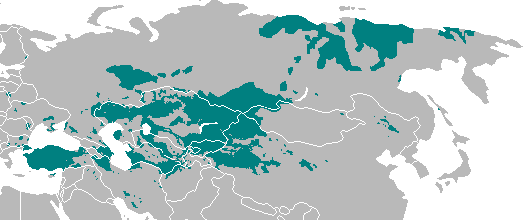
The Grey Wolves are Pan-Turkist and seek to unite the Turkic peoples in one state stretching from the Balkans to Central Asia. After the dissolution of the Soviet Union in 1991, the Grey Wolves called for "a revived Turkish empire embracing newly independent Central Asian states of the former Soviet Union." They have proposed "a pan-Turkish extension of the Turkish nation-state." Due to their pan-Turkic agenda they are hostile towards China, Iran, and Russia.
The Grey Wolves are staunchly anti-communist and have a history of violence toward leftists.
Base
According to sociologist , the Grey Wolves—"the militant youth wing of the Turkish ethnic nationalists that are dissatisfied with the inertia of the Nationalist Movement Party (MHP) camp"—are supported by 3.6% of the Turkish electorate as of 2014. A 2021 poll by Kadir Has University found that a similar percentage, 3.2% of respondents identify as Ülkücü, or supporters of the Grey Wolves.
According to analyst Ankarali Jan, the Grey Wolves have a largely unofficial presence in Turkey's major universities, but their "real power is on the streets, among disaffected poor people in predominantly Turkish Sunni neighbourhoods." Norm Dixon wrote in the Green Left Weekly in 1999 that the MHP and Grey Wolves "retain strong support within the military." In 2018, Tom Stevenson described it as a "street movement."
Links to the Turkish government and NATO
In the late 1970s, former military prosecutor and Turkish Supreme Court Justice Emin Değer documented collaboration between the Grey Wolves, the Central Intelligence Agency (CIA), and Counter-Guerrilla, the Turkish stay-behind anti-communist organization organized under NATO's Operation Gladio, a plan for guerrilla warfare in case of a communist takeover. Martin Lee writes that the Counter-Guerrilla supplied weapons to the Grey Wolves, while according to Tim Jacoby, the CIA transferred guns and explosives to Grey Wolves units through an agent in the 1970s.
During the 1996 Susurluk scandal, the Grey Wolves were accused of being members of the Counter-Guerrilla. Abdullah Çatlı, second-in-command of the Grey Wolves leadership, was killed during the Susurluk car crash, which sparked the scandal. The April 1997 report of the Turkish National Assembly's investigative committee "offered considerable evidence of close ties between state authorities and criminal gangs, including the use of the Grey Wolves to carry out illegal activities."
In 2008 the Ergenekon trials, a court document revealed that the National Intelligence Organization (MİT) armed and funded Grey Wolves members to carry out political murders. They mostly targeted members of the Armenian Secret Army for the Liberation of Armenia (ASALA), which attacked Turkish embassies abroad in retaliation for the Turkish state's continued denial of the Armenian genocide. The Turkish intelligence services also made use of the Grey Wolves in the Kurdish–Turkish conflict, by offering them amnesty for their crimes in exchange.
In 2018, the AK Party formed an alliance with the MHP which succeeded in re-electing President Erdoğan. In 2022, concerns around the close connections between the Turkish government and the Grey Wolves caused the Foreign Affairs Committee of the European Parliament to recommend that the Grey Wolves be banned in the European Union.
History
According to Ruben Safrastyan, because the Grey Wolves are subtle and often formally operate as cultural and sports organizations, information about them is scarce.
Early history
The Grey Wolves organization was formed by Colonel Alparslan Türkeş in the late 1960s as the paramilitary wing of the Nationalist Movement Party (MHP). In 1968, over a hundred camps for ideological and paramilitary training were founded by Türkeş across Turkey. Canefe and Bora describe it as a grassroots fascist network, which had an active role in the economy, education, and neighbourhoods. Nasuh Uslu characterized it as a well-disciplined paramilitary organization, while Joshua D. Hendrick compared its organization to the Nazi Schutzstaffel (SS). Young male students and economic migrants from rural areas who have settled in Istanbul and Ankara made up the majority of its members. In 1973 Israeli orientalist Jacob M. Landau wrote that the importance of the Grey Wolves "is attested to by the fact that Türkeş himself assumed responsibility for the formation of these youth groups and assigned the supervision of their training to two of his close associates".
1970s violence and 1980 coup
By the late 1970s the organizations had tens of thousands of members, and according to Amberin Zaman, the Turkish authorities had lost control over it. During the political violence between 1976 and 1980, members of the Grey Wolves were involved in numerous assassinations of left-wing and liberal activists, intellectuals, labour organizers, Kurds, officials, and journalists. The organization became a death squad engaged in "street killings and gunbattles". According to authorities, 220 of its members carried out 694 murders of left-wing and liberal activists and intellectuals. In total, some 5,000 to 6,000 people were killed in the violence, with the Grey Wolves responsible for the 'worst excesses'.
Their most significant attack of this period was the Maraş massacre in December 1978, when over 100 Alevis were killed. They are also accused of being behind the Taksim Square massacre on 1 May 1977 as well as acting as a "state-approved force" who used attacks on left-wing groups to "cause chaos and demoralization and inflame a climate in which a regime promising law and order would be welcomed by the masses." During this violent period, Grey Wolves operated with the encouragement and the protection of the Turkish Army's Special Warfare Department.
The conflict between left-wing and right-wing groups eventually resulted in a military intervention in September 1980 when General Kenan Evren led a coup d'état. According to Daniele Ganser, at the time of the coup, there were some 1,700 Grey Wolves branches, with about 200,000 registered members and a million sympathizers. Following the 1980 coup, the Grey Wolves and MHP were banned and their activity was diminished. Turkish nationalists and others assert that the Grey Wolves were "used and then discarded" by the deep state in Turkey.
Post-1980
After the 1980 coup, the Grey Wolves reorganized. They began to direct their efforts against Kurds in Turkey, as well as lobbying for aggressive denial of the Armenian genocide and support of the Turkish occupation of Cyprus.
Anti-Kurdish violence and activism
1990s
In the 1990s, the Grey Wolves turned their focus on the Kurds and participated in the Kurdish–Turkish conflict in Turkish Kurdistan. In 1999, Hürriyet Daily News described the organization as "the staunchest opponent to the Kurdish cause in Turkey."
In May 1998, the Grey Wolves were involved in two murders. On 3 May, a group of Grey Wolves attacked two students in Bolu who were passing by the organization's building. Kenan Mak, one of the students, was killed. On 5 May, a worker named Bilal Vural was killed in Istanbul's Şişli district, allegedly by the Grey Wolves. His family claimed that he was "brought several times to the Ülkü Ocakları building where ultranationalists forced him to become a member." They said that he was killed because he was a member of the pro-Kurdish People's Democracy Party (HADEP). As a result of these murders, Republican People's Party (CHP) Deputy Chairman Sinan Yerlikaya and the Freedom and Solidarity Party (ÖDP) requested that the Grey Wolves be banned by the authorities.
During the 1999 general election, the Grey Wolves attacked members of the HADEP, allegedly with impunity.
2000s
In August 2002, the Grey Wolves burnt Masoud Barzani's effigy in a protest in Ankara after he claimed the partly Turkmen-inhabited Iraqi governorates of Kirkuk and Mosul as part of Iraqi Kurdistan.
2010s
On 9 November 2010, Hasan Şimşek, a Grey Wolves member and a student, was killed at the Kütahya Dumlupınar University during an apparent fight between Kurdish nationalist and Turkish nationalist student groups. At his funeral, MHP leader Bahçeli stated that "We expect every kind of measure to be taken to prevent the expansion of the PKK mob, who have a tendency to grow in the universities." Violence between Turkish and Kurdish students also broke out in Marmara University in Istanbul on 12 November.
In September 2011, the Ankara Police Department raided 40 locations across Ankara belonging to the Grey Wolves. They took 36 people into custody and seized numerous guns and knives. According to police, the Grey Wolves were planning an attack on the pro-Kurdish Democratic Regions Party (BDP).
In October 2013, the Grey Wolves demonstrated across Turkey against the Kurdish–Turkish peace process.
In October 2014, the Grey Wolves were involved in deadly clashes during the 2014 Kurdish riots in Turkey against the government's perceived collaboration with the Islamic State during the Siege of Kobanî. A group of Grey Wolves in Sancaktepe, Istanbul, attempted to lynch a young man.
On 20 February 2015, Fırat Yılmaz Çakıroğlu, leader of the Grey Wolves organization in Ege University, was stabbed to death by left-wing and according to some reports, Kurdish nationalist students.
On 7–8 September 2015, Turkish nationalists, including Grey Wolves members, attacked 128 offices of the pro-Kurdish Peoples' Democratic Party (HDP) across Turkey in an apparent retaliation for anti-government attacks by the Kurdistan Workers' Party (PKK). Some have alleged that some of the attacks were carried out by AK Party members "masquerading as Grey Wolves" or that the Grey Wolves cooperated with AK Party members in attacks on HDP offices and left-wingers suspected of sympathy for the Kurds.
Greece-related violence and activism
On 18 June 1988 Kartal Demirağ, a senior member of the Grey Wolves, attempted to assassinate Prime Minister Turgut Özal's at the Motherland Party congress. Özal linked it to his visit to Greece three days earlier, saying that the attempt was carried out "by a group opposed to his efforts to improve relations with Greece."
On 6 September 2005, a group of nationalists, led by Grey Wolves leader Levent Temiz, stormed into an Istanbul exhibition commemorating the anti-Greek pogrom of 1955. They threw eggs and tore down photos. The Grey Wolves issued a statement denying involvement.
In the 2000s the Grey Wolves routinely demonstrated outside the Ecumenical Patriarchate of Constantinople in Fener (Phanar), Istanbul and burn the Patriarch in effigy. In October 2005 they staged a rally and proceeding to the gate they laid a black wreath, chanting "Patriarch Leave" and "Patriarchate to Greece", inaugurating the campaign for the collection of signatures to oust the Ecumenical Patriarchate from Istanbul. As of 2006 the Grey Wolves claimed to have collected more than 5 million signatures for the withdrawal of the Patriarch and called on the Turkish government to have the patriarch deported to Greece.
In December 2017 Grey Wolves members, among them the BBP-affiliated Alperen Ocakları, invaded the Hagia Sophia and prayed there in protest against the United States recognition of Jerusalem as capital of Israel.
Anti-Armenian violence and activism
In January 2004, the Grey Wolves prevented the screening of Ararat, a film about the Armenian genocide, in Turkey.
On 24 April 2011, the murder of Sevag Balıkçı, a soldier of Armenian descent in the Turkish Army, was committed by Kıvanç Ağaoglu, who sympathized with Abdullah Çatlı, the late leader of the Grey Wolves. According to Ruben Melkonyan, an Armenian expert on Turkish studies, Ağaoglu was a member of the Grey Wolves.
On 24 April 2012, the Armenian Genocide Remembrance Day, nationalist groups, including the Grey Wolves, protested against the commemoration of the genocide in Istanbul's Taksim Square.
In June 2015, during a visit to the medieval Armenian city of Ani in Kars Province by the Armenian pianist Tigran Hamasyan, the local leader of the Grey Wolves suggested that his followers should "go on an Armenian hunt."
Other acts of violence
According to Zürcher and Linden, when Sunni radicals attacked Alevis in Istanbul in March 1995, the police in the Gazi quarter were "heavily infiltrated by Grey Wolves" and it was not until the police were replaced by military units that peace was restored.
In December 1996, the Grey Wolves attacked left-wing students and teachers at Istanbul University, with the alleged approval of the police.
In late November 2006 the Grey Wolves staged protests against Pope Benedict XVI's visit to Turkey. On 22 November, tens of protesters symbolically occupied Haghia Sophia in Istanbul to perform Muslim prayers. They chanted slogans against the Pope, such as "Don't make a mistake Pope, don't try our patience". Reuters reported that the event was organized by Alperen Ocakları, considered an offshoot of the Grey Wolves. Police arrested around 40 protesters for violating the ban on prayers in the former mosque, which had been a museum since the 1930s.
In July 2014 around a thousand people demonstrated in Kahramanmaraş against the presence of Syrian refugees who fled the Syrian Civil War. Many protesters made the sign of the Grey Wolves, blocked roads in the city and removed Arabic-language signs from stores. AKP lawyer Mahir Ünal commented: "This doesn't make them idealists [i.e. members of the Grey Wolves] but it is certain some people's attempt to show it like something the idealists did."
In July 2015 the Grey Wolves staged protests across Turkey, burnt flags of the People's Republic of China, attacked Chinese restaurants and "tourists who were mistaken for being Chinese" in response to the Chinese government's ban on Muslim Turkic Uyghurs fast in government offices during the holy month of Ramadan. Korean tourists were attacked by Grey Wolves. An Uighur worked at the Turkish run Chinese restaurant which was assaulted. Members of the Grey Wolves displayed a banner in multiple locations that read, "We crave Chinese blood." Grey Wolves members attacked the Thai consulate in Istanbul in apparent retaliation for the deportation of hundreds of Uyghurs by Thailand. MHP chairman Devlet Bahçeli stated that "Our nationalist youth is sensitive to injustices in China", and that the attacks by MHP-affiliated youth on South Korean tourists was "understandable", adding "What feature differentiates a Korean from a Chinese? They see that they both have slanted eyes. How can they tell the difference?"
In November 2015, the Grey Wolves protested Russian involvement in the Syrian Civil War near Istanbul's Russian consulate, Ankara, and Adana, accusing Russia of slaughtering Syrian Turkmens.
Presence in Eurasia
Azerbaijan

During the First Nagorno-Karabakh War (1988–94), Grey Wolves members fought on the Azerbaijani side against Armenians, but many reportedly returned to Turkey in late 1992. Around 200 members of the Grey Wolves were still in the conflict zone in September 1994 to train Azerbaijani units.
In 1993, Azerbaijani Interior Minister Isgandar Hamidov established the Azerbaijan National Democrat Party (AzMDEP), which was known as Boz Qurd ("Grey Wolves"). According to Russian political scientist Stanislav Cherniavsky, the Azerbaijani Grey Wolves grew out of the nationalist Popular Front in 1992 and "considered itself a branch of the Turkish Grey Wolves." It was registered by the Justice Ministry in 1994. In interviews in 1992–93, Hamidov said there was no organisational link with the Turkish organization, stating that the "Grey Wolves of Azerbaijan are not subordinate to the Turkish group".
In March 1995, a coup d'état attempt against President Heydar Aliyev was staged in Baku by paramilitary police chief Rovshan Javadov, Turkish far-right organizations (including the Grey Wolves), and the Azerbaijani opposition. According to Thomas de Waal, the "shadowy backers of this uprising were never identified but appear to have included rogue elements of the Turkish security establishment and members of the 'Gray Wolves' Bozkurt movement." After the coup attempt, Hamidov was jailed, while the Azerbaijani Supreme Court formally abolished the National Democratic Party due to its links to the Turkish Grey Wolves, which it considered to be a terrorist organization. In 2004, Hamidov was freed in an amnesty granted by President Ilham Aliyev. In 2008, Hamidov retired from politics and as president of the party, which had been inactive since. After 2007, the Grey Wolves reportedly used to not operate in Azerbaijan for some time.
China (Xinjiang)
The Grey Wolves "set up training camps in Central Asia for youths from Turkic language groups" following the dissolution of the Soviet Union. Failing to find support in post-Soviet Central Asian republics, they targeted the Uyghurs, concentrated in the Chinese province of Xinjiang and began actively supporting the East Turkestan independence movement. In this scope, the Grey Wolves' European affiliates attacked Chinese tourists in the Netherlands. The Institute of Peace and Conflict Studies suggested in 2012 they are "highly limited in their reach and support base". In March 2020, several Chinese state-run outlets published an article, which claimed that the World Uyghur Congress (WUC) and "its offshoots have forged ties with the Grey Wolves" and that WUC founder Erkin Alptekin met Türkeş on numerous occasions.
Northern Cyprus
Main article: Cyprus problem
Following the Turkish invasion of Cyprus in 1974 the Grey Wolves "continued to play a role in radicalizing the dispute with Greek Cypriots by actively engaging in violence on the island." They actively supported Rauf Denktaş, then President of the unrecognized Northern Cyprus between 1983 and 2005, and were involved, according to Harry Anastasiou, in state-sponsored terrorism against Cypriot citizens. In July 1996, Kutlu Adali, a Turkish Cypriot journalist who had criticized Denktaş and his policies, was killed by the Grey Wolves, according to some sources.
In August 1996, the Grey Wolves were involved in an attack on a protest of Greek Cypriots against the Turkish occupation of Northern Cyprus. In the same year Tassos Isaac, a Greek Cypriot protester, was beaten to death by the Grey Wolves in the United Nations Buffer Zone. In July 1997, the Grey Wolves clashed with Kurdish university students in Northern Cyprus who protested against Turkey's invasion of northern Iraq in search of Kurdistan Workers' Party (PKK) members.
On 17 October 2003, Murat Kanatlı, a Turkish Cypriot journalist and editor of the opposition newspaper Yeniçağ, was "attacked by a group of 20-30 persons belonging to the Grey Wolves" according to the International Press Institute (IPI). Kanatlı had covered the Grey Wolves' demonstration against the "intervention" of the European Union and the United States in elections in Northern Cyprus.
During the 2004 referendum on the Annan Plan, the Grey Wolves campaigned for a "no" vote. During the pre-voting period at least 50 Grey Wolves activists arrived in Northern Cyprus and caused riots against pro-ratification supporters. They were suspected of assaulting motorcyclists carrying "vote yes" banners.
In October 2013, the Grey Wolves opened a new headquarters in North Nicosia's Köşklüçiftlik quarter. During the opening ceremony Adem Yurdagül, the chairman of the Grey Wolves in Cyprus delivered a speech, while slogans like "Nicosia plain is home of Grey Wolves", "Cyprus is Turkish and will remain Turkish", "We are soldiers of [Alparslan] Türkeş", "The Grey Wolves Movement cannot be prevented" were chanted.
In November 2013, a fight broke out between members of the Grey Wolves and Kurdish university students at the Near East University in North Nicosia, resulting in arrest of 23 persons. According to the newspaper Havadis, "the cause of the fight was allegations by the Grey wolves' organization that some Kurdish students broke the windows of the Grey wolves organization’s building. Around 500 students went out on the streets holding clubs and rocks and the police asked for reinforcement in order to put them under control."
Russia
In November and December 2015, Federation Council member Andrey Klishas and two Communist Party members of the State Duma proposed outlawing the Grey Wolves in Russia. In August 2020, the Russian International Affairs Council, a government think tank, classified the Grey Wolves as an extremist organization.
According to a December 2015 report by the independent Russian online newspaper Svobodnaya Pressa, Crimean Tatar nationalists have apparently began cooperating with the Grey Wolves in Crimea.
Chechnya
Members of the Grey Wolves fought on the Chechen separatist side during the First Chechen War (1994–1996) and the Second Chechen War (1999–2000). CNN reported in 2000 that the Grey Wolves with most pro-Chechen stance were those affiliated with the Islamist Great Union Party (BBP), which had split from MHP in 1993. The article suggested that they "run the mosques and commercial activities in some parts of Istanbul. It is in these mosques, in the suburbs of the city, that offerings are collected after daily prayers for the Chechen refugees. It is money that probably also goes to soldiers on the front lines." According to Svante Cornell it is "widely believed that the Grey Wolves organised arms shipments to Chechnya, probably with at least the partial knowledge of the Turkish authorities." Russian media has alleged that the Turkish government knew and possibly supported, or at least did not prevent, the activities of the Grey Wolves in Chechnya. Georgian Minister of State Security Valery Khaburdania stated in 2002 that the Grey Wolves were the "conduit of assistance" to the Chechen militants.
Azerbaijani Grey Wolves also participated in the fight against Russia. In January 1995 Kommersant cited the Federal Counterintelligence Service (FSK) in stating that the Azerbaijani Grey Wolves sent 80 fighters to Chechnya. Another 270 fighters went to Chechnya in December of that year.
Syria
Main article: Turkish involvement in the Syrian civil war

Activists of the MHP and Idealist Hearths have fought in the Syrian civil war in support of the Syrian Turkmen, whom they consider kinsmen. The MHP and Grey Wolves have provided the Syrian Turkmen Assembly with relief aid and fighters. Syrian Turkmen Assembly president Abdurrahman Mustafa stated in 2016 that "Turkish NGOs, just as the Grey Wolves, give us humanitarian aid." According to Egypt Today the National Intelligence Organization of Turkey (MİT) "is believed to be recruiting retired military personnel to provide support for armed groups operating in Syria, through the Grey Wolves Brigades."
Some Syrian rebel groups have ties to the Grey Wolves. One is the Muntasir Billah Brigade, another is the Turkmen Abdulhamid Han Brigade.
On 24 November 2015, the Turkish Air Force shot down a Russian Sukhoi Su-24M bomber aircraft near the Syria–Turkey border. The pilot was shot in mid-air parachuting toward land by Syrian Turkmen rebels under Syrian Turkmen Brigades. The Turkmen rebel group operated under the command of Alparslan Çelik,
- a Turkish national and a Grey Wolves member from Elazığ.
Youm7, an Egyptian news site picked up a document allegedly issued by the Army of Conquest (Jaish al-Fatah), which claimed that it conspired with the Turkistan Islamic Party and the Grey Wolves in the December 2016 assassination of Andrei Karlov, the Russian ambassador to Turkey. Russian-state run news TASS agency cited this in a news report.
Thailand
The 2015 Bangkok bombing is suspected to have been carried out by the Grey Wolves due to Thailand's deportation of Uyghur terrorist suspects back to China instead of allowing them to travel to Turkey for asylum. A man with fake Turkish passports using the name Adem Karadag was arrested by the Thai police in connection to the bombing and bomb making materials found in his apartment.
Presence in Western Europe
Austria
In Austria, the Grey Wolves salute as well as its symbols were legally banned starting from 1 March 2019. It is punishable by fines up to €4,000. Turkey's Foreign Ministry condemned the ban. "[T]he 'bozkurt' ('Grey Wolves') sign, which is a symbol of a legal political party in Turkey and the 'rabia' sign that is widely used by Muslims in many countries as well as in Turkey. We do not accept this and we strongly condemn it," read the Foreign Ministry statement. Turkey also called on Austria to "correct this grave mistake," because it "deeply offends Turkey, the Turkish community in Austria and Muslims." In early March 2019, Grey Wolves sympathizers started a campaign on Twitter by sending Chancellor Sebastian Kurz hundreds of photos of people showing the salute. Kurz defended the ban declaring people and organizations that do not accept democratic values, or fight against those values, have no place in Austria.
In January 2020 four Turkish bus drivers were fired in Vienna for making the Grey Wolves sign. On 26 June 2020, Turkish nationalist groups, identified by journalist Jake Hanrahan as Grey Wolves members, attacked Kurdish rallies in Vienna protesting the Turkish operation in Iraqi Kurdistan. Turkey criticized the handling of the violence by the Austrian police and claimed that it was organized by PKK sympathizers.
Belgium
The Belçika Türk Federasyonu (BTF) is considered to be "affiliated with or sympathetic" to the Grey Wolves. According to one study, its aim is "to foster loyalty among young people of Turkish origin to their ancestral culture, religion and history and to keep alive the Turkish identity in Europe. BTF claims to oppose not the integration of Belgian-Turks into their host society but rather their assimilation by it." Its activities mostly focus on "issues relevant to Turkish national sensitivities". For instance, it has demonstrated against the erection of an Armenian Genocide memorial in Brussels. During the municipal elections of 2006 two member of the BTF came to the attention of the media: Fuat Korkmazer on the Flemish Christian Democrats (CD&V) list in Ghent and Murat Denizli on the Francophone Socialist Party (PS) list in Schaerbeek, a municipality in the Brussels Region. Korkmazer got a very low number of votes, while Denizli was elected but had to resign because it was discovered he had a false address and lived in another municipality. In 2019, sp.a candidate Mustafa Ayutar was linked to the organization. In 2019, Belgian-Kurdish New Flemish Alliance politician Zuhal Demir reported that posters advertising her candidacy in Maasmechelen had been vandalized with swastikas and the symbol of the Grey Wolves.
In 2022, Grey Wolves vandalized an Armenian genocide memorial in Brussels with three crescents, similar to the MHP logo.
France
In May 1984, Grey Wolves leader Abdullah Çatlı carried out a bombing of an Armenian Genocide memorial in Alfortville, a Paris suburb.
According to Direction générale de la sécurité intérieure members of the Grey Wolves partook in a 21 January 2012 demonstration in Paris against the adoption of the bill criminalizing the Armenian genocide denial in France.
In November 2020, France banned the Grey Wolves organization after defacement of an Armenian Genocide Memorial, organizing combat training camps in the Ardèche region in 2019, inciting violence against Kurds and Armenians and orchestrating marches targeting Armenians near Lyon. Turkey's Foreign Ministry criticized the ban and said: "we will reciprocate to this decision in the strongest way." In addition, accused the French government of tolerating associations affiliated with the PKK and the FETÖ.
Germany

As a far-right extremist group, the Grey Wolves are monitored by the German authorities. The Federal Office for the Protection of the Constitution assumes that there are around 12,100 people in Germany who can be assigned to the "Ülkücü" movement and its ideology as of 2023. The majority of these – around 10,500 supporters – are organized in clubs, which in turn are grouped together under the umbrella of larger associations. A 2017 article published by the Federal Agency for Civic Education estimated over 18,000 members.
The three "Ülkücü" associations in Germany with the largest number of members are:
- "Federation of Turkish Democratic Idealist Associations in Germany e.V." (ADÜTDF), with around 7,000 members organized in around 200 local associations.
- "ATİB – Union of Turkish-Islamic Cultural Associations in Europe e.V." (ATİB), with around 2,500 members in 25 associations.
- "Federation of the World Order in Europe" (ANF), with around 1,000 members in around 15 local associations.
The group transfers conflicts from their native Turkey into Germany with harassment against Kurds and Armenians as well as people with leftist political views in general. Its members have actively engaged in attacks on and clashes with Kurds in Germany.
Historically the most important Grey Wolves-affiliated Turkish organization in Germany was the Türk Federasyon (Avrupa Demokratik Ülkücü Türk Dernekleri Federasyonu, ADÜTDF), which had around 200 member organizations. Founded in 1978 by 64 nationalist organizations it declined in the 1980s, but revived in the 1990s and claimed to have doubled its membership following the Solingen arson attack of 1993. It denies any direct links with the Grey Wolves in Turkey or the MHP, however, its monthly journal publishes articles praising the MHP and denouncing left-wing and Kurdish organizations in Turkey and Germany. According to educationalist Kemal Bozay, their influence on third generation Turkish youth—who are "looking for an identity"—has "increased significantly". They had ties to the banned Turkish-nationalistic outlaw motorcycle club Osmanen Germania BC.
According to the Baden-Württemberg State Government, there are 45 Grey Wolves clubs and associations in that state as of 2012. These associations are often given non-political names (usually cultural and athletic) to conceal their identity.
The 2013 in three German federal states "two live arms with ammunition, blank-firing guns, batons, electric stun guns and Samurai swords" were seized from members of the Grey Wolves.
The Ministry of the Interior of North Rhine-Westphalia, Germany's most populous state where 70 Grey Wolves associations with more than 2,000 members operated in 2011, also monitors the organization. Nevertheless, Serdar Yüksel, a Social Democratic Party member of the state's parliament, stated in a 2011 interview that the threat of the Grey Wolves in Germany is underestimated. He said, "When thousands of Turkish right-wing radicals come together in Essen, we're not worried. But if 100 members of NPD march, we immediately organize a counter-demonstration." Olaf Lehne, a Christian Democratic Union member of North Rhine-Westphalia's state parliament, stated in an interview that the Grey Wolves "are in this country, unfortunately, too often ignored". He also added that they have a large number of sympathizers among young people. Another important organization affiliated with the Grey Wolves are the ATIB (Turkish: Avrupa Türk-İslam Birliği, ATİB; German: Union der Türkisch-Islamischen Kulturvereine in Europa).
During the UEFA Euro 2024 football tournament held in Germany, several Turkish supporters were observed giving the "wolf salute," a hand gesture associated with the Grey Wolves. This gesture, symbolic of Turkish ultra-nationalism and far-right ideologies, raised concerns among European authorities and football officials.
The incident occurred during the group stage match between Turkey and Italy, held in Munich on June 20, 2024. The "wolf salute" was prominently displayed by a section of Turkish fans, leading to immediate condemnation from various quarters. UEFA officials noted the salute and initiated an investigation to address the display of political and extremist symbols during the tournament.
UEFA issued a statement reaffirming its commitment to keeping political and extremist expressions out of football. The German Football Association (DFB) also expressed its concern and emphasized the need for vigilance against far-right activities in sports events.
Turkey's Merih Demiral was subsequently banned "for violating the basic rules of decent conduct, for using sports events for manifestations of a non-sporting nature and for bringing the sport of football into disrepute", for allegedly making a "wolf salute" during Turkey's round of 16 win over Austria.
From 2014-2018 the Osmanen Germania were an extreme right criminal gang working as security guards for the gray wolves.
Netherlands
As early as 1979 the Dutch Scientific Council for Government Policy reported that clashes between the Grey Wolves and the Dutch-Turkish Workers Association (HTIB) occurred on May Day celebrations. Organizations such as Turkish Federation Netherlands (Turkse Federatie Nederland, TFN) and Turkish Islamic Federation (Turks Islamitische Federatie) have links to the Grey Wolves. According to Wangmo and Yazilitas, the Grey Wolves in the Netherlands have engaged in a variety of activities, ranging from criminal activities and nationalist propaganda to support of football teams. The organization was more influential in the 1990s when many first-generation Turkish immigrants "maintained a deep interest in Turkish politics and who had a deeply felt Turkish identity." Grey Wolves activists have participated—with varying successes—in the local politics of several Dutch municipalities. In November 2020, VVD MP Bente Becker introduced a motion to ban the Grey Wolves. The motion was supported by 147 members of the parliament with 3 members voting against it. All three votes against the motion came from Denk.
Sweden
On 13 September 2015, an explosion occurred at a Kurdish civil center in Stockholm, Sweden, following clashes between Turks, Kurds and anti-fascists at a rally organized by the Swedish Grey Wolves.
The Swedish Green Party was hit by a political scandal in April 2016, as images emerged of party member and Housing Minister Mehmet Kaplan attending a dinner party alongside leading members of the Grey Wolves. Kaplan resigned when a 2009 video was made public in which he compared Israel's treatment of Palestinians to that of Jews by Nazi Germany. The Sweden Democrats party have called for the Grey Wolves to be banned in Europe and for its members in Sweden to be deported.
Vatican
On 13 May 1981 Mehmet Ali Ağca, an alleged Grey Wolves member, attempted to murder Pope John Paul II in St. Peter's Square. The masterminds were not identified and the organization's role remains unclear. According to Daniel Pipes and Khalid Duran Grey Wolves appear to have been involved in the assassination attempt and write that Ağca "in his own confused way mixed Turkish nationalist sentiments with fundamentalist Islam." However, Italian investigators could not establish his link to the Grey Wolves.
Norway
There is allegedly a Grey Wolf group recruiting in Drammen, Norway.
Illegal drug trade allegations
Grey Wolves members and leaders have been involved in international drug trafficking since the 1980s. In the early 1980s U.S. anti-terrorism officials at the State Department reported that Türkeş is "widely believed to have been involved" in moving heroin from Turkey into Western Europe. According Stephen E. Ambrose, the leaders of Grey Wolves had built in the late 1980s an army by trading drugs for military equipment, ranging from assault helicopters to tanks. Drugs were transported to Italy, where organized crime processed them. According to Peter Dale Scott, the author of the book American War Machine, in 2010 there were drug producing and dealing groups that had clear ties with the Grey Wolves and its affiliated political party, MHP.
Designation as a terrorist group
In 2005, Kazakhstan banned the Grey Wolves, classifying it as a terrorist group.
Following the November 2020 ban of the Grey Wolves in France for hate speech and violence, and the calls for similar actions to be taken in the Netherlands and Germany, the European Parliament urged, on 20 May 2021, that the 27 member states of the European Union to designate the Grey Wolves as a terrorist group, and thus, marking the first time that an EU institution has linked the Grey Wolves to terrorism. The Turkish government reacted to the EP report by calling it "biased" and "unacceptable", because, according to the Turkish Foreign Ministry spokesperson Tanju Bilgiç, the Grey Wolves are "a legal movement, which is associated with a long-established political party in Turkey." The MFA claimed the "slanders" are "fabricated by the anti-Turkey Armenian diaspora as well as PKK and FETÖ circles."
In September 2021 Representative Dina Titus (D-NV) proposed designating the Grey Wolves as a terrorist group through an amendment to the Fiscal Year 2022 National Defense Authorization Act (NDAA). The proposed amendment asked the US Secretary of State to provide "a detailed report of the activities of the Grey Wolves organization undertaken against US interests, allies, and international partners" and determine if the organization "meet the criteria for designation as a foreign terrorist organization." The state-run Anadolu Agency claimed that the Gülen movement was behind the move.
Noted Grey Wolves member Cengiz Telci has stated in regards to accusations of violence against Kurds that, "I don't kill people; I kill terrorists. Terrorist not people."
Cultural references
The Grey Wolves organization benefits from Turkish TV films and series, such as those released in 2003 to 2005 or 2018, which glorify Turkish nationalism.
- The Turkish television series Valley of the Wolves ("Kurtlar Vadisi") and The Wolves ("Börü") are particularly likely to provoke an exaggerated nationalist attitude and reinforce enemy images that are inherent in the Ülkücü movement.
- In the 2002 film Aram a French-Armenian fighter named Levon attempts to kill a high level Turkish general who is the head of Grey Wolves.
- In the 2003 novel ** ("Empire of the Wolves") by Jean-Christophe Grangé the Grey Wolves are involved in a woman's murder. The 2005 film Empire of the Wolves is based on the same-name novel by Grangé.
- The left-wing American podcast Chapo Trap House (2016–present) refers to avid fans and Patreon backers as "Grey Wolves," an ironic reference to the podcast's pretended support of Erdoğan and the AKP.
References
Notes
Citations
Bibliography
References
- (7 July 2020). "Ülkü Ocakları'na yeni başkan atandı". [[Milliyet]].
- (2019). "Terrorism: An International Perspective". [[SAGE Publications]].
- Sánchez Amor, N.. (25 May 2022). "Document A9-0149/2022: Report on the 2021 Commission Report on Turkey". [[European Parliament]].
- Taspinar, Omer. (2005). "Kurdish Nationalism and Political Islam in Turkey: Kemalist Identity in Transition". [[Routledge]].
- . (1999). "The Grey Wolves". *Centre for Comparative Genocide Studies, [[Macquarie University]]*.
- (10 November 2020). "Ülkü Ocakları Atatürk için çaldı".
- "France has banned the 'Grey Wolves' – but who are they?".
- "Grey Wolves".
- "TRENDS Research and Advisory - The Grey Wolves: Erdoğan's extremist arm in Europe". Trendsresearch.org.
- (24 September 2021). "Ülkü Ocakları, trafodaki gökkuşağına sprey sıktı".
- (2008). "The Rise of Political Islam in Turkey". [[RAND Corporation]].
- Orhan Kemal Cengiz. (25 December 2012). "Why was the commemoration for the Maraş massacre banned?". [[Today's Zaman]].
- (14 July 2014). "Hundreds march against Syrian refugees". via [[Doğan News Agency]].
- "Anti-Syrian protests sign of growing tensions in southern Turkey". [[Sabah (newspaper).
- (9 July 2015). "China-Turkey relationship strained over Uighurs".
- (30 July 2015). "Turkish Grey Wolves target 'Chinese'". [[Politico]].
- (12 January 2011). "Murder in Anatolia: Christian missionaries and Turkish ultranationalism". [[European Stability Initiative]].
- (5 October 2021). "Turkey's ruling coalition now targets Christians with 'Grey Wolves' terror group". India Narrative.
- (19 July 2010). "Resurgence of Anti-Semitism in Turkey and Amsterdam". [[Investigative Project on Terrorism]].
- Naylor, R. T.. (2006). "Satanic Purses: Money, Myth, and Misinformation in the War on Terror". [[McGill–Queen's University Press]].
- (13 May 2007). "Promoting Peace with Information: Transparency as a Tool of Security Regimes". Princeton University Press.
- (27 August 2015). "Thai police look into Turkish connection in Bangkok blast". Reuters.
- (29 August 2015). "Bangkok bombing: Was it the Grey Wolves of Turkey?". [[The Daily Telegraph]].
- . (4 November 2020). ["France bans Turkish ultra-nationalist Grey Wolves"](https://www.dw.com/en/france-bans-turkish-ultra-nationalist-grey-wolves-group/a-55503469). *[[Deutsche Welle]]*.
- (24 November 2017). "Graue Wölfe – die größte rechtsextreme Organisation in Deutschland". [[Federal Agency for Civic Education]].
- (1999). "Economic Warfare: Sanctions, Embargo Busting, and Their Human Cost". Northeastern University Press.
- (Winter 2017). "An Intellectual History of Turkish Nationalism: Between Turkish Ethnicity and Islamic Identity by Umut Uzer (review)". [[The Middle East Journal]].
- (25 April 2011). "Video shows Turkish police singing Grey Wolf march". [[Hürriyet Daily News]].
- (19 August 2020). "Why Erdogan must expand his ultranationalist alliances". [[Al-Monitor]].
- (30 June 2020). "The Grey Wolves conquering Europe". MENA Research & Study Center.
- "'Our bodies are Turkish, our souls Islamic!' The rise of Turkey's ultra-nationalists".
- (12 November 2020). "Screws tighten on Gray Wolves, Erdogan's European guard - Al-Monitor: The Pulse of the Middle East".
- "Definition of Terrorism". [[Middlebury Institute of International Studies at Monterey]].
- (24 November 2017). "Graue Wölfe – die größte rechtsextreme Organisation in Deutschland".
- Slomp, Hans. (2011). "Europe, a Political Profile: An American Companion to European Politics, Volume 1". [[ABC-CLIO]].
- "The national list of banned terrorist organizations in Kazakhstan".
- (2 November 2011). "Siirt Ülkü Ocakları Başkanı Yeşilkök". [[Radikal]].
- (15 August 2018). "The ultra-nationalist Turkish mob boss Erdogan can't touch".
- (2002). "On the Question, "what is Turkish-German?" Minority Literatures and the Dialectics of Exclusion". Stanford University.
- (April 2009). "Turkey's "Deep-State" and the Ergenekon Conundrum". [[Middle East Institute]].
- (7 October 2007). "Amerika'dan ithal faşist slogan". [[Radikal]].
- "Germany summons Turkish ambassador over 'wolf' goal celebration". The Guardian.
- (14 February 2019). "Turkey condemns Austria's ban on 'Grey Wolves' salute". [[Hurriyet Daily News]].
- (14 February 2019). "Turkey condemns Austria's ban on 'Grey Wolves' salute".
- (9 October 2018). "Germany seeks to ban Turkish 'Gray Wolves' far-right symbols".
- (7 July 2024). "Euro 2024: Türkiye fans make controversial gesture on way to stadium".
- (1989). "Turkey and US Strategy in the Age of Glasnost". [[Middle East Report]].
- (15 February 2016). "Turkey protective of ethnic Turkmens in Syria". [[The Irish Times]].
- (30 July 2015). "Turkish Grey Wolves target 'Chinese'". [[Politico Europe]].
- (28 April 1999). "Kurds defy repression with strong vote for HADEP". [[Green Left Weekly]].
- (11 August 2016). "The coup that followed the coup in Turkey". socialistworker.org ([[Socialist Worker#United States.
- "Definition of Terrorism". [[Middlebury Institute of International Studies at Monterey]].
- (2010). "The big world experiment: the mobilization of social capital in migrant communities". FMG: Amsterdam Institute for Social Science Research (AISSR).
- (5 June 2015). "Turkish elections: Turkey's Kurd-hating Grey Wolves spreading neo-nazi poison across Europe". [[International Business Times]].
- (30 April 1999). "Turquie: les différents masques du loup". [[Le Monde]].
- Tunander, Ola. (1995). "A New Ottoman Empire? The Choice for Turkey: Euro-Asian Centre vs National Fortress". [[Security Dialogue]].
- (30 July 2015). "Turkish Grey Wolves target 'Chinese'". [[Politico]].
- (2010). "Iran's Foreign Policy in the Post-Soviet Era: Resisting the New International Order". ABC-CLIO.
- (3 November 2012). "Так будет ли у Т. Эрдогана достойный конкурент? [Will Erdogan have a worthy competitor?]".
- "Erdogan's plans for power hinge on Turkish nationalist feud | DW | 15.05.2016".
- (6 January 2022). "Kadir Has Üniversitesi'nin siyasi eğilim araştırması [Political tendency research of Kadir Has University]".
- (4 January 2022). "Türkiye Eğilimleri – 2021". [[Kadir Has University]].
- (4 April 1997). "The Short and Bloody History of Ulkucus". [[Hürriyet]].
- (October 2008). "Turkey's Deep State: Ergenekon and the Threat to Democratisation in the Republic". [[Royal United Services Institute]].
- (14 July 2013). "Machete attacks raise fears over widespread violence". Today's Zaman.
- Lee, Martin A.. (2000). "The Beast Reawakens: Fascism's resurgence from Hitler's Spymasters to Today's Neo-Nazi Groups and Right Wing Extremists". Routledge.
- (18 June 2018). "Why Erdogan is entering key elections with a far-right ally".
- (25 June 2018). "Turkey election: Erdogan wins re-election as president".
- (7 June 2022). "European Parliament resolution of 7 June 2022 on the 2021 Commission Report on Turkey".
- (3 October 2014). "Hairenik Weekly Newspaper". [[Armenian Weekly.
- Uslu, Nasuh. (2003). "The Turkish-American Relationship Between 1947 and 2003: The History of a Distinctive Alliance". Nova Science.
- (2013). "Gülen: The Ambiguous Politics of Market Islam in Turkey and the World". New York University Press.
- (1973). "Middle Eastern Themes: Papers in History and Politics". [[Taylor & Francis.
- (22 April 1999). "Turkey" Nation and tribe the winners". [[The Economist]].
- (9 April 1997). "Obituary: Alpaslan Turkes". [[The Independent]].
- Marcus, Aliza. (2007). "Blood and Belief: The PKK and the Kurdish Fight for Independence". New York University Press.
- [[Orhan Kemal Cengiz]]. (25 December 2012). "Why was the commemoration for the Maraş massacre banned?". [[Today's Zaman]].
- (2008). "The Rise of Political Islam in Turkey". [[RAND Corporation]].
- (2008). "The Rise of Political Islam in Turkey". [[Defense Technical Information Center]].
- (2013). "Postmodern Responses to the September 12th 1980 Military Coup D'Etat in Turkish Literature Search within citing articles". [[Istanbul University]].
- (2005). "NATO's Secret Armies: Operation GLADIO and Terrorism in Western Europe". Routledge.
- (2001). "Political Leaders and Democracy in Turkey". Lexington.
- Ünver, H. Akin. (April 2009). "Turkey's "Deep-State" and the Ergenekon Conundrum". [[Middle East Institute]].
- Çelikkan, Murat. (18 December 2003). "Ülkü Ocakları". [[Radikal]].
- (30 January 1999). "Grey Wolves in charge for Ocalan". [[Hürriyet Daily News]].
- (23 August 2002). "Ülkü Ocakları'ndan Barzani protestosu". [[Radikal]].
- (14 November 2010). "MHP leader visits slain student's grave". [[Hürriyet Daily News]].
- (12 November 2010). "Nationalist violence spreads to Istanbul's Marmara University". [[Hürriyet Daily News]].
- (12 September 2011). "Ankara police detain 36 in MHP youth branch raid". Today's Zaman.
- (2 October 2013). "Nationalists stage protests against package across Turkey". [[Hürriyet Daily News]].
- (9 October 2014). "10 people, including two police officers, killed in two Turkish provinces". Hürriyet Daily News.
- (10 October 2014). "Kobani is Falling to ISIS in Syria. Kurd Protests Explode in Turkey.". [[The Daily Beast]].
- (8 October 2014). "Üç büyük kent de karıştı". [[Milliyet]].
- (20 February 2015). "Death of nationalist student stirs politics in Turkey". [[Hürriyet Daily News]].
- (8 September 2015). "Far-right activists attack HDP offices across Turkey after anti-PKK demos".
- (21 September 2015). "Comment: Is President Erdogan behaving more like Bashar al-Assad?". Famagusta Gazette.
- (26 October 2015). "Tensions running high in Turkey as elections loom".
- (2001). "Political Chronology of the Middle East". Routledge.
- (18 June 1988). "Turkish Prime Minister Turgut Ozal Escapes Assassination". [[Reuters]].
- (20 June 1988). "Ozal sees plot behind shooting". [[The Christian Science Monitor]].
- (20 June 1988). "Turkish leader links shooting, Greek trip". [[Chicago Tribune]].
- (18 September 2008). "Eleven Taken Into Custody For Ergenekon Investigation".
- (30 September 2005). "In Turkey, a Clash of Nationalism and History". [[The Washington Post]].
- (2009). "The Violations of the Human Rights of the Greek Minority in Turkey: Atrocities and persecutions 1923–2009". The Constantinopolitan Society.
- (28 October 2005). "By the Grey Wolves Tension at the Patriarchate".
- (April 2006). "A Populist Surge Splits Turkey From Its Traditional Allies". [[International Strategic Studies Association]].
- Victor Roudometof. (October 2013). "Globalization and Orthodox Christianity: The Transformations of a Religious Tradition". Routledge.
- (11 December 2017). "Turkish Nationalist Group Invaded İstanbul's Hagia Sophia Church to Pray (video)".
- (7 January 2004). "Turkish Extremists Scuttle the Screening of "Ararat"". [[Asbarez]].
- (7 January 2004). "'Ararat'ın ertelenmesine Egoyan'dan tepki". [[Radikal]].
- (9 May 2011). "Asker Sevag'a ne oldu?". [[Radikal]].
- (18 May 2011). "Ethnic Armenian soldier in Turkey killed by Bozkurtlar member".
- Perrier, Guillaume. (25 April 2012). "April 24th". The Globe Times.
- (24 June 2015). "Ülkücü başkandan tehdit: 'Sokaklarda Ermeni avına mı çıkalım' !". [[Taraf]].
- (25 June 2015). "Turkish Radical Threatens to 'Hunt for Armenians' In Streets of Kars". [[Asbarez]].
- (13 December 1996). "Istanbul University: Alleged Police-Ulkucu Collaboration Escalates Tensions". [[Hürriyet]].
- (25 November 2006). "A tense time for a papal visit". [[Los Angeles Times]].
- (27 November 2006). "A chance to get friendlier: The pope's controversial trip to Turkey". [[The Economist]].
- (28 November 2006). "Pope reaches out to Islamic world". [[The Washington Times]].
- (22 November 2006). "Police detain Turks protesting Pope at Aya Sofya". [[Reuters]].
- (24 November 2006). "Turkish nationalists protest pope, Vatican remains calm". [[Hürriyet Daily News]].
- (6 July 2015). "Chinese tourists in Turkey told to avoid anti-Beijing protests after attacks". [[South China Morning Post]].
- (4 July 2015). "Turks protesting against China attack Koreans 'by mistake'". AFP.
- (20 July 2015). "Attacks on Chinese escalate in Turkey".
- (9 July 2015). "Uighur deportation sparks anger in Turkey".
- (22 July 2015). "Anti-China sentiment is sweeping over Turkey". [[Business Insider]].
- (9 Jul 2015). "Thai PM defends decision to send Uighurs back to China". Reuters.
- (21 November 2015). "Ülkü Ocakları ve Alperen Ocakları'ndan 'Türkmen Dağı' protestosu". [[Zaman (newspaper).
- (21 November 2015). "Ülkücüler Türkmenler için sokaktaydı". [[Sözcü]].
- (1994). "The Caucasian Knot: The History and Geopolitics of Nagorno-Karabagh".
- (1997). "Russia and the Commonwealth of Independent States: Documents, Data, and Analysis". [[M. E. Sharpe]].
- (30 May 2007). "Azerbaijan: Date For Presidential Ballot Confirmed".
- (2002). "Новый путь Азербайджана [Azerbaijan's New Path]". Moscow.
- Immigration and Refugee Board of Canada. (2 May 1995). "Information on the strength and activities of a group called the Grey Wolves, and on whether this group is related to the ultra right-wing group called the Grey Wolves in Turkey". European Country of Origin Information Network.
- (2009). "Turkey's Entente with Israel and Azerbaijan: State Identity and Security in the Middle East and Caucasus". Routledge.
- de Waal, Thomas. (2003). "Black Garden: Armenia and Azerbaijan Through Peace and War". New York University Press.
- Kyamal. Ali. link. ann.az. Azerbaijan News Network. (18 February 2014)
- (July 2007). "Fight Against Terrorist Financing". [[National Criminal Justice Reference Service]].
- Shimatsu, Yoichi. (13 July 2009). "Behind the China Riots -- Oil, Terrorism & 'Grey Wolves'".
- (April 2012). "Separatism in Xinjiang: Between Local Problems and International Jihad?". Institute of Peace and Conflict Studies.
- (16 March 2020). "Inside the World Uyghur Congress: The US-backed right-wing regime change network seeking the 'fall of China'". [[People's Daily]].
- (20 March 2020). "Unmistakable US hand in Xinjiang". [[China Daily]].
- (2012). "Nonstate Actors, Fragmentation, and Conflict Processes". [[Journal of Conflict Resolution]].
- Wes Johnson, ''Balkan inferno: betrayal, war and intervention, 1990–2005'', (Enigma Books, 2007), 389.
- (July–December 1996). "AI Concerns in Europe". [[Amnesty International]].
- (2004). "Chronology for Turkish Cypriots in Cyprus". [[Minorities at Risk]].
- (23 October 2003). "IPI expresses concern over brutal attack on Turkish Cypriot journalist". [[Reporters Without Borders]].
- (2009). "Cyprus Problem in the Integration of Turkey to the European Union". [[Tbilisi State University]].
- (2008). "The Broken Olive Branch: Nationalism, Ethnic Conflict, and the Quest for Peace in Cyprus". Syracuse University Press.
- "Turkish Cypriot and Turkish Media Review 30/10/2013". moi.gov.cy.
- "Turkish Cypriot and Turkish Media Review 08/11/2013". moi.gov.cy.
- (30 November 2015). "В Совфеде предложили запретить турецкую организацию "Серые волки"". [[RBC Information Systems.
- "Коммунисты предложили Чайке запретить турецких "Серых волков"". [[gazeta.ru]].
- (18 August 2020). "Russian think tank labels Turkish far-right Grey Wolves as 'extremist' organisation". ahvalnews.com.
- "Серые волки [Grey Wolves]". [[Russian International Affairs Council]].
- (8 December 2015). "Эрдоган отправляет в Крым "Серых волков"". svpressa.ru.
- (2007). "The Columbia World Dictionary of Islamism". Columbia University Press.
- (2002). "Unholy Wars: Afghanistan, America and International Terrorism". [[Pluto Press]].
- Goltz, Thomas. (2003). "Chechnya Diary: A War Correspondent's Story of Surviving the War in Chechnya". Thomas Dunne Books.
- Isingor, Ali. (6 September 2000). "Istanbul: Gateway to a holy war".
- (1999). "International Reactions to Massive Human Rights Violations: The Case of Chechnya". [[Europe-Asia Studies]].
- (20 October 2011). "Шторм в "тихой гавани" чеченских боевиков". [[pravda.ru]].
- (19 February 2002). "Moscow, Washington and Tbilisi Wrestle With Instability in the Pankisi". [[EurasiaNet]].
- (2005). "Small Nations and Great Powers: A Study of Ethnopolitical Conflict in the Caucasus". Routledge.
- (18 January 1995). "Наемники в Чечне". [[Kommersant]].
- (2003). "The Chechen Wars: Will Russia Go the Way of the Soviet Union?". [[Brookings Institution]] Press.
- (3 February 2016). "Turkey's nationalist 'Gray Wolves' enter Syrian fray".
- (21 January 2016). "A Cause for all Turks: Turkey and Syria's Turkmen Rebels".
- (30 November 2015). "MHP'nin iki ilçe başkanı Türkmen Dağı'nda savaşa katıldı". [[Radikal]].
- (15 February 2016). "Turkey protective of ethnic Turkmens in Syria". [[The Irish Times]].
- (11 May 2017). "Grey Wolves, Turkey's armed proxy in Syria". [[Egypt Today]].
- Umar Farooq. (16 February 2016). "Turks head to Syria to defend Turkmen 'brothers'". [[Middle East Eye]].
- (21 January 2016). "A Cause For All Turks: Turkey and Syria's Turkmen Rebels". War on the Rocks.
- (7 February 2019). "Syrian Turkmen Groups in Latakia: An Overview". [[Bellingcat]].
- (26 November 2015). "След "Серых Волков". Кто убил российского пилота Су-24?". [[Argumenty i Fakty]].
- (25 November 2015). "Найти и уничтожить". [[NTV (Russia).
- (26 November 2015). "Rus uçağını düşürmek gerekli miydi?". [[Radikal]].
- (24 November 2015). "'Türkmen komutan' dedikleri kişi Elazığlı ülkücü çıktı!". [[SoL (newspaper).
- (21 December 2016). "موجز أخبار مصر 1 ظهرا.. جيش الفتح يعلن مسئوليته عن اغتيال سفير روسيا بأنقرة [Army of Conquest announces responsibility for the assassination of Russia's ambassador in Ankara]". youm7.com.
- (21 December 2016). "جيش فتح الشام يعلن مسئوليته عن اغتيال السفير الروسى فى أنقرة [Jaysh Fatah al-Sham claims responsibility for the assassination of the Russian ambassador in Ankara]". youm7.com.
- (21 December 2016). "Media: Jaish al-Fatah claims responsibility for murder of Russian ambassador". [[TASS]].
- Murdoch, Lindsay. (30 August 2015). "Bangkok bombing: Who are the Turkish terrorist group the Grey Wolves?". [[The Sydney Morning Herald]].
- Cunningham, Susan. (24 August 2015). "Thailand's Shrine Bombing – The Case For Turkey's Grey Wolves". [[Forbes]].
- (12 February 2019). "Diese 13 extremistischen Symbole werden verboten". [[:de:Heute (österreichische Zeitung).
- (14 February 2019). "Turkey condemns Austria's ban on 'Grey Wolves' salute".
- (12 December 2018). "Press Release Regarding the "Symbol Act" on Symbols of Extremist Organizations that Has Been Passed by the Austrian Parliament". Republic of Turkey Ministry of Foreign Affairs.
- (4 March 2019). "So kontert der Kanzler auf Wolfsgruß-Aktion". [[:de:Heute (österreichische Zeitung).
- (21 January 2020). "4 Turkish bus drivers fired over gray wolf sign in Vienna". [[Daily Sabah]].
- (27 June 2020). "Turkish ultranationalists attack Kurdish rallies in Vienna".
- (29 June 2020). "Turkey, Austria trade barbs over Kurdish-Turkish clashes in Vienna". [[Reuters]].
- (8 September 2006). "Fuat Korkmazer stapt op bij Turkse vereniging". [[De Standaard]].
- (12 October 2006). "Le loup gris du PS hante Schaerbeek". [[Le Soir]].
- (11 May 2019). "Verkiezingsborden Zuhal Demir plastered with Turkish slogans and symbol Grey Wolves: But I will not be intimidated News".
- (27 April 2022). "Grey Wolves vandalize Armenian genocide memorial in Brussels".
- Grosscup, Beau. (1991). "The new explosion of terrorism". New Horizon Pr..
- Meynial, Claire. (29 March 2012). "Les Loups sont entrés dans Paris". [[Le Point]].
- (2 November 2020). "France to ban Turkish ultranationalist Grey Wolves group". [[Al Jazeera English.
- "France bans Turkish ultra-nationalist Grey Wolves – DW – 11/04/2020".
- (2020-11-04). "Le mouvement ultra-nationaliste turc des Loups gris officiellement dissous en France". Le Monde.fr.
- (2 November 2020). "France to ban Turkish 'Grey Wolves' after defacement of Armenian memorial". [[France 24]].
- (2020-11-02). "Grey Wolves: Far-right group to be banned in France". BBC News.
- (29 October 2020). "Turkish Ultranationalist Group Linked to "Hunt For Armenians" in France". [[Vice Media]].
- (4 November 2020). "Press Release Regarding the French Council of Ministers' Decision on the dissolution of the "Grey Wolves" Movement". Republic of Turkey Ministry of Foreign Affairs.
- (2023-09-01). "Auslandsbezogener Extremismus".
- Bildung, Bundeszentrale für politische. (19 July 2017). "Einführung: Graue Wölfe und türkischer Ultranationalismus in Deutschland {{!}} bpb".
- "2012 Annual Report on the Protection of the Constitution". [[Federal Ministry of the Interior (Germany).
- "Wer sind die "Grauen Wölfe"?". Ministerium für Inneres und Kommunales des Landes Nordrhein-Westfalen [Ministry of the Interior of North Rhine-Westphalia].
- (25 November 2011). "Der Schein trügt, die Grauen Wölfe sind gefährlich". [[Die Welt]].
- (5 August 2016). "Stellung der Avrupa Türk-Islam Birliği (ATIB) im Spektrum der Grauen Wölfe". [[Bundestag]].
- Zidan, Karim. (June 26, 2024). "Europe's extremists are converging at Euro 2024".
- (July 5, 2024). "Turkey says Demiral ban for Euros 'wolf' salute is unfair".
- (1979). "Ethnic minorities". [[Scientific Council for Government Policy.
- (5 January 2002). "Protest in Den Bosch against Grey Wolves".
- (2004). "Turkey and the European Union: Domestic Politics, Economic Integration and International Dynamics". Routledge.
- Haffmans, Ernst. "Belabberd resultaat Grijze Wolven bij gemeenteraadsverkiezingen 2006". Xs4all.nl.
- (18 November 2020). "Nederland wil een verbod op organisatie Grijze Wolven". NieuwsOn.
- (27 April 2016). "Sweden's Green Party hit by religious row". Al Jazeera.
- (14 April 2016). "Housing minister, Turkish extremists dined together". Radio Sweden.
- (17 April 2016). "Swedish cabinet member compared Israel with Nazi-Germany". [[Svenska Dagbladet]].
- (18 April 2016). "Sweden's housing minister Mehmet Kaplan quits after his Nazi comparison to Israel". International Business Times.
- (25 April 2016). "Green Party leaders: We have no plans to resign". [[The Local]].
- (4 March 2020). "Charlie Weimers (SD): EU behöver bygga murar mot Erdogans Turkiet".
- Ondrckova, Camilla. (15 November 2016). "Advarer mot tyrkisk fascistisk organisasjon i Drammen".
- Sørøst-Norge, Dag Einar Thorsen-førsteamanuensis i statsvitenskap ved Høgskolen i. (20 November 2016). "En flørt med fascisme".
- Storhaug, Hege. (15 November 2016). "Fascisme åpenbarer seg i Drammen? – Human Rights Service".
- (2014). "Heroin, Organized Crime, and the Making of Modern Turkey". Oxford University Press.
- (2016-09-08). "The Containment of Organised Crime and Terrorism: Thirty-Five Years of Research on Police, Judicial and Administrative Cooperation". BRILL.
- (4 November 2020). "France bans Turkish ultra-nationalist Grey Wolves group".
- Patrick Keddie. (24 November 2020). "France has banned the 'Grey Wolves' – but who are they?".
- Richard Connor. (7 November 2020). "German lawmakers urge ban on extreme-right Turkish Gray Wolves". [[Deutsche Welle]].
- Ezel Sahinkaya. (8 December 2020). "Shadowy Turkish Ultra-Nationalist Group Under Scrutiny in Europe".
- Zoe Didili. (9 November 2020). "Germany's political opposition wants Turkish ultra-nationalist Grey Wolves banned".
- Nazlan Ertan. (20 May 2021). "Will Turkey's Grey Wolves land on EU terror list".
- (20 May 2021). "Turkish Foreign Ministry slams EP over call to add Grey Wolves to EU terrorist list".
- (19 May 2021). "Statement of the Spokesperson of the Ministry of Foreign Affairs, Ambassador Tanju Bilgiç in Response to a Question Regarding the Call on the EU and its Member States to Examine the Possibility of Adding Grey Wolves to the EU Terrorist List, to Ban their Associations and Organisations in EU countries, to Closely Monitor their Activities in the European Parliament's 2019-2020 Report on Turkey". [[Ministry of Foreign Affairs (Turkey).
- (15 September 2021). "Proposed amendment calls for designation of Turkey's Grey Wolves as a terrorist group". [[Kathimerini]].
- (6 October 2021). "Grey Wolves: Amendment to US defence bill has Turkey's ultra-nationalists in its sights". [[Middle East Eye]].
- (30 September 2021). "FETÖ behind US move to designate Turkish group as terrorists". [[Daily Sabah]].
- (1 March 2004). "Compressing Time, Expanding Horizons: The Armenian Film Festival of San Francisco in February 2004". [[University of Southern California]].
- (17 December 2004). "Empire of the Wolves, by Jean-Christophe Grangé, trans. Ian Monk". [[The Independent]].
- (24 August 2017). "MST3K for politics: The hosts of Chapo Trap House trace their podcast's evolution to the disastrous present".
- Tolentino, Jia. "What Will Become of the Dirtbag Left?".
- (23 July 2017). "Leftwing Breitbart? Chapo Trap House is strong new voice in resistance to Trump".
- (2004). "Turkey and the European Union: Domestic Politics, Economic Integration and International Dynamics". Routledge.
- Jacoby, Tim. "Political Violence, the 'War on Terror' and the Turkish State". [[University of St Andrews]].
- AbuKhalil, As'ad. (4 February 2016). "On ties between the terrorist fascist Turkish Grey Wolves organization and NATO and US government, see this source".
- Combs, Cindy C.. (2007). "Encyclopedia of terrorism". Facts On File.
- (7 October 2013). "Crying "Wolf": Why Turkish Fears Need Not Block Kurdish Reform". [[International Crisis Group]].
- Zaman, Amberin. (20 April 1999). "Turkey's Gray Wolves Nip at Heels of Power". [[Los Angeles Times]].
- Koutroubas, T., Vloeberghs, W. and Yanasmayan, Z. 2009. [http://www.microconflict.eu/publications/PWP5_TK_WV_ZY.pdf ''Political, Religious and Ethnic Radicalisation Among Muslims in Belgium''] {{webarchive. link. (2014-10-25 . MICROCON Policy Working Paper 5, Brighton: MICROCON.)
- (2009). "Historical Dictionary of Terrorism". [[Scarecrow Press]].
- Atkins, Stephen E.. (2004). "Encyclopedia of Modern Worldwide Extremists and Extremist Groups". Greenwood Press.
- Idiz, Semih. (29 March 2013). "Turkey's Ultra-Nationalists Playing With Fire".
- (22 April 2014). "Parties and political identities". [[Today's Zaman]].
- (2011). "The SAGE Encyclopedia of Terrorism". [[SAGE Publications]].
- (2 May 2010). "Hundreds of thousands on Taksim Square on Mayday". [[Committee for a Workers' International (1974).
- (April 2008). "Defining Terrorism". [[Institute for Defence Studies and Analyses]].
- (12 April 1998). "Turkish Dirty War Revealed, but Papal Shooting Still Obscured". [[Los Angeles Times]].
- (2004). "Turkish and Kurdish Identity and Nationalism in the Netherlands". Humanity In Action.
- (2003). "Transnational Politics: The Case of Turks and Kurds in Germany". Routledge.
- Marchand, Laure. (21 January 2008). "En Turquie, les "Loups" sont de retour [In Turkey, the "Wolves" are returning]". [[Le Figaro]].
- (15 February 2014). "Türkische Nationalisten in Deutschland: Die unheimlichen Grauen Wölfe [Turkish nationalists in Germany: The Uncanny Grey Wolves]". [[Der Spiegel]].
- (2012). "Graue Wölfe heulen wieder: Türkische Faschisten und ihre Vernetzung in Deutschland [Grey wolves howl again: Turkish fascists and their networks in Germany]". Unrast Verlag.
- (17 December 2012). "Graue Wölfe im Schafspelz". [[:de:Zeitungsverlag Waiblingen.
- (16 November 2013). "Graue Wölfe heulen in Oberhausen". [[Neues Deutschland]].
- (1 June 2014). "Radikale sollen in der NRW-CDU aktiv sein". [[Die Zeit]].
- "Parliamentary question - E-006101/2020 - Inclusion of Grey Wolves on EU terrorist list".
- (28 February 2011). "Wie die rechtsradikalen "Grauen Wölfe" junge Türken ködern". [[Westdeutsche Allgemeine Zeitung]].
- (August 1993). "Muslims in the West: Can Conflict Be Averted?". [[United States Institute of Peace]].
- "2013 Annual Report on the Protection of the Constitution". [[Federal Ministry of the Interior (Germany).
- (2008). "Political Islam in Turkey". Palgrave Macmillan.
- (19 May 2006). "You reap what you sow". [[Hürriyet Daily News]].
- (15 May 1998). "Ultranationalist attacks viewed with concern". [[Hürriyet Daily News]].
- (9 September 2005). "Attack on Sept. 6-7 events photo exhibit condemned". [[Hürriyet Daily News]].
- (14 September 2015). "Increasing tensions see resurgence of Turkey's far-right street movements".
- (25 May 1981). "Trial of Mehmet Ali Agca: 6 years of neofascist ties". [[The New York Times]].
- (21 July 2018). "'Our bodies are Turkish, our souls Islamic!' The rise of Turkey's ultra-nationalists".
- (2018). "Communal violence and ethnic polarization before and after the 2015 elections in Turkey: attacks against the HDP and the Kurdish population". Southeast European and Black Sea Studies.
This article was imported from Wikipedia and is available under the Creative Commons Attribution-ShareAlike 4.0 License. Content has been adapted to SurfDoc format. Original contributors can be found on the article history page.
Ask Mako anything about Grey Wolves (organization) — get instant answers, deeper analysis, and related topics.
Research with MakoFree with your Surf account
Create a free account to save articles, ask Mako questions, and organize your research.
Sign up freeThis content may have been generated or modified by AI. CloudSurf Software LLC is not responsible for the accuracy, completeness, or reliability of AI-generated content. Always verify important information from primary sources.
Report