From Surf Wiki (app.surf) — the open knowledge base
Greenville, Mississippi

| Field | Value | |
|---|---|---|
| name | Greenville, Mississippi | |
| settlement_type | City | |
| nicknames | The Heart & Soul of the Delta | |
| motto | The Best Food, Shopping, & Entertainment in the South | |
| image_skyline | Welcome_To_Greenville_Sign.jpg | |
| image_flag | Flag of Greenville, Mississippi.png | |
| image_seal | Seal of Greenville, Mississippi.png | |
| image_map | Washington_County_Mississippi_Incorporated_and_Unincorporated_areas_Greenville_Highlighted.svg | |
| mapsize | 250px | |
| map_caption | Location of Greenville in Washington County | |
| pushpin_map | USA | |
| pushpin_map_caption | Location in the United States | |
| <!-- Location --> | subdivision_type | Country |
| subdivision_name | United States | |
| subdivision_type1 | State | |
| subdivision_type2 | County | |
| subdivision_name1 | Mississippi | |
| subdivision_name2 | Washington | |
| <!-- Government --> | government_type | Municipal government |
| leader_title | Mayor | |
| leader_name | Errick Simmons (D) | |
| established_title | Incorporated | |
| established_date | ||
| <!-- Area --> | unit_pref | Imperial |
| area_footnotes | ||
| area_total_sq_mi | 27.67 | |
| area_total_km2 | 71.66 | |
| area_land_sq_mi | 26.89 | |
| area_land_km2 | 69.66 | |
| area_water_sq_mi | 0.77 | |
| area_water_km2 | 2.00 | |
| <!-- Population --> | population_as_of | 2020 |
| population_total | 29670 | |
| population_urban | 38,300 | |
| population_density_km2 | 425.95 | |
| population_density_sq_mi | 1103.18 | |
| <!-- General information --> | timezone | CST |
| utc_offset | −6 | |
| timezone_DST | CDT | |
| utc_offset_DST | −5 | |
| coordinates | ||
| elevation_footnotes | ||
| elevation_ft | 125 | |
| <!-- Area/postal codes & others --> | postal_code_type | ZIP codes |
| postal_code | 38701–38704, 38731 | |
| area_code | 662 | |
| blank_name | FIPS code | |
| blank_info | 28-29180 | |
| blank1_name | GNIS feature ID | |
| blank1_info | 2403752 | |
| website | www.greenvillems.org |
Greenville is the ninth-most populous city in the U.S. state of Mississippi, and the largest city by population in the Mississippi Delta region. It is the county seat of Washington County. The population was 29,670 at the 2020 Census.
History
Early history
This area was occupied by indigenous peoples for thousands of years. When the French explored here, they encountered the historic Natchez people. As part of their colony known as La Louisiane, the French established a settlement at what became Natchez, Mississippi. Other Native American tribes also lived in what is now known as Mississippi.
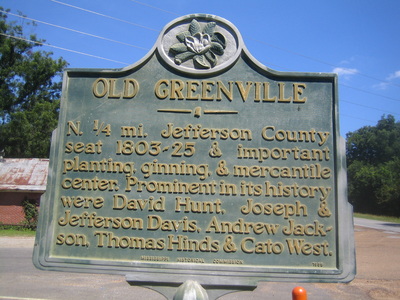
The current city of Greenville is the third in the State to bear the name. The first, (known as Old Greenville) located to the south near Natchez, was the Jefferson County seat from 1803 to 1825 but became defunct soon after the American Revolution, as European-American settlement was then still concentrated in the eastern states. This ghost town was in no way related to the second Greenville except that they eventually shared a name.
Many migrants came to the area of the future, second Greenville, located approximately 150 miles north of the first Greenville, from the eastern and Upper South states, seeking land for developing cotton plantations, and this area became a trading center for the region's plantations. In 1830, the United States Congress passed the Indian Removal Act, which authorized the government to make treaties to revoke Native American land claims in exchange for lands west of the Mississippi River. They forced most of the Southeastern tribes to Indian Territory during the following decade.
After it became necessary to relocate the county seat of Washington County in 1844 due to the loss of land to the newly formed Issaquena County, the not-yet-established second Greenville was designated as the future county seat and finally became so upon its founding in 1847. American William W. Blanton filed for land from the United States government and was granted section four, township eighteen, range eight west; this plot now constitutes most of current downtown Greenville (the third). It was named by its founders for General Nathanael Greene, friend of President George Washington, for whom the county was named. This Greenville was thriving hamlet in the antebellum years, as cotton plantations developed in the area generated high profits for major planters. They used indentured Whites, captured Indians and African slaves as farmhands on the plantations.
Washington County's two previous county seats, New Mexico and Princeton, were located along the Mississippi River and had been eroded by the waters, to the point that they were destroyed. As county seat, Greenville was the trading, business, and cultural center for the large cotton plantations that surrounded it. Most plantations were located directly on the Mississippi and other major navigable tributaries. The interior bottomlands were not developed until after the Civil War.
The destruction of Greenville and the Civil War
The town (the second Greenville, eventually also referred to as Old Greenville by its residents who may not have been familiar with Mississippi's first Greenville, which by then had disappeared) was destroyed during the Union Army's actions related to the siege of Vicksburg. Troops from a Union gunboat landed at Greenville. In retaliation for being fired upon, they burned every building. The inhabitants took refuge in plantation homes of the area. When the war ended, veterans of Mississippi regiments returned to find Greenville in a state of ruin.
The former residents soon decided to build again. They chose a new site (the third, current Greenville) three miles away, at the highest point on the Mississippi River between the towns of Vicksburg and Memphis. Much of the land belonged to the Roach and Blanton families; the major part of the area selected was within property owned by Mrs. Harriet Blanton Theobald. She welcomed the idea of a new Greenville, and donated land for schools, churches and public buildings. She was called the "Mother of Greenville". Major Richard O’Hea, who had planned the wartime defense fortifications at Vicksburg, was hired to lay out the new town.
Greenville recovered prosperity, still based on cotton, despite the decline in world markets for this commodity. In the early 20th century, its elite families had considerable political influence in the state, and US Senator Leroy Percy was from here. Several residences and other buildings from the late 19th and early 20th centuries have been listed on the National Register of Historic Places. It was a center of Delta culture in the early 20th century. This city adapted the former site to serve as industrial fill.
Nelson Street

African Americans in the Delta developed rich varieties of innovative music. Nelson Street is a historic strip of blues clubs that drew crowds in the 1940s and 1950s to the flourishing club scene to hear Delta blues, big band, jump blues and jazz. Record companies came to Greenville to recruit talent. |access-date=2008-05-31 |archive-url=http://webarchive.loc.gov/all/20080918201642/http://www.atlantamagazine.com/uploadedFiles/Atlanta/Travel/November07%20Travel.pdf |archive-date=September 18, 2008 |url-status=dead |access-date=2008-05-29 |url-status=dead |archive-url=https://web.archive.org/web/20080529055826/http://www.visitmississippi.org/music/MBTmapbrochure1s.pdf |archive-date=2008-05-29
In the early 21st century, the Mississippi Blues Commission was established to commemorate this music in the state's history and culture. It has identified sites throughout the Delta as part of the Mississippi Blues Trail.
Southern Whispers Restaurant on Nelson Street in Greenville was the second site identified on this trail; this was a stop on the Chitlin' Circuit in the early days of the blues. The historic marker in front of the restaurant commemorates its importance in the history of the blues in Mississippi.http://www.bluesmatters.com/modules.php?name=News&file=article&sid=2493 |access-date=2008-05-28 |archive-url=https://web.archive.org/web/20080509122945/http://www.msbluestrail.org/blues_trail/ |archive-date=2008-05-09 |url-status=live
21st century
In 2020 the city ordered churches to shut down to prevent the spread of COVID-19 and issued citations and fines to those attending a drive-in church gathering. The U.S. Justice Department intervened on behalf of the church.
Geography
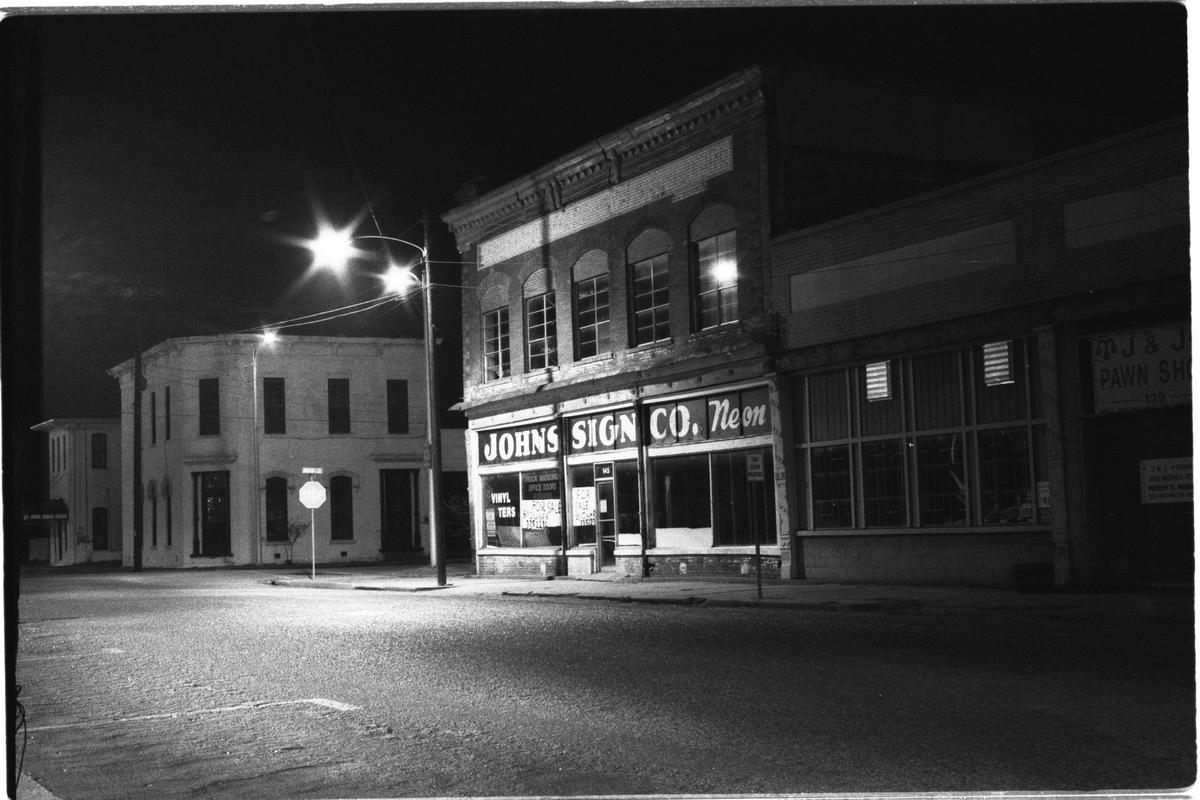
Greenville is located on the eastern bank of Lake Ferguson, an oxbow lake left from an old channel of the Mississippi River.
One floating casino is located on the lake near the downtown area known as the Trop Casino Greenville, with a second just west of the city near the Greenville Bridge known as Harlow's Casino Resort. Chicago Mill and Lumber Co. operated a lumber mill on the lake two-tenths of a mile south of the casino levee parking lot; the mill specialized in making hardwood boxes until it closed.
According to the United States Census Bureau, the city has a total area of 27.7 sqmi, of which 26.9 sqmi is land and 0.8 sqmi (2.82%) is water.
Climate
|Jan record high F = 90 |Feb record high F = 91 |Mar record high F = 91 |Apr record high F = 96 |May record high F = 100 |Jun record high F = 107 |Jul record high F = 110 |Aug record high F = 107 |Sep record high F = 107 |Oct record high F = 99 |Nov record high F = 88 |Dec record high F = 85 |year record high F = 110 |Jan record low F = -1 |Feb record low F = -2 |Mar record low F = 15 |Apr record low F = 29 |May record low F = 36 |Jun record low F = 49 |Jul record low F = 53 |Aug record low F = 50 |Sep record low F = 37 |Oct record low F = 25 |Nov record low F = 16 |Dec record low F = -1 |year record low F = -2 | access-date = June 9, 2021}}{{cite web | access-date = June 9, 2021}}
Demographics
U.S. Decennial Census
2020 census
| Race / Ethnicity (NH = Non-Hispanic) | title=P004: Hispanic or Latino, and Not Hispanic or Latino by Race – 2000: DEC Summary File 1 – Greenville city, Mississippi | url=https://data.census.gov/table?g=160XX00US2829180&tid=DECENNIALSF12000.P004 | website=United States Census Bureau | access-date= }} | title=P2: Hispanic or Latino, and Not Hispanic or Latino by Race – 2010: DEC Redistricting Data (PL 94-171) – Greenville city, Mississippi | url=https://data.census.gov/cedsci/table?q=p2&g=160XX00US2829180&tid=DECENNIALPL2010.P2 | website=United States Census Bureau | access-date= }} | % 2000 | % 2010 |
|---|---|---|---|---|---|---|---|---|---|---|
| White alone (NH) | 11,963 | 6,894 | 4,821 | 28.73% | ||||||
| Black or African American alone (NH) | 28,871 | 26,750 | 23,787 | 69.35% | ||||||
| Native American or Alaska Native alone (NH) | 28 | 45 | 33 | 0.07% | ||||||
| Asian alone (NH) | 292 | 251 | 264 | 0.70% | ||||||
| Native Hawaiian or Pacific Islander alone (NH) | 5 | 5 | 3 | 0.01% | ||||||
| Other race alone (NH) | 8 | 6 | 48 | 0.02% | ||||||
| Mixed race or Multiracial (NH) | 169 | 156 | 445 | 0.41% | ||||||
| Hispanic or Latino (any race) | 297 | 293 | 269 | 0.71% | ||||||
| Total | 41,633 | 34,400 | 29,670 | 100.00% |
As of the 2020 United States census, there were 29,670 people, 12,142 households, and 7,405 families residing in the city.
2013 ACS
As of the 2013 American Community Survey, there were 33,928 people living in the city. 75.9% were African American, 21.7% White, 0.0% Native American, 0.8% Asian, 0.9% from some other race and 0.7% from two or more races. 1.2% were Hispanic or Latino of any race.
2000 census
As of the census of 2000, there were 41,633 people, 18,784 households, and 14,422 families living in the city. The population density was 1,548.8 PD/sqmi. There were 16,251 housing units at an average density of 604.6 /sqmi. The racial makeup of the city was 28.92% White, 69.60% Black, 0.07% Native American, 0.71% Asian, 0.01% Pacific Islander, 0.20% from other races, and 0.49% from two or more races. Hispanic or Latino of any race were 0.71% of the population.
There were 14,784 households, out of which 35.8% had children under the age of 18 living with them, 37.8% were married couples living together, 27.7% had a female householder with no husband present, and 29.5% were non-families. Of all households, 25.8% were made up of individuals, and 10.4% had someone living alone who was 65 years of age or older. The average household size was 2.77 and the average family size was 3.34.
In the city, the population was spread out, with 31.4% under the age of 18, 10.1% from 18 to 24, 26.3% from 25 to 44, 20.5% from 45 to 64, and 11.8% who were 65 years of age or older. The median age was 32 years. For every 100 females, there were 85.4 males. For every 100 females age 18 and over, there were 77.5 males.
The median income for a household in the city was $25,928, and the median income for a family was $30,788. Males had a median income of $29,801 versus $20,707 for females. The per capita income for the city was $13,992. About 25.7% of families and 29.6% of the population were below the poverty line, including 38.2% of those under age 18 and 23.6% of those age 65 or over.
1990 census
As of the census of 1990, there were 45,226 people living in the city. The racial makeup of the city was 59.41% (26,867) Black or African American, 39.54% (17,881) White, 0.08% (37) Native American, 0.41% (185) Asian, and 0.01% (4) from other races. 0.56% (252) were Hispanic or Latino of any race.
Government
| Image | Mayor | Years | Notes | |||||||
|---|---|---|---|---|---|---|---|---|---|---|
| ? | 1824–? | |||||||||
| L. Wilczinski | 1875–1887 | |||||||||
| R. W. Tilford | 1887–1889 | |||||||||
| J. H. Wynn | 1889–? | |||||||||
| –? | ||||||||||
| J. T. Gooch | December 1919 – July 15, 1920 | first= | last= | authorlink= | title=Greenville Mayor Quits and Hunt is Successor | newspaper=The Semi-Weekly Leader | date=July 14, 1920 | url= https://www.newspapers.com/article/the-semi-weekly-leader/125521581/ | via=Newspapers.com}} | |
| J. Allen Hunt | July 15, 1920 – ? | Appointed mayor after resignation of J.T. Gooch | ||||||||
| ? | ||||||||||
| Fred Schelben | 1928–1932 | |||||||||
| E. G. Ham | 1932–1934 | |||||||||
| Milton C. Smith | 1934–1944 | |||||||||
| E. M. Gray | 1944–1948 | |||||||||
| George F. Archer | 1948–1964 | |||||||||
| Pat Dunne | 1964–1976 | |||||||||
| William Burnley | 1976– July 31, 1990 | Defeated in a runoff election He was authorized to serve until August 8, 1990 but resigned effective July 31, 1990. | ||||||||
| Jerre Lane | July 31, 1990 – August 8, 1990 | Vice Mayor Lane served as interim mayor after William Burnley's resignation | ||||||||
| Frank Self | August 8, 1990 – 1995 | |||||||||
| Paul Artman Jr. | 1996–2003 | first= | last= | authorlink= | title= Four Campaign for Mayor | newspaper=Hattiesburg American | date=August 10, 2003 | url= https://www.newspapers.com/article/hattiesburg-american-four-campaign-for-m/125514547/ | via=Newspapers.com}} | |
| [[File:Heather McTeer Toney.jpg | 75px]] | Heather McTeer Toney | 2004–2011 | First African-American mayor | ||||||
| Chuck Jordan | 2012 | Resigned effective September 24, 2012 after being diagnosed with pancreatic cancer. | ||||||||
| Carolyn Weathers | September 24, 2012 – October 24, 2012 | Vice Mayor Weathers served as interim mayor after Chuck Jordan's resignation | ||||||||
| John Cox | October 24, 2012 – 2014 | Elected in a special election on October 22, 2012, to complete Jordan's term; sworn in on October 24, 2012. | ||||||||
| [[File:Errick Simmons, Mayor of Greenville Mississippi.jpg | 75px]] | Errick Simmons | 2015–Present | 2nd African-American mayor |
|}
Transportation
Air
Greenville Mid Delta Regional Airport (GLH), located in unincorporated Washington County, northeast of downtown Greenville, serves the city and the Mississippi Delta region. Commercial passenger air service is currently provided by Denver Air Connection with nonstop flights to Dallas/Fort Worth (DFW) and Atlanta (ATL) on the Fairchild Dornier 328JET, and Contour Airlines with a nonstop Bombardier regional jet flight to Dallas/Fort Worth (DFW). Air service out of GLH is federally subsidized under the Essential Air Service program.
Transportation
U.S. Highway 61, U.S. Highway 82 and the Great River Road (Mississippi Highway 1) are the main transportation arteries through the Greenville area. U.S. Highway 82 is a major part of the Mississippi Delta's transportation network, as it connects to Interstate 55 and other major four-lane highways. In addition, the U.S. Highway 82 bypass is being constructed to provide a transportation route at the southern end of the Delta, connecting at the new Mississippi River Bridge and ending near Leland. The four-lane Greenville Bridge, a $206 million cable-stayed span crossing the Mississippi River into Arkansas, opened in 2010, replacing the two-lane Benjamin G. Humphreys Bridge, which opened in 1940.
Rail
The Columbus and Greenville Railway operates the Greenwood–Greenville rail line for freight traffic. North of Greenville, the Great River Railroad's line to Rosedale branches off.
Economy
Circa 2008 there were ten grocery stores operated by ethnic Chinese people. There were 42 such stores in the city in 1951, but since then there had been a flight of ethnic Chinese from the Delta.
Education
Most of Greenville is served by the Greenville Public School District, while a small portion of the city lies in the Western Line School District. Greenville High School is the public high school of the Greenville district, while O'Bannon High School serves Western Line residents.
The private schools, Washington School and Greenville Christian School, also serve the city, as well as St. Joseph Catholic School (K-12), a parochial school which is part of the Roman Catholic Diocese of Jackson. The diocese formerly operated Our Lady of Lourdes Elementary School, which merged into St. Joseph in 2016.
The Greenville Higher Education Center offers non-credit community courses and credit courses from Delta State University, Mississippi Delta Community College (MDCC), and Mississippi Valley State University. All of Washington County is in the service area of MDCC.
Media
Delta Democrat Times is the daily newspaper of the town.
Sports
The Greenville Bucks were a minor-league baseball team in the Cotton States League from 1922 to 1955.
The Greenville Bluesmen were an independent minor league professional baseball team from 1996 to 2001 in Greenville.
The Mississippi Miracles, formerly the Mississippi Stingers, were an American Basketball Association franchise from 2004 to 2006 in Greenville.
Sites
Main article: Winterville site
The Winterville Mounds Historic Site, with more than twelve earthwork mounds constructed by people of the Plaquemine Mississippian culture, is a survival north of the county seat of the deep indigenous history along the Mississippi River. This culture was particularly prominent from 13th to the 15th centuries, long before European exploration. Earthwork mounds were built by peoples in this area from the 9th century. The people in this region were influenced by the larger Mississippian culture, which built similar ceremonial sites throughout the Mississippi Valley and its tributaries. The historic Natchez people are considered the only contemporary surviving group of the Mississippian culture at the time of European exploration.
The Winterville Mounds has been designated as a state park and National Historic Landmark. A museum on the grounds displays artifacts recovered in professional excavations and adds to the interpretation of this complex, and the park has walking trails. It is located about 3 miles north of the city. It can be reached at 2415 Highway 1 N.
In popular culture
The movies Crossroads (1986) and The Reivers (1969) were filmed in Greenville.
The movie Django Unchained (2012) is set in Greenville for some scenes.
Sherman's Restaurant, located on Main St. in Greenville, was featured in the first season of Gordon Ramsay's 24 Hours to Hell and Back.
Notable people
Born in Greenville
- Steve Azar, country singer
- Eden Brent, blues boogie-woogie musician, composer, and performer
- Vivian Brown, meteorologist for The Weather Channel
- Charles Chew, (1922–1986), Illinois state senator; born in Greenville
- John Colbert, a.k.a. J Blackfoot, Soul singer with the Bar-Kays and Soul Children
- Tommy Davidson, actor/comedian
- Ross Davis, Negro league baseball player
- Tyrone Davis, blues musician
- Johnny Dollar, (1941–2006), Chicago blues guitarist, singer and songwriter
- Shelby Foote, author and historian
- Jimmie Giles, NFL tight end with Tampa Bay Buccaneers
- Quentin Groves, an American football linebacker with the Jacksonville Jaguars
- Brooks Haxton, poet and professor at Syracuse University
- Robert T. Henry, World War II soldier and Medal of Honor recipient
- Jim Henson, (1936–1990), puppeteer, television and film producer, creator of The Muppets
- Corey Holmes, all-star Canadian Football League player and Mayor of Metcalfe, Mississippi
- Lucy Somerville Howorth, feminist and New Deal lawyer
- Carla Hughes, convicted of murdering Avis Banks and her unborn baby.
- Antonio Johnson, NFL player for the Indianapolis Colts
- Germany Kent, model and media personality
- Cornelia Lampton, pianist
- Sam Chu Lin, pioneering Chinese American journalist
- John Ramsey Miller, writer and journalist
- Wilbert Montgomery, former NFL running back, member of Philadelphia Eagles Hall of Fame
- Neil Ratliff (1936-1994), music librarian
- Julia Evans Reed, author, journalist and columnist
- George Scott, MLB player for Boston Red Sox, Milwaukee Brewers, Kansas City Royals and New York Yankees
- Carol Schwartz, former member of Council of the District of Columbia
- Nellie Nugent Somerville, first woman elected to Mississippi Legislature, mother of Lucy Somerville Howorth
- LaToya Thomas, former professional basketball player in WNBA, first round draft pick of Cleveland Rockers
- Heather McTeer Toney, former mayor of Greenville and EPA regional administrator.
- Walter Turnbull, African American musician, founder of Boys Choir of Harlem
- Frank White, professional baseball player
- Mary Wilson, singer of The Supremes
- Benjamin Wright, (born July 11, 1946) is an American record producer, composer and arranger.
Greenville-related
- Bruce Blackman, musician and co-founder of Atlanta-based rock group Starbuck
- Ray Brown, NFL football player
- Hodding Carter, Pulitzer Prize-journalist, managed the city's Delta Democrat Times.
- Hodding Carter III, also a journalist, lived and worked here during and after the civil rights movement.
- Holt Collier is buried in Greenville. Collier was an African-American bear hunter and sportsman.
- Samuel Gibbs French (1818-1910), Confederate Major General, managed a plantation in Greenville
- John F. Harris, Mississippi State Representative from Greenville elected in 1890.
- Clarke Reed, Mississippi state Republican chairman from 1966 to 1976
- Thomas R. Yarborough, first Black city councilman in California
Sister cities
- Germany Kronach, Bavaria, Germany, since 2006
- Liberia Greenville, Liberia, since 2009
References
References
- "Over 300 Democratic Mayors Endorse Vice President Kamala Harris".
- "2020 U.S. Gazetteer Files". United States Census Bureau.
- {{GNIS. 2403752
- "Old Greenville Historical Marker".
- "Washington County Historical Papers".
- Woods, Woody. (2010). "Delta Plantations: The Beginning". Troy (Woody) Woods.
- (April 14, 2020). "CORONAVIRUS Justice Department defends Mississippi drive-in church service".
- "QuickFacts: Greenville city, Mississippi".
- "U.S. Decennial Census". Census.gov.
- "P004: Hispanic or Latino, and Not Hispanic or Latino by Race – 2000: DEC Summary File 1 – Greenville city, Mississippi".
- "P2: Hispanic or Latino, and Not Hispanic or Latino by Race – 2010: DEC Redistricting Data (PL 94-171) – Greenville city, Mississippi".
- "P2: Hispanic or Latino, and Not Hispanic or Latino by Race – 2020: DEC Redistricting Data (PL 94-171) – Greenville city, Mississippi".
- "U.S. Census website". [[United States Census Bureau]].
- (October 1, 1887). "H & N Wilczinski". The Weekly Democrat-Times.
- (April 7, 1888). "Railroad Election". The Weekly Democrat-Times.
- (December 10, 1889). "The Greenville Election". The Daily Commercial Herald.
- (July 14, 1920). "Greenville Mayor Quits and Hunt is Successor". The Semi-Weekly Leader.
- (September 5, 2014). "Schelben Park to lose some amenities". [[The Washington Times]].
- (January 2, 1932). "Magruder At Banquet - Retired Admiral Will Speak At Greenville". [[Clarion-Ledger]].
- (December 12, 1933). "Milton C. Smith, Greenville Mayor". [[The Greenwood Commonwealth]].
- (December 31, 1943). "New Greenville Mayor". [[Sun Herald]].
- (January 3, 1964). "City, County Officials take Office Monday". [[The Delta Democrat-Times]].
- (October 7, 1975). "Former Police Chief Wins Demo Nomination for Greenville Mayor". [[Hattiesburg American]].
- (July 18, 1990). "Incumbent Greenville Mayor Loses Runoff Election". [[Clarion-Ledger]].
- (July 20, 1990). "Greenville Mayor Resigns". [[The Clarksdale Press Register]].
- (August 10, 2003). "Four Campaign for Mayor". [[Hattiesburg American]].
- (December 9, 2003). "Democrat Hudson Makes History, Is Elected Greenville Mayor". [[The Greenwood Commonwealth]].
- (December 15, 2011). "New Greenville Mayor Jordan Takes Office Jan. 3 - Jordan Defeated McGee In Monday's Election". [[WAPT]].
- (September 19, 2012). "Greenville mayor resigns following cancer diagnosis". [[WAPT]].
- (October 24, 2012). "Attorney Elected Greenville Mayor". [[Clarion-Ledger]].
- link. (2008-05-10 ." [[U.S. Census Bureau]]. Retrieved on July 15, 2011.)
- "Scheduled Flights".
- "Route Map".
- Thornell, John G.. (2008). "A Culture in Decline: The Mississippi Delta Chinese". Southeast Review of Asian Studies.
- Geography Division. (December 21, 2020). "2020 CENSUS - SCHOOL DISTRICT REFERENCE MAP: Washington County, MS". [[U.S. Census Bureau]].
- [http://Gcssaints.com Greenville Christian School website] {{webarchive. link. (2008-07-05)
- "St. Joseph Catholic School, Greenville, Mississippi".
- [http://lourdes.greenville.ms.us/Site/Welcome.html Our Lady of Lourdes Elementary School website] {{webarchive. link. (2008-09-08)
- "2020-21 Parent/Student Handbook". St. Joseph Catholic School.
- Emerson, Melaney. "MDCC – GHEC". ghec.org.
- "About MDCC". [[Mississippi Delta Community College]].
- Barth, Jack (1991). ''Roadside Hollywood: The Movie Lover's State-By-State Guide to Film Locations, Celebrity Hangouts, Celluloid Tourist Attractions, and More''. Contemporary Books. Page 170. {{ISBN. 9780809243266.
- (December 24, 2012). "Django Unchained". [[East Bay Express]].
- "Sherman's Restaurant expanding parking lot spaces".
- "Steveazar". Steve Azer.
- ''Illinois Blue Book 1985–1986'', "Biographical Sketch of Charles Chew", p. 79
- (30 November 2011). "Stax star J Blackfoot Dies". The Commercial Appeal.
- "Illustrated Johnny Dollar discography".
- "Carla Hughes". Mdoc.state.ms.us.
- "Heather McTeer Toney".
- Stowers, Mark. (August 15, 2014). "Delta Legend Bruce Blackman – Moonlight Still Feels Right". Clarion Ledger, Jackson, MS.
- Buchannan, Minor Ferris. [http://library.fws.gov/refuges/HoltCollier_history.pdf "Holt Collier: Guiding Roosevelt through the Mississippi [Canebrake]."] {{Webarchive. link. (2010-05-27 [http://library.fws.gov/About.html U.S. Fish & Wildlife Service Conservation Library] {{Webarchive). link. (2009-08-12)
- "Samuel Gibbs French (1818–1910) Confederate General".
- (25 June 2010). "Sid Salter, GOP pioneer Clarke Reed faces post-crash surgeries, June 25, 2010". DeSoto Times Tribune.
- Forrey, Kathy. (August 1, 1990). "More than 200 pay homage to Yarborough". Lake Elsinore Valley Sun-Tribune.
This article was imported from Wikipedia and is available under the Creative Commons Attribution-ShareAlike 4.0 License. Content has been adapted to SurfDoc format. Original contributors can be found on the article history page.
Ask Mako anything about Greenville, Mississippi — get instant answers, deeper analysis, and related topics.
Research with MakoFree with your Surf account
Create a free account to save articles, ask Mako questions, and organize your research.
Sign up freeThis content may have been generated or modified by AI. CloudSurf Software LLC is not responsible for the accuracy, completeness, or reliability of AI-generated content. Always verify important information from primary sources.
Report