From Surf Wiki (app.surf) — the open knowledge base
Greenhouse gas emissions by the United States
Climate changing gases from the North American country

Climate changing gases from the North American country
gases from the United States which contribute to climate change, and their mitigation
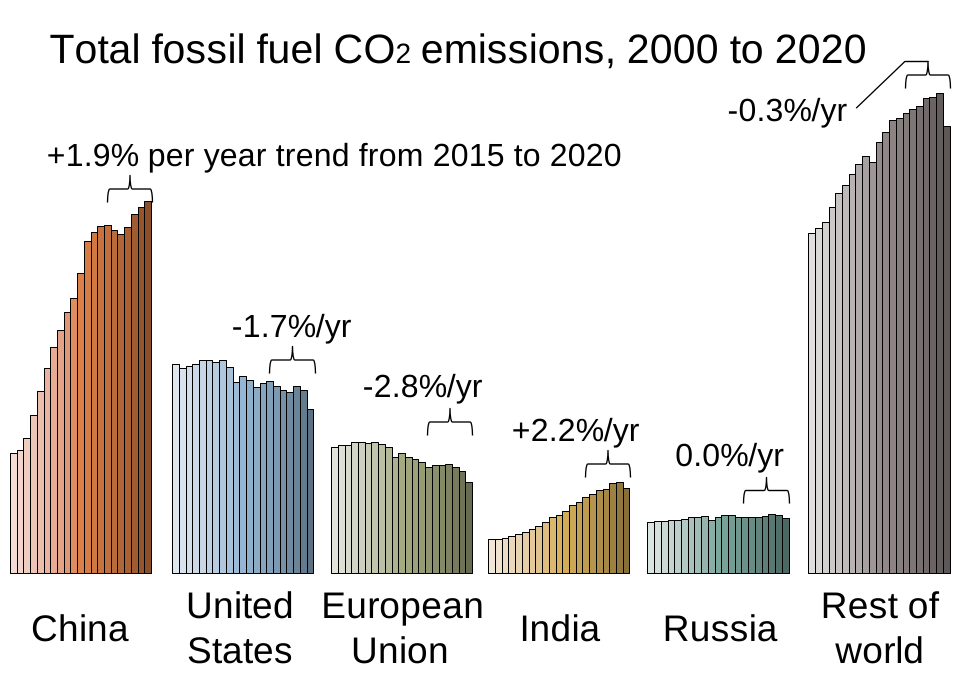
The United States produced 5.2 billion metric tons of carbon dioxide equivalent greenhouse gas (GHG) emissions in 2020, the second largest in the world after greenhouse gas emissions by China and among the countries with the highest greenhouse gas emissions per person. In 2022, the emissions rose to 6.3432 billion metric tons. In 2019 China is estimated to have emitted 27% of world GHG, followed by the United States with 11%, then India with 6.6%. In total the United States has emitted a quarter of world GHG, more than any other country. Annual emissions are over 15 tons per person and, amongst the top eight emitters, is the highest country by greenhouse gas emissions per person.
The IEA estimates that the richest decile in the US emits over 55 tonnes of per capita each year. Because coal-fired power stations are gradually shutting down, in the 2010s emissions from electricity generation fell to second place behind transportation which is now the largest single source. In 2020, 27% of the GHG emissions of the United States were from transportation, 25% from electricity, 24% from industry, 13% from commercial and residential buildings and 11% from agriculture.
U.S. energy-related CO2 emissions decreased by 3% in 2023, amounting to a reduction of approximately 134 million metric tons (MMmt). This reduction primarily occurred in the electric power sector, with a significant shift from coal-fired power to more sustainable energy sources like solar and natural gas.
In 2021, the electric power sector was the second largest source of U.S. greenhouse gas emissions, accounting for 25% of the U.S. total. These greenhouse gas emissions are contributing to climate change in the United States, as well as worldwide.
Background
In context of climate change


Greenhouse gases absorb radiant energy from the Earth after the surface is warmed by sunlight. US emissions in 2022 involved carbon dioxide (, 79.7%), methane (, 11.1%), nitrous oxide (, 6.1%) and other gases (e.g., fluorinated gases, 3.1%).
Greenhouse gases vary in how long they remain in the atmosphere. is longer-lived, remaining in the atmosphere for centuries. The average concentration in 2024 was over 424 parts per million (ppm), and exceeded 427 ppm in February 2025—each more than 50% higher than its pre-industrial level. Annual US national emissions were exceeded only by those of China,
Sources of greenhouse gases
Carbon dioxide enters the atmosphere through the mass burning of fossil fuels such as coal, natural gas, and oil along with trees, solid waste, and biological materials. In 2018, carbon dioxide was estimated to approximately be 81% of all USA greenhouse gases emitted in 2018. Natural sinks and reservoirs absorb carbon dioxide emissions through a process called the carbon cycle. Sinks and reservoirs can include the ocean, forests and vegetation, and the ground.
Methane is mainly produced by livestock and agricultural practices. Methane was estimated to make up 10% of emitted greenhouse gases. to about 5%, which is a smaller percentage than many other countries likely because the USA has more greenhouse gas emissions from vehicles, machines, and factories. Nitrous oxide is a greenhouse gas produced mainly by agriculture. Fluorinated gases are synthetically produced and used as substitutes for stratospheric ozone-depleting substances.
Greenhouse gases are produced from a wide variety of human activities, though some of the greatest impacts come from burning fossil fuels, deforestation, agriculture and industrial manufacturing. In the United States, power generation was the largest source of emissions for many years, but in 2017, the transportation sector overtook it as the leading emissions source. As of that year, the breakdown was transportation at 29%, followed by electricity generation at 28% and industry at 22%.
After carbon dioxide, the next most abundant compound is methane, though there have been methodological differences in how to measure its effects. According to a 2016 study, US methane emissions were underestimated by the EPA for at least a decade, by some 30 to 50 percent. Currently, the US government is working to reduce methane emissions in the agriculture, mining, landfill, and petroleum industries.
Another area of concern is that of ozone-depleting substances such as chlorofluorocarbons (CFCs) and hydrofluorocarbons (HFCs), which are often potent greenhouse gases with serious global warming potential (GWP). However, significant progress has been made in reducing the usage of these gases as a result of the Montreal Protocol, the international treaty that took effect in 1989.
Major emissions-creating events
In February 2018, an explosion and blowout in a natural gas well in Belmont County, Ohio was detected by the Copernicus Sentinel-5P satellite's Tropospheric Monitoring Instrument. The well was owned by XTO Energy. About 30 homes were evacuated, and brine and produced water were discharged into streams flowing into the Ohio River. The blowout lasted 20 days, releasing more than 50,000 tons of methane into the atmosphere. The blowout leaked more methane than is discharged by most European nations in a year from their oil and gas industries.

Reporting requirement
Reporting of greenhouse gases was first implemented on a voluntary basis with the creation of a federal register of greenhouse gas emissions authorized under Section 1605(b) of the Energy Policy Act of 1992. This program provides a means for utilities, industries, and other entities to establish a public record of their emissions and the results of voluntary measures to reduce, avoid, or sequester GHG emission
In 2009, the United States Environmental Protection Agency established a similar program mandating reporting for facilities that produce 25,000 or more metric tons of carbon dioxide per year. This has resulted in thousands of US companies monitoring and reporting their greenhouse gas emissions, covering about half of all GHG emissions in the United States.
A separate inventory of fossil fuel emissions is provided by Project Vulcan, a NASA/DOE funded effort to quantify North American fossil fuel emissions over time.
Mitigation
Federal Policies
The United States government has held shifting attitudes toward addressing greenhouse gas emissions. The George W. Bush administration opted not to sign the Kyoto Protocol, but the Obama administration entered the Paris Agreement. The Trump administration withdrew from the Paris Agreement while increasing the export of crude oil and gas, making the United States the largest producer.
In 2021, the Biden administration committed to reducing emissions to half of 2005 levels by 2030. In 2022, President Biden signed the Inflation Reduction Act into law, which is estimated to provide around $375 billion over 10 years to fight climate change. the social cost of carbon is 51 dollars a tonne whereas academics say it should be more than three times higher.
In 2025, however, under the Trump administration, the Environmental Protection Agency (EPA) administrator Lee Zeldin proposed a rule to eliminate the reporting and measuring of carbon emissions by a vast majority of US industries, including fossil fuel producers and refiners. The White House considers the GHGRP rollback as part of its plan to increase US oil and gas production.
Cross-sectoral
- State and Local Climate and Energy Program
- Federal Energy Management Program
Transportation
The transportation sector accounted for nearly 29% of GHG emissions in the United States in 2019, with 58% of emissions coming from light-duty vehicles. , states lack legislation for low emission zones. Programs to reduce greenhouse gas emissions from the transportation sector include:
- The Corporate Average Fuel Economy (CAFE) Program: Requires automobile manufacturers to meet average fuel economy standards for the light-duty vehicles, large passenger vans and SUVs sold in the United States. Fuel economy standards vary according to the size of the vehicle.
- SmartWay: Helps improve environmental outcomes for companies in the freight industry.
- Renewable Fuel Standard: Under the Energy Policy Act of 2005, United States Environmental Protection Agency is responsible for promulgating regulations to ensure that gasoline sold in the United States contains a specific volume of renewable fuel.
- FreedomCAR and Fuel Partnership and Vehicle Technologies Program: The program works jointly with DOE's hydrogen, fuel cell, and infrastructure R&D efforts and the efforts to develop improved technology for hybrid electric vehicles, which include components (such as batteries and electric motors). The U.S. government uses six "criteria pollutants" as indicators of air quality: ozone, carbon monoxide, sulfur dioxide, nitrogen oxides, particulate matter, and lead and does not include carbon dioxide and other greenhouse gases.
- Clean Cities: A network of local coalitions created by DOE in 1993 that works to support energy efficiency and clean fuel efforts in local transportation contexts.
- Congestion Mitigation and Air Quality Improvement (CMAQ) Program: Provides funds to states to improve air quality and congestion through the implementation of surface transportation projects (e.g., traffic flow and public transit improvements).
- Aviation industry regulation: Emissions from commercial and business jets make up 10% of U.S. transportation sector emissions and 3% of total national GHG emissions. In 2016, the EPA issued an "endangerment finding" that allowed the agency to regulate aircraft emissions, and the first proposed standards under that legal determination were issued in July 2020.
- Developing alternative energy sources: The Department of Energy's Bioenergy Technologies Office (BETO) supports research into biofuels as part of that agency's efforts to reduce transportation-related GHG emissions.
- Diesel Emissions Reduction Act (DERA) Program: Provides grants for diesel emissions reduction projects and technologies.
Energy consumption, residential and commercial
As of 2020, buildings in the United States consume roughly 40% of the country's total electricity and contribute a similar percentage of GHG emissions.
- EPA and DOE Clean Energy Programs – Energy Star
- Commercial Building Integration
- Residential Building Integration
- Weatherization Assistance Program
- State Energy Program
Energy consumption, industrial
- Energy Star for industry
- Industrial Technologies Program (ITP)
Energy supply


- The Coalbed Methane Outreach Program (CMOP) works to reduce methane released into the atmosphere as a result of coal mining by supporting recovery of naturally occurring coal mine gases and encouraging the production of coalbed methane energy, among other uses.
- Natural Gas STAR Program
- The government also supports alternative energy sources that do not rely on fossil fuels, including wind power, solar power, geothermal power, and biofuel.
- These clean energy sources can often be integrated into the electric grid in what are known as distributed generation systems.
- EPA Clean Energy Programs - Green Power Partnership
- EPA Clean Energy Programs - Combined Heat and Power Partnership
- Carbon capture and storage Research Program
- Advanced Energy Systems Program
- CO2 Capture
- CO2 Storage
Agriculture
- Environmental Quality Incentives Program
- Conservation Reserve Program
- Conservation Security Program
- AgSTAR Program
Forestry
- Healthy Forests Initiative
- Forest Land Enhancement Program
Waste management
- The Landfill Methane Outreach Program (LMOP) promotes the use of landfill gas, a naturally occurring byproduct of decaying landfill waste, as a sustainable energy source. Besides reducing emissions, landfill gas utilization has also been credited for reductions in air pollution, improvements to health and safety conditions, and economic benefits for local communities.
- In addition to reducing emissions from waste already in landfills, the EPA's WasteWise program works with businesses to encourage recycling and source reduction to keep waste out of landfills in the first place.
Regional initiatives
- Western Climate Initiative
- The Regional Greenhouse Gas Initiative (RGGI), founded in 2007, is a state-level emissions capping and trading program by nine northeastern U.S. states: Connecticut, Delaware, Maine, Maryland, Massachusetts, New Hampshire, New York, Rhode Island, Vermont, and Virginia. It is a cap and trade program in which states "sell nearly all emission allowances through auctions and invest proceeds in energy efficiency, renewable energy and other consumer benefit programs."
- Western Governors Association Clean and Diversified Energy Initiative
- Powering the Plains
- Carbon Sequestration Regional Partnerships
- U.S. Mayors Climate Protection Agreement
- National Governors Association's (NGA) Securing a Clean Energy Future.https://www.washingtonpost.com/wp-dyn/content/article/2007/09/12/AR2007091201651.html?tid=informbox
State Policies
California
- Vehicle Air Pollution (Senate Resolution 27): States and implies that California does not have to adhere to cutbacks in federal emissions standards, thereby allowing stricter California emissions standards than the federal government. This Senate Resolution stems from the previous administration's efforts to reverse environmental policies, and in this case, vehicle emissions standards. California's authority to set its own emissions standards is allowed through California's Clean Air Act preemption waiver granted to the state by the EPA in 2009. California's waiver applies to vehicles made in 2009 and later. The previous state standard included a goal for certain vehicles to reach an average 35 miles per gallon. California saw a large decline in vehicle emissions from 2007 to 2013 but a rise in emissions following 2013, which can be attributed to different circumstances, some of which include population and employment growth, and increases in overall state GDP indicating more economic activity in the state.
- Cap-and-Trade Program: Market-based carbon pricing program that sets a statewide cap on emissions. This cap declines annually and applies to large emitters that account for over 80 percent of California's GHG emissions. The California Air Resources Board (CARB) creates an allowance for each ton of carbon dioxide emissions. The number of allowances decreases over time and incentivizes a flexible approach to emissions reduction through trading.
- Advanced Clean Cars: Addresses GHG emissions and criteria air pollutants in California through the Low-Emission Vehicle (LEV) regulation and the Zero-Emission Vehicle (ZEV) regulation. The LEV regulation establishes increasing emissions standards for passenger vehicles through model year 2025. The ZEV regulation requires vehicle manufacturers to sell a certain percentage of ZEVs and plug-in hybrids annually through 2025. The next iteration of this program for future model years is under development. 15 states have adopted the regulations under this program.
- Advanced Clean Cars II: Mandates a ban on the sale of internal combustion engine passenger vehicles, trucks, and SUVs starting in 2035, and mandates annual increases in ZEV sales targets from model year 2026 to 2035. California has adopted the regulation and New York announced that it would follow.
- Advanced Clean Trucks: Requires manufacturers of medium-and heavy-duty trucks to sell an increasing percentage of zero-emission trucks each year starting with model year 2024. In addition to California, Oregon, Washington, New Jersey, New York, and Massachusetts have also adopted this regulation. 10 other states and the District of Columbia intend to adopt in the future.
- Low Carbon Fuel Standard (LCFS): Establishes annual targets through 2030 to ensure transportation-related fuels become cleaner and less carbon intensive. Oregon has a similar program entitled, Clean Fuels Program, which runs until 2025.
- In 2006, the state of California passed AB-32 (Global Warming Solutions Act of 2006), which requires California to reduce greenhouse gas emissions. To implement AB-32, the California Air Resources Board proposed a carbon tax but this was not enacted.
- In May 2008, the Bay Area Air Quality Management District, which covers nine counties in the San Francisco Bay Area, passed a carbon tax on businesses of 4.4 cents per ton of CO2.
Colorado
In November 2006, voters in Boulder, Colorado, passed what is said to be the first municipal carbon tax. It covers electricity consumption with deductions for using electricity from renewable sources (primarily Xcel's WindSource program). The goal is to reduce their emissions by 7% below 1990 levels by 2012. Tax revenues are collected by Xcel Energy and are directed to the city's Office of Environmental Affairs to fund programs to reduce emissions.
Boulder's Climate Action Plan (CAP) tax was expected to raise $1.6 million in 2010. The tax was increased to a maximum allowable rate by voters in 2009 to meet CAP goals. As of 2017 the tax was set at for residential users (avg. $21 per year), for commercial (avg. $94 per year), and for industrial (avg. $9,600 per year). Tax revenues were expected to decrease over time as conservation and renewable energy expand. The tax was renewed by voters on 6 November 2012.
As of 2015, the Boulder carbon tax was estimated to reduce carbon output by over 100,000 tons per year and provided in revenue. This revenue is invested in bike lanes, energy-efficient solutions, rebates, and community programs. The surcharge has been generally well received.
Maryland
In May 2010, Montgomery County, Maryland, passed the nation's first county-level carbon tax. The legislation required payments of $5 per ton of CO2 emitted from any stationary source emitting more than a million tons of carbon dioxide per year. The only source of emissions fitting the criteria is an 850 megawatt coal-fired power plant then owned by Mirant Corporation. The tax was expected to raise between and for the county, which faced a nearly budget gap.
The law directed half of tax revenues toward low interest loans for county residents to invest in residential energy efficiency. The county's energy supplier buys its energy at auction, requiring the plant owner to sell its energy at market value, preventing any increase in energy costs. In June 2010, Mirant sued the county to stop the tax. In June 2011 the Federal Court of Appeals ruled that the tax was a fee imposed "for regulatory or punitive purposes" rather than a tax, and therefore could be challenged in court. The County Council repealed the fee in July 2012.
GHG reduction targets
- States with statutory GHG reduction targets: California, Colorado, Connecticut, Hawaii, Maryland, Maine, Minnesota, Massachusetts, New Jersey, New York, Nevada, Oregon, Rhode Island, Vermont, Virginia, and Washington.
- States that don't have statutory targets, but have statutory GHG reporting requirements: Iowa and Pennsylvania.
Renewable portfolio standards
- 38 states have established renewable portfolio standards or voluntary targets, which increase the share of renewable electricity generation over time.
Lead by example programs
- New Hampshire's Better Buildings Neighborhood Program
- New Jersey's Clean Energy Program
- Atlanta's Virginia Highland - 1st Carbon Neutral Zone in the United States
Local programs
Municipal, county, and regional governments have substantial influence on greenhouse gas emissions, and many have reduction goals and programs. Local governments are often one of the largest employers in their jurisdictions, and can achieve substantial reductions in their own operations, such as by using zero-emissions vehicles, making government buildings energy-efficient, making or buying renewable energy, and providing incentives for employees to walk, bike, or take transit to work. Local governments have control over several policy areas which influence emissions for the population as a whole. These include land use regulations such as zoning; transportation infrastructure like public transit, parking, and bike lanes; and building codes and efficiency regulations. Some municipalities act as utility cooperatives and set a minimum standard for renewable generation. Although healthier air is the main benefit of clean air zones in cities they can have a side effect of reducing greenhouse gas emissions: however as of 2025 it is unclear whether cities in the US have the political power to make clean air zones.
Non-governmental responses
Individual action
Actions taken by individuals on climate change include diet, travel alternatives, household energy use, reduced consumption and family size. Individuals can also engage in local and political advocacy around issues of climate change. Individuals have a variety of carbon offsetting options available to mitigate their environmental impact through non-profit organizations.
Business community
Numerous large businesses have started cutting emissions and committed to eliminate net emissions by various dates in the future, resulting in higher demand for renewable energy and lower demand for fossil fuel energy. Businesses may also go carbon neutral by enrolling in Carbonfree® Programs or certifying their products as Carbonfree® through carbon offset organizations.
Technologies in development
- Carbon Sequestration Regional Partnerships
- Nuclear:
- Generation IV Nuclear Energy Systems Initiative
- Nuclear Hydrogen Initiative
- Advanced Fuel Cycle Initiative
- Global Nuclear Energy Partnership
- Clean Automotive Technology
- Hydrogen Technology
- High-temperature superconductivity
References
References
- US EPA, OAR. (2015-08-25). "Fast Facts on Transportation Greenhouse Gas Emissions".
- "Climate Change Indicators: U.S. Greenhouse Gas Emissions / Figure 3. U.S. Greenhouse Gas Emissions per Capita and per Dollar of GDP, 1990–2020". U.S. Environmental Protection Agency.
- (2024). "Territorial (MtCO2) / 1) Emissions / Carbon emissions / Chart View". Global Carbon Atlas }} ([https://web.archive.org/web/20250113130608/https://ourworldindata.org/grapher/annual-co2-emissions-per-country archive on Our World in Data])
● Country population data source: {{cite web. - "International / DATA / Natural Gas / Download options / Export CSV (table)". U.S. Energy Information Administration.
- "Greenhouse Gas Inventory Data Explorer". U.S. Environmental Protection Agency.
- (2024). "GHG emissions of all world countries". Emissions Database for Global Atmospheric Research (EDGAR).
- US EPA, OAR. (2017-02-08). "Inventory of U.S. Greenhouse Gas Emissions and Sinks".
- US EPA, OAR. (2015-12-29). "Sources of Greenhouse Gas Emissions".
- (2021-05-07). "Report: China emissions exceed all developed nations combined". BBC News.
- (2021-10-26). "The world is still falling short of meeting its climate goals".
- "Who has contributed most to global {{CO2}} emissions?".
- (2020-02-06). "4 Charts Explain Greenhouse Gas Emissions by Countries and Sectors".
- IEA (2023), The world’s top 1% of emitters produce over 1000 times more {{CO2 than the bottom 1%, IEA, Paris https://www.iea.org/commentaries/the-world-s-top-1-of-emitters-produce-over-1000-times-more-co2-than-the-bottom-1, License: CC BY 4.0
- EPA, OA, US. (2015-12-29). "Sources of Greenhouse Gas Emissions - US EPA".
- "U.S. energy-related CO2 emissions decreased by 3% in 2023 - U.S. Energy Information Administration (EIA)".
- "Sources of Greenhouse Gas Emissions".
- (26 November 2015). "Total cumulative greenhouse gas emissions". European Parliamentary Research Service.
- (5 October 2021). "Analysis: Which countries are historically responsible for climate change? / Historical responsibility for climate change is at the heart of debates over climate justice.". Carbon Brief.
- (16 January 2025). "Overview of Greenhouse Gases". U.S. Environmental Protection Agency.
- (16 January 2025). "Understanding Global Warming Potentials". U.S. Environmental Protection Agency.
- (29 October 2019). "The Atmosphere: Getting a Handle on Carbon Dioxide". National Aeronautics and Space Administration (NASA).
- (March 2025). "Carbon Dioxide / LATEST MEASUREMENT: / February 2025 / 427 ppm". National Aeronautics and Space Administration (NASA).
- Jackson, Randal. "The Effects of Climate Change".
- "Sources & Sinks".
- (2017-11-28). "Nutritional and greenhouse gas impacts of removing animals from US agriculture". Proceedings of the National Academy of Sciences.
- US EPA, OAR. (2017-02-08). "Inventory of U.S. Greenhouse Gas Emissions and Sinks".
- "Greenhouse Gas Emissions and Sinks in U.S. Agriculture".
- US EPA, OAR. (2015-12-29). "Sources of Greenhouse Gas Emissions".
- (2016). "US methane emissions are drastically underestimated, a new study shows". PRI.
- US EPA, OAR. (June 26, 2018). "What the U.S. is Doing in the Global Methane Initiative".
- (2018-03-07). "Exxon's XTO caps leaking Ohio gas well, 20 days after blowout". Reuters.
- (2019-12-12). "Satellite observations reveal extreme methane leakage from a natural gas well blowout". Proceedings of the National Academy of Sciences.
- Falconer, Rebecca. (December 17, 2009). "Satellite reveals Ohio gas well blowout to be a massive methane "super-emitter"".
- European Space Agency. (2019-12-20). "Massive Methane Leak Visible From Space".
- (2019). "Global Carbon Budget 2019". Earth System Science Data.
- US EPA, OAR. (2014-09-22). "Learn About the Greenhouse Gas Reporting Program (GHGRP)".
- Gurney, Kevin. (March 2025). "The Vulcan Project - Index".
- Dessai, S. (December 2001), [https://web.archive.org/web/20121031094826/http://www.tyndall.ac.uk/content/climate-regime-hague-marrakech-saving-or-sinking-kyoto-protocol Tyndall Centre Working Paper 12: The climate regime from The Hague to Marrakech: Saving or sinking the Kyoto Protocol?], Norwich, UK: Tyndall Centre, archived from [https://tyndall.ac.uk/content/climate-regime-hague-marrakech-saving-or-sinking-kyoto-protocol the original] on 31 October 2012. p. 5.
- (2016-09-03). "President Obama: The United States Formally Enters the Paris Agreement".
- "Effect of the US withdrawal from the Paris Agreement {{!}} Climate Action Tracker".
- (2021-04-22). "The U.S. Has a New Climate Goal. How Does It Stack Up Globally?". The New York Times.
- (2022-08-16). "Biden signs massive climate and health care legislation".
- (October 2022). "Comprehensive evidence implies a higher social cost of {{CO2}}". Nature.
- (2025-10-02). "Trump Administration Attempt to Eliminate Carbon Emissions Reporting Could Backfire".
- (2025-01-23). "Here Comes the Fossil Fuel Agenda".
- "Low and Zero Emissions Zones {{!}} Union of Concerned Scientists".
- US EPA, OAR. (2016-04-29). "Learn about SmartWay".
- US Energy Information Administration, [http://www.eia.gov/totalenergy/data/annual/pdf/sec2_3.pdf Primary energy by source and sector, 2011], PDF.
- "EERE: Vehicle Technologies Program Home Page".
- "Clean Cities Coalition Network: About Clean Cities".
- "Federal Programs Directory: Congestion Mitigation and Air Quality (CMAQ) Improvement Program {{!}} US Department of Transportation".
- US EPA, OAR. (2016-09-09). "Regulations for Greenhouse Gas Emissions from Aircraft".
- Davenport, Coral. (2020-07-22). "E.P.A. Proposes Airplane Emission Standards That Airlines Already Meet". The New York Times.
- "About the Bioenergy Technologies Office: Growing America's Energy Future".
- "Bioenergy Technologies Office Fiscal Year 2014 Annual Report".
- US EPA, OAR. (2015-07-24). "Learn About Impacts of Diesel Exhaust and the Diesel Emissions Reduction Act (DERA)".
- Mazria, Ed. "2030 Challenge".
- US EPA, OAR. (2017-02-08). "Inventory of U.S. Greenhouse Gas Emissions and Sinks".
- "Commercial Buildings Integration".
- "Residential Buildings Integration".
- "Weatherization Assistance Program".
- "State Energy Program".
- "Industrial Technologies Program BestPractices".
- (12 March 2025 }} ● Source chart reproduced by: {{cite news). "US Electricity 2025 Special Report". Ember Energy.
- US EPA, OAR. (2015-12-07). "Mitigating Coal Mine Methane Emissions".
- US EPA, OAR. (2016-05-03). "Natural Gas STAR Program".
- "Wind Energy Technologies Office".
- "Solar Energy Technologies Office".
- "Geothermal Technologies Office".
- "Bioenergy Technologies Office".
- "OE: Distributed Energy Program Home Page".
- "Green Power Partnership". U.S. Environmental Protection Agency.
- "Combined Heat and Power Partnership". U.S. Environmental Protection Agency.
- "Carbon Capture and Storage Research". U.S. Department of Energy, Office of Fossil Energy.
- "Advanced Energy Systems Program". National Energy Technology Laboratory, U.S. Department of Energy.
- "Carbon Capture". National Energy Technology Laboratory, U.S. Department of Energy.
- "Carbon Storage Technology". National Energy Technology Laboratory, U.S. Department of Energy.
- US EPA, OAR. (2014-06-02). "AgSTAR: Biogas Recovery in the Agriculture Sector".
- US EPA, OAR. (2016-06-29). "About the Landfill Methane Outreach Program".
- US EPA, OAR. (2016-04-15). "Benefits of Landfill Gas Energy Projects".
- US EPA, OLEM. (2016-03-11). "WasteWise".
- (n.d.). "Welcome". Regional Greenhouse Gas Initiative, Inc.
- (January 2020). "Powering the Plains: Energy Transition Roadmap". Great Plains Institute.
- "Regional Carbon Sequestration Partnerships". National Energy Technology Laboratory, U.S. Department of Energy.
- National Governors Association]. "2007-2008 NGA Chair's Initiative".
- "Bill Text - SR-27".
- (2017-04-03). "California Senate approves Wieckowski Clean Air Act resolution". Senator Bob Wieckowski.
- (2016-10-14). "California Greenhouse Gas Waiver Request {{!}} US EPA".
- Federal Register (2009) [https://www.govinfo.gov/content/pkg/FR-2009-07-08/pdf/E9-15943.pdf Part III Environmental Protection Agency], Federal Register / Vol. 74, No. 129 / Wednesday, July 8, 2009 / Notice
- "California's Greenhouse Gas Emission Inventory".
- "Cap-and-Trade Program {{!}} California Air Resources Board".
- "Advanced Clean Cars Program {{!}} California Air Resources Board".
- "States that have Adopted California's Vehicle Standards under Section 177 of the Federal Clean Air Act {{!}} California Air Resources Board".
- Karlamangla, Soumya. (2022-08-29). "What to Know About California's Ban on New Gasoline-Powered Cars". The New York Times.
- "Advanced Clean Cars II {{!}} California Air Resources Board".
- "New York begins implementation of 2035 ban on new gas-powered cars and trucks, following California lead".
- "Governor Hochul Drives Forward New York's Transition to Clean Transportation {{!}} Governor Kathy Hochul".
- "Advanced Clean Trucks {{!}} California Air Resources Board".
- "Department of Environmental Quality : Clean Truck Rules 2021 : Rulemaking at DEQ : State of Oregon".
- "WAC 173-423-400 - Washington State Department of Ecology".
- "New Jersey Department of Environmental Protection".
- "Air Pollution Regulatory Revisions - NYS Dept. of Environmental Conservation".
- "310 CMR 7.00: Air Pollution Control {{!}} Mass.gov".
- "15 states and the District of Columbia join forces to accelerate bus and truck electrification {{!}} California Air Resources Board".
- "Virginia Supports Medium & Heavy-Duty Zero Emissions Vehicles Memorandum of Understanding".
- "Low Carbon Fuel Standard {{!}} California Air Resources Board".
- "Department of Environmental Quality : Clean Fuels Program Overview : Oregon Clean Fuels Program : State of Oregon".
- "California and AB32".
- link. (15 March 2011, San Francisco Chronicle, 22 May 2008)
- "Climate Action Plan Tax".
- Kelley, Katie. (18 November 2006). "City Approves 'Carbon Tax' in Effort to Reduce Gas Emissions". The New York Times.
- Sadasivam, Naveena. (2 November 2015). "How Boulder Taxed its Way to a Climate-Friendlier Future".
- "Carbon Energy Tax".
- "Natural Sciences Repository Index 130". Itsgettinghotinhere.org.
- McGowan, Elizabeth. "Maryland County Carbon Tax Law Could Set Example for Rest of Country".
- (13 June 2013). "Archive Template". Washingtonexaminer.com}}{{dead link.
- (13 June 2013). "Archive Template". Washingtonexaminer.com}}{{dead link.
- United States Court of Appeals for the Fourth Circuit. (20 June 2011). "Genon Mid-Atlantic LLC v. Montgomery County, Maryland".
- County Council for Montgomery County, Maryland. (10 July 2012). "Resolution No. 17-484. Repeal of Department of Finance Regulation 12-10, Excise Tax: Major Emitters of Carbon Dioxide".
- "Greenhouse Gas Emissions Reduction Targets and Market-based Policies".
- "Renewable energy explained - portfolio standards - U.S. Energy Information Administration (EIA)".
- "NH BetterBuildings {{!}} Energy Division {{!}} NH Office of Strategic Initiatives".
- "Board of Public Utilities {{!}} ResidentialCustomers".
- Jay, Kate. (November 14, 2008). "First Carbon Neutral Zone Created in the United States". Reuters.
- (2018). "Climate of Hope: How Cities, Businesses, and Citizens Can Save the Planet". St. Martin's Griffin.
- "Clean Air Zones: Practical guidance for cities".
- "C40 Knowledge Community".
- (2025-03-20). "Trump extends deadline for New York to end congestion toll for Manhattan drivers".
- "Carbon Footprint Factsheet - Center for Sustainable Systems".
- Perkins, Sid. (July 11, 2017). "The best way to reduce your carbon footprint is one the government isn't telling you about". [[Science (journal).
- (12 July 2017). "Want to fight climate change? Have fewer children".
- (16 October 2018). "Population Matters: Climate change".
- Frankel, Jeffrey. (2020-01-20). "The best way to help the climate is to increase the price of {{CO2}} emissions {{!}} Jeffrey Frankel". The Guardian.
- "For Individuals - Offset Your Carbon Footprint".
- (December 2020). "Growing renewable power: companies seizing leadership opportunities".
- "Carbonfree® Partner Programs for Businesses".
- "Carbonfree® Product Certification Process".
- "Carbon Neutrality for Individuals and Businesses".
- Schultz, K.. (2007-07-01). "Status of the US nuclear hydrogen initiative". Office of Scientific and Technical Information.
- "Technologies for Hydrogen Production". National Energy Technology Laboratory, U.S. Department of Energy.
This article was imported from Wikipedia and is available under the Creative Commons Attribution-ShareAlike 4.0 License. Content has been adapted to SurfDoc format. Original contributors can be found on the article history page.
Ask Mako anything about Greenhouse gas emissions by the United States — get instant answers, deeper analysis, and related topics.
Research with MakoFree with your Surf account
Create a free account to save articles, ask Mako questions, and organize your research.
Sign up freeThis content may have been generated or modified by AI. CloudSurf Software LLC is not responsible for the accuracy, completeness, or reliability of AI-generated content. Always verify important information from primary sources.
Report