From Surf Wiki (app.surf) — the open knowledge base
Greeneville, Tennessee
Town in Tennessee, United States

Town in Tennessee, United States
| Field | Value | |
|---|---|---|
| name | Greeneville | |
| settlement_type | Town | |
| nickname | Home of President Andrew Johnson | |
| motto | ||
| image_skyline | Main & Depot Intersection - Greeneville.jpg | |
| image_blank_emblem | Greeneville, Tennessee Logo.gif | |
| blank_emblem_type | Logo | |
| imagesize | 223px | |
| image_caption | Corner of Main and Depot in downtown Greeneville | |
| image_flag | Flag of Greeneville, Tennessee.png | |
| image_seal | ||
| image_map | File:Greene County Tennessee Incorporated and Unincorporated areas Greeneville Highlighted 4730980.svg | |
| mapsize | 250px | |
| map_caption | Location of Greeneville in Greene County, Tennessee. | |
| map_caption1 | ||
| subdivision_type | Country | |
| subdivision_name | United States | |
| subdivision_type1 | State | |
| subdivision_name1 | Tennessee | |
| subdivision_type2 | County | |
| subdivision_name2 | Greene | |
| government_footnotes | ||
| government_type | Council-Manager | |
| leader_title | Mayor | |
| leader_name | Cal Doty | |
| leader_title1 | City Manager | |
| leader_name1 | Todd Smith | |
| leader_title2 | City Recorder | |
| leader_name2 | Lora Young | |
| leader_title3 | Chief of Police | |
| leader_name3 | Steve Spano | |
| leader_title4 | City Council | |
| leader_name4 | {{Collapsible list | |
| title | List of Council members | |
| frame_style | border:none; padding: 0; | |
| list_style | text-align:left;display:none | |
| 1 | Tim Ward - First Ward | |
| 2 | Ginny Kidwell - First Ward | |
| 3 | Tim Teague - Second Ward | |
| 4 | Scott Bullington - Second Ward | |
| established_title | Settled | |
| established_date | 1780 | |
| established_title2 | Founded | |
| established_date2 | 1783 | |
| established_title3 | Incorporated | |
| established_date3 | 1795 | |
| named_for | Nathanael Greene | |
| unit_pref | Imperial | |
| area_footnotes | ||
| area_total_sq_mi | 17.00 | |
| <!-- Population --> | population_as_of | 2020 |
| population_total | 15479 | |
| population_density_km2 | 351.63 | |
| population_density_sq_mi | 910.69 | |
| population_urban | 23664 | |
| timezone | Eastern (EST) | |
| utc_offset | -5 | |
| timezone_DST | EDT | |
| utc_offset_DST | -4 | |
| elevation_footnotes | ||
| elevation_ft | 1595 | |
| coordinates | ||
| postal_code_type | ZIP Codes | |
| postal_code | 37616, 37743 & 37745 (General Delivery) and 37744 (P.O. Boxes) | |
| area_codes | 423 and 729 | |
| blank_name | FIPS code | |
| blank_info | 47-30980 | |
| blank1_name | GNIS feature ID | |
| blank1_info | 2406613 | |
| website | www.greenevilletn.gov | |
| area_total_km2 | 44.02 | |
| area_land_km2 | 44.02 | |
| area_water_km2 | 0.00 | |
| area_land_sq_mi | 17.00 | |
| area_water_sq_mi | 0.00 | |
| population_footnotes |
Greeneville is an incorporated town in and the county seat of Greene County, Tennessee, United States. The population as of the 2020 census was 15,479. The town was named in honor of Revolutionary War hero Nathanael Greene, and it is the second oldest town in Tennessee. It is the only town with this spelling in the United States, although there are numerous U.S. towns named Greenville. The town was the capital of the short-lived State of Franklin in the 18th-century history of East Tennessee.
Greeneville is known as the town where United States President Andrew Johnson began his political career when elected to be an alderman and transitioned from his trade as a tailor. He and his family lived there for most of his adult years. It was an area of strong abolitionist and Unionist views and yeoman farmers, an environment that influenced Johnson's outlook.
The Greeneville Historic District was established in 1974.
The U.S. Navy was named in honor of the town.
Greeneville is part of the Johnson City-Kingsport-Bristol, TN-VA Combined Statistical Area – commonly known as the "Tri-Cities" region. Tusculum University, a private Christian university located in nearby Tusculum, has a Greeneville mailing address.
Geography
thumb|right|Aerial view of Greeneville Greeneville lies in the foothills of the Appalachian Mountains. These hills are part of the Appalachian Ridge-and-Valley Province, which is characterized by fertile river valleys flanked by narrow, elongate ridges. Greeneville is located roughly halfway between Bays Mountain to the northwest and the Bald Mountains— part of the main Appalachian crest— to the southeast. The valley in which Greeneville is situated is part of the watershed of the Nolichucky River, which passes a few miles south of the town.
Several federal and state highways now intersect in Greeneville, as they were built to follow old roads and trails. U.S. Route 321 follows Main Street through the center of the town and connects Greeneville to Newport to the southwest. U.S. Route 11E (Andrew Johnson Highway), which connects Greeneville with Morristown to the west, intersects U.S. 321 in Greeneville and the merged highway proceeds northeast to Johnson City. Tennessee State Route 107, which also follows Main Street and Andrew Johnson Hwy, Greeneville to Erwin to the east and to the Del Rio area to the south. Tennessee State Route 70 (Lonesome Pine Trail) connects Greeneville with Interstate 81, and Rogersville to the north and Asheville, North Carolina to the south. Tennessee State Route 172 (Baileyton Road) connects Greeneville with Interstate 81 and Baileyton to the north.
Tennessee State Route 93 (Kingsport Highway) connects Greeneville to Interstate 81, Fall Branch and Kingsport to the north.
According to the United States Census Bureau, the town has a total area of 17.01 sqmi, all land.
Climate
|Jan record high F = 79 |Feb record high F = 82 |Mar record high F = 86 |Apr record high F = 90 |May record high F = 96 |Jun record high F = 101 |Jul record high F = 104 |Aug record high F = 100 |Sep record high F = 102 |Oct record high F = 95 |Nov record high F = 85 |Dec record high F = 80 |year record high F = 104 |Jan record low F = −29 |Feb record low F = −23 |Mar record low F = −9 |Apr record low F = 16 |May record low F = 26 |Jun record low F = 35 |Jul record low F = 45 |Aug record low F = 40 |Sep record low F = 28 |Oct record low F = 14 |Nov record low F = 3 |Dec record low F = −16 |year record low F = -29 | access-date = May 28, 2021 | archive-date = November 16, 2018 | archive-url = https://web.archive.org/web/20181116080734/http://w2.weather.gov/climate/xmacis.php?wfo=mrx | url-status = dead | access-date = May 28, 2021}}
Neighborhoods
- Buckingham Heights
- Cherrydale
- Oak Hills
- Windy Hills
- Harrison Hills
- South Greene
History
Early history
Native Americans were hunting and camping in the Nolichucky Valley as early as the Paleo-Indian period (c. 10,000 B.C.). A substantial Woodland period (1000 B.C. - 1000 A.D.) village existed at the Nolichucky's confluence with Big Limestone Creek (now part of Davy Crockett Birthplace State Park). By the time the first Euro-American settlers arrived in the area in the late 18th century, the Cherokee claimed the valley as part of their hunting grounds. The Great Indian Warpath passed just northwest of modern Greeneville, and the townsite is believed to have once been the juncture of two lesser Native American trails.
The permanent European settlement of Greene County began in 1772. Jacob Brown, a North Carolina merchant, leased a large stretch of land from the Cherokee, located between the upper Lick Creek watershed and the Nolichucky River, in what is now the northeastern corner of the county. The "Nolichucky Settlement" initially aligned itself with the Watauga Association as part of Washington County, North Carolina. After voting irregularities in a local election, however, an early Nolichucky settler named Daniel Kennedy (1750–1802) led a movement to form a separate county, which was granted in 1783.
The county was named after Nathanael Greene, reflecting the loyalties of the numerous Revolutionary War veterans who settled in the Nolichucky Valley, especially from Pennsylvania and Virginia. The first county court sessions were held at the home of Robert Kerr, who lived at "Big Spring" (near the center of modern Greeneville). Kerr donated 50 acre for the establishment of the county seat, most of which was located in the area currently bounded by Irish, College, Church, and Summer streets. "Greeneville" was officially recognized as a town in 1786.
State of Franklin

In 1784, North Carolina attempted to resolve its debts by giving the U.S. Congress its lands west of the Appalachian Mountains, including Greene County, abandoning responsibility for the area to the federal government. In response, delegates from Greene and neighboring counties convened at Jonesborough and resolved to break away from North Carolina and establish an independent state. The delegates agreed to meet again later that year to form a constitution, which was rejected when presented to the general delegation in December. Reverend Samuel Houston (not to be confused with the later governor of Tennessee and Texas) had presented a draft constitution that restricted the election of lawyers and other professionals. Houston's draft met staunch opposition, especially from Reverend Hezekiah Balch (1741–1810) (who was later instrumental in the creation of Tusculum College). John Sevier was elected governor, and other executive offices were filled.
A petition for statehood for what would have become known as the State of Franklin (named in honor of Benjamin Franklin) was drawn at the delegates session in May 1785. The delegates submitted a petition for statehood to Congress, which failed to gain the requisite votes needed for admission to the Union. The first state legislature of Franklin met in December 1785 in a crude log courthouse in Greeneville, which had been named the capital city the previous August. During this session, the delegates finally approved a constitution that was based on, and quite similar to, the North Carolina state constitution. However, the Franklin movement began to collapse soon thereafter, with North Carolina reasserting its control of the area the following spring.
In 1897, at the Tennessee Centennial Exposition in Nashville, a log house that had been moved from Greeneville was displayed as the capitol where the State of Franklin's delegates met in the 1780s. There is, however, nothing to verify that this building was the actual capitol. In the 1960s, the capitol was reconstructed, based largely on the dimensions given in historian J. G. M. Ramsey's Annals of Tennessee.
Greeneville and the abolitionist movement

Greene County, like much of East Tennessee, was home to a strong abolitionist movement in the early 19th century. This movement was likely influenced by the relatively large numbers of Quakers who migrated to the region from Pennsylvania in the 1790s. The Quakers considered slavery to be in violation of Biblical Scripture and were active in the region's abolitionist movement throughout the antebellum period. One such Quaker was Elihu Embree (1782–1820), who published the nation's first abolitionist newspaper, The Emancipator, at nearby Jonesborough.
When Embree's untimely death in 1820 effectively ended publication of The Emancipator, several of Embree's supporters turned to Ohio abolitionist Benjamin Lundy, who had started publication of his own antislavery newspaper, The Genius of Universal Emancipation, in 1821. Anticipating that a southern-based abolitionist movement would be more effective, Lundy purchased Embree's printing press and moved to Greeneville in 1822. Lundy remained in Greeneville for two years before moving to Baltimore. He would later prove influential in the career of William Lloyd Garrison, whom he hired as an associate editor in 1829.
Greenevillians involved in the abolitionist movement included Hezekiah Balch, who freed his slaves at the Greene County Courthouse in 1807. Samuel Doak, the founder of Tusculum College, followed in 1818. Valentine Sevier (1780–1854), a nephew of John Sevier who served as Greene County Court Clerk, freed his slaves in the 1830s and offered to pay for their passage to Liberia, which had been formed as a colony for freed slaves. Francis McCorkle, the pastor of Greeneville's Presbyterian Church, was a leading member of the Manumission Society of Tennessee.
Civil War
In June 1861, on the eve of the Civil War, thirty counties of the pro-Union East Tennessee Convention met in Greeneville to discuss strategy after state voters had elected to join the Confederate States of America. The convention sought to create a separate state in East Tennessee that would remain with the United States. The state government in Nashville rejected the convention's request, however, and East Tennessee was occupied by Confederate forces shortly thereafter. Thomas Dickens Arnold, a Greeneville resident and former congressman who attended the convention, advocated the use of violent force to allow East Tennessee to break away from Tennessee, and taunted other members of the convention who advocated a more peaceful set of resolutions.
Several conspirators involved in the pro-Union East Tennessee bridge burnings lived near what is now Mosheim, and managed to destroy the railroad bridge over Lick Creek in western Greene County on the night of November 8, 1861. Two of the conspirators, Jacob Hensie and Henry Fry, were executed in Greeneville on November 30, 1861.
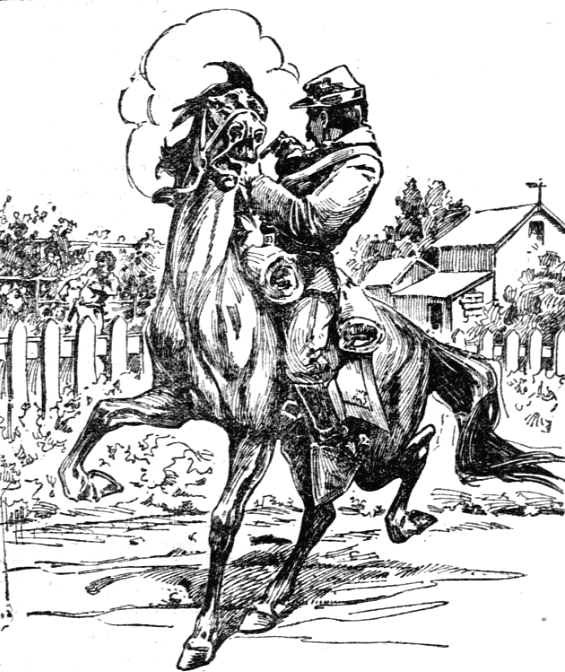
A portion of James Longstreet's army wintered in Greeneville following the failed Siege of Knoxville in late 1863. Confederate general John Hunt Morgan was killed in Greeneville during a raid by Union soldiers led by Alvan Cullem Gillem on September 4, 1864.
Andrew Johnson

Andrew Johnson, the 17th President of the United States, spent much of his active life in Greeneville. In 1826, Johnson arrived in Greeneville after fleeing an apprenticeship in Raleigh. Johnson chose to remain in Greeneville after learning that the town's tailor was planning to retire. Johnson purchased the tailor shop, which he moved from Main Street to its present location at the corner of Depot and College streets. Johnson married a local girl, Eliza McCardle, in 1827. The two were married by Mordecai Lincoln (1778–1851), who was Greene County's Justice of the Peace. He was a cousin of Abraham Lincoln, under whom Johnson would serve as vice president.
In the late 1820s, a local artisan named Blackstone McDannel often stopped by Johnson's tailor shop to debate issues of the day, especially the Indian Removal, which Johnson opposed. Johnson and McDannel decided to debate the issue publicly. The interest sparked by this debate led Johnson, McDannel, and several others to form a local debate society. The experience and influence Johnson gained in debating local issues helped him get elected to the Greeneville City Council in 1829. He was elected mayor of Greeneville in 1834, although he resigned after just a few months in office to pursue a position in the Tennessee state legislature, which he attained the following year. As Johnson rose through the ranks of political office in state and national government, he used his influence to help Greeneville constituents obtain government positions, among them his long-time supporter, Sam Milligan, who was appointed to the Court of Claims in Washington, D.C.
Whilst Andrew Johnson was away from home, during his vice-presidency, both Union and Confederate armies often used his home as a place to stay and rest during their travel. Soldiers left graffiti on the walls of Johnson's home. Confederate soldiers left notes on the walls expressing their displeasure, to put it delicately, of Johnson. Evidence of this can still be seen at the Andrew Johnson home. Andrew Johnson had to almost completely renovate his home after he returned home from Washington, D.C.
The Andrew Johnson National Historic Site, located in Greeneville, was listed on the National Register of Historic Places in 1963. Contributing properties include Johnson's tailor shop at the corner of Depot and College streets. The site also maintains Johnson's house on Main Street and the Andrew Johnson National Cemetery (atop Monument Hill to the south). A replica of Johnson's birth home and a life-size statue of Johnson have been placed across the street from the visitor center and tailor shop.
Indian Wars
Buffalo Soldiers originally were members of the 10th Cavalry Regiment of the United States Army, formed on September 21, 1866, at Fort Leavenworth, Kansas. This nickname was given to the Black Cavalry by Native American tribes who fought in the Indian Wars. The term eventually became synonymous with all of the African-American regiments formed in 1866. Greeneville was home to at least four men who bravely served the country as "Buffalo Soldiers".
George Clem School
In 1887, with assistance from the African Methodist Episcopal Zion Church, the George Clem School was organized as Greeneville College. In 1932, the Greeneville Board of Education leased the property to provide public education for Negroes. Three years later, George Clem was appointed principal. Consisting of grades one through ten, the school was renamed Greeneville College High School. In 1937, the 11th grade was added. A year later, the school became an accredited four-year school. In 1939, the city purchased the school and renamed it the George Clem School. A decade later, the original building was demolished and the present building was erected in 1950. The school closed in 1965 when the public schools desegregated, and it became the location of the Greeneville City Schools Central Office. The George Clem School is often overlooked when talking about Greeneville history. Topics such as Sam Doak, the death of General Morgan, and Andrew Johnson are often the focal points when learning about Greeneville. The George Clem School is something the town should promote and be proud of. This history shows the accomplishments of the black community in Greeneville through the years. There is now a non profit organization in Greeneville by the name of George Clem Multicultural Alliance that helps honor the history of the school. The George Clem Multicultural Alliance is a non-profit 501(c)(3), public benefit, & exclusively charitable organization dedicated to supporting civic pride & cultural diversity awareness through various means within Wesley Heights community, and Greeneville/Greene County at large
Magnavox
From 1947 to 2005, Magnavox—an electronics manufacturer best known for its television sets—operated its main three facilities in Greeneville. Magnavox was at one time the largest employer of Greeneville, employing more than 5,000 workers. Eight years after the first plant opened, Magnavox workers voted to form a union through the IBEW. In 1974, the facilities and the Magnavox company were acquired by the electronics giant Philips. Throughout the 1980s and early 1990s, the Greeneville facility saw a fluctuation and drops in employment. In 1997, Phillips sold its facilities to Knoxville-based company Five Rivers Electronic Innovations. In 2005, Five Rivers closed the former Magnavox plant after declaring bankruptcy. Before its shuttering, the Five Rivers facility was the site of the last television manufactured in the United States, which is now on display in the Greeneville-Greene County History Museum.
2011 tornado outbreak
On April 27, 2011, the rural community of Camp Creek south of Greeneville was severely affected by an EF3 tornado in the 2011 Super Outbreak. Six people were killed and 220 were injured by the tornado that either damaged or destroyed over 175 homes. Two hours later, Horse Creek, southeast of Greeneville, was also hit by an EF3 tornado, with the path travelling alongside and later crossing the earlier Camp Creek event as it moved into Washington County. Another 60-65 homes were either damaged or destroyed, and around 25 farms sustained heavy structural damage. Two more people were killed by that tornado, with an estimated 70 more being injured. A total of seven were killed in Greene County, with an eighth fatality in Washington County.
Downtown revitalization

In 2018, town officials, with the cooperation of a development and urban design firm, began efforts towards the redevelopment of the central business district of Greeneville. The project is projected to operate in several phases, projects proposed include: a farmer's market pavilion, a greenway along Richland Creek, an alley park, improved access for pedestrians and cyclists, parking garages, and the conversion of Depot Street into a street fair area. In October 2021, construction work began on a complete street-approach to Depot Street between Main Street and Irish Street in downtown Greeneville with enhanced pedestrian access. The project was completed in November 2023.
Demographics
2020 census
| Race | Number | Percentage | White (non-Hispanic) | Black or African American (non-Hispanic) | Native American | Asian | Pacific Islander | Other/Mixed | Hispanic or Latino |
|---|---|---|---|---|---|---|---|---|---|
| 12,855 | 83.05% | ||||||||
| 717 | 4.63% | ||||||||
| 21 | 0.14% | ||||||||
| 152 | 0.98% | ||||||||
| 1 | 0.01% | ||||||||
| 726 | 4.69% | ||||||||
| 1,007 | 6.51% |
As of the 2020 United States census, there were 15,479 people, 6,075 households, and 3,549 families residing in the town.
2010 census
As of the 2010 census, there were 15,062 people; 6,478 households; 7,399 housing units; and 3,845 families in the town. The population density was 885.3 /sqmi. The racial makeup of the city was 89.1% White, 5.6% African American, 0.2% Native American, 0.8% Asian, 0.0% Pacific Islander, 2.3% from other races, and 2% from two or more races. Hispanics or Latinos of any race were 4.4% of the population.
There were 6,506 households, out of which 24.8% had children under the age of 18 living with them, 40.2% were married couples living together, 14.9% had a female householder with no husband present, and 40.6% were non-families. 36.1% of all households were made up of individuals, and 17.3% had someone living alone who was 65 years of age or older. The average household size was 2.2 and the average family size was 2.86.
The age distribution was 21.2% under 18 and 21% who were 65 or older. The median age was 42.6 years. The median income for a household in the city was $51,692. The per capita income for the city was $24,376. About 13.9% of the population was below the poverty line.
Economy
Top employers
According to Greeneville Forward, a long-term growth plan published for the town in 2017, the top employers in the town are:
| # | Employer | # of Employees |
|---|---|---|
| 1 | Walmart | 916 |
| 2 | Laughlin Memorial Hospital | 800 |
| 3 | Takoma Regional Hospital | 620 |
| 4 | American Greetings | 542 |
| 5 | Parker-Hannifin | 450 |
| 6 | Greeneville City Schools | 448 |
| 7 | John Deere | 431 |
| 8 | Worthington Industries | 410 |
| 9 | Ingles Markets | 350 |
| 10 | Town of Greeneville | 240 |
| 11 | Food City | 216 |
Manufacturing remained as the top employing industry in Greeneville until the 1990s, after Magnavox, once the town's largest employer, shuttered its facilities in the town.
Retail is a major employer in Greeneville. The largest shopping center in Greeneville is Greeneville Commons which contains several national retailers. As of 2017, grocery stores in Greeneville include three Food City Supermarkets, two Ingles Markets, Dollar General Market, Sav-Mor Foods (a grocery store owned by Ingles Markets), Publix and Save-A-Lot. Walmart and Lowe's also have stores in Greeneville.
Arts and culture
Festivals and fairs
There has been a fair in some form in Greene County since 1870 when the Farmers and Mechanics Association held its first exposition. The present Greene County Fair Association was incorporated in 1949. The Greene County Fair is recognized statewide as one of the best fairs of its size. In 2021, the Fair received the First Runner-Up Award in the AAA Division. In 2015, the Fair was recognized as the AAA Division Champion Fair in the state of Tennessee by the Tennessee Association of Fairs. In 2005, we were honored to receive the Tennessee Association of Fairs highest award, the “Champion of Champions” fair trophy, and in 2006, the Fair received the “Champion of Champions Premier Fair” award.
The town is home to the Street Dance on Davis celebration, which is held annually on the weekend before Aug. 8, in remembrance of Aug. 8, 1863, the date when Andrew Johnson freed his personal slaves at his home in Greeneville. This street dance is a celebration that includes live music, dancing in the streets, kids zones, and most importantly open dialogue that supports black history. In recent years, The George Clem Multicultural Alliance has been the host of this celebration. Although the celebration started as primarily involving the local African-American community, the event has expanded to celebrate the African-American community of East Tennessee.
The fair was also an inspiration for The Band Perry's song "Walk Me Down The Middle", which was featured on their eponymous debut album.
Historic sites
- Andrew Johnson National Historic Site
- Earnest Farms Historic District
- Greeneville Historic District
- Maden Hall Farm
Sports
Greeneville is home to the Greeneville Flyboys, a collegiate summer baseball team of the Appalachian League, which was started in 2021. The team's home stadium is Pioneer Park on the campus of Tusculum College.
Professional baseball was first played in Greeneville by the Greeneville Burley Cubs in the Appalachian League in 1921. They remained in the league through 1925 and returned for a second stretch from 1938 to 1942. They were followed in the same league by the Greeneville Astros, who played in the city from 2004 to 2017. The circuit's vacancy was filled by the Cincinnati Reds, who placed a Rookie-level affiliate in Greeneville known as the Greeneville Reds.
Parks and recreation
The Town of Greeneville Parks and Recreation Department maintains:
- Dogwood Park
- Ginny Kidwell Amphitheater at Dogwood Park
- Hardin Park
- Highland Hills Park
- J.J. Jones Memorial Park
- Veterans Memorial Park (Forest Park)
- Wesley Heights Park
Government

Municipal
Greeneville is administered through a mayor/city council/city manager form of government. It previously had a mayor/board of aldermen/administrator form of government until April 18, 2023, when the then board of mayor and aldermen voted to change the town's charter.
The town has a mayor and four city council members, along with the city manager who is the chief administrative officer and is in charge of supervising all town employees and is required to develop an annual budget and present it to the mayor and council members. The following is a list of current officials as of April 2023:
- C. Calvin Doty– Mayor
- Scott Bullington – City Council Member
- Tim Ward – City Council Member
- Virginia "Ginny" Kidwell – City Council Member
- Tim Teague – City Council Member
- Todd Smith – City Manager
State
Greeneville is represented in the Tennessee House of Representatives in the 5th district, by Representative David Hawk, a Republican.
In the Tennessee State Senate, Greeneville is represented by the 1st district, by Senator Steve Southerland, also a Republican.
Federal
Greeneville is represented in the United States House of Representatives by Republican Diana Harshbarger of the 1st congressional district.
Education
Greeneville is home to Walters State Niswonger Campus, which was expanded in 2019.
Tusculum University is located in nearby Tusculum.
The Greeneville City School District, the school district for areas in the city limits, operates:
- Eastview Elementary School - Grades PK-5
- Greene Technology Center - Grades 9-12 (Also contains adult education classes and is associated with the Tennessee College of Applied Technology at Morristown)
- Greeneville High School - Grades 9–12
- Greeneville Middle School - Grades 6–8
- Hal Henard Elementary School - Grades PK-5
- Highland Elementary School - Grades PK-5
- Tusculum View Elementary School - Grades PK-5
Media
Television
Greeneville is part of both the Knoxville DMA and the Tri-Cities DMA. One station has Greeneville listed as its city of license (WEMT-Fox Tri-Cities). WGRV (AM) also has a television station on Comcast Cable channel 18. The channel simulcasts WGRV's live newscasts and other live programs and shows local events.
Radio
Greeneville has three radio stations: WGRV (AM), WIKQ-FM, and WSMG-AM.
Newspaper
The Greeneville and Greene County area are served by The Greeneville Sun, a daily newspaper published Monday through Saturday. The Greeneville Sun also publishes a free newspaper, The Greeneville Neighbor News, which spotlights arts and entertainment.
Infrastructure
Healthcare
Greeneville has one hospital, which is part of Ballad Health.
- Greeneville Community Hospital East, formerly Laughlin Memorial Hospital
Greeneville also has many nursing facilities, including: Life Care Center of Greeneville, Laughlin Healthcare Center, Signature Healthcare of Greeneville, Morning Pointe, Wellington Place owned by Brookdale Senior Living, Maxim Healthcare Services and Comcare.
Notable people
- Dale Alexander, professional baseball player; 1932 American League batting champion.
- Thomas D. Arnold, congressman and foe of Andrew Jackson.
- William E. Bishop (1932–2003), politician who served as mayor of Rockaway Township, New Jersey and represented the 25th Legislative District in the New Jersey General Assembly from 1982 to 1984.
- Elias Nelson Conway, fifth governor of Arkansas.
- William Crutchfield (1824–1890), Congressman and Southern Unionist.
- Samuel Doak (1749–1830), Presbyterian minister, pioneer; founded earliest schools and churches in East Tennessee. President of Washington College 1795–1818, he moved to Greeneville and taught at Tusculum Academy, later Tusculum College, from 1818 to 1830. Delegate to the "Lost State" of Franklin which convened in Greeneville.
- Col. Joseph Hardin (1734–1801), Speaker of the House for the State of Franklin; trustee of Greeneville (now Tusculum) College.
- Andrew Johnson, Alderman and Mayor of Greeneville, Tennessee, U.S. Senator, U.S. Vice President, U.S. President.
- Sergeant Elbert Kinser (October 21, 1922 - May 4, 1945), a United States Marine who received the Medal of Honor for his heroic actions and sacrifice of his life on the island of Okinawa during World War II. US Marine Base Camp Kinser, located on Okinawa, is named for Sgt. Kinser.
- Frank Little (tenor), opera singer.
- Samuel Milligan (1814–1874), judge and state representative.
- Park Overall, actress, most notable for Empty Nest, a Golden Girls spin-off.
- Rance Pless Baseball Pro. Won 2 minor league batting crowns, 1952 & 1955; AAA MVP 1955; member of the 1956 Kansas City A's. After retirement from pro ball, employed by Magnavox.
- Samuel R. Rodgers (1798–1866), Southern Unionist and post-Civil War Speaker of the Tennessee Senate.
- Oliver Perry Temple, 19th-century Knoxville attorney and economic promoter.
- Malcolm Wheeler-Nicholson, entrepreneur and founder of National Allied Publications, which would later evolve into DC Comics. Wheeler-Nicholson was a Greeneville native and lived there for several years before his family moved away in his early childhood. He is widely credited as being the creator of the modern comic book.
Gallery
Image:Andrew-johnson-house-tn1.jpg|Andrew Johnson House on Main Street Image:Sevier-Johnson-Susong-House-tn1.jpg|Susong House, built c. 1795 by Valentine Sevier Image:SS Greeneville Sun 2 r470x260.jpg|The Greeneville Sun, 121 W. Summer Street Image:Hotel-Brumley.jpg|Hotel Brumley, now General Morgan Inn & Conference Center, 111 North Main Street Image:Presbyterian-Church.jpg|Cumberland Presbyterian Church, 201 North Main Street Image:Episcopal-Church.jpg|St. James Episcopal Church, 105 North Church Street Image:Valentine-Sevier-House.jpg|Valentine Sevier House, 214 North Main Street Image:Doughty-House.jpg|Doughty House, 309 North Main Street Image:Antrium-log-cabin.jpg|Antrium-log-cabin, 307 North Main Street Image:Clawson-Home.jpg|Clawson Home, 204 South Main Street Image:Lowry-Snapp-House.jpg|Lowry Snapp House, 216 West Irish Street Image:Armitage-McKee-Law-Office.jpg|Armitage-McKee Law Office, Corner of McKee and Irish Streets Image:Dickson-Williams-Mansion.jpg|Dickson Williams Mansion, 106 North Irish Street
References
Notes
References
- Welcome signs at town's entrance.
- "Greeneville". [[University of Tennessee]].
- "Town Government".
- "The Big Spring".
- (27 February 2017). "Greeneville, Tennessee Visitor Center".
- ''[http://www.state.tn.us/sos/bluebook/05-06/48-data.pdf Tennessee Blue Book]'', 2005-2006, pp. 618-625.
- (2001). "Tennessee Place Names". Indiana University Press.
- "ArcGIS REST Services Directory". United States Census Bureau.
- "Greeneville, TN Urban Cluster".
- "U.S. Census website". [[United States Census Bureau]].
- {{GNIS. 2406613
- "Find a County". National Association of Counties.
- "Decennial Census P.L. 94-171 Redistricting Data". U.S. Census Bureau.
- (October 8, 2017). "State of Franklin". [[Tennessee Historical Society]].
- (October 8, 2017). "Andrew Johnson". [[Tennessee Historical Society]].
- "Greeneville Historic District". [[National Park Service]].
- "USS Greeneville (SSN 772)".
- Samuel Smith, ''Historical Background and Archaeological Testing of the Davy Crockett Birthplace State Historic Area, Greene County, Tennessee'' (Nashville, Tenn.: Tennessee Division of Archaeology, 1980), 3.
- Richard Doughty, ''Greeneville: One Hundred Year Portrait (1775-1875)'' (Kingsport Press, 1974), 3.
- Doughty, 11-13.
- Doughty, 15-16.
- Doughty, 15-17.
- Doughty, 17-19.
- Doughty, 43.
- Tara Mitchell Mielnik, "[http://tennesseeencyclopedia.net/entry.php?rec=812 Benjamin Lundy]." ''The Tennessee Encyclopedia of History and Culture'', 2009. Retrieved: 11 February 2013.
- Doughty, 44-46.
- Doughty, 43-47.
- Eric Lacy, ''Vanquished Volunteers: East Tennessee Sectionalism from Statehood to Secession'' (Johnson City, Tenn.: East Tennessee State University Press, 1965), pp. 217-233.
- Oliver Perry Temple, ''[https://archive.org/details/easttennesseean00tempgoog/page/n381 East Tennessee and the Civil War]'' (R. Clarke Company, 1899), p. 351.
- Temple, ''[https://archive.org/details/easttennesseean00tempgoog/page/n425 East Tennessee and the Civil War]'', p. 393.
- Blythe Semmer, "[http://tennesseeencyclopedia.net/entry.php?rec=572 Greene County]," ''Tennessee Encyclopedia of History and Culture''. Retrieved: 28 March 2014.
- A.B. Wilson, "[http://chroniclingamerica.loc.gov/lccn/sn82016187/1902-04-24/ed-1/seq-7/#date1=1890&sort=relevance&date2=1922&searchType=advanced&language=&sequence=0&index=15&words=green+Green+Greeneville+Tennessee&proxdistance=5&state=&rows=20&ortext=tennessee&proxtext=greene&phrasetext=greeneville&andtext=&dateFilterType=yearRange&page=3 Death of Morgan: Correction of Errors in Some Alleged Histories]," ''The National Tribune'', 24 April 1902, p. 7.
- Doughty, 59-60.
- [https://web.archive.org/web/20071203174610/http://www.nps.gov/anjo/forteachers/curriculummaterials.htm Andrew Johnson National Historic Site - Curriculum Materials]. Retrieved: 3 June 2008.
- Doughty, 59-73.
- "Learn About the Park". [[National Park Service]].
- "Buffalo Soldiers".
- "George Clem School 1887~1965-1C85-Greeneville - Tennessee Historical Markers on". Waymarking.com.
- "Timeline".
- (December 17, 2016). "Magnavox Timeline". [[The Greeneville Sun]].
- (October 1, 2016). "Magnavox: The Plants Are Gone, But The History Lives On". [[The Greeneville Sun]].
- Ken Little, [http://greenevillesun.com/story/314628 "Fourth Tornado Confirmed: This One In Houston Valley Area,"] {{webarchive. link. (2012-07-08 ''[[The Greeneville Sun). Greeneville Sun]]'' May 13, 2011.
- (2011). "April 2011 Storm Data". National Oceanic and Atmospheric Administration.
- [http://www2.tricities.com/news/tri-deadly-storms/2011/apr/29/six-greene-county-tornado-victims-identified-ar-1006225/ "Six Greene County tornado victims identified,"] {{Webarchive. link. (2011-05-03 Tri-Cities.com, April 29, 2011, retrieved May 17, 2011.)
- Ken Little, [http://greenevillesun.com/story/314467 "7th Victim Dies From Injuries Related To Tornadoes,"] {{webarchive. link. (2012-07-11 ''Greeneville Sun'' May 5, 2011.)
- [http://www2.tricities.com/news/tri-deadly-storms/2011/apr/30/national-weather-service-confirms-eight-tornadoes--ar-1008433/ "National Weather Service confirms eight tornadoes in our region,"] {{Webarchive. link. (2011-10-08 Tri-Cities.com, April 30, 2011.)
- Ken Little, [http://greenevillesun.com/story/314519 "'Incredible Devastation' Viewed By Sen. Corker,"] {{webarchive. link. (2012-07-10 ''Greeneville Sun'' May 7, 2011.)
- (April 26, 2016). "A look back: Deadly tornado outbreak on April 27, 2011". [[WBIR-TV]].
- (June 29, 2018). "Downtown Redevelopment Plan". Toole Design Group.
- (March 15, 2019). "Downtown Redevelopment Plan Unveiled, Design Work Begins". [[Greeneville Sun]].
- (January 6, 2023). "A Year Of Progress Seen On Depot Street". [[The Greeneville Sun]].
- (November 2, 2023). "'The End Is In Sight': Depot Street Project Planned To Be Mostly Finished By Nov. 10".
- "Census of Population and Housing: Decennial Censuses". [[United States Census Bureau]].
- "Incorporated Places and Minor Civil Divisions Datasets: Subcounty Resident Population Estimates: April 1, 2010 to July 1, 2014". U.S. Census Bureau.
- "Census Population API". United States Census Bureau.
- "Explore Census Data".
- ["2010 Census: General Population and Housing Characteristics"](https://factfinder.census.gov/bkmk/table/1.0/en/DEC/10_DP/DPDP1/1600000US4730980).
- (1 April 2010). "Greeneville town, Tennessee".
- "Georgetown (City) QuickFacts from the US Census Bureau".
- (October 10, 2017). "Greeneville Forward Comprehensive Plan".
- "Community Street Dance Highlights 'Eighth of August'".
- "The Band Perry - "Walk Me Down the Middle"".
- Avento, Joe. (February 4, 2021). "Greeneville Flyboys Latest Team Announced for New Appy League". Johnson City Press.
- "Greeneville, Tennessee Encyclopedia". Sports Reference.
- "Standings". Minor League Baseball.
- https://wgrv.com/2023/04/19/board-of-mayor-and-aldermen-officially-now-city-council/ {{Bare URL inline. (August 2024)
- "Town of Greeneville".
- "State House District 05". [[Tennessee General Assembly]].
- "Representative Rick Eldridge".
- "State Senate District 01". [[Tennessee General Assembly]].
- "Senator Steve Southerland".
- "Congressman Phil Roe Tennessee's 1st District – About the 1st District".
- (January 18, 2019). "Construction nears completion at Walters State downtown Greeneville campus".
- "Facilities Enhancement -- Campus Enhancement -- Walters State Community College".
- "2020 CENSUS - SCHOOL DISTRICT REFERENCE MAP: Greene County, TN". [[U.S. Census Bureau]].
- [http://www.greenevillesun.com Greeneville Sun], official website. Retrieved: 29 October 2013.
- "Locations | Ballad Health".
- (February 8, 2019). "Ballad spells out plan to consolidate hospital services in Greene County".
- Romano, Ellie. (April 3, 2019). "Ballad Health rolls out changes to Greene County hospitals, residents express concern".
- [https://www.newspapers.com/newspage/256620895/ "William E. Bishop Jr., 70, former state assemblyman"], ''[[Daily Record (Morristown). Daily Record]]'', January 18, 2003. Accessed January 14, 2022. "William E. Bishop Jr. died suddenly Wednesday morning, Jan. 15, 2003, in Morristown Memorial Hospital. He was 70. Born Sept. 26, 1932, in Greenville, Tenn., he was formerly of Knoxville, Tenn., and was a resident of Rockaway Township since 1965, moving there from West New York."
- E. Alvin Gerhardt, Jr., "[http://tennesseeencyclopedia.net/entry.php?rec=385 Samuel Doak]." ''The Tennessee Encyclopedia of History and Culture'', 2009. Retrieved: 11 February 2013.
- Patterson, Prof. Tommie Cochran. (1931). "Joseph Hardin: A Biographical & Genealogical Study". Library of the University of Texas at Austin, Texas; Austin, TX.
- Trefousse, Hans L. ''Andrew Johnson: A Biography''. New York: W.W. Norton. 1989.
This article was imported from Wikipedia and is available under the Creative Commons Attribution-ShareAlike 4.0 License. Content has been adapted to SurfDoc format. Original contributors can be found on the article history page.
Ask Mako anything about Greeneville, Tennessee — get instant answers, deeper analysis, and related topics.
Research with MakoFree with your Surf account
Create a free account to save articles, ask Mako questions, and organize your research.
Sign up freeThis content may have been generated or modified by AI. CloudSurf Software LLC is not responsible for the accuracy, completeness, or reliability of AI-generated content. Always verify important information from primary sources.
Report