From Surf Wiki (app.surf) — the open knowledge base
Greater Toronto Area
Metropolitan area in Southern Ontario, Canada

Metropolitan area in Southern Ontario, Canada
| Field | Value | |
|---|---|---|
| name | Greater Toronto Area | |
| settlement_type | Metropolitan area | |
| image_skyline | {{multiple image | |
| perrow | 1/2/2 | |
| border | infobox | |
| total_width | 288 | |
| image1 | Toronto skyline, 2024 (52592814618).jpg | |
| image2 | Aerial view of Oakville 2023.jpg | |
| image3 | Sibbald Point Provincial Park - a view to Lake Simcoe (2).jpg | |
| image4 | St. George's Anglican Church (Georgina, Ontario).jpg | |
| image5 | Uxbridge downtown.jpg | |
| image6 | Pearson International Airport, Toronto (506136) (26205931012).jpg | |
| image_caption | From top, left to right: the southern portion of Downtown Toronto; Oakville; Sibbald Point Provincial Park; St. George's Anglican Church in Georgina; Downtown Uxbridge; Toronto Pearson International Airport | |
| motto | ||
| pushpin_map | Canada Southern Ontario#Canada | |
| pushpin_label_position | top | |
| pushpin_mapsize | ||
| subdivision_type | Country | |
| subdivision_name | Canada | |
| subdivision_type1 | Province | |
| subdivision_name1 | Ontario | |
| subdivision_name3 | ||
| established_date3 | ||
| coordinates | ||
| area_land_km2 | 7,123.64 | |
| area_blank1_sq_mi | ||
| elevation_footnotes | ||
| elevation_ft | ||
| population_total | 6,711,985 | |
| population_as_of | 2021 | |
| population_est | 7,670,678 | |
| pop_est_as_of | 2024 | |
| pop_est_footnotes | ||
| population_density_km2 | 1076.79 | |
| population_note | Combined population of Halton, Peel, Toronto, York, Durham | |
| <!-- General information ---------------> | demographics_type2 | GDP (Nominal, 2022) |
| demographics2_title1 | Total | |
| demographics2_info1 | CA$ | |
| postal_code_type | Postal code | |
| postal_code | L, M | |
| area_codes | 226, 249, 289, 416, 437, 519, 647, 705, 905, 365 | |
| image_map | Greater toronto area map.svgclass=skin-invert-image | |
| mapsize | 287px | |
| map_caption | Municipalities in the Greater Toronto Area | |
| timezone1 | EST | |
| utc_offset1 | −5 | |
| timezone1_DST | EDT | |
| utc_offset1_DST | −4 |
The Greater Toronto Area, commonly referred to as the GTA, includes the city of Toronto and the regional municipalities of Durham, Halton, Peel, and York. In total, the region contains 25 urban, suburban, and rural municipalities. The Greater Toronto Area begins in Burlington in Halton Region to the west, and extends along Lake Ontario past downtown Toronto eastward to Clarington in Durham Region.
According to the 2021 census, the Census Metropolitan Area (CMA) of Toronto has a total population of 6.202 million residents, making it the nation's largest, and the 7th-largest in North America. However, the Greater Toronto Area, which is an economic area defined by the Government of Ontario, includes communities that are not included in the CMA, as defined by Statistics Canada. Extrapolating the data for all 25 communities in the Greater Toronto Area from the 2021 Census, the total population for the economic region included 6,711,985 people.
The Greater Toronto Area is a part of several larger areas in Southern Ontario. The area is also combined with the city of Hamilton to form a conurbation known as the Greater Toronto and Hamilton Area (GTHA). The GTHA combined with Niagara Region form the core of the Golden Horseshoe.
Etymology
The term "Greater Toronto" was first used in writing as early as the 1900s although at the time, the term referred only to the old city of Toronto and to its immediate townships and villages, which became Metropolitan Toronto in 1954 and became the current city of Toronto in 1998. The use of the term involving the four surrounding regional municipalities came into formal use in the mid-1980s, when it was used in a widely discussed report on municipal governance restructuring in the region and was later made official as a provincial planning area. However, it did not come into everyday usage until the mid-to-late 1990s.
In 2006, the term began to be supplanted in the field of spatial planning as provincial policy increasingly began to refer to either the "Greater Toronto and Hamilton Area" (GTHA) or the still-broader "Greater Golden Horseshoe". The latter includes the Greater Toronto Area's satellite municipalities, such as Peterborough, Barrie, Guelph, Kitchener, Waterloo, Cambridge and Niagara Region. The GTA continues, however, to be in official use elsewhere in the Government of Ontario, such as the Ministry of Finance.
Census metropolitan area
.jpg)


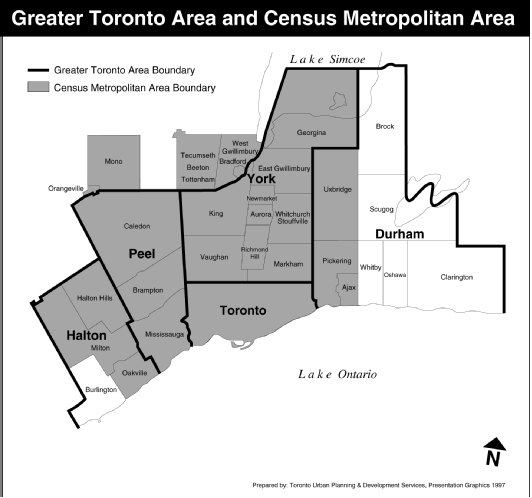
Some municipalities considered part of the GTA are not within the Toronto Census Metropolitan Area (CMA), which is smaller than the land area and population of the GTA planning area. For example, Oshawa is the centre of its own CMA, yet deemed part of the Greater Toronto Area, while other municipalities, such as New Tecumseth in southern Simcoe County and Mono Township in Dufferin County are included in the Toronto CMA but not in the GTA. These different border configurations result in the GTA's population being higher than the Toronto CMA by nearly one-half million people, often leading to confusion amongst people when trying to sort out Toronto's urban population.
Other nearby urban areas, such as Hamilton, Barrie, St. Catharines-Niagara or Kitchener-Waterloo, are not part of the GTA or the Toronto CMA, but form their own CMAs near the GTA. Ultimately, all the aforementioned places are part of the Greater Golden Horseshoe metropolitan region, an urban agglomeration, which is the fifth most populous in North America. It is part of the Great Lakes megalopolis, containing an estimated 59.1 million people in 2011.
| Census division | Census subdivision | In GTA | Toronto CMA | Oshawa CMA | Hamilton CMA |
|---|---|---|---|---|---|
| Toronto | |||||
| Durham Region | Ajax | ||||
| Clarington | |||||
| Brock | |||||
| Oshawa | |||||
| Pickering | |||||
| Scugog | |||||
| Uxbridge | |||||
| Whitby | |||||
| Halton Region | Burlington | ||||
| Halton Hills | |||||
| Milton | |||||
| Oakville | |||||
| Peel Region | Brampton | ||||
| Caledon | |||||
| Mississauga | |||||
| York Region | Aurora | ||||
| East Gwillimbury | |||||
| Georgina | |||||
| King | |||||
| Markham | |||||
| Newmarket | |||||
| Richmond Hill | |||||
| Vaughan | |||||
| Whitchurch-Stouffville | |||||
| Chippewas of Georgina Island First Nation | |||||
| Dufferin County | Mono | ||||
| Orangeville | |||||
| Simcoe County | Bradford West Gwillimbury | ||||
| New Tecumseth |
Extended area
The term "Greater Toronto and Hamilton Area" (GTHA) refers to the GTA, and the city of Hamilton, located along the western border of the Greater Toronto Area. The term has been adopted by several organizations, including Metrolinx and the Ministry of Energy) because of the growing commuter population in the combined region. The GTHA and the Regional Municipality of Niagara form the inner ring of the larger Greater Golden Horseshoe, an urban agglomeration and secondary region of Ontario.
History
Early history
Historically, the Greater Toronto Area was home to a number of First Nations who lived on the shore of Lake Ontario long before the first Europeans arrived in the region. At various times, the Neutral, the Seneca, the Mohawk and the Huron nations were living in the vicinity. The Mississaugas arrived in the late 17th or early 18th century, driving out the occupying Iroquois. While it is unclear as to who was the first European to reach the Toronto area, there is no question it occurred in the 17th century.

The area would later become very crucial for its series of trails and water routes that led from northern and western Canada to the Gulf of Mexico. Known as the "Toronto Passage", it followed the Humber River, as an important overland shortcut between Lake Ontario, Lake Simcoe and the upper Great Lakes. For this reason the area, under French fur traders, became a major part of the North American fur trade. The French would later establish three trading forts, Magasin Royal in the 1720s, although abandoned within the decade, Fort Toronto in 1750 and Fort Rouillé in 1751. During the Seven Years' War both forts were abandoned but Fort Toronto was later renovated. Fort Rouillé was burnt down after the Battle of Fort Niagara in 1759 by the French garrison during the French and Indian War.
The first large influx of European settlers to settle the region were the United Empire Loyalists arriving after the American Revolution, when various individuals petitioned the Crown for land in and around the Toronto area. In 1787, the British negotiated the purchase of more than a quarter million acres (1,000 km2) of land in the area of Toronto with the Mississaugas of New Credit. York County, would later be created by Governor John Graves Simcoe in 1792, which would at its largest size, comprise all of what is now Halton Region, Toronto, Peel Region, York Region and parts of Durham Region.
The GTA saw three American incursions during the War of 1812. The Town of York (present-day Toronto) was attacked by American forces at Battle of York, on April 27, 1813; and was subsequently occupied until May 8. The second incursion occurred several months later, in July 1813, with two landings in the GTA. On July 29, American forces landed at Burlington Beach (present-day Burlington) in an attempt to dislodge British forces at the adjacent Burlington Heights. However, finding the British forces too well-entrenched for any assault to be successful, the American naval force withdrew and proceeded east towards York. The American landings at York on July 31 went unopposed, with most of the soldiers garrisoned at York directed to defend Burlington Heights. The third incursion occurred a year later, when an American naval squadron arrived outside of York's harbour on August 6, 1814. The squadron dispatched to enter the harbour in order to gauge the town's defences, where it briefly exchanged cannon fire with Fort York before withdrawing to rejoin the American squadron outside the harbour. American forces did not attempt a landing during this incursion, although remained outside York's harbour for three days before departing.
In 1816, Wentworth County (which would later become the city of Hamilton) and Halton County were created from York County. York County would later serve as the setting for the beginnings of the Upper Canada Rebellion with William Lyon Mackenzie's armed march from Holland Landing towards York Township on Yonge Street, eventually leading up to the battle at Montgomery's Tavern. In 1851, Ontario County (present-day Durham Region) and Peel County were separated from York.

Since 1901
The idea towards a streamlined local government to control local infrastructure was made as early as 1907 by, William Findlay Maclean, a member of parliament and founder of The Toronto World, who called for the expansion of the government of the former City of Toronto in order to create a Greater Toronto. In 1953, the portion of York County south of Steeles Avenue, a concession road which formed a common boundary between several townships across the width of the county, was severed from it and incorporated as the Municipality of Metropolitan Toronto. With the concession of Metro Toronto, the offices of York County were moved from Toronto to Newmarket.
Originally, the membership in Metropolitan Toronto included the City of Toronto and five townships: East York, Etobicoke, North York, Scarborough and York; as well as seven villages and towns, which became amalgamated into their surrounding townships in 1967. In 1971, the remaining areas of York County was replaced by the Ontario government with the Regional Municipality of York. In 1974, Ontario and Durham Counties were reorganized to become the Regional Municipality of Durham; Pickering west of Rouge River was transferred to Scarborough at that time. Peel County became Peel Region in 1974 as well. In 1980, North York would be incorporated into a city, with York following suit in 1983 and Etobicoke and Scarborough in 1984, although still part of the Metropolitan Toronto municipal government.

In 1992, the Ontario government passed legislation requiring Metropolitan Toronto to include the rest of the Greater Toronto Area into its planning. However, there was fear different parts of the municipal system were working against one another. Therefore, Bob Rae, the Premier of Ontario, appointed Anne Golden to head a GTA task force to govern the region's quality of life, competitiveness and governance. During this time, the Metro Toronto government advocated to the task force the creation of a new GTA authority, which would be made up of 21 of the 30 existing municipalities in the GTA at the time. The proposal from Metro Toronto would have resulted in 15 new municipalities. The City of Mississauga argued consolidation should take place only in such a way the new municipalities would have a population between 400,000 and 800,000. The Town of Markham had similarly advocated municipal consolidation in York Region but opposed to complete consolidation into a single municipality. Municipal consolidation faced stiff opposition, however, from smaller communities such as Ajax, Milton, and the borough of East York.
The task force's recommendation to eliminate the Metro Toronto government, and consolidate its remaining municipalities into an enlarged City of Toronto was completed in 1997 and became official in 1998, under the Common Sense Revolution of the then premier, Mike Harris. However, the task force's recommendation to create a GTA-wide upper-tier municipality was not taken up by the Harris government for fear that a GTA-wide municipality would recreate the intermunicipal competitiveness that was believed to have impaired the former Metro Toronto government.
Metrolinx, an agency of the Government of Ontario, was established to oversee public transit development across the Greater Toronto Area.
The Greater Toronto Area hosted the 2015 Pan American Games.
Geography


The Greater Toronto Area covers an area of 7125 km2. The region itself is bordered by Lake Ontario to the south, Kawartha Lakes to the east, the Niagara Escarpment to the west, and Lake Simcoe to the north. The region creates a natural ecosystem known as the Greater Toronto Bioregion. The Greater Toronto Area forms part of the neck of the Ontario Peninsula.
Vast parts of the region remain farmland and forests, making it one of the distinctive features of the geography of the GTA. Most of the urban areas in the GTA hold large urban forest. For the most part designated as parkland, the ravines are largely undeveloped. Rouge Park is also one of the largest nature parks within the core of a metropolitan area. Much of these areas also constitute the Toronto ravine system, which consists of deep and steep valleys, and a number of conservation areas in the region which are managed by Toronto and Region Conservation Authority. The Cheltenham Badlands, in Caledon, is an example of environmental degradation from poor agricultural practice. The Scarborough Bluffs are part of the Glacial Lake Iroquois shoreline.
In 2005, the Government of Ontario also passed legislation to prevent urban development and sprawl on environmentally sensitiveland in the Greater Toronto Area, known as the Greenbelt; many of the areas include protected sections of the Oak Ridges Moraine, Rouge Park, and the Niagara Escarpment. Nevertheless, low-density suburban developments continue to be built, some of which is on or near ecologically sensitive and protected areas. The provincial government attempted to address the issue through the "Places to Grow" legislation passed in 2005, which emphasizes higher-density growth in existing urban centres over the next 25 years (i.e., until 2030).
Climate
The climate of the Greater Toronto Area is classified as humid continental, according to the Köppen climate classification. Much of the Greater Toronto Area is under Köppen Dfb (warm summer subtype) zone. Old Toronto (excluding the Toronto Islands) and some areas between there and Burlington to the southwest are under the Köppen Dfa climate zone, the hot summer subtype; this is the result of the urban heat island effect, especially in Old Toronto. Precipitation averages 832 mm annually, which is fairly distributed through the year but is driest in later winter with higher average totals in the later summer.
In winter, typical high temperatures will range from -5 to and low temperatures from -12 to. Cold arctic outbreaks keep daytime highs below -10 C for several days but that does not occur in every winter, and low temperatures sometimes drop below -18 C, with the accompanying wind chill making that feel much colder. Annual snowfall averages between 80 and across the area. Mild and snow-free spells are also a feature of Toronto's winter, with temperatures surpassing 5 C for several days to occasionally above 15 C. Spring is short and often cool to mild, and snow can sometimes fall well into April but rarely accumulates. The transition from spring into summer can be rapid. Summer is warm on average to hot and moderately humid with high temperatures typically between 24 and, while low temperatures average between 15 C in the suburbs and 18 to downtown and near the lake. Although fairly sunny, summers have long stretches of humid conditions that give rise to frequent thunderstorm activity, and very heavy rainfall sometimes results in flash flooding. Heat wave conditions with temperatures between 32 and are common but typically do not last long, and rarely temperatures rarely reach 38 C. Humidex values can be high during heat episodes; at their highest, they have exceeded 50 C. Immediate lakeshore locations have generally lower average maximum temperatures but they can also experience hot conditions when offshore winds prevail. Normally, autumns alternate between wet and dry with lengthy periods of mild and calm weather. Temperatures fall and windspeeds increase sharply in November. By December, cold and snowy weather is more common, and the average temperature falls close to or just below 0 C.
Climate data
Economy
The Greater Toronto Area is a commercial, distribution, financial and economic centre and is the second-largest financial centre in North America. The region generates about a fifth of Canada's GDP and is home to 40 per cent of Canada's business headquarters. The economies of the municipalities in Greater Toronto are largely intertwined. The work force is made up of approximately 2.9 million people and more than 100,000 companies The Greater Toronto Area produces nearly 20 per cent of the entire nation's GDP with $323 billion, and from 1992 to 2002, experienced an average GDP growth rate of 4.0 per cent and a job creation rate of 2.4 per cent (compared with the national average GDP growth rate of 3 per cent and job creation rate of 1.6 per cent). The Greater Toronto Area has the largest regional economy in Canada, with its GDP surpassing the Province of Quebec in 2015.

In 2010, over 51 per cent of the labour force in the Greater Toronto Area is employed in the service sector, with 19% in the manufacturing, 17% of the labour force employed in wholesale & retail trade, 8% of the labour force involved in transportation, communication and utilities, and 5% of the workforce is involved in construction. Although the service industry makes up only 51% of Greater Toronto's workforce, over 72% of the region's GDP is generated by service industries.
The largest industry in the Greater Toronto Area is the financial services in the province, accounting for an estimated 25% of the region's GDP. Notably, the five largest banks in Canada all have their operational headquarters in Toronto's Financial District. Toronto is also home to the headquarters of the Toronto Stock Exchange and the Standard and Poor TSX Composite Index and offices of the TSX Venture Exchange. The TMX Group, the owners and operators of TSX Exchanges as well as the Montreal Exchange, are also headquartered in Toronto. The TSX and the TSX Venture Exchange represent 3,369 companies, including more than half of the world's publicly traded mining companies.
Markham also attracted the highest concentration of high tech companies in Canada, and because of it, has positioned itself as Canada's High-Tech Capital. The Greater Toronto Area is the second-largest automotive centre in North America (after Detroit). Currently, General Motors, Ford and Chrysler run six assembly plants in the area, with Honda and Toyota having assembly plants just outside the GTA. General Motors, Ford, Honda, KIA, Mazda, Suzuki, Nissan, Volkswagen, Toyota, Hyundai, Aston Martin, Jaguar, Land Rover, Subaru, Volvo, BMW, and Mitsubishi have chosen the Greater Toronto Area for their Canadian headquarters. Magna International, the world's most diversified car supplier, also has its headquarters in Aurora. The automobile industry accounts for roughly 10% of the region's GDP.
Agriculture
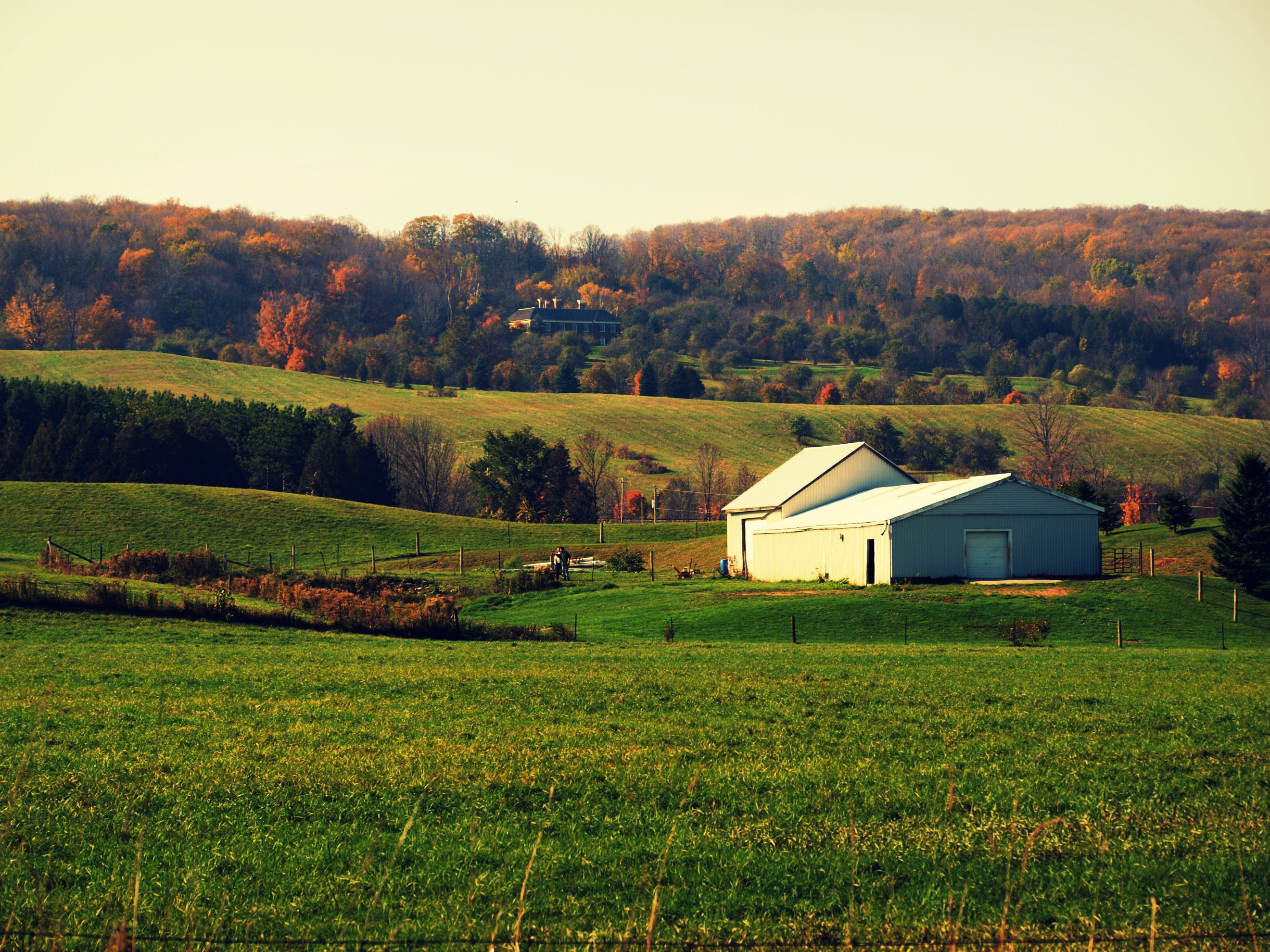
While it was once the most dominant industry for residents in the Greater Toronto Area, agriculture now occupies a small percentage of the population though it is still a large part of land in the surrounding four regional municipalities. Census data from 2006 has shown there are 3,707 census farms in the GTA, down 4.2 percent from 2001 and covering 274,363 ha. Almost every community in the GTA is currently experiencing a decrease in the acreage of farmland, with Mississauga seeing the most significant one. The only communities in the GTA that are experiencing a growth in the acreage of farmland are Aurora, Georgina, Newmarket, Oshawa, Richmond Hill, and Scugog, with Markham experiencing no growth or decline. Most of the GTA's farmland is in Durham Region, with 55 per cent of their total land area being farmland. This is followed by York Region with 41 per cent of their lands being farmland, Peel Region with 34 percent, and Halton Region with 41 percent. Toronto's remaining farmland is completely within Rouge Park in the Rouge Valley. The average size of the farm in the GTA (183 acre) is much lower than the farms in the rest of Ontario (averaging 233 acre). This has been attributed to the shift of farm types in the GTA from the traditional livestock and cash crop farms (requiring an extensive land base), towards more intensive enterprises including greenhouse, floriculture, nursery, vegetable, fruit, sheep and goats.
The most numerous farm types in the GTA are miscellaneous specialty farms (including horse and pony, sheep and lamb, and other livestock specialty), followed by cattle, grain and oilseed, dairy and field crop farms. Although the output of dairy production has dropped with farms from within the GTA, dairy has remained the most productive sector in the agricultural industry by annual gross farm receipts. Despite the decreased amount of farmland around the region, farm capital value increased from $5.2 billion in 1996 to $6.1 billion in 2001, making the average farm capital value in the GTA continued to be the highest in the province.
Infrastructure
Transportation

There are several public transportation operators within the Greater Toronto Area that provide services within their jurisdictions. While those operators are largely independent, provisions are being made to integrate them under Metrolinx, which manages transportation planning including public transport in the Greater Toronto and Hamilton Area. GO Transit, which merged with Metrolinx during the late 2000s, is Ontario's only intra-regional public transit service, linking the communities in the GTA and the city of Hamilton, as well as the rest of the Greater Golden Horseshoe. The implementation of the Presto card by Metrolinx has created a common means for all fare payments and allows for seamless connection between these and other transit operators.
Public transit operators in the GTA include Brampton Transit, Burlington Transit, Durham Region Transit, GO Transit, Milton Transit, MiWay (serving Mississauga), Oakville Transit, Toronto Transit Commission (TTC), and York Region Transit. The TTC operates the Toronto subway system, which consists of three heavy rail lines and runs in Toronto and in Vaughan, the latter of which began to be served by the system in December 2017 with an extension of Line 1 Yonge–University to Vaughan Metropolitan Centre station on Highway 7 at Jane Street; since December 2025, the subway system also consists of a light rail line: Line 6 Finch West.

The GTA also consists of several King's Highways and is supplemented by municipal expressways. One of the principal highways in the GTA, Highway 401, is also the longest in Ontario and is also one of the widest and busiest highways in the world.{{cite web | access-date = March 18, 2007 |archive-url = https://web.archive.org/web/20070914064434/http://ogov.newswire.ca/ontario/GPOE/2002/08/06/c0057.html?lmatch=&lang=_e.html |archive-date = September 14, 2007}} Notably, a segment of the highway passing through the GTA is North America's busiest highway. The GTA is laced with a number of limited-access highways including the 400-series highways. These include:
Note: "York", "Peel", "Durham" and "Halton" here refer to the regional municipalities.
- [[File:Ontario 400.svg|15px]] Highway 400 – York, Toronto
- [[File:Ontario 401.svg|15px]] Highway 401 – Durham, Toronto, Peel, Halton
- [[File:Ontario 403.svg|15px]] Highway 403 – Peel, Halton
- [[File:Ontario 404.svg|15px]] Highway 404 – York, Toronto
- [[File:Highway407crest.svg|15px]] / [[File:Ontario 407.svg|15px]] 407 ETR / Highway 407 – Durham, Peel, York, Halton (toll route)
- [[File:Ontario 409.svg|15px]] Highway 409 – Toronto, Peel
- [[File:Ontario 410.svg|15px]] Highway 410 – Peel
- [[File:Ontario 412.svg|15px]] Highway 412 – Durham
- [[File:Ontario 418.svg|15px]] Highway 418 – Durham
- [[File:Ontario 427.svg|15px]] Highway 427 – York, Toronto, Peel
- [[File:Ontario QEW.svg|15px]] Queen Elizabeth Way – Peel, Halton, Toronto
- [[File:Gardiner Shield.svg|15px]] Gardiner Expressway – Toronto
- [[File:DVP Shield.svg|15px]] Don Valley Parkway – Toronto
- [[File:Allen Road Shield.svg|15px]] William R. Allen Road – Toronto

The main airport serving the GTA is Toronto Pearson International Airport in Mississauga, which is Canada's largest and busiest airport. It processed over 47 million passengers in 2017 and nearly 50 million passengers in 2018. Toronto Pearson International Airport is operated by the Greater Toronto Airports Authority (GTAA). John C. Munro Hamilton International Airport in nearby Hamilton also handles international flights, handles some discount flights and charters, and acts as an alternative to Pearson. The Billy Bishop Toronto City Airport, on the Toronto Islands near downtown, is used for civil aviation, air ambulance traffic and regional scheduled airlines (it handled nearly two million passengers in 2012). There are also a number of smaller airports scattered throughout the GTA. The International Air Transport Association (IATA) uses YTO as a code for multiple airports in the area, including those without passenger service.
The Greater Toronto Airport Authority has also placed a tentative proposal to develop a new airport in Pickering, which would also extend over into Markham and Uxbridge. As the GTAA predicts Toronto Pearson would be unable to be the sole provider for the bulk of Toronto's commercial air traffic in the next 20 years from the report's publication in 2004 (i.e. in 2024), it believes that a new airport in Pickering would address the need for a regional/reliever airport east of Toronto Pearson and complement the airport in Hamilton, Ontario. The GTAA also stated the new airport would create more opportunities for economic development in the eastern region of the Greater Toronto Area. However, demand for the new airport lessened because of the COVID-19 pandemic and its aftermath, as well as the planned Alto high-speed rail network, which would eliminate many short-haul flights along the route between Toronto and Quebec City.
The region also has significant maritime infrastructure being on the Great Lakes-St. Lawrence Seaway system. The Port of Oshawa and Port of Toronto handle between 2 and 4 million tonnes of cargo annually. The Port of Toronto also has an International Marine Passenger Terminal, which had 12,000 cruise passengers in 2019.
Communication
The Greater Toronto Area is served by seven distinct telephone area codes. Before 1993, the GTA used the 416 area code. In a 1993 zone split, Metropolitan Toronto retained the 416 code, while the other municipalities of the Greater Toronto Area were assigned the new area code 905. This division by area code has become part of the local culture to the point where local media refer to something inside Toronto as "the 416" and outside of Toronto as "the 905". For example, the Raptors 905 basketball team in the NBA G League is named after the area code the team represents. Though for the most part, the use of the area 905 as shorthand for the suburban areas outside Toronto city limits was correct, it is not entirely true as some portions of Durham and York Regions use the 705 area code. The unincorporated community of Acton (in Halton Hills), is the only community in the GTA that uses the 519 area code, which covers most of Southwestern Ontario.
To meet the increased demand for phone numbers, two overlay area codes were introduced in 2001. Area code 647 (supplementing the 416 area code) was introduced in March 2001 and area code 289 (supplementing the 905 area code) was introduced in July 2001. Some individuals within the 905 area code region may have to dial long distance to reach each other; although residents of Mississauga and Hamilton share the same area code (905), an individual from Toronto, for example, would have to dial "1" to reach Hamilton, but not to reach Mississauga. Ten-digit telephone dialling, including the area code for local calls, is required throughout the GTA.
Government
Since the 2015 election, the Greater Toronto Area has been represented by 58 Members of Parliament in the House of Commons of Canada. Forty-six Members of the Provincial Parliament also represent the GTA in the Ontario Legislature. Five Senators from Ontario have also designated themselves as representatives of certain areas in the GTA in the Canadian Senate.
Federal politics
Federally, the Conservatives, Liberals, and the New Democrats (NDP) all hold several electoral districts in the GTA. The City of Toronto has often been supportive of the Liberal Party. Traditionally, Liberal support is strongest in Downtown Toronto, while Conservative support is stronger in the surrounding communities outside Toronto. The NDP also has a strong base within the GTA. The Greater Toronto Area has the ability to influence election results and determine the governing party in Canada, due in part to its large population and riding count.
From 1993 to 2011, a centre-right party failed to win a single seat in the former Metro Toronto. In the 2011 election, however, a surge in NDP support combined with a collapse in Liberal support allowed the Conservatives to win eight seats in Toronto itself, and another 24 in the suburbs. Toronto's political leanings now appeared to mirror those of surrounding communities that leaned toward the Conservatives.
The election of 2011 showed Liberal support, based on votes in the GTA, had collapsed from 43.7% to 30.6%, giving the Liberals only 14.9% of the local seats in the House of Commons. However, the support of the Conservatives and NDP increased accordingly, with the Conservatives increasing their vote share from 31.5% to 42.2% (and capturing 68.1% of the GTA seats) and the NDP increasing from 14.6% to 23.2% of the vote and 17% of the local Federal ridings.
In the 2015 federal election, the Liberals regained their dominance of the GTA after suffering devastating losses there four years earlier. They defeated a number of prominent incumbents from both the NDP and the Conservatives. The Liberals took all of Toronto itself. They also took back almost all of the suburban ridings they had lost in 2011. Both the NDP and the Conservatives suffered heavily as their support collapsed in the inner city and the suburbs respectively. Only a few Conservatives held onto their seats in the outer ring of the GTA, while the NDP failed to elect any MPs in this area. The 2019, 2021 and 2025 federal elections have similar results.
Provincial politics

Toronto is the capital of Ontario with the Ontario Legislative Building, often metonymically known as Queen's Park after the street and park surrounding it, being located in Downtown Toronto. Most of the provincial government offices are also located in downtown Toronto.
On the provincial level of government, the Ontario Progressive Conservatives (PCs), Ontario Liberals, and the Ontario New Democrats all hold electoral districts in the GTA. While the GTA provided a strong base of support for the Progressive Conservative government between 1995 and 2003, the Ontario Liberal Party achieved a major victory in the GTA during the 2003 election and has enjoyed strong support from the region ever since. In the 2011 election, the Liberals won 33 of the 44 available seats in the GTA, allowing Premier Dalton McGuinty to hold onto a minority government. The 2014 election under McGuinty's successor, Kathleen Wynne, was an even bigger electoral landslide for the Liberals, as they won 38 seats in the region. They even took several ridings in territory that had voted PC for decades, like Durham, Burlington, Newmarket-Aurora and Halton. The PCs hold no seats in Peel Region and only one seat in each of the Halton, York, and Durham regions. While the NDP has been weak in the GTA since the 1995 election, it has seen some successes in Brampton and Durham Region, where they hold one seat each.
The Progressive Conservative Party of Ontario did not win a riding in the City of Toronto during a general election from 1999 to 2018. On the other end of the spectrum, the NDP saw major losses in Toronto during the 2014 election and held only two seats in the city. That is no longer the case since the 2018 provincial election, as the Progressive Conservatives and the NDP made significant gains at the expense of the Liberals; that continues to hold true in the 2022 and 2025 provincial elections.
Municipal politics
In 2011, 244 politicians govern the Greater Toronto Area below the provincial and federal levels, holding offices in cities, towns, and regional municipalities. There are no political parties at the municipal level in the Greater Toronto Area. Unusual for a large North American urban agglomeration, the GTA has very few agencies with powers that can cross boundaries. Attempts to create an interregional organization have been made, such as the Province of Ontario's Office of the Greater Toronto Area (OGTA) in 1988 and the Greater Toronto Services Board (GTSB) in 1998, but they have failed by the lack of real authority in those agencies.
Consequently, there are few interregional public authorities: Metrolinx, an agency of the provincial government, manages the GTA-wide GO Transit system, while the Toronto and Region Conservation Authority manages some of the GTA's watersheds and natural areas. Notably, there is no organization with broad powers as in other Canadian cities, such as the Communauté métropolitaine de Montréal and Metro Vancouver Regional District.
Demographics
Population
| 2001|5,081,826 | 2006|5,555,912 | 2011|6,054,196 | 2016|6,417,516 | 2021|6,712,341 According to the latest census data from 2021 from Statistics Canada, the population of this area is 6,712,341. Population growth studies have projected the City of Toronto's population in 2031 to be 3,000,000 and the Greater Toronto Area's population to be 7,450,000, while the Ontario Ministry of Finance states it could reach 7.7 million by 2025.{{cite web | access-date = May 23, 2007 | archive-url = https://web.archive.org/web/20070514160115/http://www.fin.gov.on.ca/english/economy/ltr/2005/05_ltr.html | archive-date = May 14, 2007 | url-status = live
| Name | Population in 2021 | Land area | Density | Location |
|---|---|---|---|---|
| Province of Ontario | 14,223,942 | 892,411.76 km2 | 15.9 km2 | |
| City of Toronto | 2,794,356 | 631.10 km2 | 4,427.8 km2 | |
| Regional Municipality of Durham | 696,992 | 2,521.11 km2 | 276.5 km2 | |
| Regional Municipality of Peel | 1,451,022 | 1,247.45 km2 | 1,163.2 km2 | |
| Regional Municipality of York | 1,173,334 | 1,758.27 km2 | 667.3 km2 | |
| Regional Municipality of Halton | 596,637 | 965.71 km2 | 617.8 km2 | |
| Greater Toronto Area | 6,712,341 | 7,123.64 km2 | 942.4 km2 |
Ethnicity
Statistics Canada found in 2006, there were 31,910 Indigenous people living in the Greater Toronto Area, which represented 2.7 per cent of all Indigenous peoples in Canada and 13.2 per cent of those in Ontario. Most of them, however, are not registered with the Indian reserves within the Greater Toronto Area, the Chippewas of Georgina Island First Nation and the Mississaugas of Scugog Island First Nation.
.jpg)
| Panethnic group | 2021 | 2016 | 2011 | 2006 | 2001 | Pop. | % | Pop. | % | Pop. | % | Pop. | % | Pop. | % | Total responses | 6,647,100 | 6,345,725 | 5,986,310 | 5,510,710 | 5,043,355 | Total population | 6,712,341 | 6,417,516 | 6,054,196 | 5,555,912 | 5,081,826 |
|---|---|---|---|---|---|---|---|---|---|---|---|---|---|---|---|---|---|---|---|---|---|---|---|---|---|---|---|
| European | 2,961,545 | 3,195,695 | 3,288,345 | 3,258,770 | 3,277,970 | ||||||||||||||||||||||
| South Asian | 1,224,890 | 994,865 | 847,435 | 694,405 | 481,265 | ||||||||||||||||||||||
| East Asian | 789,180 | 732,740 | 621,570 | 568,585 | 474,905 | ||||||||||||||||||||||
| Black | 521,610 | 465,295 | 413,155 | 366,290 | 319,125 | ||||||||||||||||||||||
| Southeast Asian | 394,800 | 345,865 | 327,445 | 246,040 | 188,915 | ||||||||||||||||||||||
| Middle Eastern | 299,910 | 236,170 | 176,310 | 132,610 | 97,790 | ||||||||||||||||||||||
| Latin American | 161,460 | 136,950 | 120,695 | 101,715 | 77,375 | ||||||||||||||||||||||
| Indigenous | 55,915 | 56,090 | 43,825 | 31,910 | 23,950 | ||||||||||||||||||||||
| Other/multiracial | 237,800 | 182,075 | 147,565 | 110,345 | 102,055 | ||||||||||||||||||||||
| Note: Totals greater than 100% due to multiple origin responses | |||||||||||||||||||||||||||
| 2021 census sources: | |||||||||||||||||||||||||||
| 2016 census sources: | |||||||||||||||||||||||||||
| 2011 census sources: | |||||||||||||||||||||||||||
| 2006 census sources: | |||||||||||||||||||||||||||
| 2001 census sources: |
|File:Toronto South Asians.png|South Asians |File:Toronto Blacks.png|Black |File:Toronto Chinese.png|Chinese |File:Toronto Filipinos.png|Filipinos |File:Toronto Arabs.png|Arabs |File:Toronto Latin Americans.png|Latin Americans |File:Toronto Southeast Asians.png|Southeast Asians (excluding Filipinos) |File:Toronto West Asians.png|West Asians (excluding Arabs)
Immigration
In 2009, the Toronto CMA also has one of the largest proportions of foreign-born residents (46 per cent) as a share of the total population out of all metropolitan areas in the Organization for Economic Co-operation and Development (OECD). The Toronto region is also unusually diverse in the composition of its ethnicities. The four largest foreign-born populations of Toronto constitute only 15 per cent of the total foreign-born population. That is opposed to the four largest foreign-born populations of other metropolitan areas such as New York City and London, where they make up 25 per cent of their respective foreign-born populations.
Education
Education in the Greater Toronto Area is managed by the provincial Ministry of Education, who manages preschool, elementary and secondary education, while the provincial Ministry of Colleges and Universities administers laws relating to tertiary education, including colleges, universities, and vocational schools.
Primary and secondary education
There are presently twelve public English first language school boards, and two French first language school boards operating within the GTA. Seven of these school boards operate secular schools, whereas the other seven operate separate schools; the seven separate school boards in the Greater Toronto Area all serve the Roman Catholic faith. In addition to public schools, there are also many private schools that operate within Greater Toronto.
Three of these GTA-based public school boards also manage institutions outside Greater Toronto, the two French first language school boards, based in Toronto, as well as the Dufferin-Peel Catholic District School Board (DPCDSB). Conversely, English first language public schools in Clarington, a municipality within Durham Region, are managed by school boards based outside the GTA.
| French separate | Conseil scolaire catholique MonAvenir |
|---|
Post-secondary education
Colleges
The Greater Toronto Area is also home to six publicly funded colleges that have campuses spread in and around the metropolitan area. The six publicly funded colleges based in the Greater Toronto Area include:
- Centennial College (Toronto, Pickering)
- Durham College (Pickering, Brock, Scugog, Oshawa, Uxbridge)
- George Brown College (Toronto)
- Humber Polytechnic (Toronto; formerly Humber College)
- Seneca Polytechnic (King, Markham, Toronto; formerly Seneca College)
- Sheridan College (Brampton, Mississauga, Oakville) Another publicly funded college, Collège Boréal, also maintains a satellite campus in Toronto. However, Collège Boréal's main campus and administration is based outside the GTA, in Greater Sudbury. In addition to publicly funded colleges, there are also many private career colleges spread throughout the Greater Toronto Area.
Universities
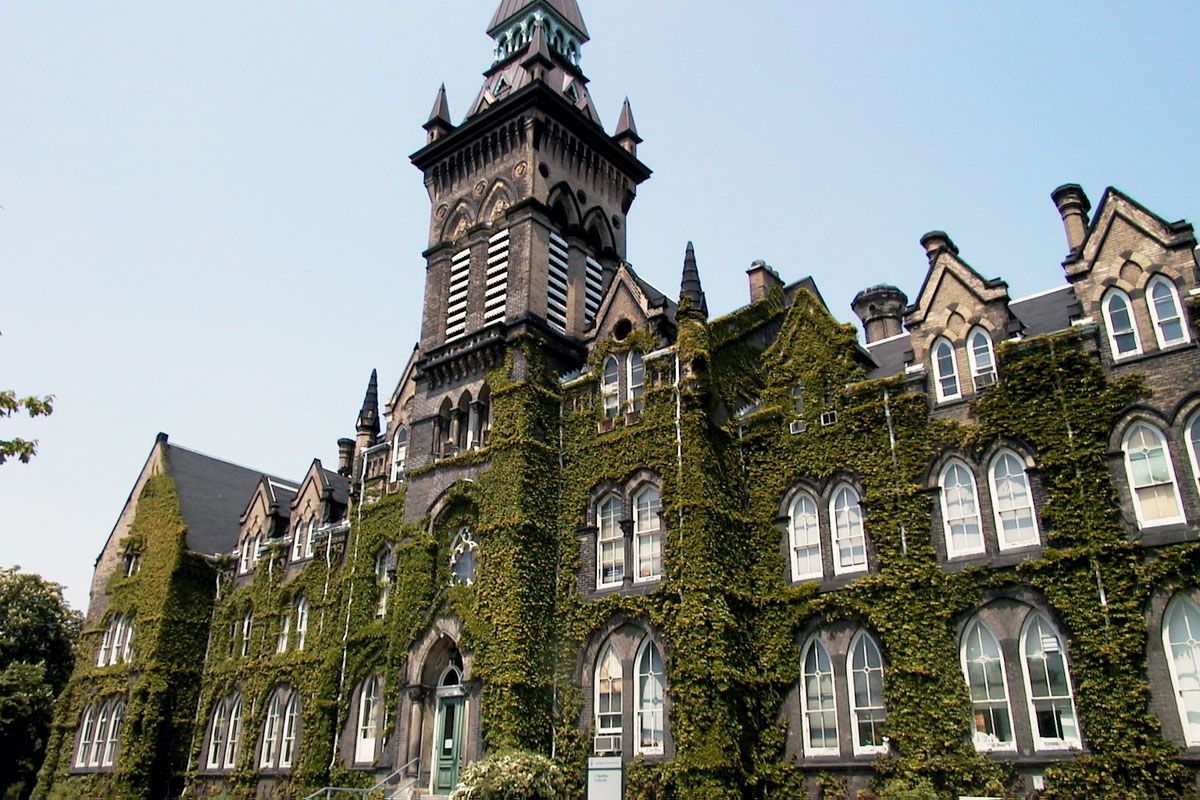
The Greater Toronto Area is home to six publicly funded universities. Universities based within Greater Toronto include:
- OCAD University (Toronto)
- Ontario Tech University (Oshawa)
- Toronto Metropolitan University (Toronto; formerly Ryerson University)
- Université de l'Ontario français (Toronto)
- University of Toronto (Toronto, Mississauga)
- York University (Toronto, Markham) Three publicly funded universities based outside of the GTA operate satellite campuses within the GTA, including the Hamilton-based McMaster University, Peterborough-based Trent University, and the Guelph-based University of Guelph. The McMaster's DeGroote School of Business operates the Ron Joyce Centre in Burlington; Trent University operates a satellite campus in Oshawa, referred to as Trent in Oshawa; The University of Guelph operates an affiliated institution alongside Humber College, the University of Guelph-Humber, in Toronto. One American university, Boston-based Northeastern University, operates a satellite campus in Toronto.
There also are eleven private religious universities spread throughout the GTA.
Notes
Footnotes
References
References
- (January 16, 2025). "Population estimates, July 1, by census metropolitan area and census agglomeration, 2021 boundaries". [[Statistics Canada]].
- "Statistics Canada. Table 36-10-0468-01 Gross domestic product (GDP) at basic prices, by census metropolitan area (CMA) (x 1,000,000)".
- [[OECD]] "OECD Territorial Reviews OECD Territorial Reviews: Toronto, Canada 2009" OECD Publishing, {{ISBN. 92-64-07940-8 p37
- "Greater Toronto Area".
- (February 9, 2022). "2021 Census - Toronto Metropolitan area". [[Statistics Canada]].
- (2006). "Places to Grow: Growth Plan for the Greater Golden Horseshoe". Ministry of Public Infrastructure Renewal.
- (December 16, 2009). "Amendment No. 38 to the Regional Plan (2006)". Regional Municipality of Halton.
- [[Lawrence Solomon. Solomon, Lawrence]] "Toronto sprawls: a history." University of Toronto Press; 1 edition, {{ISBN. 0-7727-8618-6 p3
- "About Us". Metrolinx.
- "Planning for Growth". Ministry of Public Infrastructure Renewal.
- "Greater Toronto Area and Toronto CMA Map". [[Municipal government of Toronto.
- "Population of census metropolitan areas (2006 Census boundaries)". [[Statistics Canada]].
- "2006 Census: Portrait of the Canadian Population in 2006: Subprovincial population dynamics". [[Statistics Canada]].
- (1990). "The Archaeology Of Southern Ontario To A.D. 1650". London Chapter of the [[Ontario Archaeological Society]].
- "First Peoples, 9000 BCE to 1600 CE". City of Toronto.
- ''The Ojibwa-Iroquois War: The War the Five Nations Did Not Win''. Leroy V. Eid. Ethnohistory, Vol. 26, No. 4 (Autumn, 1979), Duke University Press, pp. 297–324
- Schmalz, Peter S., ''The Ojibwa of Southern Ontario.'' University of Toronto Press. {{ISBN. 0-8020-2736-9. pp 21–22
- (2009). "Natives and Newcomers, 1600–1793". City of Toronto.
- "The Toronto Carrying-place". Nature Conservancy of Canada.
- Rayburn, Alan. (September 18, 2007). "The real story of how Toronto got its name". [[Natural Resources Canada]].
- link. (July 14, 2011)
- [https://www.archives.gov.on.ca/english/on-line-exhibits/maps/textdocs/districts1798big.aspx Ontario's Districts – 1798] {{webarchive. link. (February 12, 2011 , [[King's Printer for Ontario). Queen's Printer for Ontario]]. Retrieved on February 6, 2010.
- (2009). "A Provincial Centre, 1793–1851". [[Toronto.
- Benn, Carl. (1993). "History Fort York, 1794–1993". Dundurn.
- [[Archives of Ontario]]. (February 28, 2010). "18th and 19th century Ontario Counties and Corresponding Districts". [[King's Printer for Ontario.
- Robert M. Stamp. (1991). "The Road to Rebellion". Town of Richmond Hill Public Library.
- [[Archives of Ontario]]. (February 28, 2010). "Ontario's Districts – 1851". [[King's Printer for Ontario.
- The idea for a single government municipality would not be seriously explored until the late 1940s when planners decided the city needed to incorporate its immediate suburbs. However, due to strong opposition from suburban politicians, a compromise was struck, which resulted in the creation of [[Metropolitan Toronto]].[[Lawrence Solomon. Solomon, Lawrence]] "Toronto sprawls: a history." University of Toronto Press; 1 edition, {{ISBN. 0-7727-8618-6 p3-8
- [http://www.e-laws.gov.on.ca/html/repealedstatutes/english/elaws_rep_statutes_90m62_e.htm Municipality of Metropolitan Toronto Act] {{Webarchive. link. (January 5, 2011 , [[King's Printer for Ontario). Queen's Printer for Ontario]]. Retrieved on February 6, 2010.
- The early Metro Toronto government debated over the annexation of surrounding townships of Markham, Pickering and Vaughan. [[Fred Gardiner. Frederick Goldwin Gardiner]], the first [[Chairman of the Municipality of Metropolitan Toronto. Metro Toronto Chairman]], planned on the conversion of these townships into boroughs of the Metro Toronto government.Rose, Albert "Governing metropolitan Toronto: a social and political analysis, 1953–1971" Institute of Governmental Studies; University of California Press; 1st edition, {{ISBN. 0-520-02041-3 p.107, 166
- [[Archives of Ontario]]. (February 28, 2010). "Municipality of Metropolitan Toronto and the Regional Municipality of York". [[King's Printer for Ontario.
- Fletcher, Thomas Hobbs "From Love Canal to environmental justice: the politics of hazardous waste on the Canada-U.S. border" University of Toronto Press, {{ISBN. 1-55111-434-8 p28
- Sanction, Andrew "Merger mania: the assault on local government" McGill-Queen's Press, {{ISBN. 0-7735-2163-1 p.114
- Sanction, Andrew "Merger mania: the assault on local government" McGill-Queen's Press, {{ISBN. 0-7735-2163-1 p.115
- Sanction, Andrew "Merger mania: the assault on local government" McGill-Queen's Press, {{ISBN. 0-7735-2163-1 p.116
- [http://www.canlii.org/en/on/laws/stat/so-1997-c-2/latest/so-1997-c-2.html City of Toronto Act, 1997] {{webarchive. link. (October 17, 2015 , [[King's Printer for Ontario). Queen's Printer for Ontario]]. Retrieved on February 6, 2010.
- Sanction, Andrew "Merger mania: the assault on local government" McGill-Queen's Press, {{ISBN. 0-7735-2163-1 p.121
- link. (September 6, 2007.)
- [http://www.rougepark.com/about/about_us.php About Us] {{webarchive. link. (October 15, 2010 , [[Rouge National Urban Park]]. Retrieved on February 7, 2010.)
- [http://www.trca.on.ca/about/jurisdiction-and-participating-municipalities.dot Jurisdiction and Participating Municipalities] {{Webarchive. link. (January 25, 2010 , [[Toronto and Region Conservation Authority]]. Retrieved on February 7, 2010.)
- "[http://www.mah.gov.on.ca/Asset1293.aspx Greenbelt Plan Area] {{Webarchive. link. (August 5, 2010 ," ''Greenbelt Protection''. ''(Retrieved February 7, 2010.)'')
- "[https://www.placestogrow.ca/images/pdfs/Toronto_Star.pdf 4 Million More People, But Without the Sprawl]{{dead link. (August 2017)
- "Toronto's key industry clusters: Financial services". [[Toronto.
- "[http://www.td.com/economics/special/db0502_gta.pdf The Greater Toronto Area (GTA): Canada's Primary Economic Locomotive in Need of Repairs] {{webarchive. link. (January 7, 2011 ," ''TD Financial''. ''(Retrieved February 7, 2010.)'')
- [[OECD]] "OECD Territorial Reviews OECD Territorial Reviews: Toronto, Canada 2009" OECD Publishing, {{ISBN. 92-64-07940-8 p35
- Lu, Vanessa. (March 16, 2010). "Should Toronto go it alone?". Toronto Star.
- [http://www.greatertoronto.org/investing_reg_00.htm] {{webarchive. link. (October 27, 2005)
- [http://www.greatertoronto.org/top-10-reasons-for-investing-in-the-gta.html Top 10 Reasons for Investing in the GTA] {{webarchive. link. (March 5, 2010 , ''Greater Toronto Marketing Alliance''. Retrieved on February 7, 2010.)
- [http://www.greatertoronto.org/economic-overview/12-labour-force.html Labour Force] {{webarchive. link. (April 19, 2010 , ''Greater Toronto Marketing Alliance''. Retrieved on February 7, 2010.)
- [http://www.greatertoronto.org/key-industry-sectors/25-financial-services.html Financial Services] {{webarchive. link. (February 14, 2011 , ''Greater Toronto Marketing Services''. Retrieved on February 7, 2010.)
- [http://www.markham.ca/Markham/Departments/EDO/Top+300+IT+Companies+in+Canada.htm Markham's High-Tech Companies in The Branham Top 300 Canadian IT Companies] {{webarchive. link. (June 10, 2011 , [[Markham, Ontario). Town of Markham]]. Retrieved on February 7, 2010.
- [http://www.greatertoronto.org/key-industry-sectors/15-automotive-a-advanced-manufacturing.html#1 Automotive & Advanced Manufacturing] {{webarchive. link. (February 17, 2011 , ''Greater Toronto Marketing Alliance''. Retrieved on February 7, 2010.)
- [http://www.magna.com/magna/en/about/ About Magna] {{webarchive. link. (November 14, 2008 , [[Magna International]]. Retrieved on February 7, 2010.)
- [http://www.magna.com/magna/en/contact/ Contact Us] {{webarchive. link. (November 14, 2008 , [[Magna International]]. Retrieved on February 7, 2010.)
- [http://www.gtalocalfood.ca/GTAAC_profile.html GTA Agricultural Profile] {{webarchive. link. (March 26, 2010 , ''Greater Toronto Area Agricultural Action Committee''. Retrieved on February 12, 2010.)
- "[http://www.gtalocalfood.ca/pdfs/GTA_Ag_Profile_Update_Ex_Sum_.pdf GREATER TORONTO AREA AGRICULTURAL PROFILE UPDATE] {{webarchive. link. (February 20, 2009 ," ''Greater Toronto Area Agricultural Action Committee''. ''(Retrieved February 12, 2010.)'')
- [http://www.metrolinx.com/thebigmove/introduction/index.html The Big Move] {{webarchive. link. (April 7, 2010 , [[Metrolinx]]. Retrieved on February 7, 2010.)
- [http://www.gotransit.com/public/en/aboutus/whatisgo.aspx What Is GO?] {{Webarchive. link. (April 3, 2018, [[GO Transit]]. Retrieved on March 2, 2010.)
- [https://www.prestocard.ca/StaticContent/Gtafs About PRESTO] {{Webarchive. link. (July 6, 2011 , [[King's Printer for Ontario). Queen's Printer for Ontario]]. Retrieved on February 7, 2010.
- [http://www.greatertoronto.org/public-transportation.html Public Transportation] {{webarchive. link. (March 5, 2010 , Greater Toronto Marketing Alliance. Retrieved on March 2, 2010.)
- [http://www.thekingshighway.ca/Highway401.htm Highway 401] {{Webarchive. link. (March 25, 2010 , Cameron Bevers. Retrieved on February 22, 2010.)
- "Southern Ontario Road Maps Map 3". [[Ministry of Transportation of Ontario.
- GTAA – Toronto Pearson today, [[Greater Toronto Airports Authority]]. Retrieved on March 4, 2010.
- "Celebrating 40 Million Passengers". Toronto Pearson Airport.
- [http://www.gtaa.com/local/files/en/Corporate/Statistics/PassengerTraffic-200912.pdf Passenger Statistics 2008]{{dead link. (July 2017)
- "Tenant List". [[PortsToronto]].
- "Toronto Island airport set new passenger record last year".
- [https://getawaytips.azcentral.com/the-difference-between-yto-and-yyz-at-the-airport-12533866.html Toronto City Code]
- Byers, Jim. (September 6, 2007). "Pickering airport idea revived". Toronto Star.
- [http://www.gtaa.com/local/files/en/PickeringAirportDraftPlanReport.pdf Pickering Airport Draft Plan Report] Originally published 2004 {{webarchive. link. (November 15, 2008 , ''GTAA Pickering Project''. ''(Retrieved January 29, 2010.)'')
- "Area Why are some 905 numbers long distance while others aren't? And what's with this 647 business?". [[Toronto Life]].
- "Toronto Cultural Tips". National Geographic Society.
- "Area Code Map for Toronto". WhitePages Inc..
- "CO Code Status". [[Canadian Numbering Administration Consortium]].
- "CO Code Status". [[Canadian Numbering Administration Consortium]].
- [https://www.cbc.ca/amp/1.196454 Toronto to get extra area code], [[CBC News]]. Retrieved on February 7, 2010.
- "Order CRTC 2001-840". [[Canadian Radio-television and Telecommunications Commission]].
- In March 2013, two additional area codes were introduced to the GTA: area code 437 in Toronto and area code 365 in the area served by 905 and 289.[http://www.newswire.ca/en/releases/archive/September2011/22/c5610.html Telecommunications Alliance. New area codes for the Greater Toronto Area] {{Webarchive. link. (September 25, 2011 . Newswire.ca. Retrieved on July 26, 2013.)
- "Senators in Alphabetical Order". [[Senate of Canada]].
- "Tories struggle in Toronto's Liberal strongholds". [[CTV News]].
- (October 12, 2015). "Election 2015: Why the Greater Toronto Area boils down to a few distinct fights".
- Rider, David. (October 19, 2015). "Red wave rolls over the GTA". Toronto Star.
- "Ontario Votes 2007 – Regional results". CBC.
- (October 11, 2007). "Liberals surge in Toronto, 905 ridings". CBC.
- (October 7, 2011). "GTA Liberal ridings shut out vote-hungry Tories". CBC.
- Lorinc, John. [http://www.walrusmagazine.com/articles/2011.11-society-how-toronto-lost-its-groove "How Toronto Lost Its Groove, and why the rest of Canada should resist the temptation to cheer"] {{Webarchive. link. (November 21, 2011 , ''[[The Walrus]]'', Toronto, November 2011. Retrieved on November 20, 2011.)
- Sancton, Andrew "Merger Mania" McGill-Queen's Press, {{ISBN. 0-7735-2163-1 p113
- Lu, Vanessa. (July 15, 2009). "GTA needs economic 'war cabinet'". The Toronto Star.
- [http://www.search.e-laws.gov.on.ca/en/isysquery/e3361e62-7f1f-4933-9506-67d3eb4d48eb/2/fram e/?search=browseRepealed&context= Greater Toronto Services Board Act, 1998], [[Queen's Printer for Ontario]]. Retrieved on February 22, 2010.
- Rao, Nirmala. (2007). "Cities in transition: growth, change and governance in six metropolitan areas". Routledge.
- "Metrolinx – About Us". [[Metrolinx]].
- "About: TRCA". [[Toronto and Region Conservation Authority]].
- "Toward 2025: Assessing Ontario's Long-Term Outlook". [[Ministry of Finance (Ontario)]].
- Government of Canada, Statistics Canada. (January 15, 2001). "Census of Population".
- {{Cite cgndb. FEHRI. Ontario
- Government of Canada, Statistics Canada. (February 9, 2022). "Data table, Census Profile, 2021 Census of Population - Toronto, Census division (CDR) [Census division], Ontario".
- {{Cite cgndb. FEUZB. City of Toronto
- Government of Canada, Statistics Canada. (February 9, 2022). "Data table, Census Profile, 2021 Census of Population - Durham, Regional municipality (RM) [Census division], Ontario".
- {{Cite cgndb. FPABZ. Regional Municipality of Durham
- Government of Canada, Statistics Canada. (February 9, 2022). "Data table, Census Profile, 2021 Census of Population - Peel, Regional municipality (RM) [Census division], Ontario".
- {{Cite cgndb. FAYJM. Regional Municipality of Peel
- Government of Canada, Statistics Canada. (February 9, 2022). "Data table, Census Profile, 2021 Census of Population - York, Regional municipality (RM) [Census division], Ontario".
- {{Cite cgndb. FEAMO. Regional Municipality of York
- Government of Canada, Statistics Canada. (February 9, 2022). "Data table, Census Profile, 2021 Census of Population - Halton, Regional municipality (RM) [Census division], Ontario".
- {{Cite cgndb. FBLID. Regional Municipality of Halton
- (February 22, 2010). "Toronto's racial diversity". City of Toronto.
- Government of Canada, Statistics Canada. (2022-10-26). "Census Profile, 2021 Census of Population Toronto, City (C) Ontario [Census subdivision]".
- Government of Canada, Statistics Canada. (2022-10-26). "Census Profile, 2021 Census of Population Peel, Regional municipality (RM) Ontario [Census division]".
- Government of Canada, Statistics Canada. (2022-10-26). "Census Profile, 2021 Census of Population York, Regional municipality (RM) Ontario [Census division]".
- Government of Canada, Statistics Canada. (2022-10-26). "Census Profile, 2021 Census of Population Durham, Regional municipality (RM) Ontario [Census division]".
- Government of Canada, Statistics Canada. (2022-10-26). "Census Profile, 2021 Census of Population Halton, Regional municipality (RM) Ontario [Census division]".
- Government of Canada, Statistics Canada. (2021-10-27). "Census Profile, 2016 Census Toronto, City [Census subdivision], Ontario and Toronto, Census division [Census division], Ontario [Province]".
- Government of Canada, Statistics Canada. (2021-10-27). "Census Profile, 2016 Census Peel, Regional municipality [Census division], Ontario and Ontario [Province]".
- Government of Canada, Statistics Canada. (2021-10-27). "Census Profile, 2016 Census York, Regional municipality [Census division], Ontario and Ontario [Province]".
- Government of Canada, Statistics Canada. (2021-10-27). "Census Profile, 2016 Census Durham, Regional municipality [Census division], Ontario and Ontario [Province]".
- Government of Canada, Statistics Canada. (2021-10-27). "Census Profile, 2016 Census Halton, Regional municipality [Census division], Ontario and Ontario [Province]".
- Government of Canada, Statistics Canada. (2015-11-27). "NHS Profile, Toronto, C, Ontario, 2011".
- Government of Canada, Statistics Canada. (2015-11-27). "NHS Profile, Peel, RM, Ontario, 2011".
- Government of Canada, Statistics Canada. (2015-11-27). "NHS Profile, York, RM, Ontario, 2011".
- Government of Canada, Statistics Canada. (2015-11-27). "NHS Profile, Durham, RM, Ontario, 2011".
- Government of Canada, Statistics Canada. (2015-11-27). "NHS Profile, Halton, RM, Ontario, 2011".
- Government of Canada, Statistics Canada. (2019-08-20). "2006 Community Profiles Toronto Ontario (City)".
- Government of Canada, Statistics Canada. (2019-08-20). "2006 Community Profiles Peel Ontario (Regional municipality)".
- Government of Canada, Statistics Canada. (2019-08-20). "2006 Community Profiles York Ontario (Regional municipality)".
- Government of Canada, Statistics Canada. (2019-08-20). "2006 Community Profiles Durham Ontario (Regional municipality)".
- Government of Canada, Statistics Canada. (2019-08-20). "2006 Community Profiles Halton Ontario (Regional municipality)".
- Government of Canada, Statistics Canada. (2019-07-02). "2001 Community Profiles Toronto Ontario (City)".
- Government of Canada, Statistics Canada. (2019-07-02). "2001 Community Profiles Peel Regional Municipality Ontario (Regional Municipality)".
- Government of Canada, Statistics Canada. (2019-07-02). "2001 Community Profiles York Regional Municipality Ontario (Regional Municipality)".
- Government of Canada, Statistics Canada. (2019-07-02). "2001 Community Profiles Durham Regional Municipality Ontario (Regional Municipality)".
- Government of Canada, Statistics Canada. (2019-07-02). "2001 Community Profiles Halton Regional Municipality Ontario (Regional Municipality)".
- Ministry of Education, Ontario. (2010). "About the Ministry". Queen's Printer for Ontario, 2010.
- (2010). "Welcome to TCU". Queen's Printer for Ontario, 2010.
- (January 1, 2010). "Getting to Know Ontario's Colleges". Queen's Printer, Ontario.
- (November 18, 2007). "Private Career Colleges (PCC)". Queen's Printer, Ontario.
- (April 24, 2009). "Getting to Know Ontario's Universities". Queen's Printer, Ontario.
- Office of Public Relations, McMaster University. (June 17, 2009). "Celebrating expansion into Burlington". McMaster University.
- Trent University. (2010). "The Trent Difference in Oshawa". Trent University.
- University of Guelph and Humber Institute of Technology and Advanced Learning. (2005). "bout the University of Guelph-Humber". University of Guelph-Humber.
- (March 16, 2007). "Privately Funded Ontario Institutions with Degree-Granting Authority". Queen's Printer, Ontario.
This article was imported from Wikipedia and is available under the Creative Commons Attribution-ShareAlike 4.0 License. Content has been adapted to SurfDoc format. Original contributors can be found on the article history page.
Ask Mako anything about Greater Toronto Area — get instant answers, deeper analysis, and related topics.
Research with MakoFree with your Surf account
Create a free account to save articles, ask Mako questions, and organize your research.
Sign up freeThis content may have been generated or modified by AI. CloudSurf Software LLC is not responsible for the accuracy, completeness, or reliability of AI-generated content. Always verify important information from primary sources.
Report