From Surf Wiki (app.surf) — the open knowledge base
Great Tenasserim River

| Field | Value |
|---|---|
| name | Great Tenasserim River |
| image | Great Tenasserim River.jpg |
| image_size | 260px |
| image_caption | Great Tenasserim River |
| map | Greattenasserimrivermap.png |
| map_size | 260px |
| source1_location | Tenasserim Hills |
| mouth_location | Myeik (Mergui), Andaman Sea |
| mouth_coordinates | |
| subdivision_type1 | Country |
| subdivision_name1 | Burma |
| length | 450 km |
| source1_elevation | 2,074 m |
| mouth_elevation | 0 m |
| discharge1_location | Tanintharyi Delta |
| discharge1_avg | 1,778 m3/s |
| basin_size | 19,637 km2 |
| river_system | Andaman Sea |
| progression | Great Tenasserim River |
| tributaries_left | Kamaungthwe, Sarawa, Little Tanintharyi |
| tributaries_right | Ban, Thami, Thar Ra Bwin, Tamok |
The Great Tenasserim River or the Tanintharyi River is a major river of southeastern Burma. It flows through the Tanintharyi Region, past the town of Tanintharyi, and enters the sea at Myeik (Mergui). The river rises from the Tenasserim Range at an altitude of 2,074 m, and flows into the Andaman Sea. The region formed by this river is also known as Tenasserim, or Tanintharyi in Burmese. It is in a constricted coastal region in southeastern Myanmar (formerly Burma), which borders Thailand on the east and the Andaman Sea on the west.
While non-indigenous fruit trees and other traces of a large population that once occupied the river banks are evident, the ethnic groups who live in this river valley are the Karens in the west and north, Thais in the south, and Burmans who speak a distinct dialect of Burmese.
Geography
The Great Tenasserim River is one of the major rivers of southeastern Burma, and the most substantial river running through the Tanintharyi Region. The river is formed at the confluence of the rivers Kamaungthwe and Ban, near Myitta. River Kamaungthwe rises in the Tenasserim Range at a height of 2,074 m and the Ban flows from the south. The Myitta River, one of the Tenasserim River's main northern tributaries, joins the Tenasserim from the right northwest of the town of Myitta. After passing by several towns, including Tagu, Banlaw, Wunna, Thamihla, and the right bank towns of Tharapon and Kahan, it reaches Tanintharyi (Tenasserim).
Tanintharyi, the capital of the province, is located on the southern bank of the Great Tenasserim, where it is joined by the Little Tenasserim. From here, it flows 33 mi before reaching the Andaman Sea at the major seaside town of Myeik (Mergui), situated on a small island that is formed by two branches of the river. These branches constitute the two largest of several mouths of the Great Tenasserim. Myeik is located on the island's peninsula that projects into the Andaman Sea. The river's arrival at the Andaman Sea is 150 mi to the south of Tavoy, and about 45 mi north of where the Lenya River enters the sea. The river delta stretches over a coast line of 20 mi, with outlet channels of which the navigable channel is 3 mi south of the town of Mergui at the mouth.
The river banks are characterized as almost perpendicular in some areas. Islands dot the river in the low land areas. Rapids occur in narrow areas of the channel. The tide is felt 10 mi above Tanintharyi. The Tenasserim plains to the north are drained by a series of short rivers and tributaries. The tributaries include Tonbyaw Creek, Thuggoo River, as well as the Hti-phan-ko stream on the Great Tenasserim's right bank. Soil erosion is reported in the upland ridges of the region.
Tributaries
| Left | Right tributary | Length (km) | Basin size (km2) | Average discharge (m3/s) |
|---|---|---|---|---|
| Great Tenasserim | 450 | 19,637 | 1,778 | |
| Tha Moke (Tamok) | 267.1 | 36.1 | ||
| Little Tenasserim | 5,359.1 | 262.4 | ||
| Thar Ra Bwin | 294.2 | 33.5 | ||
| Sarawa | 1,581.9 | 128.5 | ||
| Thami | 347.3 | 43.2 | ||
| Ban | 1,890.6 | 297.6 | ||
| Kamaungthwe | 966.8 | 150.6 |
History
In the late 18th century, during the wars on territorial dispute between Myanmar and Thailand, the Great Tenasserim River region came under the control of the Burmese. In the first Anglo-Burmese War (1824–26), British took control of the region. They first occupied Myeik town – the first town of Burma to become a part of British India in 1826. Thereafter, in 1941 during World War II, Japanese occupied the Tenasserim region, and they held Burma from 1941 to 1945. After the war, in 1948, the region became independent from Britain.
Economic development
The main agricultural operations in the Tenasserim River valley include paddy rice, mostly near Tavoy; vegetables, coconuts, rubber, and teak. Salt extraction is also done. Wood and bamboo products are manufactured in Tavoy. Fishing in the sea is a major industry at Myeik, with exports of sea fish being of major value to the town's economy. As a result, in the 1990s the town started flourishing with modern buildings. Large boats can navigate the river as far inland as Tanintharyi (Tenasserim Town).
Resources
The river is said to be rich in sources of manganese. Tin is found in the southern portion of the Tenasserim division; once extracted it is purified in a plant in Heinda. Tungsten and iron ore mines are found near Tavoy and Mergui.
Coal deposits were discovered on the Great Tenasserim around 1838, and five years later, an experimental coal seam was worked. By 1863, indications of coal fields, though not of consequence, were noted on the Great Tenasserim above Tanintharyi, while a 6 ft bed of crop coal above the Falls of the Great Tenasserim was determined to be of inferior quality and abandoned. Balfour, in 1871, described a principal mine worked about 90 mi from the river's mouth and said of the river valley coal that its best parts were considered an improvement over ordinary lignite while equal to bituminous coal's inferior portions. Extensive coal deposits have been found on the river banks. They are concentrated in the river valley about 67 mi upstream from the Mergu River mouth. It is in the form of thin beds of shales, sandstones and conglomerates. Its extraction, however, has been limited.
Hydroelectric power
In 2009, an announcement was made that the Burmese authorities had begun surveying the river for a potential hydroelectric power project along the river, which would generate electricity to be exported to Thailand and Singapore. The first survey of the river for a hydroelectric project was conducted in 2007 by the KNU. The state-run New Light of Myanmar newspaper claimed that a signing ceremony for the Tenasserim Hydropower Project was held on October 9, 2008, between the Burmese Ministry of Electric Power No. 1, the Italian-Thai Development Public Co. Ltd., of Thailand and Singapore's Wind Fall Energy Services Ltd. The Burmese military and Thai officials took water levels in December 2008. A Thai expert has been hired to take water level measurements of the river in different areas in different seasons to assess the best location for a dam. Two possible sites have since been identified for a dam which is expected to generate 600 Mega Watts. The first is located in the upper river in the village of Ler Pa Doh, and the second is located in the lower river course near Muro, about three hours apart down the river by boat.
Fish fauna
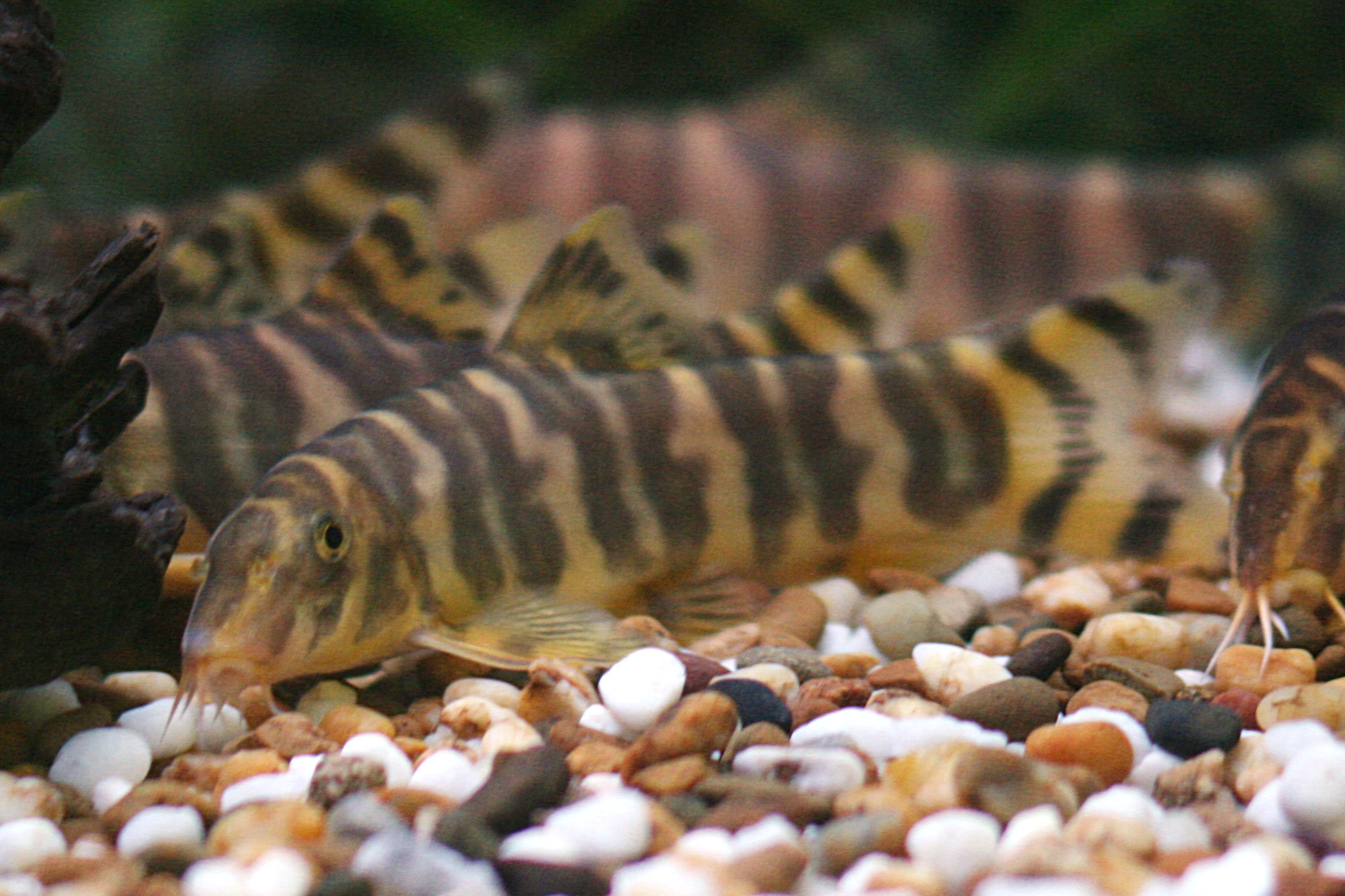
A new fish species of the true loaches family was captured for the first time in the Great Tenasserim River in 1993, and was named "Kamphol Udomritthiruj" after the person who found it. It was given the scientific name Botia udomritthiruji, along with the common name Emperor loach. Although it is considered a suitable aquarium fish, the Emperor loach has not been exported from the area due to a serious insurgency problem prevailing in the region.
References
References
- (2017). "Baseline Assessment Report Introduction".
- (2005). "Fragmentation and Flow Regulation of the World's Large River Systems".
- "Peninsula Thai-Malaysia-Myanmar".
- "Tenasserim (in Tenasserim (region, Myanmar))".
- Royal Asiatic Society of Bengal. (1841). "Journal". The Society.
- (1867). "Chambers's Encyclopaedia: Sound-Vitaceæ". W. and R. Chambers.
- Geological Survey of India, p. 189, 194
- Hunter, p. 24-25
- Hunter, Sir William Wilson. (1881). "The imperial gazetteer of India". Trübner & co..
- Grosberg, Robert Michael. (2005). "Myanmar (Burma)". Lonely Planet.
- Great Britain. Parliament. House of Commons. (1848). "House of Commons papers". HMSO.
- (1907). "Scottish geographical magazine, Volume 23". [[Royal Scottish Geographical Society]].
- Hunter, p. 26
- "Great Tenasserim River | river, Myanmar".
- Geological Survey of India. (1889). "Records of the Geological Survey of India". The Survey.
- Royal Asiatic Society, p. 852
- Journal of the Iron and Steel Institute, p. 360
- "British Burma (British Burmah)".
- Iron and Steel Institute. (1892). "Journal of the Iron and Steel Institute". The Institute.
- Great Britain. Parliament. House of Commons. (1863). "Accounts and papers of the House of Commons".
- Balfour, Edward. (1871). "Coal". B. Quaritch.
- "Tenasserim hydropower project under survey". Mizzima.
- [http://www.fishbase.org/summary/Botia-udomritthiruji.html FishBase]
- Martin Thoene. "Emperor Botia (Botia udomritthiruji)". Loaches>com.
This article was imported from Wikipedia and is available under the Creative Commons Attribution-ShareAlike 4.0 License. Content has been adapted to SurfDoc format. Original contributors can be found on the article history page.
Ask Mako anything about Great Tenasserim River — get instant answers, deeper analysis, and related topics.
Research with MakoFree with your Surf account
Create a free account to save articles, ask Mako questions, and organize your research.
Sign up freeThis content may have been generated or modified by AI. CloudSurf Software LLC is not responsible for the accuracy, completeness, or reliability of AI-generated content. Always verify important information from primary sources.
Report