From Surf Wiki (app.surf) — the open knowledge base
Grain
Edible dry seed

Edible dry seed
After being harvested, dry grains are more durable than other staple foods, such as starchy fruits (plantains, breadfruit, etc.) and tubers (sweet potatoes, cassava, and more). This durability has made grains well suited to industrial agriculture, since they can be mechanically harvested, transported by rail or ship, stored for long periods in silos, and milled for flour or pressed for oil. Thus, the grain market is a major global agricultural market that includes crops such as maize, rice, soybeans, wheat and other grains.
History
The origin of grains goes back to the Neolithic Revolution about 10,000 years ago, when prehistoric communities started to make the transition from hunter-gatherer to farmer. Modern varieties of grains have been developed over time through mutation, selective cropping, breeding and research in biotechnology. Ancient grains, however, are said to be largely unchanged from their initial domesticated varieties.
Various forms of archaeobotanical evidence, such as carbonized and semicarbonized grains, coprolites and imprints of grains, husks or spikelets on potsherds, have been found during excavations of Neolithic sites.
Ancient grains played a role in the spiritual life of several ancient civilizations, from the Aztecs to the Greeks and Egyptians. Quinoa was called the "mother of all grains" and considered sacred by the Inca people. Amaranth was likewise considered sacred by the Aztecs, and was used as part of a religious ceremony, its cultivation being banned by Spanish colonial authorities. Farro grains are mentioned in the Old Testament.
The first reference to ancient grains as a health food was in the Daily News (New York) in 1996. Since then the popularity of ancient grains as a food has increased, and in 2011 the gluten-free food market was valued at $1.6 billion.
Because grains are small, hard and dry, they can be stored, measured, and transported more readily than can other kinds of food crops such as fresh fruits, roots and tubers. The development of grain agriculture allowed excess food to be produced and stored easily which could have led to the creation of the first temporary settlements and the division of society into classes.
This assumption that grain agriculture led to early settlements and social stratification has been challenged by James Scott in his book Against the Grain. He argues that the transition from hunter-gatherer societies to settled agrarian communities was not a voluntary choice driven by the benefits of increased food production due to the long storage potential of grains, but rather that the shift towards settlements was a coerced transformation imposed by dominant members of a society seeking to expand control over labor and resources.
Cereal and non-cereal grains
In the grass family, a grain (narrowly defined) is a caryopsis, a fruit with its wall fused on to the single seed inside, belonging to a cereal such as wheat, maize, or rice. More broadly, in agronomy and commerce, seeds or fruits from other plant families are called grains if they resemble cereal caryopses. For example, amaranth is sold as "grain amaranth", and amaranth products may be described as "whole grains". The pre-Hispanic civilizations of the Andes had grain-based food systems, but at higher elevations none of the grains belonged the cereal family. All three grains native to the Andes (kaniwa, kiwicha, and quinoa) are broad-leaved plants rather than grasses.
Cereal grains
Main article: Cereal
Many different species of cereal are cultivated for their grains.
File:Wheat-kernel nutrition.png|A wheat kernel, its composition and the nutritional values of its parts. File:Dinrêyes.jpg|Cereal grain seeds clockwise from top-left: wheat, spelt, oat, barley File:Gerstenkorrels Hordeum vulgare.jpg|Barley File:Secale cereale (roggekorrels).jpg|Rye File:Rice grains (IRRI).jpg|Rice grains by the IRRI
Warm-season cereals
- fonio
- maize (corn)
- millets (of multiple species)
- sorghum
Cool-season cereals
- barley
- oats
- rice
- rye
- spelt
- teff
- triticale
- wheat
- wild rice
Pseudocereal grains
Main article: Pseudocereal

Starchy grains from broadleaf (dicot) plant families are cultivated as nutritious alternatives to cereals. The three major pseudocereal grains are:
- amaranth (Amaranth family) also called kiwicha
- buckwheat (Smartweed family)
- quinoa (Amaranth family, formerly classified as Goosefoot family) Other grains sometimes called pseudocereals include:
- chia (Mint family)
- kañiwa --
Pulses or grain legumes

Pulses or grain legumes, members of the pea family, have a higher protein content than most other plant foods, at around 20%, while soybeans have as much as 35%. As is the case with all other whole plant foods, pulses also contain carbohydrates and fat. Common pulses include:
- chickpeas
- common beans
- common peas (garden peas)
- fava beans
- lentils
- lima beans
- lupins
- mung beans
- peanuts
- pigeon peas
- runner beans
- soybeans
Oilseed grains
Oilseed grains are grown primarily for the extraction of their edible oil. Vegetable oils provide dietary energy and some essential fatty acids. They are also used as fuel and lubricants.
Mustard family
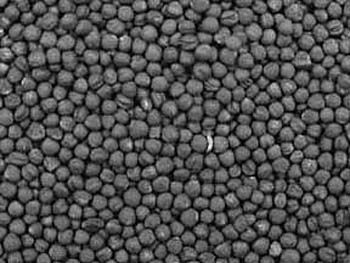
- black mustard
- India mustard
- rapeseed (including canola)
Aster family

- safflower
- sunflower seed
Other families
- flax seed (Flax family)
- hemp seed (Hemp family)
- poppy seed (Poppy family)
Trade
Occupational safety and health
Those who handle grain at grain facilities may encounter numerous occupational hazards and exposures. Risks include grain entrapment, where workers are submerged in the grain and unable to extricate themselves; explosions caused by fine particles of grain dust, and falls.
References
References
- Babcock, P. G., ed. 1976. ''Webster's Third New Dictionary''. Springfield, Massachusetts: G. & C. Merriam Co.
- Shewry, P. R.. (2009). "Wheat". Journal of Experimental Biology.
- Cooper, Raymond. (July 2015). "Re-discovering ancient wheat varieties as functional foods". Journal of Traditional and Complementary Medicine.
- (1974). "Ancient Grains from India". Bulletin of the Deccan College Post-Graduate and Research Institute.
- Sullivan, Rebecca. (17 January 2014). "Ancient grains: why you should eat these six superfoods eaten by the Aztec". News.com.au.
- Maisto, Michelle. (5 December 2011). "Rediscovering Amaranth, The Aztec Superfood". Forbes.
- Amy Brown. (1 June 2010). "Understanding Food: Principles and Preparation". Cengage Learning.
- (1989). "Lost Crops of the Incas: Little-Known Plants of the Andes with Promise for Worldwide Cultivation". Office of International Affairs, National Academies.
- Wessel, T.. (1984). "The Agricultural Foundations of Civilization". Journal of Agriculture and Human Values.
- Scott, James. (2017). "Against the Grain: A Deep History of the Earliest States". Yale University Press.
- Simpson, Michael G.. (2019-11-10). "Plant Systematics". Academic Press.
- (1989). "Lost Crops of the Incas: Little-Known Plants of the Andes with Promise for Worldwide Cultivation". [[National Academies Press]].
- McKevith, Brigid. (2004). "Nutritional aspects of cereals". Nutrition Bulletin.
- (2019). "Nutritional importance and processing aspects of pseudo-cereals". Journal of Agricultural Engineering and Food Technology.
- (2001). "Advances in Agronomy". Elsevier.
- (2017). "Food and fuel from Canadian oilseed grains: Biorefinery production may optimize both resources". European Journal of Lipid Science and Technology.
- Salunkhe, D. K.. (1992-02-29). "World Oilseeds". Springer Science & Business Media.
- (April 2011). "Frequently Asked Questions About Flowing Grain Entrapment, Grain Rescue and Strategies, and Grain Entrapment Prevention Measures". Agricultural Safety and Health Program, [[Purdue University]].
- Occupational Safety and Health Administration. "Combustible Dust in Industry: Preventing and Mitigating the Effects of Fire and Explosions". [[United States Department of Labor]].
- Serna-Saldivar, S.O.. (2012). "Cereal Grains: Laboratory Reference and Procedures Manual". Taylor & Francis.
- Lean, M.E.J.. (2006). "Fox and Cameron's Food Science, Nutrition & Health, 7th Edition". CRC Press.
This article was imported from Wikipedia and is available under the Creative Commons Attribution-ShareAlike 4.0 License. Content has been adapted to SurfDoc format. Original contributors can be found on the article history page.
Ask Mako anything about Grain — get instant answers, deeper analysis, and related topics.
Research with MakoFree with your Surf account
Create a free account to save articles, ask Mako questions, and organize your research.
Sign up freeThis content may have been generated or modified by AI. CloudSurf Software LLC is not responsible for the accuracy, completeness, or reliability of AI-generated content. Always verify important information from primary sources.
Report