From Surf Wiki (app.surf) — the open knowledge base
Golf course turf
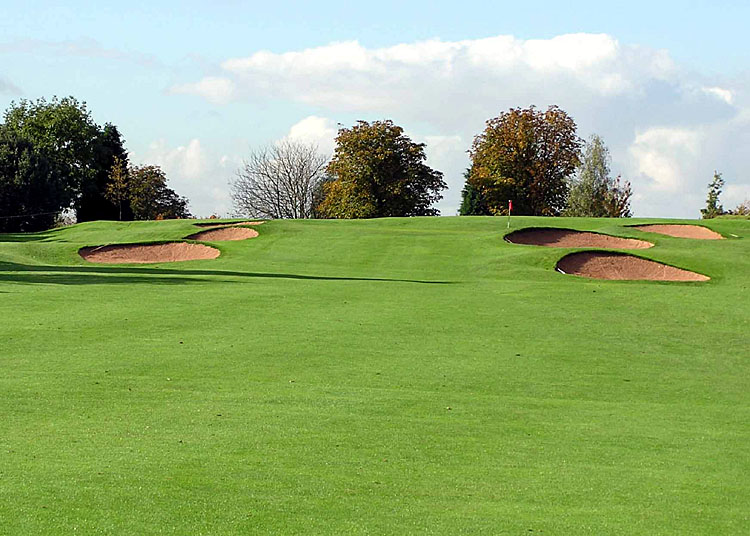
Golf course turf is the grass covering golf courses, which is used as a playing surface in the sport of golf. The grass is usually maintained by a greenskeeper to control weeds, insects with pesticides, plant fungal diseases with fungicides and to introduce nutrients such as nitrogen fertilization. The grass is kept at a constant height by mowing.
Nutrient management
Nitrogen is the nutrient required in greatest amount by turfgrass.{{cite book
In the spring, heavy nitrogen applications for the first two months caused changes in color, but the nitrogen response by the grass was not maintained and a decrease in color was found as the growing season progressed. Spring fertilization can increase the tiller numbers of the grass compared to fall fertilization.{{cite journal
In the fall, application of nitrogen fertilizer can cause improved color retention and early spring coloration. Year-to-year differences in nitrogen loss during the fall result from differences in temperature and precipitation. Lower levels of nitrogen loss during fall can be found when it was warmer (more plant uptake) and dryer (less loss due to leaching).
The quality and color of turf can increase depending on nitrogen application amount. high rates create darker green turf. There is a positive correlation between high levels of nitrogen fertilizer used on turf and turf quality for any level of wear.{{cite journal
Environmental quality
Groundwater and air quality should be considered when applying fertilizer and pesticides to turf.
Fertilizer
Turf growth at the time of nitrogen application affects nitrate (NO) leaching risk. For example, grass absorbed more N during active growth while uptake was limited in newly seeded turf. In another study, nitrogen applied after 15 September (of a northern-hemisphere autumn) caused relatively little plant growth, resulting in increased NO - N concentration in percolate water.
Areas made of sod undergo greater leaching than seeded turf plots.{{cite journal
A highly soluble fertilizer, containing nitrogen in its nitrate form, such as ammonium nitrate, can create leaching three to seven times greater than United States Environmental Protection Agency (EPA) limits of (10 ppm) NO3-N during a time of ten to twenty-five days following nitrogen application.{{cite journal
Photoperiod (the length of daylight) affects overall plant uptake. When the length of daylight gets shorter, grass undergoes less photosynthesis and uptakes less nitrogen.{{cite journal
Pesticides
The antifungal cyproconazole was marketed as early as 1995 for use on sod farms and golf courses.
References
References
- (September 1995). "cyproconazole - Registration of Sentinel 40 WG Turf Fungicide (EPA Reg. No. 55947-132)". EPA.
This article was imported from Wikipedia and is available under the Creative Commons Attribution-ShareAlike 4.0 License. Content has been adapted to SurfDoc format. Original contributors can be found on the article history page.
Ask Mako anything about Golf course turf — get instant answers, deeper analysis, and related topics.
Research with MakoFree with your Surf account
Create a free account to save articles, ask Mako questions, and organize your research.
Sign up freeThis content may have been generated or modified by AI. CloudSurf Software LLC is not responsible for the accuracy, completeness, or reliability of AI-generated content. Always verify important information from primary sources.
Report