From Surf Wiki (app.surf) — the open knowledge base
Golem
Being in Jewish folklore made from clay

Being in Jewish folklore made from clay
| Field | Value |
|---|---|
| name | Golem |
| image | Golem_–_Mikoláš_Aleš_(Staré_pověsti_české).jpg |
| image_upright | 1.2 |
| caption | The Maharal of Prague and the Golem |
| Grouping | Monster |
| Folklore | Jewish folklore |
| First_Attested | Talmud |
| AKA | Gōlem () |
| Country | Bohemia |
| Region | Prague |
| Habitat | Typically resides in attics or temples |
| Details | Protector of the Jewish community, created from clay or mud, animated through mystical rituals. |
A golem ( ; ) is an animated anthropomorphic being in Jewish folklore that is created entirely from inanimate matter, usually clay or mud. The most famous golem narrative involves Rabbi Judah Loew ben Bezalel, the late-16th-century rabbi of Prague. According to Moment magazine, "the golem is a highly mutable metaphor with seemingly limitless symbolism. It can be a victim or villain, man or woman—or sometimes both. Over the centuries, it has been used to connote war, community, isolation, hope, and despair."
In modern popular culture, the word has become generalized, and any crude automaton devised by a sorcerer may be termed a "golem".
Etymology
The word golem occurs once in the Bible, in Psalm 139, which uses the word גׇּלְמִ֤י (he; 'my golem', 'my light form', 'raw material') to connote the unfinished human being before God's eyes. Pirkei Avot 5:9 uses the term to refer to someone who is unsophisticated: "[There are] seven things [characteristic] in a clod, and seven in a wise man" (שִׁבְעָה דְבָרִים בַּגֹּלֶם וְשִׁבְעָה בֶחָכָם).
In Modern Hebrew, he is used to mean 'dumb', 'helpless', or 'pupa'. Similarly, it is often used today as a metaphor for a stupid man or other entity that serves a man under controlled conditions, but is hostile to him in other circumstances. Golem passed into Yiddish as yi, meaning someone who is lethargic or in a stupor.
History
Earliest stories
The oldest stories of golems date to early Judaism. In the Talmud (Tractate Sanhedrin 38b), Adam is initially created as a golem (גולם) when his dust is "kneaded into a shapeless husk". Like Adam, all golems are created from mud by those close to divinity, but no anthropogenic golem is fully human. Early on, the main disability of the golem was its inability to speak. Sanhedrin 65b describes Rava creating a man (he), whom he then sends to Rav Zeira. Zeira speaks to the man, but he does not answer, whereupon Zeira says, "You were created by the sages; return to your dust".
During the Middle Ages, passages from the Sefer Yetzirah were studied as a means to create and animate a golem, although little in the writings of Jewish mysticism supports this belief. The earliest known written account of how to create a golem can be found in the Sode Raza, a commentary on Merkabah mysticism by Eleazar of Worms, who lived in the late 12th and early 13th centuries.
It was believed that golems could be activated by an ecstatic experience induced by the ritual use of various letters of the Hebrew alphabet forming one of the names of God. This was written on a piece of paper and inserted into the mouth or forehead of the golem.
In some tales, including certain stories of the Chełm and Prague golems, a word such as he 'truth' is inscribed on the golem, sometimes on its forehead. In this example, the golem could then be deactivated by removing the aleph (א), thus changing the inscription from "truth" to "death" (, he, 'dead').
One source credits Solomon ibn Gabirol, who lived in the 11th century, with creating a golem, possibly female, for household chores. A legend also existed claiming that Samuel of Speyer created a golem in the 12th century.
In 1625, Joseph Solomon Delmedigo wrote that "many legends of this sort are current, particularly in Germany."
Golem of Chełm
The oldest description of the creation of a golem by a historical figure is included in a tradition connected to the Baal Shem (folk healer) named Elijah of Chełm (1550–1583).
A Polish Kabbalist, writing in about 1630–1650, reported the creation of a golem by Rabbi Eliyahu thusly:
A similar account was reported by a Christian author, Christoph Arnold, in 1674.
Jacob Emden elaborated on the story in a book published in 1748:
According to the Polish Kabbalist, "the legend was known to several persons, thus allowing us to speculate that the legend had indeed circulated for some time before it was committed to writing and, consequently, we may assume that its origins are to be traced to the generation immediately following the death of R. Eliyahu, if not earlier."
Classic narrative: The Golem of Prague

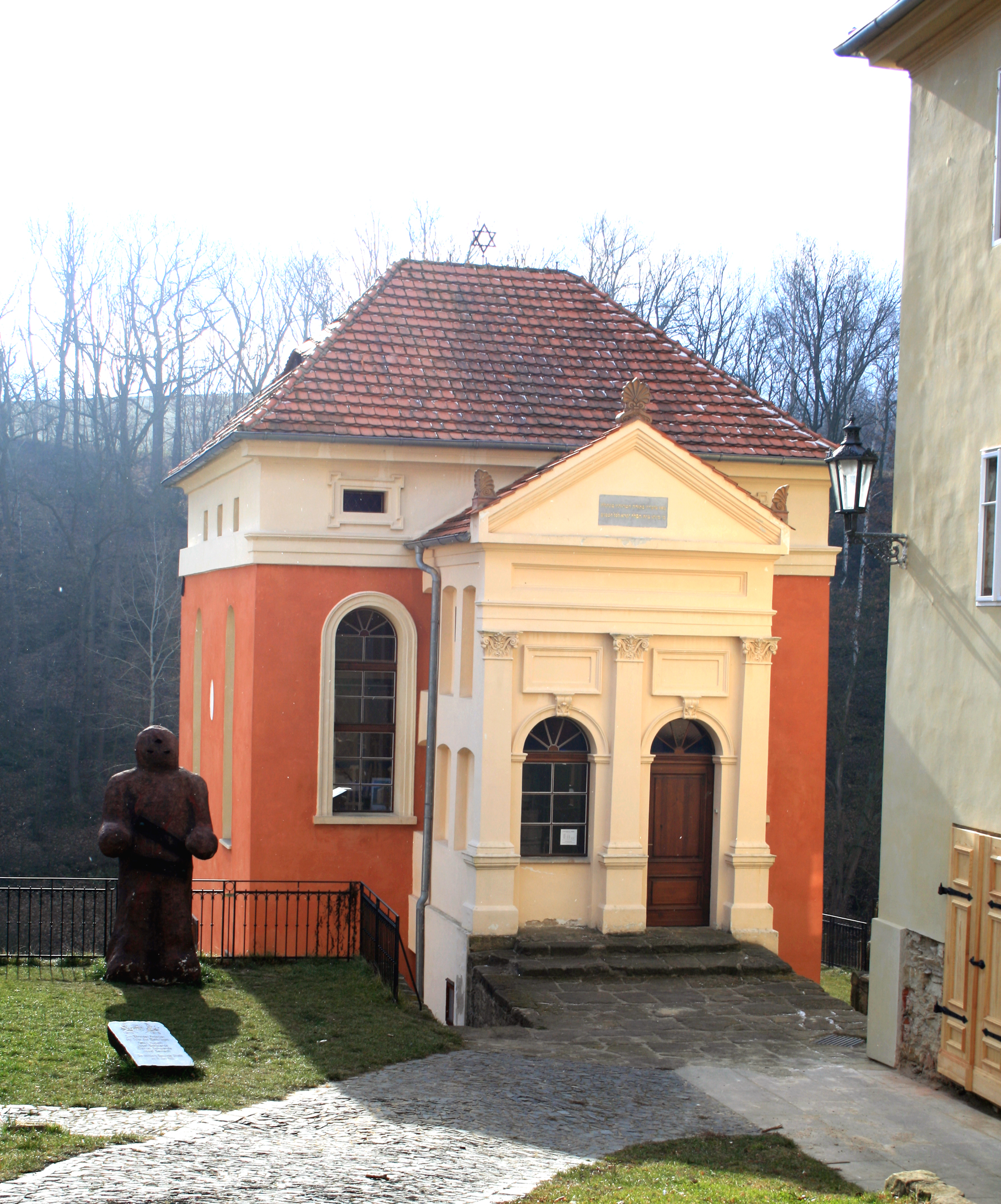
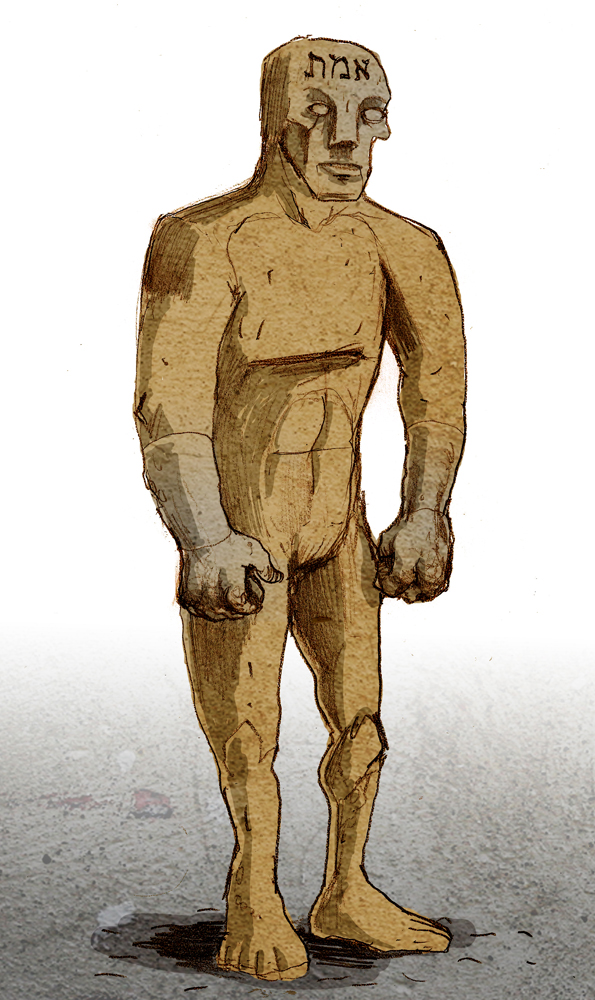
The most famous golem narrative involves Judah Loew ben Bezalel, the late 16th-century rabbi of Prague, also known as the Maharal, who reportedly "created a golem out of clay from the banks of the Vltava River and brought it to life through rituals and Hebrew incantations to defend the Prague ghetto from antisemitic attacks and pogroms". Depending on the version of the legend, the Jews in Prague were to be either expelled or killed under the rule of Rudolf II, the Holy Roman Emperor. The Golem was called Josef and was known as Yossele. He was said to be able to make himself invisible and summon spirits from the dead. Rabbi Loew deactivated the Golem on Friday evenings by removing the shem before the Sabbath (Saturday) began, so as to let it rest on Sabbath.
One Friday evening, Rabbi Loew forgot to remove the shem, and feared that the Golem would desecrate the Sabbath. A different story tells of a golem that fell in love, and when rejected, became the violent monster seen in most accounts. Some versions have the golem eventually going on a murderous rampage. The rabbi then managed to pull the shem from his mouth and immobilize him in front of the synagogue, whereupon the golem fell in pieces. The Golem's body was stored in the attic genizah of the Old New Synagogue, where it would be restored to life again if needed.
Rabbi Loew then forbade anyone except his successors from going into the attic. Rabbi Yechezkel Landau, a successor of Rabbi Loew, reportedly wanted to go up the steps to the attic when he was Chief Rabbi of Prague to verify the tradition. Rabbi Landau fasted and immersed himself in a mikveh, wrapped himself in phylacteries and a prayer-shawl and started ascending the steps. At the top of the steps, he hesitated and then came immediately back down, trembling and frightened. He then reiterated Rabbi Loew's original warning.
According to legend, the body of Rabbi Loew's Golem still lies in the synagogue's attic. When the attic was renovated in 1883, no evidence of the Golem was found. Some versions of the tale state that the Golem was stolen from the genizah and entombed in a graveyard in Prague's Žižkov district, where the Žižkov Television Tower now stands. A recent legend tells of a Nazi agent ascending to the synagogue attic, dying under suspicious circumstances thereafter. The attic is not open to the general public.
Some Orthodox Jews believe that the Maharal did actually create a golem. The evidence for this belief has been analyzed from an Orthodox Jewish perspective by Shnayer Z. Leiman.
Sources of the Prague narrative
The general view of historians and critics is that the story of the Golem of Prague was a German literary invention of the early 19th century. According to John Neubauer, the first writers on the Prague Golem were:
- 1837: Berthold Auerbach, Spinoza
- 1841: , Der Golam, eine Legende
- 1841: Franz Klutschak, Der Golam des Rabbi Löw
- 1842: , Der Golem des Hoch-Rabbi-Löb
- 1847: , Der Golem A few slightly earlier examples are known, in 1834 and 1836.
All of these early accounts of the Golem of Prague are in German by Jewish writers. They are suggested to have emerged as part of a Jewish folklore movement parallel with the contemporary German folklore movement.
The origins of the story have been obscured by attempts to exaggerate its age and to pretend that it dates from the time of the Maharal. Rabbi Yudel Rosenberg (1859–1935) of Tarłów, before moving to Canada where he became one of its most prominent rabbis, is said to have originated the idea that the narrative dates from the time of the Maharal. Rosenberg published Nifl'os Maharal (Wonders of Maharal) (Piotrków, 1909), which purported to be an eyewitness account by the Maharal's son-in-law, who had helped to create the Golem. Rabbi Meir Mazuz commented that Rosenberg was a forger and stories of the Maharal creating a Golem stem from Rosenberg's fabrication.
Rosenberg claimed that the book was based upon a manuscript that he found in the main library in Metz. Wonders of Maharal "is generally recognized in academic circles to be a literary hoax". Gershom Sholem observed that the manuscript "contains not ancient legends, but modern fiction". Rosenberg's claim was further disseminated in Chayim Bloch's (1881–1973) The Golem: Legends of the Ghetto of Prague, English edition 1925.
The Jewish Encyclopedia of 1906 cites the historical work Zemach David by David Gans, a disciple of the Maharal, published in 1592. In it, Gans writes of an audience between the Maharal and Rudolph II: "Our lord the emperor ... Rudolph ... sent for and called upon our master Rabbi Low ben Bezalel and received him with a welcome and merry expression, and spoke to him face to face, as one would to a friend. The nature and quality of their words are mysterious, sealed, and hidden."
But it has been said of this passage, "Even when [the Maharal is] eulogized, whether in David Gans' Zemach David or on his epitaph ..., not a word is said about the creation of a golem. No Hebrew work published in the 16th, 17th, and 18th centuries (even in Prague) is aware that the Maharal created a golem." Furthermore, the Maharal himself did not refer to the Golem in his writings. Rabbi Yedidiah Tiah Weil (1721–1805), a Prague resident, who described the creation of golems, including those created by Rabbis Avigdor Kara of Prague (died 1439) and Eliyahu of Chelm, did not mention the Maharal. Rabbi Meir Perils' biography of the Maharal published in 1718 does not mention a golem.
Golem of Vilna
A similar tradition relates to the Vilna Gaon or "the saintly genius from Vilnius" (1720–1797). Rabbi Chaim Volozhin (Lithuania 1749–1821) reported in an introduction to Sifra de Tzeniuta that he once presented to his teacher, the Vilna Gaon, ten different versions of a certain passage in the Sefer Yetzira and asked the Gaon to determine the correct text. The Gaon immediately identified one version as the accurate rendition of the passage.
The amazed student then commented to his teacher that, with such clarity, he should easily be able to create a live human. The Gaon affirmed Rabbi Chaim's assertion and said that he once began to create a person when he was a child, under the age of 13, but during the process, he received a sign from Heaven ordering him to desist because of his youth.
Theme of hubris

The existence of a golem is sometimes a mixed blessing. Golems are not intelligent; if commanded to perform a task, they will perform the instructions literally. In many depictions, golems are inherently perfectly obedient. In its earliest known modern form, the Golem of Chełm became enormous and uncooperative. In one version of this story, the rabbi had to resort to trickery to deactivate it, whereupon it crumbled upon its creator and crushed him.
A similar theme of hubris is seen in Frankenstein, The Sorcerer's Apprentice, and some other stories in popular culture, such as The Terminator. The theme manifests itself in R.U.R. (Rossum's Universal Robots), Karel Čapek's 1921 play that coined the term robot. The play was written in Prague, and while Čapek denied that he modeled the robot after the golem, many similarities are seen in the plot.
Culture of the Czech Republic
The golem is a popular figure in the Czech Republic. The 1915 novel by Gustav Meyrink (The Golem) was briefly popular and did much to keep the imagination about the golem going. Several restaurants and other businesses have names that make reference to the creature. A Czech strongman, René Richter goes by the nickname "Golem", and a Czech monster truck outfit calls itself the "Golem Team".
Abraham Akkerman preceded his article on human automatism in the contemporary city with a short satirical poem on a pair of golems turning human.
Clay Boy variation
A Yiddish and Slavic folktale is the Clay Boy, which combines elements of the golem and The Gingerbread Man, in which a lonely couple makes a child out of clay, with disastrous or comical consequences.
In one common Russian version, an older couple, whose children have left home, make a boy out of clay and dry him by their hearth. The Clay Boy (, ru) comes to life; at first, the couple is delighted and treats him like a real child, but the Clay Boy does not stop growing and eats all their food, then all their livestock, and then the Clay Boy eats his parents. The Clay Boy rampages through the village until he is smashed by a quick-thinking goat.
Golem in popular culture

In popular culture, the term "golem" is often used to refer to "any magically created human figure" rather than specifically "a humanoid formed by Kabbalistic means".
Film and television
Golems are frequently depicted in movies and television shows. Programs with them in the title include:
- The Golem (, shown in the United States as The Monster of Fate), a 1915 German silent horror film, written and directed by Paul Wegener and Henrik Galeen.
- The Golem and the Dancing Girl (), a 1917 German silent comedy-horror film, directed by Paul Wegener and Rochus Gliese.
- The Golem: How He Came into the World (, also referred to as Der Golem), a 1920 German silent horror film, directed by Paul Wegener and Carl Boese.
- Le Golem (), a 1936 Czechoslovak monster movie directed by Julien Duvivier in French.
- The Emperor and the Golem (), a 1952 Czechoslovak movie starring Jan Werich.
- The Limehouse Golem, a 2016 film about a fictional series of Jack the Ripper-esque murders in Victorian London. Other references to golems in popular culture include:
- The Golem (), the first novel by Gustav Meyrink and adapted for television in 1967, for film in 1980, and for the stage in 2013.
- Daimajin, a 1966 Japanese kaiju film directed by Kimiyoshi Yasuda.
- It!, a 1967 British horror film directed by Herbert J. Leder.
- "Kaddish", a 1997 episode of The X-Files.
- The 1995 Gargoyles episode "Golem" featured a golem made in the image of a stone statue that was created by Rabbi Loew (voiced by Victor Brandt) to defend the Jewish inhabitants of Prague from raiders and had been passed down to his descendant Max Loew (voiced by Scott Weil).
- The 1997 Extreme Ghostbusters series depicts a Rabbi's son bringing a golem to life to protect a local New York synagogue from antisemitic vandalism in the episode "The True Face of a Monster".
- "You Gotta Know When to Golem" is a short story during "Treehouse of Horror XVII", part of the long-running series of The Simpsons Halloween specials. The Golem, voiced by Richard Lewis, is controlled via paper notes by Bart and used to wreak havoc on the citizens of Springfield.
- Inglourious Basterds, a 2009 film written and directed by Quentin Tarantino, includes a fictional version of Adolf Hitler repeating fearful speculation that "The Bear Jew," who kills German soldiers with a bat, is a golem.
- In the fourth episode of season 4 of Grimm ("Dyin' on a Prayer"), a golem plays an important role.
- The 2013 Supernatural episode "Everybody Hates Hitler" features a golem (portrayed by John DeSantis) who had been used to fight the Nazis in Belarus during World War II. In the present, the golem has been passed down from Rabbi Bass (portrayed by Hal Linden) to his grandson Aaron Bass (portrayed by Adam Rose). While Aaron had a hard time controlling the golem at first, they did help Sam Winchester and Dean Winchester fight against a group of Nazi necromancers led by Commandant Eckhart (portrayed by Bernhard Forcher).
- The 2019 Netflix series The Order features a recurring character (portrayed by Dylan Playfair) who is revealed to be a golem in season 1.
- The majority of the CW series Legacies (a spin-off of The Vampire Diaries) centers around defeating a golem.
- The Golem, a 2018 Israeli horror film features the Golem, who takes the form of a dead child.
Literature
- "El Golem" is a poem by Jorge Luis Borges, published in 1959, and later published as part of the 1964 book El otro, el mismo (The other, the self). The poem tells the story of Judah Loew and his creation of the Golem. In the poem, Borges quotes the works of German Jewish philosopher Gershom Scholem and Cratylus by Plato.
- Marge Piercy's 1991 science fiction novel, He, She and It, features intertwined narratives, one of which is a retelling of the story of Rabbi Loew and his creation of a golem in medieval Prague.
- Terry Pratchett's 1996 Discworld novel Feet of Clay features a number of golems who reside in the city of Ankh-Morpork. Golems also appear in Going Postal and Making Money and make cameos throughout the remainder of the series. They fulfil the same role as robots but some develop more personality.
- Thomas Pynchon's 1997 novel Mason & Dixon features a giant golem, described as a "Jewish Automaton, taller than the most ancient of the Trees," which was purportedly created by a Native American tribe believed to be one of the Lost Tribes of Israel; having escaped its creators' control, the golem roams the wilderness having learned how to be invisible.
- Golems play a large role in Mary Gentle's novel Ash: A Secret History.
- Ted Chiang's 2000 novella "Seventy-Two Letters" focuses on an alternate history of the world where science and technology are based on the use of golems and, accordingly, the Kabbalistic names embedded in them.
- Michael Chabon's 2000 novel The Amazing Adventures of Kavalier & Clay features a story of a Golem like creature that is shipped to the United States.
- The 2004 book The Golem's Eye by Jonathan Stroud features a magically rendered golem as the main threat.
- David Brin's 2002 science fiction book, Kiln People, is based on the premise that people can make short-lived clay-based copies of themselves. The golems have the same motives and memories as the humans that made them.
- Brandon Mull's 2006 book series Fablehaven prominently contains a golem character, one which is more faithful to traditional portrayals through its depiction as a protector of the community.
- Catherynne M. Valente's novel The Girl Who Circumnavigated Fairyland and later books in the series feature a golem made of soap, Lye, as a recurring character.
- The Marvel Comics superhero, Captain America, as the character's creators, Joe Simon and Jack Kirby, originally conceived of him, has been described as a variant of the Golem concept: a protector of the Jewish community created by one of its elders (Dr. Abraham Erskine).
- The Golem and the Jinni is a debut novel written by Helene Wecker, published by Harper in April 2013. It combines the genre of historical fiction with elements of fantasy, telling the story of two displaced magical creatures in 19th century New York City, reflecting the fate of contemporary immigrants to the USA.
- The Golem of Hollywood, a supernatural mystery by writers Jonathan Kellerman and Jesse Kellerman, weaves the legend of the Golem into a Los Angeles murder mystery. This golem is described as female.
- Dan Brown's 2025 novel The Secret of Secrets is set in Prague and includes a figure inspired by the legend of the Golem.
Tabletop and video games
- Golems appear in the fantasy role-playing game Dungeons & Dragons (first published in 1974), and the influence of Dungeons & Dragons has led to the inclusion of golems in other tabletop role-playing games, as well as in video games. There are many varieties of golems in the game, and ** reviewer Philippe Tessier called the creature a "classic of D&D". The clay golem is based on the golem of Medieval Jewish folklore, though changed from "a cherished defender to an unthinking hulk". The flesh golem is related to Frankenstein's monster as Universal's 1931 film, seen in e.g. being empowered by electricity, though again with the difference of being essentially an unthinking machine in the game. *D&D'''s golems are also rooted in Gothic fiction more generally, and are typical denizens of the Ravenloft setting. The flesh golem was ranked ninth among the ten best mid-level monsters by the authors of *Dungeons & Dragons For Dummies'' for both 3rd and 4th edition.
- Golems are recurring characters in the Dragon Quest/Dragon Warrior video game series.
- There is a golem character in Little Samson, a game released on the Nintendo Entertainment System.
- Golems are a recurring character in the Final Fantasy series of video games.
- Games in the Minecraft franchise contain many different types of golems. In the main game, there are iron, snow and copper golems. In Minecraft Dungeons, there is the Redstone Golem. In Minecraft Legends, there are Cobblestone Golems, Plank Golems, Mossy Golems, and Grindstone Golems.
- Golem is the name of a Pokémon whose body is made of rocks. Golett and Golurk are two Pokémon inspired by the Golem of Prague.
- A golem features prominently in The Ghost and the Golem, a 2024 Jewish historical fantasy interactive fiction game by Benjamin Rosenbaum, on the Choice of Games platform.
Music
- A number of scores have been written to accompany or based on the 1920 film, including by Daniel Hoffman and performed by the San Francisco-based ensemble Davka and by Karl-Errnst Sasse.
- In 1962, Abraham Ellstein's opera The Golem, commissioned by the New York City Opera, premiered at City Opera, New York.
- In 1994, composer Richard Teitelbaum composed "Golem", based on the Prague legend and combining music with electronics.
Other
- GOLEM was the name given to three custom-made computers built in the Weizmann Institute of Science in Israel during the 1960s.
Notes
References
References
- Cooper, Marilyn. [http://www.momentmag.com/jewish-word-golem/ Jewish Word. Golem"]. {{webarchive. link. (25 August 2017 ''[[Moment (magazine)). Moment]]''. 17 July 2017. 24 August 2017.
- "Definition of GOLEM".
- (1989). "golem". Clarendon Press.
- "Pirkei Avot 5:7".
- Bluestein, Gene. (1998). "Anglish/Yinglish: Yiddish in American Life and Literature". U of Nebraska Press.
- "Sanhedrin 38b".
- "Sanhedrin 65b".
- Kressel, Matthew. (1 October 2015). "36 Days of Judaic Myth: Day 24, The Golem of Prague". Matthew Kressel.
- Idel, Moshe. (1990). "Golem: Jewish Magical and Mystical Traditions on the Artificial Anthropoid". State University of New York Press.
- Kerstein, Benjamin. ''Jewish Ideas Daily''. 14 September 2010. 24 August 2017.
- Bokser, Ben Zion (2006). </ref From the World of the Cabbalah. Kessinger. p. 57.
- "Ibn Gabirol, Solomon ben Judah".
- [http://www.press.umich.edu/pdf/9780472117598-intro.pdf Introduction to "The Golem Returns"] {{webarchive. link. (12 October 2012 . Retrieved 23 September 2011.)
- Trachtenberg, Joshua. (2004). "Jewish Magic and Superstition". [[University of Pennsylvania Press]].
- (2011). "The Golem Returns: From German Romantic Literature to Global Jewish Culture, 1808-2008". University of Michigan Press.
- link. (2013-05-09 . Cf. his בירת מגדל עוז, Altona, 1748, p. 259a; מטפחת ספרים, Altona, 1768, [http://hebrewbooks.org/pdfpager.aspx?req=21115&st=&pgnum=90&hilite= p. 45a] {{webarchive). link. (2013-05-09 ; and מגילת ספר, ed. Kahana, Warsaw, 1896, [https://www.hebrewbooks.org/pdfpager.aspx?req=37017&st=&pgnum=12&hilite= p. 4] {{webarchive). link. (2013-05-09 . See also שו"ת חכם צבי, [https://www.hebrewbooks.org/pdfpager.aspx?req=19566&st=&pgnum=163 סי' צ"ג] {{webarchive). link. (2013-05-09 , and the references cited in שו"ת חכם צבי עם ליקוטי הערות, Jerusalem, 1998, vol. 1, p. 421 and in the periodical כפר חב"ד, number 351 (1988), p. 51. Cited by Leiman, S.Z., [http://seforim.blogspot.com/2007/02/shnayer-z-leiman-did-disciple-of.html "Did a Disciple of the Maharal Create a Golem?"] {{webarchive). link. (2012-01-11)
- Green, Kayla. [http://www.momentmag.com/the-golem-in-the-attic/ "The Golem in the Attic"]. {{webarchive. link. (25 August 2017 ''Moment''. 1 February 2011. 25 August 2017.)
- Bilefsky, Dan. (10 May 2009). "Hard Times Give New Life to Prague's Golem". [[The New York Times]].
- "The Golem Legend". applet-magic.com.
- Winkler, Gershon. (1980). "The Golem of Prague". Judaica Press.
- (16 September 2014). "Mysteries of the Unknown: Inside the World of the Strange and Unexplained". Time-Life.
- Lee-Parritz, Oren. "The Golem Lives On". jewishpost.com.
- [http://atlasobscura.com/place/old-new-synagogue Old New Synagogue located in Praha, Czech Republic. Atlas Obscura. Curious and Wondrous Travel Destinations] {{webarchive. link. (29 August 2011 . Atlas Obscura. Retrieved on 23 September 2011.)
- Leiman, S. Z., [http://seforim.blogspot.com/2010/05/golem-of-prague-in-recent-rabbinic.html ''The Golem of Prague in Recent Rabbinic Literature''] {{webarchive. link. (24 September 2011)
- Tendlau, Abraham M.. (1842). "Das Buch der Sagen und Legenden jüdischer Vorzeit". J.F. Cast'sche Buchhandlung.
- (2 June 2009). "Populäres Judentum: Medien, Debatten, Lesestoffe". Walter de Gruyter.
- "Der jüdische Gil Blas".
- (1836). "Oesterreichische Zeitschrift für Geschichts- und Staatskunde". Beck.
- [[Hillel J. Kieval. Kieval, Hillel J.]] [http://www.yivoencyclopedia.org/article.aspx/Golem_Legend "Golem Legend"]. {{webarchive. link. (25 August 2017 ''The YIVO Encyclopedia''. 24 August 2017.)
- MiGedolei Yisrael (Hebrew: מגדולי ישראל) volume 1, p. ה (Hebrew pagination) footnote 1.
- [http://traditionarchive.org/news/originals/Volume%2036/No.%201/The%20Adventure%20of%20the.pdf Leiman, S.Z., " The Adventure of the Maharal of Prague in London: R. Yudl Rosenberg and The Golem of Prague"], {{webarchive. link. (17 September 2017 ''Tradition'', 36:1, 2002)
- Sherwin, Byron L. (1985) ''The Golem Legend: Origins and Implications''. New York: University Press of America
- Sholem, G., ''Major Trends in Jewish Mysticism'', Schocken, 1961
- link. (25 January 2022 . ''Jewish Encyclopedia''. Retrieved on 23 September 2011.)
- [http://www.epa.hu/01400/01462/00004/pdf/1986_2_296-298.pdf HUNGARIAN STUDIES 2. No. 2. Nemzetközi Magyar Filológiai Társaság. Akadémiai Kiadó Budapest [1986]] {{webarchive. link. (10 May 2013. (PDF). Retrieved on 23 September 2011.)
- Gans, D., ''Zemach David'', ed. M.Breuer, Jerusalem, 1983, p.145, cited [http://www.rabbiyehudahyudelrosenberg.com/ Rabbi Yehudah Yudel Rosenberg and the Maharal's Golem] {{webarchive. link. (23 September 2009)
- link. (14 June 2016, in Cornis-Pope, M., and Neubauer, J. ''History of The Literary Cultures of East-Central Europe'', John Benjamins, 2010, see also: Dekel E., Gurley D.E., "How Did Golem \came to Prague", JQR, Vol. 103, No. 2 (Spring 2013), pp. 241–258 [https://jqr.pennpress.org/media/23891/JQRnewArticle.pdf] {{Webarchive). link. (9 August 2017)
- Meir Perels. (1718). "Megilas Yuchsin".
- link. (4 February 2021 ''The Kabbalistic Tradition: An Anthology of Jewish Mysticism'', edited by Alan Unterman. ''Google Books''. 24 August 2017.)
- [[Voyen Koreis. link. (4 February 2021 ''Google Books''. 25 August 2017.)
- B, Veronika. (25 January 2020). "VIDEO: René Richter, the Czech Man With the Strongest Jaws in the World".
- Akkerman, Abraham. (2003–2004). "Philosophical Urbanism and Deconstruction in City-Form: An Environmental Ethos for the Twenty-First Century".
- Cronan, Mary W.. (1917). "Lutoschenka".
- Ginsburg, Mirra. (1997). "Clay Boy". Greenwillow.
- "Русская народная сказка «Глиняный парень»".
- Sherman, Fraser. (2022). "Jews in Popular Science Fiction: Marginalized in the Mainstream". [[Lexington Books]].
- Davidowicz, Klaus. (2019). "Golem: Modern Wars and Their Monsters". [[AJS Review]].
- Soukupová, Blanka. (2021). "Visual Antisemitism in Central Europe – Imagery of Hatred". [[de Gruyter]].
- Ishii et al., 1997, 日本特撮・幻想映画全集, p.170, Keibunsha, {{ISBN. 4766927060
- (10 October 2020). "It! (1967): The Golem Movie That Time Forgot – Ryan Harvey".
- (October 2024). "Kaddish (The X-Files)".
- (26 November 2019). "Inglourious Basterds (2009) - the Bear Jew".
- Chrystall, Andrew. "Inglourious Basterds: Satirizing the spectator and revealing the 'Nazi' within." ''New Cinemas: Journal of Contemporary Film'' 13.2 (2015): 153-168.
- (2012). "Quentin Tarantino's ''Inglourious Basterds'': A Manipulation of Metacinema". [[Bloomsbury (publisher).
- (3 December 2021). "Captain America Is A Jewish Golem - Theory Explained".
- Ciuraru, Carmela. (27 April 2013). "'The Golem and the Jinni': Supernatural story of assimilation". [[USA Today]].
- Cokal, Susann. (16 March 2013). "Breaking the Mold: 'The Golem and the Jinni', by Helene Wecker". [[The New York Times]].
- (31 March 2013). "The Golem and the Jinni". [[Kirkus Reviews]].
- (2014). "The Golem of Hollywood {{!}} Jewish Book Council".
- (2025-09-26). "In the footsteps of Robert Langdon: Dan Brown's new thriller inspires themed city tours".
- (February 8, 2007). "How Dungeon & Dragons shaped the modern videogame". [[PC Gamer]].
- (June 1993). "[[Monstrous Manual]]". [[TSR, Inc.]].
- Tessier, Philippe. (November 2000). "Baldur's Gate II".
- Silver, Eric. (2021-01-28). "Dungeons & Dragons Has an Antisemitism Problem".
- DeVarque, Aardy. "Literary Sources of D&D".
- (2014). "The Ashgate Encyclopedia of Literary and Cinematic Monsters". [[Ashgate Publishing]].
- (2006). "Dungeons & Dragons For Dummies". For Dummies.
- Rangel Jiménez, Mauricio. (2021). "Lanzando los dados: aproximaciones académicas a los juegos de rol". [[Universidad Iberoamericana]].
- (January 2009). "Dungeons and Dragons 4th Edition For Dummies". [[John Wiley & Sons]].
- "Dragon Warrior game review".
- "Golem Monster Wiki Result > Dragons den: Dragon Quest Fansite".
- "Little Sampson game review".
- (23 August 2016). "Little Sampson game review".
- (11 December 2020). "Recurring monsters in Final Fantasy".
- (3 January 2021). "Specific instance of a Golem in Final Fantasy".
- (2017-02-27). "Meet the Iron Golem".
- (21 March 2023). "How to Make a Snow Golem in Minecraft".
- Anderca, Cristina. (1 July 2025). "A new friend with a familiar patina".
- (2022-10-12). "New Friends: The Golems of Minecraft Legends".
- Lucas Sullivan. (February 8, 2014). "17 Pokemon based on real-world mythology". [[GamesRadar]].
- "The Ghost and the Golem".
- "Davka - the Golem - Amazon.com Music".
- "Der Golem".
- "Abraham Ellstein's the Golem".
- (1995). "Teitelbaum: Golem".
- אורני, אמיר. (2020-06-02). "WEIZAC and GOLEM: The Start-Up Nation's Earliest Computers".
This article was imported from Wikipedia and is available under the Creative Commons Attribution-ShareAlike 4.0 License. Content has been adapted to SurfDoc format. Original contributors can be found on the article history page.
Ask Mako anything about Golem — get instant answers, deeper analysis, and related topics.
Research with MakoFree with your Surf account
Create a free account to save articles, ask Mako questions, and organize your research.
Sign up freeThis content may have been generated or modified by AI. CloudSurf Software LLC is not responsible for the accuracy, completeness, or reliability of AI-generated content. Always verify important information from primary sources.
Report