From Surf Wiki (app.surf) — the open knowledge base
Gold-containing drugs
Ionic chemical compounds of the element
Ionic chemical compounds of the element
Gold-containing drugs are pharmaceuticals that contain gold. Sometimes these species are referred to as "gold salts". "Chrysotherapy" and "aurotherapy" are the applications of gold compounds to medicine. Research on the medicinal effects of gold began in 1935, primarily to reduce inflammation and to slow disease progression in patients with rheumatoid arthritis. The use of gold compounds has decreased since the 1980s because of numerous side effects and monitoring requirements, limited efficacy, and very slow onset of action. Most chemical compounds of gold, including some of the drugs discussed below, are not salts, but are examples of metal thiolate complexes.
In the modern period research has increased on gold nanoparticles which has applications in diagnostics, drug delivery and various therapies.
Use in rheumatoid arthritis
Investigation of medical applications of gold began at the end of the 19th century, when gold cyanide demonstrated efficacy in treating Mycobacterium tuberculosis in vitro.
Indications
The use of injected gold compound is indicated for rheumatoid arthritis. Its uses have diminished with the advent of newer compounds such as methotrexate and because of numerous side effects. The efficacy of orally administered gold is more limited than injecting the gold compounds.
Mechanism in arthritis
The mechanism by which gold drugs affect arthritis is unknown.
Administration
Gold-containing drugs for rheumatoid arthritis are administered by intramuscular injection but can also be administered orally (although the efficacy is low). Regular urine tests to check for protein, indicating kidney damage, and blood tests are required.
Efficacy
A 1997 review (Suarez-Almazor ME, et al) reports that treatment with intramuscular gold (parenteral gold) reduces disease activity and joint inflammation. Gold-containing drugs taken by mouth are less effective than by injection. Three to six months are often required before gold treatment noticeably improves symptoms.
Side effects
Chrysiasis
A noticeable side-effect of gold-based therapy is skin discoloration, in shades of mauve to a purplish dark grey when exposed to sunlight. Skin discoloration occurs when gold salts are taken on a regular basis over a long period of time. Excessive intake of gold salts while undergoing chrysotherapy results – through complex redox processes – in the saturation by relatively stable gold compounds of skin tissue and organs (as well as teeth and ocular tissue in extreme cases) in a condition known as chrysiasis. This condition is similar to argyria, which is caused by exposure to silver salts and colloidal silver. Chrysiasis can ultimately lead to acute kidney injury (such as tubular necrosis, nephrosis, glomerulitis), severe heart conditions, and hematologic complications (leukopenia, anemia). While some effects can be healed with moderate success, the skin discoloration is considered permanent.
Other side effects
Other side effects of gold-containing drugs include kidney damage, itching rash, and ulcerations of the mouth, tongue, and pharynx. Approximately 35% of patients discontinue the use of gold salts because of these side effects. Kidney function must be monitored continuously while taking gold compounds.
Types
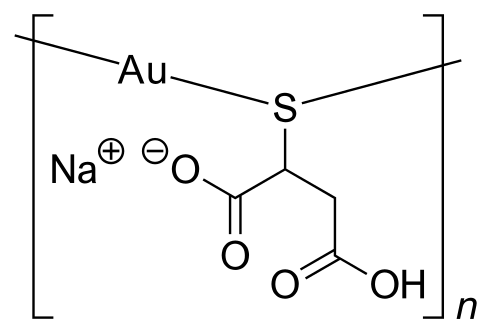
- Disodium aurothiomalate
- Sodium aurothiosulfate (Gold sodium thiosulfate)
- Sodium aurothiomalate (Gold sodium thiomalate) (UK)
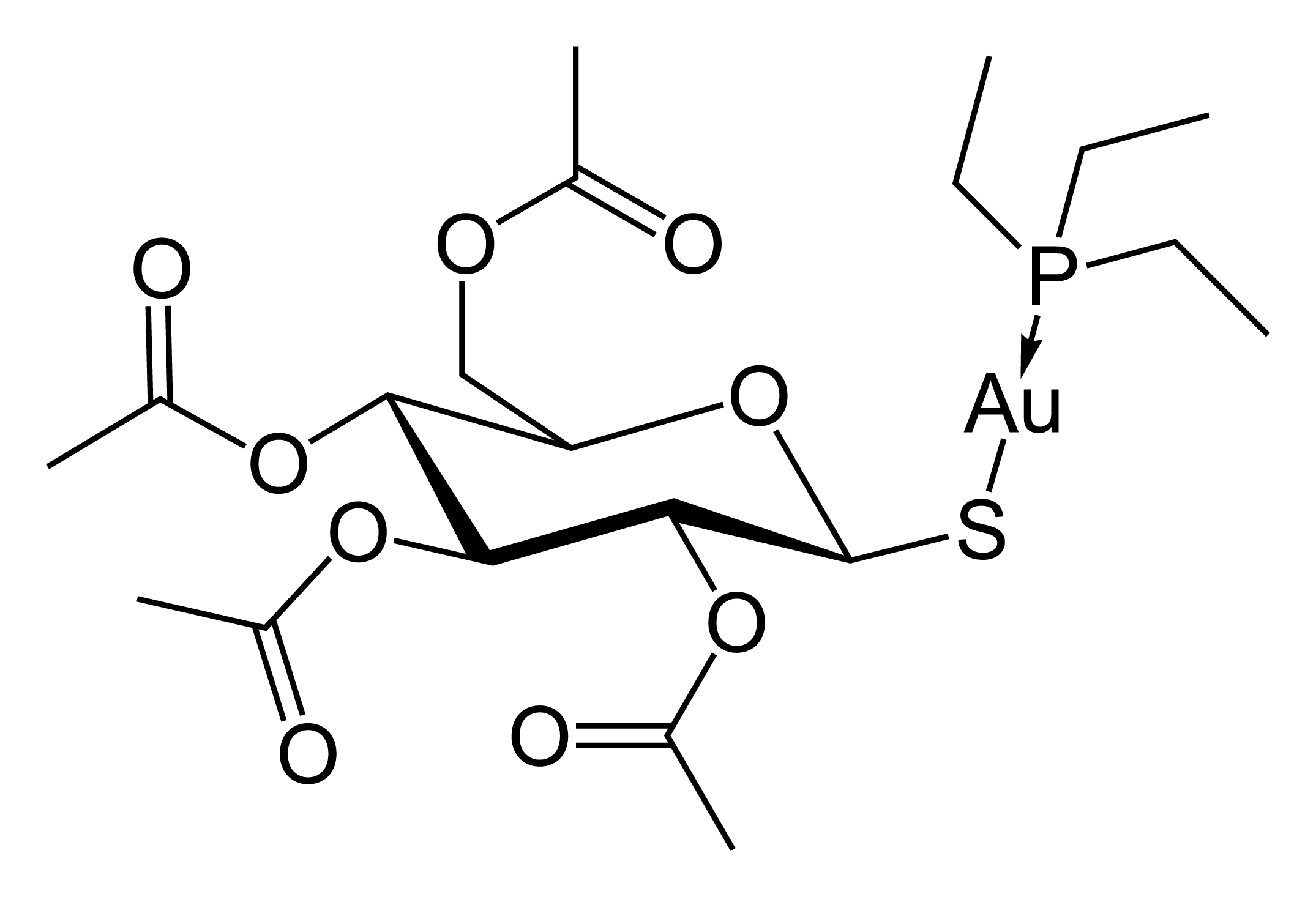
- Auranofin (UK & US)
- Aurothioglucose (Gold thioglucose) (US)
References
References
- (September 1999). "Gold-based therapeutic agents". Chemical Reviews.
- (May 1935). "Rheumatoid arthritis and its treatment with gold salts - results of six years experience.". J Lab Clin Med.
- (April 2011). "Gold nanoparticles in biology and medicine: recent advances and prospects.". Acta naturae.
- (1 September 2007). "Foye's principles of medicinal chemistry". Lippincott Williams & Wilkins.
- "Rheumatoid Arthritis". University of Washington Medicine.
- (2012). "Rheumatoid Arthritis Treatment". Johns Hopkins Medical.
- (2000). "Injectable gold for rheumatoid arthritis". The Cochrane Database of Systematic Reviews.
- (2009). "Chrysiasis: a gold "curse"!". BMJ Case Reports.
- Beck, Richard K.. (2002). "Drug Reference for EMS Providers".
- "Auranofin complete list of warnings, precautions and reactions". Drugs.com.
- "Aurothioglucose Suspension adverse effects". Health Digest.
- "Gold sodium thiomalate (gold)".
This article was imported from Wikipedia and is available under the Creative Commons Attribution-ShareAlike 4.0 License. Content has been adapted to SurfDoc format. Original contributors can be found on the article history page.
Ask Mako anything about Gold-containing drugs — get instant answers, deeper analysis, and related topics.
Research with MakoFree with your Surf account
Create a free account to save articles, ask Mako questions, and organize your research.
Sign up freeThis content may have been generated or modified by AI. CloudSurf Software LLC is not responsible for the accuracy, completeness, or reliability of AI-generated content. Always verify important information from primary sources.
Report