From Surf Wiki (app.surf) — the open knowledge base
Goan Catholics
Catholic ethno-religious community native to Goa, India
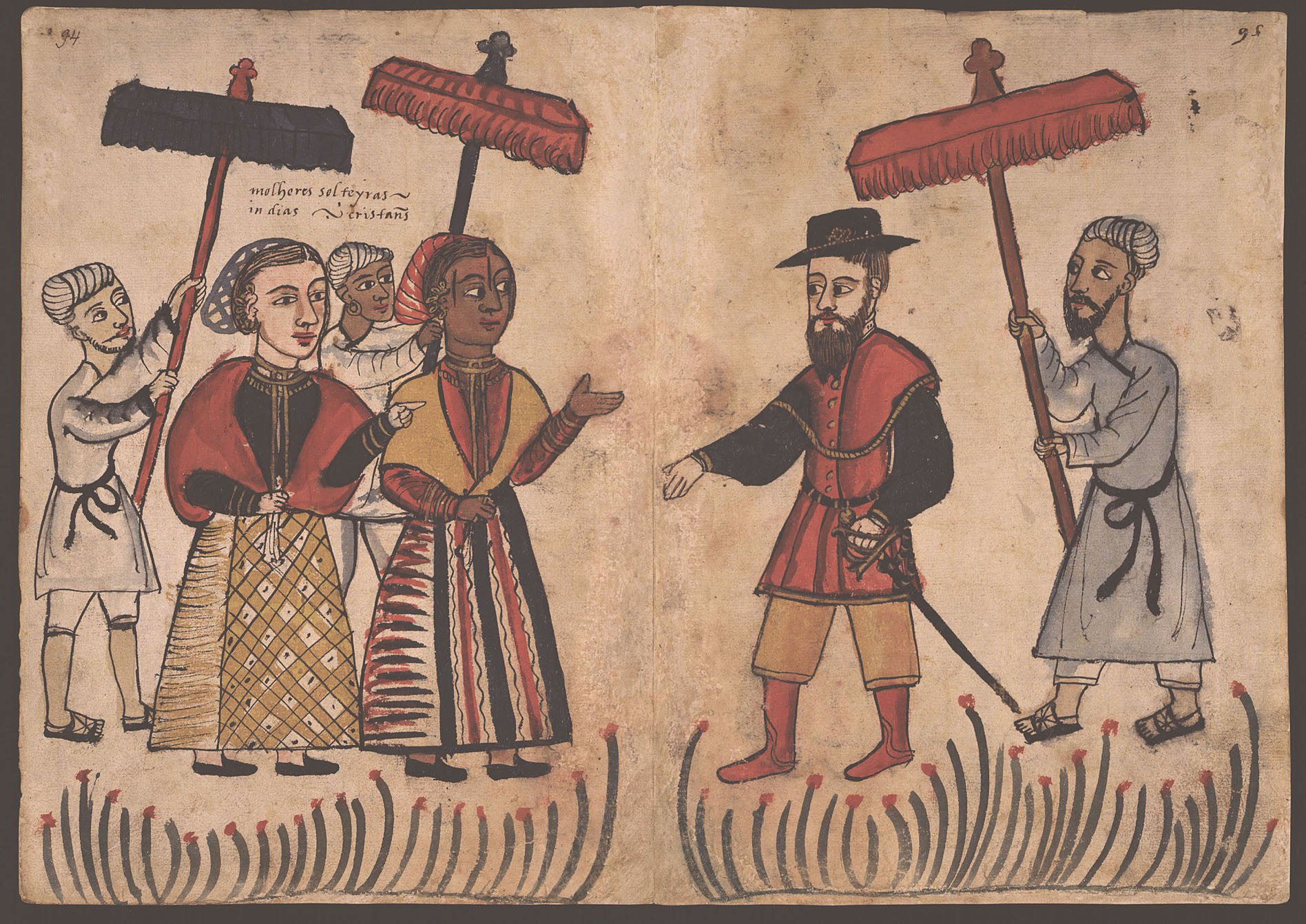
Catholic ethno-religious community native to Goa, India
| Field | Value | |
|---|---|---|
| group | Goan Catholics | |
| langs | Goan Konkani, English, Indo-Portuguese | |
| rels | Catholicism (Latin Rite) | |
| region1 | India India (1954) | |
| pop1 | 1,000,000 | |
| region2 | →Goa (2011) | |
| pop2 | 366,130 | |
| region3 | →Greater Bombay (1960s) | |
| pop3 | ~100,000 | |
| region4 | Portugal Portugal | |
| pop4 | 80,000~100,000 | |
| region5 | Kenya Kenya | |
| region6 | →Nairobi (prior to the 1960s) | |
| pop6 | ~5000 | |
| region7 | Uganda Uganda (1931) | |
| pop7 | ~1124 | |
| region8 | →Kampala (1931) | |
| pop8 | ~500 | |
| region9 | Tanzania Tanzania (1931) | |
| region10 | →Tanganyika (1961–1964) (1931) | |
| pop10 | ~1,722 | |
| region11 | →Dar es Salaam (1993) | |
| pop11 | 700 | |
| region12 | Pakistan Pakistan (1954) | |
| pop12 | ~30,000 | |
| region13 | →Karachi (1954) | |
| pop13 | ~10,000 | |
| region14 | [[File:GCC Flag.svg | 25px]] Persian Gulf countries (2003) |
| pop14 | ~20,000 | |
| region15 | Canada Canada (1999) | |
| pop15 | ~23,000 | |
| region16 | →Ontario (1999) | |
| pop16 | ~16,000 | |
| region17 | United Kingdom | |
| region18 | →London | |
| pop18 | ~6,000 | |
| region19 | →Swindon (2018) | |
| pop19 | ~12,000 | |
| last | Pereira | |
| first | Andrew | |
| date | 27 November 2018 | |
| title | Goans help put life back into London's churches | |
| url | https://timesofindia.indiatimes.com/city/goa/goans-help-put-life-back-into-londons-churches/articleshow/66818111.cms | |
| work | Times News Network | |
| publisher | The Times Group | |
| location | Goa | |
| access-date | 24 October 2019 | |
| related | Kudali Catholics, Karwari Catholics, Mangalorean Catholics, Bombay East Indian Catholics & Damanese people |
"Goa Population Statistics 2011". Census Department of India. United Kingdom | access-date = 24 October 2019
Goan Catholics () are an ethno-religious community adhering to the Latin Rite of the Catholic Church from the Goa state, in the southern part of the Konkan region along the west coast of India. They are ethnic Konkani people and speak the Konkani language.
Missionary activities followed soon after the Portuguese conquest of Goa. Pope Nicholas V had enacted the Papal bull of Romanus Pontifex in AD 1455, according to which the patronage of the Christian faith in the East Indies, was granted to the Portuguese crown.
Their culture is an amalgam of Konkani and Portuguese cultures, with the latter having a more important role because Goa, Daman and Diu had been ruled by Portugal from AD 1510–1961.{{cite book
The Goan Catholic diaspora is concentrated in the Persian Gulf countries; the Lusophone world, especially Portugal, Brazil, Mozambique, and Zanzibar; the European Union countries; and the Anglophone world, especially the United Kingdom, the United States of America, Canada, Australia, and New Zealand. | editor1-last = German | editor1-first = Myna | editor2-last = Banerjee | editor2-first = Padmini
Ethnic identity
Christian adherents to the Catholic Church who originate from the present state of Goa, a region on the west coast of India, and their descendants are generally referred to as Goan Catholics. A majority of Goan Catholics belong to the Konkani ethnicity while a smaller proportion are Luso-Indians. Goan Catholics played a pivotal role in the formation of the state of Goa and in designating their native language Konkani as a scheduled language of India. Diaspora communities in anglophone countries usually speak English as their first language while regarding Konkani as their ancestral language. | access-date = 24 October 2019 Some upper class Catholic families in Goa spoke Portuguese as their primary language prior to 1961. | author-link = Maria Aurora Couto
Portugal took control of Goa in 1510. The Portuguese soon consolidated their power by imposing their own government and culture through intermarriage{{cite book
Due to the distance from Portugal, Goans (like the people of Macau and Timor) had a high level of autonomy, although still a part of Portugal. Goans moved for work to other parts of the Portuguese Empire, and hence it is possible to find people of Goan descent in the Americas, Africa, Europe, as well as other parts of Asia.{{Cite book
A large-scale emigration of Goan Catholics to Bombay (now Mumbai) began in the 1800s, because of better economic opportunities. At that time Bombay was under the British rule and there existed another established Luso-Indian Catholic community; the Bombay East Indians, who were residents of Portuguese Bombay prior to it being granted to the British East India Company in the 17th century. Since the Goan Catholic and East Indian Catholic communities were converted to Christianity by the Portuguese, the British referred to them as "Portuguese Christians". They congregated in the same churches, attended many of the same religious functions, and shared Portuguese surnames and culture. The British favoured the Goan Christians in administrative jobs, due to their proficiency in western language and culture. https://www.persee.fr/doc/luso_1257-0273_2000_num_7_1_1386
History
Main article: History of Goan Catholics
Renaissance and Baroque eras
Main article: Christianisation of Goa
The Portuguese came to India with the ambition of capturing the Asian trade to Europe through the Arab world and by-passing the traditional Silk Route from China to Europe. The Portuguese first reached the west coast of India in 1498 when Vasco da Gama landed at Calicut.{{cite web |access-date=8 July 2008 |url-status=dead |archive-url=https://web.archive.org/web/20080120020120/http://www.bbc.co.uk/history/historic_figures/gama_vasco_da.shtml |archive-date=20 January 2008

In 1534 the Diocese of Goa was created from the Diocese of Funchal to serve as a common diocese for the western coast of India, including Goa and the area in and around Bombay.
The Portuguese built many churches; the most notable are Basilica of Bom Jesus (Basílica of Child Jesus) built during the sixteenth century—a UNESCO World Heritage Site dedicated to the Infant Jesus.The church also holds the embalmed body of St. Francis Xavier.—and the Se Cathedral, the largest church in Asia dedicated to St. Catherine of Alexandria, the construction of which was started in 1562 during the reign of King Dom Sebastião and completed in 1619. It was consecrated in 1640. The Our Lady of the Immaculate Conception Church (Nossa Senhora da Imaculada Conceição Igreja) was built in 1540. The Church and Convent of St. Francis of Assisi (Igreja e Convento de São Francisco de Assis), Church of Lady of Rosary (Igreja da Senhora do Rosário), Church of St. Augustine (Igreja de Santo Agostinho), and St. Michael's Church, Anjuna (Igreja São Miguel em Anjuna), built in 1613, were also erected during the Portuguese reign.
Modern era
Main article: Indian annexation of Goa
In 1787, some Goan Catholic priests, unhappy with the process of promotion within the Church and other discriminatory practices of the Portuguese, organised the unsuccessful Pinto Revolt against the Portuguese.{{cite book |author-link=Joaquim Heliodoro da Cunha Rivara
From the 19th century, Catholic Goans started emigrating to British-run cities in India, especially to Mumbai and Bangalore in the 1920s and 1930s. They also started migrating to Portuguese territories, the United Kingdom, and the United States.
According to the 1909 statistics in the Catholic Encyclopedia, the total Catholic population was 293,628 out of a total population 365,291 (80.33%).{{cite book
On 1 May 1928, the Archdiocese of Goa was renamed and was promoted to the Metropolitan Archdiocese of Goa and Daman (Goa e Damão). It is the oldest diocese in terms of activity in the East, with its origins linked to the arrival of the Portuguese on the Malabar Coast. The Metropolitan Archbishop of Goa and Daman also uses the title of Primate of the Indies or Primate of the East and honorifically receives the title of Patriarch of the East Indies.
After British India gained independence in 1947, the Portuguese government refused to accept Nehru's demand that they hand over Goa to India. On 18 December 1961 India moved in with troops and after intense warfare, the Portuguese administration was forced to surrender. On 30 May 1987 Goa was elevated as India's 25th state.
According to the 2011 census, Christians formed 26.01% of Goa's total population.{{cite news |publication-date = 26 August 2015 |access-date = 6 September 2017 |archive-url = https://web.archive.org/web/20160110201326/http://www.thehindu.com/news/national/religious-communities-census-2011-what-the-numbers-say/article7582284.ece |archive-date = 10 January 2016 |url-status = live
Geographical distribution
.jpg)
According to the 2001 census there were around 359,568 Christians in Goa.{{cite web |access-date=22 December 2008}} Many Goan Catholics live in Mumbai and Bangalore. In the 1960s there were around 100,000 Goan Catholics in Bombay, of which 90,000 were in urban Bombay, and 10,000 in suburban Bombay. Other regions of India which have a small proportion of Goan Catholics are Delhi, Calcutta, Madras, Pune, Ahmednagar, Hyderabad, Nagpur, Nasik, and Ranchi.
Goan Catholics are also found abroad, either as Non-resident Indian and Person of Indian Origin (NRIs), with some people born abroad.{{cite web |access-date=9 April 2011}} They are found in Arab states of the Persian Gulf in the Middle East, including Saudi Arabia, Bahrain, United Arab Emirates, and Kuwait.{{cite web |url=http://www.tehelka.com/story_main19.asp?filename=hub090906Serenading_PhotoFeatures.asp |access-date=13 December 2008 |archive-url=https://web.archive.org/web/20110604122920/http://www.hindu.com/2001/04/22/stories/1322106l.htm |url-status=dead |archive-date=4 June 2011 |access-date=3 August 2009 |access-date=30 October 2008
In 1999 the Goan Overseas Association, the Canorient Christian Association, and other Goan associations estimated that there were around 23,000 Goan Catholics in Canada, out of which 13,000 were in Ontario. During 1954 it was estimated that there were 20,000 Goan Catholics in the Arab states of the Persian Gulf, while 30,000 were living in Pakistan, out of which 10,000 were settled in Karachi. In 1931 it was estimated that there were around 1,772 Goan Catholics in Tanzania of which 700 were in Dar es Salaam. In Uganda during 1931, there were around 1,124 Goan Catholics, out of which 500 were settled in its capital of Kampala. Prior to the 1960s it was estimated that there were around 5,000 Goan Catholics in Nairobi, Kenya. By the 20th century there were around 6,000 Goan Catholics in London, while in 2001, 9,000 were present in Swindon, United Kingdom.
Culture
Main article: Culture of Goan Catholics
Architecture
Main article: Architecture of Goan Catholics

Goan Architecture is heavily influenced by Portuguese styles, a result of being a territory of Portugal for over 450 years. Houses influenced by Indian architecture were inward-looking with small windows and roofed with Mangalore tile. Houses were constructed with walls of wooden planks, mud, laterite brick, or stone.{{cite book
Cuisine
Main article: Goan Catholic cuisine

Coconut, vinegar and spices are common ingredients in most curries. Sorpotel — pork cooked in a spicy sauce — is one of the most popular dishes of the Goan Catholic community. Other popular meat preparations include Cabidela, Xacuti, Choris-Pão (spicy pork sausages stuffed in bread), Vindalho, Roast Maas (spicy braised beef), Mitta Maas (salt pork), and Leitão Assado (roasted piglet). Canja de galinha and Frango à Cafreal are well-known chicken dishes.{{cite web |access-date=26 October 2008 |archive-url=https://web.archive.org/web/20081105041917/http://www.hinduonnet.com/thehindu/mp/2003/03/27/stories/2003032701250300.htm |archive-date=5 November 2008 |url-status=usurped |author-link=Maria de Lourdes Bravo da Costa Rodrigues |url-status=dead |archive-date=27 March 2009 |access-date=9 December 2008

Patoleo (sweet rice cakes steamed in turmeric leaves consisting of a filling of coconut and palm jaggery) are prepared on the Feasts of San Juanv (São João) on 24 June, Maria da Assunção on 15 August, and Konnsachem fest (harvest festival) which occurs across Goa during the month of August. | archive-url = https://archive.today/20130204165207/http://epaper.timesofindia.com/Repository/getFiles.asp?Style=OliveXLib:LowLevelEntityToPrint_TOI&Type=text/html&Locale=english-skin-custom&Path=TOIGO/2008/08/16&ID=Ar00401 | url-status = dead | archive-date = 4 February 2013 | access-date = 16 August 2017 Kuswad (Consoada) is a term used for the sweet delicacies prepared during Christmas which include Bebinca, Dodol, Bathica, Kulkuls, Neureos, and Perada.
Names and surnames
Main article: Goan Catholic names and surnames
Portuguese names, having variants in both Romi Konkani and English, like Mingel (Michael) and Magdu (Magdalene) are common among Goan Catholics. Portuguese surnames (like Lobo, D’Souza, Rodrigues, Fernandes, Pereira Pereira and Pinto) are standard among Goan Catholics because of the Christianisation of Goa during Portuguese rule.
| Goan Catholic variant | English variant | Portuguese variant | Meaning | Gender |
|---|---|---|---|---|
| Balthu | Balthasar | Baltasar | ‘Bel’ is my King | Male |
| Pedru | Peter | Pedro | Rock | Male |
| Kaitan | Cajetan | Caetano | man from ‘Caieta’ | Male |
| Juanv | John | João | God is gracious | Male |
| Bosteanv | Sebastian | Sebastião | Revered | Male |
| Lorso | Lawrence | Lourenço | man from ‘Laurentum’ | Male |
| Mori | Mary | Maria | Beloved | Female |
| Joki | Joachim | Joaquim | raised by ‘YHWH’ | Male |
| Rakel | Rachel | Raquel | Ewe or one with purity | Female |
| Anton | Anthony | António | Flower | Male |
| Jebel | Elizabeth | Isabel | My God is my oath | Female |
| Zuze | Joseph | José | The Lord will add | Male |
| Source: Msgr. S. R. Dalgado's “Grammar of Konkani Language” |
Language and literature
Language
Main article: Konkani language

Goan Catholics speak the Konkani language which is key to the community's identity. | access-date = 24 October 2019 Konkani is an Indo-Aryan language belonging to the Indo-European family of languages, which is spoken predominantly on the west coast of India.{{cite web |url=http://www.sfb632.uni-potsdam.de/conference/posters/D2_Konkani.pdf |access-date=10 February 2008 |url-status=dead |archive-url=https://web.archive.org/web/20080408205720/http://www.sfb632.uni-potsdam.de/conference/posters/D2_Konkani.pdf |archive-date=8 April 2008 |access-date=25 September 2008 |url-status=dead |archive-url=https://web.archive.org/web/20081009164936/http://www.ethnologue.com/show_language.asp?code=gom |archive-date= 9 October 2008 | access-date = 24 October 2019 Portuguese influence can be seen in the dialect's lexicon and syntax. 1,800 Portuguese lexical items are found in the Goan Catholic dialect. The syntactic patterns adopted from Portuguese include mostly word order patterns, such as the placement of the direct and the indirect object and of the adverb after the verb, the placement of the predicate noun after the copula, and the placement of the relative or reduced relative clause after the head noun. There are, however, some transformations as well among these patterns. Such syntactic modification is most evident in this particular dialect. It is observed only in the written word and in formal speech such as sermons. In recent times, more and more periodicals have abandoned the Portuguese syntactic patterns. The dialect is significantly different from the dialect spoken by the Hindu Goans not only with respect to Portuguese influence, but also with respect to grammatical and lexical characteristics.
Literature
Main article: Literature of Goan Catholics
.jpg)
The origin of their literature dates to 1563, when the first Konkani grammar was published by Fr Andre Vaz at St Paulo College at Old Goa. In 1567 the first Konkani-Portuguese dictionary was published by missionary priests at Rachol, Goa.{{cite web |access-date=14 September 2008 |url-status=dead |archive-url=https://web.archive.org/web/20080828171254/http://www.goakonkaniakademi.org/konkaniweb/language-literature.htm |archive-date=28 August 2008 |archive-url=https://web.archive.org/web/20060523025340/http://www.hindu.com/2005/10/27/stories/2005102706790400.htm |url-status=dead |archive-date=23 May 2006 |access-date=9 December 2008 |archive-url=https://web.archive.org/web/20040414024905/http://www.hindu.com/mag/2004/04/04/stories/2004040400140200.htm |url-status=dead |archive-date=14 April 2004 |access-date=4 September 2008 |access-date=18 October 2008 In 2018, Archbishop of Goa and Daman Filipe Neri Ferrao launched the Povitr Pustok, a Konkani Bible app, a mobile phone application software with the entire Konkani Bible text.
Traditions and festivals
Traditions
Many Indian customs and traditions persist among the Goan Catholics, which are more conspicuous during their marriage festivities. Borges, Pereira & Stubbe 2000, p. 307–309
Traditionally, as in other Indian communities, arranged marriages were the norm. Pre-marriage traditions include Soirik (matrimonial alliance), Utor (promise of marriage), Mudi (engagement ceremony), Amontron (wedding invitation), Porcond (bridal shower), Chuddo (glass bangles) ceremony wherein the bride's forearms are adorned with colourful glass bangles of green, yellow, and red which are symbolic of fertility and married life, Saddo (red or pink dress) ceremony of cutting and sewing the bridal dress, the bridegroom's Hair-cutting ritual, and Bhuim jevon (a ritual meal in honour of the ancestors) or Bhikream jevon (a meal for the poor or beggars). Dennem (trousseau) is sent to the groom's house the day before the wedding.
The Ros (anointing) ceremony held on the evening before the wedding involves the parents, relatives, and friends blessing the soon-to-be-wed couple before they begin their married life. | access-date = 23 October 2019 It is conducted at the bride's and bridegroom's respective homes, who along with their bridesmaids and best men are ceremonially bathed with Apros (first extract of coconut milk). The bridegroom's/bride's mother dabs her thumb in coconut oil and anoints her son's/daughter's forehead by placing the sign of the cross on it. Special commemorative songs called Zoti are sung for the occasion. | access-date = 23 October 2019 On the wedding day, the bridal couple receive Besanv (Benediction) ceremoniously from their parents and elders before the families leave their individual homes for the church to celebrate the Resper (Nuptial Mass) which is followed by the wedding reception later in the evening.
Traditions post the reception include Hatant dinvcheak (handing over) the bride solemnly by the father or the guardian of the bride to the groom's family, Shim (boundary) ritual which involves crossing an imaginary boundary created by pouring liquor on the ground as the Vor (bridal party) prepare to leave for the groom's house. After the ritual, one or two relatives from the bride's side formally invite the newlyweds to the bride's home for a celebration the next day. This is known as Apovnnem (invitation) in Konkani and the occasion is called Portovnnem (ceremonial return).
Festivals
Konsachem fest (harvest festival) celebrated on 15 August that involves blessing of new harvests are other Goan Catholic celebrations.
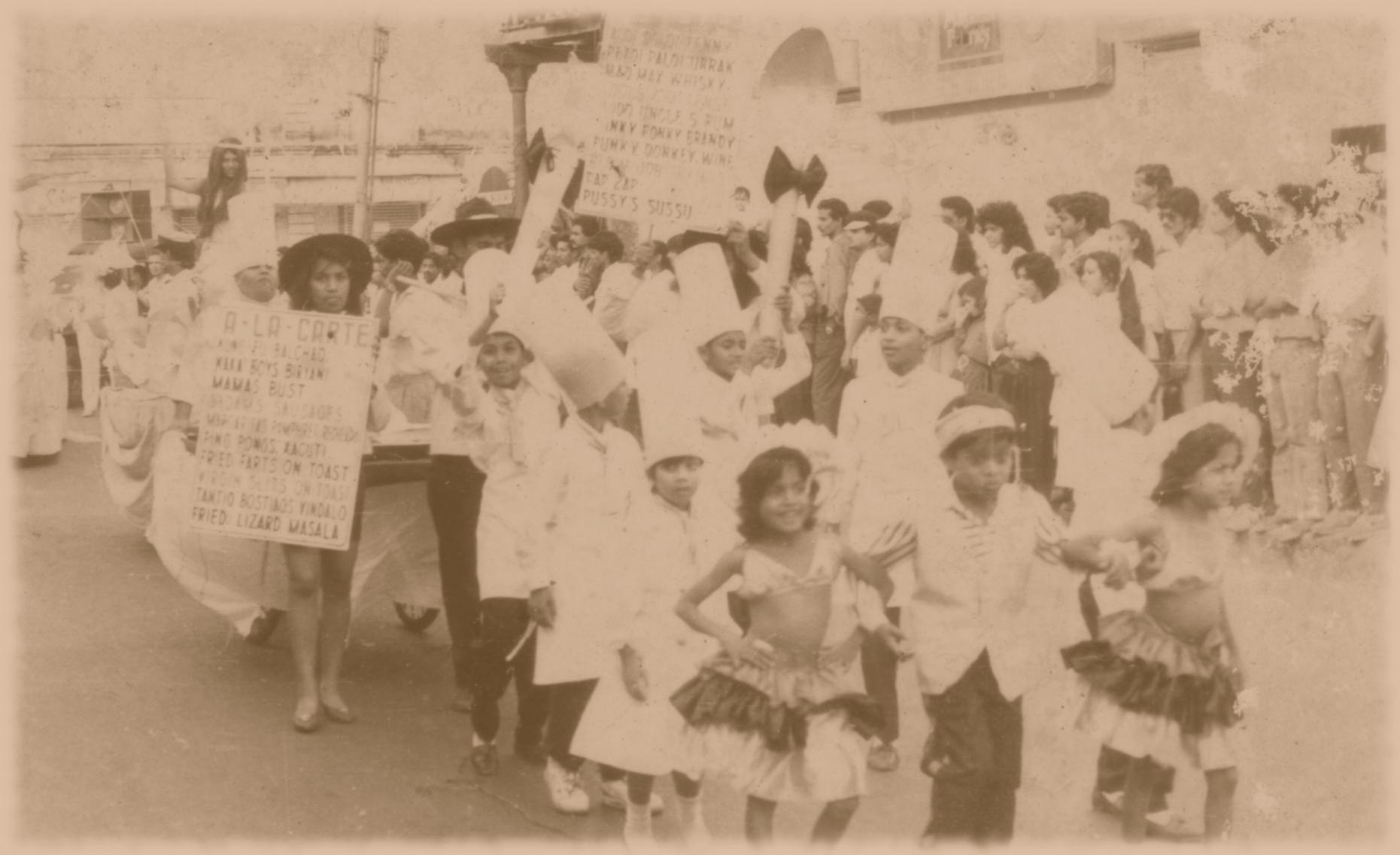
In addition to common Christian festivals like Christmas, Good Friday, and Easter, the community celebrates many other festivals of religious and historical significance. The Zagor (nocturnal vigil in Konkani), mainly celebrated in Siolim, in Bardez taluka, is a festival highlighted by dance, drama and music.{{cite web |archive-url=https://web.archive.org/web/20080828104154/http://infochangeindia.org/200604075527/Human-Rights/Features/Zagor-the-Goan-festival-of-communal-amity-under-threat.html |url-status=usurped |archive-date=28 August 2008 |access-date=9 December 2008 |access-date=2 December 2008 |archive-url=https://web.archive.org/web/20090327231742/http://www.hinduonnet.com/2004/12/04/stories/2004120401182000.htm |archive-date=27 March 2009 |url-status=usurped |archive-url=https://archive.today/20121208205433/http://www.merinews.com/catFull.jsp?articleID=143490 |url-status=dead |archive-date=8 December 2012 |access-date=24 July 2009 |archive-url=https://web.archive.org/web/20190404155031/https://www.heraldgoa.in/Cafe/The-dawn-of-Viva-Carnaval-in-Goa/143320.html |archive-date=4 April 2019
Costumes and ornaments
In the past, Goan Catholic women wore a hol, a white sheet over their saris, while going to Church.
In the early period of Portuguese rule, Goan Catholic women were married in whites saris (hol) and changed into a red dress or sari, known as saddo, at home. Women of the upper strata wore the Fota-Kimao after the Church ceremony. Fota was a blouse made of red velvet and satin with a black border and embroidered with gold thread. Accessories used along with the fota included a variety of jewellery worn on the head, ears, neck, and arms. The fator was an ornament that consisted of a green stone between two corals held by double chains. Together with the fator, women wore a set of five intricate chains known as contti, and other chains. Women wore bangles known as nille with matching carap on their ears. They also wore few small chains from the ear to the head, combs made of gold (dantoni), silver, or tortoise shell, and rings on every finger. During the later period of Portuguese rule, women got married in Western clothes. The Cordao (wedding necklace) was a necklace with two black-beaded chains reminiscent of the Hindu Mangalsutra, interspersed with roughly twenty gold coins, which formed a gold pendant, often in the shape of Jesus or the cross. A widow had to wear black clothes for the rest of her life and was not allowed to wear ornaments.
Society

Goan Catholics retained the same caste system which their ancestors had followed. A village in Goa was known as Ganv, its freeholder was the Ganvkar, and Ganvkari included the Ganvkars' village associations and co-operatives. Village communities were known as Ganvponn, which the Portuguese referred to as Comunidades.
The mass was celebrated in Latin; the Homily was delivered to the congregation in Konkani.
Caste
Native Catholics in rural Goa retained their former Hindu castes. The Bamonns (the Konkani word for Brahmins) were members of the Hindu priestly caste. Brahmin sub-castes (such as the Goud Saraswat Brahmins, the Padyes, the Daivadnyas), the goldsmiths and some merchants were lumped into the Christian caste of Bamonn.
The Chardos (the Konkani word for Kshatriyas) were converts from the Kshatriya (military/ royal class) caste, and included members from the Vaishya Vani caste (merchant class). Those Vaishyas who were not incorporated into the Chardo caste were called Gauddos, and formed the fourth group. The artisan converts formed the third-biggest group and were known as Sudirs (labour class). The Dalits or "Untouchables" who converted to Christianity became Mahars and Chamars, who formed the fifth group. They were later merged to the Sudirs. The Christian converts of the aboriginal stock known as Gavddis were termed Kunbi. Although they still observe the caste system, they consider it the unhappiest heritage of their pre-Christian past.
Occupation
After conversion, the most popular occupation of Goan Catholic men was that of sailor. Others served as government officials for the Portuguese. Goan Catholics also became doctors, architects, lawyers and businessmen. Agriculture was mainly done by rural women because they were skilled farmers. Rural men practised carpentry and other artisanal professions, constructing churches and other structures under Portuguese supervision. In the late seventeenth century, many Goan Catholic women had received education and also became employed as teachers or feitoria workers. Other crafts and industries were nonexistent.
Performing arts
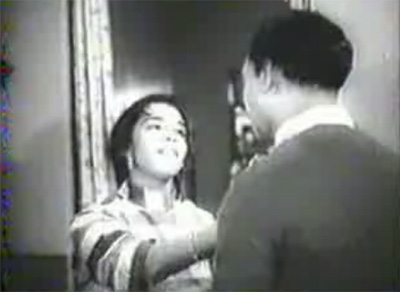
On 24 April 1950, Mogacho Aunddo (Desire of Love), the first Konkani film by Al Jerry Braganza, was released at Mapusa, Goa.{{cite web |access-date=10 December 2008 |access-date=9 December 2008 |access-date=10 December 2008 |archive-url=https://web.archive.org/web/20090327231752/http://www.hinduonnet.com/mp/2002/12/30/stories/2002123001420400.htm |archive-date=27 March 2009 |url-status=usurped
The Konkani hymn Asli Mata Dukhest, which was translated into Konkani from the Latin hymn Stabat Mater, is sung during Lent. Jocachim Miranda, a Goan Catholic priest, composed Riglo Jezu Molliant (Jesus entered the Garden of Gethsemene) during his Canara mission. Diptivonti, Sulokinni, an eighteenth-century Konkani hymn, was performed at a concert held in the Holy Spirit Church, Margao, Goa. Other hymns composed by Goan Catholics include Dona Barrete's Papeanchi Saratinni (Sinners Repent), Carlos Jrindade Dias' Sam Jose Bogta Bagvionta, and Fr. Pascal Baylon Dias' San Francisco Xaveria. Konkani pop music became popular after Indian Independence. Chris Perry and Lorna Cordeiro are known for the Bebdo (Drunkard) in 1976 and Pisso (Mad) in the 1970s, while Frank Fernand's Konkani ballad Claudia from 1966 is popular.
The Mando, a contemporary form of dance music, evolved in Salcette in the first half of the nineteenth century out of wedding music, specifically the Ovi. The songs in this style are serene and sedate, generally a monologue in the Bramhin Konkani dialects of the South Goan villages of Loutolim, Raia, Curtorim, and Benaulim. They are traditionally sung during the Shim (bridal departure) ceremony. Early composers of the Mando were Ligorio de Costa of Courtarim (1851–1919) and Carlos Trindade Dias. Deknni is a semi-classical dance form. One woman starts the dance and is later accompanied by other dancers. The Mussoll (pestle dance), believed to be first performed by the Kshatriyas of Chandor, commemorates the victory of King Harihara II (son of King Bukka I of the Vijaynagar Empire) over the Chola Empire at Chandrapur fortification in the fourteenth century. Other dances are the Portuguese Corridinho and Marcha. Dulpod is dance music with a quick rhythm and themes from everyday Goan life. Fell is a music genre performed by men and women during the Goa Carnival. Other dances performed at the Goan Carnival are Fulwali, Nistekaram, Vauradi, and Kunbi. The Ghumot is a musical instrument played, especially during weddings, and is used while performing a Mando.{{cite web |access-date=26 October 2008}} The instrument has the form of an earthen pot that is open at both sides. One end is covered with the skin of some wild animal, and the other is left open.
Konkani Plays, known as ‘Tiatr’ (theatre), a form of classic stage performance with live singing and acting, were written and staged in Goa. The form evolved in the 20th century with pioneer tiatrists such as Jao Agostinho Fernandes (1871–1941).{{cite news |access-date=14 December 2008 |access-date=5 August 2009 |archive-url=https://web.archive.org/web/20110604122947/http://www.hindu.com/2007/03/13/stories/2007031308170500.htm |url-status=dead |archive-date=4 June 2011 |access-date=1 December 2008
Ai mhojem kalliz rê fapsota. Oh! my heart begins to fear (Repeat previous two lines)
Dispediru korchea vellar, At this moment of saying farewell,
Ho sonvsar naka-so disota. In this world I no longer wish to dwell. (Repeat previous two lines)
Goan Catholics have also played an important role in Bollywood music. (See Goans in Hindi film music composition)
Organisations
Goenkaranchi Ekvot is a registered organisation of Goan Catholics residing in Delhi.{{cite web |archive-url=https://archive.today/20130209213756/http://groups.yahoo.com/group/gulf-goans/message/1021 |url-status=dead |archive-date=9 February 2013 |access-date=11 September 2008}} In Bangalore, associations such as the Karnataka Goan Association serve the community. The Kuwait Konknni Kendr is a well-known Goan Catholic organisation in Kuwait.{{cite web |access-date = 11 September 2008 |url-status = dead |archive-url = https://web.archive.org/web/20080808135313/http://www.goacom.com/culture/konkani/kendr.html |archive-date = 8 August 2008}} The Goan Overseas Association in Toronto,{{cite web |access-date=11 September 2008}} Indian Catholic Association of Central Texas, the Indo-Pakistani Christian Association, and the Canorient Christian Association are popular organisations in North America.{{cite web |access-date=6 December 2008}} In the United Kingdom, Goan Voice UK,{{cite web |access-date=6 December 2008}} the Young London Goan Society (YLGS),{{cite web |access-date=22 May 2012}} Goan Community Association, and Siolim Association, based in London, are popular organisations.{{cite web |access-date=6 December 2008}} In the Middle East, the Goan Community of Oman is well known.{{cite web |access-date=30 December 2008 |archive-date=11 April 2009 |archive-url=https://web.archive.org/web/20090411183156/http://www.goansinoman.com/about_the_gco.htm |url-status=dead
Notable Goan Catholics
| Goan Catholics | Notes | ||
|---|---|---|---|
| Vincent Alvares | Medical practitioner and Chemist of John V of Portugal | ||
| Adeodato Barreto | Poet and writer | ||
| Abade Faria | Priest and hypnotist{{cite news | ||
| Teresa Albuquerque | Historian | ||
| Alfred Rose | Singer, Tiatrist | ||
| Jaime Valfredo Rangel | Founder of Tipografia Rangel, pioneer of media and tiatr | ||
| Bruno Coutinho | Footballer{{cite web | ||
| Charles Correa | Architect | ||
| Evarist Pinto | Archbishop of Karachi{{cite news | ||
| Francisco Luís Gomes | Physician, politician, writer, historian, and economist | ||
| Ivan Dias | Archbishop of Bombay from 8 November 1996 – 20 May 2006, Prefect of Congregation for the Evangelization of Peoples, Rome{{cite news | ||
| Keith Vaz | British Labour Party politician, Member of Parliament for Leicester East{{cite web | ||
| Valerie Vaz | British Labour Party politician, Member of Parliament for Walsall South | ||
| Oswald Gracias | Cardinal, Archbishop of Mumbai{{cite news | ||
| Lorna Cordeiro | Singer and tiatrist{{cite news | ||
| José Gerson da Cunha | Vaz | 1997 | p=118}} |
| Froilano de Mello | Microbiologist, medical scientist, professor, author and independent MP in the Portuguese parliament{{cite web | ||
| Wallis Mathias | Cricketer{{cite news | ||
| Anthony Mascarenhas | Journalist{{cite news | ||
| Jerry Pinto | Writer | ||
| Patricia Rozario | Soprano{{cite web | ||
| José Vaz | Missionary, Patron Saint of Sri Lanka |
Citations
References
- {{cite conference |access-date = 3 August 2009 |url-status = dead |archive-url = https://web.archive.org/web/20111008075400/http://goacom.com/culture/religion/gch/GoanCatholicHeritage.doc |archive-date = 8 October 2011
- {{cite book |access-date=5 August 2009
- {{cite conference |author-link = Teotonio R de Souza |access-date = 3 August 2009
- {{cite book
- {{cite book |editor1-last=Fincher |editor1-first=Ruth |editor2-last=Jacobs |editor2-first=Jane Margaret |access-date=17 August 2009
- {{cite book |editor1-last=Gulzar |editor2-last=Nihalani |editor2-first=Govind |editor3-last=Chatterjee |editor3-first=Saibal |access-date=5 August 2009
- {{cite book |access-date=7 January 2009
- {{cite book |access-date=20 September 2008
- {{cite book |access-date=10 December 2008
- {{cite book
- {{Cite book |url-access = registration |access-date = 9 March 2010
- {{Cite book |access-date = 9 March 2010
- {{cite book
- {{cite book |access-date=22 January 2009
- {{cite book |access-date=30 April 2009
- {{cite book
- {{cite book |author-link=Robert Kerr (writer) |chapter-url=http://www.columbia.edu/itc/mealac/pritchett/00generallinks/kerr/vol06chap01sect05.html |access-date=5 January 2008
- {{cite book |access-date=16 January 2009
- {{cite book |access-date=3 December 2008
- {{cite book |access-date = 23 December 2008 |url-status = dead |archive-url = https://web.archive.org/web/20081121204702/http://www.goatoronto.com/images/stories/stock/catholic-goan-research-paper.pdf |archive-date = 21 November 2008
- {{Cite book
- {{cite book |access-date=28 November 2008
- {{cite book
- {{cite book |access-date=3 December 2008
- {{Cite book |access-date=24 August 2008
- {{Cite book
- {{cite book |access-date=15 September 2008
- {{cite book |editor-last=Noronha |editor-first=Frederick |access-date=16 December 2008
- {{cite journal
- {{Cite web |access-date=17 August 2009 |archive-date=9 August 2020 |archive-url=https://web.archive.org/web/20200809051532/http://www.portcities.org.uk/london/server/show/ConNarrative.50/The-Goan-community-of-London.html |url-status=dead
- {{cite book |access-date=5 August 2009
- {{Cite book
- {{cite book |access-date=7 June 2009
- {{cite book
- {{cite book
- {{cite book |editor-first=Paul R. |editor-last=Magocsi |access-date=11 September 2008
- {{cite book
- {{cite book |access-date=6 January 2009
- {{cite book |access-date=29 August 2008
- {{cite book
- {{cite book
- {{cite book
- {{cite book
References
- {{harvnb. de Souza. 1999
- {{harvnb. Jacobsen. Raj. 2008
- {{harvnb. Baptista. 1967
- {{harvnb. Larsen. 1998
- {{harvnb. Kerr. 1812
- {{harvnb. George. 1992
- {{harvnb. Daus. 1983
- {{CathEncy
- "Basilica of Bom Jesus (Goa)". [[National Informatics Centre]] (NIC).
- "Sé Cathedral". [[National Informatics Centre]] (NIC).
- {{harvnb. Saldhana. 2007
- "Churches and Convents of Goa". [[National Informatics Centre]] (NIC).
- {{harvnb. Harding. 2003
- {{harvnb. Larsen. 1998
- {{harvnb. Saldhana. 2007
- {{harvnb. Larsen. 1998
- {{harvnb. Dias. 2007
- {{harvnb. Baptista. 1967
- {{harvnb. Afonso. 1991
- Sonia Faleiro. "Karachi Vignettes". [[India Today]].
- {{harvnb. Magocsi. 1999
- {{harvnb. Kurzon. 2003
- {{harvnb. Campbell. Rew. 1999
- {{harvnb. Fincher. Jacobs. 1998
- {{harvnb. Thomas. Scott. 1949
- {{harvnb. Thomas. Scott. 1949
- {{harvnb. Zenner. 1991
- {{harvnb. PortCities London. 2009
- {{harvnb. Norton. 2007
- Howard Hillman. "Goa Cuisine". HQP / Hillman Quality Publications.
- {{harvnb. Maffei. 2001
- {{harvnb. Saradesāya. 2000
- {{harvnb. Jain. Cardona. 2003
- {{harvnb. Abbi. Gupta. Kidwai. 1997
- {{harvnb. Abbi. Gupta. Kidwai. 1997
- {{harvnb. Abbi. Gupta. Kidwai. 1997
- {{harvnb. Abbi. Gupta. Kidwai. 1997
- {{harvnb. Abbi. Gupta. Kidwai. 1997
- {{harvnb. Abbi. Gupta. Kidwai. 1997
- {{harvnb. Lal. 1992
- {{harvnb. Saradesāya. 2000
- {{harvnb. Noronha. 2008
- {{harvnb. Noronha. 2008
- "Moreno de Souza SJ 1923–2007". Goa Jesuits.in.
- {{harvnb. Saradesāya. 2000
- {{harvnb. Saradesāya. 2000
- {{harvnb. George. 1992
- Gomes 1987, p. 126
- Bhatt & Bhargava 2006, p. 213
- Gomes 1987, pp. 128, 411
- Gajarani 2004, p. [https://books.google.com/books?id=sP091bSPZ04C&q=mudi 94]
- da costa 2004, p. [https://books.google.com/books?id=vUzp68cpXuUC&dq=porcondo&pg=PA94 157]
- Bhatt & Bhargava 2006, p. 214
- Michigan State University 1983, p. [https://books.google.com/books?id=al5OAAAAYAAJ&q=chuddo+ceremony+goa 160]
- da Silva Gracias 1996, p. [https://archive.org/details/kaleidoscopeofwo0000silv/page/56 56]
- Bhatt & Bhargava 2006, p. 215
- Gomes 1987, p. 137
- Gajarani 2004, p. [https://books.google.com/books?id=sP091bSPZ04C&q=hair+cutting+ritual 97–98]
- Thapar 2004, p. [https://books.google.com/books?id=Eo4MAQAAMAAJ&q=bhuim+jevon 1032]
- Gomes 1087, p. [https://books.google.com/books?id=CHsiAAAAMAAJ&q=bhikream+jevon 140]
- De Sousa 2007, p. 57
- da Silva Gracias 1996, p. [https://archive.org/details/kaleidoscopeofwo0000silv/page/62 62]
- Goa University 2001, p. [https://books.google.com/books?id=M15uAAAAMAAJ&q=ros+goa 188]
- Bhatt & Bhargava 2006, p. 216
- de Braganza Pereira 2008, p. [https://books.google.com/books?id=MghtAwAAQBAJ&dq=Hatant+dinvcheak&pg=PT388 Marriage]
- Gajrani 2004, pp. [https://books.google.com/books?id=sP091bSPZ04C&q=shim+wedding+ceremony 99–100]
- "Konsachem fest". Department of tourism, Goa.
- (7 April 2018). "Mapusa's Milagres feast on April 16". [[The Times of India]].
- {{harvnb. da Silva Gracias. 1994
- {{harvnb. da Silva Gracias. 1994
- {{harvnb. da Silva Gracias. 1996
- {{harvnb. da Silva Gracias. 1996
- {{harvnb. da Silva Gracias. 1996
- {{harvnb. Larsen. 1998
- {{harvnb. da Silva Gracias. 1996
- {{harvnb. da Silva Gracias. 1996
- Gracias, Radharao F.. (26 July 2023). "Caste and Christianity". OHeraldo, Goa.
- {{harvnb. Dias. 2007
- {{harvnb. Buday. 2000
- {{harvnb. Gajrani. 2004
- De Souza, Teotonio R.. (1 January 1990). "Goa Through the Ages: An Economic History". Concept Publishing Company.
- {{harvnb. Rodrigues. 2009
- (18 August 2009). "A Taste of Classical Music". [[Navhind Times]].
- {{harvnb. George. 1992
- {{harvnb. Ayyappapanicker. 1997
- {{Harvnb. Rodrigues. 2009
- {{Harvnb. Rodrigues. 2009
- {{harvnb. Rodrigues. 2009
- {{harvnb. Porter. Rice. Goertzen. 1999
- {{harvnb. Larsen. 1998
- {{harvnb. Mohanty. 2006
- {{harvnb. Porter. Rice. Goertzen. 1999
- {{harvnb. Mohanty. 2006
- Pereira, Renato. "GRAF's 'Gõycho Karnaval' Dazzles Mumbaikars". The Secular Citizen.
- {{harvnb. Naimpalli. 2005
- {{harvnb. Rodrigues. 2009
- "Goan flavour". [[Deccan Herald]].
- Gomes Catão, Francisco Xavier. (1962). "The Island of Chorão (A Historical Sketch)".
- {{harvnb. Prabhu. 1967
- AIFF. "AIFF Award winner of the year – Men". All India Football Federation.
- (19 December 2011). "Goa's highest civilian award to Charles Correa". [[The Times of India]].
- {{harvnb. Vaz. 1997
- "Walsall South parliamentary constituency - Election 2017". BBC News.
- {{harvnb. Vaz. 1997
This article was imported from Wikipedia and is available under the Creative Commons Attribution-ShareAlike 4.0 License. Content has been adapted to SurfDoc format. Original contributors can be found on the article history page.
Ask Mako anything about Goan Catholics — get instant answers, deeper analysis, and related topics.
Research with MakoFree with your Surf account
Create a free account to save articles, ask Mako questions, and organize your research.
Sign up freeThis content may have been generated or modified by AI. CloudSurf Software LLC is not responsible for the accuracy, completeness, or reliability of AI-generated content. Always verify important information from primary sources.
Report