From Surf Wiki (app.surf) — the open knowledge base
Global city
City important to the world economy
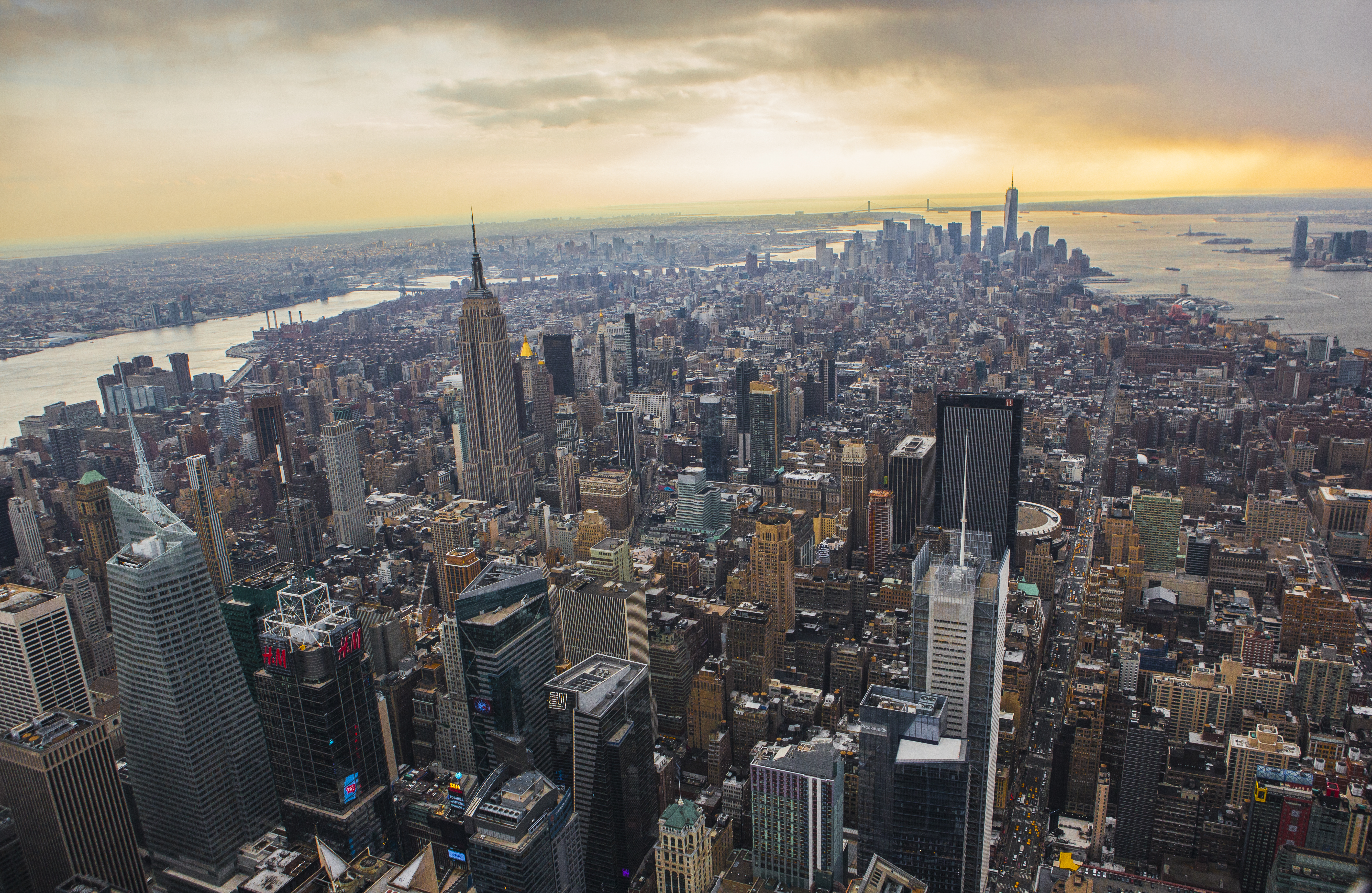
City important to the world economy
In order to uphold WP:NPOV, any ranking of cities of comparison between cities included in this article must be referenced (WP:NOR), by a reliable source (WP:VERIFY), and not simply reflect or advertise individual users' opinions (WP:NOT).
A global city (also known as a power city, world city, alpha city, or world center) is a city that serves as a primary node in the global economic network. The concept originates from geography and urban studies, based on the thesis that globalization has created a hierarchy of strategic geographic locations with varying degrees of influence over finance, trade, and culture worldwide. The global city represents the most complex and significant hub within the international system, characterized by links binding it to other cities that have direct, tangible effects on global socioeconomic affairs.
The criteria of a global city vary depending on the source. Common features include a high degree of urban development, a large population, the presence of major multinational companies, a significant and globalized financial sector, a well-developed and internationally linked transportation infrastructure, local or national economic dominance, high quality educational and research institutions, and a globally influential output of ideas, innovations, or cultural products. Global city rankings are numerous. New York City, London, Tokyo, and Paris are the most commonly mentioned.
Origin and terminology
The term global city was popularized by sociologist Saskia Sassen in her 1991 book, The Global City: New York, London, Tokyo. Before then, other terms were used for urban centers with roughly the same features. The term 'world city', meaning a city heavily involved in global trade, appeared in a May 1886 description of Liverpool, by The Illustrated London News; British sociologist and geographer Patrick Geddes used the term in 1915. The term 'megacity' entered common use in the late 19th or early 20th century, the earliest known example being a publication by the University of Texas in 1904. In the 21st century, the terms are usually focused on a city's financial power and high technology infrastructure.
Criteria
Competing groups have devised competing means to classify and rank world cities and to distinguish them from other cities. Although there is a consensus on the leading world cities, the chosen criteria affect which other cities are included. Selection criteria may be based on a yardstick value (e.g., if the producer-service sector is the largest sector then city X is a world city) or on an imminent determination (if the producer-service sector of city X is greater than the combined producer-service sectors of N other cities then city X is a world city.) Although criteria are variable and fluid, typical characteristics of world cities include:
- The most prominent criterion has been providing a variety of international financial services, notably in finance, insurance, real estate, banking, accountancy, and marketing; and their amalgamation of financial headquarters, a stock exchange, and other major financial institutions,
- Headquarters of numerous multinational corporations,
- Domination of the trade and economy of a large surrounding area,
- Major manufacturing centers with port and container facilities,
- Considerable decision-making power daily and at a global level,
- Centers of new ideas and innovation in business, economics, and culture,
- Centers of digital and other media and communications for global networks,
- The dominance of the national region with great international significance,
- The high percentage of residents employed in the services sector and information sector,
- High-quality educational institutions, including renowned universities and research facilities; and attracting international student attendance,
- Multi-functional infrastructure offering some of the best legal, medical, and entertainment facilities in the country,
- High diversity in language, culture, religion, and ideologies.
Rankings
GaWC World Cities
Main article: Globalization and World Cities Research Network
Primarily concerned with what it calls the "advanced producer services" of accountancy, advertising, banking/finance, and law, the cities in the top two classifications in the 2024 edition are:
Alpha ++
- GBR London
- USA New York City
Alpha +
- CHN Beijing
- UAE Dubai
- HKG Hong Kong
- FRA Paris
- CHN Shanghai
- SGP Singapore
- AUS Sydney
- JPN Tokyo
Global Cities Index (Kearney)
In 2008, the American journal Foreign Policy, working with the consulting firm A.T. Kearney and the Chicago Council on Global Affairs, published a ranking of global cities based on consultation with Saskia Sassen, Witold Rybczynski, and others. The ranking is based on 27 metrics across five dimensions: business activity, human capital, information exchange, cultural experience, and political engagement. The top ranked cities in 2025 are:
- USA New York City
- GBR London
- FRA Paris
- JPN Tokyo
- SGP Singapore
- CHN Beijing
- HKG Hong Kong
- CHN Shanghai
- USA Los Angeles
- USA Chicago
Global Cities Index (Oxford Economics)
Advisory firm Oxford Economics ranks the world's largest 1,000 cities based on 27 indicators across five categories (economics, human capital, quality of life, environment, and governance) with more weight on economic factors. The top ranked cities in 2025 are:
- USA New York City
- GBR London
- FRA Paris
- USA San Jose
- USA Seattle
- AUS Melbourne
- AUS Sydney
- USA Boston
- JPN Tokyo
- USA San Francisco
Global Power City Index
The Tokyo-based Institute for Urban Strategies at The Mori Memorial Foundation first published a study of global cities in 2008. They are ranked in six categories: economy, research and development, cultural interaction, livability, environment, and accessibility. The top 10 cities in 2025 are:
- GBR London
- JPN Tokyo
- USA New York City
- FRA Paris
- SGP Singapore
- KOR Seoul
- NLD Amsterdam
- CHN Shanghai
- UAE Dubai
- GER Berlin
World's Best Cities ranking
Consultancy firm Resonance publishes the World's Best Cities ranking. They are ranked in three categories: livability, lovability and prosperity, each of them using different factors. The top 10 cities in 2026 are:
- GBR London
- USA New York City
- FRA Paris
- JPN Tokyo
- SPA Madrid
- SGP Singapore
- ITA Rome
- UAE Dubai
- GER Berlin
- SPA Barcelona
Global Financial Centres Index
The 2025 ranking was:
- USA New York City
- GBR London
- HKG Hong Kong
- SIN Singapore
- USA San Francisco
- USA Chicago
- USA Los Angeles
- CHN Shanghai
- CHN Shenzhen
- KOR Seoul
References
References
- (2015). "Human diffusion and city influence". [[Journal of the Royal Society Interface]].
- (2012). "The Wiley-Blackwell Encyclopedia of Globalization".
- (2017). "International Encyclopedia of Geography".
- (July 2001). "The global city: strategic site/new frontier".
- "global city".
- (2 April 2019). "Decoding City Performance".
- "Struggling Giants". University of Minnesota Press.
- (2004). "Global cities". Oxford University Press.
- Sassen, Saskia. ''[http://pup.princeton.edu/titles/6943.html The Global City: New York, London, Tokyo]''. 1991. [[Princeton University Press]]. {{ISBN. 0-691-07063-6. {{webarchive. link. (16 March 2015.)
- (18 December 2009). "The Empire in One City? Liverpool's Inconvenient Imperial Past". Reviews in History.
- Doel, M., & Hubbard, P., (2002), "Taking World Cities Literally: Marketing the City in a Global Space of flows", ''City'', vol. 6, no. 3, pp. 351–368. Subscription required.
- (1994). "Hemisfile: Perspectives on Political and Economic Trends in the Americas". Institute of the Americas.
- (15 February 2015). "Asian Cities Pay Hidden Price for Global Status". The Diplomat.
- (14 August 2014). "The World's Most Influential Cities". Forbes.
- "What are the characteristics of world cities and megacities, and how has their distribution changed since 1950? – HBK Portal".
- [http://www.lboro.ac.uk/gawc/rb/rb5.html GaWC Research Bulletin 5] {{Webarchive. link. (8 August 2011 , GaWC, [[Loughborough University]], 28 July 1999)
- Pashley, Rosemary. "HSC Geography". Pascal Press, 2000, p.164
- J.V. Beaverstock, [http://www.lboro.ac.uk/gawc/rb/rb179.html World City Networks 'From Below'] {{Webarchive. link. (8 March 2006, GaWC, Loughborough University, 29 September 2010)
- K. O'Connor, [http://www.lboro.ac.uk/gawc/rb/rb161.html International Students and Global Cities] {{Webarchive. link. (5 February 2006 , GaWC, Loughborough University, 17 February 2005)
- "World Cities 2024".
- "2012 Global Cities Index and Emerging Cities Outlook".
- (21 October 2008). "The 2008 Global Cities Index". [[Foreign Policy]].
- "Read @ATKearney: Una Cuestión de Talento: Cómo el Capital Humano Determinará los Próximos Líderes Mundiales".
- "R2025 Global Cities Report: Accelerating through volatility".
- Kelly, Liv. (2025-05-21). "Global Cities Index 2025: Which cities topped the ranking this year?".
- "Global Power City Index 2025".
- "Resonance: World's Best Cities".
This article was imported from Wikipedia and is available under the Creative Commons Attribution-ShareAlike 4.0 License. Content has been adapted to SurfDoc format. Original contributors can be found on the article history page.
Ask Mako anything about Global city — get instant answers, deeper analysis, and related topics.
Research with MakoFree with your Surf account
Create a free account to save articles, ask Mako questions, and organize your research.
Sign up freeThis content may have been generated or modified by AI. CloudSurf Software LLC is not responsible for the accuracy, completeness, or reliability of AI-generated content. Always verify important information from primary sources.
Report