From Surf Wiki (app.surf) — the open knowledge base
Glass bottle
Narrow-necked container
Narrow-necked container

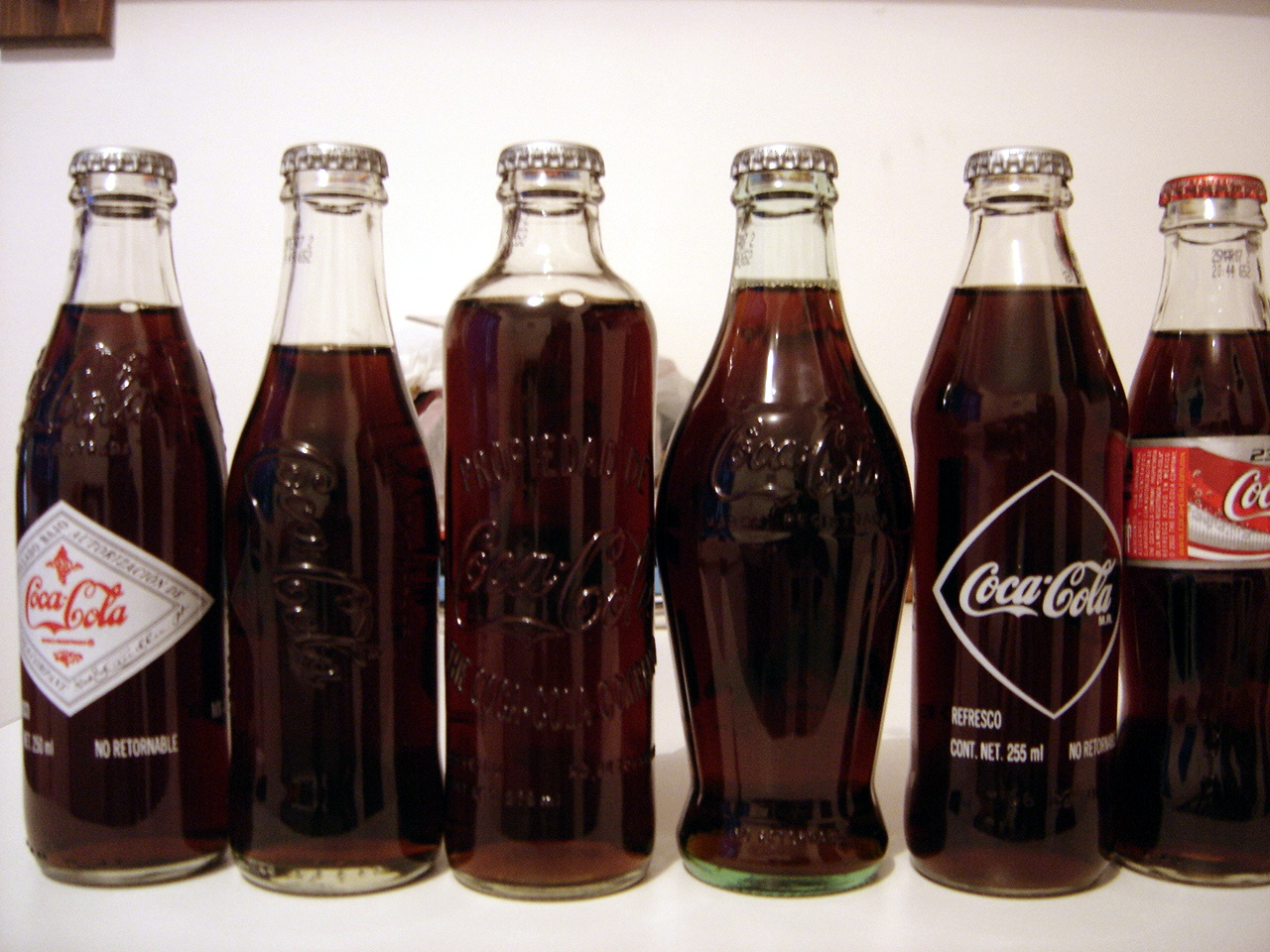
Common uses for bottles made from glass include food condiments, soda, liquor, cosmetics, pickling and preservatives; they are occasionally also notably used for the informal distribution of notes. A glass bottle can vary in size considerably, but are most commonly found in sizes ranging between about 200 millilitres and 1.5 litres.
History
_(cropped).jpg)
Glass bottles and glass jars are found in many households worldwide. The first glass bottles were produced in Mesopotamia around 1500 B.C., and in the Roman Empire in around 1 AD. America's glass bottle and glass jar industry was born in the early 1600s, when settlers in Jamestown built the first glass melting furnace. The invention of the automatic glass bottle-blowing machine in 1903 industrialized the process of making bottles.
Manufacture
The earliest bottles or vessels were made by ancient man. Ingredients were melted to make glass and then clay forms were dipped into the molten liquid. When the glass cooled off, the clay was chipped out of the inside leaving just the hollow glass vessel. This glass was very thin as the fire was not as hot as modern-day furnaces. The blowpipe was invented around 1 B.C. This allowed molten glass to be gathered on the end of the blow pipe and blown into the other end to create a hollow vessel. Eventually, the use of a mould was introduced, followed by the invention of a semi-automatic machine, called the Press and Blow, by Yorkshire Iron founder, Howard Matravers Ashley, in 1886. In 1904, Michael Owens invented the automatic bottle machine, after working on the production of electric lightbulbs, in Ohio, for Edison.
Once made, bottles may suffer from internal stresses as a result of unequal, or too rapid cooling. An annealing oven, or 'lehr', is used to cool glass containers slowly to prevent stress and make the bottle stronger. When a glass bottle filled with liquid is dropped or subjected to shock, the water hammer effect may cause hydrodynamic stress, breaking the bottle.{{cite journal
Characteristics
Markings
Modern bottles, when moulded, are given marks on the heel (bottom). These marks serve a variety of purposes, such as identifying the machine used in the production of the bottle (for quality control purposes), showing the manufacturer of the bottle, how much to fill the bottle to, the date the bottle was manufactured, as well as other information. Embossing on a bottle consists of raised lettering, numbers, and/or designs which were intended to inform the purchaser in some way of the contents or to establish ownership of the bottle.
Closures
Glass bottles have a variety of closures to seal up the bottle and prevent the contents from escaping. Early bottles were sealed with wax, and later stoppered with a cork. More common today are screw caps and stoppers.
Disposal
Glass recycling recovers a high rate of raw materials. Some countries have adopted container-deposit legislation to encourage recycling.
Examples
Common shapes in modern commerce include:{{cite web |url=https://howtobuypackaging.com/types-of-packaging-glass-bottles-and-jars/ |title=Types of Packaging - Glass Bottles and Jars
- Boston round or Winchester bottles - cylinder with heavily rounded top and bottom; thick glass, typically clear, blue, or amber. Common in medical and scientific applications.
- Long-necked or Woozy bottles - tall cylinder with a prominent neck, many of which are used as beer bottles
- Wine bottle - very standard shape, mostly cylindrical but gradually narrowing into the neck
- Spice bottles
- Liquor bottles
- Olive oil bottles - tall and relatively thin with a prominent neck. Marasca bottles are rectangular cuboids on the bottom and rounded on top; Dorica bottles are cylinders.
File:Animal medication veterinary pharmaceutical bottles.JPG|Pharmaceutical supplies File:Paso Robles red blend unique wine bottle.jpg|Square wine bottle File:Glass Milk Bottles.tif|US pint and gallon returnable glass bottles File:Beer bottles 2018 G1.jpg|Colors File:Glass hexagonal bottle MET DP102354.jpg|Roman hexagonal bottle File:Swing-top bottle.JPG|Flip-top or bail closure File:Hexavis 200.JPG|Pharmaceutical bottle File:Perfume set from Sovjetunio cca 1965.jpg|glass spray bottle File:"Calabash" bottle MET DP704310.jpg|19th century glass bottle in the shape of a calabash
References
Citations
Sources
- Soroka, W, "Fundamentals of Packaging Technology", IoPP, 2002,
- Yam, K. L., "Encyclopedia of Packaging Technology", John Wiley & Sons, 2009,
References
- "All About Glass {{!}} Corning Museum of Glass".
- "A History of Glass Bottle and Glass Jar Manufacturing Glass Bottles and Glass Jars".
- Wheeler, Mike. "ASGS - History of Glassblowing".
- Dungworth, David. (2012-05-01). "Three and a Half Centuries of Bottle Manufacture". Industrial Archaeology Review.
- Bill Lockhart, Beau Schreiver, Bill Lindsey, and Carol Serr. "The Ashley Semiautomatic Bottle Machine". Self.
- https://sha.org/bottle/glassmaking.htm#B. Machine-made bottles
- "How Glass Bottles are Made".
- https://sha.org/bottle/body.htm#Mold Seams
- "Behälterkennzeichnung".
- "How to Read a Glass Bottle".
- Dobson, Jim. (28 June 2010). "Glass Container Defect Manual". Lulu.com.
- "Closure Types".
- "Recycling". Glass Packaging Institute.
This article was imported from Wikipedia and is available under the Creative Commons Attribution-ShareAlike 4.0 License. Content has been adapted to SurfDoc format. Original contributors can be found on the article history page.
Ask Mako anything about Glass bottle — get instant answers, deeper analysis, and related topics.
Research with MakoFree with your Surf account
Create a free account to save articles, ask Mako questions, and organize your research.
Sign up freeThis content may have been generated or modified by AI. CloudSurf Software LLC is not responsible for the accuracy, completeness, or reliability of AI-generated content. Always verify important information from primary sources.
Report