From Surf Wiki (app.surf) — the open knowledge base
Giraffe
Tall African hoofed mammal

Tall African hoofed mammal
Giraffes (genus Giraffa) are large African hoofed mammals. They are the tallest living terrestrial animals and the largest ruminants on Earth. They are classified under the family Giraffidae, along with their closest extant relative, the okapi. Traditionally, giraffes have been thought of as one species, Giraffa camelopardalis, with nine subspecies. Most recently, researchers proposed dividing them into four extant species, with seven subspecies, which can be distinguished morphologically by their fur coat patterns. Six valid extinct species of Giraffa are known from the fossil record.
The distinguishing characteristics of giraffes are their extremely long neck and legs, horn-like ossicones, and spotted coat patterns. Their scattered range extends from Chad in the north to South Africa in the south and from Niger in the west to Somalia in the east. Giraffes usually inhabit savannahs and woodlands. Their food source is leaves, fruits, and flowers of woody plants, primarily acacia species, which they browse at heights most other ground-based herbivores cannot reach. Lions, leopards, spotted hyenas, and African wild dogs may prey upon giraffes. Giraffes live in herds of related females and their offspring or bachelor herds of unrelated adult males but are gregarious and may gather in large groups. Males establish social hierarchies through "necking", combat bouts where the neck is used as a weapon. Dominant males gain mating access to females, which bear sole responsibility for rearing the young.
Giraffes have intrigued various ancient and modern cultures for their peculiar appearance and has often been featured in paintings, books, and cartoons. They have been extirpated from many parts of their former range. Giraffes are still found in many national parks and game reserves, but estimates as of 2016 indicate there are approximately 97,500 members of Giraffa in the wild. More than 1,600 were kept in zoos in 2010 in many national parks and game reserves, but estimates as of 2016 indicate there are approximately 97,500 members of Giraffa in the wild. More than 1,600 were kept in zoos in 2010.
Etymology
The name "giraffe" has its earliest known origins in the Arabic word ar (زِرَافَةْ), of an ultimately unclear Sub-Saharan African language origin. The modern English form developed around 1600 from the French girafe.
"Camelopard" () is an archaic English name for the giraffe; it derives from the Ancient Greek καμηλοπάρδαλις (grc), from κάμηλος (grc), "camel", and πάρδαλις (grc), "leopard", referring to its camel-like shape and leopard-like colouration.
Taxonomy
Evolution
Giraffes, along with the okapi, are the only living members of family Giraffidae in the order Artiodactyla. They are ruminants of the clade Pecora, along with Antilocapridae (pronghorns), Cervidae (deer), Bovidae (cattle, antelope, goats and sheep) and Moschidae (musk deer). A 2019 genome study (cladogram below) finds that Giraffidae are a sister taxon to Antilocapridae, with an estimated split of over 20 million years ago.
The family Giraffidae was once much more extensive, with over 10 fossil genera described. The elongation of the neck appears to have started early in the giraffe lineage. Comparisons between giraffes and their ancient relatives suggest vertebrae close to the skull lengthened earlier, followed by lengthening of vertebrae further down. One early giraffid ancestor was Canthumeryx, which has been dated variously to have lived , 17–15 mya or 18–14.3 mya and whose deposits have been found in Libya. This animal resembled an antelope and had a medium-sized, lightly built body. Giraffokeryx appeared 15–12 mya on the Indian subcontinent and resembled an okapi or a small giraffe, and had a longer neck and similar ossicones. Giraffokeryx may have shared a clade with more massively built giraffids like Sivatherium and Bramatherium.
Giraffids like Palaeotragus, Shansitherium and Samotherium appeared 14 mya and lived throughout Africa and Eurasia. These animals had broader skulls with reduced frontal cavities. Bohlinia, which first appeared in southeastern Europe and lived 9–7 mya, was likely a direct ancestor of Giraffa. Bohlinia closely resembled modern giraffes, having a long neck and legs and similar ossicones and dentition.
Bohlinia colonised China and northern India and produced the Giraffa, which, around , reached Africa. Climate changes led to the extinction of the Asian giraffes, while the African giraffes survived and radiated into new species. Living giraffes appear to have arisen around in eastern Africa during the Pleistocene. Some biologists suggest the modern giraffes descended from G. jumae; others find G. gracilis a more likely candidate. G. jumae was larger and more robust, while G. gracilis was smaller and more slender.
The changes from extensive forests to more open habitats, which began 8 mya, are believed to be the main driver for the evolution of giraffes. Some researchers have hypothesised that this new habitat, coupled with a different diet, including acacia species, may have exposed giraffe ancestors to toxins that caused higher mutation rates and a higher rate of evolution. The coat patterns of modern giraffes may also have coincided with these habitat changes. Asian giraffes are hypothesised to have had more okapi-like colourations.
The Masai giraffe genome is around 2.9 billion base pairs in length, compared to the 3.3 billion base pairs of the okapi. Of the proteins in giraffe and okapi genes, 19.4% are identical. The divergence of giraffe and okapi lineages dates to around 11.5 mya. A small group of regulatory genes in the giraffe appears responsible for the animal's height and associated circulatory adaptations.
Species and subspecies

Carl Linnaeus originally classified living giraffes as one species in 1758. He gave it the binomial name Cervus camelopardalis. Mathurin Jacques Brisson coined the generic name Giraffa in 1762. During the 1900s, various taxonomies with two or three species were proposed. A 2007 study on the genetics of giraffes using mitochondrial DNA suggested at least six lineages could be recognised as species. A 2011 study using detailed analyses of the morphology of giraffes, and application of the phylogenetic species concept, described eight species of living giraffes. A 2016 study also concluded that living giraffes consist of multiple species. The researchers suggested the existence of four species, which have not exchanged genetic information between each other for one to two million years.
A 2020 study showed that, depending on the method chosen, different taxonomic hypotheses recognizing from two to six species can be considered for the genus Giraffa. That study also found that multi-species coalescent methods can lead to taxonomic over-splitting, as those methods delimit geographic structures rather than species. The three-species hypothesis, which recognises G. camelopardalis, G. giraffa, and G. tippelskirchi, is highly supported by phylogenetic analyses and also corroborated by most population genetic and multi-species coalescent analyses. A 2021 whole genome sequencing study suggests the existence of four distinct species and seven subspecies, which was supported by a 2024 study of cranial morphology. A 2024 study found a higher amount of ancient gene flow than expected between populations.
The cladogram below shows the phylogenetic relationship between the four species and seven subspecies based on a 2021 genome analysis. The eight lineages correspond to eight traditional subspecies in the one-species hypothesis. The Rothschild giraffe is subsumed into G. camelopardalis camelopardalis.
The following table compares the different hypotheses for giraffe species. The description column shows the traditional nine subspecies in the one-species hypothesis.
| Description | Image | Eight species taxonomy | Four species taxonomy | Three species taxonomy | ||||||||||||
|---|---|---|---|---|---|---|---|---|---|---|---|---|---|---|---|---|
| author1=Hassanin, A. | author2=Ropiquet, A. | author3=Gourmand, B.-L. | author4=Chardonnet, B. | author5=Rigoulet, J. | year=2007 | title=Mitochondrial DNA variability in Giraffa camelopardalis: consequences for taxonomy, phylogeography and conservation of giraffes in West and Central Africa | journal=Comptes Rendus Biologies | volume=330 | issue=3 | pages=173–183 | pmid=17434121 | doi=10.1016/j.crvi.2007.02.008}} Compared to the Nubian giraffe, this subspecies has smaller and more irregular spotting patterns. Its spots are present on insides of the legs, sometimes below the hocks. A median lump is present in males. Some 2,000 are believed to remain in the wild. Considerable confusion has existed over the status of this subspecies and G. c. peralta in zoos. In 2007, all alleged G. c. peralta in European zoos were shown to be, in fact, G. c. antiquorum. With this correction, about 65 are living in zoos. | [[File:Zoo de Vincennes, Paris, France April 2014 (7), crop.jpg | 150px]] | Kordofan giraffe | |
| (G. antiquorum) | Northern giraffe | |||||||||||||||
| (G. camelopardalis) | ||||||||||||||||
| chestnut]]-coloured spots surrounded by mostly white lines, while undersides lack spotting. A lump is prominent in the middle of the male's head. Around 2,150 are thought to remain in the wild, with another 1,500 individuals belonging to the Rothschild's ecotype. In 2003, this group numbered 14. | [[File:Giraffa camelopardalis camelopardalis (Al Ain Zoo, UAE), crop & flip.jpg | 150px]] | Nubian giraffe | |||||||||||||
| (G. camelopardalis) | ||||||||||||||||
| author=Fennessy, S. | author2=Fennessy, J. | author3=Muller, Z. | author4=Brown, M. | author5=Marais, A. | date=2018 | title=Giraffa camelopardalis ssp. rothschildi | volume=2018 | article-number=e.T174469A51140829 | doi=10.2305/IUCN.UK.2018-2.RLTS.T174469A51140829.en | access-date=19 November 2021}} This giraffe has large dark patches with normally well-defined edges but sometimes split. The dark spots may also have swirls of pale colour within them. Spotting rarely reaches below the hocks and rarely to the hooves. This ecotype may also develop five "horns". Around 1,500 individuals are believed to remain in the wild, and more than 450 are living in zoos. According to genetic analysis circa September 2016, it is conspecific with the Nubian giraffe (G. c. camelopardalis). | [[File:Rothschild's Giraffe (Giraffa camelopardalis rothschildi) male (7068054987), crop & edit.jpg | 150px]] | ||||
| author=Kingdon, J. | year=1988 | title=East African Mammals: An Atlas of Evolution in Africa | volume=((3, Part B: Large Mammals)) | pages=313–337 | publisher=University of Chicago Press | isbn=978-0-226-43722-4}} with red lobe-shaped blotches that reach under the hocks. The ossicones are more erect than in other subspecies, and males have well-developed median lumps. It is the most endangered subspecies within Giraffa, with 400 individuals remaining in the wild. Giraffes in Cameroon were formerly believed to belong to this species, but are actually G. c. antiquorum. This error resulted in some confusion over its status in zoos, but in 2007 it was established that all "G. c. peralta" kept in European zoos are actually G. c. antiquorum. The same 2007 study found that the West African giraffe was more closely related to Rothschild's giraffe than the Kordofan, and its ancestor may have migrated from eastern to northern Africa and then west as the Sahara Desert spread. At its largest, Lake Chad may have acted as a boundary between the West African and Kordofan giraffes during the Holocene (before 5000 BC). | [[File:Giraffe-solo Koure-NIGER.jpg | 150px]] | author=Fennessy, J. | author2=Marais, A. | author3=Tutchings, A. | year=2018 | title=Giraffa camelopardalis ssp. peralta | article-number=e.T136913A51140803}} | ||
| 53}} An estimated 8,660 individuals remain in the wild, A 2024 study found that the reticulated giraffe is the result of hybridisation between northern and southern giraffe lineages. | [[File:Giraffa camelopardalis reticulata 01, flip.jpg | 150px]] | Reticulated giraffe | |||||||||||||
| (G. reticulata), | ||||||||||||||||
| date=2023 | url=https://www.npr.org/2023/07/11/1187035189/for-the-first-time-in-decades-angolan-giraffes-now-populate-a-park-in-angola | title=For the first time in decades, Angolan giraffes now populate a park in Angola | website=NPR | access-date=12 July 2023 | archive-date=12 July 2023 | archive-url=https://web.archive.org/web/20230712085939/https://www.npr.org/2023/07/11/1187035189/for-the-first-time-in-decades-angolan-giraffes-now-populate-a-park-in-angola }}, Megan Lim, NPR, 11 July 2023 A 2009 genetic study on this subspecies suggested the northern Namib Desert and Etosha National Park populations form a separate subspecies. This subspecies is white with large brown blotches with pointed or cut edges. The spotting pattern extends throughout the legs but not the upper part of the face. The neck and rump patches tend to be fairly small. The subspecies also has a white ear mark. About 13,000 animals are estimated to remain in the wild, and about 20 are living in zoos. | [[File:Giraffa camelopardalis angolensis, flip.jpg | 150px]] | Angolan giraffe | |||||||
| (G. angolensis) | Southern giraffe (G. giraffa) | |||||||||||||||
| 52}} A maximum of 31,500 are estimated to remain in the wild, and around 45 are living in zoos. | [[File:Giraffe standing.jpg | 150px]] | South African giraffe | |||||||||||||
| (G. giraffa) | ||||||||||||||||
| 54}} A total of 32,550 are thought to remain in the wild, and about 100 are living in zoos. | [[File:GiraffaCamelopardalisTippelskirchi-Masaai-Mara.JPG | 150px]] | Masai giraffe | |||||||||||||
| (G. tippelskirchi) | Masai giraffe (G. tippelskirchi) | |||||||||||||||
| Thornicroft's giraffe (G. c. thornicrofti) is restricted to the Luangwa Valley in eastern Zambia. | [[File:Giraffe Walking Square, flip.jpg | 150px]] | Thornicroft's giraffe | |||||||||||||
| ("G. thornicrofti") |
The first extinct species to be described was Giraffa sivalensis from Pakistan, the holotype of which was reevaluated as a vertebra of separate species within the genus that was initially described as a fossil of the living giraffe. Another extinct species Giraffa punjabiensis is known from Pakistan. Four other valid extinct species of Giraffa known from Africa are Giraffa gracilis, Giraffa jumae, Giraffa pygmaea and Giraffa stillei. "G." pomeli from Algeria and Tunisia is not a species of Giraffinae, but a species of Palaeotraginae related to Mitilanotherium.
Anatomy
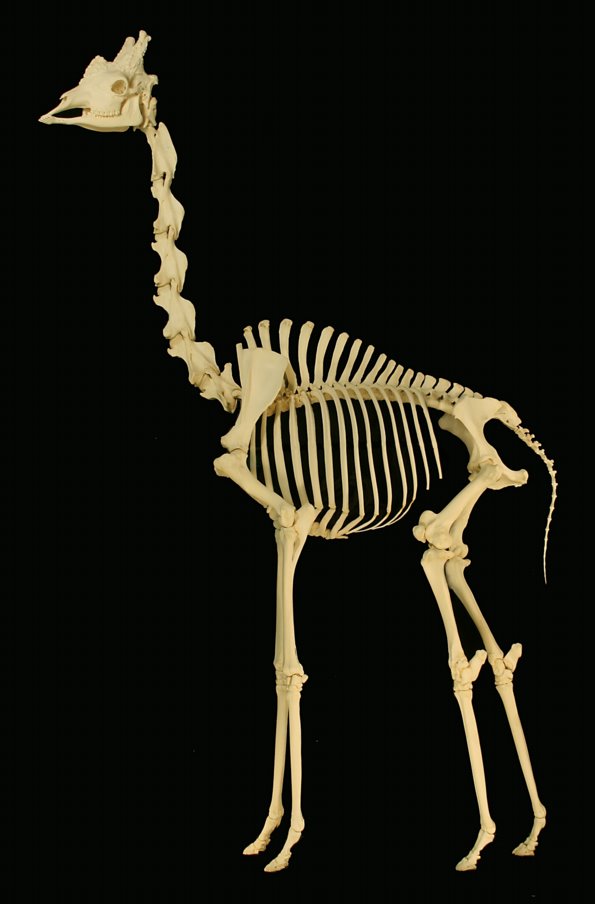
Fully grown giraffes stand 4.3 – tall, with males taller than females. The average weight is 1192 kg for an adult male and 828 kg for an adult female. Despite its long neck and legs, its body is relatively short. and can reach a thickness of 20 mm. The 80 – long tail ends in a long, dark tuft of hair and is used as a defense against insects.
The coat has dark blotches or patches, which can be orange, chestnut, brown, or nearly black, surrounded by light hair, usually white or cream coloured. Male giraffes become darker as they grow old. The coat pattern has been claimed to serve as camouflage in the light and shade patterns of savannah woodlands. Calves inherit some coat pattern traits from their mothers, and variation in some spot traits is correlated with calf survival. The skin under the blotches may regulate the animal's body temperature, being sites for complex blood vessel systems and large sweat glands. Spotless or solid-colour giraffes are very rare, but have been observed.
The fur may give the animal chemical defense, as its parasite repellents give it a characteristic scent. At least 11 main aromatic chemicals are in the fur, although indole and 3-methylindole are responsible for most of the smell. Because males have a stronger odour than females, it may also have a sexual function.
Head
_head_with_oxpecker_Kruger.jpg)
Both sexes have prominent horn-like structures called ossicones, which can reach 13.5 cm. They are formed from ossified cartilage, covered in skin, and fused to the skull at the parietal bones. Being vascularised, the ossicones may have a role in thermoregulation, and are used in combat between males. Appearance is a reliable guide to the sex or age of a giraffe: the ossicones of females and young are thin and display tufts of hair on top, whereas those of adult males tend to be bald and knobbed on top. A lump, which is more prominent in males, emerges in the middle of the skull. Males develop calcium deposits that form bumps on their skulls as they age. Multiple sinuses lighten a giraffe's skull. However, as males age, their skulls become heavier and more club-like, helping them become more dominant in combat. The occipital condyles at the bottom of the skull allow the animal to tip its head over 90 degrees and grab food on the branches directly above them with the tongue.
With eyes located on the sides of the head, the giraffe has a broad visual field from its great height. Compared to other ungulates, giraffe vision is more binocular and the eyes are larger with a greater retinal surface area. Giraffes may see in colour, A giraffe's tongue is about 45 cm long. It is black, perhaps to protect against sunburn, and can grasp foliage and delicately pick off leaves. The upper lip is flexible and hairy to protect against sharp prickles. The upper jaw has a hard palate instead of front teeth. The molars and premolars are wide with low crowns on the surface.
Neck
Giraffes have an extremely elongated neck, which can be up to 2.4 m in length. Along the neck is a mane made of short, erect hairs. The neck typically rests at an angle of 50–60 degrees, though juveniles are closer to 70 degrees. They comprise 52–54 per cent of the length of the giraffe's vertebral column, compared with the 27–33 percent typical of similar large ungulates, including the giraffe's closest living relative, the okapi. This elongation largely takes place after birth, perhaps because giraffe mothers would have a difficult time giving birth to young with the same neck proportions as adults. The giraffe's head and neck are held up by large muscles and a nuchal ligament, which are anchored by long thoracic vertebrae spines, giving them a hump.

The giraffe's neck vertebrae have ball and socket joints. However, this proposition is not generally accepted, as T1 has other morphological features, such as an articulating rib, deemed diagnostic of thoracic vertebrae, and because exceptions to the mammalian limit of seven cervical vertebrae are generally characterised by increased neurological anomalies and maladies.
There are several hypotheses regarding the evolutionary origin and maintenance of elongation in giraffe necks. Charles Darwin originally suggested the "competing browsers hypothesis", which has been challenged only recently. It suggests that competitive pressure from smaller browsers, like kudu, steenbok and impala, encouraged the elongation of the neck, as it enabled giraffes to reach food that competitors could not. This advantage is real, as giraffes can and do feed up to 4.5 m high, while even quite large competitors, such as kudu, can feed up to only about 2 m high. There is also research suggesting that browsing competition is intense at lower levels, and giraffes feed more efficiently (gaining more leaf biomass with each mouthful) high in the canopy. However, scientists disagree about just how much time giraffes spend feeding at levels beyond the reach of other browsers, and a 2010 study found that adult giraffes with longer necks actually suffered higher mortality rates under drought conditions than their shorter-necked counterparts. This study suggests that maintaining a longer neck requires more nutrients, which puts longer-necked giraffes at risk during a food shortage.
Another theory, the sexual selection hypothesis, proposes that long necks evolved as a secondary sexual characteristic, giving males an advantage in "necking" contests to establish dominance and obtain access to sexually receptive females. In support of this theory, some studies have stated that necks are longer and heavier for males than females of the same age, It has also been proposed that the neck serves to give the animal greater vigilance.
Legs, locomotion and posture
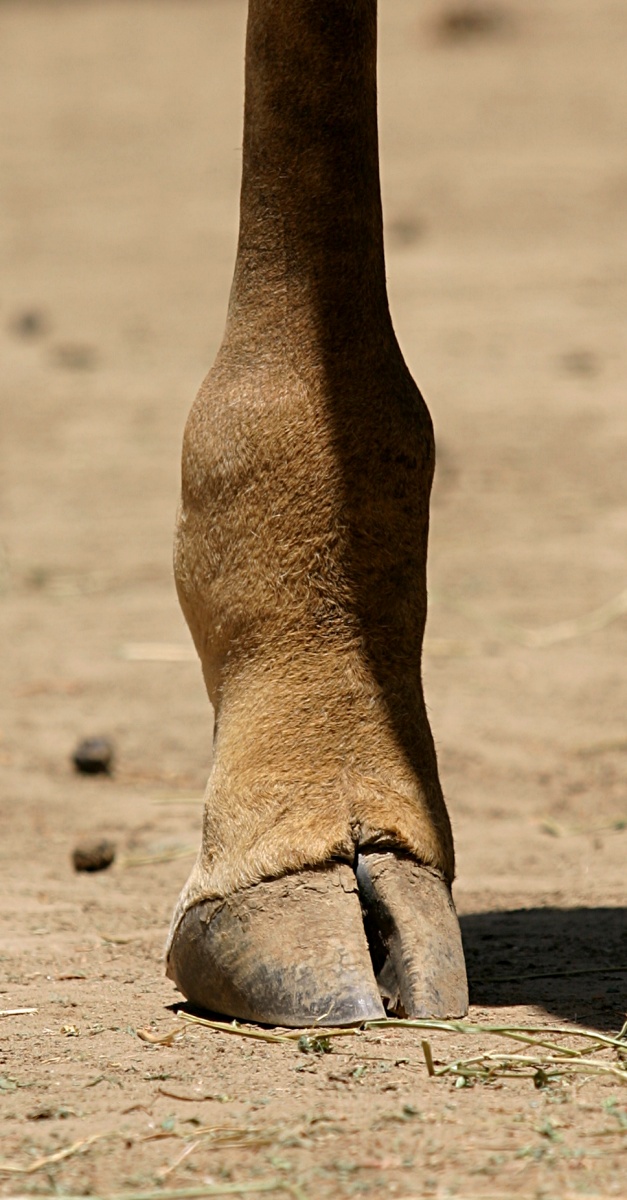
The front legs tend to be longer than the hind legs, The hooves of large male giraffes reach 31 x in diameter. The fetlock of the leg is low to the ground, allowing the hoof to better support the animal's weight. Giraffes lack dewclaws and interdigital glands. While the pelvis is relatively short, the ilium has stretched-out crests.
A giraffe has only two gaits: walking and galloping. Walking is done by moving the legs on one side of the body, then doing the same on the other side. and can sustain 50 km/h for several kilometres. Giraffes would probably not be competent swimmers as their long legs would be highly cumbersome in the water, although they might be able to float. When swimming, the thorax would be weighed down by the front legs, making it difficult for the animal to move its neck and legs in harmony or keep its head above the water's surface.
A giraffe rests by lying with its body on top of its folded legs.
Internal systems
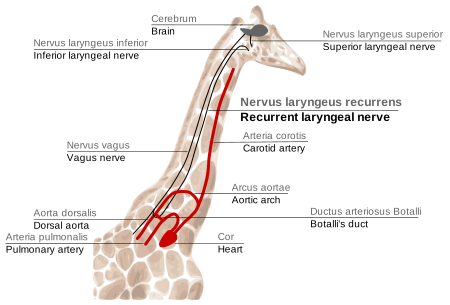
In mammals, the left recurrent laryngeal nerve is longer than the right; in a giraffe, it is over 30 cm longer. These nerves are longer in giraffes than in any other living animal; the left nerve is over 2 m long. Each nerve cell in this path begins in the brainstem and passes down the neck along the vagus nerve, then branches off into the recurrent laryngeal nerve which passes back up the neck to the larynx. Thus, these nerve cells have a length of nearly 5 m in the largest giraffes. Evaporative heat loss in the nasal passages keep the giraffe's brain cool.

A giraffe's circulatory system has several adaptations to compensate for its great height. Its 25 lb and 2 ft heart must generate approximately double the blood pressure required for a human to maintain blood flow to the brain. As such, the wall of the heart can be as thick as 7.5 cm. Giraffes have relatively high heart rates for their size, at 150 beats per minute. The jugular veins contain several (most commonly seven) valves to prevent blood flowing back into the head from the inferior vena cava and right atrium while the head is lowered. Conversely, the blood vessels in the lower legs are under great pressure because of the weight of fluid pressing down on them. To solve this problem, the skin of the lower legs is thick and tight, preventing too much blood from pouring into them.
Giraffes have oesophageal muscles that are strong enough to allow regurgitation of food from the stomach up the neck and into the mouth for rumination. Giraffes have a small, compact liver.
Behaviour and ecology
Habitat and feeding
Giraffes usually inhabit savannahs and open woodlands. They prefer areas dominated by Acacieae, Commiphora, Combretum and Terminalia trees over Brachystegia which are more densely spaced. Giraffes browse on the twigs of trees, preferring those of the subfamily Acacieae and the genera Commiphora and Terminalia, which are important sources of calcium and protein to sustain the giraffe's growth rate. They also feed on shrubs, grass and fruit. A giraffe eats around 34 kg of plant matter daily. When stressed, giraffes may chew on large branches, stripping them of bark. Giraffes are also recorded to chew old bones.
During the wet season, food is abundant and giraffes are more spread out, while during the dry season, they gather around the remaining evergreen trees and bushes. Mothers tend to feed in open areas, presumably to make it easier to detect predators, although this may reduce their feeding efficiency. As a ruminant, the giraffe first chews its food, then swallows it for processing and then visibly passes the half-digested cud up the neck and back into the mouth to chew again. A giraffe requires less food than many other herbivores because the foliage it eats has more concentrated nutrients and it has a more efficient digestive system. The animal's faeces come in the form of small pellets. When it has access to water, a giraffe will go no more than three days without drinking.
Giraffes have a great effect on the trees that they feed on, delaying the growth of young trees for some years and giving "waistlines" to particularly tall trees. Feeding is at its highest during the first and last hours of daytime. Between these hours, giraffes mostly stand and ruminate. Rumination is the dominant activity during the night, when it is mostly done lying down.
Social life
_females.jpg)
Giraffes usually form groups that vary in size and composition according to ecological, anthropogenic, temporal, and social factors. Traditionally, the composition of these groups had been described as open and ever-changing. For research purposes, a "group" has been defined as "a collection of individuals that are less than a kilometre apart and moving in the same general direction". More recent studies have found that giraffes have long-lasting social groups or cliques based on kinship, sex or other factors, and these groups regularly associate with other groups in larger communities or sub-communities within a fission–fusion society. Proximity to humans can disrupt social arrangements. Masai giraffes in Tanzania sort themselves into different subpopulations of 60–90 adult females with overlapping ranges, each of which differ in reproductive rates and calf mortality. Dispersal is male biased, and can include spatial and/or social dispersal. Adult female subpopulations are connected by males into super communities of around 300 animals.
The number of giraffes in a group can range from one up to 66 individuals. Male giraffes occasionally roam far from areas that they normally frequent.
Early biologists suggested giraffes were mute and unable to create enough air flow to vibrate their vocal folds. During courtship, males emit loud coughs. Females call their young by bellowing. Calves will emit bleats, mooing and mewing sounds. During nighttime, giraffes appear to hum to each other. There is some evidence that giraffes use Helmholtz resonance to create infrasound. They also communicate with body language. Dominant males display to other males with an erect posture; holding the chin and head up while walking stiffly and displaying their side. The less dominant show submissiveness by dropping the head and ears, lowering the chin and fleeing.
Reproduction and parental care
.jpg)
Reproduction in giraffes is broadly polygamous: a few older males mate with the fertile females. Females can reproduce throughout the year and experience oestrus cycling approximately every 15 days. Female giraffes in oestrus are dispersed over space and time, so reproductive adult males adopt a strategy of roaming among female groups to seek mating opportunities, with periodic hormone-induced rutting behaviour approximately every two weeks. Males prefer young adult females over juveniles and older adults.
Male giraffes assess female fertility by tasting the female's urine to detect oestrus, in a multi-step process known as the flehmen response. Once an oestrous female is detected, the male will attempt to court her. When courting, dominant males will keep subordinate ones at bay. A courting male may lick a female's tail, lay his head and neck on her body or nudge her with his ossicones. During copulation, the male stands on his hind legs with his head held up and his front legs resting on the female's sides.
Giraffe gestation lasts 400–460 days, after which a single calf is normally born, although twins occur on rare occasions. The mother gives birth standing up. The calf emerges head and front legs first, having broken through the fetal membranes, and falls to the ground, severing the umbilical cord. A newborn giraffe is 1.7 - tall. its coat pattern providing camouflage. The ossicones, which have lain flat in the womb, raise up in a few days.
_female_with_young_2_months.jpg)
Mothers with calves will gather in nursery herds, moving or browsing together. Mothers in such a group may sometimes leave their calves with one female while they forage and drink elsewhere. This is known as a "calving pool". Calves are at risk of predation, and a mother giraffe will stand over them and kick at an approaching predator. Calves first ruminate at four to six months and stop nursing at six to eight months. Young may not reach independence until they are 14 months old. Males must wait until they are at least seven years old to gain the opportunity to mate.
Necking

Male giraffes use their necks as weapons in combat, a behaviour known as "necking". Necking is used to establish dominance, and males that win necking bouts have greater reproductive success. This behaviour occurs at low or high intensity. In low-intensity necking, the combatants rub and lean on each other. The male that can keep itself more upright wins the bout. In high-intensity necking, the combatants will spread their front legs and swing their necks at each other, attempting to land blows with their ossicones. The contestants will try to dodge each other's blows and then prepare to counter. The power of a blow depends on the weight of the skull and the arc of the swing. A necking duel can last more than half an hour, depending on how well matched the combatants are. Although most fights do not lead to serious injury, there have been records of broken jaws, broken necks, and even deaths.
After a duel, it is common for two male giraffes to caress and court each other. Such interactions between males have been found to be more frequent than heterosexual coupling. In one study, up to 94 percent of observed mounting incidents took place between males. The proportion of same-sex activities varied from 30 to 75 percent. Only one percent of same-sex mounting incidents occurred between females.
Mortality and health
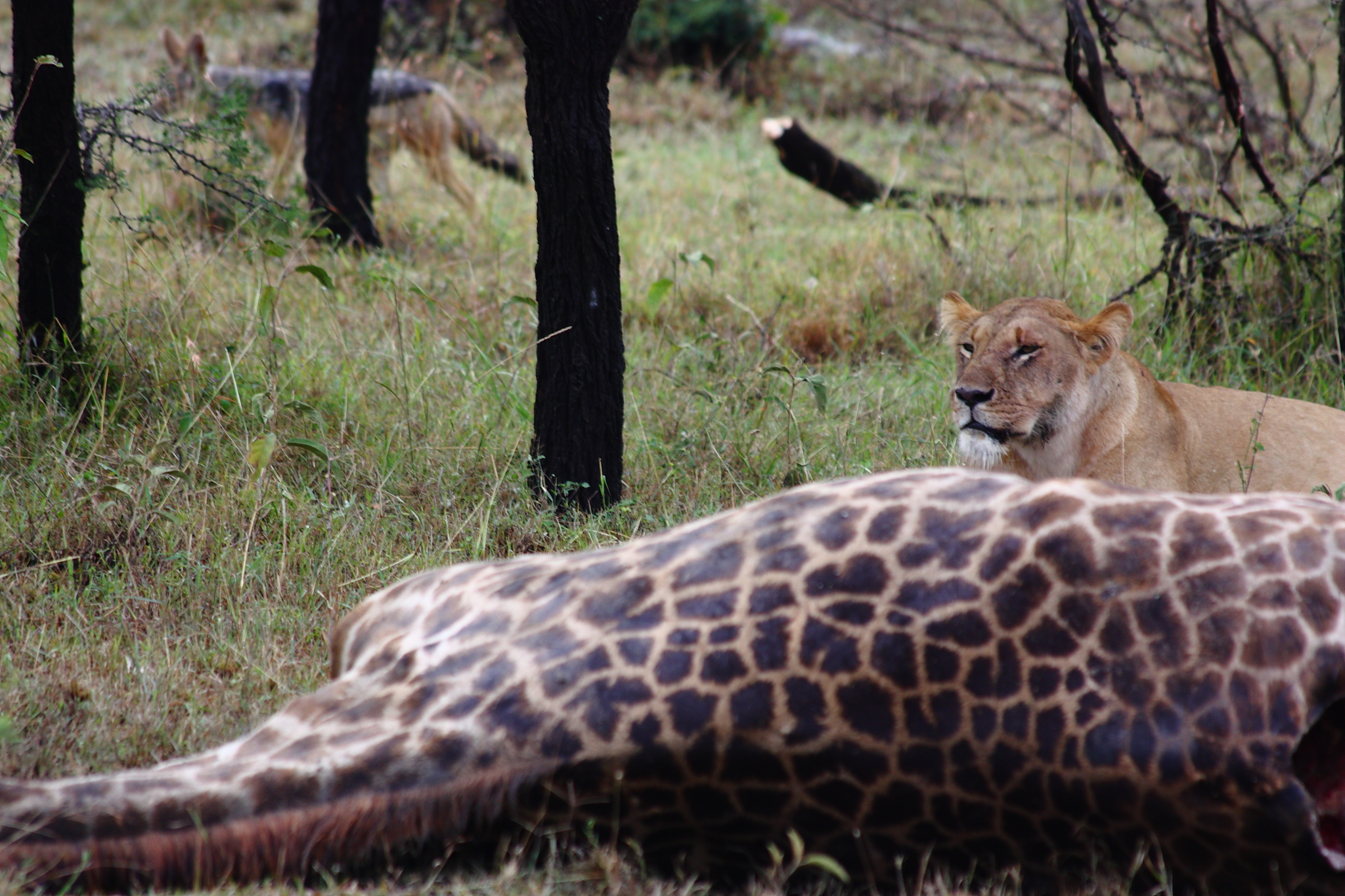
Giraffes have high adult survival probability, and an unusually long lifespan compared to other ruminants, up to 38 years. Adult female survival is significantly correlated with the number of social associations. Because of their size, eyesight and powerful kicks, adult giraffes are mostly safe from predation, Calf survival varies according to the season of birth, with calves born during the dry season having higher survival rates.
The local, seasonal presence of large herds of migratory wildebeests and zebras reduces predation pressure on giraffe calves and increases their survival probability. In turn, it has been suggested that other ungulates may benefit from associating with giraffes, as their height allows them to spot predators from further away. Zebras were found to assess predation risk by watching giraffes and spend less time looking around when giraffes are present.

Some parasites feed on giraffes. They are often hosts for ticks, especially in the area around the genitals, which have thinner skin than other areas. Tick species that commonly feed on giraffes are those of genera Hyalomma, Amblyomma and Rhipicephalus. Red-billed and yellow-billed oxpeckers clean giraffes of ticks and alert them to danger. Giraffes host numerous species of internal parasites and are susceptible to various diseases. They were victims of the (now eradicated) viral illness rinderpest.
Human relations
Cultural significance
With its lanky build and spotted coat, the giraffe has been a source of fascination throughout human history, and its image is widespread in culture. It has represented flexibility, far-sightedness, femininity, fragility, passivity, grace, beauty and the continent of Africa itself.

Giraffes were depicted in art throughout the African continent,. The Kiffians were responsible for a life-size rock engraving of two giraffes, dated 8,000 years ago, that has been called the "world's largest rock art petroglyph". Judging from evidence including incised clay pots, archaeologists now believe that, in the ancient Kushite societies located in Nubia, or what is now northern Sudan, giraffes may have featured in popular religion and women's religion, though not in elite or royal religion, and may have also had a connection to beliefs about the sun. The Tugen people of modern Kenya used the giraffe to depict their god Mda. The Egyptians gave the giraffe its own hieroglyph; 'sr' in Old Egyptian and 'mmy' in later periods. How the giraffe got its height has been the subject of various African folktales.
Giraffes have a presence in modern Western culture. Salvador Dalí depicted them with burning manes in some surrealist paintings. Dali considered the giraffe to be a masculine symbol. A flaming giraffe was meant to be a "masculine cosmic apocalyptic monster". Several children's books feature the giraffe, including David A. Ufer's The Giraffe Who Was Afraid of Heights, Giles Andreae's Giraffes Can't Dance and Roald Dahl's The Giraffe and the Pelly and Me. Giraffes have appeared in animated films as minor characters in Disney's Dumbo and The Lion King, and in more prominent roles in The Wild and the Madagascar films. Sophie the Giraffe has been a popular teether since 1961. Another famous fictional giraffe is the Toys "R" Us mascot Geoffrey the Giraffe.
The giraffe has also been used for some scientific experiments and discoveries. Scientists have used the properties of giraffe skin as a model for astronaut and fighter pilot suits because the people in these professions are in danger of passing out if blood rushes to their legs. The constellation of Camelopardalis, introduced in the 17th century, depicts a giraffe.
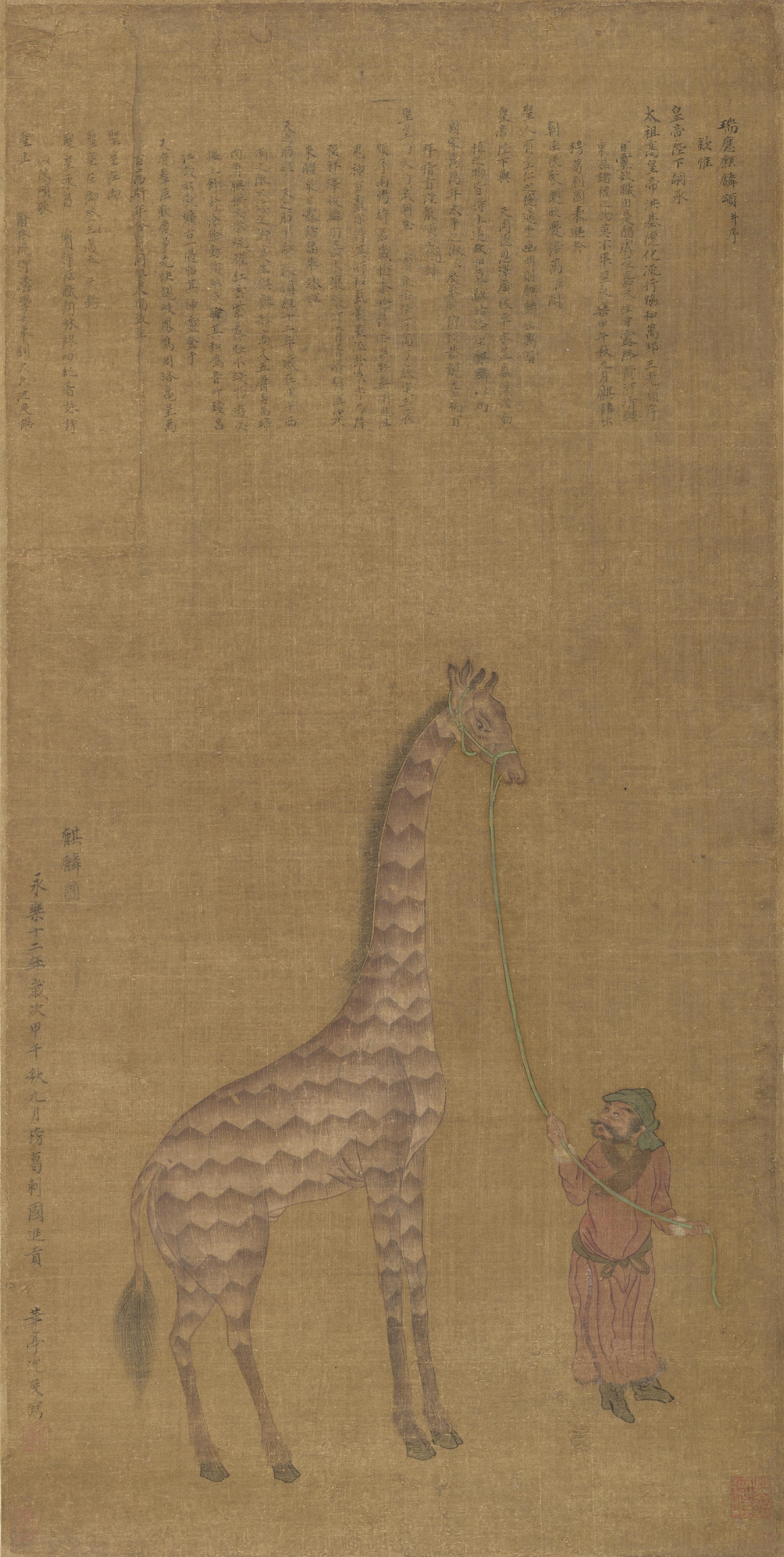
Captivity
The Egyptians were among the earliest people to keep giraffes in captivity and shipped them around the Mediterranean.
Individual captive giraffes were given celebrity status throughout history. In 1414, a giraffe from Malindi was taken to China by explorer Zheng He and placed in a Ming dynasty zoo. The animal was a source of fascination for the Chinese people, who associated it with the mythical Qilin. Zarafa, another famous giraffe, was brought from Egypt to Paris in the early 19th century as a gift for Charles X of France. A sensation, the giraffe was the subject of numerous memorabilia or "giraffanalia".
Giraffes have become popular attractions in modern zoos, though keeping them is difficult as they prefer large areas and need to eat large amounts of browse. Captive giraffes in North America and Europe appear to have a higher mortality rate than in the wild, the most common causes being poor husbandry, nutrition, and management. Giraffes in zoos display stereotypical behaviours, particularly the licking of inanimate objects and pacing. Zookeepers may offer various activities to stimulate giraffes, including training them to take food from visitors. Stables for giraffes are built particularly high to accommodate their height.
Exploitation
Giraffes were probably common targets for hunters throughout Africa. Different parts of their bodies were used for different purposes. Their meat was used for food. The tail hairs were flyswatters, bracelets, necklaces, and threads. Shields, sandals, and drums were made using the skin, and the strings of musical instruments were from the tendons. In Buganda, the smoke of burning giraffe skin was traditionally used to treat nosebleeds. The Humr people of Kordofan consume the drink Umm Nyolokh, which is prepared from the liver and bone marrow of giraffes. Richard Rudgley hypothesised that Umm Nyolokh might contain DMT. The drink is said to cause hallucinations of giraffes, believed to be the giraffes' ghosts, by the Humr.
Conservation status
In 2016, giraffes were assessed as Vulnerable from a conservation perspective by the International Union for Conservation of Nature (IUCN). Estimates as of 2016 indicate there are approximately 97,500 members of Giraffa in the wild. The Masai and reticulated subspecies are endangered, and the Rothschild subspecies is near threatened. The Nubian subspecies is critically endangered. In 2025, the IUCN accepted four species of giraffe with seven subspecies.

The primary causes for giraffe population declines are habitat loss and direct killing for bushmeat markets. Giraffes have been extirpated from much of their historic range, including Eritrea, Guinea, Mauritania and Senegal. They may also have disappeared from Angola, Mali, and Nigeria, but have been introduced to Rwanda and Eswatini.
Protected areas like national parks provide important habitat and anti-poaching protection to giraffe populations. Private game reserves have contributed to the preservation of giraffe populations in eastern and southern Africa. The giraffe is a protected species in most of its range. It is the national animal of Tanzania, and is protected by law, and unauthorised killing can result in imprisonment. The UN-backed Convention of Migratory Species selected giraffes for protection in 2017. In 2019, giraffes were listed under Appendix II of the Convention on International Trade in Endangered Species (CITES), which means international trade including in parts/derivatives is regulated.
Translocations are sometimes used to augment or re-establish diminished or extirpated populations, but these activities are risky and difficult to undertake using the best practices of extensive pre- and post-translocation studies and ensuring a viable founding population. Aerial survey is the most common method of monitoring giraffe population trends in the vast roadless tracts of African landscapes, but aerial methods are known to undercount giraffes. Ground-based survey methods are more accurate and can be used in conjunction with aerial surveys to make accurate estimates of population sizes and trends.
References
References
- Muller, Z.. (2018). "''Giraffa camelopardalis''".
- Muller, Z.. (2018). "''Giraffa camelopardalis''".
- Őrsi, Tibor. (2006). "French Linguistic Influence in the Cotton Version of Mandeville's Travels". Tinta Könyvkiadó.
- "Giraffe".
- "Definition of CAMELOPARD". Encyclopædia Britannica: Merriam-Webster.
- "Definition of camelopard". Dictionary of Medieval Terms and Phrases.
- (2019). "Large-scale ruminant genome sequencing provides insights into their evolution and distinct traits". Science.
- (2003). "On the origin, evolution, and phylogeny of giraffes ''Giraffa camelopardalis''". [[Transactions of the Royal Society of South Africa]].
- (2015). "Fossil evidence and stages of elongation of the ''Giraffa camelopardalis'' neck". [[Royal Society Open Science]].
- (2015). "The cervical anatomy of ''Samotherium'', an intermediate-necked giraffid". Royal Society Open Science.
- (1997). "Effect of orogeny, plate motion and land–sea distribution on Eurasian climate change over the past 30 million years". [[Nature (journal).
- (2016). "Giraffe genome sequence reveals clues to its unique morphology and physiology". [[Nature Communications]].
- Dagg, A. I.. (1971). "''Giraffa camelopardalis''". [[Mammalian Species]].
- Gippoliti, S.. (2018). "Impacts of taxonomic inertia for the conservation of African ungulate diversity: an overview". [[Biological Reviews]].
- (2007). "Extensive population genetic structure in the giraffe". [[BMC Biology]].
- (2011). "Ungulate Taxonomy". [[JHU Press]].
- (2016). "Multi-locus Analyses reveal four giraffe species instead of one". [[Current Biology]].
- (2020). "A comparative approach for species delimitation based on multiple methods of multi-locus DNA sequence analysis: A case study of the genus ''Giraffa'' (Mammalia, Cetartiodactyla)". [[PLOS One]].
- (2021). "Whole-genome analysis of giraffe supports four distinct species". Current Biology.
- (19 December 2024). "Heads up–Four Giraffa species have distinct cranial morphology". PLOS ONE.
- Linnaeus, C.. (1758). "Systema Naturæ".
- Swaison 1835. Camelopardalis antiquorum. Bagger el Homer, Kordofan, about 10° N, 28° E (as fixed by Harper, 1940)
- "Nubian giraffe born in Al Ain zoo". UAE Interact.
- Fennessy, J.. (2018). "''Giraffa camelopardalis'' ssp. ''peralta''".
- (2024). "Giraffe lineages are shaped by major ancient admixture events". Current Biology.
- Winton, W. E. de. (1899). "XXXVIII.—On mammals collected by Lieut.-Colonel W. Giffard in the northern territory of the Gold Coast". [[Annals and Magazine of Natural History]].
- (2023). "For the first time in decades, Angolan giraffes now populate a park in Angola".
- (2018). "Matrilineal population structure and distribution of the Angolan giraffe in the Namib desert and beyond". Ecological Genetics and Genomics.
- (2009). "Genetic structure of two populations of the Namibian giraffe, ''Giraffa camelopardalis angolensis''". [[African Journal of Ecology]].
- Rookmaaker, L. C.. (1989). "The Zoological Exploration of Southern Africa 1650–1790". [[CRC Press]].
- (2015). "On reconstructing ''Giraffa sivalensis'', an extinct giraffid from the Siwalik Hills, India". PeerJ.
- (2002). "Faunal and Environmental Change in the Late Miocene Siwaliks of Northern Pakistan". Paleobiology.
- (2010). "Cenozoic Mammals of Africa". University of California Press.
- Nowak, R.M.. (1999). "Walker's Mammals of the World". The [[Johns Hopkins University Press]].
- (1990). "The mammals of the southern African subregion". [[University of Pretoria]].
- Langley, L.. (2017). "Do zebras have stripes on their skin?". [[National Geographic]].
- Estes, R.. (1992). "The Behavior Guide to African Mammals: including Hoofed Mammals, Carnivores, Primates". [[University of California Press]].
- (2022). "Using spot pattern recognition to examine population biology, evolutionary ecology, sociality, and movements of giraffes: a 70-year retrospective". [[Mammalian Biology]].
- (2018). "Seeing spots: quantifying mother-offspring similarity and assessing fitness consequences of coat pattern traits in a wild population of giraffes (''Giraffa camelopardalis'')". [[PeerJ]].
- (2004). "Giraffe thermoregulation: a review". [[Transactions of the Royal Society of South Africa]].
- (12 September 2023). "Another rare spotless giraffe found—the first ever seen in the wild". [[National Geographic]].
- (6 September 2023). "A rare spotless giraffe gets a name to match". [[NPR]].
- (2002). "The scent of the reticulated giraffe (''Giraffa camelopardalis reticulata'')". [[Biochemical Systematics and Ecology]].
- Dagg, A. I.. (2014). "Giraffe: Biology, Behaviour, and Conservation". [[Cambridge University Press]].
- (2013). "Orbit orientation and eye morphometrics in giraffes (''Giraffa camelopardalis'')". [[African Zoology]].
- Peterson, D.. (2013). "Giraffe Reflections". [[University of California Press]].
- (2013). "Why sauropods had long necks; and why giraffes have short necks". [[PeerJ]].
- (2009). "The giraffe ''(Giraffa camelopardalis)'' cervical vertebral column: A heuristic example in understanding evolutionary processes?". [[Zoological Journal of the Linnean Society]].
- (2010). "From fetus to adult – An allometric analysis of the giraffe vertebral column". [[Journal of Experimental Zoology Part B: Molecular and Developmental Evolution]].
- (2010). "Necks-for-sex or competing browsers? A critique of ideas on the evolution of giraffe". Journal of Zoology.
- du Toit, J. T.. (1990). "Feeding-height stratification among African browsing ruminants". [[African Journal of Ecology]].
- (2007). "Winning by a Neck: Tall Giraffes Avoid Competing with Shorter Browsers". [[American Naturalist]].
- (2001). "Vertical zonation of browse quality in tree canopies exposed to a size-structured guild of African browsing ungulates". [[Oecologia]].
- (1991). "Sex differences in giraffe feeding ecology: energetic and social constraints". [[Ethology (journal).
- (2010). "The demography of giraffe deaths in a drought". Transactions of the Royal Society of South Africa.
- (1996). "Winning by a Neck: Sexual Selection in the Evolution of Giraffe". [[The American Naturalist]].
- Brownlee, A.. (1963). "Evolution of the Giraffe". [[Nature (journal).
- (2016). "Giraffe Stature and Neck Elongation: Vigilance as an Evolutionary Mechanism". Biology.
- (1993). "Does metatarsal/femur ratio predict maximal running speed in cursorial mammals?". Journal of Zoology.
- Rafferty, J. P.. (2011). "Grazers (Britannica Guide to Predators and Prey)". [[Britannica Educational Publishing]].
- (2010). "Predicting the buoyancy, equilibrium and potential swimming ability of giraffes by computational analysis". [[Journal of Theoretical Biology]].
- Naish, D.. (2011). "Will it Float?".
- (1996). "Behavioural sleep in the giraffe (''Giraffa camelopardalis'') in a zoological garden". Journal of Sleep Research.
- Wedel, M. J.. (2012). "A monument of inefficiency: the presumed course of the recurrent laryngeal nerve in sauropod dinosaurs". [[Acta Palaeontologica Polonica]].
- Harrison, D. F. N.. (1995). "The Anatomy and Physiology of the Mammalian Larynx". Cambridge University Press.
- (2017). "The brain of the giraffe (''Giraffa camelopardalis''): surface configuration, encephalization quotient, and analysis of the existing literature". The Anatomical Record.
- (2011). "Lung volumes in giraffes, ''Giraffa camelopardalis''". Comparative Biochemistry and Physiology A.
- (2021). "Heads up! The cardiovascular secrets of giraffes".
- (2009). "The structure and function of giraffe jugular vein valves". South African Journal of Wildlife Research.
- (1997). "Comparative morphology of the gallbladder and biliary tract in vertebrates: variation in structure, homology in function and gallstones". [[Microscopy Research and Technique]].
- Kingdon, J.. (1997). "The Kingdon Field Guide to African Mammals". [[Academic Press]].
- (2019). "Fission–fusion dynamics of a megaherbivore are driven by ecological, anthropogenic, temporal, and social factors". [[Oecologia]].
- van der Jeugd, H. P.. (2000). "Movements and group structure of giraffe (''Giraffa camelopardalis'') in Lake Manyara National Park, Tanzania". [[Journal of Zoology]].
- (1985). "Giraffe social behavior". [[Journal of Natural History]].
- (2020). "Proximity to humans affects local social structure in a giraffe metapopulation". [[Journal of Animal Ecology]].
- (2013). "Herd composition, kinship and fission–fusion social dynamics among wild giraffe". [[African Journal of Ecology]].
- (2013). "Fission–fusion dynamics in wild giraffes may be driven by kinship, spatial overlap and individual social preferences". [[Animal Behaviour (journal).
- (2014). "Multilevel social organization and space use in reticulated giraffe (''Giraffa camelopardalis'')". [[Behavioral Ecology (journal).
- (2021). "Socially defined subpopulations reveal demographic variation in a Giraffe metapopulation". [[The Journal of Wildlife Management]].
- (2021). "Leaving by staying: Social dispersal in giraffes". Journal of Animal Ecology.
- (2021). "Social connectedness and movements among communities of giraffes vary by sex and age class". Animal Behaviour.
- (2019). "Correlates of home range sizes of giraffes, ''Giraffa camelopardalis''". [[Animal Behaviour (journal).
- (2018). "How do giraffes locate one another? A review of visual, auditory, and olfactory communication among giraffes". Journal of Zoology.
- (2015). "Nocturnal "humming" vocalizations: adding a piece to the puzzle of giraffe vocal communication". BMC Research Notes.
- (2013). "Giraffe Helmholtz resonance". Proceedings of Meetings on Acoustics.
- (2005). "Fecal steroid analysis of female giraffe (''Giraffa camelopardalis'') reproductive condition and the impact of endocrine status on daily time budgets". [[General and Comparative Endocrinology]].
- (2006). "Sociosexual behavior, male mating tactics, and the reproductive cycle of giraffe ''Giraffa camelopardalis''". [[Hormones and Behavior]].
- (2013). "Androgen changes and flexible rutting behaviour in male giraffes". [[Biology Letters]].
- Leuthold, B. M.. (1979). "Social organization and behaviour of giraffe in Tsavo East National Park". African Journal of Ecology.
- Langman, V. A.. (1977). "Cow-calf relationships in giraffe (''Giraffa camelopardalis giraffa'')". Zeitschrift für Tierpsychologie.
- (2021). "Further behavioural parameters support reciprocity and milk theft as explanations for giraffe allonursing". Scientific Reports.
- Coe, M. J.. (1967). "'Necking' behavior in the giraffe". Journal of Zoology.
- Bagemihl, B.. (1999). "Biological Exuberance: Animal Homosexuality and Natural Diversity". St. Martin's Press.
- (2016). "Reference Module in Earth Systems and Environmental Sciences". Elsevier.
- (2011). "A long life among ruminants: giraffids and other special cases". Schweizer Archiv für Tierheilkunde.
- (2021). "Sociability increases survival of adult female giraffes". Proceedings of the Royal Society B: Biological Sciences.
- (2017). "Season of birth affects juvenile survival of giraffe". [[Population Ecology]].
- (2016). "Migratory herds of wildebeests and zebras indirectly affect calf survival of giraffes". [[Ecology and Evolution]].
- Schmitt, M. H.. (2016). "Zebra reduce predation risk in mixed-species herds by eavesdropping on cues from giraffe". Behavioral Ecology.
- (2016). "The occurrence and prevalence of Giraffe skin disease in protected areas of northern Tanzania". [[Journal of Wildlife Diseases]].
- (2016). "Soil Correlates and Mortality from Giraffe Skin Disease in Tanzania". Journal of Wildlife Diseases.
- (2016). "Regional variation of the manifestation, prevalence, and severity of giraffe skin disease: A review of an emerging disease in wild and captive giraffe populations". [[Biological Conservation]].
- Williams, E.. (2011). "Giraffe". [[Reaktion Books]].
- "The Dabous Giraffe rock art petrograph". The [[Bradshaw Foundation]].
- Kilroe, Loretta. (2023-12-18). "Giants of the Sands: The Giraffe and its Place in Symbolic Vocabulary in the Kingdom of Kush, Sudan". Journal of African Archaeology.
- Shorrocks, B.. (2016). "The Giraffe: Biology, Ecology, Evolution and Behaviour". [[Wiley (publisher).
- Rudgley, Richard ''The Encyclopedia of Psychoactive Substances'', pub. Abacus 1998 {{ISBN. 0 349 11127 8 pps. 20–21.
- Ian Cunnison. (1958). "Giraffe hunting among the Humr tribe". [[Sudan Notes and Records]].
- Matt McGrath. (8 December 2016). "Giraffes facing 'silent extinction' as population plunges". [[BBC News]].
- (8 December 2016). "New bird species and giraffe under threat – IUCN Red List".
- Bolger, D.. (2019). "Masai Giraffe".
- Muneza, A.. (2018). "Reticulated Giraffe".
- Wube, T.. (2018). "''Giraffa camelopardalis'' ssp. ''camelopardalis''".
- (2018). "Quantifying the ecological success of a community-based wildlife conservation area in Tanzania". [[Journal of Mammalogy]].
- Knappert, J. (1987). "East Africa: Kenya, Tanzania & Uganda". Vikas Publishing House.
- (2014). "A Field Guide to the Larger Mammals of Tanzania". [[Princeton University Press]].
- "National Symbols: National Animal". Tanzania Government Portal.
- (28 October 2017). "Chimpanzees among 33 breeds selected for special protection". [[BBC News]].
- "Good News for Giraffes at CITES CoP18 > Newsroom".
- (2020). "Giraffe translocations: A review and discussion of considerations". [[African Journal of Ecology]].
- (27 February 2020). "Giraffe translocation population viability analysis". Endangered Species Research.
- (2016). "Precision, accuracy, and costs of survey methods for giraffe ''Giraffa camelopardalis''". [[Journal of Mammalogy]].
This article was imported from Wikipedia and is available under the Creative Commons Attribution-ShareAlike 4.0 License. Content has been adapted to SurfDoc format. Original contributors can be found on the article history page.
Ask Mako anything about Giraffe — get instant answers, deeper analysis, and related topics.
Research with MakoFree with your Surf account
Create a free account to save articles, ask Mako questions, and organize your research.
Sign up freeThis content may have been generated or modified by AI. CloudSurf Software LLC is not responsible for the accuracy, completeness, or reliability of AI-generated content. Always verify important information from primary sources.
Report